
Blacktip Reef Shark
Carcharhinus melanopterus
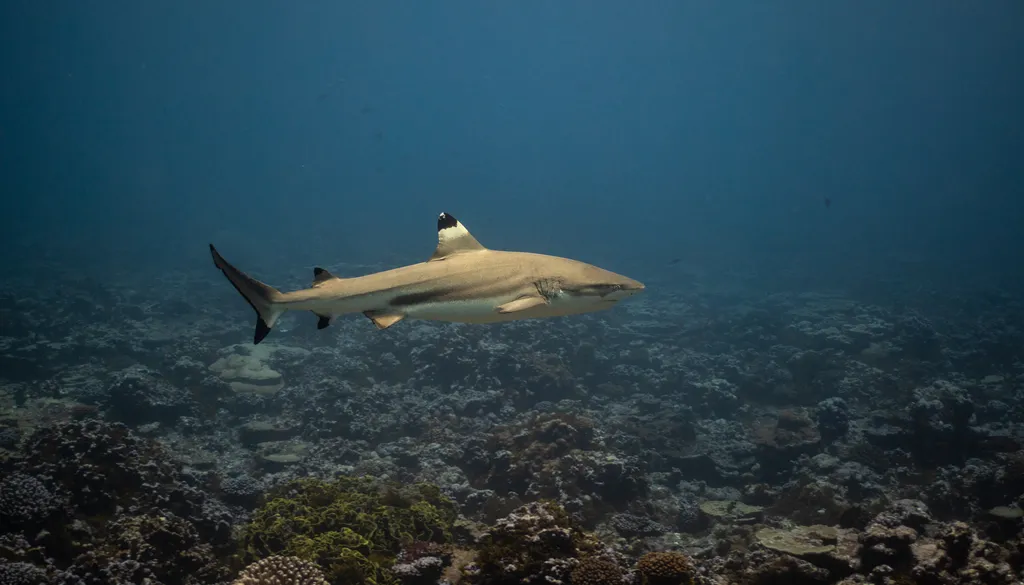
Photo by USFWS Pacific via Wikimedia Commons
The Blacktip Reef Shark is the classic "postcard shark" of the Indo-Pacific. If you’re wading in ankle-deep water in the Maldives or Tahiti and see a black-tipped triangular fin cutting through the surface, this is the culprit. They are the busiest sharks on the reef, constantly patrolling shallow lagoons and reef flats. While relatively small and timid, they are curious and will often investigate divers and snorkelers. They are the "managers" of the shallow reef ecosystem, keeping fish populations in check.
🔬Classification
📏Physical Features
🌊Habitat Info
⚠️Safety & Conservation
Identification Guide
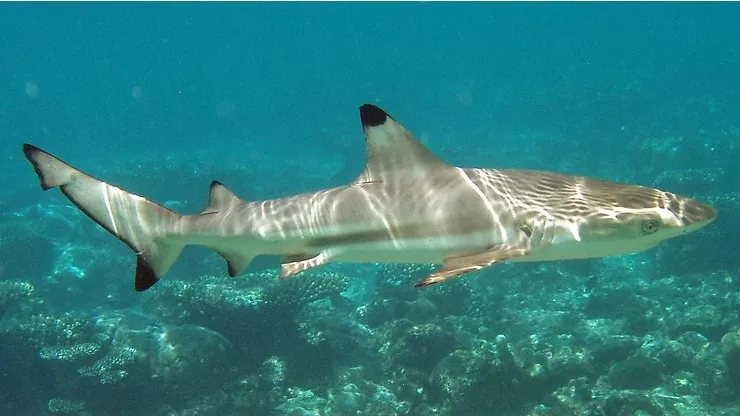
Photo by http://www.whatsthatfish.com/profile/fishx6 via Wikimedia Commons
Field marks:
- Black Tips: The First dorsal fin has a massive black tip with a thin white border underneath it. All other fins also have black tips.
- Light Streak: A distinctive pale stripe (flank mark) running along the side of the body, from the pelvic fin forward.
- Snout: Short, broadly rounded, and blunt.
- Habitat: Found in very shallow water, sometimes barely enough to cover their bodies.
- Shape: Typical "shark" shape but compact and streamlined.
Differences from Similar Species
- Grey Reef Shark: Larger, stockier; dorsal fin usually has a white tip (or no tip), black margin on tail is wide; lacks the distinct black dorsal tip of the Blacktip Reef.
- Blacktip Shark (C. limbatus): Larger, open-water shark; dorsal fin black tip is less defined (fades); lacks the prominent black tip on the anal fin (usually).
- Whitetip Reef Shark: Has white tips on dorsal and tail fins; much more slender body; rests on the bottom (Blacktip Reef Sharks must swim).
Juvenile vs. Adult
Juveniles are often found in nursery groups in extremely shallow water (mangroves or sandy flats) to avoid larger predators. They look identical to adults.
Top 10 Fun Facts about Blacktip Reef Shark
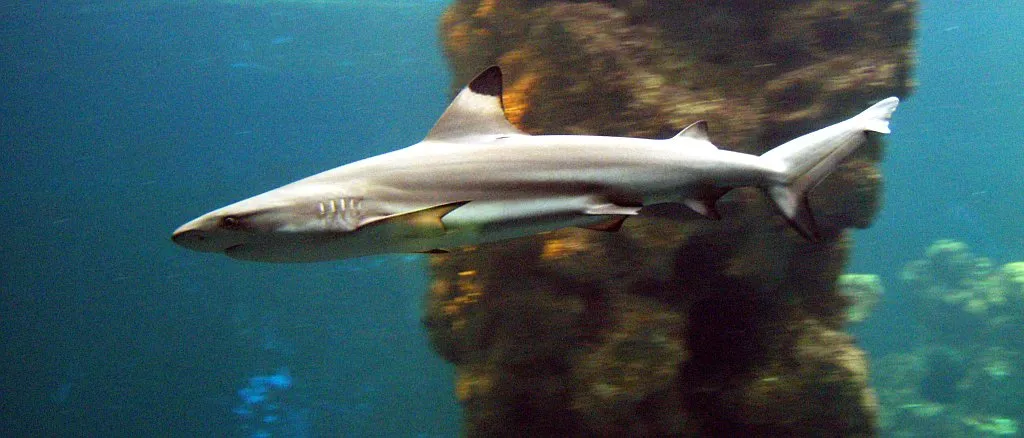
Photo by Raimond Spekking / CC BY-SA 4.0 via Wikimedia Commons
1. The "Shark Fin Soup" Mistake
Divers often confuse the Blacktip Reef Shark (C. melanopterus) with the Blacktip Shark (C. limbatus). The key difference? The Blacktip Reef Shark loves shallow coral gardens and has a distinct black tip on its dorsal fin with a white outline. The other guy hangs out in deeper water and looks a bit "washed out."
2. Shallow Water Kings
These sharks love the shallows. It’s not uncommon to see their dorsal fins slicing through water less than 30 cm (1 foot) deep! They have been known to swim onto reef flats so shallow that their backs are completely exposed, just to chase small fish or octopuses.
3. Viviparous Birth
Like mammals, female Blacktip Reef Sharks give birth to live young (viviparous) and nourish embryos via a placenta. They produce small litters of 2 to 4 pups after a gestation of roughly 8-16 months (depending on location). The pups are miniature replicas, fully independent from birth.
4. Nursery Gardens
Females show incredible "site fidelity" for giving birth. They return to the exact same shallow coastal mangroves or sandy flats where they were born to drop their pups. These areas act as nurseries where babies can grow up safe from hungry cannibalistic adults.
5. Timid but Curious
Despite their "shark" reputation, they are notoriously skittish. If you swim towards them aggressively, they will bolt. However, they are curious; if you stay still, they will often swim in circles around you to check you out. They are the "cats" of the reef—curious but flighty.
6. Cooperative Hunting?
While usually solitary, they sometimes work together to herd schools of small fish against the shore or a reef wall, making it easier to catch them. In a frenzy, they can become quite aggressive, snapping at anything that moves (including diver's fins), so watch out during feeding time!
7. Jumpers
They are surprisingly acrobatic. During feeding frenzies in shallow water, Blacktip Reef Sharks have been seen breaching completely out of the water to catch prey or avoid competitors. It's a rare sight but spectacular to witness from a boat.
8. Skin Like Sandpaper
Their skin is covered in dermal denticles (skin teeth) that protect them and reduce drag. But unlike some sharks, their denticles are so rough that simply brushing against one can cause "shark burn"—a nasty abrasion that feels like road rash.
9. The "Apex" of the Shallows
In their specific niche (shallow reef flats), they are the apex predators. While Tiger Sharks or Hammerheads might eat them in deeper water, in the 1-meter depth zone, the Blacktip Reef Shark is King. They play a crucial role in removing weak or sick fish from the reef.
10. Social Networks
Research in French Polynesia showed that these sharks form social communities. Individual sharks prefer to hang out with specific "friends" and avoid others. They have a complex social network that we are only just beginning to understand.
Diving & Observation Notes
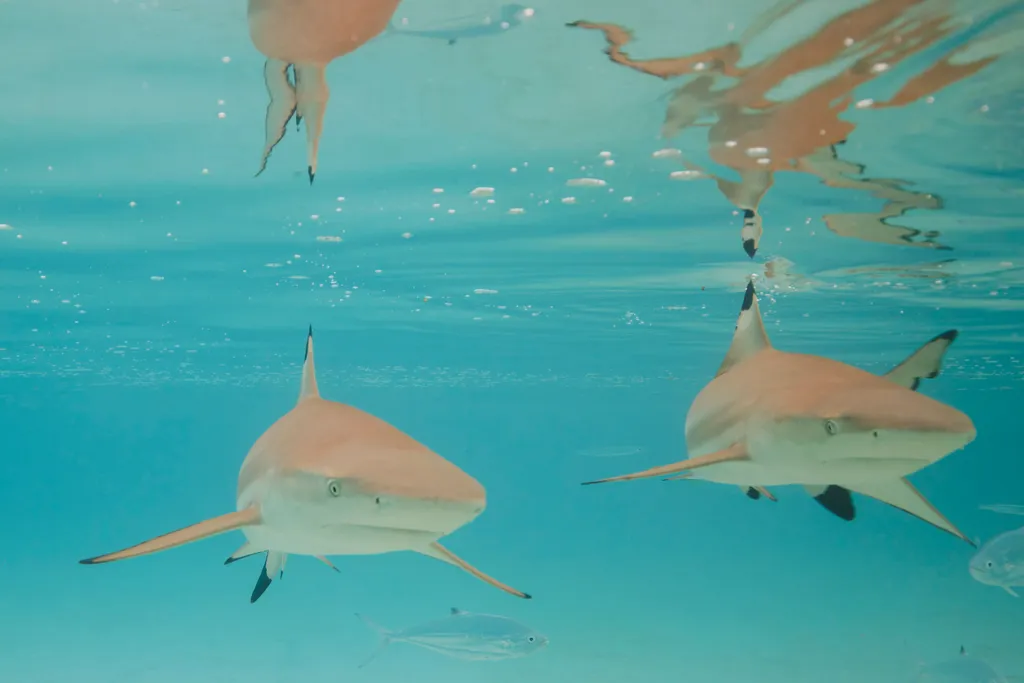
Photo by Charles J. Sharp / CC BY-SA 4.0 via Wikimedia Commons
🧭 Finding Blacktip Reef Sharks
Go shallow! Skip the deep drop-off and hang out in the lagoon or shallow coral gardens (1-10m). Look for the distinct black tip breaking the surface near the beach. They are often the first shark a snorkeler sees.
🤿 Approach & Behavior
- Play Hard to Get: If you chase them, they vanish. If you kneel on the sand and ignore them, they will come check you out.
- Snorkeling is Best: Bubbles often scare them. Snorkelers usually get closer encounters than scuba divers.
- Watch the Fins: If they start arching their back and lowering their pectoral fins, that's a threat display. Back off.
- Feeding Caution: Do not spearfish near them; the sound of a struggling fish acts like a dinner bell, and they can get bitey.
📸 Photo Tips
- Split Shots: Because they swim so shallow, they are perfect subjects for over-under (split) shots. Try to get the shark underwater and the island palm trees above.
- Surface Reflections: Shoot upward when they are just below the surface to get their reflection.
- Natural Light: You barely need strobes in 2m of water. Use the sun to your advantage.
⚠️ Safety
- Ankle Biters: Most "attacks" are just nips on the ankles of waders in murky water (mistaken identity). Don't splash around like a distressed fish in murky shallows.
- Shark Burn: Don't touch. Their skin is extremely abrasive.
Best Places to Dive with Blacktip Reef Shark
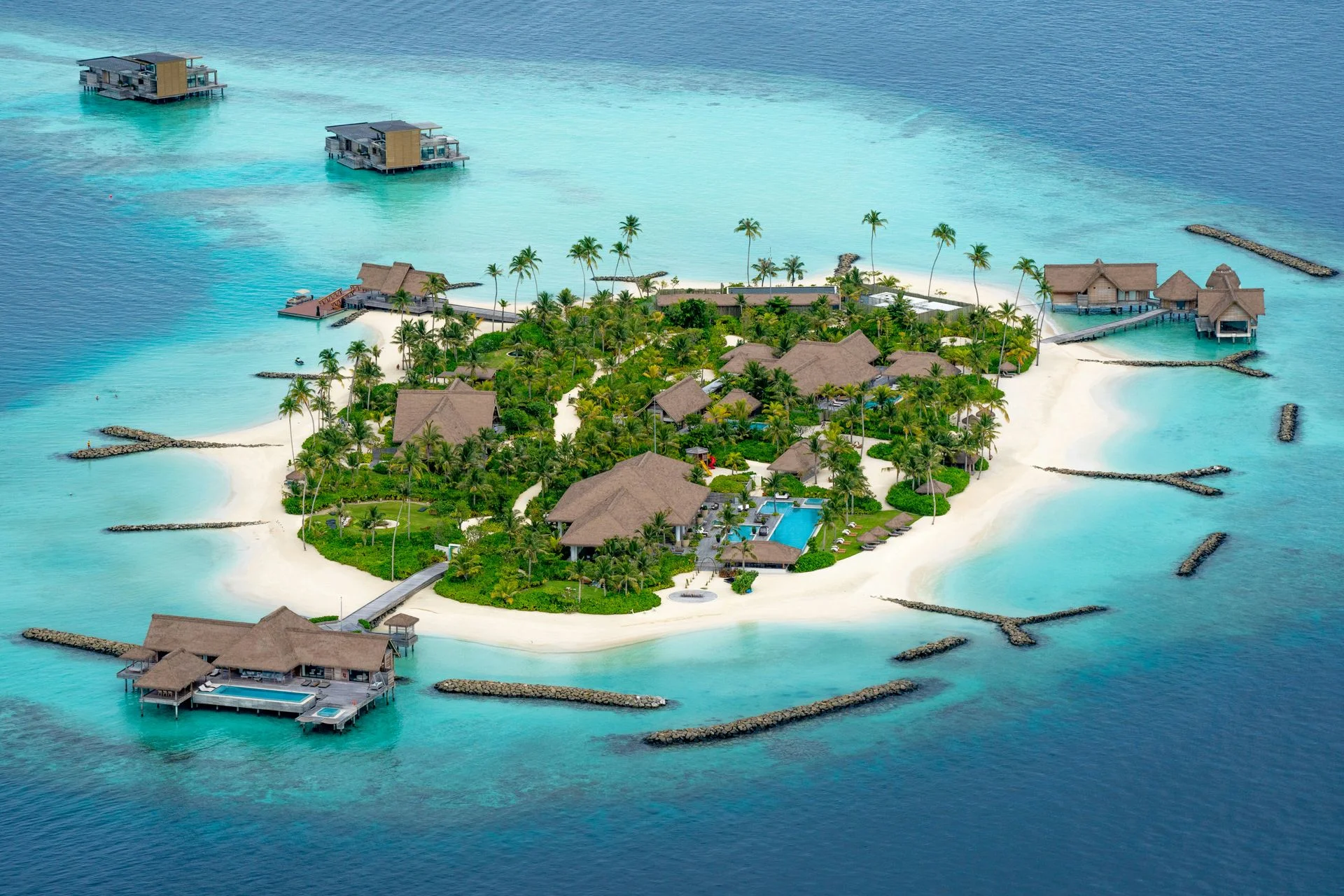
Maldives
Scattered across the Indian Ocean like strings of pearls, the Maldives’ 26 atolls encompass more than a thousand low‑lying islands, reefs and sandbanks. Beneath the turquoise surface are channels (kandus), pinnacles (thilas) and lagoons where powerful ocean currents sweep past colourful coral gardens. This nutrient‑rich flow attracts manta rays, whale sharks, reef sharks, schooling jacks, barracudas and every reef fish imaginable. Liveaboards and resort dive centres explore sites such as Okobe Thila and Kandooma Thila in the central atolls, manta cleaning stations in Baa and Ari, and shark‑filled channels like Fuvahmulah in the deep south. Diving here ranges from tranquil coral slopes to adrenalin‑fuelled drifts through current‑swept passes, making the Maldives a true pelagic playground.
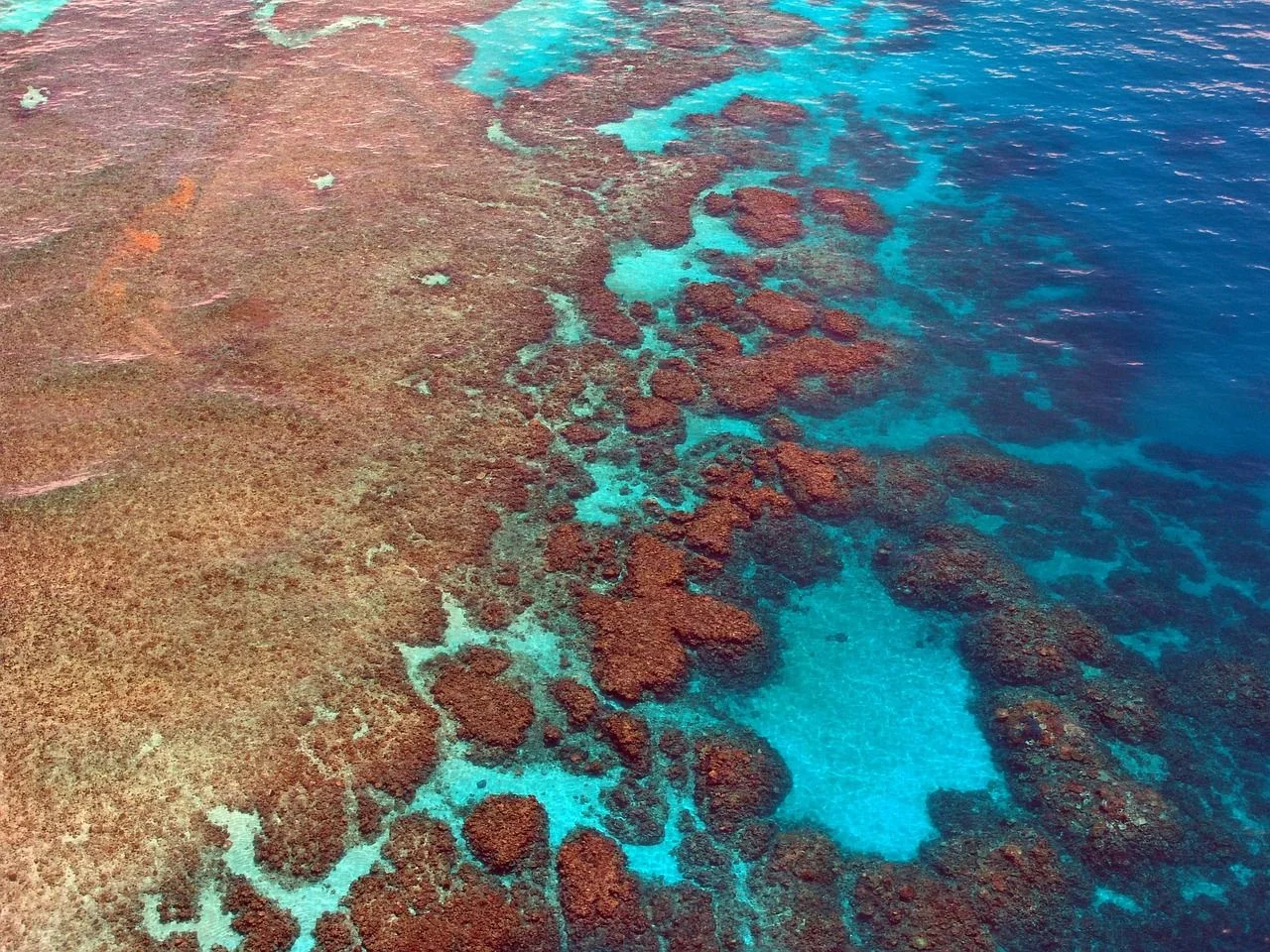
Great Barrier Reef
The Great Barrier Reef stretches for more than 2,300 km along Australia’s Queensland coast and is Earth’s largest coral ecosystem. With over 2,900 individual reefs, hundreds of islands, and a staggering diversity of marine life, it’s a bucket‑list destination for divers. Outer reef walls, coral gardens and pinnacles support potato cod, giant trevallies, reef sharks, sea turtles, manta rays and even visiting dwarf minke and humpback whales. Divers can explore historic wrecks like the SS Yongala, drift along the coral‑clad walls of Osprey Reef or mingle with friendly cod at Cod Hole. Whether you’re a beginner on a day trip from Cairns or an experienced diver on a remote liveaboard, the Great Barrier Reef offers unforgettable underwater adventures.
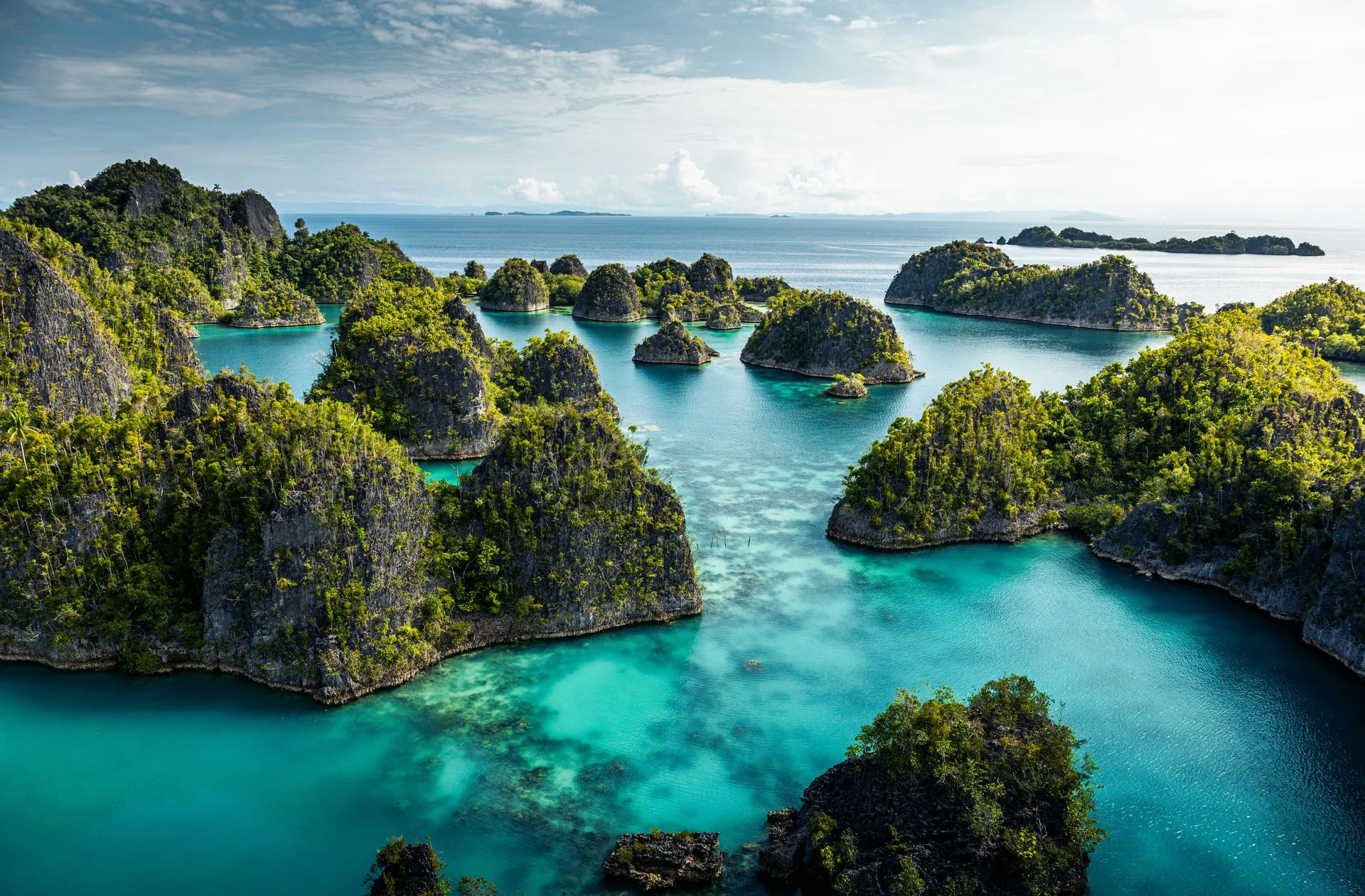
Raja Ampat
Raja Ampat, the “Four Kings,” is an archipelago of more than 1,500 islands at the edge of Indonesian West Papua. Its reefs sit in the heart of the Coral Triangle, where Pacific currents funnel nutrients into shallow seas and feed the world’s richest marine biodiversity. Diving here means gliding over colourful walls and coral gardens buzzing with more than 550 species of hard and soft corals and an estimated 1,500 fish species. You’ll meet blacktip and whitetip reef sharks on almost every dive, witness giant trevally and dogtooth tuna hunting schools of fusiliers, and encounter wobbegong “carpet” sharks, turtles, manta rays and dolphins. From cape pinnacles swarming with life to calm bays rich in macro critters, Raja Ampat offers endless variety. Above water, karst limestone islands and emerald lagoons provide spectacular scenery between dives.
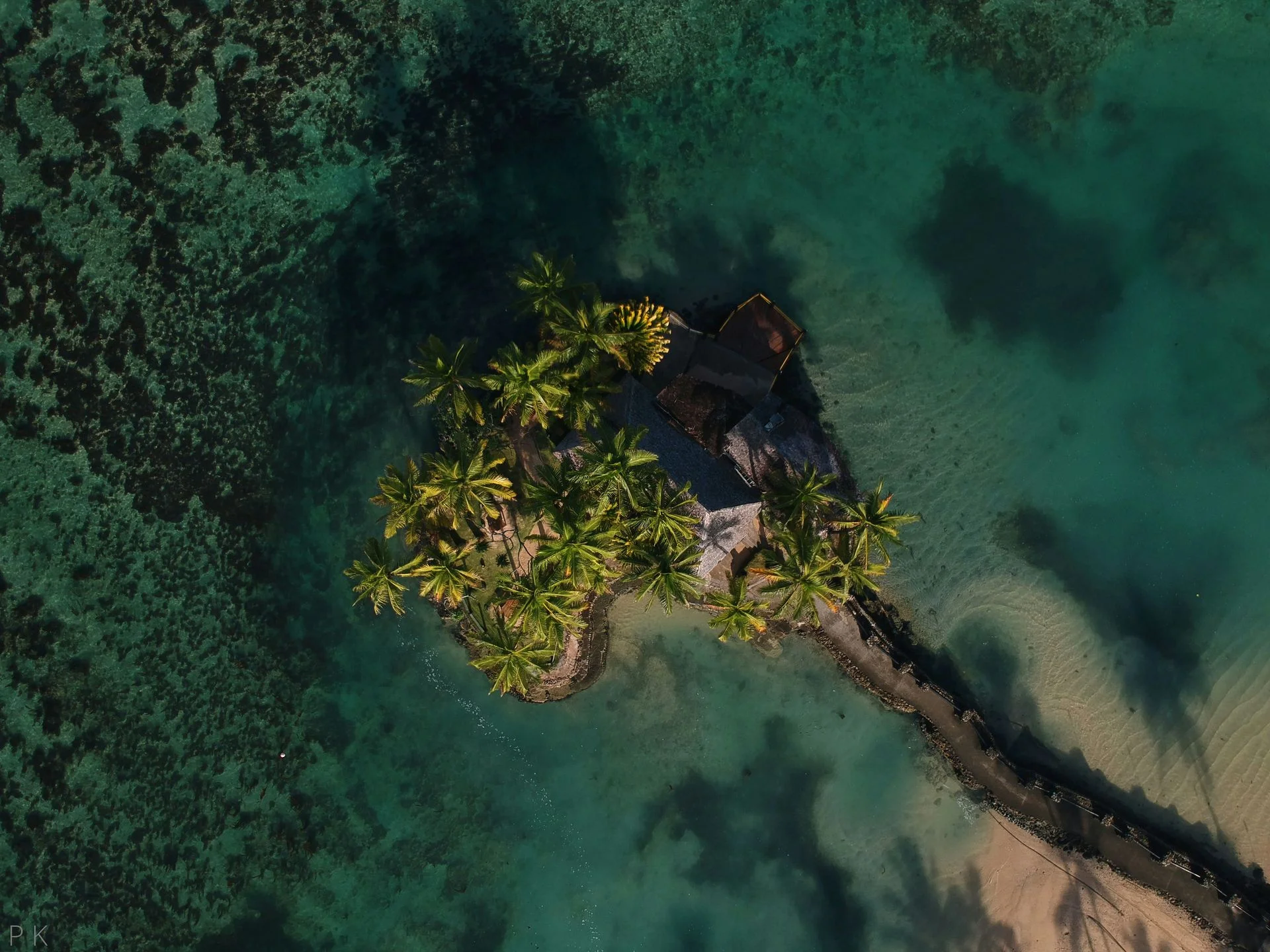
Fiji
Fiji sits like a necklace of more than 300 inhabited islands and 500 smaller islets in the heart of the South Pacific. Jacques Cousteau dubbed it the “soft coral capital of the world” for good reason – nutrient‑rich currents wash over sloping reefs, walls and bommies that erupt in shades of pink, purple, orange and yellow. The country’s dive sites range from kaleidoscopic coral gardens and pinnacles in the Somosomo Strait to shark dives in Beqa Lagoon, and remote passages in Bligh Water and the Koro Sea. Schools of barracuda, trevally and surgeonfish cruise above while manta rays, turtles, bull sharks and occasionally hammerheads glide past. Friendly locals and a relaxed island vibe make Fiji a favourite for both adventurous liveaboard trips and leisurely resort‑based diving.