
Christmas Tree Worm
Spirobranchus giganteus
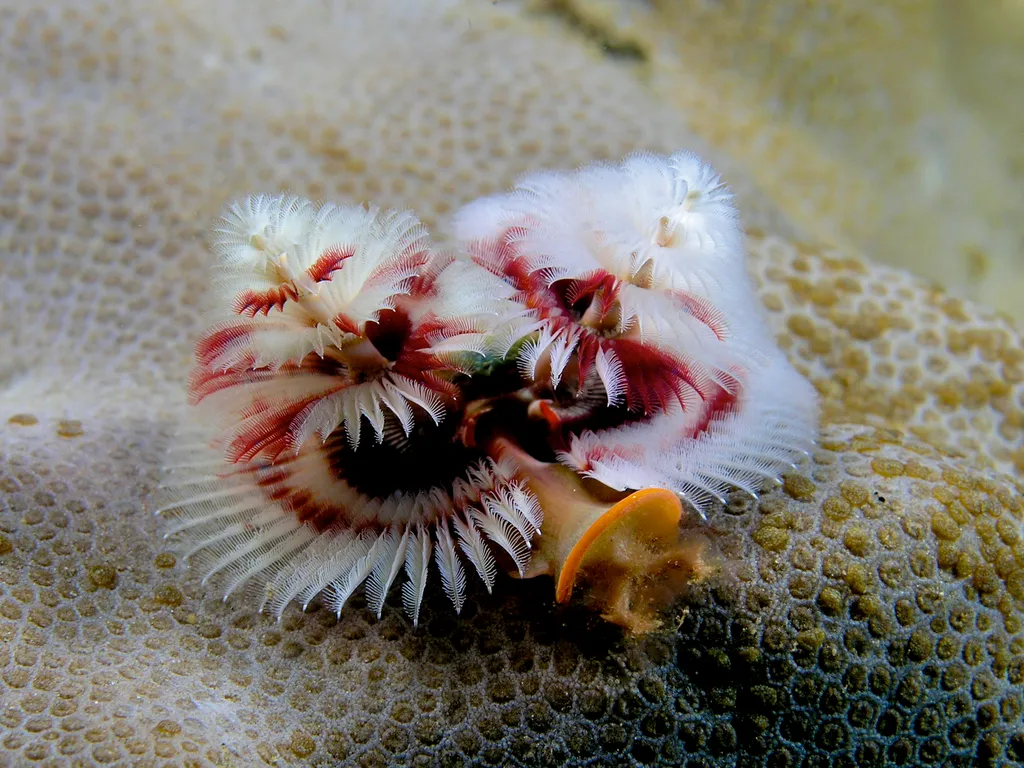
Photo by Nhobgood Nick Hobgood / CC BY-SA 3.0 via Wikimedia Commons
Imagine decorating a coral reef for the holidays, and nature beat you to it - that's the Christmas tree worm. With twin spirals of feathery tentacles that look exactly like miniature decorated firs, these tiny polychaete worms add splashes of neon color to coral heads worldwide. But these aren't just pretty reef ornaments - they're sophisticated filter-feeding machines permanently embedded in living coral, armed with hair-trigger reflexes that make them vanish in a literal blink. Touch the water near one, cast a shadow over it, even swim too close, and SNAP - it disappears into its coral fortress in milliseconds, leaving you wondering if you imagined the whole thing. For macro photographers and patient divers, Christmas tree worms offer an endless game of "now you see me, now you don't" that never gets old.
🔬Classification
📏Physical Features
🌊Habitat Info
⚠️Safety & Conservation
Identification Guide
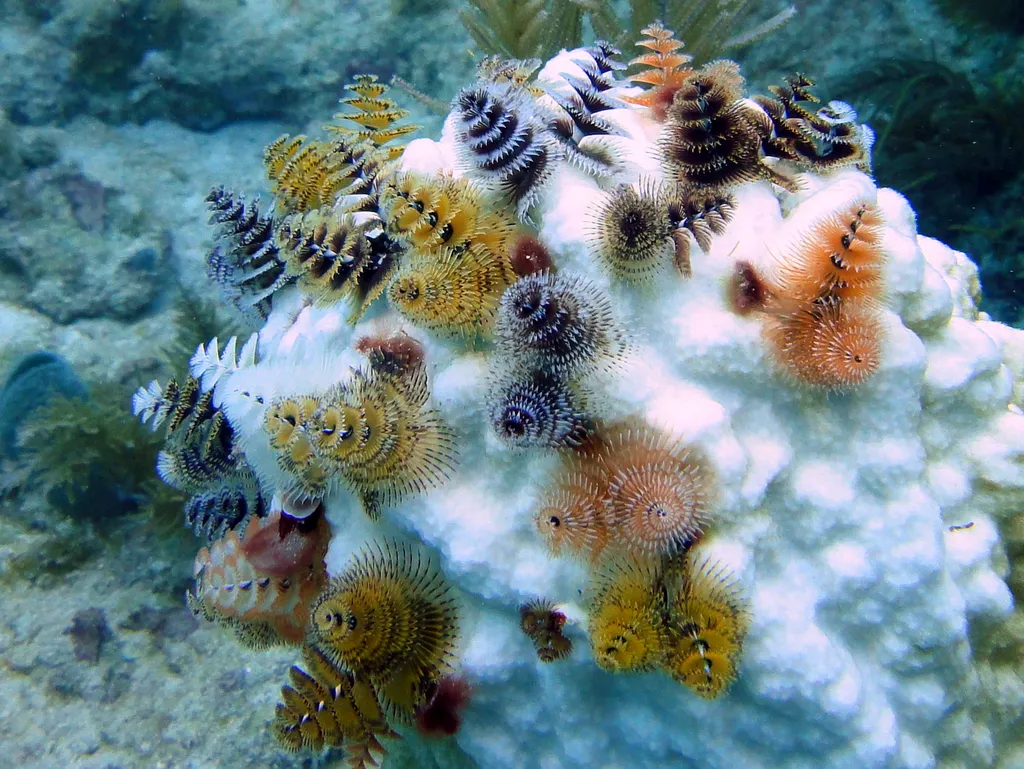
Photo by Matt Kieffer / CC BY-SA 2.0 via Wikimedia Commons
- Twin Spirals: Always two matching spiral plumes (radioles) per worm, never just one
- Perfect Symmetry: Both spirals are identical in color - if one is blue, both are blue
- Size Range: Visible crowns from tiny 1cm to impressive 4cm diameter spirals
- Color Matching: The two spirals always match each other perfectly
- Attachment: Growing directly out of coral surface, not on substrate
- Retraction Behavior: Disappears instantly when disturbed - distinctive identification feature
- Common Hosts: Look for them on massive coral heads, especially Porites coral
Top 10 Fun Facts about Christmas Tree Worm
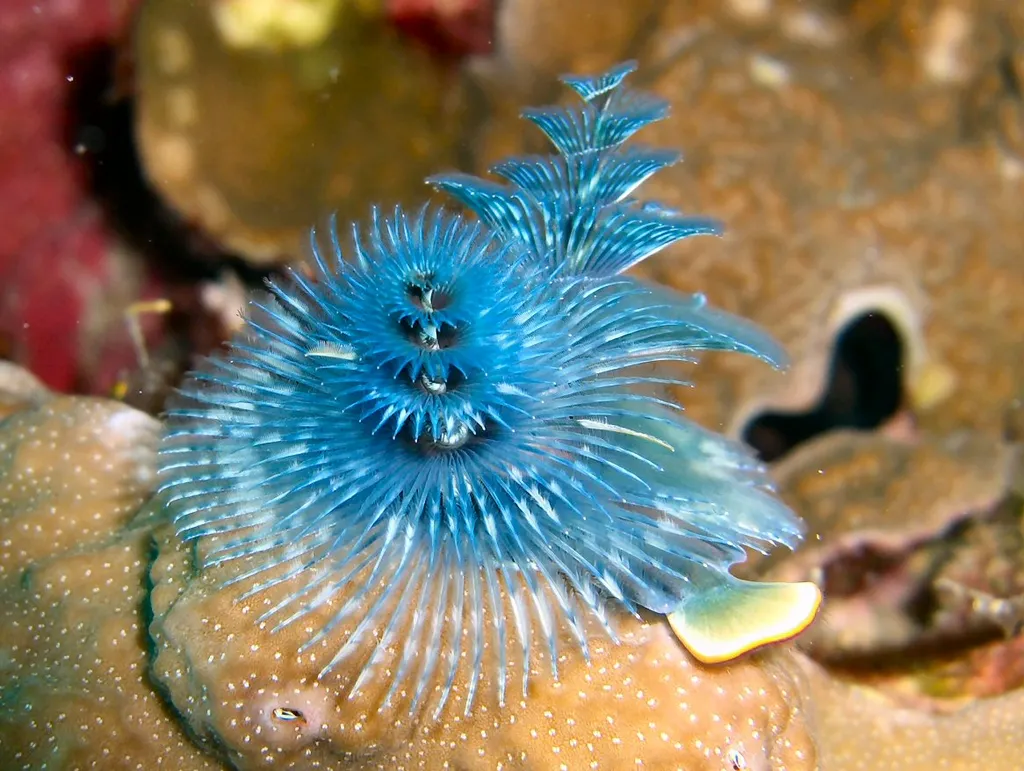
Photo by TimSC / CC BY 4.0 via Wikimedia Commons
1. The Fastest Retraction in the Reef
Christmas tree worms possess one of the fastest defensive reflexes in the ocean. At the slightest disturbance - a shadow passing overhead, a water current shift, or a nearby vibration - they can retract their entire crown in under 100 milliseconds. That's faster than a human eye blink (300-400 milliseconds)! This lightning-quick withdrawal is powered by specialized longitudinal muscles running the length of their tube. The worm essentially yanks itself downward like a reverse jack-in-the-box, disappearing into its calcareous tube before predators (or photographers) can react. This hair-trigger sensitivity makes them incredibly frustrating for underwater photographers but highly effective at avoiding predation.
2. Living Christmas Decorations: A Rainbow of Colors
Christmas tree worms come in an astonishing array of colors that would make any holiday decorator jealous. You can find them in vivid orange, yellow, electric blue, bright white, deep red, hot pink, chocolate brown, and countless color combinations. Even more remarkable: the two spiral crowns on a single worm are always perfectly color-matched - if one is neon yellow, its twin is identically neon yellow. Scientists aren't entirely sure what determines their color, though diet, symbiotic algae, and genetics all likely play roles. This color diversity makes coral heads look like underwater Christmas trees decorated with living ornaments.
3. The Operculum: Nature's Trapdoor
After retracting into its tube, a Christmas tree worm doesn't leave itself vulnerable. It possesses a specialized modified radiole called an operculum - essentially a built-in door or plug. This hardened, often spine-covered structure perfectly seals the tube entrance, creating an impenetrable barrier against predators like wrasses, butterflyfish, and crabs that would love to extract a meal. The operculum fits so precisely that it's virtually impossible for predators to pry the worm out. It's like having a personal castle with a drawbridge that slams shut and locks automatically whenever danger appears.
4. Coral Marriage: 'Til Death Do Us Part
Christmas tree worms have one of the most committed relationships in the ocean - with coral. When a free-swimming larva settles on a coral head, it immediately begins boring into the living coral, secreting a calcareous tube as it tunnels. Once established, it's there for life - literally. These worms are completely sedentary, unable to leave their tubes or relocate. If the coral dies, the worm dies with it. Over the worm's 30-40 year lifespan, the coral grows around and over its tube, eventually incorporating the worm completely into its structure. This permanent relationship means the worm's fate is inextricably linked to the health of its coral host.
5. Dual-Purpose Spirals: Eating and Breathing
Those beautiful spiral crowns aren't just for show - they're multifunctional life-support systems. The radioles (feathery tentacles forming the spirals) perform two critical jobs simultaneously. First, they act as gills for respiration, extracting oxygen from the water flowing through them. Second, they function as feeding apparatuses, trapping microscopic plankton, bacteria, and organic particles on tiny cilia. These captured food particles are transported along specialized grooves to the worm's mouth at the base of the spirals. It's like having your nose and mouth combined into an elegant spiral structure - highly efficient if somewhat alien in design.
6. Eyes on Their Gills: Optical Surveillance
Christmas tree worms have evolved a clever early warning system: they have light-sensitive eyespots scattered across their radioles. These aren't complex eyes capable of forming images, but they're extremely effective at detecting shadows and light changes - exactly what's needed to spot approaching predators. When a fish swims overhead, even its brief shadow triggers the worm's ultra-sensitive photoreceptors, initiating that lightning-fast retraction we discussed earlier. It's essentially "seeing" through its gills, allowing 360-degree shadow detection without needing a centralized visual system.
7. Broadcast Spawning: Underwater Fireworks
Christmas tree worms are either male or female (not hermaphrodites like many worms), and they reproduce through broadcast spawning. During spawning events, which often occur during full moons, both sexes simultaneously release clouds of eggs and sperm into the water column. This creates brief underwater "blizzards" of reproductive material. The fertilized eggs develop into free-swimming larvae that drift with currents for days or weeks before settling on a suitable coral head. This planktonic dispersal stage is the only time in their lives when Christmas tree worms are mobile - once they settle, they never move again.
8. Coral Reef Health Indicators
Because Christmas tree worms spend their entire lives embedded in a single coral colony and can live 30-40 years (some sources report over 40 years), they serve as excellent bioindicators of reef health. A coral head covered in healthy, colorful Christmas tree worms indicates a thriving coral colony that's been stable for decades. Conversely, coral bleaching events, pollution, or disease outbreaks that stress or kill corals also kill the worms living within them. Marine biologists sometimes survey Christmas tree worm populations to assess long-term reef condition and monitor recovery after disturbances.
9. Accidentally Beneficial Roommates
While Christmas tree worms are primarily just using coral as stable real estate, their presence may provide some incidental benefits to their hosts. Their filter feeding helps clean the water immediately around the coral, potentially removing harmful bacteria and excess particles. Their calcium carbonate tubes, once overgrown by coral, become incorporated into the coral's structure, possibly providing minor structural reinforcement. The worms' burrowing action might also create small water channels that could aid in waste removal and oxygen circulation within the coral colony - though scientists debate whether these benefits are significant enough to call the relationship truly symbiotic.
10. The Photographer's Challenge
Ask any underwater macro photographer about Christmas tree worms, and you'll hear tales of patience, frustration, and ultimate satisfaction. These worms present a unique photographic challenge: they're beautifully photogenic but maddeningly sensitive. The trick to photographing them involves approaching with glacial slowness, minimizing water disturbance, avoiding casting shadows, and sometimes using delayed triggers or remote controls. Many photographers describe it as the ultimate test of buoyancy control and breath discipline - even your exhaled bubbles hitting the coral can cause retraction. Successfully capturing that perfect macro shot of a Christmas tree worm's intricate spiral structure feels like a genuine achievement.
Diving & Observation Notes
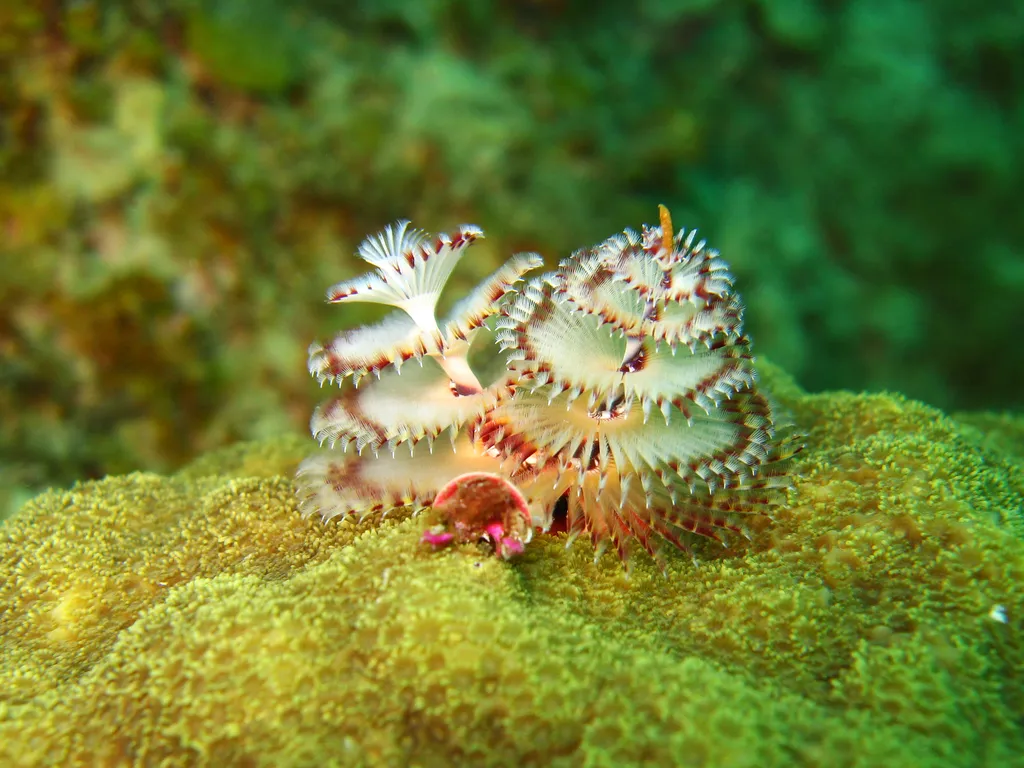
Photo by Kevin King / CC BY 2.0 via Wikimedia Commons
🧭 Finding Christmas Tree Worms
Ubiquitous on healthy tropical reefs, but easy to miss if you don't look closely.
- Target Massive Corals: Look on large, stable Porites (finger coral) and brain coral heads.
- Scan for Color: Their bright spirals (blue, yellow, orange) stand out against the brownish-green coral.
- Cluster Colonies: Often found in groups; if you see one, look for dozens more on the same coral head.
🤿 Approach & Behavior
- The Patience Game: They are extremely sensitive to pressure waves and shadows.
- Slow Approach: Move in slow motion. Any sudden fin kick or hand wave will trigger instant retraction.
- Shadow Control: Position yourself so your shadow doesn't fall on the worm.
- The "Blink" Test: If you (gently) wave water near them, they retract in <100ms. Wait 30-90s for them to re-emerge.
📸 Photo Tips
- Macro Essential: Use a 60-105mm macro lens to fill the frame with the spiral details.
- Side Lighting: Position strobes from the side to highlight the spiral texture and avoid flat lighting.
- Pre-Focus: Compose and focus from a distance, then drift in slowly to minimize disturbance.
- Get Both Spirals: Try to align your focal plane to get both twin spirals sharp.
⚠️ Ethics & Conservation
- No Touching: Never poke the worm or the coral to force retraction.
- Buoyancy Check: Watch your fins! These worms live on live coral, so don't crash into the reef.
- Reef Health Indicators: Their presence signals a healthy reef; bleaching kills them too.
Best Places to Dive with Christmas Tree Worm
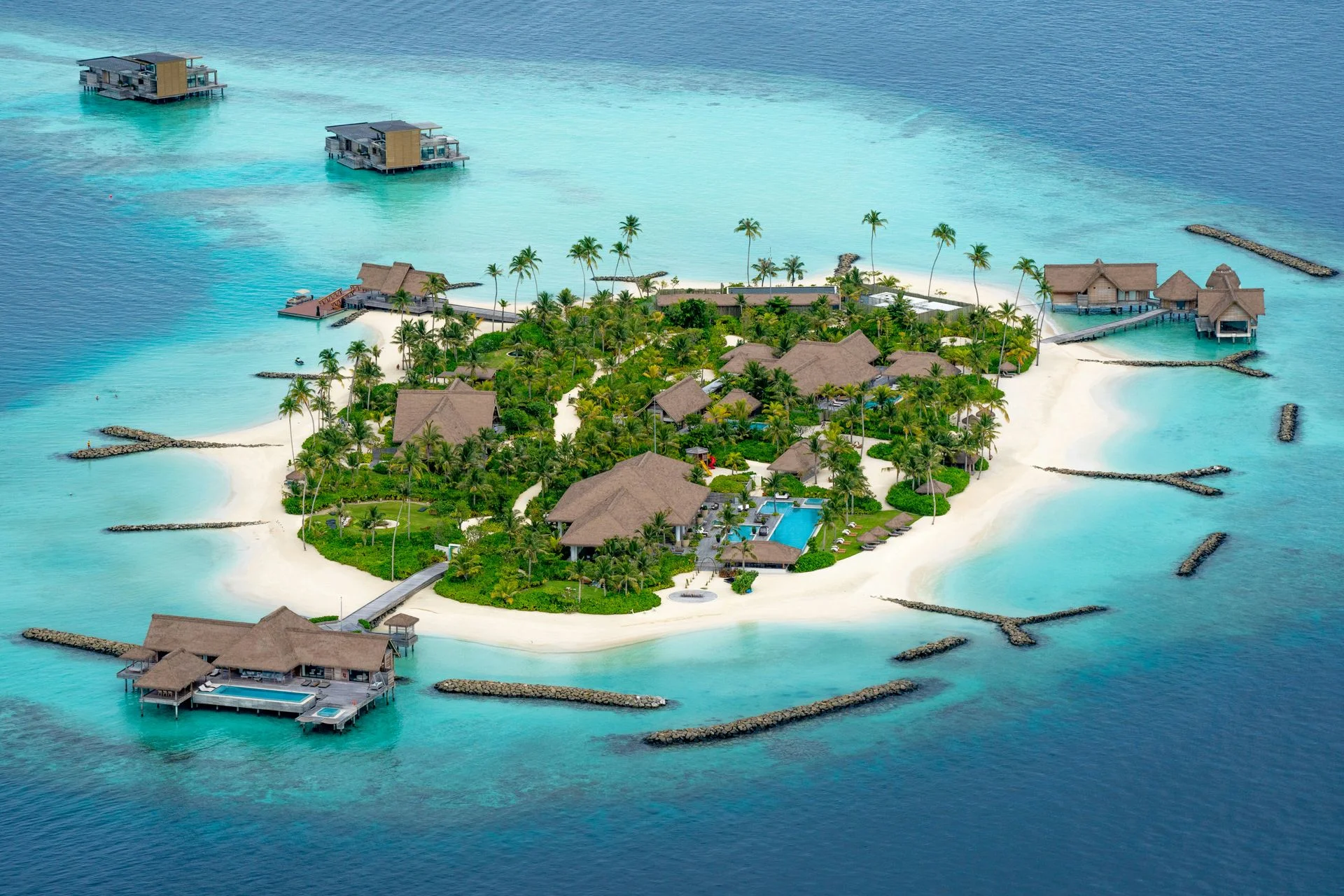
Maldives
Scattered across the Indian Ocean like strings of pearls, the Maldives’ 26 atolls encompass more than a thousand low‑lying islands, reefs and sandbanks. Beneath the turquoise surface are channels (kandus), pinnacles (thilas) and lagoons where powerful ocean currents sweep past colourful coral gardens. This nutrient‑rich flow attracts manta rays, whale sharks, reef sharks, schooling jacks, barracudas and every reef fish imaginable. Liveaboards and resort dive centres explore sites such as Okobe Thila and Kandooma Thila in the central atolls, manta cleaning stations in Baa and Ari, and shark‑filled channels like Fuvahmulah in the deep south. Diving here ranges from tranquil coral slopes to adrenalin‑fuelled drifts through current‑swept passes, making the Maldives a true pelagic playground.
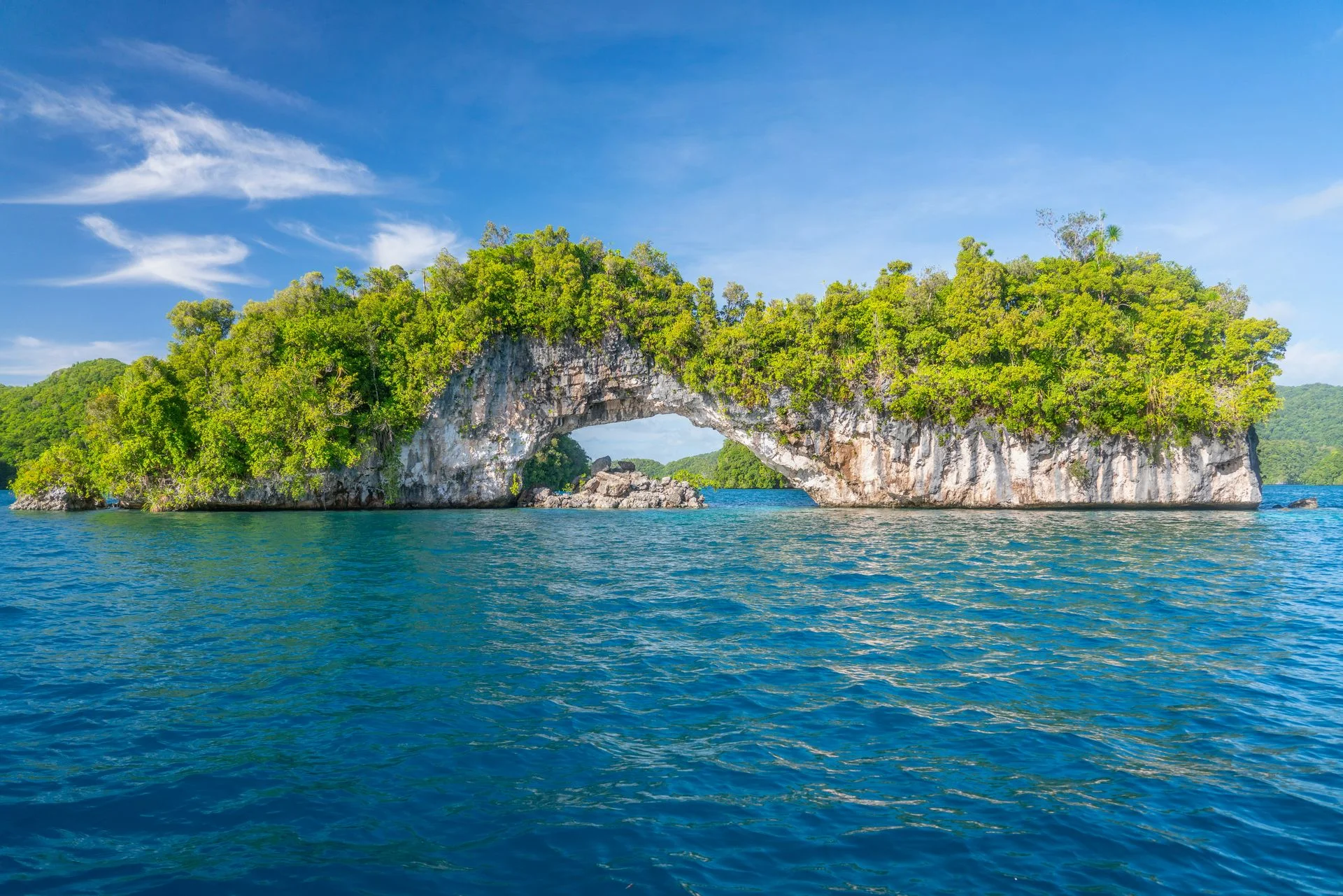
Palau
Rising out of the western Pacific at the meeting point of two great oceans, Palau is an archipelago of more than 500 jungle‑cloaked islands and limestone rock pinnacles. Its barrier reef and scattered outcrops create caverns, walls, tunnels and channels where nutrient‑rich currents sweep in from the Philippine Sea. These flows feed carpets of hard and soft corals and attract vast schools of jacks, barracudas and snappers, as well as an impressive cast of pelagics. Grey reef and whitetip sharks parade along the legendary Blue Corner; manta rays glide back and forth through German Channel’s cleaning stations; and Ulong Channel offers a thrill‑ride drift over giant clams and lettuce corals. Between dives you can snorkel among non‑stinging jellyfish in Jellyfish Lake or explore WWII ship and plane wrecks covered in colourful sponges.
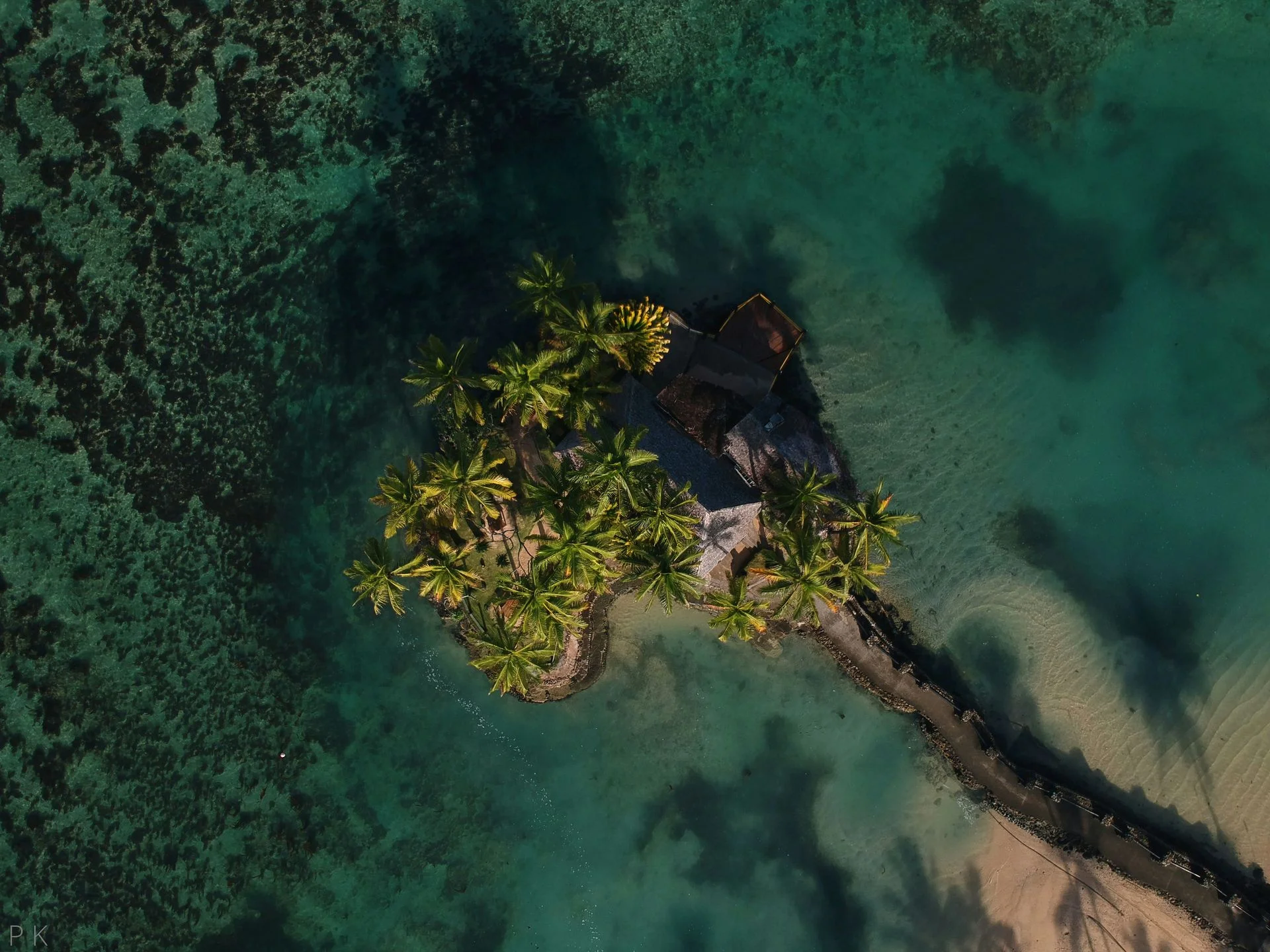
Fiji
Fiji sits like a necklace of more than 300 inhabited islands and 500 smaller islets in the heart of the South Pacific. Jacques Cousteau dubbed it the “soft coral capital of the world” for good reason – nutrient‑rich currents wash over sloping reefs, walls and bommies that erupt in shades of pink, purple, orange and yellow. The country’s dive sites range from kaleidoscopic coral gardens and pinnacles in the Somosomo Strait to shark dives in Beqa Lagoon, and remote passages in Bligh Water and the Koro Sea. Schools of barracuda, trevally and surgeonfish cruise above while manta rays, turtles, bull sharks and occasionally hammerheads glide past. Friendly locals and a relaxed island vibe make Fiji a favourite for both adventurous liveaboard trips and leisurely resort‑based diving.

Komodo
Komodo National Park is a diver’s paradise full of marine diversity: expect healthy coral gardens, reef sharks, giant trevallies, countless schools of fish, and frequent manta ray sightings at sites like Manta Point and Batu Bolong. Drift dives and dramatic reef structures add excitement, while both macro lovers and big-fish fans will find plenty to love. Above water, the wild Komodo dragons roam, giving a touch of prehistoric wonder to the whole trip.