
Dugong
Dugong dugon
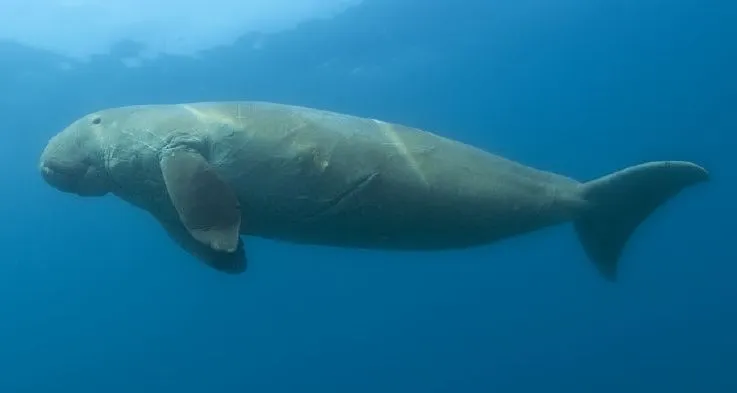
Photo by Geoff Spiby / www.geoffspiby.co.za / CC BY-SA 3.0 via Wikimedia Commons
The Dugong is the real-life mermaid—the gentle, seagrass-grazing marine mammal that inspired centuries of sailor's tales. With a fluked tail like a dolphin and a downturned snout perfect for rooting through seagrass beds, they are the ocean's "sea cows," spending their days peacefully munching on underwater meadows. Encountering a dugong underwater is like meeting a mythical creature that decided to become real—graceful, curious, and utterly peaceful.
🔬Classification
📏Physical Features
🌊Habitat Info
⚠️Safety & Conservation
Identification Guide
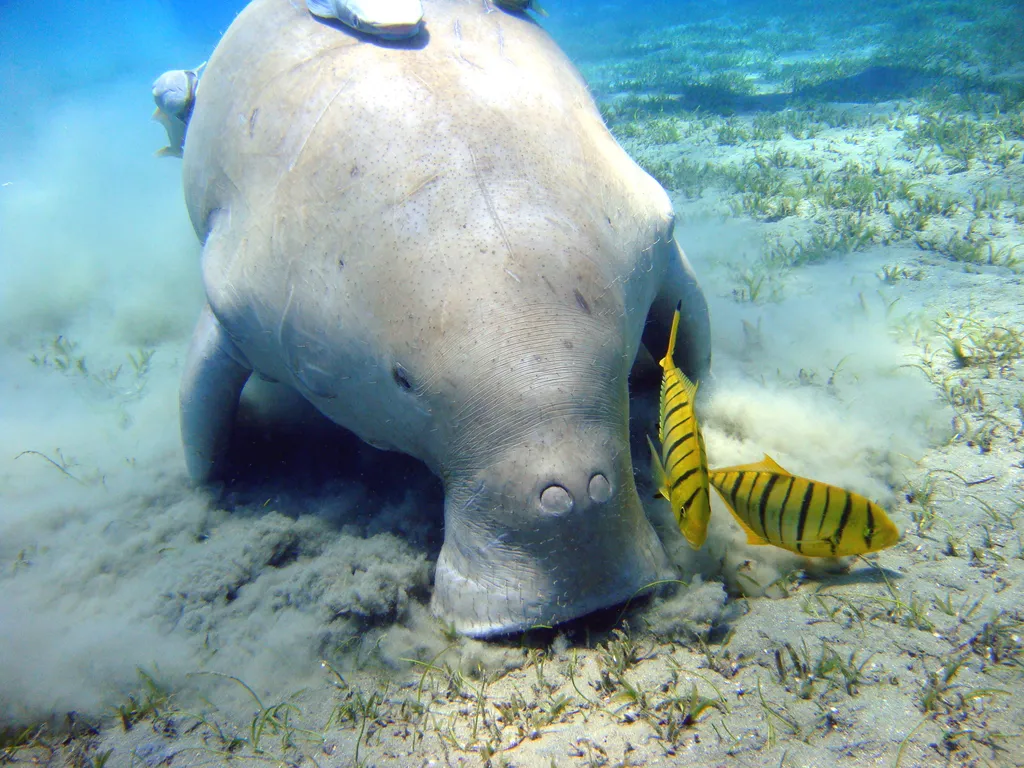
Photo by Julien Willem / CC BY-SA 3.0 via Wikimedia Commons
Field marks:
- Fluked Tail: The tail is forked (like a dolphin or whale), not paddle-shaped like a manatee.
- Downturned Snout: The snout curves downward, perfect for grazing on the seafloor.
- Smooth Skin: Unlike manatees, dugongs have smooth, relatively hairless skin.
- Size: Large, torpedo-shaped body, typically 2.5–3 meters long.
- Flippers: Small, paddle-like flippers without nails (manatees have nails on their flippers).
- Tusks: Adult males have small tusks protruding from the upper jaw (visible in older individuals).
Differences from Similar Species
- Manatee: Has a paddle-shaped tail (not forked); more flexible upper lip; can live in freshwater; has nails on flippers.
- Dolphin: Much smaller; has a dorsal fin (dugongs don't); breathes more frequently; more active and playful.
Juvenile vs. Adult
Juveniles are smaller and stay close to their mothers. Adult males develop tusks, and older individuals may have scars from tusk-fighting during mating season.
Top 10 Fun Facts about Dugong
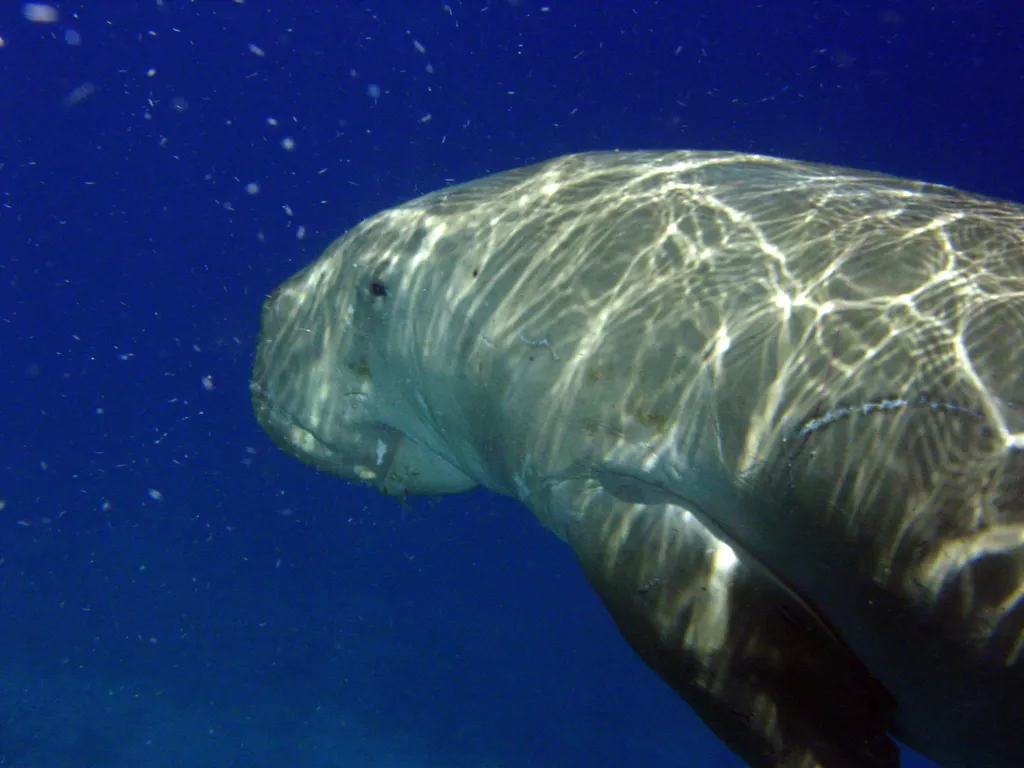
Photo by Vardhanjp / CC BY-SA 4.0 via Wikimedia Commons
1. The Original Mermaid
For centuries, lonely sailors mistook dugongs for mermaids. When a female dugong surfaces to nurse her calf, she holds the baby with her flippers while floating vertically—creating a silhouette that, from a distance, looks remarkably human. The rounded body, the way they "sit" in the water, and their gentle nature all contributed to the mermaid myth. Sorry, Ariel—the real mermaid is a 300-kg seagrass-eating mammal.
2. The Seagrass Lawnmower
Dugongs are the ocean's most dedicated gardeners. They eat 30 kilograms (66 pounds) of seagrass per day, consuming the entire plant including roots. This grazing actually helps maintain healthy seagrass meadows by preventing overgrowth and promoting new growth. They create "feeding trails"—bare patches in the seagrass beds that look like underwater crop circles.
3. The Forked Tail Advantage
Unlike their manatee cousins (paddle tail), dugongs have a fluked, dolphin-like tail. This gives them more power and speed, allowing them to travel longer distances between seagrass meadows. They can swim up to 10 km/h when needed, though they usually cruise at a leisurely 2–3 km/h.
4. Tusk Warriors
Adult male dugongs grow small tusks (up to 7 cm) that protrude from their upper jaw. During mating season, males use these tusks to fight each other for access to females. The scars you see on older males are battle wounds from these underwater duels. It's like medieval jousting, but with marine mammals.
5. The Breathing Rhythm
As mammals, they must surface to breathe. They typically dive for 1–4 minutes, but can hold their breath for up to 8 minutes when resting. Their nostrils are positioned on top of their snout and close automatically when diving. Watching a dugong surface, take a breath, and gracefully sink back down is one of the most peaceful sights in the ocean.
6. Mother's Milk
Female dugongs have teats located at the base of their flippers (armpits). When nursing, the mother and calf float vertically, with the baby positioned under the flipper. This behavior, combined with the mother's rounded body, is what likely inspired the mermaid legend. The calf nurses for up to 18 months.
7. The Lonely Grazer
Unlike manatees (which are social), dugongs are usually solitary or found in pairs. The largest groups you might see are mothers with calves or small feeding aggregations (3–6 individuals) in rich seagrass areas. They don't form large herds.
8. Deep Diving for Dinner
While they prefer shallow waters (1–10m), dugongs have been recorded diving to 37 meters (121 feet) to reach deep seagrass beds. They can stay submerged for several minutes while grazing, using their sensitive snout to root through the sediment.
9. The 70-Year Life
Dugongs are long-lived, with a lifespan of up to 70 years. They reach sexual maturity slowly (around 10 years for females, 6–17 years for males) and have a long gestation period (13–15 months). This slow reproductive rate makes them extremely vulnerable to population decline.
10. Cultural Guardians
In many cultures across their range (from East Africa to Australia), dugongs hold cultural significance. In Aboriginal Australian culture, they are considered sacred and are protected by traditional laws. In some areas, they are still hunted for meat and oil, which has contributed to their Vulnerable status.
Diving & Observation Notes
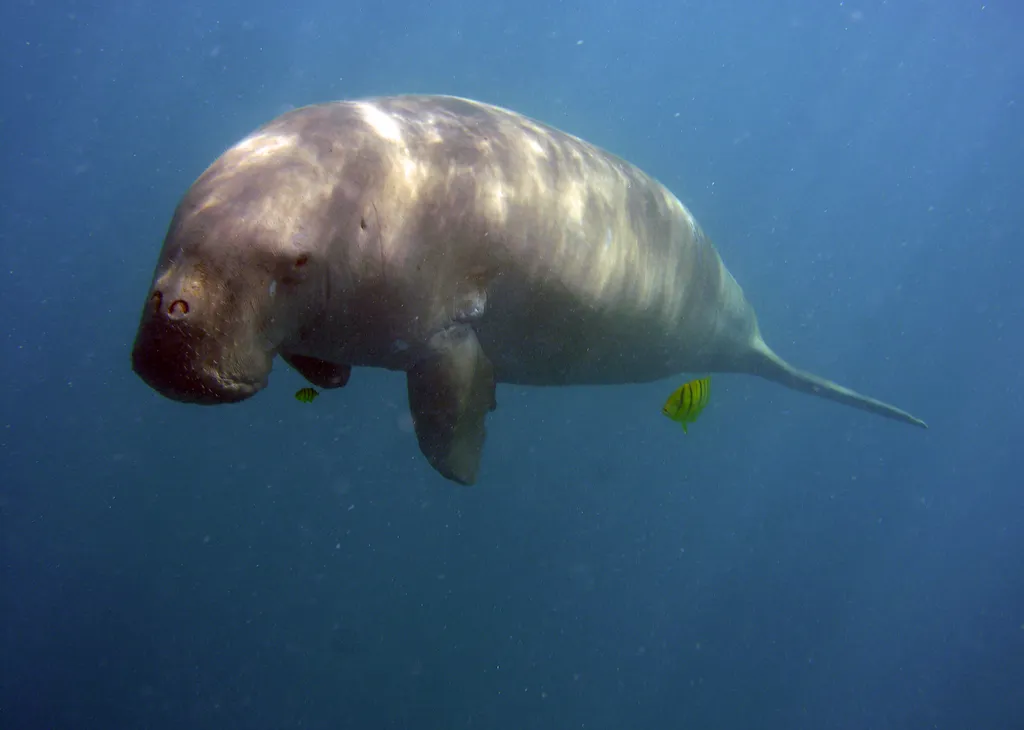
Photo by Vardhanjp / CC BY-SA 4.0 via Wikimedia Commons
🧭 Finding Dugongs
Look for seagrass meadows in shallow, warm coastal waters. They are most active during high tide when seagrass is more accessible. In the Red Sea, check areas like Abu Dabbab or Marsa Alam. In Australia, the Great Barrier Reef and Ningaloo are prime locations.
🤿 Approach & Behavior
- Stay Calm and Still: Dugongs are easily spooked. Move slowly and avoid sudden movements. If you're lucky, they might approach you out of curiosity.
- Surface Observation: Often, you'll see them from the surface first—look for a large, grey body and a fluked tail breaking the surface.
- Respect Distance: They are wild animals. Don't chase them or try to touch them. A stressed dugong will leave the area.
- Snorkeling is Best: Since they prefer shallow water (often 2–5m), snorkeling is often better than scuba for encounters.
📸 Photo Tips
- The Snout Shot: Get close (but not too close!) to capture their unique downturned snout and the texture of their skin.
- Feeding Behavior: If you catch one grazing, try to capture the moment it's rooting through the seagrass with its snout.
- Mother and Calf: If you're extremely lucky to see a mother with calf, this is a once-in-a-lifetime shot. The calf often rides on the mother's back.
- Natural Light: They're usually in shallow, clear water. Use natural light to your advantage.
⚠️ Ethics & Safety
- No Touching: They are protected in most areas. Touching can stress them and is often illegal.
- Boat Awareness: Many dugongs are injured by boat propellers. If you're on a boat, watch for surfacing dugongs and slow down in seagrass areas.
- Seagrass Protection: Don't anchor in seagrass beds. Use mooring buoys or anchor in sandy areas.
🌏 Local Guide Nuggets
- Red Sea (Egypt): Abu Dabbab Bay is famous for dugong encounters. The seagrass beds here are rich, and dugongs are often seen grazing.
- Australia (QLD/WA): The Great Barrier Reef and Shark Bay (Ningaloo) have healthy populations. Early morning or late afternoon are best times.
- Coron (Philippines): North of Coron in the Philippines is a dugong sanctuary, often seen grazing.
Best Places to Dive with Dugong
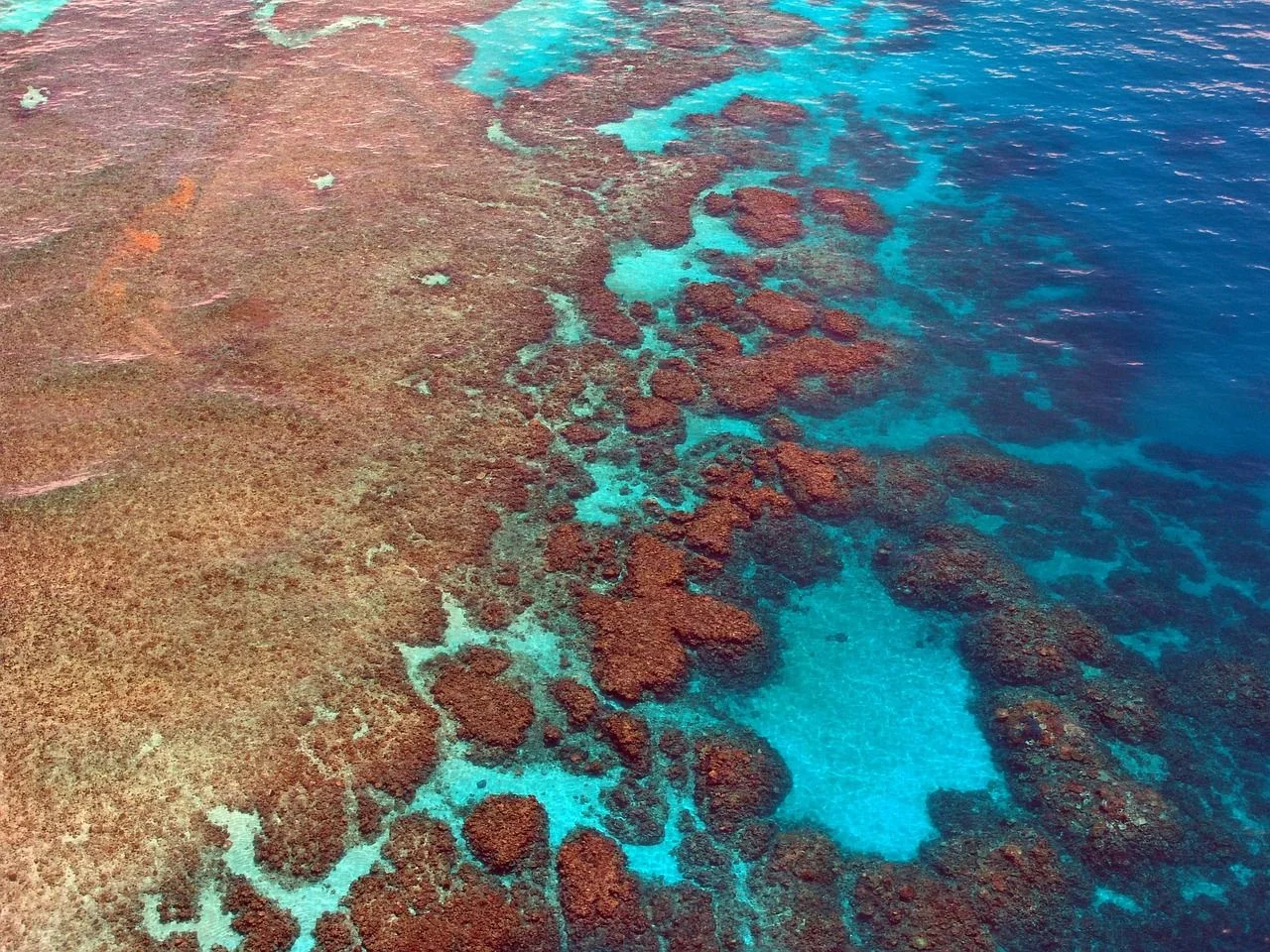
Great Barrier Reef
The Great Barrier Reef stretches for more than 2,300 km along Australia’s Queensland coast and is Earth’s largest coral ecosystem. With over 2,900 individual reefs, hundreds of islands, and a staggering diversity of marine life, it’s a bucket‑list destination for divers. Outer reef walls, coral gardens and pinnacles support potato cod, giant trevallies, reef sharks, sea turtles, manta rays and even visiting dwarf minke and humpback whales. Divers can explore historic wrecks like the SS Yongala, drift along the coral‑clad walls of Osprey Reef or mingle with friendly cod at Cod Hole. Whether you’re a beginner on a day trip from Cairns or an experienced diver on a remote liveaboard, the Great Barrier Reef offers unforgettable underwater adventures.

Marsa Alam
Once a sleepy fishing village on Egypt’s southern Red Sea coast, Marsa Alam is now synonymous with pristine reefs, encounters with sharks and dolphins, and long, deep walls far from the crowds. Stretching from El Quseir in the north to Wadi Lahami in the far south, the region encompasses famous offshore pinnacles such as Elphinstone and Daedalus, seagrass meadows where dugongs graze, and shallow bays sheltering green turtles. Compared to Hurghada and Sharm, the reef systems here are relatively untouched and the crowds thin, making Marsa Alam ideal for divers seeking pelagics, dramatic drop‑offs and a taste of the desert wilderness.
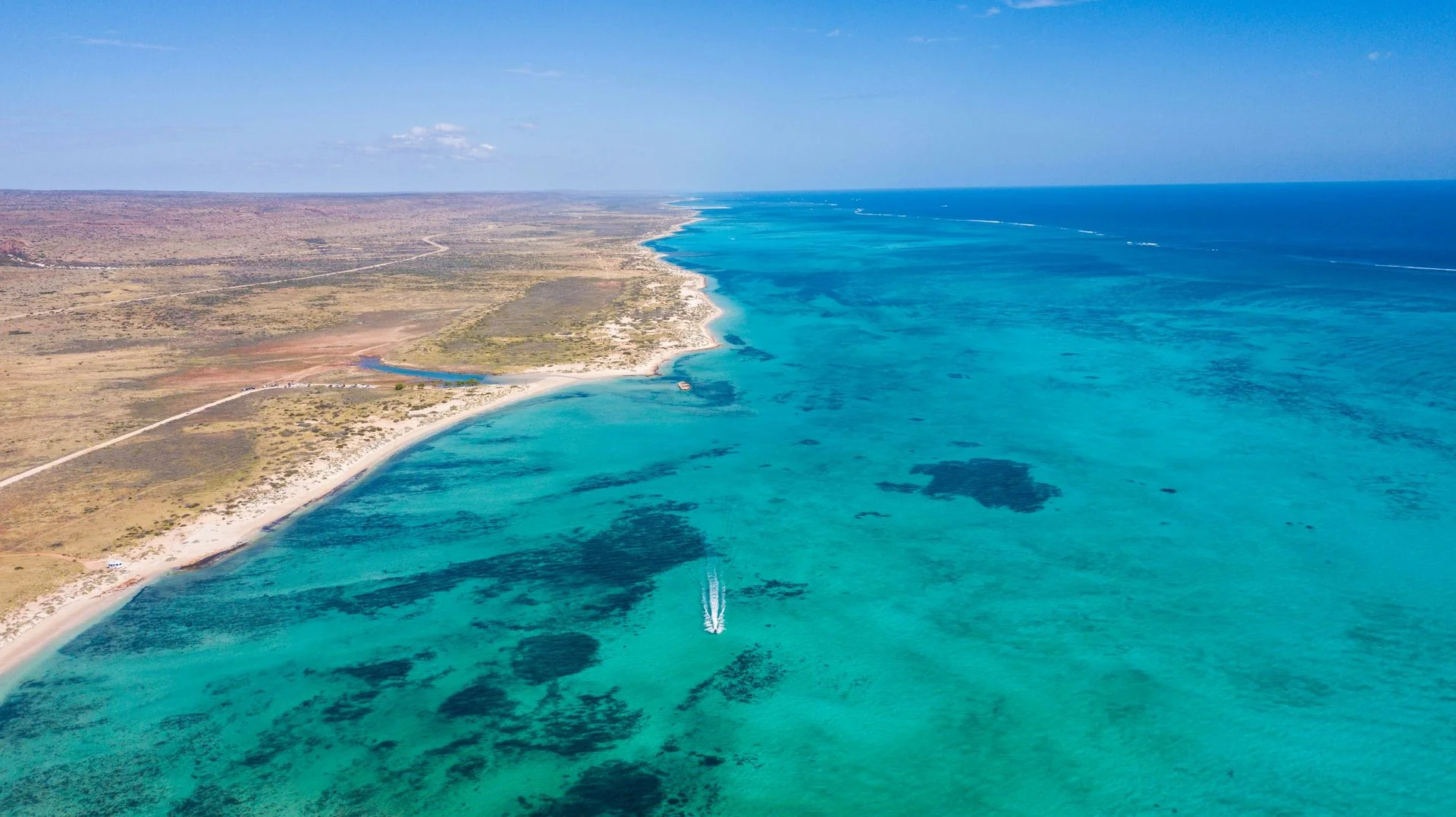
Ningaloo Reef
Stretching for over 300 km along Western Australia’s remote mid‑north coast, Ningaloo Reef is one of the world’s longest fringing reefs and a UNESCO World Heritage site. Unlike the barrier reefs further east, Ningaloo sits just off the beach—often no more than a few fin kicks from the shoreline—making its turquoise lagoons and outer drop‑offs incredibly accessible. The reef is famous for seasonal whale sharks (March–August) and migrating humpback whales (June–November), and its manta ray cleaning stations, dugongs, reef sharks, turtles and colourful coral gardens mean there’s always something to see. Dive operators based in Exmouth and Coral Bay offer day trips to sites like Central Station, The Canyon and the legendary Exmouth Navy Pier, as well as expeditions to the coral‑clad Murion Islands. With clear, warm water and gentle currents, Ningaloo is ideal for both snorkellers and divers seeking megafauna encounters without the crowds.
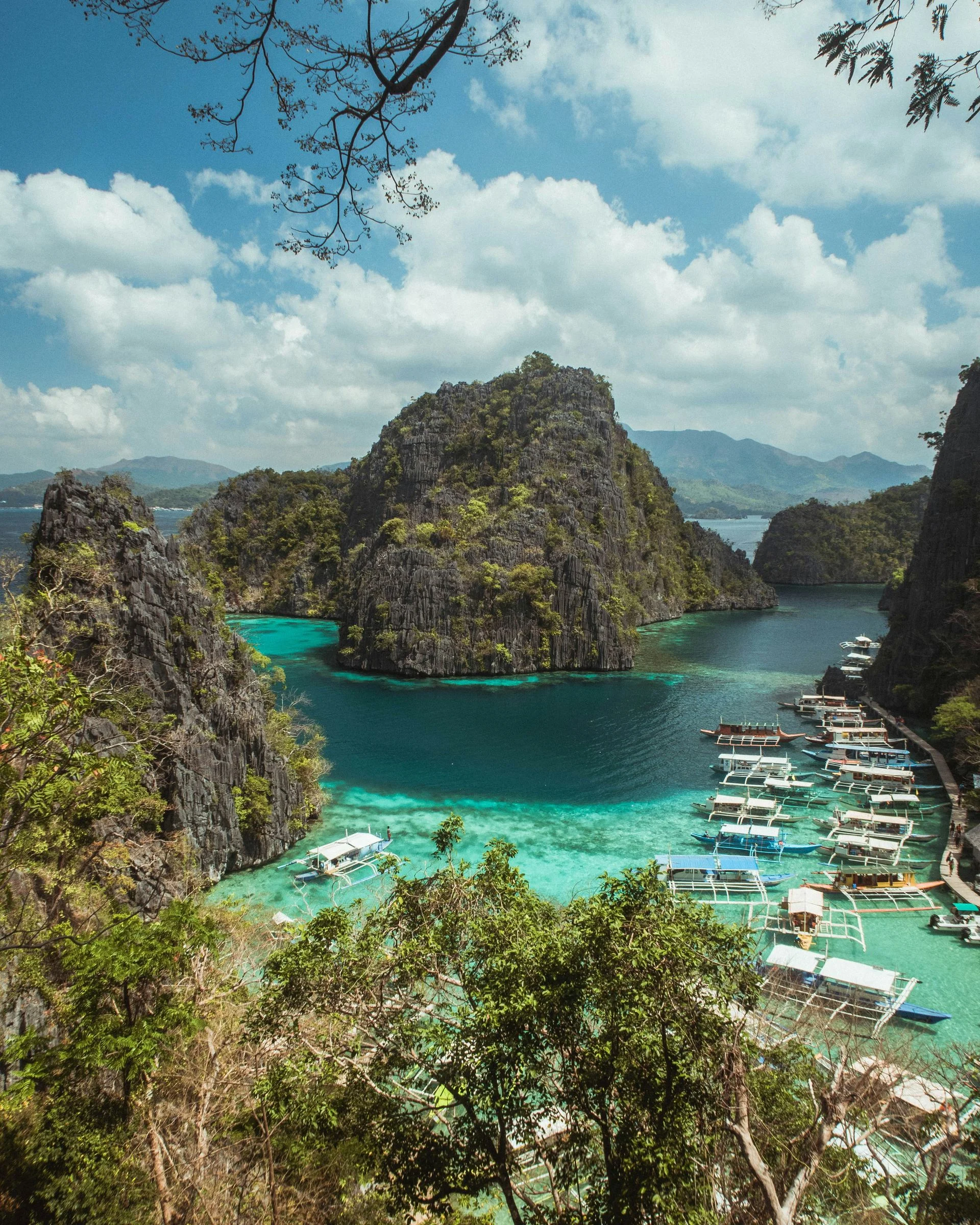
Coron
Coron, a mountainous island at the northern end of Palawan, is a world‑renowned destination for World War II wreck diving. On 24 September 1944, US carrier aircraft bombed and sank a Japanese supply fleet anchored in Coron Bay; today more than ten massive shipwrecks lie between 10 and 40 m, encrusted with corals and teeming with life. Divers can swim through cargo holds, engine rooms and anti‑aircraft guns of vessels like Morazan Maru, Akitsushima Maru and Olympia Maru, while schools of glassfish, batfish and macro critters shelter in the shadows. Beyond the wrecks, Coron offers freshwater lake dives like Barracuda Lake – famous for its clear water and thermocline – plus vibrant coral reefs around Sangat and Lusong Gunboat. With dramatic limestone peaks and turquoise lagoons above water, Coron combines history, scenery and adventure in one extraordinary trip.