Giant Trevally
Caranx ignobilis
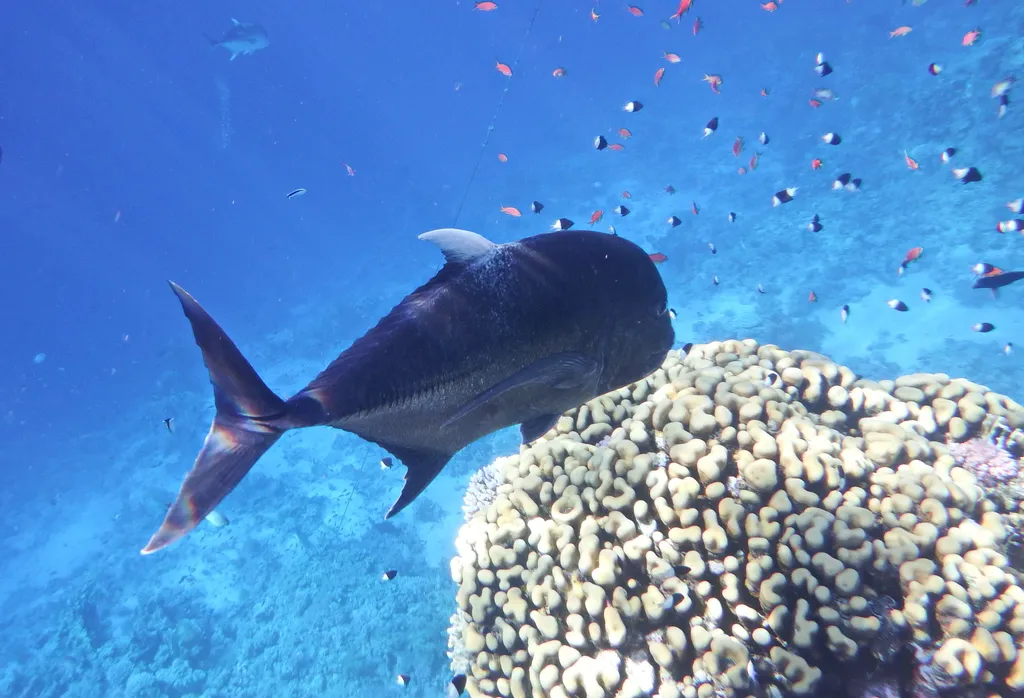
Photo by Kora27 / CC BY-SA 4.0 via Wikimedia Commons
If you've ever watched a silver torpedo materialize from the blue and detonate through a baitball at Castle Rock or Cape Kri, you already know why divers and anglers obsess over the Giant Trevally. Caranx ignobilis — universally abbreviated GT — is the apex jack of the Indo-Pacific: a deep-bodied, steep-headed predator that can exceed 170 cm and 80 kg, cruise reef edges like a submarine, then accelerate from zero to blinding speed in a single tail beat.
Unlike schooling jacks that mob prey in hundreds, mature GTs are mostly solitary hunters patrolling territories along drop-offs and current channels. They shadow sharks, seals, and even divers to flush fish from cover. Their color shifts from reflective silver to charcoal or jet black when hunting or asserting dominance — a visual warning that this is not a passive reef fish drifting with the tide.
For underwater photographers and adrenaline divers, GT encounters define the best current dives in Komodo, Raja Ampat, and the Maldives. Respect the power: a charging GT can ram prey, reef structure, or anything it misidentifies as competition.
🔬Classification
📏Physical Features
🌊Habitat Info
⚠️Safety & Conservation
Identification Guide
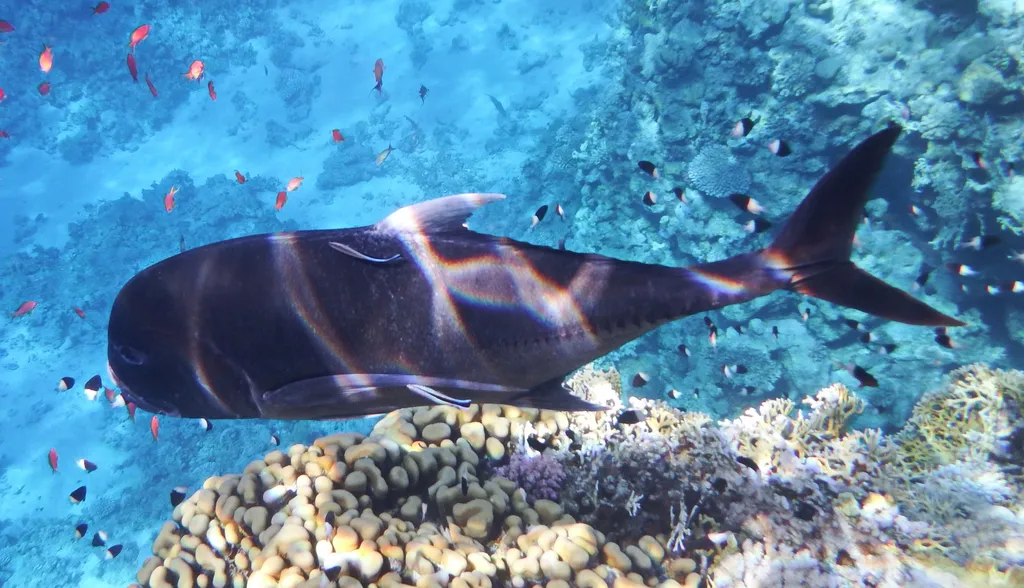
Photo by Kora27 / CC BY-SA 4.0 via Wikimedia Commons
Field Marks
- Steep head profile with prominent lips — looks like it's frowning at you
- Large size — if it's over 80 cm and built like a refrigerator, suspect GT over other trevallies
- Black spot at the base of the pectoral fin (key ID feature vs. other Caranx)
- Straight, scuted lateral line on the posterior body — hard armored plates along the tail base
- Forked tail reinforced by a prominent keel scute
Color Phases
- Silver phase: Reflective silver-grey, occasional dark spots on back
- Dusky/golden phase: Bronze or golden wash, common on reef flats
- Black phase: Mature males turn charcoal to jet black — especially when hunting or dominant
vs. Similar Species
- Bluefin Trevally (C. melampygus): Brighter blue fins and spots; smaller; more reef-associated
- Bigeye Trevally (C. sexfasciatus): Dark bars on head; schools in large numbers; smaller head profile
- Golden Trevally (Gnathanodon speciosus): Yellow-black bars; juveniles follow sharks; different genus
Top 10 Fun Facts about Giant Trevally
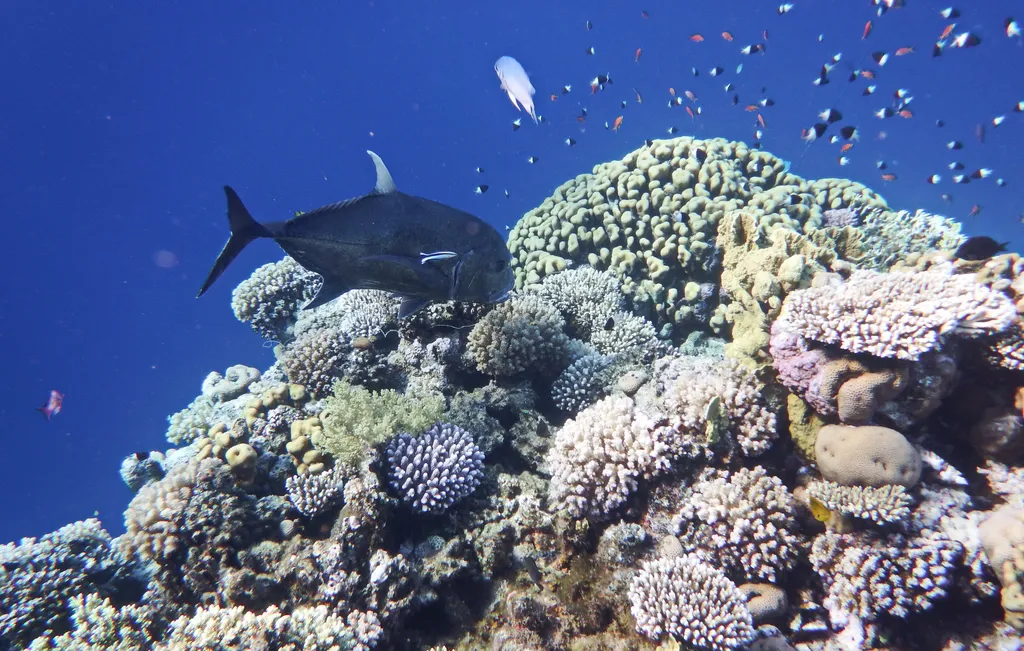
Photo by Kora27 / CC BY-SA 4.0 via Wikimedia Commons
1. GT — Three Letters, Legendary Status
In dive and sport-fishing circles worldwide, "GT" needs no explanation. The Giant Trevally is the largest species in genus Caranx, and its reputation as pound-for-pound one of the hardest-fighting fish has made it a bucket-list species from the Seychelles to Christmas Island.
2. The Bird Hunter
Perhaps the most viral GT behavior: launching out of the water to snatch seabirds. On remote Pacific atolls, GTs patrol shallow lagoons where terns hunt baitfish. When a bird swoops low, the fish explodes upward in a timed leap — a split-second calculation of trajectory, speed, and jaw position that stunned researchers and made BBC footage iconic.
3. Shadow Hunting
GTs are intelligent opportunists. They follow monk seals, reef sharks, groupers, and even human divers, using the disturbance to flush prey from coral crevices. The primary predator does the work; the GT grabs the escapees. Some individuals learn to associate divers with flushed fish and shadow dive groups persistently.
4. Black Phase Dominance
Mature male GTs can undergo a dramatic color transformation to jet black. This "black phase" correlates with dominance, territorial behavior, and breeding condition. Encountering a 1.2 m black-phase GT cruising a drop-off is one of diving's most intimidating fish sightings — a dark submarine with attitude.
5. Explosive Acceleration
GTs cruise slowly, then accelerate from standstill to attack speed in one tail stroke. Their deep, muscular body and rigid forked tail generate enormous thrust. Divers at current-swept sites like Batu Bolong witness these blitz attacks on fusilier schools — silver flashes, torn water, and panicked baitfish exploding in every direction.
6. From Estuary to Open Ocean
Juvenile GTs tolerate brackish water and even low-salinity estuaries, sometimes hundreds of kilometers from the sea. They school in turbid inshore waters before transitioning to solitary offshore life on seaward reefs and drop-offs beyond 80 m. This life-history split means you might see fingerlings in a river mouth and trophy adults on the same coastline's outer reef.
7. Ulua — Hawaiian Cultural Icon
In Hawaii, GTs are called ulua and hold deep cultural significance. Historically a food fish for royalty, ulua feature in Hawaiian proverbs and fishing traditions. Juvenile ulua are among the most common large carangids in protected Hawaiian bays — a reminder that GTs thrive where fishing pressure is managed.
8. Ciguatera Caution
Large GTs in certain regions — especially around coral reef islands — can accumulate ciguatoxin from dinoflagellates in the food chain. While not a diving concern, it's why locals in the Pacific sometimes avoid eating trophy-sized GTs. The fish itself is not venomous; the toxin comes from its diet of reef-associated prey.
9. Artificial Reef Magnet
Studies in Taiwan found GTs among the dominant species around artificial reef structures. They patrol predictable structures — natural pinnacles, wrecks, channel mouths — making them reliable encounters at sites with defined topography and current.
10. Nintendo Fame
GTs achieved pop-culture status as one of the rarest and most valuable fish in Animal Crossing. Gamers who spent hours fishing virtual GTs often become genuinely curious about the real animal — a quirky gateway to marine awareness.
Diving & Observation Notes
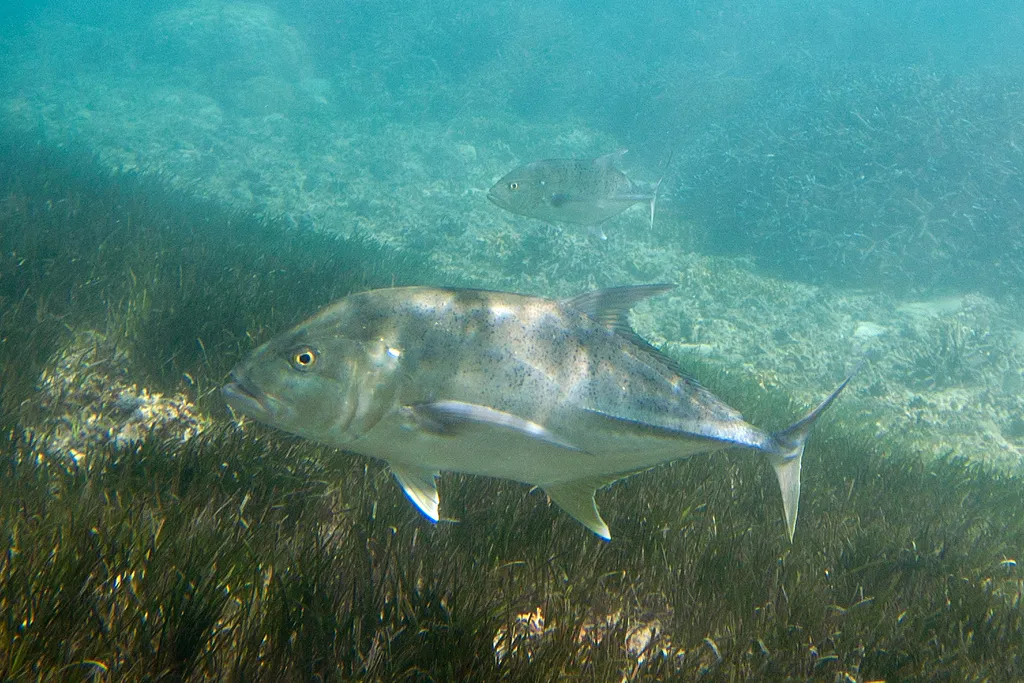
Photo by Paul Asman and Jill Lenoble / CC BY 2.0 via Wikimedia Commons
🧭 Where to Find GTs
Target current-swept channels and pinnacles at slack-plus-current windows. Top sites: Castle Rock and Batu Bolong (Komodo), Cape Kri and Blue Magic (Raja Ampat), channel thilas in the Maldives, Yongala and Osprey Reef (Great Barrier Reef), and house reefs off Sharm el Sheikh.
🌊 Reading Current & Position
GTs face into the current on reef points and drop-off lips. Hook in at the upstream edge of a pinnacle and let fish come to you — chasing a hunting GT through a baitball in heavy current is a recipe for separation from the group. Dawn and dusk dives often produce the most aggressive feeding behavior.
🤿 Approach & Safety
- GTs are curious but powerful — a charging fish can collide with divers accidentally
- Never feed GTs — habituation creates aggressive begging behavior (documented at some Pacific sites)
- Keep fins and hands in — a startled GT may strike at flash or movement
- Black-phase males near territory are best observed from the side, not head-on
📸 Photo Tips
- Fast shutter speed (1/250s minimum) — attack bursts are instantaneous
- Shoot into the blue for silver reflection; black-phase GTs need exposure compensation
- Wide-angle with diver for scale — a 1 m GT next to a diver tells the size story
- Pre-focus on cleaning stations and channel edges where GTs patrol predictably
⚠️ Ethics
GT populations face heavy sport-fishing pressure globally. Support operators and destinations with size limits and no-take zones. If you encounter GTs at sites with controversial fish-feeding programs, understand that fed GTs become aggressive toward divers and snorkelers.
Best Places to Dive with Giant Trevally
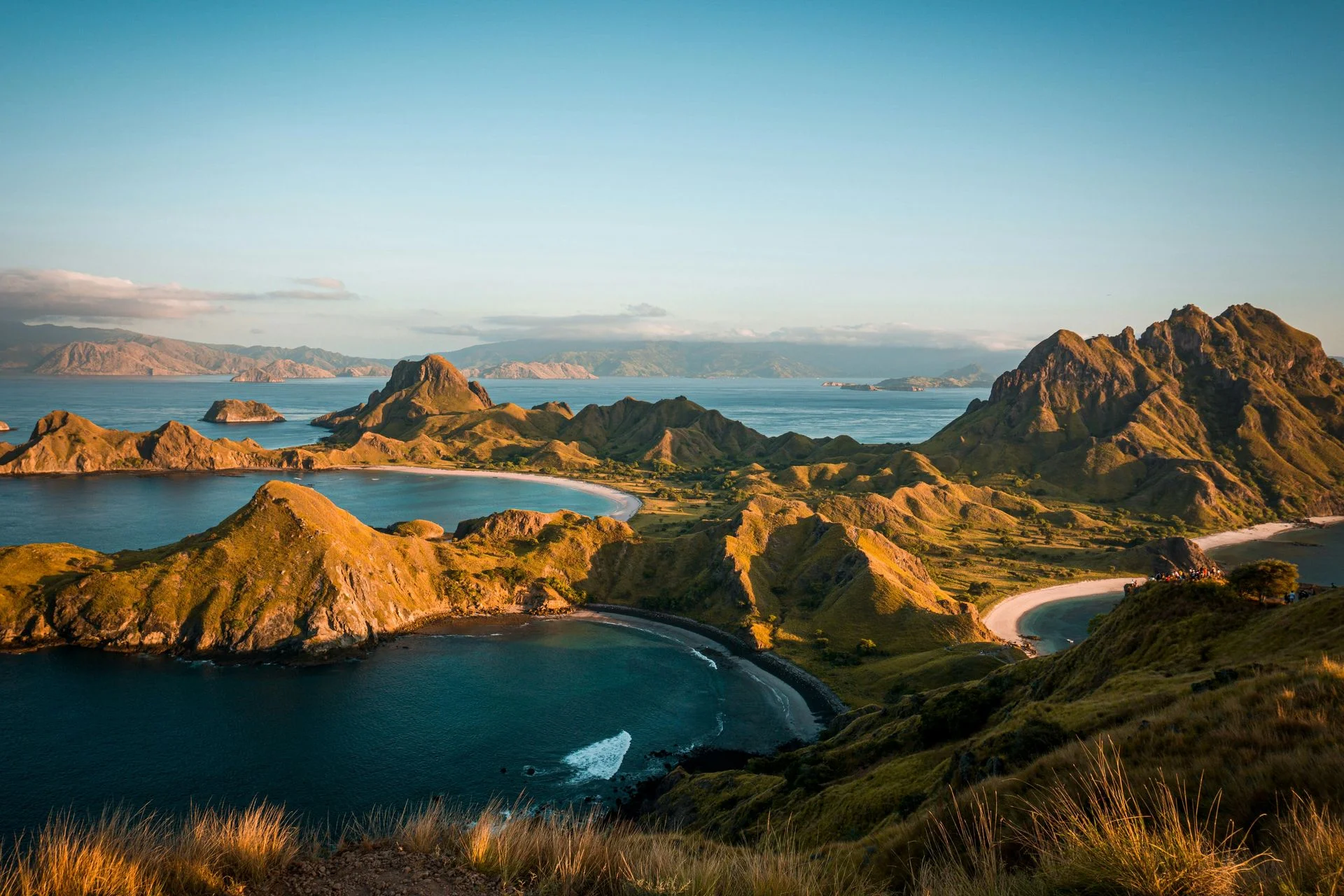
Komodo
Komodo National Park is a diver’s paradise full of marine diversity: expect healthy coral gardens, reef sharks, giant trevallies, countless schools of fish, and frequent manta ray sightings at sites like Manta Point and Batu Bolong. Drift dives and dramatic reef structures add excitement, while both macro lovers and big-fish fans will find plenty to love. Above water, the wild Komodo dragons roam, giving a touch of prehistoric wonder to the whole trip.
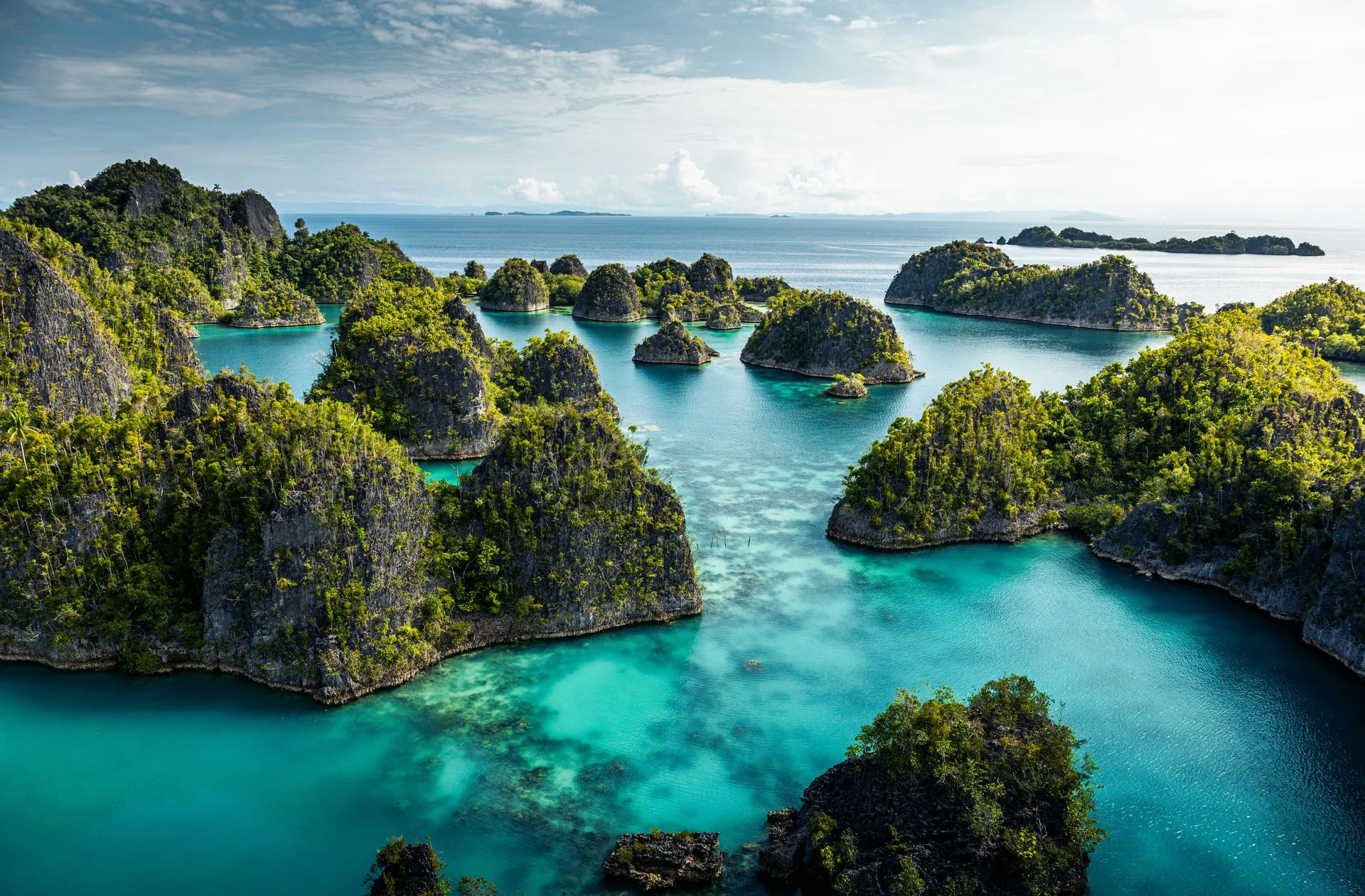
Raja Ampat
Raja Ampat, the “Four Kings,” is an archipelago of more than 1,500 islands at the edge of Indonesian West Papua. Its reefs sit in the heart of the Coral Triangle, where Pacific currents funnel nutrients into shallow seas and feed the world’s richest marine biodiversity. Diving here means gliding over colourful walls and coral gardens buzzing with more than 550 species of hard and soft corals and an estimated 1,500 fish species. You’ll meet blacktip and whitetip reef sharks on almost every dive, witness giant trevally and dogtooth tuna hunting schools of fusiliers, and encounter wobbegong “carpet” sharks, turtles, manta rays and dolphins. From cape pinnacles swarming with life to calm bays rich in macro critters, Raja Ampat offers endless variety. Above water, karst limestone islands and emerald lagoons provide spectacular scenery between dives.
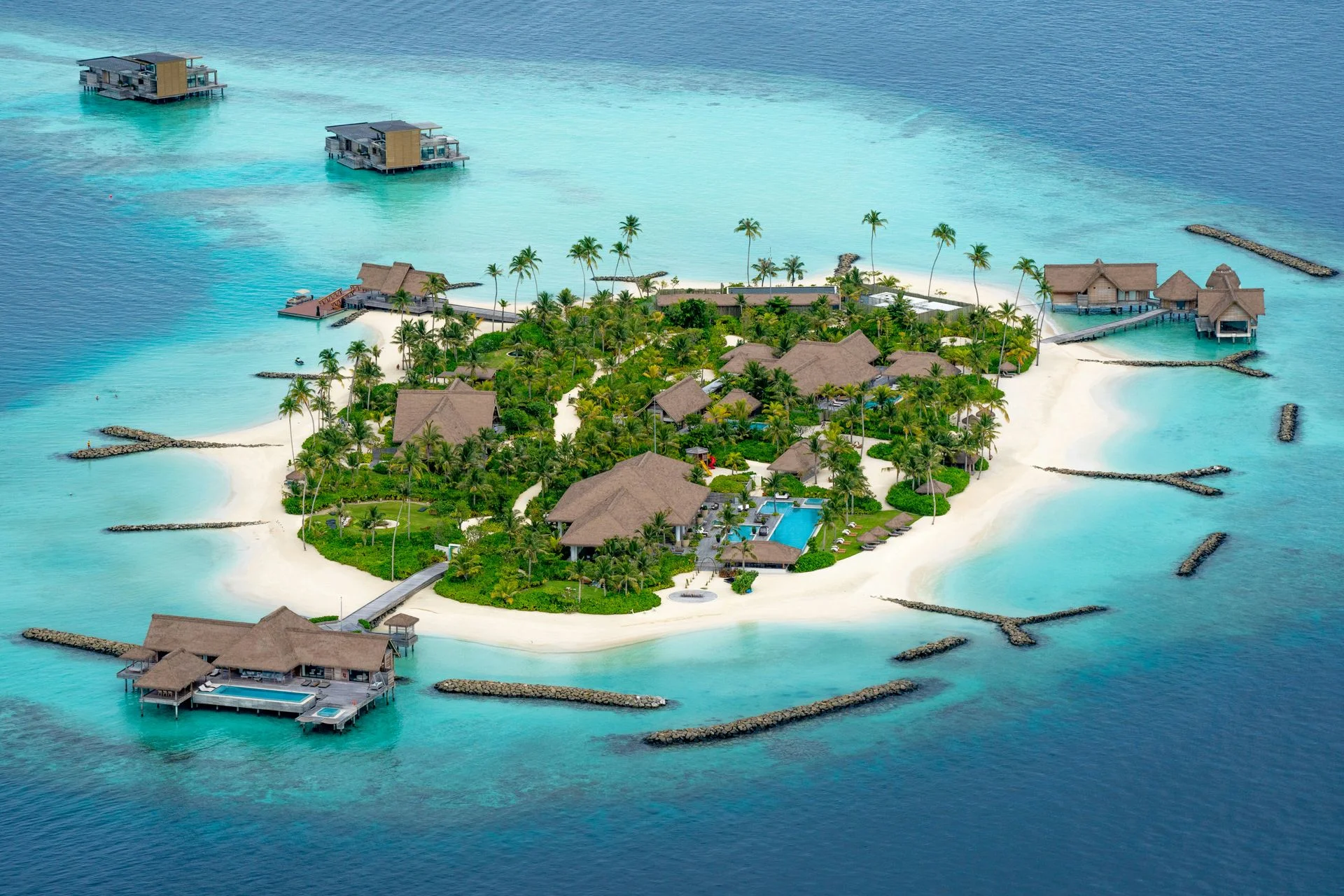
Maldives
Scattered across the Indian Ocean like strings of pearls, the Maldives’ 26 atolls encompass more than a thousand low‑lying islands, reefs and sandbanks. Beneath the turquoise surface are channels (kandus), pinnacles (thilas) and lagoons where powerful ocean currents sweep past colourful coral gardens. This nutrient‑rich flow attracts manta rays, whale sharks, reef sharks, schooling jacks, barracudas and every reef fish imaginable. Liveaboards and resort dive centres explore sites such as Okobe Thila and Kandooma Thila in the central atolls, manta cleaning stations in Baa and Ari, and shark‑filled channels like Fuvahmulah in the deep south. Diving here ranges from tranquil coral slopes to adrenalin‑fuelled drifts through current‑swept passes, making the Maldives a true pelagic playground.
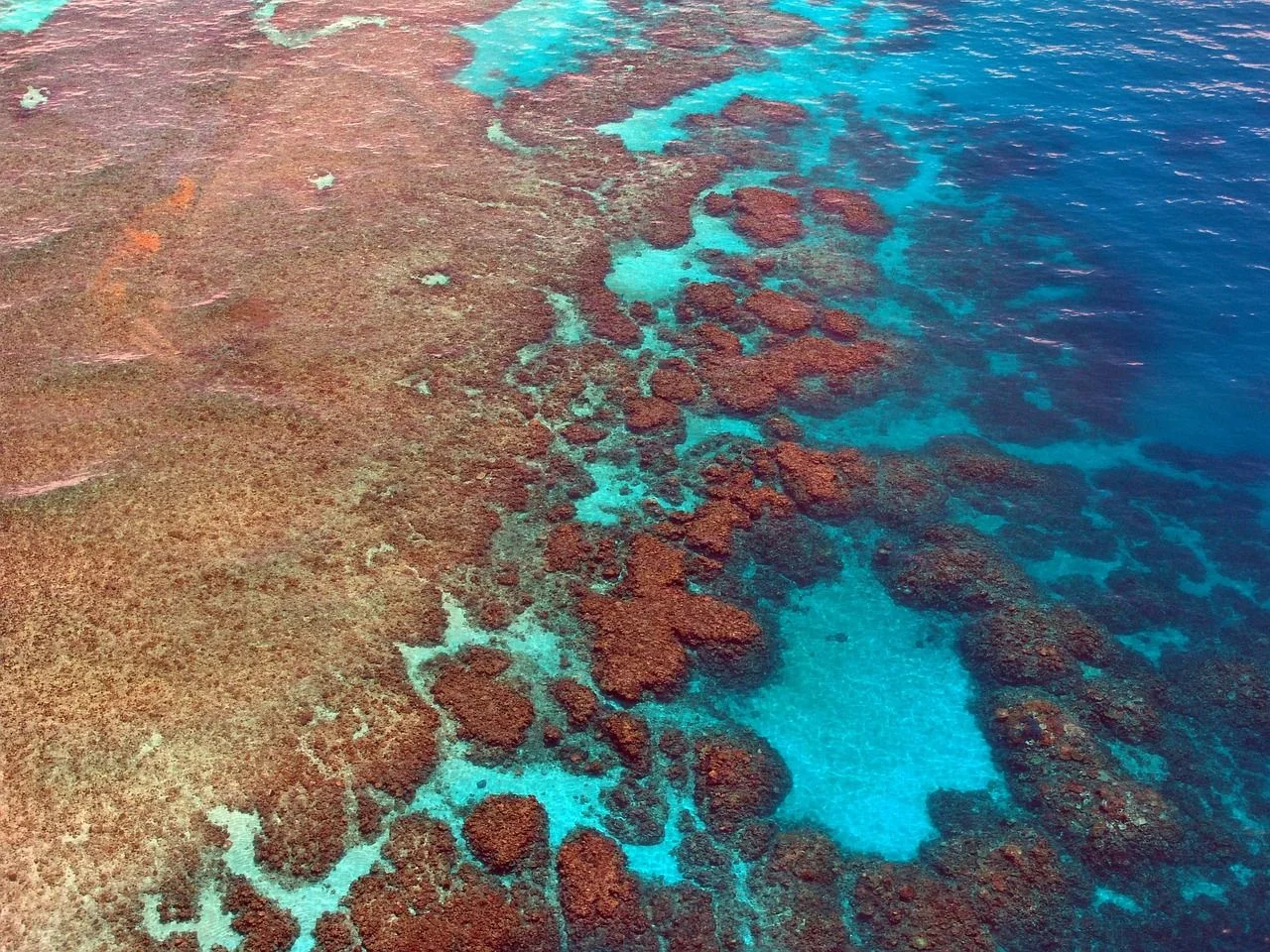
Great Barrier Reef
The Great Barrier Reef stretches for more than 2,300 km along Australia’s Queensland coast and is Earth’s largest coral ecosystem. With over 2,900 individual reefs, hundreds of islands, and a staggering diversity of marine life, it’s a bucket‑list destination for divers. Outer reef walls, coral gardens and pinnacles support potato cod, giant trevallies, reef sharks, sea turtles, manta rays and even visiting dwarf minke and humpback whales. Divers can explore historic wrecks like the SS Yongala, drift along the coral‑clad walls of Osprey Reef or mingle with friendly cod at Cod Hole. Whether you’re a beginner on a day trip from Cairns or an experienced diver on a remote liveaboard, the Great Barrier Reef offers unforgettable underwater adventures.
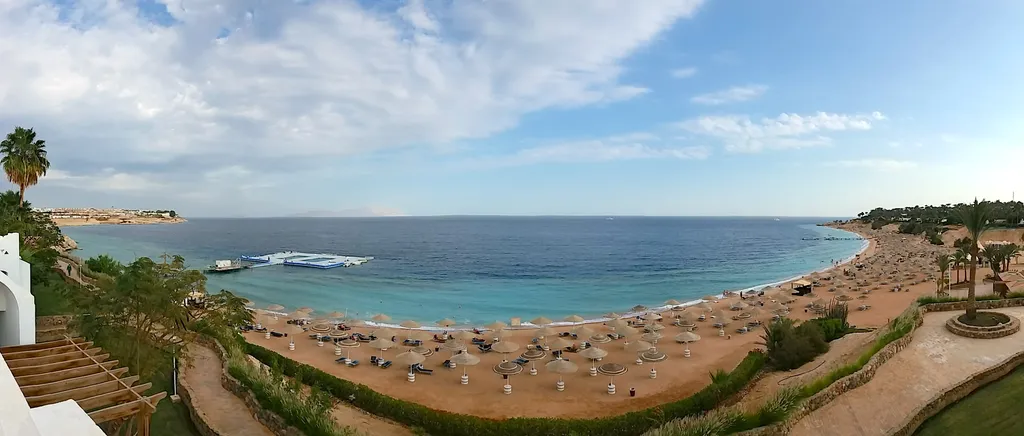
Sharm El Sheikh
Sharm El Sheikh sits at the southern tip of Egypt's Sinai Peninsula and functions as the Red Sea's busiest dive hub for good reason. Day boats run south to Ras Mohammed National Park—walls, current-swept pinnacles and the famous Shark Reef–Yolanda Reef double drop—and north through the Straits of Tiran past four reef towers where hammerheads patrol in season. Wreck divers book the early alarm for SS Thistlegorm, one of the world's great WWII cargo dives, and the coral-encrusted SS Dunraven on calmer days. Closer to Naama Bay and Sharks Bay, house reefs like Ras Um Sid, the Gardens and Temple deliver easy boat dives between the big-ticket runs. Visibility routinely clears 20 m, reefs are healthy by Red Sea standards, and the resort strip makes logistics painless: gear on, coffee, two-tank boat, back for lunch.
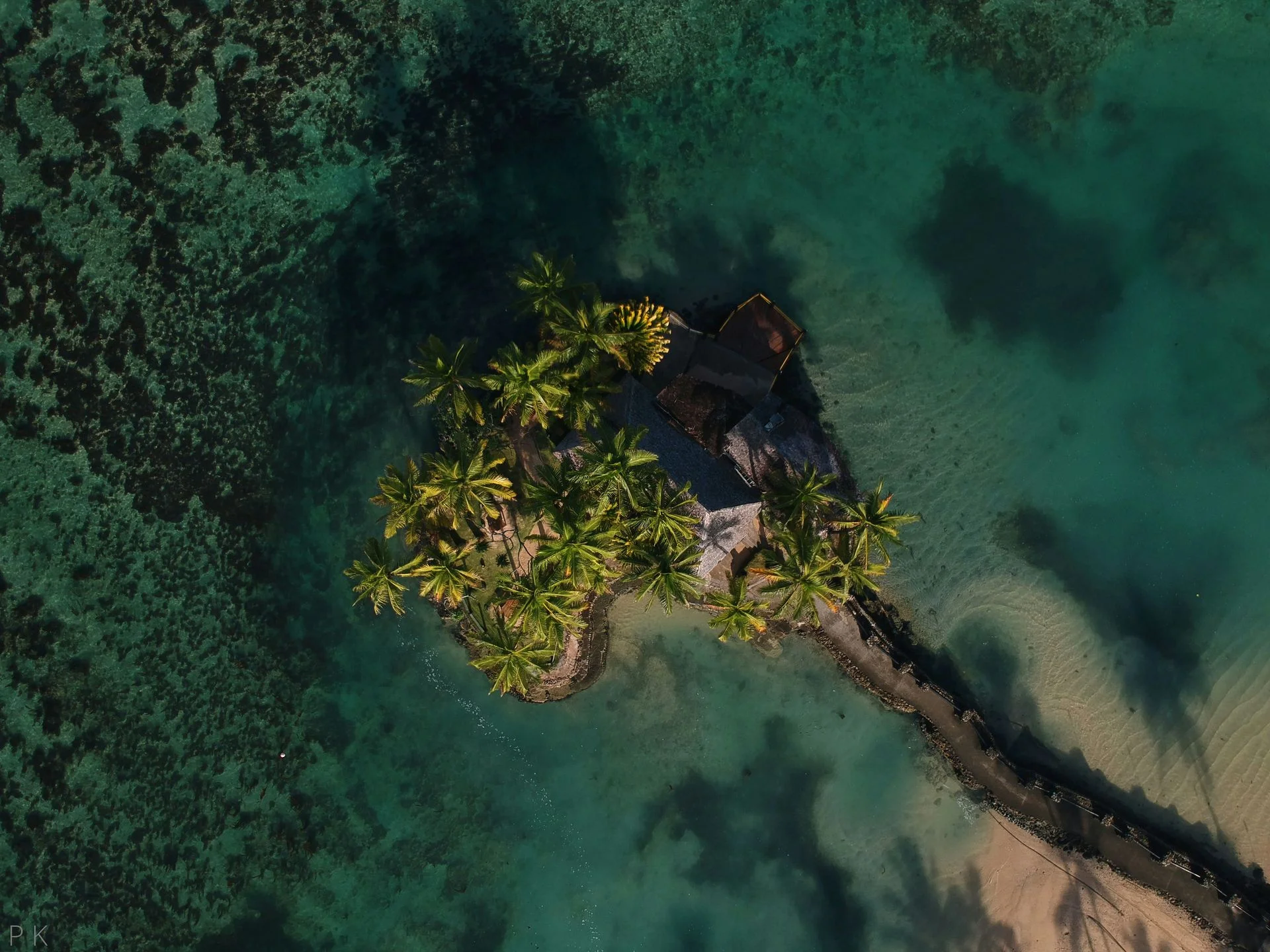
Fiji
Fiji sits like a necklace of more than 300 inhabited islands and 500 smaller islets in the heart of the South Pacific. Jacques Cousteau dubbed it the “soft coral capital of the world” for good reason – nutrient‑rich currents wash over sloping reefs, walls and bommies that erupt in shades of pink, purple, orange and yellow. The country’s dive sites range from kaleidoscopic coral gardens and pinnacles in the Somosomo Strait to shark dives in Beqa Lagoon, and remote passages in Bligh Water and the Koro Sea. Schools of barracuda, trevally and surgeonfish cruise above while manta rays, turtles, bull sharks and occasionally hammerheads glide past. Friendly locals and a relaxed island vibe make Fiji a favourite for both adventurous liveaboard trips and leisurely resort‑based diving.