
Grey Reef Shark
Carcharhinus amblyrhynchos
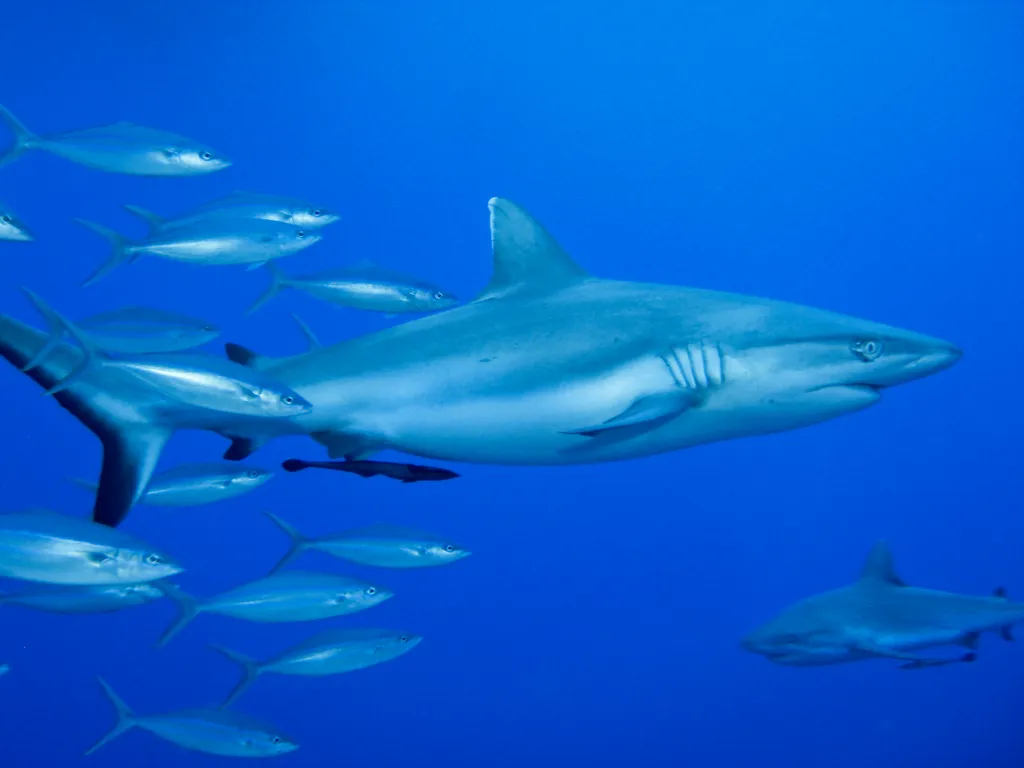
Photo by Marc Tarlock from San Francisco / CC BY-SA 2.0 via Wikimedia Commons
The Grey Reef Shark is the "Boss" of the Indo-Pacific reefs. While Blacktips patrol the shallows and Whitetips nap in caves, the Grey Reef Shark rules the current-swept drop-offs. They are active, agile, and territorial predators often found patrolling in large schools. Famous for their distinct "threat display" (hunching their back and dropping their fins), they demand respect from divers. In places like Fakarava and Palau, you can witness the "Wall of Sharks"—hundreds of Grey Reefs hanging effortlessly in the blue current.
🔬Classification
📏Physical Features
🌊Habitat Info
⚠️Safety & Conservation
Identification Guide
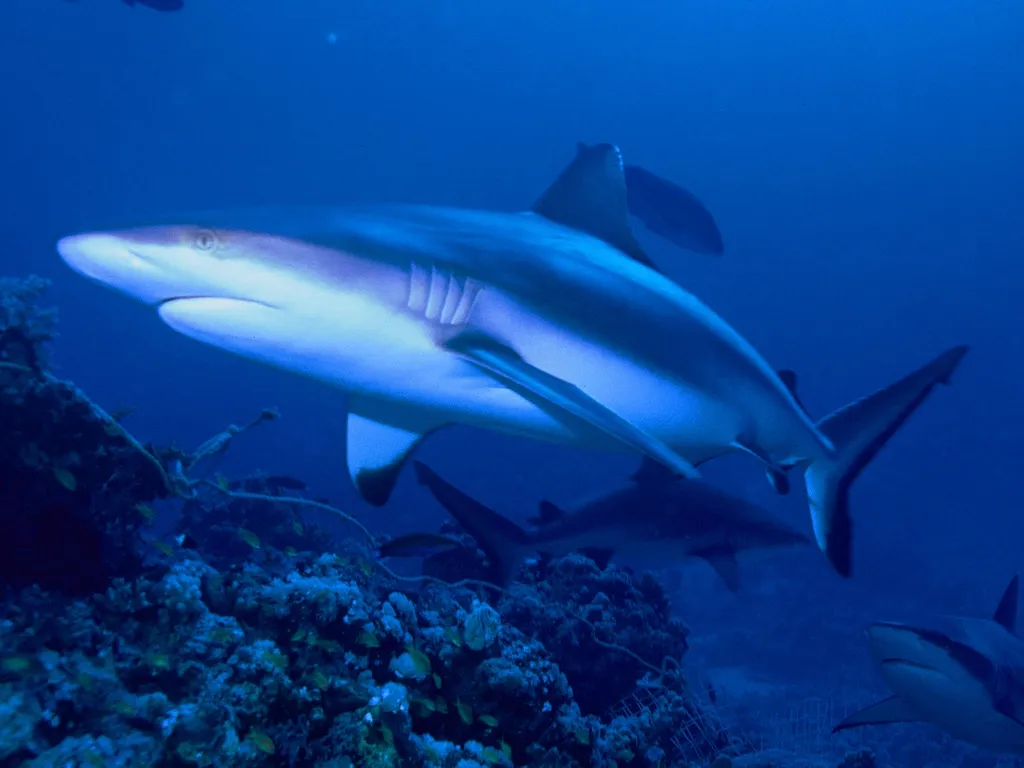
Photo by Albert kok / CC BY-SA 3.0 via Wikimedia Commons
Field marks:
- Black Tail Margin: The most distinct feature is a broad, black band running along the entire rear edge of the caudal fin (tail).
- Dorsal Fin: The first dorsal fin is usually grey or has a white tip (but NEVER a distinct black tip like the Blacktip Reef Shark).
- Stocky Build: They are robust and thick-bodied, with a classic "sharky" silhouette.
- Eyes: Medium-sized, round eyes.
- Behavior: Often found in current, patrolling the reef edge or drop-off, not sitting on the bottom.
Differences from Similar Species
- Blacktip Reef Shark: Has a prominent black tip on the dorsal fin (Grey Reefs have white or plain); lives in much shallower water.
- Whitetip Reef Shark: Has white tips on dorsal and tail fins; slender body; rests on the bottom.
- Silvertip Shark: Larger; has white tips on all fins (including pectorals and caudal), whereas Grey Reefs do not.
- Bull Shark: Much heavier/thicker; snout is very short and blunt; no black margin on the tail.
Juvenile vs. Adult
Juveniles look similar to adults but are more likely to be found alone or in sheltered areas before joining the main school on the outer reef.
Top 10 Fun Facts about Grey Reef Shark
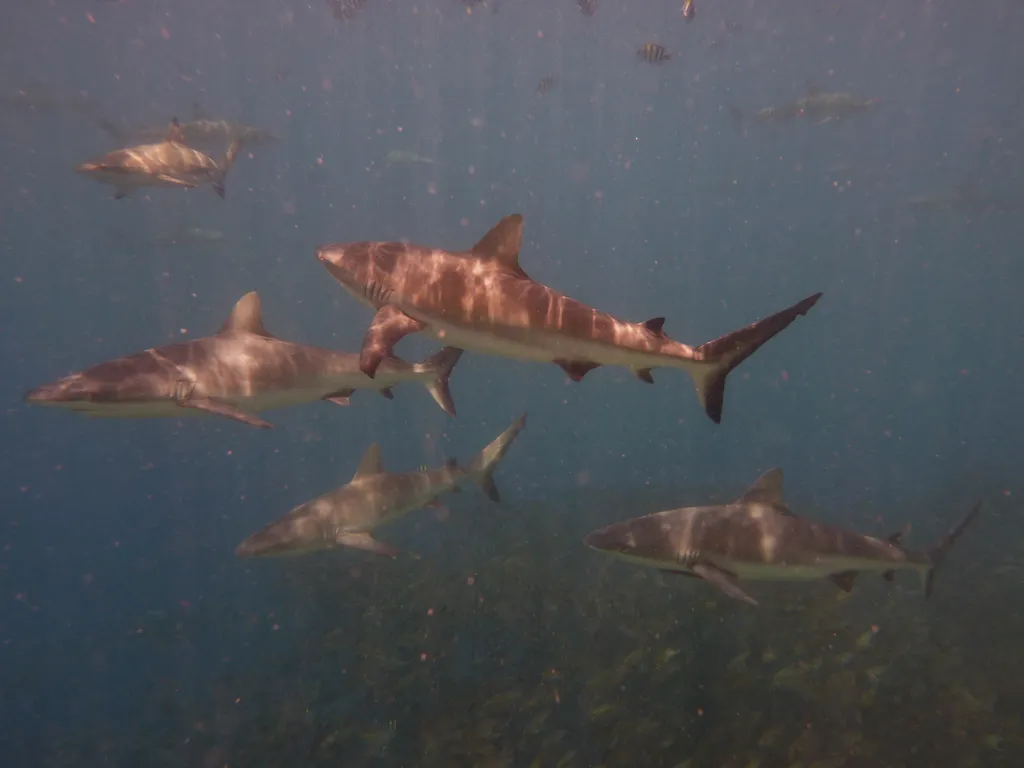
Photo by Kai Squires / CC BY 4.0 via Wikimedia Commons
1. The "Boss" Attitude (Threat Display)
Grey Reef Sharks are famous for their agonistic display—a "get away from me" warning. If cornered or harassed, they will arch their back, lower their pectoral fins, lift their snout, and swim in an exaggerated, jerky side-to-side motion. If you see this, back off immediately, or a lightning-fast bite might follow.
2. Walls of Sharks
In Fakarava (French Polynesia), Grey Reef Sharks form the largest known shark aggregations in the world. During the grouper spawning season, up to 700 sharks gather in the Tumakohua Pass. They form a literal "wall" of sharks, hanging motionless in the current to conserve energy while waiting for nightfall to hunt.
3. Site Fidelity
They are creatures of habit. Research shows they have very high site fidelity, meaning they stay on the same reef system for years. They might travel up to 20km to hunt at night, but they almost always return to their "home reef" during the day.
4. Social Hierarchies
Though they look like a disorganized mob, their schools have structure. Larger, more dominant individuals often occupy the prime spots in the current (where they get the most oxygen with the least effort), while smaller sharks are pushed to the back or edges.
5. Viviparous Breeders
Like mammals, they give birth to live young. After a gestation of about 12 months, females release 1 to 6 pups. The low number of offspring makes them very vulnerable to overfishing, and populations take a long time to recover.
6. Night Shift Hunters
During the day, they are relatively social and calm. At night, the school breaks up, and they become solitary, aggressive hunters. They scour the reef for fish, squid, and octopus. Their behavior shift is so drastic that night diving with them requires extra caution.
7. The "Blacktail" Confusion
In Chinese, they are often called "Blacktail True Shark" (黑尾真鲨). This is accurate because of the black margin on their tail. However, beginners often confuse them with "Blacktip" sharks. Remember: Blacktip = black spot on dorsal fin; Grey Reef = black line on tail.
8. Spy Hopping?
They are curious. While usually keeping their distance, in remote areas where they aren't used to divers, they might circle to investigate. In the Chagos Archipelago, they've been observed exhibiting bold curiosity, closely inspecting equipment.
9. Ram Ventilation
Unlike Nurse or Whitetip sharks, Grey Reef Sharks are obligate ram ventilators. They must keep swimming to push oxygen-rich water over their gills. If they stop, they suffocate. This is why they love currents—it helps them breathe with less effort.
10. Cleaner Station Regulars
Despite being tough predators, they love a spa day. They regularly visit "cleaning stations" where small wrasse and butterflyfish pick parasites off their skin and out of their mouths. Observing a Grey Reef Shark stalling in the water with its mouth open for a cleaning is a magical diving moment.
Diving & Observation Notes
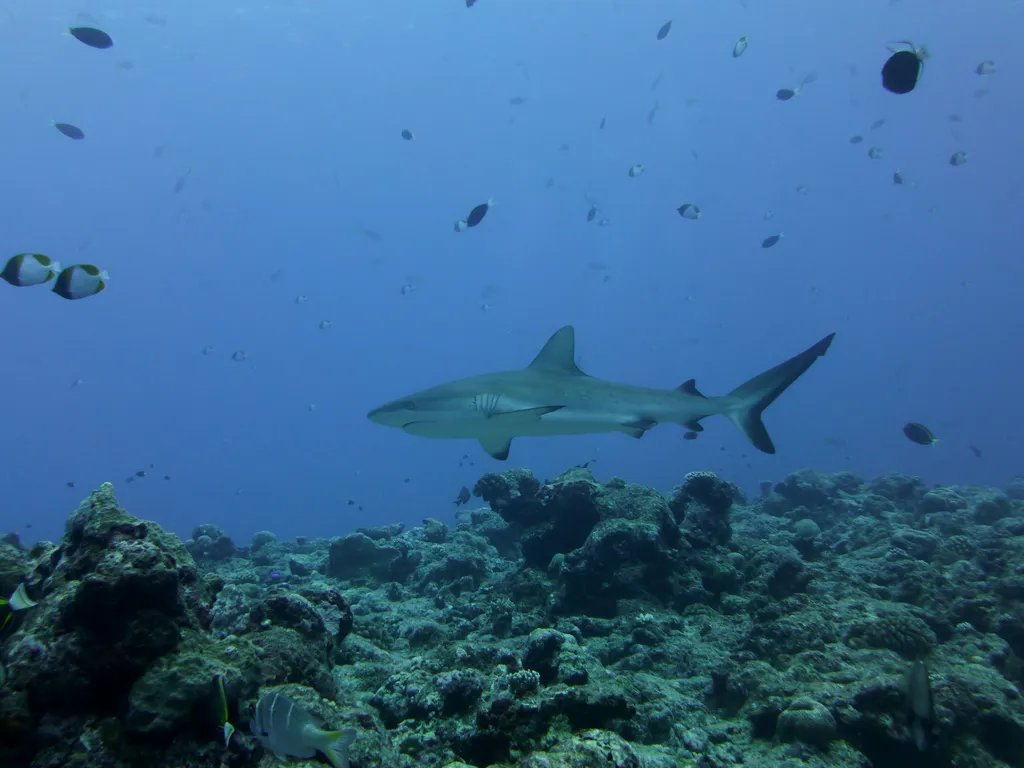
Photo by Kai Squires / CC BY 4.0 via Wikimedia Commons
🧭 Finding Grey Reef Sharks
Look for current. They love hanging out on the up-current side of a reef drop-off or in a channel pass. If you dive in Fakarava (South Pass) or Palau (Blue Corner), you don't need to look for them; they will be everywhere.
🤿 Approach & Behavior
- Respect the Current: Since they hang in strong currents, bring a reef hook. Hook into a dead rock and watch the show. Don't try to swim against the current to chase them; you will lose.
- Watch Body Language: If a shark arches its back and swims stiffly (pectoral fins down), it is threatened. Back away slowly and smoothly. Do not photograph it.
- Stay Calm: They are attracted to frantic movement. Slow, controlled movements make you a boring observer rather than a potential threat or rival.
- Golden Hour: Dives at dawn or dusk often see increased activity as they transition from social schooling to hunting mode.
📸 Photo Tips
- Wide Angle: Essential. You want to capture the school or the environment.
- Shutter Speed: They move fast, especially in current. Keep shutter speed high (1/250s+).
- Into the Blue: They often patrol the blue water off the wall. Balance your exposure for the blue water background to make the grey shark pop.
- The "Wall" Shot: In places like Fakarava, try to frame a diver looking at the wall of sharks to show scale.
⚠️ Safety
- Flash Photography: Avoid blasting them with full-power strobes at close range, especially at night. It can trigger aggression.
- No Feeding: Feeding Grey Reef Sharks can induce a "feeding frenzy" where they bite blindly. It is dangerous and irresponsible.
Best Places to Dive with Grey Reef Shark
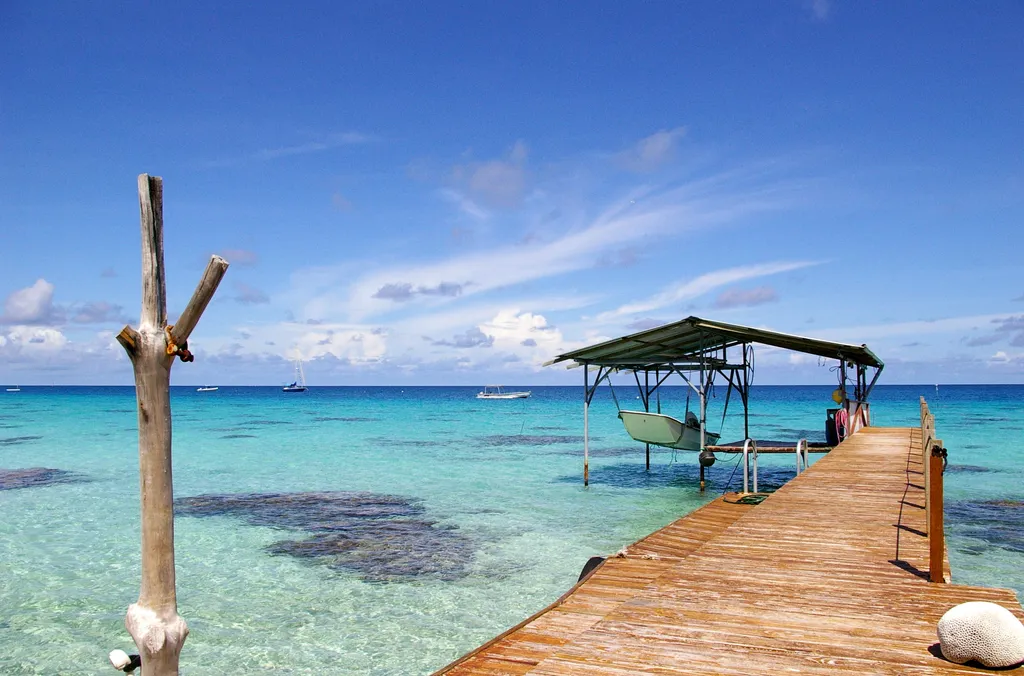
Fakarava
Fakarava is a UNESCO Biosphere Reserve in the Tuamotu Archipelago — a low coral atoll with two legendary passes that funnel Pacific water and pelagic life through its lagoon. This is advanced drift-diving territory: Garuae Pass in the north is the widest channel in French Polynesia, where incoming tides can stack grey reef sharks, Napoleon wrasse, and occasional great hammerheads along the drop-off. Tumakohua Pass in the south is the famous "shark wall" — during June–July grouper spawning around the full moon, hundreds of grey reef sharks hang in the blue like a living curtain. Visibility routinely clears 30–50 m in the dry season, and the outer walls still carry healthy hard-coral cover that feels untouched compared to busier Indo-Pacific hubs. Beyond the passes you get canyon dives (Alibaba), manta cleaning stations on Ohotu-side walls, lagoon blues at Tetamanu, and humpback whales overhead in August–October. Most divers base in Rotoava for Garuae access or split the trip with a few nights at Tetamanu village for South Pass — plan around tides, not just calendars.
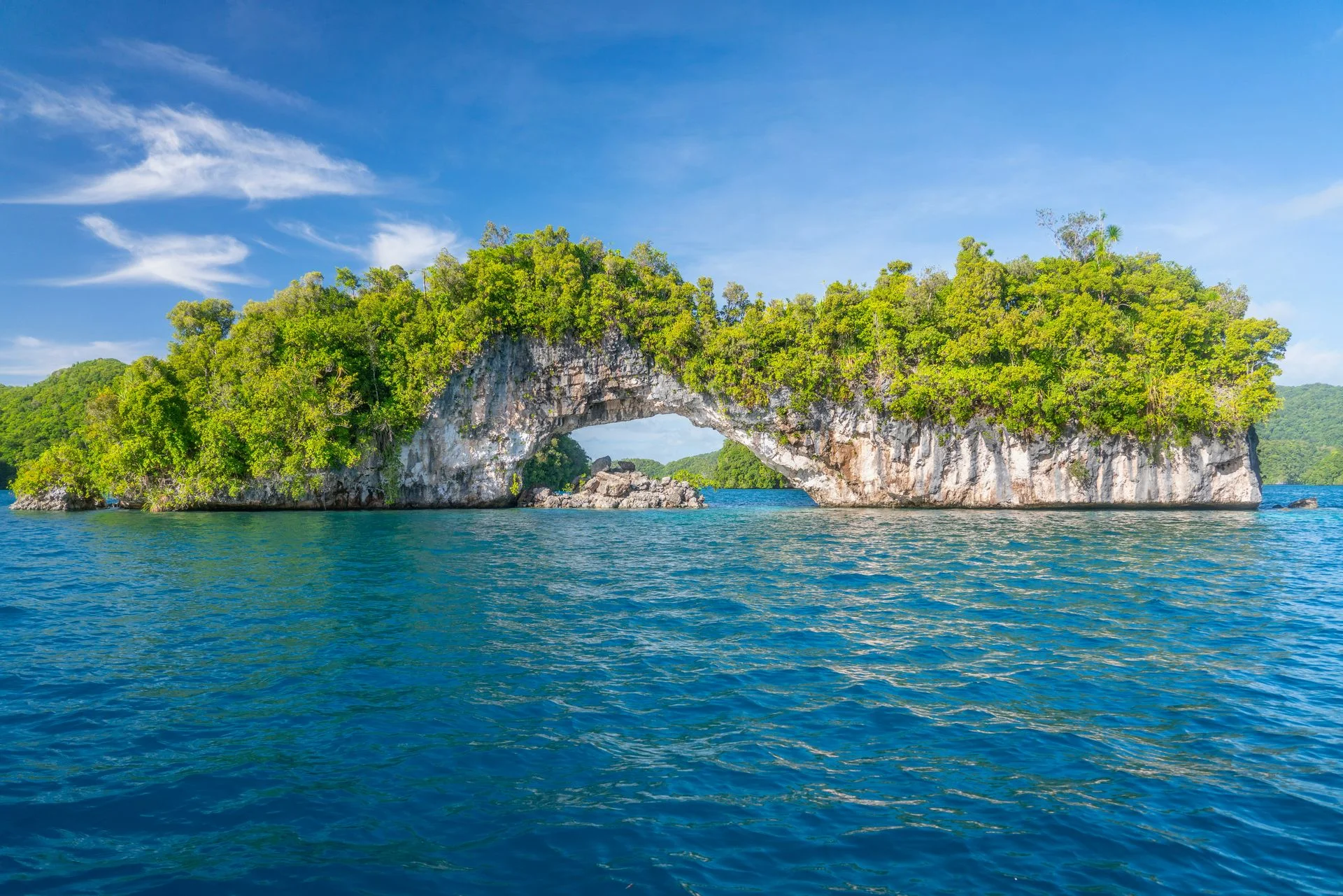
Palau
Rising out of the western Pacific at the meeting point of two great oceans, Palau is an archipelago of more than 500 jungle‑cloaked islands and limestone rock pinnacles. Its barrier reef and scattered outcrops create caverns, walls, tunnels and channels where nutrient‑rich currents sweep in from the Philippine Sea. These flows feed carpets of hard and soft corals and attract vast schools of jacks, barracudas and snappers, as well as an impressive cast of pelagics. Grey reef and whitetip sharks parade along the legendary Blue Corner; manta rays glide back and forth through German Channel’s cleaning stations; and Ulong Channel offers a thrill‑ride drift over giant clams and lettuce corals. Between dives you can snorkel among non‑stinging jellyfish in Jellyfish Lake or explore WWII ship and plane wrecks covered in colourful sponges.
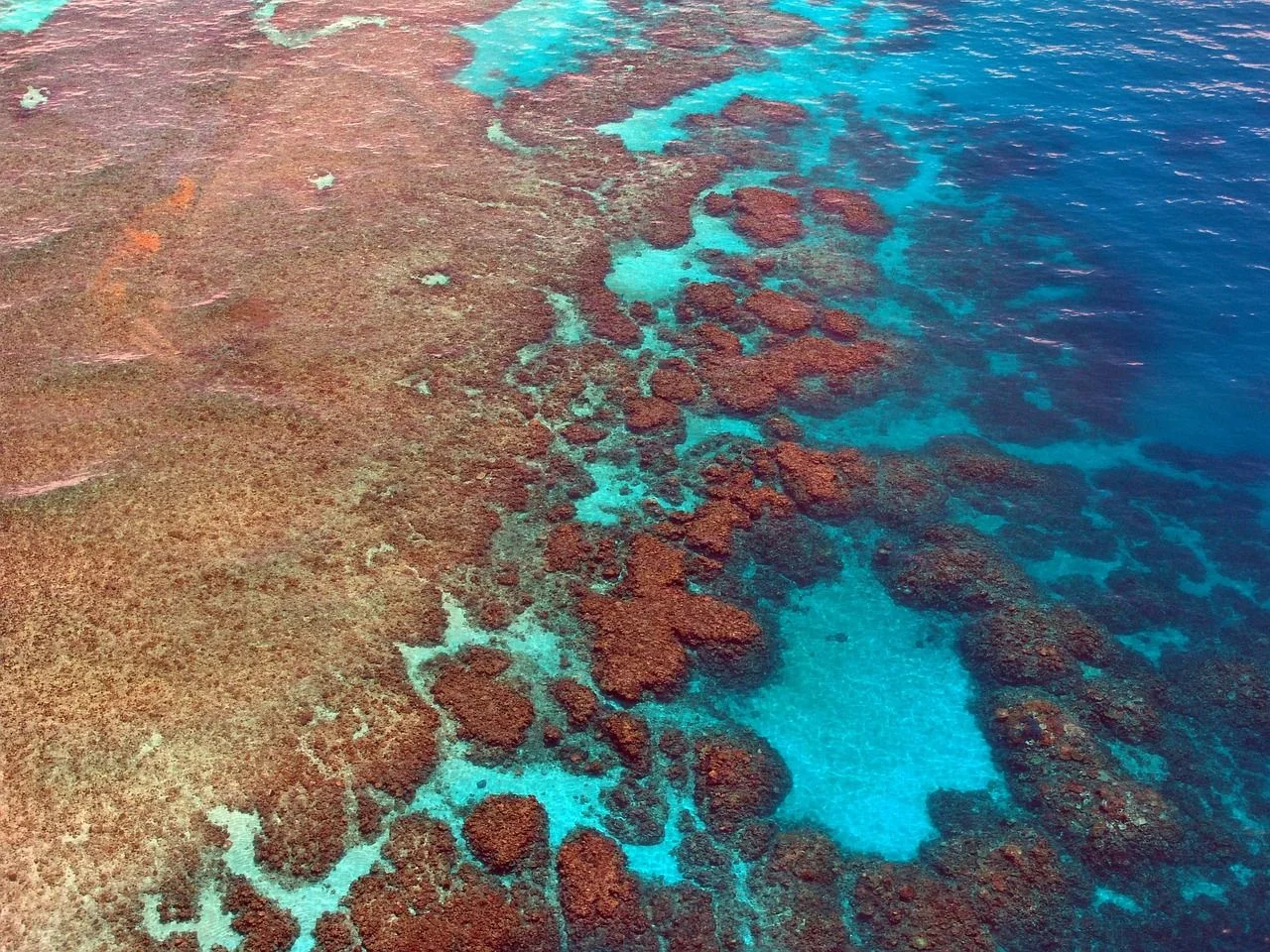
Great Barrier Reef
The Great Barrier Reef stretches for more than 2,300 km along Australia’s Queensland coast and is Earth’s largest coral ecosystem. With over 2,900 individual reefs, hundreds of islands, and a staggering diversity of marine life, it’s a bucket‑list destination for divers. Outer reef walls, coral gardens and pinnacles support potato cod, giant trevallies, reef sharks, sea turtles, manta rays and even visiting dwarf minke and humpback whales. Divers can explore historic wrecks like the SS Yongala, drift along the coral‑clad walls of Osprey Reef or mingle with friendly cod at Cod Hole. Whether you’re a beginner on a day trip from Cairns or an experienced diver on a remote liveaboard, the Great Barrier Reef offers unforgettable underwater adventures.
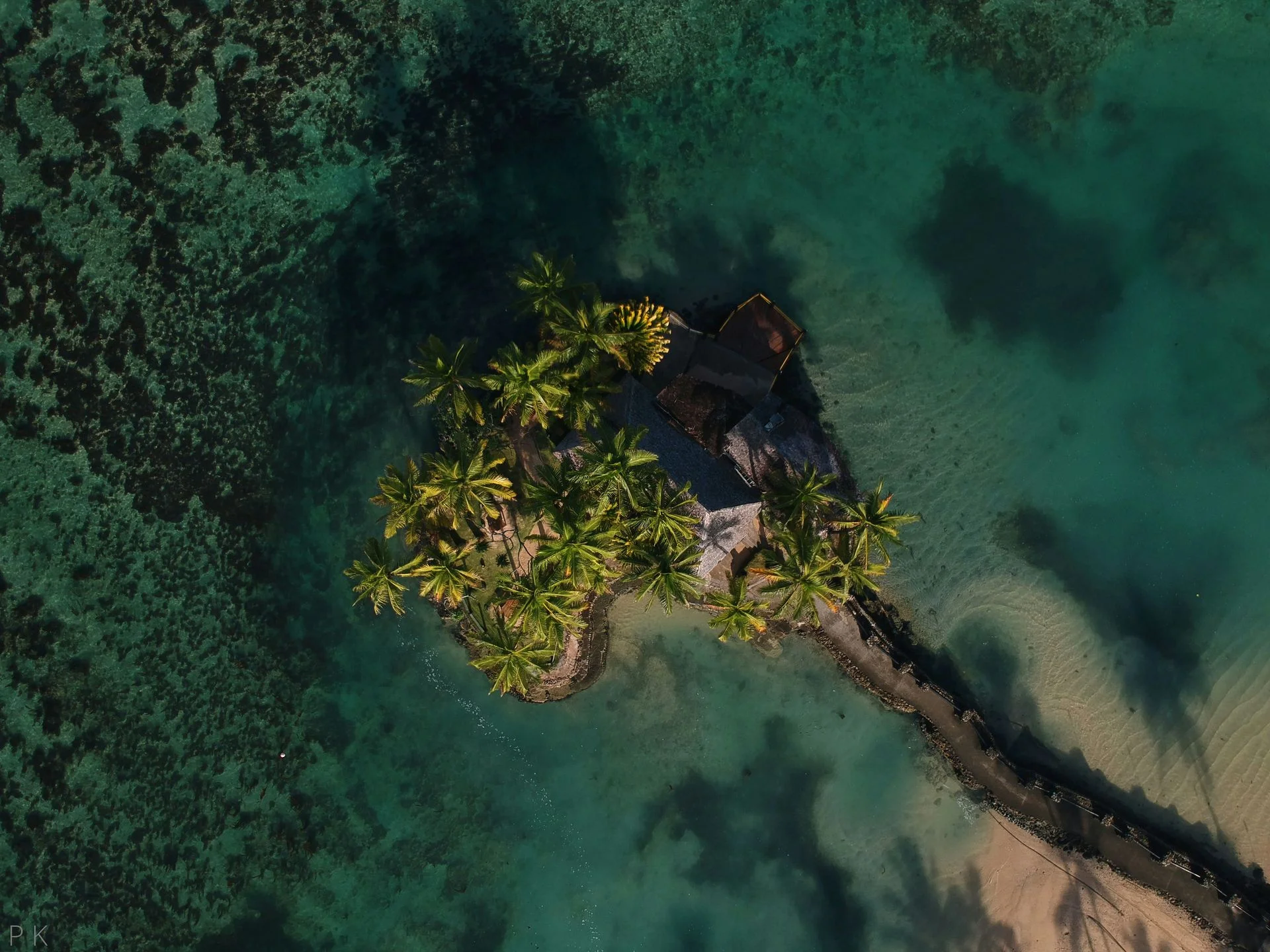
Fiji
Fiji sits like a necklace of more than 300 inhabited islands and 500 smaller islets in the heart of the South Pacific. Jacques Cousteau dubbed it the “soft coral capital of the world” for good reason – nutrient‑rich currents wash over sloping reefs, walls and bommies that erupt in shades of pink, purple, orange and yellow. The country’s dive sites range from kaleidoscopic coral gardens and pinnacles in the Somosomo Strait to shark dives in Beqa Lagoon, and remote passages in Bligh Water and the Koro Sea. Schools of barracuda, trevally and surgeonfish cruise above while manta rays, turtles, bull sharks and occasionally hammerheads glide past. Friendly locals and a relaxed island vibe make Fiji a favourite for both adventurous liveaboard trips and leisurely resort‑based diving.