
Humpback Whale
Megaptera novaeangliae
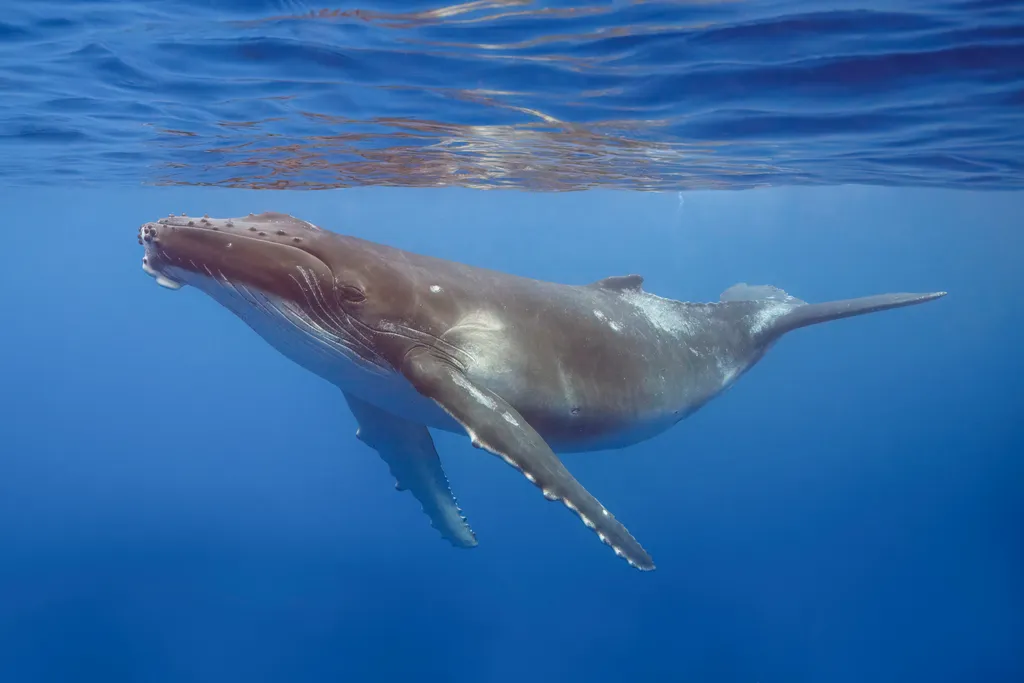
Photo by Charles J. Sharp / CC BY-SA 4.0 via Wikimedia Commons
The Humpback Whale is the ocean's greatest showman—acrobatic, musical, and endlessly fascinating. With their extraordinarily long pectoral fins (up to one-third of their body length) and their famous breaching displays, they are among the most recognizable and beloved whales. They are the singers of the sea, with males producing complex songs that can last 20 minutes and be repeated for hours. They're also master strategists, using bubble net feeding to trap schools of fish. Encountering a humpback underwater is a once-in-a-lifetime experience—graceful, massive, and surprisingly curious.
🔬Classification
📏Physical Features
🌊Habitat Info
⚠️Safety & Conservation
Identification Guide
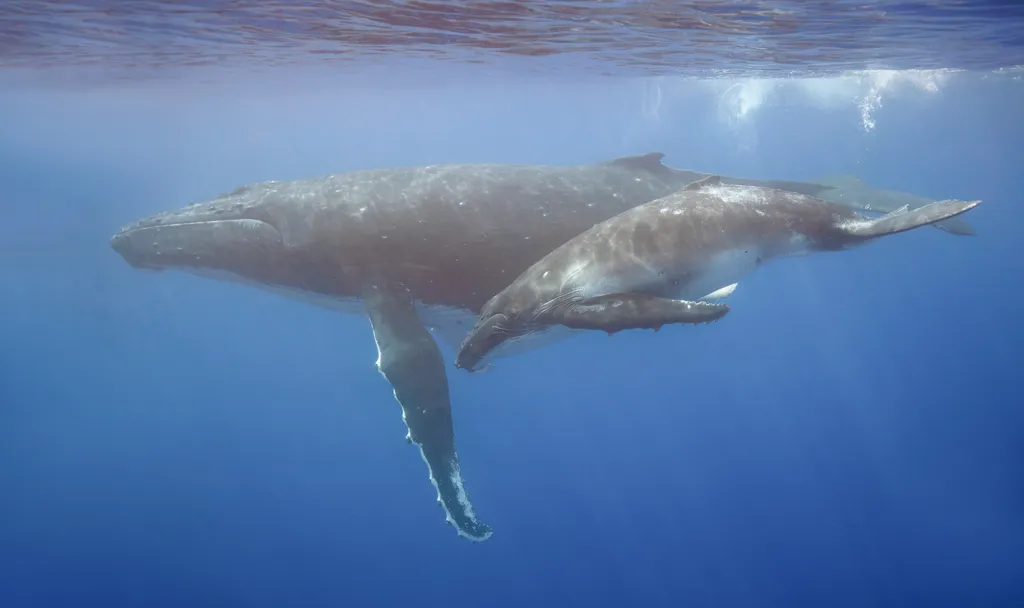
Photo by Charles J. Sharp / CC BY-SA 4.0 via Wikimedia Commons
Field marks:
- Long Pectoral Fins: The most distinctive feature—extremely long, white-patched flippers that can be up to 5 meters (16 feet) long.
- Knobbed Head: The head and upper jaw are covered with knobby protuberances (tubercles), each with a single hair.
- Small Dorsal Fin: A small, hump-like dorsal fin located far back on the body (hence "humpback").
- Tail Fluke: Large, wide tail fluke with a unique black-and-white pattern on the underside (like a fingerprint).
- Breaching: Famous for leaping completely out of the water and landing with a massive splash.
- Vocalizations: Can be heard underwater—complex songs from males, especially during breeding season.
Differences from Similar Species
- Blue Whale: Much larger (up to 30m); uniform blue-grey color; smaller flippers; no white patches.
- Fin Whale: Larger; has a distinct ridge along the back; asymmetrical coloring (white on right side only).
- Gray Whale: Smaller; mottled grey color; no dorsal fin; shorter flippers.
- Minke Whale: Much smaller (7–10m); white band on flippers; pointed head.
Juvenile vs. Adult
Calves are born at about 4–5 meters and grow rapidly. Young whales are more playful and curious, often approaching boats or divers. Adult males are known for their singing behavior, especially in breeding grounds.
Top 10 Fun Facts about Humpback Whale
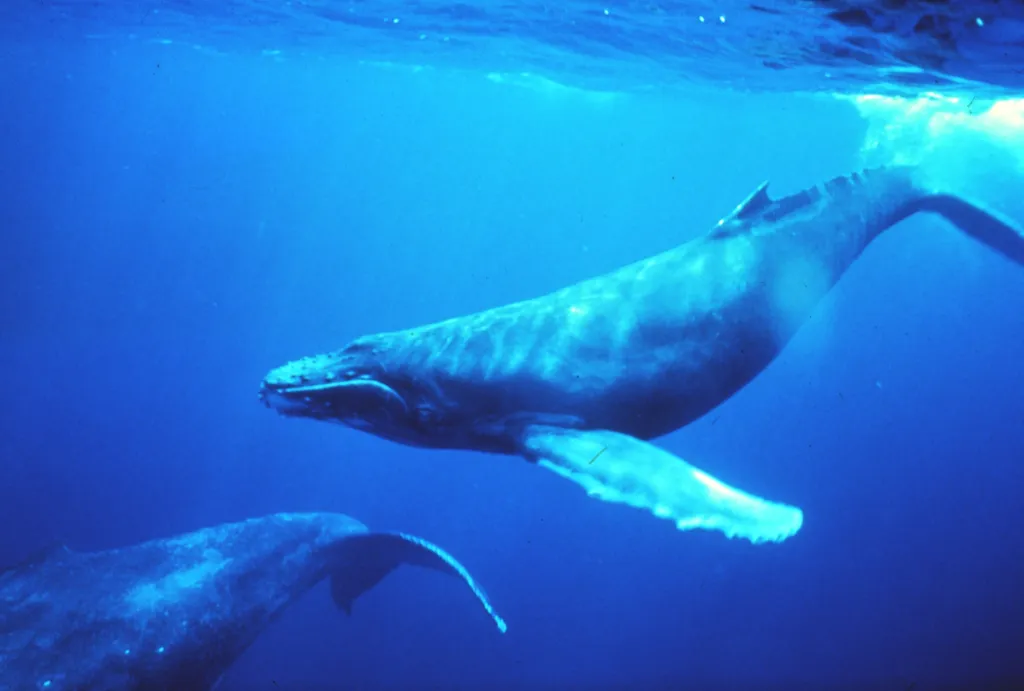
Photo by Dr. Louis M. Herman. via Wikimedia Commons
1. The "Big-Winged New Englander"
The scientific name Megaptera novaeangliae means "big-winged New Englander"—referring to their extraordinarily long pectoral fins (the "wings") and the region where they were first scientifically described. These flippers can be up to one-third of their total body length, making them the longest flippers relative to body size of any whale.
2. The Singing Giants
Male humpback whales are the opera singers of the ocean. They produce complex songs that can last up to 20 minutes and be repeated for hours. All males in a population sing the same song, which evolves over time—new "verses" are added, old ones fade away. These songs are thought to be for mating, but scientists still debate their exact purpose. You can hear them underwater from kilometers away.
3. The Bubble Net Masters
Humpback whales are the only baleen whales known to use cooperative bubble net feeding. A group of whales (usually 2–15 individuals) work together: one whale dives below a school of fish and releases bubbles while swimming in a spiral, creating a "net" that traps the fish. Then all whales swim up through the center with mouths open, engulfing thousands of fish in one gulp. It's like underwater synchronized fishing.
4. The Migration Marathon
Humpback whales undertake some of the longest migrations of any mammal—up to 5,000 miles (8,000 km) one way. They travel from cold feeding grounds (like Alaska or Antarctica) to warm breeding grounds (like Hawaii, Tonga, or the Caribbean) and back. This round trip can take them 5,000–10,000 miles annually, all while fasting during the breeding season.
5. The Acrobatic Breach
There's nothing quite like watching a 40-ton whale leap completely out of the water and crash back down with a thunderous splash. Breaching is one of the most spectacular behaviors in nature. While the exact reason is unknown, theories include communication, parasite removal, play, or simply because they can. Some whales breach repeatedly, creating a show that rivals any fireworks display.
6. The Tail Fingerprint
Each humpback whale has a unique pattern on the underside of its tail fluke—like a fingerprint. No two patterns are the same. Researchers use these patterns to identify individuals and track them across oceans and years. This has revealed incredible details about their migrations, social structures, and lifespans (some identified whales have been tracked for over 40 years).
7. The Knobby Head
The head of a humpback whale is covered with knobby protuberances (tubercles), each containing a single hair. These aren't just for looks—they're packed with nerve endings and are highly sensitive. They may help with sensing water pressure, temperature, or even detecting prey. The pattern and number of tubercles are unique to each individual.
8. The Fasting Season
During their migration to breeding grounds, humpback whales fast for months. They live entirely off their blubber reserves, which can make up 30–50% of their body weight. A whale might lose 30–40% of its body weight during the breeding season. They only feed again when they return to cold, productive feeding grounds.
9. The Protective Mothers
Female humpback whales are fiercely protective of their calves. If a calf is threatened (by sharks or orcas), the mother will position herself between the threat and her baby, and other females in the area may come to assist. They've been known to use their massive tails and flippers to defend calves, creating a barrier of protection.
10. The Comeback Story
Humpback whales were nearly driven to extinction by commercial whaling in the 20th century. At their lowest point, the global population was estimated at just 5,000 individuals. Thanks to international protection, their numbers have recovered to over 80,000. They're now listed as Least Concern, making them one of the great conservation success stories of our time.
Diving & Observation Notes
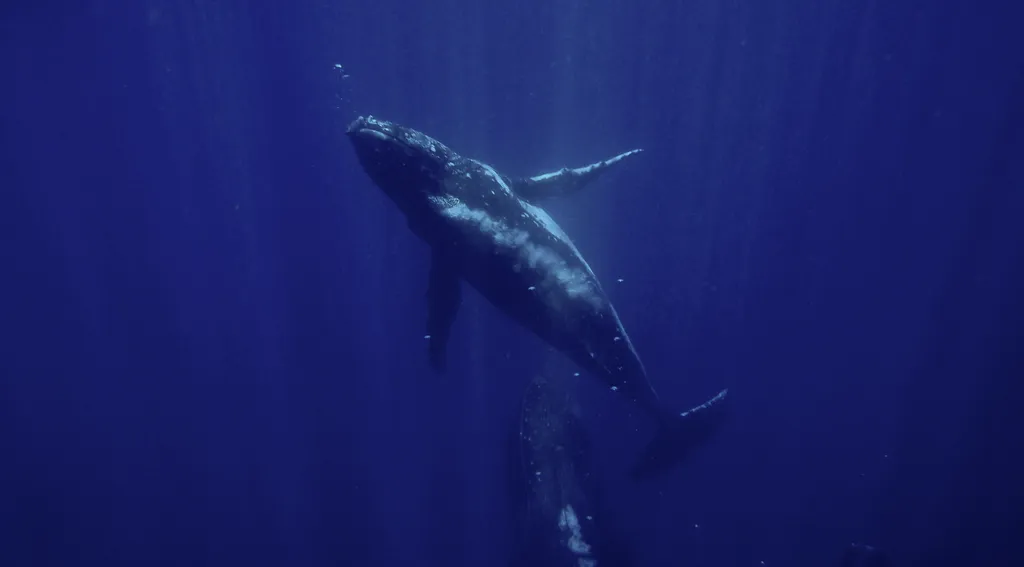
Photo by Sylke Rohrlach from Sydney / CC BY-SA 2.0 via Wikimedia Commons
🧭 Finding Humpback Whales
Humpback whales are found in all major oceans. The best encounters happen in breeding grounds (Tonga, Hawaii, Silver Bank, Dominica) or feeding grounds (Alaska, Antarctica, Iceland). They're most approachable in warm, shallow breeding waters where they're calmer and more curious.
🤿 Approach & Behavior
- Snorkeling is Best: Most humpback encounters happen while snorkeling, not scuba diving. They're usually in shallow water (10–30m) in breeding grounds, and bubbles can startle them.
- Let Them Approach: Humpbacks are curious. If you stay calm and still, they may approach you. Don't chase them—let them control the interaction.
- Eye Contact: If a whale approaches, maintain gentle eye contact. They seem to recognize and respond to this, often leading to closer encounters.
- Respect the Space: If a whale is with a calf, keep extra distance. Mothers are protective, and stress can separate calves from mothers.
📸 Photo Tips
- Wide Angle Essential: You need a fisheye or ultra-wide lens. They are massive, and you want to capture their full size and grace.
- The Breach: If you're lucky enough to see breaching, use a fast shutter speed (1/1000s+) to freeze the action. Shoot from a boat for the best angle.
- Underwater Portraits: When they approach underwater, try to capture their eye and the texture of their skin. Their eyes are surprisingly expressive.
- Tail Fluke: The unique patterns on tail flukes make for beautiful abstract images. Capture them as the whale dives.
⚠️ Ethics & Safety
- No Touching: Never attempt to touch a whale. They are wild animals, and contact can stress them or transmit diseases.
- Boat Regulations: Follow local regulations for whale watching. Most places require maintaining a minimum distance (often 100 meters).
- Respect Breeding Grounds: In breeding areas, be especially respectful. Don't interrupt courtship, mating, or mother-calf bonding.
- No Flash: Avoid using flash photography underwater. It can startle whales and is generally unnecessary in clear, shallow water.
🌏 Local Guide Nuggets
- Tonga: The ultimate humpback destination. Snorkeling with humpbacks (including mothers and calves) is possible. The water is warm, clear, and shallow—perfect for encounters.
- Hawaii: Humpbacks migrate here in winter (December–April). Boat-based snorkeling is common, and breaches are frequent.
- Silver Bank (Dominican Republic): A protected marine sanctuary where humpbacks gather in large numbers. Snorkeling encounters are world-class.
- Dominica: Known for resident sperm whales, but humpbacks also visit. The deep water close to shore makes for unique encounters.
- Alaska/Iceland: Feeding grounds where you can see bubble net feeding. The water is cold, but the behaviors are spectacular.
Best Places to Dive with Humpback Whale
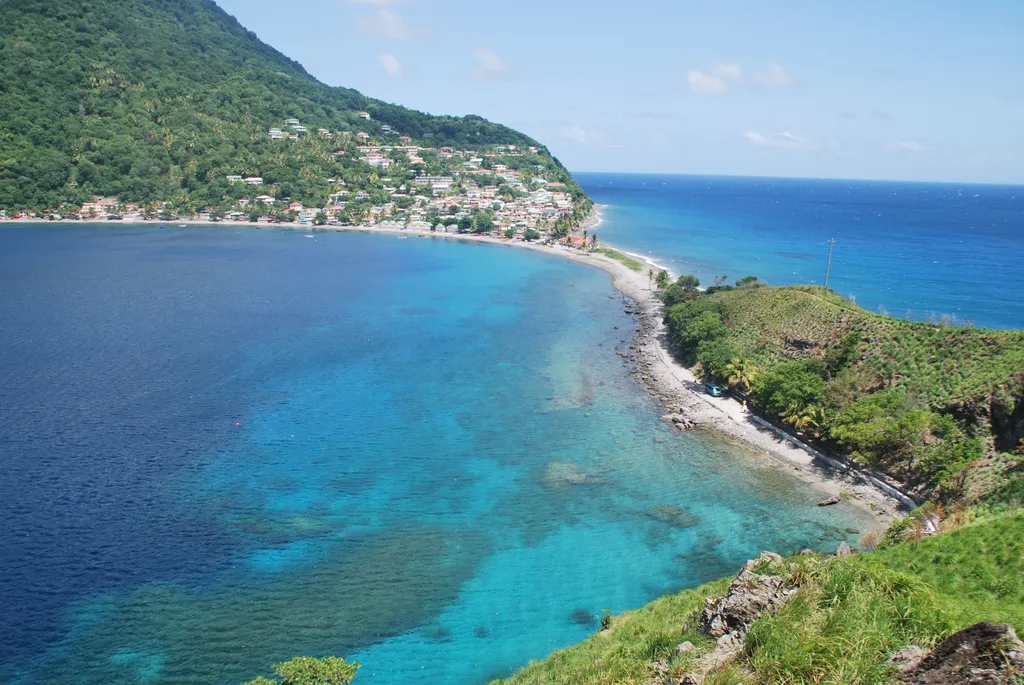
Dominica
Dominica — the Commonwealth Nature Island, not the Dominican Republic — is the Caribbean dive destination that still feels wild. The southwest coast drops from rainforest peaks straight into the flooded crater of Soufriere–Scotts Head Marine Reserve: walls, pinnacles, boulder fields, and active underwater fumaroles. Champagne Reef is the headline act (volcanic bubbles hissing through the sand like a flute glass), but the real diving is the wall-and-pinnacle circuit off Scotts Head — Soldierfish Cave swim-throughs, Crater’s Edge baitball frenzy, and sponge gardens that look more Indo-Pacific than Lesser Antilles. Water stays warm, boats run short hops from Castle Comfort / Roseau, and sperm-whale watching in the same deep coastal waters turns a dive week into a proper nature trip. Come for the bubbles; stay for the topography.
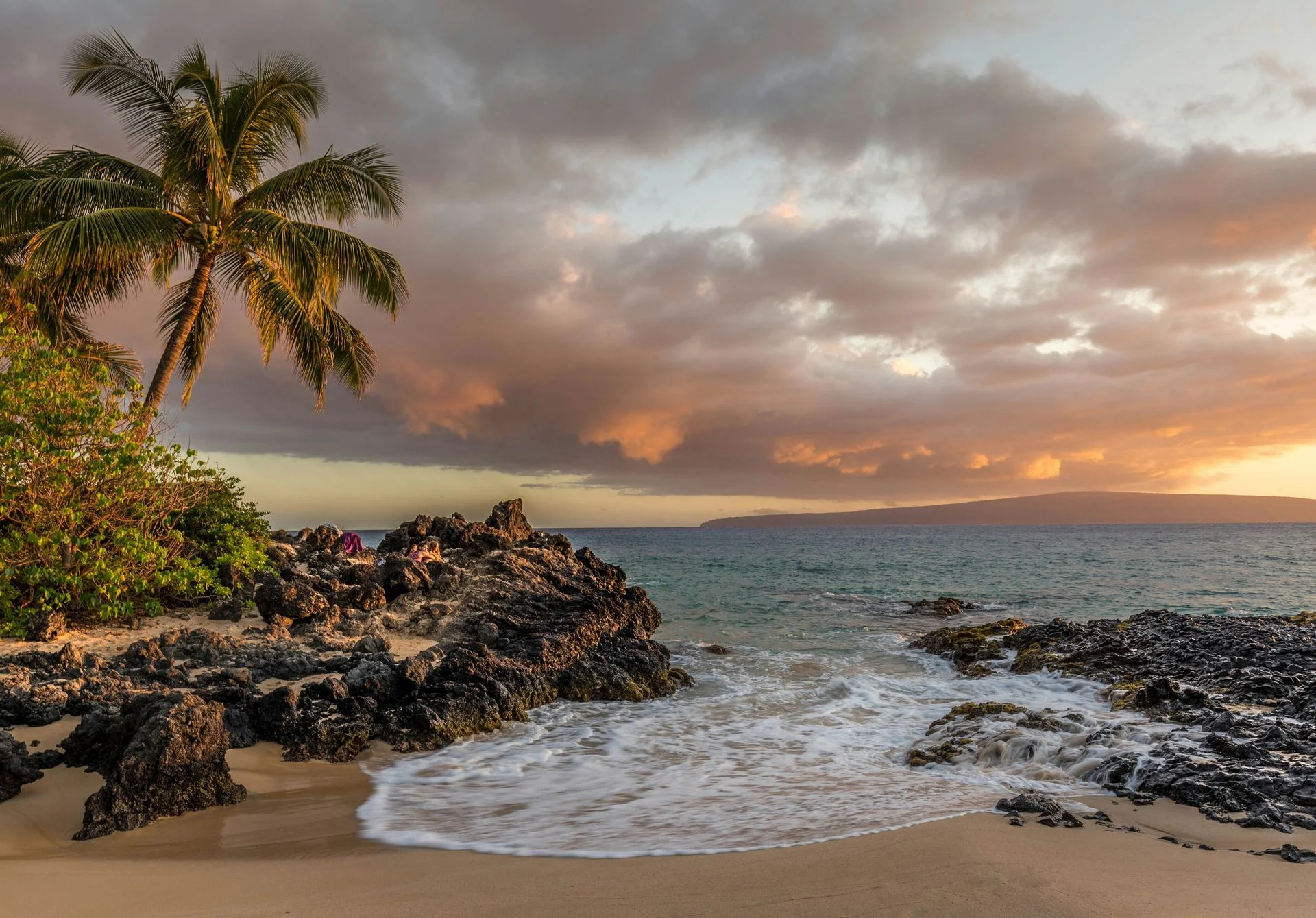
Hawaii
The Hawaiian Islands sit in the central Pacific and offer some of the United States’ most diverse diving. Each island has its own character: Oʻahu features WWII wrecks like the YO‑257 and Sea Tiger; Maui boasts the crescent‑shaped Molokini Crater and drift dives along Lānaʻi’s cathedral‑like caverns; the Big Island’s Kona coast is famed for lava tubes, black water pelagic dives and the world‑renowned manta‑ray night dive; Kauaʻi and Niʻihau offer lava arches, monk seals and dramatic drop‑offs. Water is warm year‑round and visibility regularly exceeds 25 m, making Hawaii ideal for both beginners and experienced divers. You’ll see green sea turtles, reef sharks, manta rays, dolphins and humpback whales in season, along with endemic fish found nowhere else on earth.