
Nurse shark
Ginglymostoma cirratum

Photo by Jerome Paillet (IFREMER / CC BY 4.0 via Wikimedia Commons
Nurse sharks (Ginglymostoma cirratum) are the "couch potatoes" of the shark world—but in the best way possible. These bottom-dwelling sharks are famous for their lazy daytime snoozing, often piled in adorable cuddle puddles of up to 40 individuals in caves and crevices. Don't let their chill vibes fool you—at night, they transform into suction-powered vacuum cleaners, using one of the strongest suction forces in the ocean to slurp up crabs, lobsters, and octopuses like aquatic milkshakes. With their distinctive whisker-like barbels, rounded pectoral fins, and carpet-shark Good looks, they're a favorite among divers for their docile nature and photogenic sleeping habits.
🔬Classification
📏Physical Features
🌊Habitat Info
⚠️Safety & Conservation
Identification Guide

Photo by Jerome Paillet (IFREMER / CC BY 4.0 via Wikimedia Commons
Field marks:
- Whisker Barbels: Two fleshy, whisker-like barbels hanging below the nostrils—the only shark in the Atlantic with this feature.
- Broad, Flat Head: Wide head with small eyes positioned high on the sides.
- Rounded Fins: Two rounded dorsal fins (first larger than second) and large, rounded pectoral fins.
- Long Tail: Caudal fin is elongated, making up more than ¼ of total body length.
- Small Mouth: Downward-facing mouth positioned low on the face, perfect for bottom feeding.
- Smooth Skin: Unlike rough-skinned sharks, nurse sharks have relatively smooth skin.
Differences from Similar Species
- Whale Shark: Much larger; has white spots and ridges; filter feeder (nurse shark is a suction feeder).
- Zebra Shark: Has distinct zebra stripes (juveniles) or leopard spots (adults); longer tail with no lower lobe.
- Wobbegong: More ornate skin flaps around mouth; better camouflaged with intricate patterns.
- Epaulette Shark: Smaller; has distinctive eye-like spots behind pectoral fins; more "walking" behavior on reefs.
Juvenile vs. Adult
Juveniles are born with spotted patterns that fade as they mature. Young nurse sharks often rest in very shallow water (1-4m) in mangroves and seagrass beds, while adults prefer deeper reef structures (up to 75m) and are more commonly found in caves and under ledges during the day.
Top 10 Fun Facts about Nurse shark

Photo by Gary Rinaldi from USA / CC BY-SA 2.0 via Wikimedia Commons
1. The Ocean's Strongest Vacuum Cleaner
If nurse sharks were sold at an appliance store, they'd be the Dyson of the sea. These sharks generate some of the highest suction forces ever recorded in aquatic vertebrates—the equivalent of twelve industrial vacuum cleaners working simultaneously. When they find prey hiding in a crack or buried in sand, they position their mouth close (within 3 cm) and create a rapid vacuum by suddenly expanding their throat. The unlucky crab or snail gets slurped out of its hiding spot faster than you can say "gotcha." If the prey is too large to swallow whole, they employ a violent head-shaking "suck-and-spit" technique to break it into bite-sized chunks. It's brutal efficiency disguised as a lazy lifestyle.
2. The "Whiskers" That Aren't Whiskers
Those distinctive fleshy dangles below a nurse shark's nose aren't whiskers at all—they're called barbels, and they're basically underwater tongues with superpowers. Covered in taste buds and sensory receptors, these barbels allow nurse sharks to "taste" and "feel" the seafloor as they glide along, detecting chemical traces of hidden prey. It's like having a built-in metal detector, except instead of finding coins, they find lobsters. The scientific name cirratum literally means "having curls or tendrils," a direct reference to these mustache-like appendages. Fun fact: nurse sharks are the only sharks in the entire Atlantic Ocean sporting this facial accessory.
3. The Shark That Actually Sleeps
Most sharks never stop moving because they need water flowing over their gills to breathe. Nurse sharks said "no thanks" to that grind. Through a process called buccal pumping, they actively pump water into their mouths and over their gills using muscular contractions, allowing them to lie completely still on the seafloor and actually sleep. Researchers have even observed captive nurse sharks with their eyes partially closed during rest periods, showing reduced response to external stimuli—basically, they're genuinely napping. They've even been reported to rest so deeply that divers can approach within touching distance before they react. It's the oceanic equivalent of hitting the snooze button.
4. Cuddle Puddle Champions
Nurse sharks are surprisingly social for a species often portrayed as solitary hunters. During the day, they gather in groups of up to 40 individuals in caves, under ledges, or in reef crevices—often literally piled on top of each other in what can only be described as a shark cuddle puddle. This behavior is so consistent that they exhibit strong "site fidelity," meaning they return to the exact same resting spot day after day, like a favorite couch. Some researchers believe certain individuals even act as "sentries," staying slightly more alert to watch for predators while the group snoozes. It's an adorable social contract: "You watch for danger during naptime, and I'll take the next shift."
5. The Shark That Walks
Forget swimming—nurse sharks have unlocked a rare ability to "walk" along the seafloor using their pectoral fins. Unlike most sharks, whose pectoral fins are relatively rigid, nurse sharks have Type II collagen in their fins, making them flexible enough to bend, touch the ground, and push off like makeshift legs. This behavior, called "pectoral positioning," is used when they're maneuvering into tight reef crevices to access hidden prey. Imagine a shark doing the worm on the ocean floor to squeeze into a coral gap—that's basically what's happening. Young nurse sharks also prop themselves up on these fins when resting, looking like tiny aquatic push-up enthusiasts. While they're not walking onto land like their cousin the epaulette shark, it's still one of the ocean's most unique locomotion styles.
6. Teeth Built for Crushing, Not Cutting
If you're imagining rows of razor-sharp triangular teeth like a great white, think again. Nurse shark teeth are small, blunt, and molar-like, designed for crushing shells and grinding tough prey rather than slicing flesh. They have between 58 to 76 functional teeth arranged in 20 to 30 rows, and like all sharks, they replace them continuously throughout their lives. These teeth work like a biological nutcracker, perfect for crunching through sea urchin spines, crab shells, and coral branches to get at the tasty bits inside. This specialized dental setup is a direct adaptation to their suction-feeding, bottom-dwelling lifestyle. So while they can bite (and their jaws are surprisingly strong), they're not going to take a chunk out of you—more likely, they'll just clamp down and hold on stubbornly if provoked.
7. The Name That Nobody Agrees On
Why are they called "nurse" sharks? The truth is, nobody knows for sure, and the theories are all over the map. Some believe it comes from the Old English word hurse, meaning "sea-floor shark." Others think it's because of the loud sucking sound they make while feeding, which resembles a nursing baby. Another theory suggests the name derives from early observations of females seemingly "nursing" their young (even though they don't nurse at all—they're ovoviviparous, meaning the eggs hatch inside the mother and pups are born live). The most likely explanation? A linguistic mutation over centuries of sailors mangling Latin and local names. Basically, we're calling them "nurse sharks" because of a historical typo that stuck.
8. Fourth Most Likely to Bite (But Only If You're Dumb)
Despite their reputation as gentle giants, nurse sharks are ranked fourth in documented shark bites on humans. Before you panic, context is key: these bites are almost always the result of someone harassing, grabbing, or stepping on a resting shark. Nurse sharks are not aggressive, but they will defend themselves if provoked. Their bite isn't designed to tear flesh, but their strong jaws can clamp down with impressive force, and once they latch on, they don't let go easily. In some cases, surgical intervention has been required to pry the shark's jaws open. The moral of the story? Look, don't touch. Respect the nap zone, and you'll be fine.
9. Masters of Color-Changing Camouflage
While not as flashy as cuttlefish, nurse sharks possess a subtle but effective camouflage ability: they can slightly adjust their coloration based on sunlight exposure. Sharks living in sandy, sunlit environments tend to be lighter yellow-tan, while those in darker reef caves develop deeper brown hues. Juveniles are born with distinct spotted patterns that help them blend into dappled seagrass and mangrove roots, and these spots fade as they mature and move to deeper reefs. Their pale undersides provide countershading, making them harder to spot from below against the bright surface. It's evolution's way of saying, "You want to be lazy? Fine. But at least be invisible while doing it."
10. The Slow Life: Growth, Maturity, and Longevity
Nurse sharks live life in the slow lane. They grow slowly, with males reaching sexual maturity around 10-15 years old and females around 15-20 years. Reproduction is biennial, meaning females only produce a new litter every two years, with pregnancies lasting 10-12 months. Litter sizes range from 21 to 30 pups, though due to intrauterine cannibalism (yes, siblings eat each other in the womb), fewer actually survive to birth. Pups are born at about 27-30 cm and immediately independent. Nurse sharks can live up to 25 years in the wild, though some individuals in captivity have lived longer. It's a life of patience, rest, and very, very slow reproduction—perfectly on-brand for a shark that spends half its life napping.
Diving & Observation Notes

Photo by Stevelaycock21 / CC BY-SA 4.0 via Wikimedia Commons
🧭 Finding Nurse Sharks
Stop looking in open water—nurse sharks are landlords, not wanderers. Check caves, crevices, and under ledges during the day, especially on shallow reefs (5-20m). Look for groups piled together; if you see one nurse shark tail sticking out, there are probably 5-10 more stuffed in there like a clown car. At popular sites like Alimatha Jetty in the Maldives or Shark Ray Alley in Belize, they're almost guaranteed sightings—sometimes 40+ sharks in one spot.
🤿 Approach & Behavior
- Respect the Nap: During the day, they're in full sleep mode. Approach slowly and quietly; sudden movements or touching will trigger a defensive bite.
- Night Diving Magic: Want to see them in action? Go at night. They transform from lazy couch potatoes into active hunters, using their barbels to probe the sand.
- The "Walking" Show: If you're lucky, you might catch them using their pectoral fins to "walk" along the reef, especially when squeezing into tight spots.
- Site Fidelity: If you find a nurse shark crew today, come back tomorrow—they'll be in the same spot. It's their favorite couch.
📸 Photo Tips
- Get Low: Shoot at eye level or slightly below to emphasize their broad head and barbels. The barbels are their signature feature—make them the star.
- Cuddle Puddle Shots: If you find a group piled together, compose a wide shot to capture the social behavior. It's Instagram gold.
- Macro on Barbels: Get close (but not too close!) to the face and capture the texture of the barbels and the small, high-set eyes.
- Night Shots: Use a video light to capture them actively feeding. The suction-feeding behavior is mesmerizing but quick—be ready.
⚠️ Ethics & Safety
- Do NOT Touch: Nurse sharks rank #4 in documented bites on humans—100% of which are provoked. Don't be the idiot who pulls a tail.
- Give Space: If a shark seems agitated (arching its back, opening its mouth), back off immediately.
- Respect Resting Sites: Don't block cave entrances or shine lights directly into their resting spots for extended periods.
- Don't Feed: Some tourist sites allow feeding nurse sharks. As a responsible diver, skip it. Feeding alters natural behavior and creates dependency.
🌏 Local Guide Nuggets
- Maldives (Alimatha/Vaavu Atoll): Night dive at the jetty for intimate encounters with 50-100 nurse sharks. Shallow (5-8m), perfect for all levels.
- Belize (Shark Ray Alley): Snorkel-depth nurse sharks, though the site is heavily touristy with frequent feeding (not ideal for purists).
- Florida Keys (Islamorada/Key Largo): Look under ledges at 10-15m. Common year-round, especially in summer.
- Cayman Islands: Frequent sightings on wall dives; they wedge themselves into crevices during the day.
- Caribbean-wide: Almost every reef has resident nurse sharks. Ask your guide for the local "nurse shark cave"—there's always one.
Best Places to Dive with Nurse shark
Belize
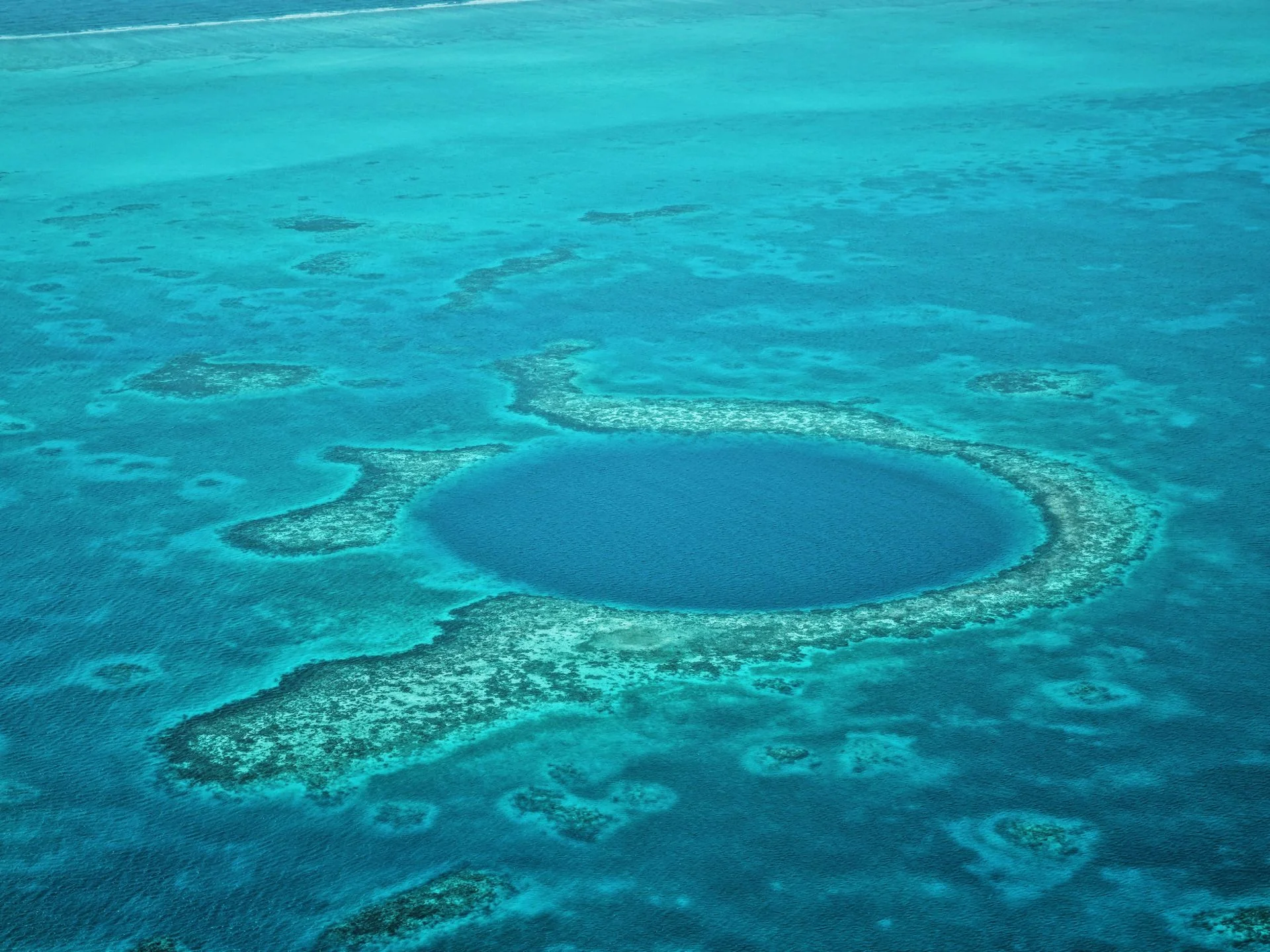
Straddling the Caribbean and Central America, Belize is home to the world’s second‑largest barrier reef and a string of offshore atolls. Warm, clear water and a relaxed tropical vibe make it a favourite with divers of all levels. The flagship attraction is the Great Blue Hole, a 300‑m‑wide limestone sinkhole plunging to 124 m, but Belize’s real magic lies in its walls and coral gardens. Turneffe Atoll and Lighthouse Reef teem with reef sharks, turtles, eagle rays and massive barrel sponges. Gladden Spit hosts whale sharks from April to June, while Hol Chan Marine Reserve and Shark Ray Alley offer easy snorkelling with nurse sharks and stingrays. Whether you’re a beginner completing your first course or an experienced diver chasing pelagics, Belize delivers with friendly people and laid‑back island life.

Maldives
Scattered across the Indian Ocean like strings of pearls, the Maldives’ 26 atolls encompass more than a thousand low‑lying islands, reefs and sandbanks. Beneath the turquoise surface are channels (kandus), pinnacles (thilas) and lagoons where powerful ocean currents sweep past colourful coral gardens. This nutrient‑rich flow attracts manta rays, whale sharks, reef sharks, schooling jacks, barracudas and every reef fish imaginable. Liveaboards and resort dive centres explore sites such as Okobe Thila and Kandooma Thila in the central atolls, manta cleaning stations in Baa and Ari, and shark‑filled channels like Fuvahmulah in the deep south. Diving here ranges from tranquil coral slopes to adrenalin‑fuelled drifts through current‑swept passes, making the Maldives a true pelagic playground.

Komodo
Komodo National Park is a diver’s paradise full of marine diversity: expect healthy coral gardens, reef sharks, giant trevallies, countless schools of fish, and frequent manta ray sightings at sites like Manta Point and Batu Bolong. Drift dives and dramatic reef structures add excitement, while both macro lovers and big-fish fans will find plenty to love. Above water, the wild Komodo dragons roam, giving a touch of prehistoric wonder to the whole trip.