
Oceanic Whitetip Shark
Carcharhinus longimanus
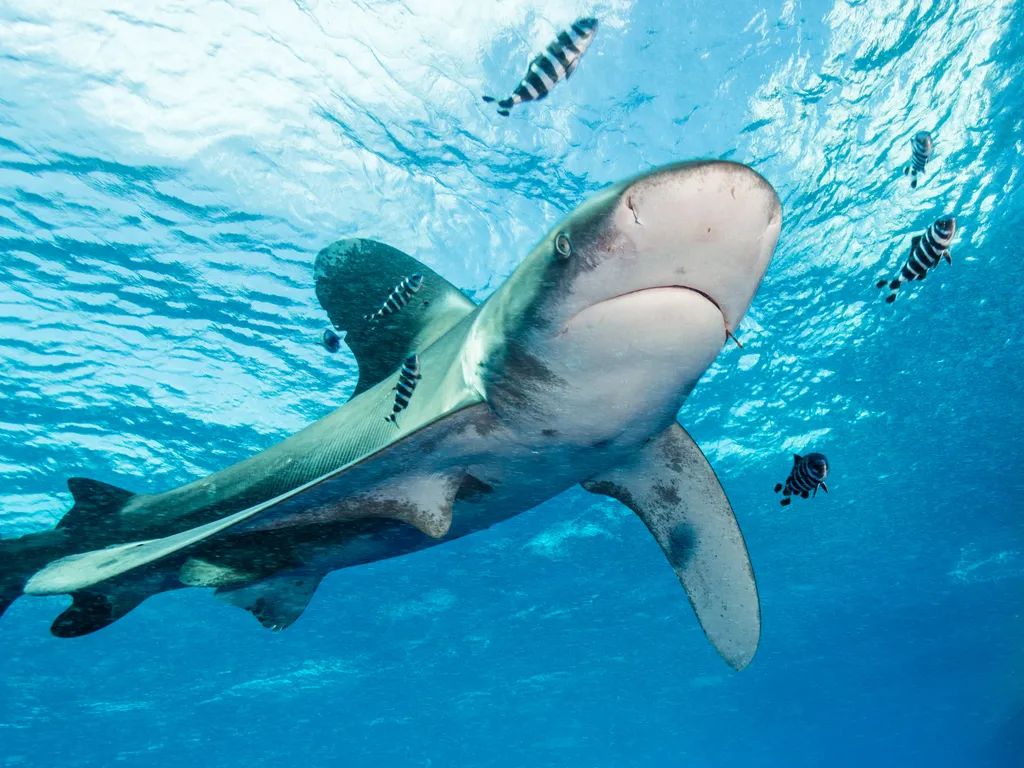
Photo by Alexander Vasenin / CC BY-SA 4.0 via Wikimedia Commons
The Oceanic Whitetip is the open-ocean icon — a stocky, slow-cruising requiem shark built for the blue, not the reef wall. Carcharhinus longimanus is instantly recognisable by its paddle-like pectoral fins (the Latin longimanus means "long hands") and the white or mottled tips on its dorsal, pectoral, pelvic, and caudal fins.
For most of the 20th century this was among the most abundant large pelagic sharks on Earth. Longline fisheries and the fin trade collapsed populations by an estimated 95%+ globally; IUCN now lists the species as Critically Endangered. The Egyptian Red Sea — especially Elphinstone Reef, the Brothers, and Daedalus — remains one of the last places where divers can reliably hover in the blue and watch multiple individuals make close, curious passes.
Encounters feel different from reef-shark dives. Oceanic whitetips are investigative, not territorial. They approach from the side, circle back, and may follow the group for minutes. Managed Red Sea protocols (calm horizontal posture, no baiting, group ascents, shark in sight at all times) have kept these interactions remarkably safe — but this is an advanced pelagic dive, not a casual wall drift.
🔬Classification
📏Physical Features
🌊Habitat Info
⚠️Safety & Conservation
Identification Guide
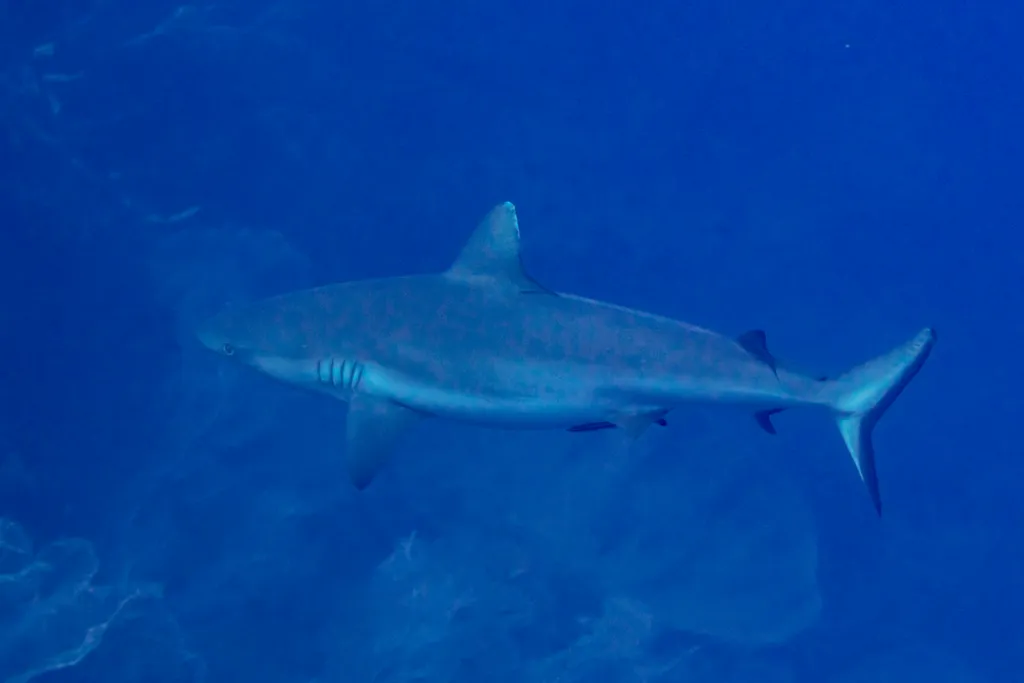
Photo by Diego Delso / CC BY-SA 4.0 via Wikimedia Commons
Field marks:
- Oversized rounded fins — pectoral and dorsal fins are dramatically long and rounded (paddle-like), with white or mottled tips
- Stocky, thick body — compact trunk compared to sleek reef sharks; blunt rounded snout
- Grey-bronze dorsal, white ventral — classic counter-shading; may show a saddle patch between dorsal fins
- Circular eyes with nictitating membranes; slow, deliberate swimming style
- Pilot fish (Naucrates ductor) often accompany adults in open water
Differences from Similar Species
- Whitetip Reef Shark (Triaenodon obesus): Much smaller and slender; rests on the bottom; white tips only on dorsal and caudal fins; strictly reef-associated
- Silky Shark (Carcharhinus falciformis): Sleeker body, sickle-shaped fins without bold white tips; more hydrodynamic profile
- Dusky Shark (Carcharhinus obscurus): Similar family but fins lack prominent white tips; more coastal
- Tiger Shark (Galeocerdo cuvier): Bold vertical bars (fading in adults); much larger mouth; different fin proportions
Juvenile vs. Adult
Pups are born ~45–75 cm. Juveniles may show darker fin markings. Adults encountered on Red Sea pelagic dives are typically 1.5–2.5 m; fish over 3 m are increasingly rare.
Top 10 Fun Facts about Oceanic Whitetip Shark
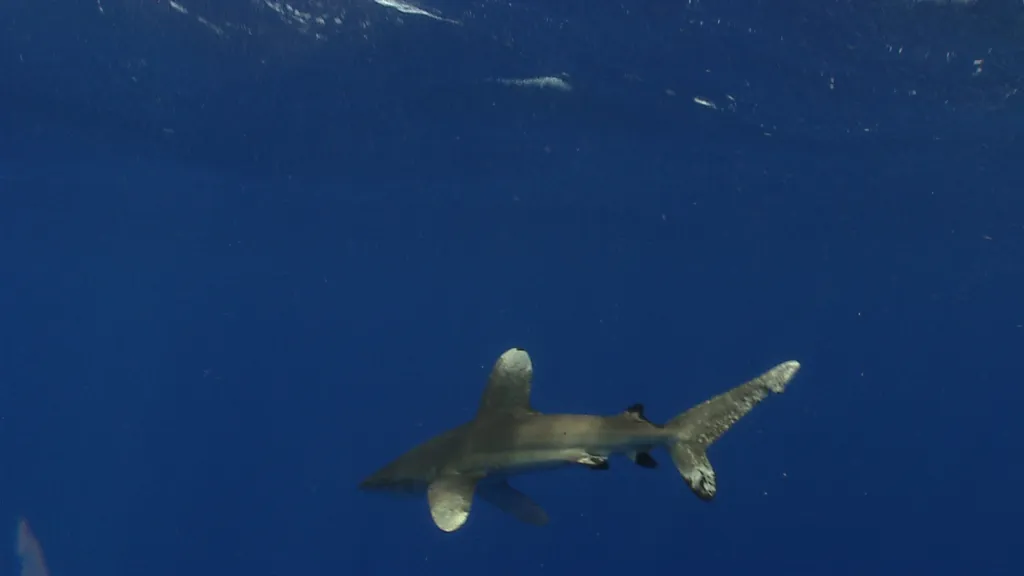
Photo by NOAA Okeanos Explorer Program via Wikimedia Commons
1. Once the Default Shark of the Open Sea
Before industrial longlining, oceanic whitetips were so common in tropical blue water that mariners called them "sea dogs" — the sharks that followed ships for days. Jacques Cousteau famously called them the most dangerous shark in the ocean, largely because of their boldness around shipwreck survivors and floating debris, not because they hunt divers.
2. The "Long Hands" Shark
The species name longimanus refers to its extraordinary pectoral fins — proportionally among the largest of any shark. Those wide, rounded wings are adapted for slow cruising and long-distance travel in low-energy open-ocean habitats, not burst speed.
3. A 95%+ Population Crash
IUCN upgraded the species to Critically Endangered in 2019 after studies showed pelagic populations had collapsed by more than 95% in every ocean region. The shark is still widely distributed on maps, but encounter rates tell a different story — except at a handful of strongholds like the southern Red Sea.
4. Shipwreck Legend, Real Biology
Oceanic whitetips gathered around WWII shipwrecks and air-sea disaster sites in the Pacific, feeding on casualties and floating debris. This history fuelled their fearsome reputation. Biologically they are opportunistic scavengers and hunters of pelagic fish, squid, and occasionally sea turtles — not specialists on humans.
5. Slow Swimmer, Bold Investigator
They cruise at a leisurely pace near the surface, often by day. When curious, they make repeated close passes and may follow divers for extended periods. Red Sea dive protocols treat this as normal investigative behaviour — calm posture and eye contact, not panic or chase.
6. Pilot Fish Partnership
Juvenile pilot fish (Naucrates ductor) commonly ride alongside adults, picking parasites and scraps. For photographers, a whitetip with a pilot-fish escort is one of the classic Red Sea pelagic compositions — the shark's bulk against a school of striped attendants.
7. Viviparous with Placental Pups
Females give birth to live young after a gestation of roughly 9–12 months. Litters range from about 2 to 14 pups depending on region. Pacific newborns can be as small as 45 cm; Atlantic pups average larger.
8. CITES and CMS Protection
The species is on CITES Appendix II (international trade requires permits) and was listed on CMS Appendix I in 2014 — the highest migratory-species protection. Several nations, including the US (ESA threatened listing) and New Zealand, afford additional domestic protection.
9. Red Sea Seasonality
At Elphinstone, the Brothers, and Daedalus, activity builds from September and peaks October through December, tapering after the new year. Summer sightings are sparse. Liveaboard itineraries from Hurghada and Marsa Alam are timed around this window.
10. Not a Reef Shark
Despite the "whitetip" name, this species does not rest on the bottom or patrol coral walls like the whitetip reef shark. Confusing the two is a common beginner mistake — if you see a huge shark with paddle fins in the blue off an offshore pinnacle, you are almost certainly looking at C. longimanus.
Diving & Observation Notes
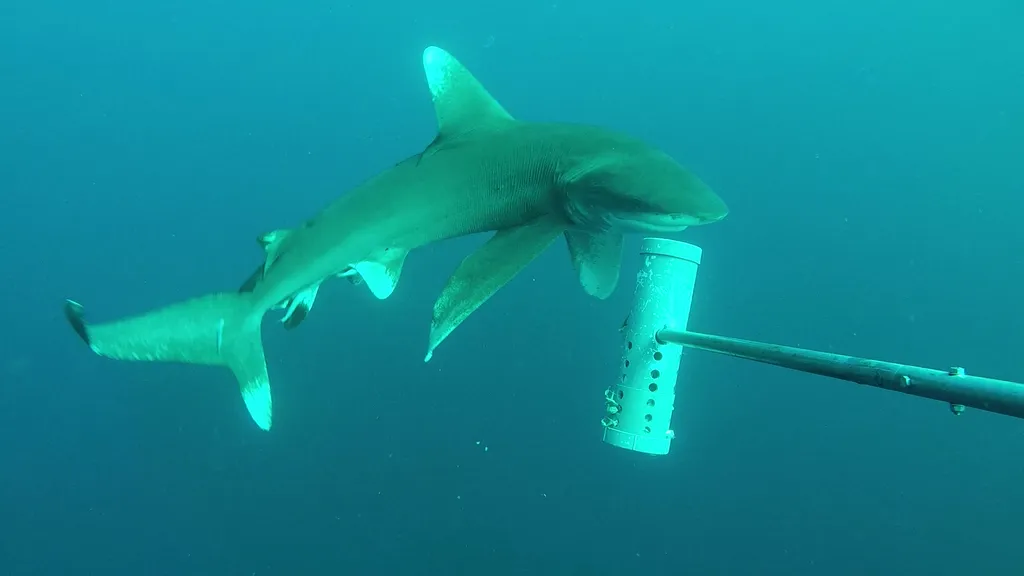
Photo by Jessica Meeuwig / CC BY-SA 4.0 via Wikimedia Commons
🧭 Where to Find Them
The southern Egyptian Red Sea is the global benchmark: Elphinstone Reef, Big Brother / Small Brother, and Daedalus Reef on liveaboard routes from Hurghada and Marsa Alam. Hang in the blue off the plateau edges at 15–35 m — sharks often approach from deep water. Season peaks October–December.
🤿 Dive Style & Prerequisites
These are advanced pelagic drifts in open blue water, often with moderate to strong current. Negative entries, reef hooks (where permitted), and solid buoyancy are standard. Many operators require 50+ logged dives and recent deep/current experience. You are not hiding behind coral — you are exposed in the water column.
🦈 Behaviour & Positioning
Oceanic whitetips investigate by circling the group. Stay calm, horizontal, and compact. Keep the shark in your field of view; avoid splashing, rapid ascents, or chasing. Do not attempt to touch or feed. If multiple sharks appear, maintain group cohesion — stragglers attract more attention.
📷 Photo Tips
Wide-angle with natural light works best; strobes often cannot reach subjects in the blue. Shoot on the shark's pass when pilot fish frame the body. Keep shutter speed high (1/250+) for fin detail. A dome port helps capture the full paddle-fin silhouette against blue water.
⚠️ Ethics & Conservation
This is a Critically Endangered species — every encounter is a privilege. Choose operators that do not bait oceanic whitetips (distinct from some shark-feed dives elsewhere). Report fin injuries to local monitoring projects. Avoid contributing to demand for shark-fin products. Your photos and logs can support citizen-science population tracking.
Best Places to Dive with Oceanic Whitetip Shark

Marsa Alam
Once a sleepy fishing village on Egypt’s southern Red Sea coast, Marsa Alam is now synonymous with pristine reefs, encounters with sharks and dolphins, and long, deep walls far from the crowds. Stretching from El Quseir in the north to Wadi Lahami in the far south, the region encompasses famous offshore pinnacles such as Elphinstone and Daedalus, seagrass meadows where dugongs graze, and shallow bays sheltering green turtles. Compared to Hurghada and Sharm, the reef systems here are relatively untouched and the crowds thin, making Marsa Alam ideal for divers seeking pelagics, dramatic drop‑offs and a taste of the desert wilderness.
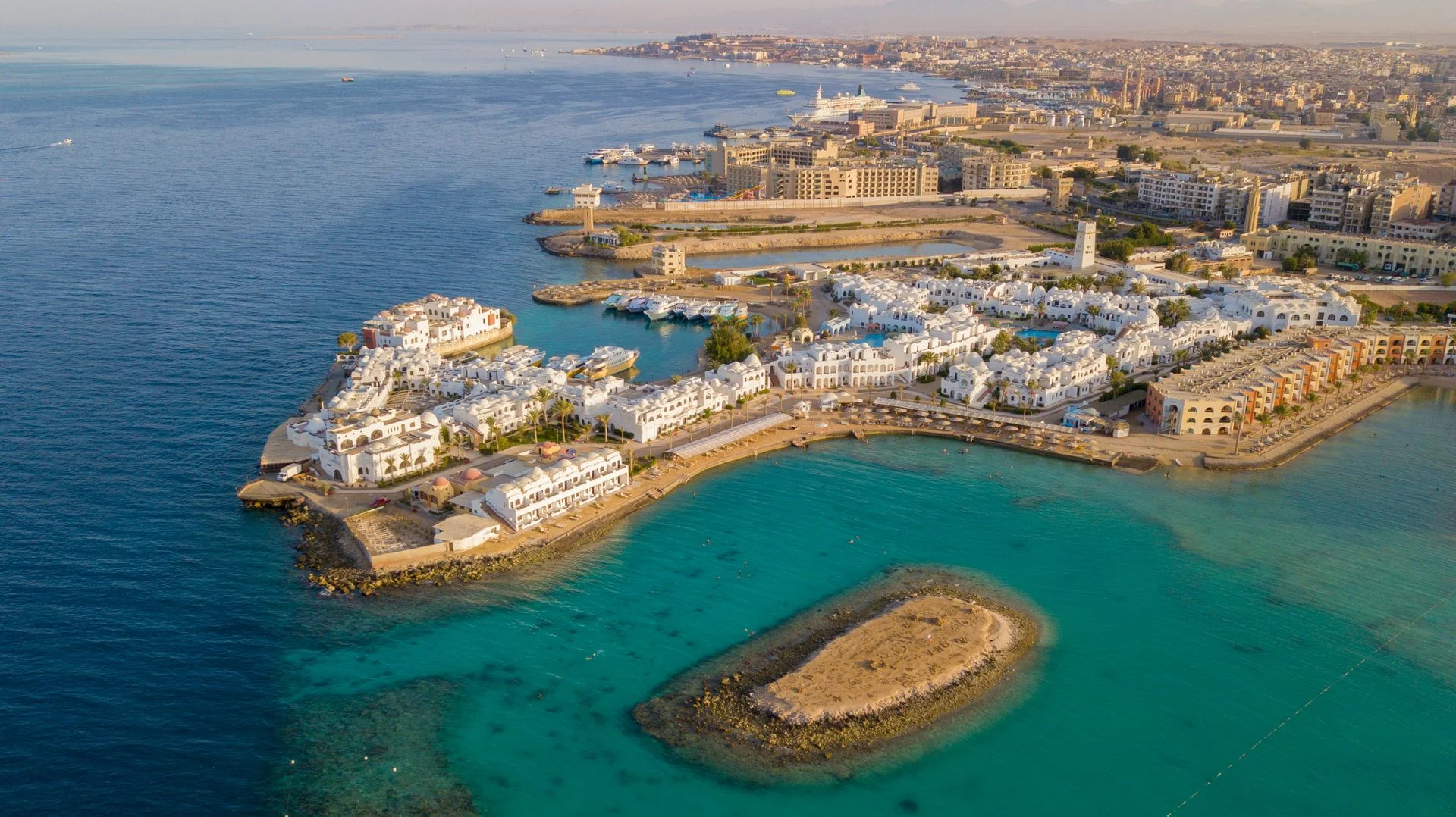
Hurghada (Red Sea)
Hurghada is one of Egypt’s original Red Sea resorts and remains a popular base for day‑boat diving and liveaboard departures. Situated on the mainland’s eastern shore, the city offers easy access to a wide variety of reefs, wrecks and islands within a short boat ride. Warm, clear waters, gentle conditions and lively coral gardens make Hurghada ideal for training and fun diving, while nearby sites such as Abu Nuhas and the Thistlegorm wreck keep more experienced divers enthralled. Topside, the modern resort town boasts a lively promenade, international restaurants and plenty of après‑dive entertainment.
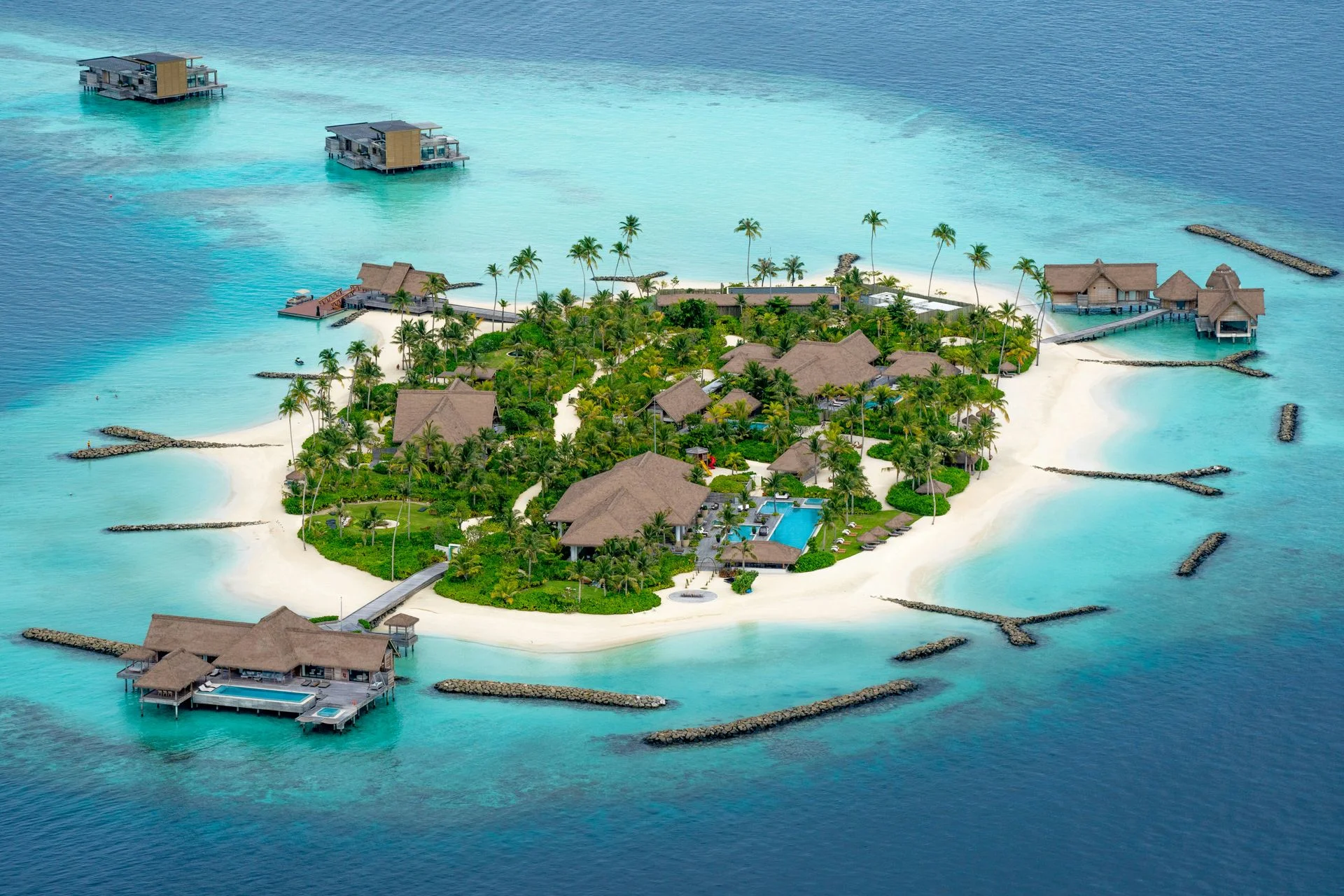
Maldives
Scattered across the Indian Ocean like strings of pearls, the Maldives’ 26 atolls encompass more than a thousand low‑lying islands, reefs and sandbanks. Beneath the turquoise surface are channels (kandus), pinnacles (thilas) and lagoons where powerful ocean currents sweep past colourful coral gardens. This nutrient‑rich flow attracts manta rays, whale sharks, reef sharks, schooling jacks, barracudas and every reef fish imaginable. Liveaboards and resort dive centres explore sites such as Okobe Thila and Kandooma Thila in the central atolls, manta cleaning stations in Baa and Ari, and shark‑filled channels like Fuvahmulah in the deep south. Diving here ranges from tranquil coral slopes to adrenalin‑fuelled drifts through current‑swept passes, making the Maldives a true pelagic playground.