
Orca (Killer Whale)
Orcinus orca
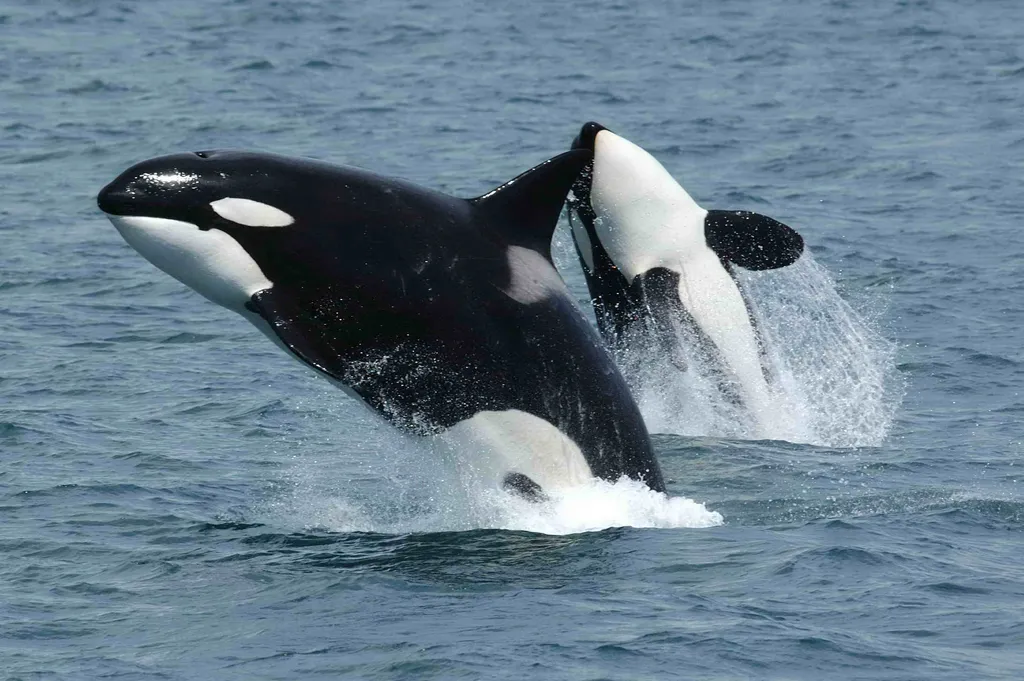
Photo by Robert Pittman via Wikimedia Commons
The Orca is the apex predator of the ocean—the largest dolphin and one of the most intelligent animals on Earth. With their striking black and white coloration and towering dorsal fin (up to 1.8 meters in males), they are instantly recognizable. They are master strategists, using sophisticated hunting techniques that vary by ecotype: some hunt fish in coordinated groups, while others specialize in taking down seals, whales, or even great white sharks. Encountering an orca underwater is both thrilling and humbling—you're in the presence of the ocean's ultimate predator.
🔬Classification
📏Physical Features
🌊Habitat Info
⚠️Safety & Conservation
Identification Guide
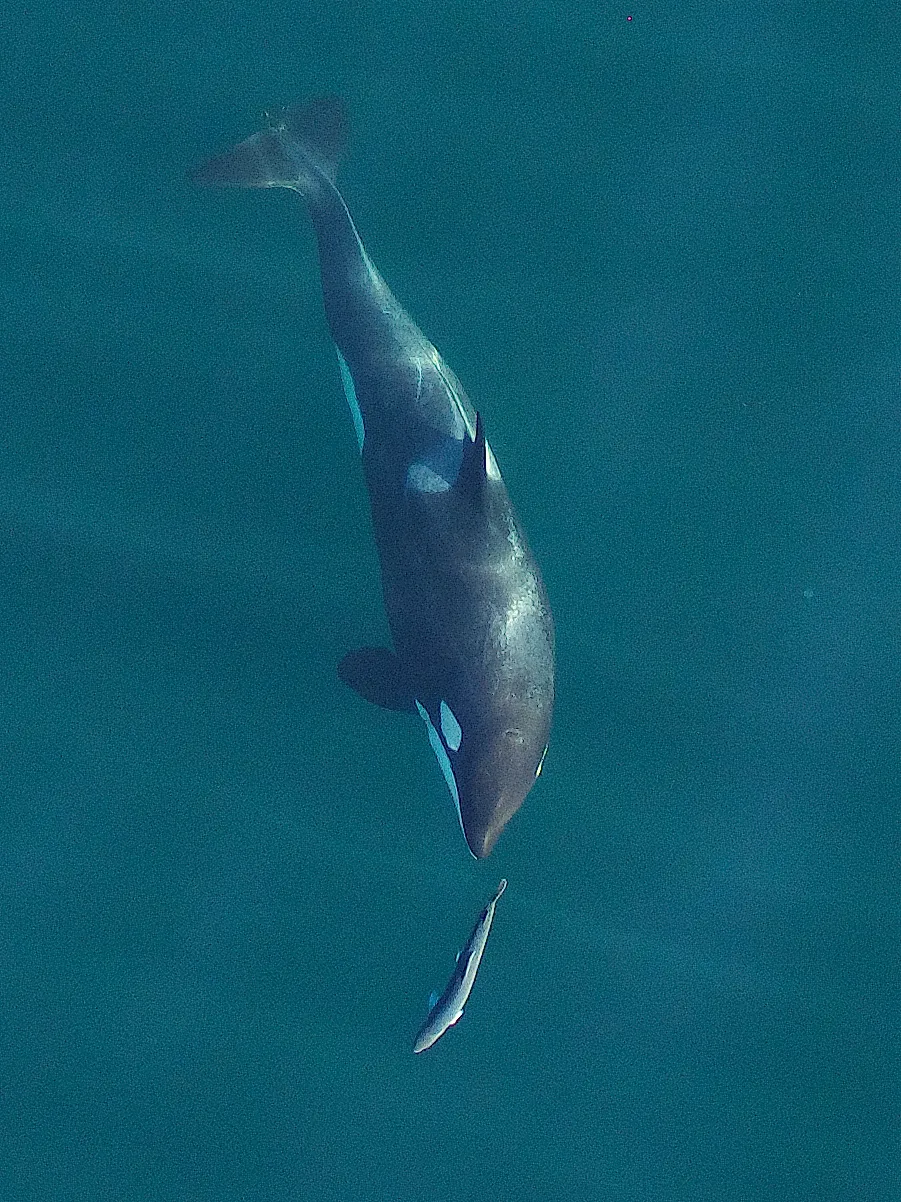
Photo by Oregon State University / CC BY-SA 2.0 via Wikimedia Commons
Field marks:
- Black and White Pattern: The most distinctive feature—jet black back, white belly, and white eye patch behind each eye.
- Tall Dorsal Fin: Males have a tall, straight dorsal fin that can reach 1.8 meters (6 feet)—the tallest of any marine mammal. Female fins are shorter and curved.
- White Saddle Patch: A grey or white "saddle" patch behind the dorsal fin (varies by ecotype).
- Robust Body: Large, powerful, torpedo-shaped body—the largest member of the dolphin family.
- Social Behavior: Almost always seen in groups (pods) of 2–50+ individuals, moving in coordinated formation.
Differences from Similar Species
- Pilot Whale: Smaller; rounded head (no distinct beak); darker overall; sickle-shaped dorsal fin (not tall and straight).
- False Killer Whale: Similar size but all dark grey/black (no white patches); more slender body.
- Dolphin: Much smaller; different coloration; smaller dorsal fin; more playful/less predatory appearance.
- Humpback Whale: Much larger; has baleen (not teeth); long pectoral fins; different body shape.
Juvenile vs. Adult
Calves are born at about 2–2.5 meters with lighter coloration and smaller dorsal fins. Young orcas stay close to their mothers and learn hunting techniques through observation and play. Adult males are significantly larger with much taller dorsal fins.
Top 10 Fun Facts about Orca (Killer Whale)
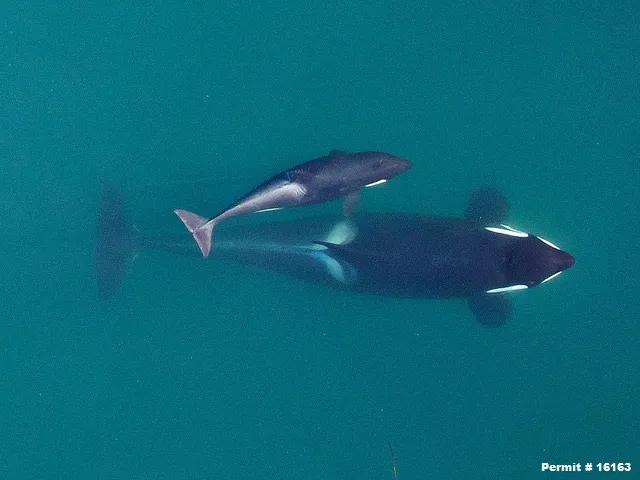
Photo by John Durban (NOAA Fisheries) via Wikimedia Commons
1. The Apex Predator
Orcas are the top predators of the ocean—they have no natural predators (except occasionally other orcas). They hunt everything from small fish to great white sharks, seals, sea lions, and even other whales. Different populations (ecotypes) have specialized diets: some eat only fish, others specialize in marine mammals. They're the ocean's equivalent of wolves—intelligent, coordinated, and ruthless.
2. The Three Ecotypes
In the North Pacific, orcas are divided into three distinct ecotypes with different cultures, diets, and behaviors: Resident (fish-eaters, especially salmon), Transient (marine mammal hunters), and Offshore (shark and fish specialists). They don't interbreed and have different "dialects." It's like having three different species that look the same.
3. The Matriarchal Society
Orcas live in matrilineal pods—stable family groups led by a matriarch (usually the oldest female). These pods can last for generations, with individuals staying together for life. The matriarch's knowledge (hunting grounds, migration routes, social customs) is passed down through the generations. When a matriarch dies, the pod can struggle to survive.
4. The Cultural Dialects
Each pod has a unique "dialect"—a set of vocalizations (clicks, whistles, pulsed calls) that are learned and culturally transmitted. Pods that share similar dialects form "clans," and multiple clans form "communities." Orcas from different communities can't understand each other's calls. It's like having regional languages and accents.
5. The Great White Shark Hunter
In South Africa, some orcas have learned to hunt great white sharks. They flip the shark upside down, inducing tonic immobility, then eat the nutrient-rich liver (leaving the rest). This behavior has caused great whites to flee entire areas when orcas are present. The ocean's top predator fears the orca.
6. The Spyhopping Behavior
Orcas practice "spyhopping"—they raise their heads vertically out of the water to observe their surroundings. This behavior helps them locate prey on ice floes, check out boats, or simply satisfy their curiosity. It's a sign of their intelligence and awareness of their environment.
7. The Deep Diver
While they often hunt near the surface, orcas are capable of deep dives. Some individuals have been recorded diving to depths exceeding 1,000 meters (3,280 feet). They can hold their breath for up to 15 minutes, though most dives are shorter. This allows them to hunt in a wide range of depths.
8. The Wave Washing
In Antarctica, Type B orcas use a technique called "wave washing" to hunt seals on ice floes. A group of orcas swims in formation, creating a wave that washes the seal off the ice. It's a coordinated, strategic hunt that requires precise timing and teamwork—pure orca intelligence in action.
9. The Menopause Mystery
Female orcas are one of only three species (along with humans and short-finned pilot whales) that experience menopause. They can live decades after they stop reproducing, acting as "grandmothers" who help raise grandchildren and share knowledge. This suggests that older females are crucial to pod survival.
10. The Name Confusion
Despite being called "killer whales," orcas are actually dolphins (family Delphinidae). The name likely comes from "whale killer" (they kill whales), which got reversed to "killer whale." In many cultures, they're revered rather than feared. The name "orca" comes from the Latin Orcinus, meaning "of the kingdom of the dead"—a reference to their power and dominance.
Diving & Observation Notes
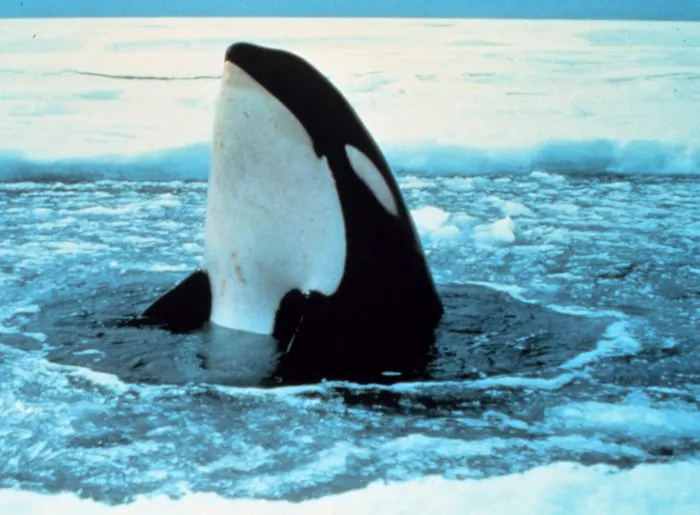
Photo by Derbeth via Wikimedia Commons
🧭 Finding Orcas
Orcas are found in all oceans, from the Arctic to the Antarctic. The best encounters happen in cold, productive waters where they hunt: Norway (fjords), Iceland, Patagonia (Argentina), Vancouver Island (Canada), and Antarctica. Look for their distinctive tall dorsal fins breaking the surface.
🤿 Approach & Behavior
- Extreme Caution: Orcas are apex predators. While attacks on humans are extremely rare, they are powerful, intelligent animals that should be treated with respect and caution.
- Snorkeling vs. Scuba: Most encounters happen while snorkeling at the surface. Scuba diving with orcas is rare and usually requires special permits and experienced guides.
- Respect the Pod: They travel in tight family groups. Don't try to separate individuals or get between group members. Their social bonds are critical.
- The Spyhop: If an orca spyhops near you, it's observing you. Stay calm and still. This is curiosity, not aggression.
📸 Photo Tips
- Wide Angle Essential: You need a fisheye or ultra-wide lens. They are large and powerful, and you want to capture their full presence.
- The Dorsal Fin: The tall dorsal fin is their signature. Capture it breaking the surface or in profile.
- The Eye Patch: The white eye patch is distinctive. Try to capture it in portraits or close-ups.
- Pod Shots: Capturing the coordinated movement of a pod is a unique and powerful image.
⚠️ Ethics & Safety
- No Touching: Never attempt to touch an orca. They are wild apex predators, and contact can be dangerous.
- Respect Hunting: If orcas are hunting, keep extra distance. Don't interfere with their natural behavior.
- Boat Regulations: Follow local regulations strictly. Most places require maintaining a minimum distance (often 100–200 meters).
- The Ecotype Matters: Different ecotypes have different behaviors. Transient orcas (mammal hunters) may be more cautious around boats than resident orcas (fish-eaters).
🌏 Local Guide Nuggets
- Norway (Tromsø/Lofoten): One of the best places in the world for orca encounters. They hunt herring in the fjords during winter (October–January). Snorkeling with orcas is possible with specialized tours.
- Iceland: Orcas are common, especially around the Snaefellsnes Peninsula. Boat-based encounters are popular.
- Patagonia (Argentina): Orcas are famous for "wave washing" seals off beaches. This is a unique hunting behavior you can observe from shore.
- Vancouver Island (Canada): Resident orcas (fish-eaters) are common. The area has strict regulations to protect these populations.
- Antarctica: Type A, B, and C orcas are found here. Each has different behaviors and hunting strategies. Encounters are possible but require expedition-level trips.