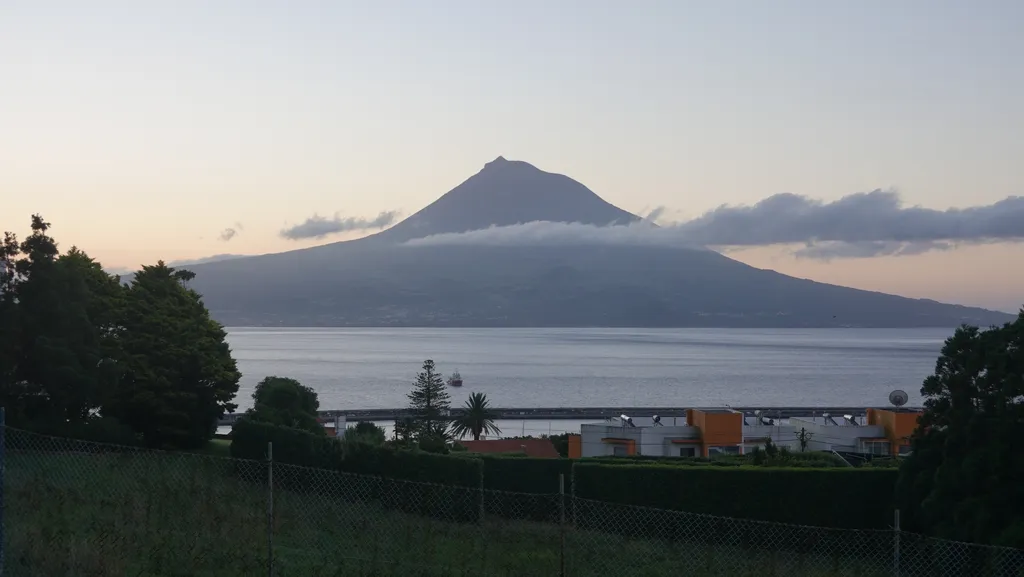
Pilot Whale
Globicephala (macrorhynchus/melas)
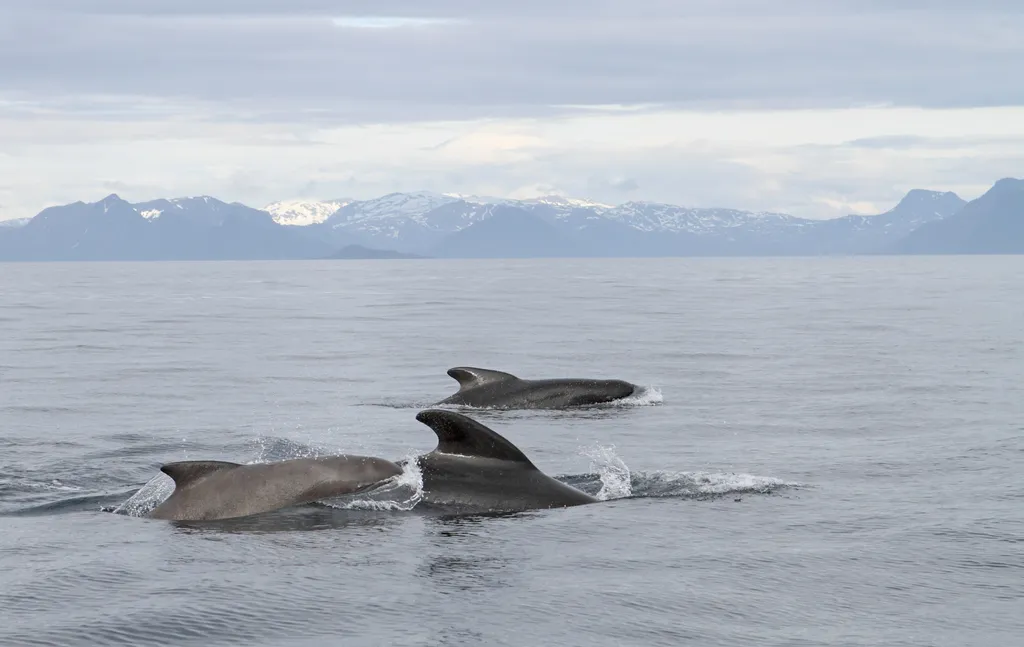
Photo by Bouke ten Cate / CC BY 4.0 via Wikimedia Commons
Pilot Whales are the "cheetahs of the deep sea"—fast, powerful divers that can reach depths of 1,000 meters in pursuit of squid. Despite their name, they're actually large dolphins (the second largest in the dolphin family after orcas). With their rounded heads, dark coloration, and strong social bonds, they travel in tight-knit family groups led by matriarchs. They're known for their mass strandings—tragic events where entire pods beach themselves, possibly due to their intense loyalty to group members. Encountering a pod of pilot whales is like meeting an underwater family on a mission.
🔬Classification
📏Physical Features
🌊Habitat Info
⚠️Safety & Conservation
Identification Guide
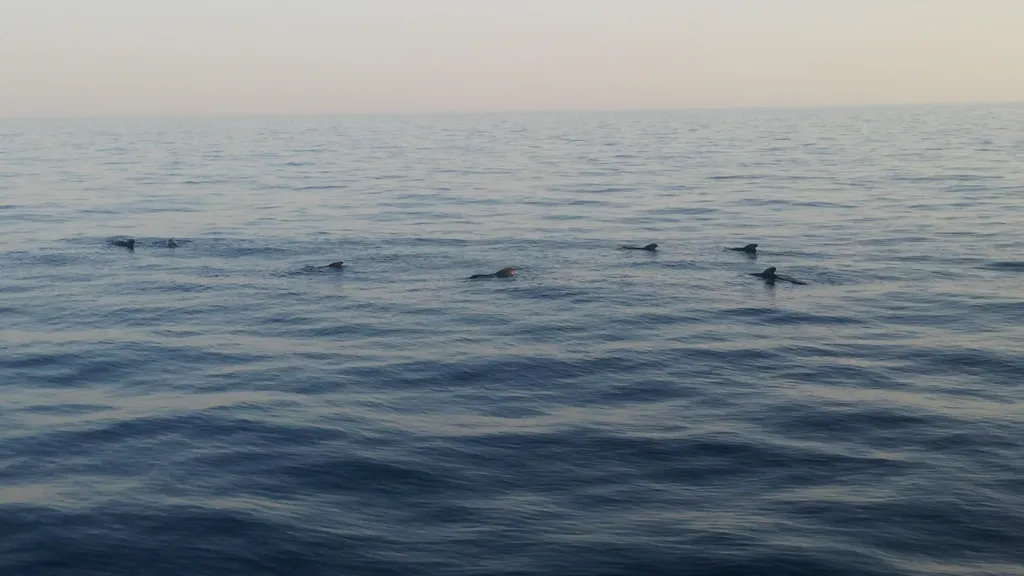
Photo by Ivane Pairaud / CC BY 4.0 via Wikimedia Commons
Field marks:
- Rounded Head: Bulbous, rounded head with a pronounced "melon" (forehead bulge). No distinct beak like other dolphins.
- Sickle-Shaped Dorsal Fin: A long, curved (sickle-shaped) dorsal fin located far forward on the back.
- Dark Coloration: Almost entirely dark grey or black, with a lighter anchor-shaped or saddle patch on the chest.
- Long Body: Robust, torpedo-shaped body, larger than most dolphins but smaller than true whales.
- Flipper Length: Short-finned pilot whales have shorter flippers; long-finned have flippers that are 15–20% of body length.
- Social Behavior: Almost always seen in groups (pods) of 10–100+ individuals, moving in tight formation.
Differences from Similar Species
- Orca (Killer Whale): Much larger; has white patches and a tall, straight dorsal fin; different body shape.
- False Killer Whale: Similar size and color, but has a more pointed head and longer, more slender body.
- Bottlenose Dolphin: Smaller; has a distinct beak; lighter grey color; smaller dorsal fin.
- Sperm Whale: Much larger; has a massive box-shaped head; wrinkled skin; different body proportions.
Juvenile vs. Adult
Calves are born at about 1.5–2 meters and are lighter in color. Young pilot whales stay close to their mothers in the pod. Adult males are larger and have more pronounced melons (forehead bulges) than females.
Top 10 Fun Facts about Pilot Whale
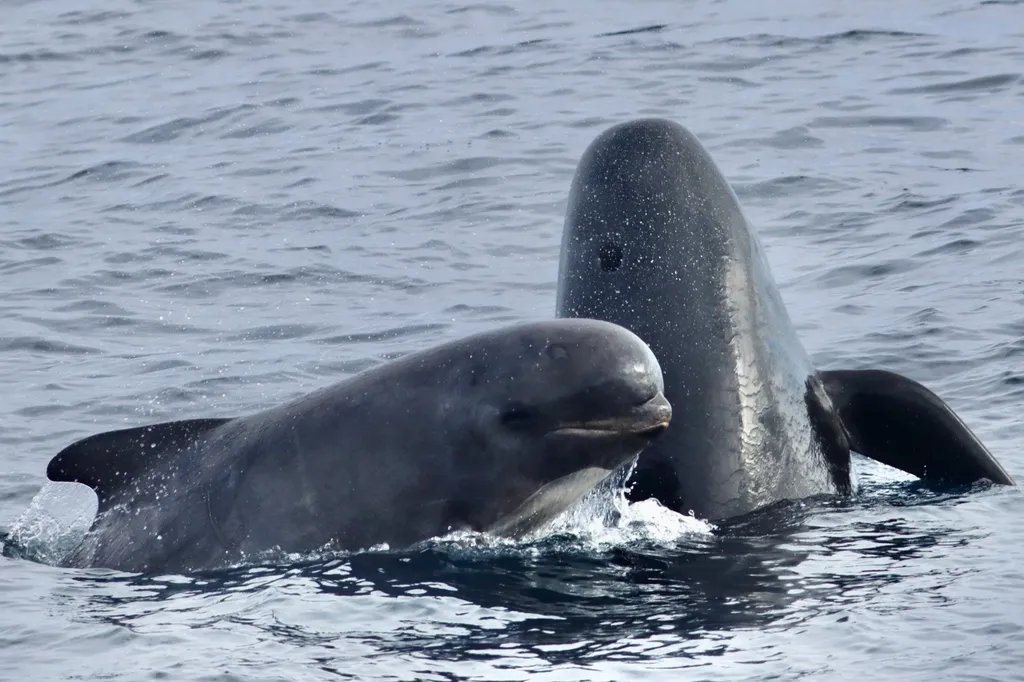
Photo by Vsevolod / CC BY 4.0 via Wikimedia Commons
1. The "Pilot" Name
The name "pilot whale" comes from the belief that these whales travel in groups led by a "pilot" or leader. Early whalers observed that if you caught the leader, the entire pod would follow, making them easy to hunt. This behavior reflects their intense social bonds—they literally follow each other, even into danger.
2. The Deep Sea Cheetahs
Short-finned pilot whales are known as the "cheetahs of the deep sea" for their high-speed, deep dives. They can reach depths of 1,000 meters (3,280 feet) in pursuit of squid, their primary prey. These intense dives can last up to 15 minutes, followed by surface intervals to recover. They're built for speed and endurance in the deep.
3. The Matriarchal Pods
Pilot whales live in matrilineal family groups—pods centered around female family members. These pods are stable and long-lasting, with individuals staying together for life. Males may leave their birth pod to mate but often return. The social bonds are so strong that the loss of a pod member can cause distress to the entire group.
4. The Mass Stranding Mystery
Pilot whales are notorious for mass strandings—events where entire pods (sometimes 100+ individuals) beach themselves. The largest recorded stranding involved over 1,000 pilot whales in New Zealand in 1918. Scientists believe this happens because of their intense social bonds: if one whale (possibly sick or disoriented) heads toward shore, the entire pod follows, even to their death.
5. The Anchor Patch
Most pilot whales have a distinctive anchor-shaped or saddle-shaped patch of lighter coloration on their chest. This patch is unique to each individual and can be used for identification, similar to how humpback whales are identified by their tail fluke patterns.
6. The Two Species
There are two species of pilot whales: Short-finned (G. macrorhynchus) and Long-finned (G. melas). The main difference is flipper length (long-finned have flippers that are 15–20% of body length). Short-finned are found in tropical/temperate waters; long-finned prefer colder waters. They're so similar that even experts can struggle to tell them apart.
7. The Deep Diving Physiology
Pilot whales have adaptations for deep diving: high concentrations of myoglobin (oxygen-storing protein) in their muscles, the ability to reduce heart rate (bradycardia), and collapsible lungs. They can dive deeper and longer than most dolphins, rivaling sperm whales in their diving capabilities.
8. The Vocal Communicators
Pilot whales have sophisticated vocalizations and echolocation abilities comparable to bottlenose dolphins. They produce group-specific calls, suggesting they have "dialects" unique to their pod. This communication is crucial for coordinating deep dives and hunting squid in the dark depths.
9. The Squid Specialists
Pilot whales are squid specialists. They dive deep to hunt various species of squid, including giant squid. Their diet can also include fish, but squid makes up the majority. An adult pilot whale needs about 50 kg (110 lbs) of food per day to sustain its massive body and deep-diving lifestyle.
10. The Second Largest Dolphin
Despite being called "whales," pilot whales are actually large dolphins (family Delphinidae). They're the second largest members of the dolphin family, after orcas. Males can reach 7 meters (23 feet) and weigh up to 3,500 kg (7,700 lbs). They're dolphins that grew up and decided to act like whales.
Diving & Observation Notes
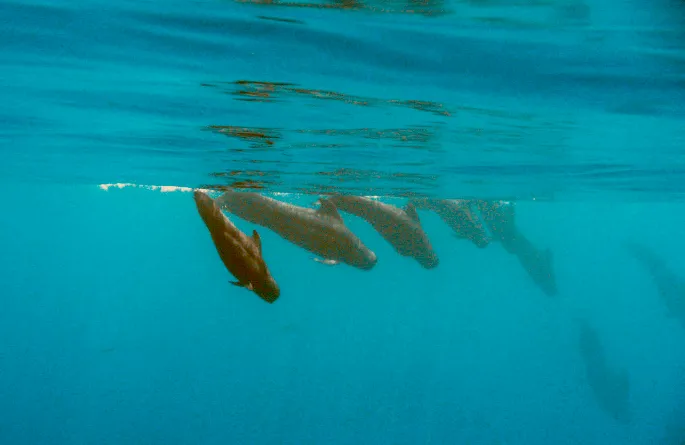
Photo by sindhi / CC BY-SA 2.5 via Wikimedia Commons
🧭 Finding Pilot Whales
Pilot whales are found in deep, offshore waters worldwide. Look for them in areas with steep drop-offs or underwater canyons. They're often seen in large pods (10–100+ individuals), moving in tight formation. The best encounters happen when they're at the surface, resting between deep dives.
🤿 Approach & Behavior
- Snorkeling is Best: Most pilot whale encounters happen while snorkeling at the surface, not scuba diving. They're usually in deep water and surface to breathe between dives.
- Respect the Pod: They travel in tight-knit groups. Don't try to separate individuals or get between group members. They have strong social bonds.
- Surface Observation: They often rest at the surface in "rafts"—groups floating together. This is a good time to observe them, but maintain distance.
- The Dive Cycle: They typically dive for 5–15 minutes, then surface for a few minutes to breathe. Watch for the tail fluke as they prepare to dive.
📸 Photo Tips
- Wide Angle: Essential for capturing groups. A fisheye lens helps show the scale of a large pod.
- The Pod Shot: Try to capture the tight formation of the pod—it's a unique behavior that shows their social structure.
- Individual Portraits: Get close enough (safely!) to capture their rounded heads and the anchor-shaped chest patch.
- Natural Light: In clear, deep water, natural light can create beautiful images, especially when they're near the surface.
⚠️ Ethics & Safety
- No Touching: Never attempt to touch a pilot whale. They are wild animals and can be unpredictable.
- Respect the Pod: Don't try to separate individuals or disrupt their group formation. Their social bonds are critical to their survival.
- Boat Regulations: Follow local regulations for whale watching. Most places require maintaining a minimum distance (often 100 meters).
- Stranding Response: If you encounter a stranding, contact local marine mammal rescue organizations immediately. Don't try to push them back into the water yourself.
🌏 Local Guide Nuggets
- Canary Islands (Spain): One of the best places in the world for pilot whale encounters. Short-finned pilot whales are resident year-round. Boat-based encounters are common.
- Azores (Portugal): Pilot whales are frequently seen, often in large pods. The deep water close to shore provides excellent habitat.
- Madeira: Short-finned pilot whales are common. The clear, deep water makes for excellent viewing and photography.
- Cabo Verde: Pilot whales are regularly seen. The warm, clear water provides good conditions for encounters.
- Sri Lanka: Pilot whales are found off the coast, especially around Mirissa. Encounters are possible but less predictable.