
Sand Tiger Shark
Carcharias taurus
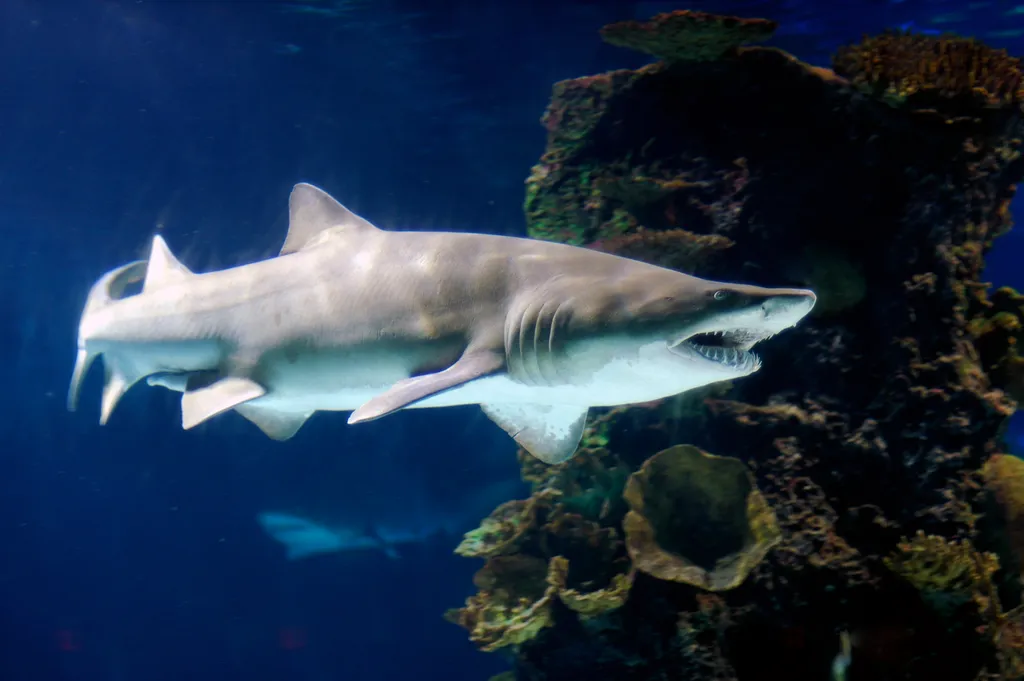
Photo by Jeff Kubina from Columbia / CC BY-SA 2.0 via Wikimedia Commons
The Sand Tiger Shark has the scariest smile in the ocean, but don't let its looks fool you. With a mouth full of jagged, needle-like teeth that protrude in all directions even when closed, it looks like a swimming nightmare. In reality, it is a docile, slow-moving giant that poses little threat to divers. Known as the "Grey Nurse Shark" in Australia and "Ragged-tooth Shark" in South Africa, it is famous for hovering motionlessly in currents—a skill it masters by gulping air into its stomach.
🔬Classification
📏Physical Features
🌊Habitat Info
⚠️Safety & Conservation
Identification Guide
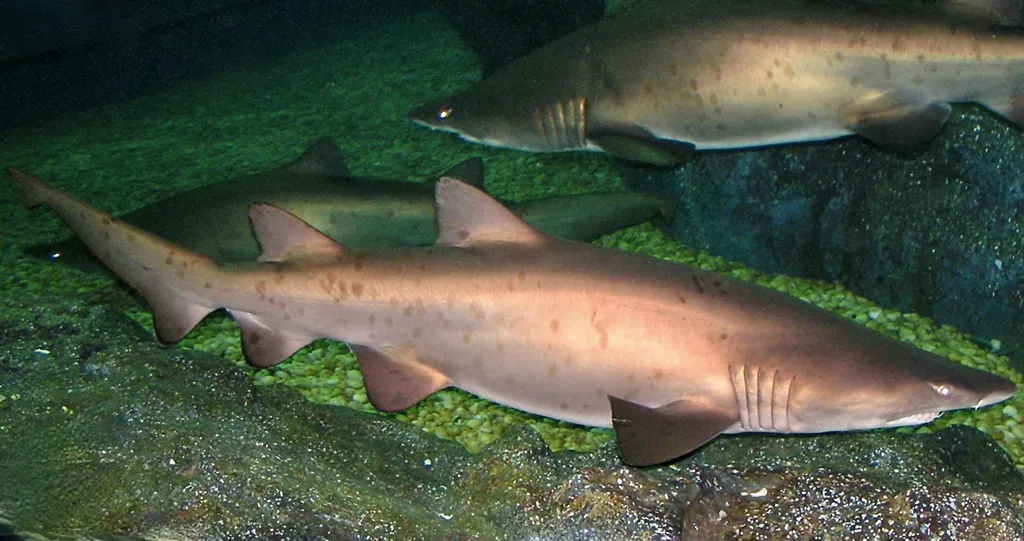
Photo by NasserHalaweh / CC BY-SA 4.0 via Wikimedia Commons
Field marks:
- The Teeth: Long, narrow, needle-like teeth that are visible even when the mouth is closed. They look messy and ragged.
- Hunched Back: The back has a distinct hump behind the head, giving it a slouching posture.
- Two Large Dorsals: The first and second dorsal fins are almost the same size (similar to the Lemon Shark, but the Sand Tiger has a pointed snout).
- Snout: Conical, flattened, and pointed snout.
- Eyes: Small, dark eyes without protective eyelids.
- Color: Often has reddish-brown spots scattered on the flanks (hence "Spotted Ragged-tooth").
Differences from Similar Species
- Lemon Shark: Also has two large dorsal fins, but has a broad, blunt snout (not pointed) and neat, hidden teeth.
- Nurse Shark: Has barbels (whiskers) and a very small mouth; rests on the bottom (Sand Tigers hover).
- Tiger Shark: Has vertical stripes and a square snout; teeth are saw-like (not needle-like).
Juvenile vs. Adult
Juveniles look very similar to adults but often have more distinct spots on their bodies.
Top 10 Fun Facts about Sand Tiger Shark
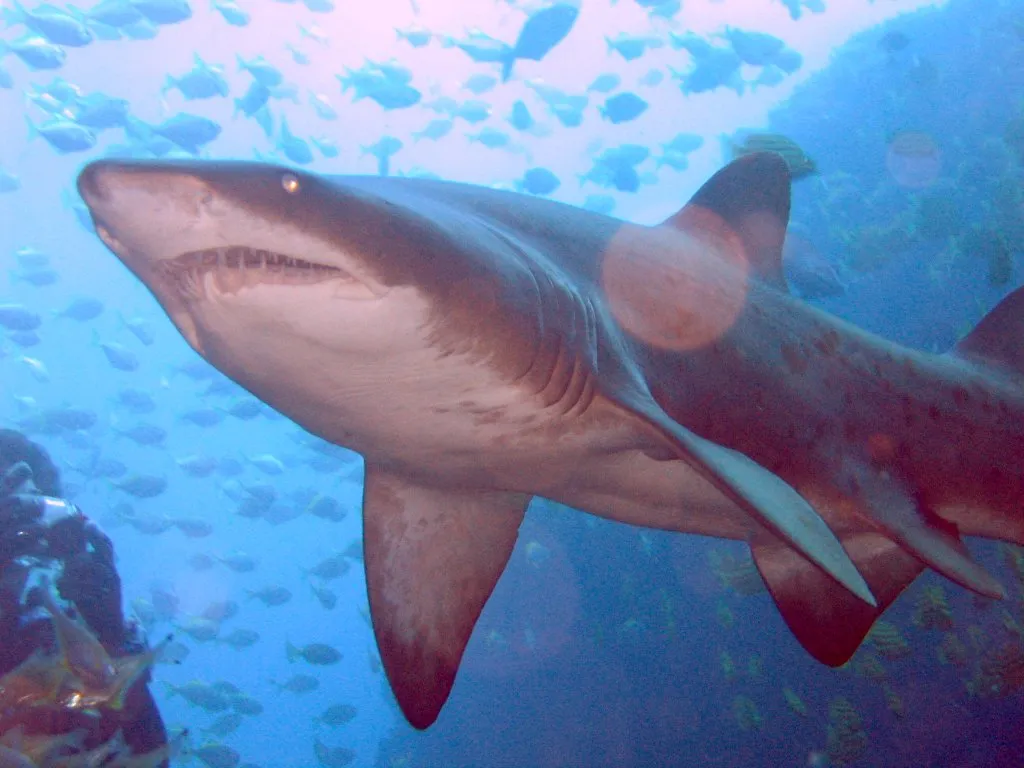
Photo by Photographer: Richard Ling <[email protected]> / CC BY-SA 3.0 via Wikimedia Commons
1. The Scariest Gentle Giant
Despite looking like a horror movie villain with their protruding, jagged teeth, Sand Tiger Sharks are surprisingly gentle. They move slowly and are generally indifferent to divers. Unless provoked, they are harmless. Their scary teeth are designed for grabbing slippery fish, not tearing apart large prey (or humans).
2. Sibling Cannibalism
They have the most brutal prenatal hunger games in nature. It's called intrauterine cannibalism (adelphophagy). The female has two uteruses, and hundreds of eggs are fertilized. The first embryo to hatch in each uterus grows teeth and eats all its siblings and unfertilized eggs. Only two giant pups are born—one from each uterus.
3. The Buoyancy Hack
Sharks don't have swim bladders like bony fish, so they usually sink if they stop swimming. Sand Tiger Sharks solved this by becoming the only shark known to gulp air at the surface and store it in their stomach. This turns their stomach into a biological BCD, allowing them to hover motionlessly in the water column.
4. Shipwreck Lovers
If you want to find them, look for a shipwreck. In North Carolina (the "Graveyard of the Atlantic"), hundreds of Sand Tigers congregate around wrecks. They seem to use the structure for shelter and navigation points.
5. Why "Sand Tiger"?
The name is confusing. They aren't related to Tiger Sharks, and they don't look like tigers. The name likely comes from their habitat (sandy bottoms) and their ferocious appearance. In Australia, they are called "Grey Nurse Sharks", and in South Africa, "Spotted Ragged-tooth Sharks" (or "Raggies").
6. Critically Endangered
Because of their slow reproduction (only 2 pups every 2 years) and late maturity, they are extremely vulnerable. They were hunted extensively in the past because they looked scary and were easy targets. Today, they are Critically Endangered in many parts of the world.
7. Tooth Conveyor Belt
Their teeth are arranged in rows, and like all sharks, they are constantly replaced. However, their teeth are particularly prone to falling out because they are long and narrow. Divers often find fossilized (or fresh) Sand Tiger teeth in the sand around their hangouts.
8. Migration Marathons
Populations in South Africa and Australia undertake massive annual migrations. They travel thousands of kilometers to specific mating and birthing grounds. In South Africa, the "Sardine Run" often attracts them as they follow the food.
9. Night Hunters
While they hover lazily during the day, they become active hunters at night. They leave their resting spots to patrol the sea floor, using their electro-receptors to find fish, rays, and squid hiding in the sand.
10. Aquarium Stars
Because they look terrifying but are actually calm and survive well in captivity, Sand Tiger Sharks are the most common large shark found in aquariums worldwide. If you've seen a big shark in a tank, it was probably a Sand Tiger.
Diving & Observation Notes
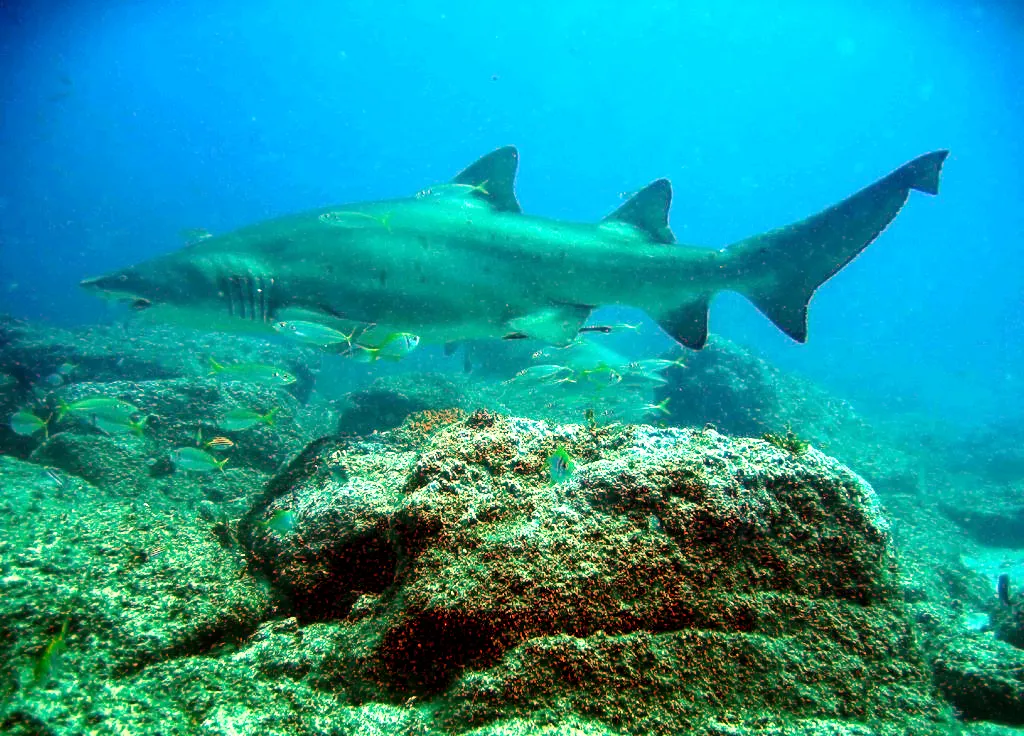
Photo by Richard Ling / CC BY-SA 2.0 via Wikimedia Commons
🧭 Finding Sand Tiger Sharks
They love structure. Look for them in gutters, caves, and especially shipwrecks. In places like South West Rocks (Australia), they congregate in the "Fish Rock Cave." In North Carolina, check the wrecks.
🤿 Approach & Behavior
- No Sudden Movements: They are skittish despite their size. Approach slowly and efficiently.
- Respect the Hover: They often hang motionless in the current. Do not swim directly at them to force them to move; swim alongside them.
- Look for Teeth: Don't be scared by the teeth. If they open their mouth (gape), it might just be to adjust their jaw or "yawn," not a threat.
- Bottom Dwellers: They usually stay deep. Watch your NDL (No Decompression Limit) as you might spend a lot of time at 20-30m.
📸 Photo Tips
- The "Grin": Get a close-up of the mouth. The messy teeth make for a very dramatic, scary-looking photo that friends will love.
- Silhouette: They have a distinctive hunched profile. Shooting up against a wreck or cave entrance looks amazing.
- Eye Contact: Their small eyes can look lifeless. Try to catch the light in their eye to give the shark some "personality."
⚠️ Safety
- Do Not Corner: In caves, ensure you don't block their exit. A cornered shark is a stressed shark.
- Teeth Everywhere: If you find teeth in the sand, feel free to keep them (where legal), but don't try to pull one out of a live shark's mouth!