
Sperm Whale
Physeter macrocephalus
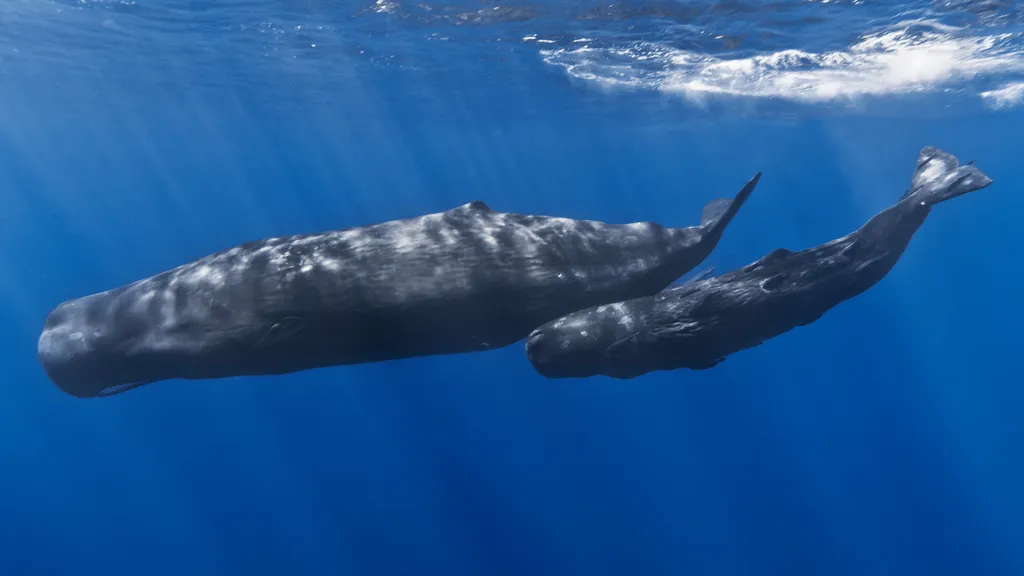
Photo by Gabriel Barathieu / CC BY-SA 2.0 via Wikimedia Commons
The Sperm Whale is the deep-diving champion of the ocean—the largest toothed predator on Earth and the deepest-diving mammal. With their massive, box-shaped head (one-third of their body length) filled with spermaceti oil, they are built for extreme depths. They can dive to 2,000+ meters and hold their breath for over an hour. They're also the loudest animals on Earth, producing clicks that can be heard hundreds of kilometers away. Encountering a sperm whale underwater is like meeting a living submarine— massive, mysterious, and perfectly adapted to the abyss.
🔬Classification
📏Physical Features
🌊Habitat Info
⚠️Safety & Conservation
Identification Guide
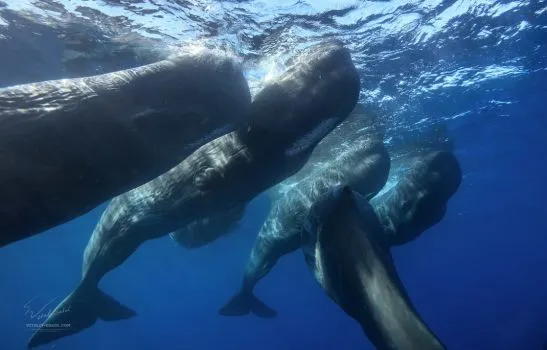
Photo by Will Falcon aka Vitaly Sokol / CC BY 4.0 via Wikimedia Commons
Field marks:
- Massive Head: The head is huge, box-shaped, and can be up to one-third of the total body length. It's the most distinctive feature.
- Wrinkled Skin: The skin is heavily wrinkled, especially on the back and sides, giving it a "prune-like" appearance.
- Small Dorsal Fin: A small, hump-like dorsal fin located far back on the body, followed by a series of bumps.
- Blow: The blowhole is positioned on the left side of the head (not centered), and the blow is angled forward and to the left.
- Tail Fluke: Large, triangular tail fluke, often raised high before a deep dive.
- No Teeth Visible: Unlike orcas, you won't see teeth when the mouth is closed (teeth are only in the lower jaw).
Differences from Similar Species
- Orca (Killer Whale): Much smaller; has a tall, straight dorsal fin; white patches; visible teeth; different body shape.
- Pilot Whale: Smaller; rounded head (not box-shaped); shorter body; found in large pods.
- Humpback Whale: Has baleen (not teeth); long pectoral fins; breaches frequently; different head shape.
- Blue Whale: Much larger; has baleen; uniform blue-grey color; no wrinkled skin.
Juvenile vs. Adult
Calves are born at about 4 meters. Young sperm whales stay with their mothers in nursery groups. Adult males are significantly larger than females and often travel alone or in small bachelor groups.
Top 10 Fun Facts about Sperm Whale
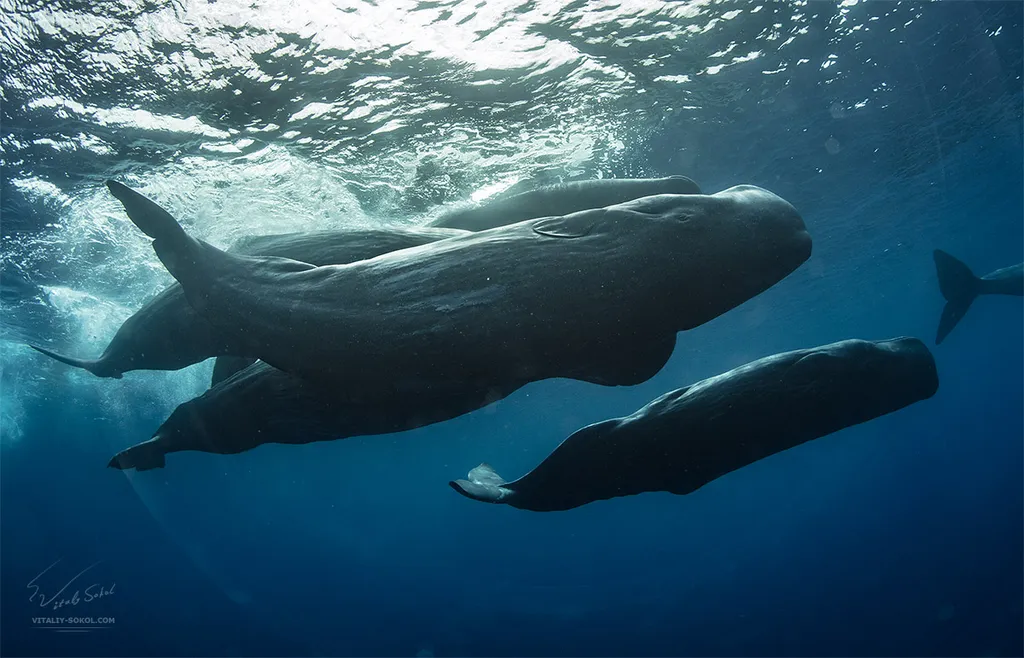
Photo by Will Falcon aka Vitaly Sokol / CC BY 4.0 via Wikimedia Commons
1. The Deepest Diver
Sperm whales are the deepest-diving mammals on Earth. They routinely dive to 400–600 meters but can reach depths exceeding 2,000 meters (6,562 feet). A dive can last 30–45 minutes, with some recorded dives lasting over 2 hours. They spend 60–80% of their time at depth, only surfacing to breathe and rest.
2. The Spermaceti Organ
The massive head contains the spermaceti organ—a complex structure filled with a waxy substance (spermaceti oil). This organ can weigh up to 2,000 kg and may help with buoyancy control, echolocation focusing, or as a battering ram. When whalers first discovered it, they thought it was sperm (hence the name), but it's actually a sophisticated diving tool.
3. The Loudest Animal
Sperm whales produce the loudest sounds of any animal on Earth. Their echolocation clicks can reach 236 decibels (louder than a jet engine) and can be detected hundreds of kilometers away. These clicks are so powerful they can stun or kill prey. You can feel them in your chest when diving near a sperm whale.
4. The Coda Language
Sperm whales have a complex communication system using "codas"—specific patterns of clicks that function like words or phrases. Different populations have different "dialects" of codas, and individuals can be identified by their unique coda patterns. It's like having a language with regional accents and individual signatures.
5. The Giant Squid Hunter
Sperm whales are the primary predators of giant squid (Architeuthis). These battles between titans happen in the deep ocean, far from human eyes. Evidence of these encounters can be seen in the circular scars on sperm whale heads—left by the giant squid's suckers and hooks. Some scars are the size of dinner plates.
6. The Vertical Sleep
Sperm whales practice a unique form of sleep called "logging" or "vertical rest". They float vertically in the water column, completely motionless, with their heads pointing up. They can sleep like this for 10–15 minutes at a time. It's one of the most surreal sights in the ocean—a 15-meter whale standing on its tail, fast asleep.
7. The Matriarchal Society
Sperm whales live in matriarchal groups called "units" or "pods." These groups consist of 10–20 females and their calves, led by an older female. They stay together for life, sharing childcare and protection. Males leave these groups as teenagers and form bachelor groups or travel alone, only returning to mate.
8. The Click Sequence
During deep dives, sperm whales produce regular echolocation clicks every 0.5–2 seconds. As they approach prey, these clicks accelerate into rapid "creaks" or "buzzes"—the final attack sequence. Scientists can track a whale's hunting behavior just by listening to these click patterns. It's like hearing a predator's heartbeat.
9. The Ambergris Treasure
Sperm whales produce ambergris—a waxy substance formed in their intestines (possibly to protect against sharp squid beaks). This rare substance was historically worth more than gold and is still used in high-end perfumes. Finding ambergris washed ashore is like finding treasure, though it's now illegal to harvest from whales.
10. The Moby Dick Legacy
Sperm whales were immortalized in Herman Melville's Moby Dick. The white whale in the story was based on a real albino sperm whale named "Mocha Dick." Despite their fearsome reputation in literature, sperm whales are generally not aggressive toward humans—they're curious but cautious, and encounters are usually peaceful.
Diving & Observation Notes
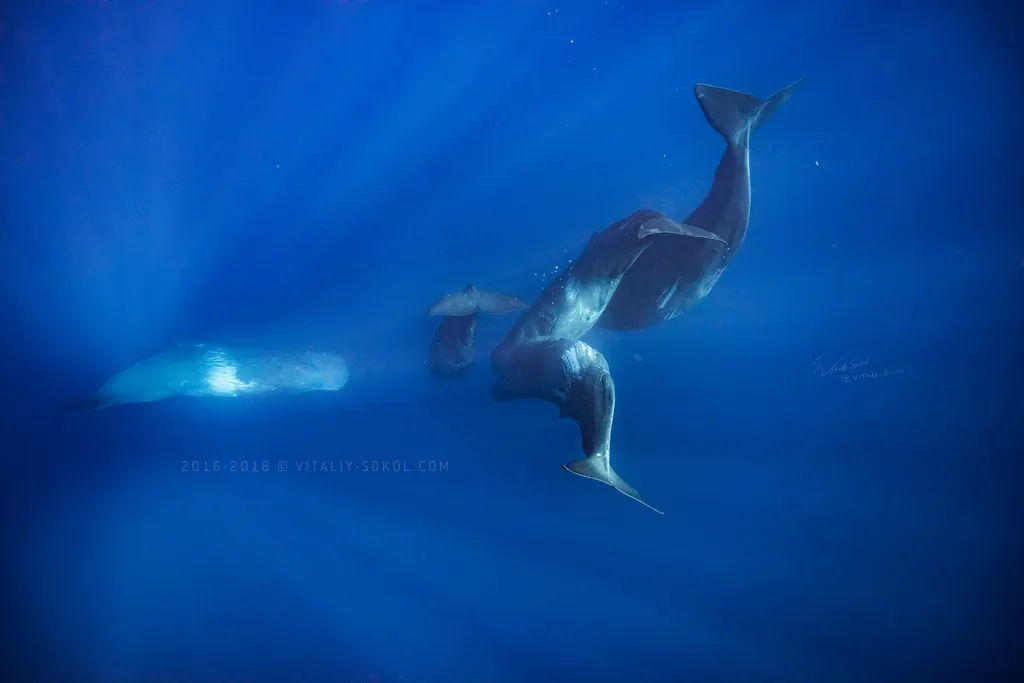
Photo by Will Falcon aka Vitaly Sokol / CC BY 4.0 via Wikimedia Commons
🧭 Finding Sperm Whales
Sperm whales are found in deep, offshore waters worldwide. The best encounters happen in areas with steep drop-offs or underwater canyons where they can access deep water close to shore. Look for their distinctive left-angled blow at the surface.
🤿 Approach & Behavior
- Snorkeling is Best: Like humpbacks, most sperm whale encounters happen while snorkeling, not scuba diving. They're usually in deep water, and you'll be at the surface waiting for them to come up.
- The Vertical Rest: If you're lucky, you might encounter a sperm whale in "vertical rest" mode—floating motionless, head up. This is a rare and magical sight. Don't approach too closely.
- Respect the Dive: When a sperm whale prepares to dive, it raises its tail fluke high. This is your cue to back away—they're about to disappear for 30–60 minutes.
- The Clicks: You can hear and feel their echolocation clicks underwater. It's an incredible experience—like being inside a living sonar system.
📸 Photo Tips
- Wide Angle Essential: You need a fisheye or ultra-wide lens. They are massive, and you want to capture their full size.
- The Head Shot: The massive, box-shaped head is their signature. Try to capture it from the front or side to show its impressive size.
- The Tail Fluke: When they raise their tail before diving, capture this iconic moment. The tail pattern is unique to each individual.
- Natural Light: In clear, deep water, natural light can create dramatic images, especially when they're near the surface.
⚠️ Ethics & Safety
- No Touching: Never attempt to touch a sperm whale. They are wild animals and can be unpredictable. Their size alone makes them potentially dangerous.
- Respect the Dive Cycle: Sperm whales have a strict dive cycle (40 min down, 8 min up). Don't interrupt their rest periods at the surface.
- Boat Regulations: Follow local regulations for whale watching. Most places require maintaining a minimum distance (often 100 meters).
- The Clicks: While their clicks are fascinating, being too close to a clicking whale can be physically uncomfortable or even harmful. Maintain distance.
🌏 Local Guide Nuggets
- Dominica: The "Whale Watching Capital of the Caribbean." Sperm whales are resident here year-round. Snorkeling encounters are possible, especially with organized tours.
- Azores (Portugal): One of the best places in the world for sperm whale encounters. Deep water close to shore makes for excellent viewing.
- Sri Lanka: Sperm whales are common off the coast, especially around Mirissa. Boat-based encounters are popular.
- Kaikoura (New Zealand): Famous for sperm whale watching. The deep Kaikoura Canyon brings whales close to shore.
- Madeira: Sperm whales are regularly seen. The deep waters around the island provide excellent habitat.
Best Places to Dive with Sperm Whale
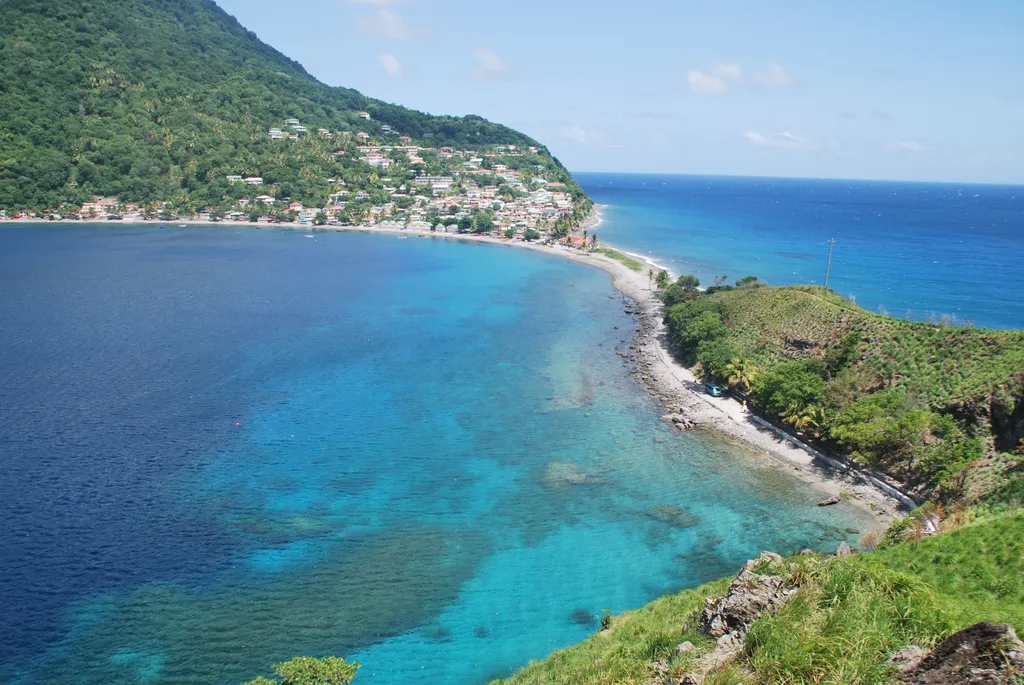
Dominica
Dominica — the Commonwealth Nature Island, not the Dominican Republic — is the Caribbean dive destination that still feels wild. The southwest coast drops from rainforest peaks straight into the flooded crater of Soufriere–Scotts Head Marine Reserve: walls, pinnacles, boulder fields, and active underwater fumaroles. Champagne Reef is the headline act (volcanic bubbles hissing through the sand like a flute glass), but the real diving is the wall-and-pinnacle circuit off Scotts Head — Soldierfish Cave swim-throughs, Crater’s Edge baitball frenzy, and sponge gardens that look more Indo-Pacific than Lesser Antilles. Water stays warm, boats run short hops from Castle Comfort / Roseau, and sperm-whale watching in the same deep coastal waters turns a dive week into a proper nature trip. Come for the bubbles; stay for the topography.

Azores
The Azores sit on the Mid-Atlantic Ridge — nine volcanic islands where the seafloor drops thousands of metres almost at your fins. For divers, the hub that actually delivers megafauna is the Pico–Faial triangle: base in Madalena (Pico) or Horta (Faial) and you are within range of Princess Alice Bank, Condor Bank blue-shark Expeditions, and a shoreline of lava arches, walls, and wrecks. Summer is the story. From July through mid-October, devil rays (Mobula tarapacana) stack over the Princess Alice pinnacle roughly 45–50 nm southwest of Pico, and open-ocean blue sharks — occasionally makos — circle chummed blue-water stations off southwest Pico. Closer in, Arcos de Caneiras swim-throughs, channel drifts between the islands, Capelinhos’ young volcanic bottom, and Faial’s WWII wreck Canção do Mar keep a weather-cancelled week from feeling empty. Water runs cool (about 18–24 °C in season); pack a 5–7 mm suit, SMB, and enough days for the offshore window to open.