
Tiger Shark
Galeocerdo cuvier
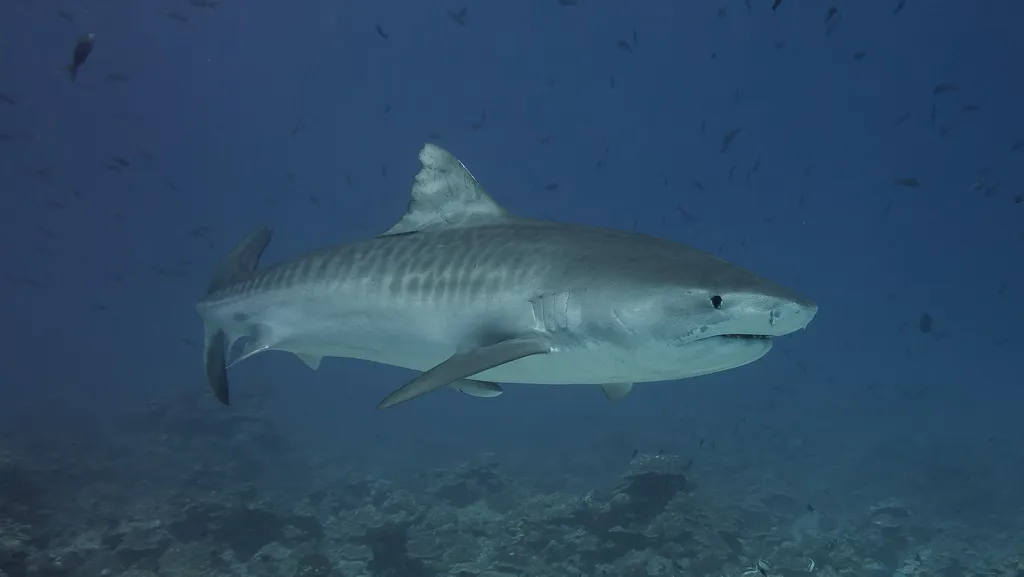
Photo by Kris Mikael Krister / CC BY 3.0 via Wikimedia Commons
The Tiger Shark is the ultimate opportunist of the ocean, second only to the Great White in size and reputation among predatory sharks. Named for the dark, tiger-like stripes that cover their bodies (especially juveniles), they are famous for their "eat anything" philosophy, earning them the nickname "Garbage Cans of the Sea." Despite their fearsome reputation, they are calculating and cautious predators, often cruising slowly through shallow coastal waters. Encountering a massive, striped Tiger Shark is an adrenaline-filled mix of awe and respect.
🔬Classification
📏Physical Features
🌊Habitat Info
⚠️Safety & Conservation
Identification Guide
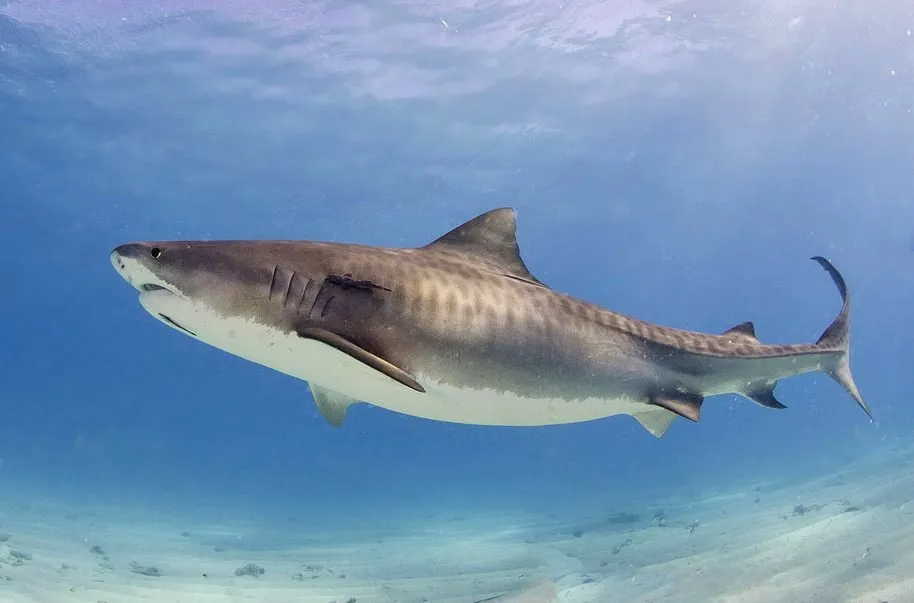
Photo by Albert Kok / CC BY-SA 3.0 via Wikimedia Commons
Field marks:
- Stripes: Dark vertical bars or spots on the sides, resembling a tiger's pattern (very distinct in young sharks, fades to grey in large adults).
- Head: Very broad, flat, and square-shaped snout. It looks like a shovel.
- Mouth: Large mouth with distinct labial furrows (grooves around the corners).
- Teeth: Unique "cockscomb" shaped teeth—curved, serrated, and notched, pointing sideways like can openers.
- Caudal Keel: A distinct ridge (keel) on the caudal peduncle (base of the tail).
- Size: They are bulky and thick-set, often wider than other reef sharks.
Differences from Similar Species
- Bull Shark: Also stocky and blunt-nosed, but lacks the stripes, has a smaller caudal keel, and has triangular (not notched) teeth.
- Great White Shark: Conical snout (not square), distinct separation between grey back and white belly, no stripes.
Juvenile vs. Adult
Juveniles: Have very high-contrast, leopard-like spots that merge into stripes. They have a slender body. Adults: Become massive and bulky. The stripes often fade significantly, sometimes leaving the shark looking almost solid grey.
Top 10 Fun Facts about Tiger Shark
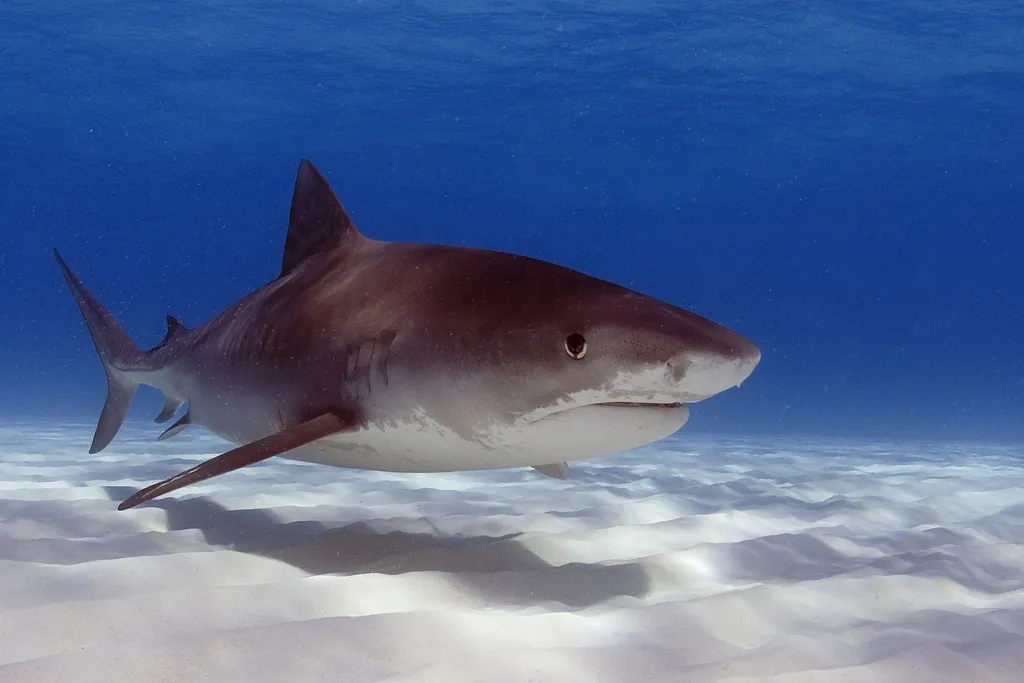
Photo by Oregon State University / CC BY-SA 2.0 via Wikimedia Commons
1. The Garbage Gut
Tiger sharks are notorious for having the least picky palate in the ocean. Stomach contents have revealed tires, license plates, armor, video cameras, and even unexploded munitions. Their stomach acid is incredibly strong, capable of dissolving bones and turtle shells, but they can also regurgitate indigestible items by turning their stomachs inside out (gastric eversion).
2. Can-Opener Teeth
Their teeth are engineering marvels. Unlike the needle-like teeth of fish-eaters or the triangular cutters of Great Whites, Tiger Shark teeth are curved, serrated, and deeply notched. This shape acts like a saw or a can opener, allowing them to crack open the incredible hard shells of sea turtles—their favorite snack.
3. Fading Stripes
The "Tiger" name comes from the dark vertical stripes found on their body. However, these stripes are like grey hairs—they change with age. Juveniles have bold, spotted patterns (looking almost like leopards) that fuse into stripes. As they age and grow massive, these stripes fade, and very old individuals can appear almost uniform grey.
4. Turtle Specialists
While they eat everything, they are specialized turtle hunters. Their broad heads and powerful jaws allow them to bite through a Green Sea Turtle's carapace. In fact, the presence of Tiger Sharks actually changes the grazing behavior of turtles, keeping seagrass beds healthy (fear ecology).
5. Sacred Ancestors ('Aumakua)
In Hawaiian culture, the Tiger Shark is often revered as an 'aumakua—a family guardian spirit or deified ancestor. It was believed that a deceased relative could manifest as a shark to protect the family. Ancient Hawaiians even had specific names for individual sharks.
6. Massive Migration
They are not just coastal loafers. Tiger Sharks are capable of trans-oceanic migrations. Research shows they travel thousands of kilometers, commuting between warm tropics in winter and temperate waters in summer. Some tracked individuals swim from Hawaii to Mexico regularly.
7. Large Litters
Unlike the Sand Tiger Shark (which eats its siblings in the womb) or the Great White (few pups), Tiger Sharks are prolific breeders. They are ovoviviparous (eggs hatch inside) and can give birth to huge litters, ranging from 10 to over 80 pups! This high reproductive rate helps them stay resilient.
8. Night Vision Hunters
They are primarily nocturnal hunters. They possess a tapetum lucidum (a reflective layer behind the retina) that is twice as effective as a cat's, allowing them to see in near-total darkness. This gives them a massive advantage over prey in murky estuaries or at night.
9. Size Matters
They are the fourth largest shark species (after Whale, Basking, and Great White) and the second largest predatory shark. Females are larger than males and can exceed 5 meters (16 feet) in length and weigh over 900 kg (2,000 lbs). Encountering a "grandma" Tiger Shark is seeing a submarine with teeth.
10. The Solitary Nomad
Unlike the social Blacktip Reef Sharks or schooling Hammerheads, Tiger Sharks are solitary nomads. They don't form schools. If you see multiple Tiger Sharks together (like at Tiger Beach), it's usually because of a food source, not friendship. They tolerate each other but prefer personal space.
Diving & Observation Notes
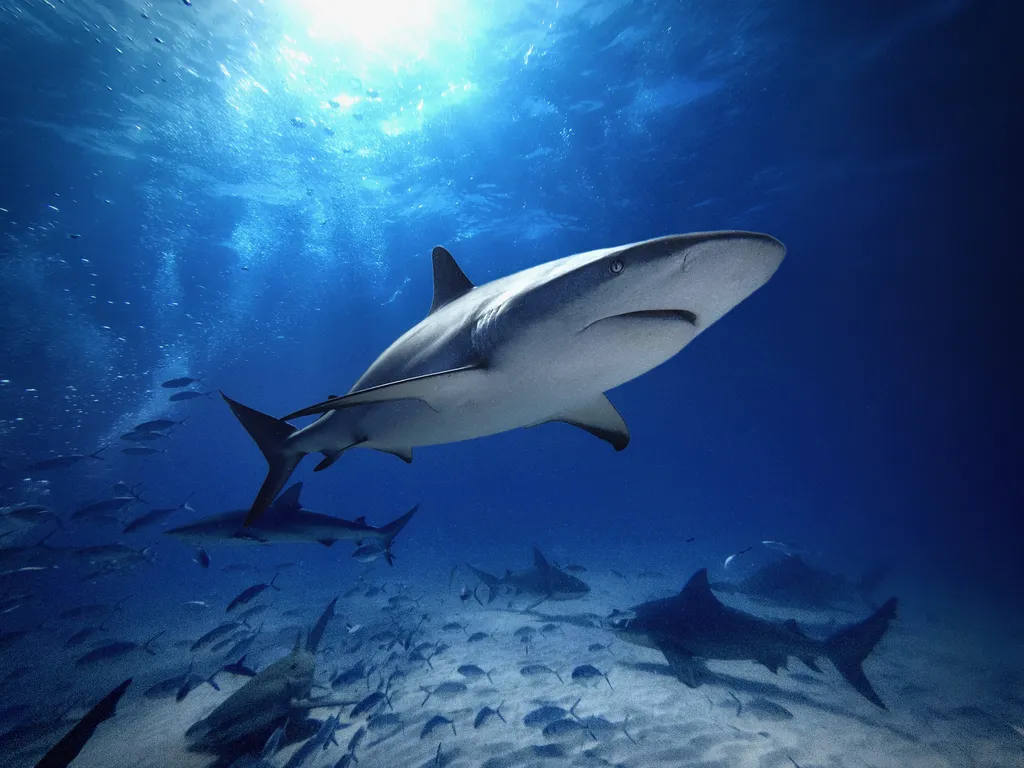
Photo by Dennis Hipp (Zepto) / CC0 via Wikimedia Commons
🧭 Finding Tiger Sharks
Reliable sightings are rare except at specific locations. Tiger Beach (Bahamas) and Fuvahmulah (Maldives) are the world's premier spots. In Hawaii or other coasts, they often patrol harbor entrances or murky river mouths at dusk/dawn (not ideal for diving).
🤿 Approach & Behavior
- Eye Contact: This is crucial. Tiger Sharks are ambush predators. If you look at them, they lose the element of surprise. Keep your head on a swivel.
- Vertical Approach: Unlike reef sharks that swim horizontally, Tigers often come from the deep blue below, swimming vertically up to check you out. Look down!
- Don't Flee: If one approaches, hold your ground and face it. Swimming away triggers their chase instinct.
- Gear Check: They are attracted to high-contrast colors (white fins, yellow tanks) and shiny gadgets. Wear dark gear (black wetsuit, black fins) to be less interesting.
📸 Photo Tips
- Fisheye Lens: They are huge and come close. A fisheye is mandatory.
- The Smile: Their snout has specific sensory pores (ampullae) that look like "stubble." Get close enough to capture the texture of their broad, blunt nose.
- Eye Roll: Capture the moment their nictitating membrane (white eyelid) rolls up to protect their eye—it turns their eye white, looking very zombie-like.
⚠️ Safety
- Respect the Hierarchy: They are the boss. If a Tiger Shark gets pushy, the dive is over.
- No Touching: Unlike Nurse Sharks, you do not touch a Tiger Shark. Their redirection reflex is less predictable, and their mouths are huge.
- Hand Placement: Keep hands close to your body. Flailing hands look like distressed fish.
Best Places to Dive with Tiger Shark
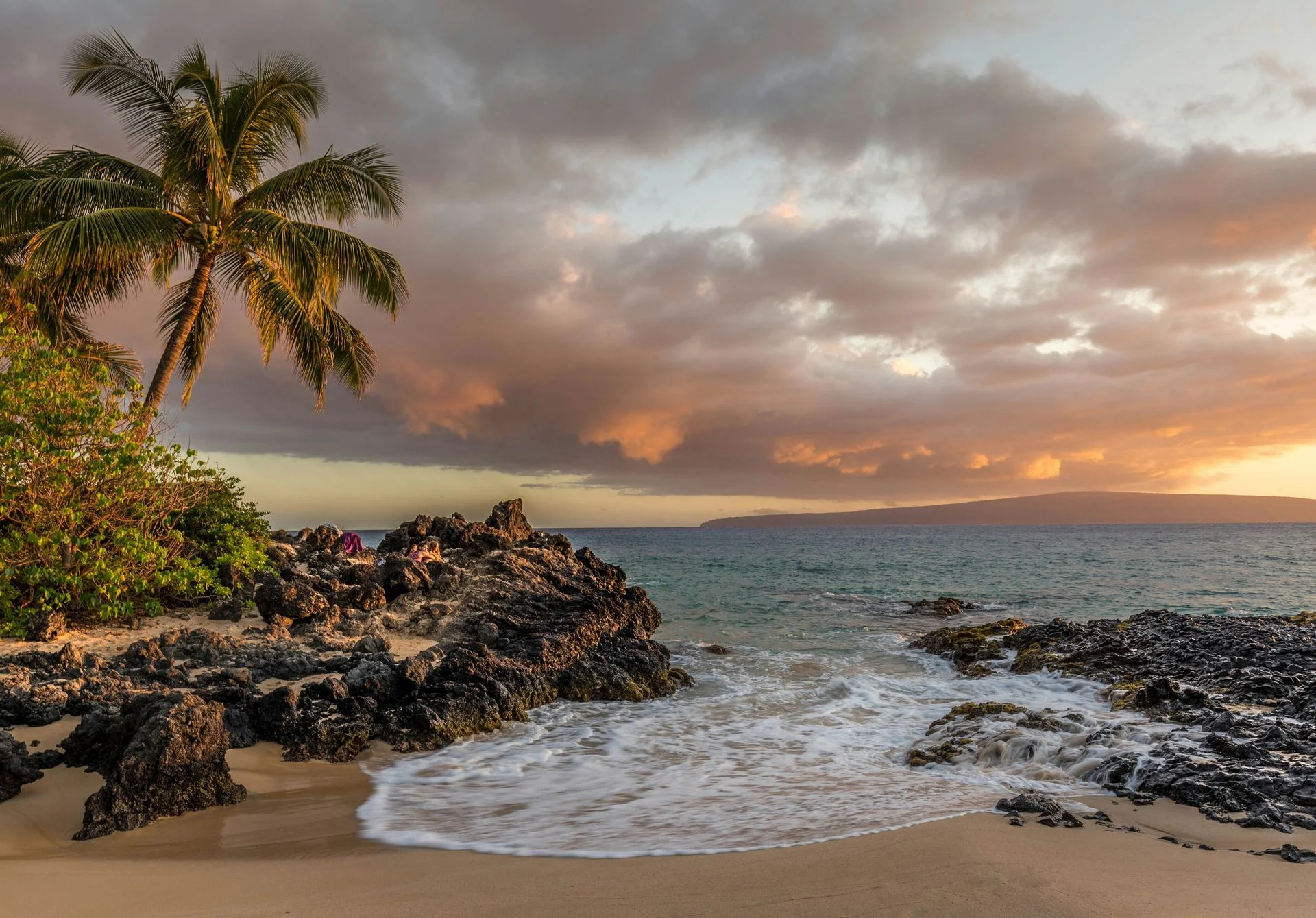
Hawaii
The Hawaiian Islands sit in the central Pacific and offer some of the United States’ most diverse diving. Each island has its own character: Oʻahu features WWII wrecks like the YO‑257 and Sea Tiger; Maui boasts the crescent‑shaped Molokini Crater and drift dives along Lānaʻi’s cathedral‑like caverns; the Big Island’s Kona coast is famed for lava tubes, black water pelagic dives and the world‑renowned manta‑ray night dive; Kauaʻi and Niʻihau offer lava arches, monk seals and dramatic drop‑offs. Water is warm year‑round and visibility regularly exceeds 25 m, making Hawaii ideal for both beginners and experienced divers. You’ll see green sea turtles, reef sharks, manta rays, dolphins and humpback whales in season, along with endemic fish found nowhere else on earth.
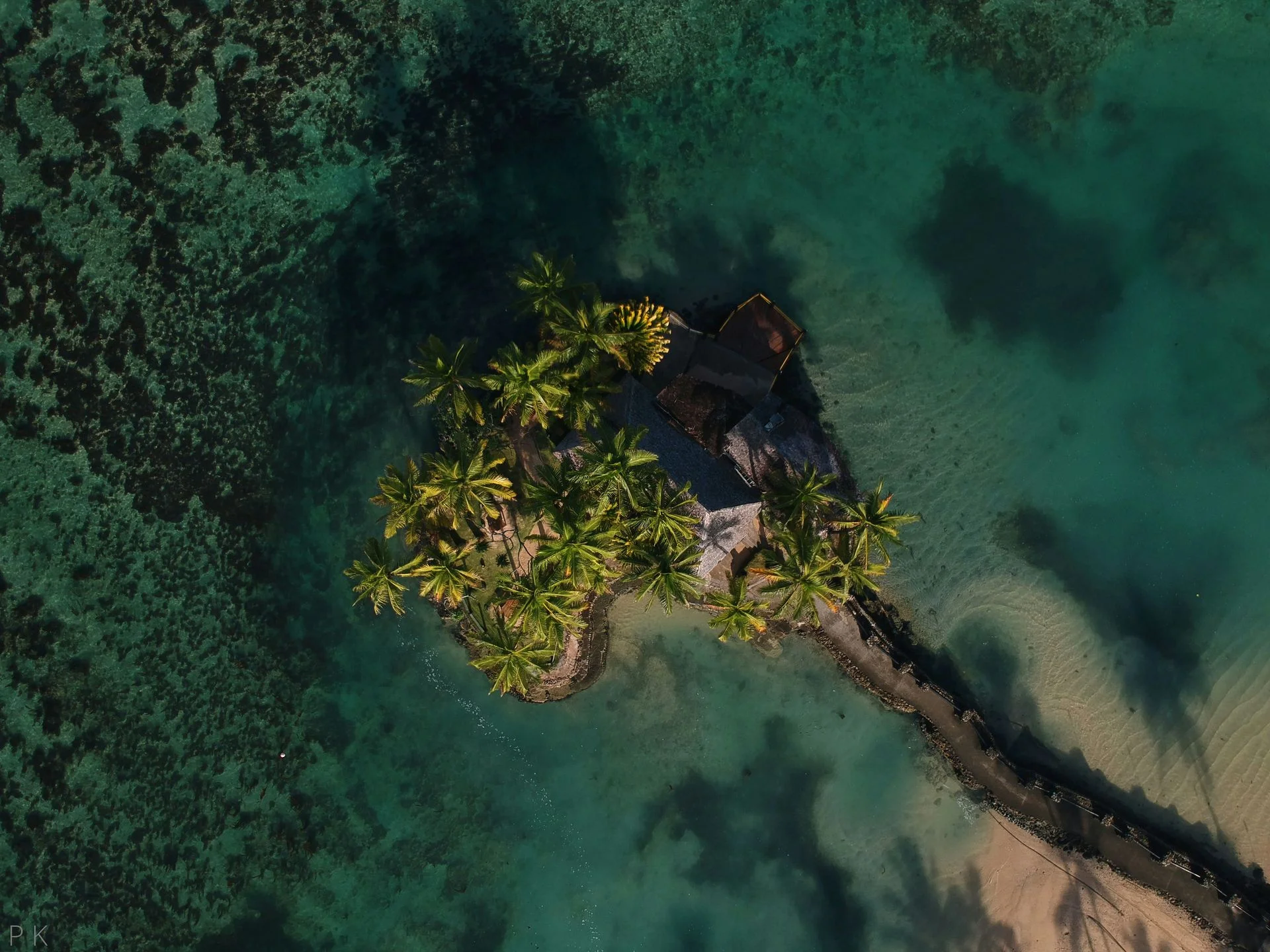
Fiji
Fiji sits like a necklace of more than 300 inhabited islands and 500 smaller islets in the heart of the South Pacific. Jacques Cousteau dubbed it the “soft coral capital of the world” for good reason – nutrient‑rich currents wash over sloping reefs, walls and bommies that erupt in shades of pink, purple, orange and yellow. The country’s dive sites range from kaleidoscopic coral gardens and pinnacles in the Somosomo Strait to shark dives in Beqa Lagoon, and remote passages in Bligh Water and the Koro Sea. Schools of barracuda, trevally and surgeonfish cruise above while manta rays, turtles, bull sharks and occasionally hammerheads glide past. Friendly locals and a relaxed island vibe make Fiji a favourite for both adventurous liveaboard trips and leisurely resort‑based diving.
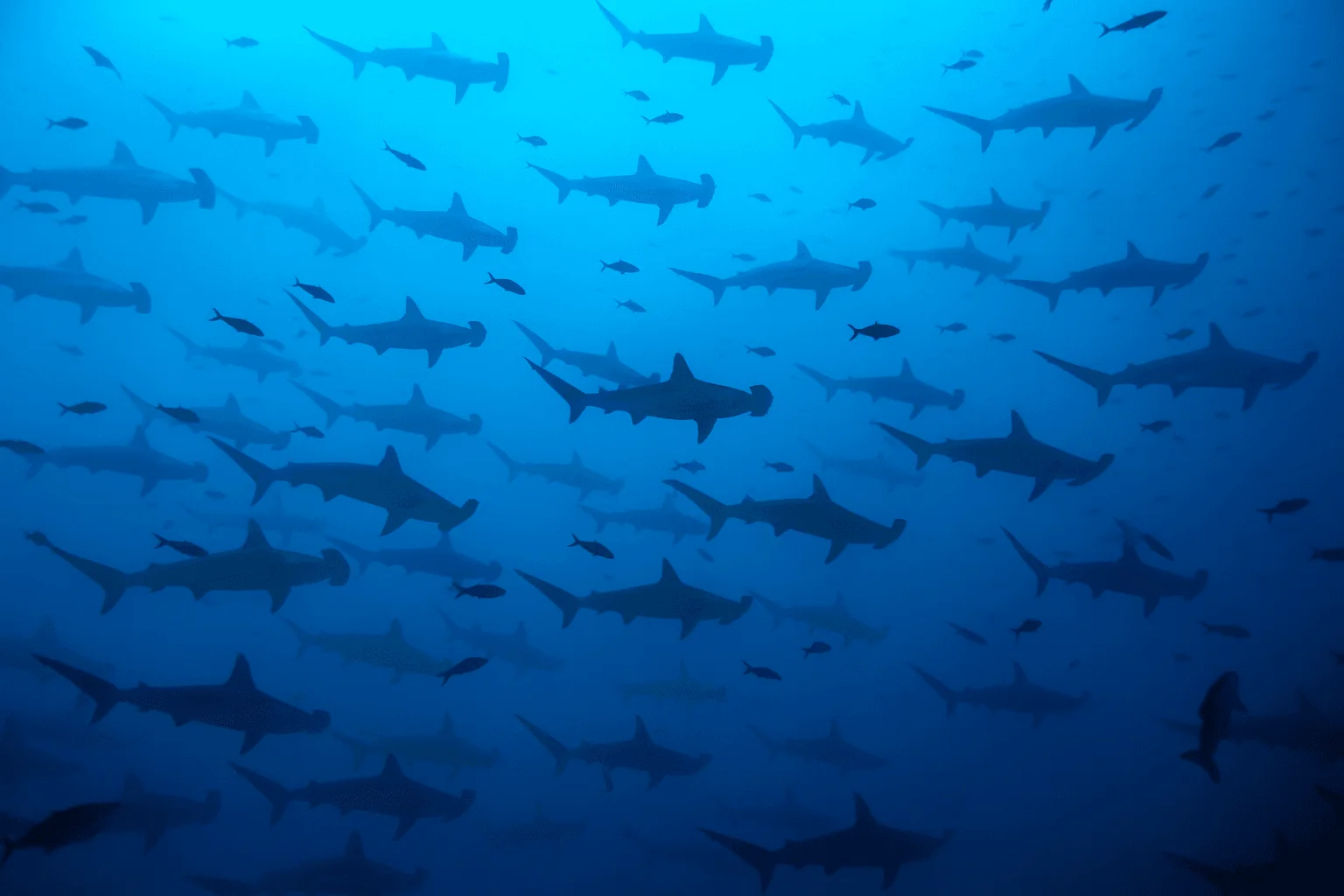
Cocos Island
Cocos Island sits 550 km off Costa Rica’s Pacific coast and is only accessible by liveaboard. This uninhabited, jungle‑clad island was described by Jacques Cousteau as “the most beautiful island in the world.” Divers come here for the pelagic action: schooling scalloped hammerheads patrol the reef points and pinnacles, tiger sharks and Galápagos sharks cruise the blue, and manta rays and whale sharks glide past during the wet season. Visibility and sea conditions vary with the seasons, but the island’s underwater topography of walls, cleaning stations and steep pinnacles makes every dive an adventure. Currents can be strong and depths often exceed 30 m, so Cocos is considered an advanced destination. Trips are normally 9–10 days with a 36‑hour crossing each way from the mainland, and most operators include guided island hikes between dives.