
Scuba Diving in Dominica
The Ultimate Guide
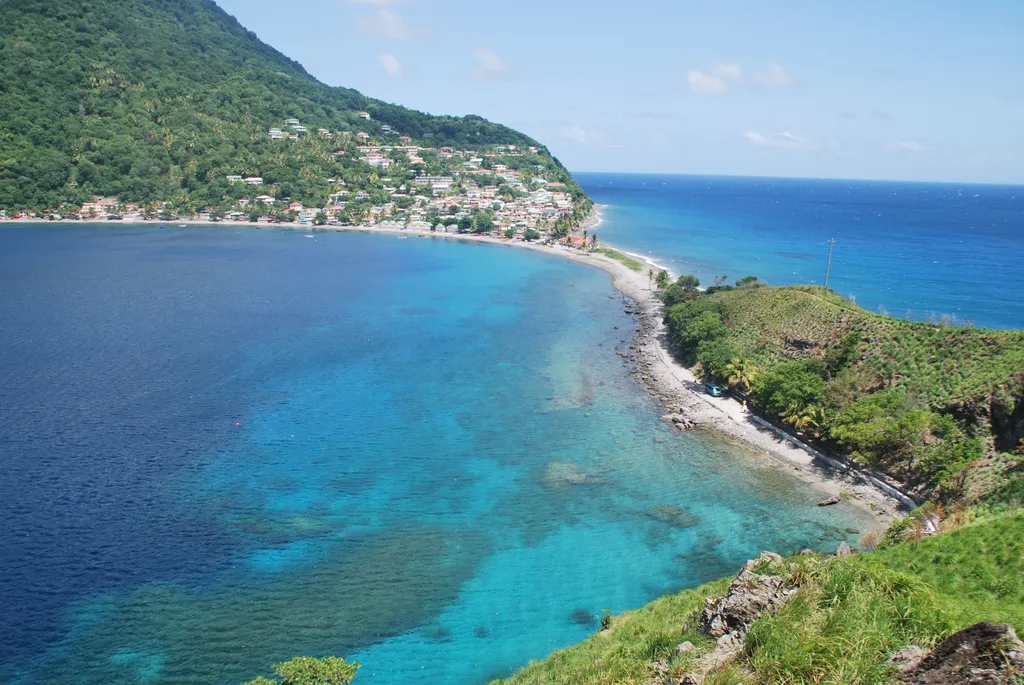
Dominica — the Commonwealth Nature Island, not the Dominican Republic — is the Caribbean dive destination that still feels wild. The southwest coast drops from rainforest peaks straight into the flooded crater of Soufriere–Scotts Head Marine Reserve: walls, pinnacles, boulder fields, and active underwater fumaroles. Champagne Reef is the headline act (volcanic bubbles hissing through the sand like a flute glass), but the real diving is the wall-and-pinnacle circuit off Scotts Head — Soldierfish Cave swim-throughs, Crater’s Edge baitball frenzy, and sponge gardens that look more Indo-Pacific than Lesser Antilles. Water stays warm, boats run short hops from Castle Comfort / Roseau, and sperm-whale watching in the same deep coastal waters turns a dive week into a proper nature trip. Come for the bubbles; stay for the topography.
Difficulty
Moderate
Temperature
26–29°C
Visibility
15–30 m
Diving Highlights
Best Months to Dive
Getting to Dominica for Diving
✈️Transportation
Fly into Douglas–Charles Airport (DOM) on the northeast coast — the main gateway. Most US/Europe itineraries connect via Antigua (ANU), Barbados (BGI), St. Maarten (SXM), San Juan (SJU), or Guadeloupe (PTP). Canefield (DCF) near Roseau handles only small propeller hops from nearby islands.
Pre-book a taxi/transfer to the Roseau–Castle Comfort–Soufriere dive belt: DOM → Roseau is roughly 60–90 minutes of mountain switchbacks (about USD 75–100 per vehicle). Dive operators cluster around Castle Comfort (a few minutes south of Roseau) with short boat runs into Soufriere–Scotts Head Marine Reserve; Nature Island Dive sits right in Soufriere if you want to sleep next to the sites.
Carry cash (XCD or USD) for marine-park fees, tips, and roadside stops — cards work at larger lodges but not everywhere. If you plan whale watching, build a flexible weather day around the same southwest deep-water corridor.
Country
Dominica
Currency
Eastern Caribbean Dollar (XCD); USD widely accepted
Electricity
230V, 50Hz, Type D/G plugs
Cost of a Dive Trip in Dominica
Day Trip
Dive Resort
Meal
Accommodation
Night Dive
Best Dive Sites in Dominica
🐠Champagne Reef
Shore-accessible volcanic vent field south of Pointe Michel. Circuit the reef, then linger in the bubble streams on the safety stop. Expect seahorses, frogfish, flying gurnards on sand, squid near the bubbles; night dives turn the same ground into a lobster-and-crab parade. Calm, light current, all levels.
🐢Scott's Head Pinnacle
Signature site. Start at Swiss Cheese / Soldierfish Cave (a swim-through packed with soldierfish and grunts), cross coral rock flats to the pinnacle (~35 ft), pass through the cut, then hang on the crater-wall “other side” dropping past 120 ft. Gorgonians and deepwater fans own the wall face. Intermediate+.
🦈Crater's Edge
Volcanic ridge NW of Scotts Head Pinnacle. Baitfish and predators (blackjack, bar jack, rainbow runner, tuna, cero) work the blue while chromis and Creole wrasse pour over the pinnacle; sponge-covered wall behind the show. Often escorted by barracuda. Strong “wow” open-water feel.
🐙Scott's Head Drop Off
Color wall from ~40–100 ft at the Caribbean–Atlantic pinch point. Pink/azure vase sponges, orange icing and yellow tube sponges fill nooks with lobster, crab, and cleaner shrimp. Safety stop around 50 ft is a dive by itself when the light is right. Current possible.
🐚L'Abym (La Sourcier)
Must-do wall where the shoreline cliff enters the sea and drops on both sides — float 30 ft off the face for the full scale. Start on a sandy/rock shelf ~25 ft with little current; dive the wall from 40 ft or deeper. Seahorses, scorpionfish, turtles, lone barracuda common. All levels if you stay shallower.
🦑Coral Gardens North (Dangleben's)
Large reef system south of Pt Guignard — Dangleben’s Pinnacles / Coral Gardens South / L’Abym North neighborhood. Finger coral beds, big sponges, turtles; schooling horse-eye jacks and sennet when current pulls. Can be easy or spicy depending on the flow; finish watching yellowheaded jawfish in ~40 ft sand.
🐡Pointe Guignard
Gently sloping reef with a memorable return swim-through toward the boat. Narrow ~50 ft cave can silt fast — skip for large groups or soft buoyancy. Reliable seahorse / frogfish hunting ground; turtles in season.
🦀The Suburbs
Wilder rocky drop-offs with black durgon schools, big barracuda, turtles, and occasional large stingrays. Dense crinoids, barrel sponges, and deepwater fan “curtains” that hide shy seahorses. Quieter days still reward slow sponge photography.
🐋The Village
Advanced Atlantic-side site — mooring atop the wall ~30 ft, three rock pinnacles rising from the deep for a natural multilevel. Soft fans dominate; sponges grow large and horizontal; schooling fish common. Treat like Atlantic: more surge/current personality than the lee wall circuit.
🦐Pointe Ronde Craters
Healthy sloping reef that drops into sand-bottomed volcanic craters (~92–120 ft). Dig carefully — sand can be hot where bubble streams escape. Unique geothermal topography for photographers who already did the classic pinnacle loop.
What Divers Say About Diving in Dominica
Sarah Chen
Scuba InstructorDominica ruined my “Caribbean = flat fringe reefs” prejudice in one week. First morning I stepped off the Castle Comfort dock expecting soft coral gardens; by lunch I was hanging mid-water off Scotts Head Pinnacle watching soldierfish part like a theater curtain, then spilling out onto a crater wall that simply keeps going. Champagne Reef is the Instagram dive — and it earns it — but the bubbles are best as a late afternoon / night session after you’ve already gotten your depth fix on Crater’s Edge or L’Abym.
What stuck with me wasn’t a single “bucket animal.” It was texture: pink vase sponges stacked on azure ones, black jack hunting baitfish in open blue, a seahorse tucked into a sea fan, warm sand that felt wrong under your glove when a fumarole seeped through. Guides are protective of the reserves (moorings only, no touch), boats are short, and land days compete hard — Trafalgar Falls and Emerald Pool will steal an afternoon if you let them. Pack a 3 mm, a torch for Champagne night, and the mental model that this island’s underwater map matches its rainforest skyline.
Frequently Asked Questions About Diving in Dominica
Is this Dominica or the Dominican Republic?
Commonwealth of Dominica — the Nature Island between Guadeloupe and Martinique. Different country, different diving (volcanic walls + Champagne bubbles, not Bayahibe / Punta Cana package reefs).
When is the best time to dive Dominica?
Diving is year-round. December–April (dry season) usually brings the calmest west-coast conditions and best visibility. July–October sits in hurricane season — check forecasts and stay flexible.
What makes Champagne Reef special?
Submarine volcanic vents release streams of gas bubbles through the reef and sand. Combine that with seahorses, frogfish, squid, and strong night-dive critter action. Suitable for beginners; still worth a revisit as a twilight or night dive.
Are the wall dives beginner-friendly?
Mixed. Champagne, parts of Coral Gardens, and the upper sections of L’Abym work for newer divers in calm conditions. Scotts Head Drop Off, Atlantic-side Village / Suburbs, and deep crater walls suit Intermediate/Advanced comfort with depth and occasional current.
How do I get around for diving?
Base near Roseau / Castle Comfort or Soufriere. Morning 2-tank boats are the norm; sites inside Soufriere–Scotts Head Marine Reserve are typically 10–25 minutes from the dock. Budget a marine-park user fee (often bundled into shop rates).
What about whales?
Dominica’s steep drop-offs support resident sperm whales and seasonal cetaceans. Whale watching is usually a separate boat trip from scuba — build it into the same week if weather cooperates.