
Scuba Diving in Gozo
The Ultimate Guide
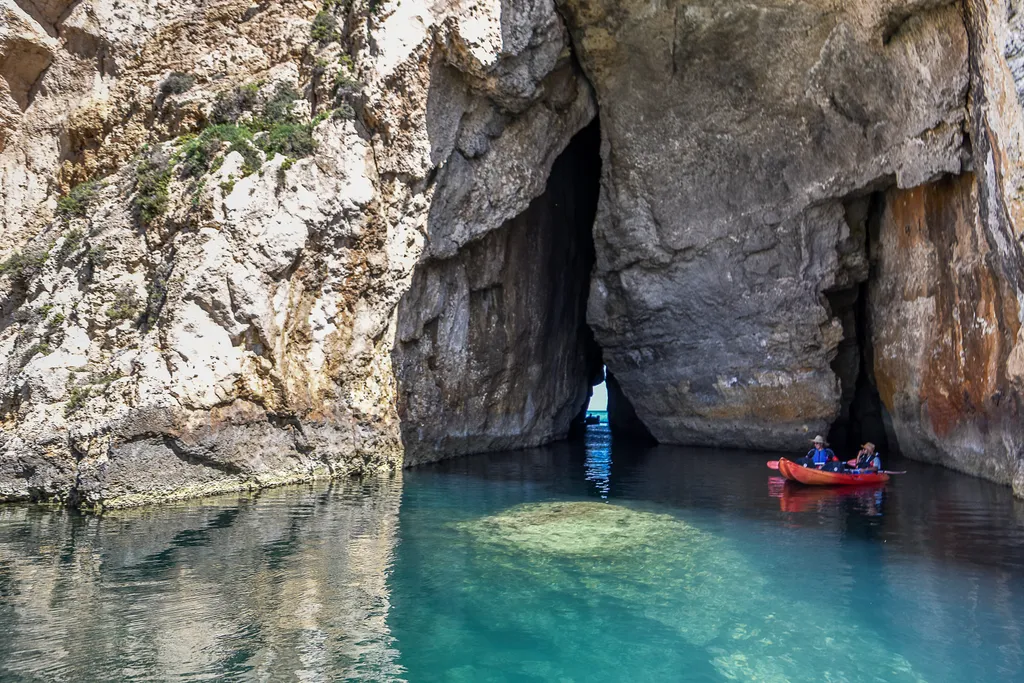
Gozo is Malta’s quieter sister island and one of the Mediterranean’s strongest shore-diving destinations. Limestone cliffs drop into clear blue water carved into arches, swim-throughs, caverns and sheer walls—often accessible without a boat. Flagship Dwejra sites (the Blue Hole and Inland Sea tunnel) sit minutes apart on the west coast, while the north coast delivers cathedral light at Blue Dome caves and high-vis walls at Reqqa Point. Intentionally scuttled wrecks off Xatt l-Aħmar, led by the upright MV Karwela, round out a week that mixes geology, overhead light and recreational wreck diving. Stay in Marsalforn, Xlendi or near Victoria, book a local centre for site-and-swell matching, and plan buffer days if you are chasing exposed west-coast icons.
Difficulty
Moderate
Temperature
15–27°C
Visibility
20–35 m
Diving Highlights
Best Months to Dive
Getting to Gozo for Diving
✈️Transportation
Fly into Malta International Airport (MLA) on the main island. From the airport, taxi, bus or rental car to Ċirkewwa ferry terminal on Malta’s north tip (about 45–75 minutes depending on traffic). The Gozo Channel ferry runs frequently to Mġarr Harbour on Gozo; the crossing is roughly 25 minutes. Foot-passenger return tickets are inexpensive and paid on the Gozo side when you leave; cars pay a return fare as well.
Once on Gozo, dive centres cluster around Marsalforn, Xlendi and Mġarr. Most signature sites are shore dives reached by van or hire car—limestone entries can be uneven, so trust local guides on ladders, steps and swell. Euro cash and cards both work widely; keep a little cash for cafés and ferry kiosks. Winter majjistral (NW) swell can shut Dwejra for days—build flexibility into the itinerary.
Country
Malta
Currency
Euro
Electricity
230V, 50Hz, Type G plugs
Cost of a Dive Trip in Gozo
Day Trip
Dive Resort
Meal
Accommodation
Night Dive
Best Dive Sites in Gozo
🐠Blue Hole (Dwejra)
Gozo’s postcard site: enter a natural limestone pool, swim through an arch around 6 m, then choose the scenic mid-depth circuit or push the open-ocean wall into deep blue. Recreation stops around 30 m for most; the wall keeps going for tec. Visibility on calm days often 25–35 m. Exposed to NW swell—entry steps can be undiveable even when other Gozo coasts are fine. Nitrox recommended if you work the wall; morning light through the arch is the money shot.
🐢Inland Sea
Start in a sheltered inland lagoon at Dwejra, then swim an ~80 m tunnel that suddenly blooms into open Mediterranean blue. Stay deep enough to avoid surface boat traffic through the corridor. Depths commonly 5–30 m; suitable for confident Open Water divers in good conditions, but surge in the tunnel demands buoyancy control. Often paired with Blue Hole in the same day when swell allows.
🦈Cathedral Cave (Blue Dome)
A large cavern with an air pocket where divers can surface inside a blue-domed chamber and look back at light flooding the entrance. Entry is often via Wied il-Għasri valley steps or nearby ladders / short boat. Surrounding walls and boulder fields hold nudibranchs, crustaceans and typical Med reef life. Intermediate skills and a torch recommended; wind direction matters for safe shore access.
🐙MV Karwela
A 50 m ferry scuttled in 2006 off Xatt l-Aħmar, sitting upright with the photogenic interior staircase intact. Superstructure starts ~20 m; seabed ~42 m—Advanced profiles and careful NDL/gas planning. Windows and doors were opened for safer swim-throughs; still treat penetration as optional specialty skill. Sister wrecks Cominoland and Xlendi sit nearby for multi-wreck days. Usually boat access; summer boat traffic means ascend on the line and SMB-ready.
🐚Reqqa Point
Northwest tip wall dive: limestone cliff from shallow shelf into 40 m+ blue with caves, overhangs and some of Gozo’s densest fish action—barracuda, amberjack, tuna seasonally in the blue. Billinghurst Cave and shrimp pockets along the wall reward torches. Often shore-entry with ladders; exit may finish as a drift into the next bay. Outstanding visibility on good days; depth and current make this Advanced territory.
🦑Double Arch Reef
Twin limestone arches and deeper wall sections near the north/west cliff complex—blue-water, photogenic architecture, and depth that rewards Advanced divers. Pair with nearby cavern/wall sites when conditions align. Expect surge and serious exposure on windy days; centres pick this when the forecast cooperates.
🐡Wied il-Għasri
Narrow inlet flanked by high cliffs; underwater you get caves, crevices and dramatic shadow-to-blue transitions. Access involves walking down into the valley—logistically slower, scenically quieter than Dwejra. Intermediate fun when swell allows; combines well with Cathedral Cave routes.
🦀Xwejni Bay
Accessible north-coast shore diving for training, relaxed reef circuits and days when the west coast is blown out. Rocky bottom and moderate depths suit newer divers and photographers hunting small Med life. Handy backup when Dwejra is closed.
🐋Xlendi Bay
Sheltered south/west bay used heavily for courses, checkouts and night dives. Less dramatic topography than Dwejra, but practical, close to shops and bars, and diveable more often when elsewhere is messy. Good place to shake down gear on day one.
🦐Ras il-Ħobż (Middle Finger)
South-coast pinnacle rising from deep water toward the shallows—big topography, blue-water feel and Advanced profiles. Often done when other sites are weather-blocked or for divers chasing vertical relief and schooling fish in the blue. Depth discipline required; centres brief carefully.
What Divers Say About Diving in Gozo

Sarah Chen
Scuba InstructorI came for the Blue Hole and stayed for the geology. Drop into that limestone pool at Dwejra, kick through the arch at six-ish metres, and the wall just keeps going into Mediterranean blue—classic Mediterranean postcard, but it hits harder in person. The same afternoon we swam the Inland Sea tunnel: dark corridor, then that strip of light opening to open ocean, with boat traffic forcing you to stay deep and disciplined. Cathedral Cave’s air pocket felt theatrical—surface inside the blue dome, look back at the glow, then exit along the wall. Reqqa Point on a clean day was the fishiest wall of the week: amberjacks working the edge, shrimp caves glowing under torchlight, and visibility that made depth discipline feel optional until your computer screamed otherwise. Karwela’s upright staircase is the wreck photo everyone wants; I liked it more for the clean artificial-reef fish than for penetration. Evenings in Marsalforn were barefoot-simple: pastizzi, a cold Cisk, and arguing about whether tomorrow’s swell would kill Dwejra. Spoiler: sometimes it does, and then Xlendi or a sheltered north-coast site still delivers a solid dive. Gozo doesn’t sell big-animal spectacle—it sells limestone light, shore convenience, and enough site variety to fill a week without getting bored.
Frequently Asked Questions About Diving in Gozo
When is the best time to dive Gozo?
May–October is the main season—warmer water (roughly mid-20s °C by late summer), calmer entries, and centres running full schedules. September–October often feels like the sweet spot: still warm, lighter crowds than peak August. Winter diving is possible but colder (mid-teens °C) and more weather-dependent on exposed sites.
Is Gozo good for beginners?
Yes for sheltered shore sites and training bays (Xlendi, parts of Xwejni, calm Inland Sea days). Blue Hole walls, deep wrecks and strong-current points like Reqqa need Advanced comfort, gas discipline and local guidance. Match the day’s swell, not just the Instagram site list.
Do I need a boat for the famous sites?
Most signature dives are shore entries—Blue Hole, Inland Sea, many north-coast caves and walls. Wrecks around Xatt l-Aħmar are commonly done by short boat or sometimes shore/advanced approaches depending on the centre. Shore does not mean easy entries; limestone ladders and surge still matter.
How does Gozo compare to Malta for diving?
Malta has denser infrastructure and more urban launch points; Gozo is quieter, more limestone-dramatic, and denser with shore classics. Many divers base on Gozo for the week or split islands. Comino day hops are a common add-on from either side.
What should I pack beyond standard dive gear?
A 5–7 mm wetsuit (or drysuit) for shoulder/winter months, a solid torch for caves and tunnels, DSMB for blue-water exits, and sturdy booties for rocky shore exits. Nitrox is widely available and useful on wreck and wall profiles.
Can Dwejra be undiveable?
Regularly in NW/SW swell. Dive centres switch coasts when Dwejra is unsafe—don’t schedule a one-day Blue Hole mission without a weather buffer.