
Scuba Diving in Tofo Beach
The Ultimate Guide
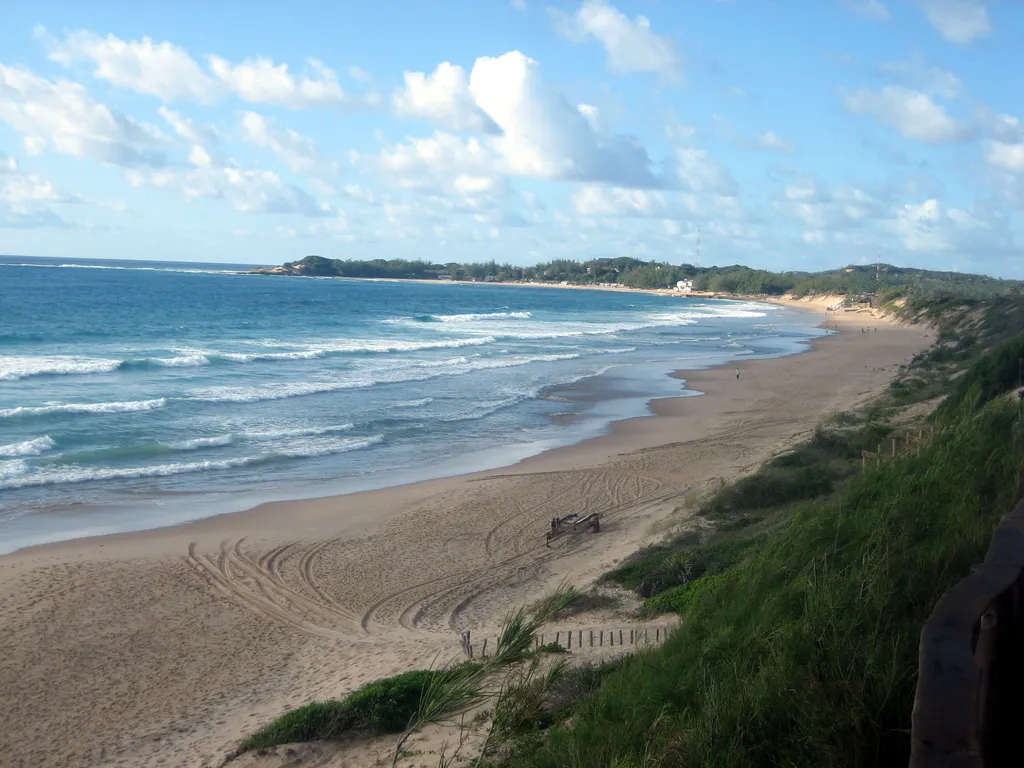
Tofo Beach sits on Mozambique's Indian Ocean coast, a dusty backpacker village that punches far above its weight for megafauna. The Mozambique Channel funnels plankton-rich water past Inhambane Bay, and the result is one of Africa's most reliable whale shark addresses — snorkel or dive alongside bus-sized filter feeders from October through March without the crowds of more famous aggregation sites.
Manta rays clean at offshore reefs like Manta Reef, reef sharks patrol pinnacles at Giant's Castle, and from June to September humpback whales cruise the bay on their migration — operators run respectful surface encounters when conditions allow. Visibility swings wildly (5–30 m) with plankton blooms, but that's the trade-off for big-animal density. Dives launch from the beach on RIBs; most sites are 15–45 minutes out. The vibe is barefoot and cash-heavy — think dhow silhouettes at sunset, peri-peri prawns after a two-tank morning, and a dive community that still feels like a secret compared to the Red Sea or Maldives circuits.
Difficulty
Moderate
Temperature
22–29°C
Visibility
5–30 m
Diving Highlights
Best Months to Dive
Getting to Tofo Beach for Diving
✈️Transportation
International gateways
Most divers fly into Maputo (MPM) for international connections, or directly to Inhambane (INH) when available — smaller airport but closest to Tofo. From Johannesburg and Nairobi there are seasonal links; many routes connect via Maputo or Dar es Salaam.
Inhambane → Tofo
INH sits roughly 30 minutes by taxi or shared chapas from Praia do Tofo. The road is paved in sections but expect dust and potholes on the last stretch. Arrange pickup with your lodge or dive centre — there is no reliable public shuttle.
On the ground
Tofo is compact: lodges, restaurants, and dive shops line the beach road. All diving launches from the sand on inflatable RIBs — wade out, back-roll or giant stride depending on swell. No harbour, no pier logistics.
Cash and practicalities
Mozambique is cash-heavy. ATMs exist in Inhambane town but can run dry on weekends; carry MZN for dives, meals, and taxis. USD/EUR sometimes accepted at lodges at poor rates. Visa on arrival or e-visa for many nationalities — confirm current entry rules before travel. Malaria prophylaxis is standard advice for this coast.
Country
Mozambique
Currency
Mozambican Metical (MZN)
Electricity
220V, 50Hz, Type C/F/M plugs
Cost of a Dive Trip in Tofo Beach
Day Trip
Dive Resort
Night Dive
Meal
Accommodation
Best Dive Sites in Tofo Beach
🐠Manta Reef
Tofo's signature manta cleaning station on an offshore reef plateau around 18–25 m. Reef mantas queue over the rubble while cleaner wrasse work; eagle rays and reef sharks often patrol the edges. Mild current possible — hold position without finning into the station. Best wide-angle site in the area; visibility varies with plankton.
🐢Giant's Castle
Deep pinnacle dropping from 18 m to 40 m+ — the "castle" name fits the stacked boulder profile. Grey reef sharks cruise the summit; schools of jacks, barracuda, and occasional eagle rays in the blue. Advanced divers get the most from the deeper faces; OW can hang on the upper reef. One of the stronger current sites when swell pushes.
🦈Amazon
Extensive reef system with coral-covered ridges and sand channels. Reef sharks, stingrays on the sand, and dense reef fish — butterflyfish, angelfish, trumpetfish. Good second dive after a manta or shark search; depth mostly 12–28 m. Macro pockets in the rubble for nudibranchs and morays when viz cooperates.
🐙The Office
Popular mid-depth reef named for its reliable "everyday" productivity — guides treat it like the worksite you clock into. Overhangs and ledges shelter potato grouper, morays, and lionfish; reef sharks on patrol. Typically 15–25 m, moderate current, suitable for most certified divers. Night dives here reveal Spanish dancers and hunting morays.
🐚Reggies
Coral garden reef with bommies and gullies rolling off a sandy bottom. Stingrays, turtles (seasonal), and reef sharks are regulars; the structure suits photographers working both macro and mid-wide. Depth 14–26 m. Often paired with neighbouring sites on two-tank mornings when seas are calm.
🦑The Oasis
Sheltered reef section that often has calmer conditions when outer sites are blown out. Soft corals and sea fans on the slopes; reef fish aggregations and resting stingrays. Shallower profile (10–22 m) makes it a sensible choice for newer divers or recovery dives between megafauna days.
🐡Sherwood Forest
Named for dense stands of tree-like hard corals and gorgonians rising from the reef. Swim-throughs between coral "trunks" hold lionfish, morays, and schools of anthias. Depth 16–30 m with occasional current. Excellent habitat diversity — not a megafauna headline site but a favourite for reef scenery and critter hunts.
🦀Marble Arch
Natural rock arch and swim-through on a reef shoulder around 20 m. Light beams when viz clears; reef sharks and eagle rays pass in the blue outside the arch. Medium current on outgoing tide — plan the swim-through with your guide. One of the more photogenic topography dives off Tofo.
🐋Amphitheater
Bowl-shaped reef formation with stepped walls — divers descend the "tiers" watching reef sharks circle the rim. Sand bottom at the centre hosts stingrays and garden eels; coral heads on the steps swarm reef fish. Depth 18–32 m. Advanced comfort helps on the deeper tiers; current usually manageable.
🦐Salon
Compact reef patch with cleaning activity and regular reef-shark traffic — guides joke it's where the fish "get styled." Bommies at 15–24 m; macro life in the rubble includes nudibranchs and shrimp. Easy navigation, good for photographers who want structure without heavy current.
🐠Clownfish Reef
Shallow inshore reef (8–18 m) with anemone fields and — as the name promises — clownfish colonies. Ideal check dive, refresher, or third dive of the day. Turtles and rays possible on the sand patches. Less dramatic than offshore pinnacles but reliable and easy on air.
🐢Praia da Rocha
Reef running off the rocky beach section south of central Tofo. Mixed coral and rock with reef sharks, stingrays, and schooling fish close to shore — short boat ride when outer sites are weathered out. Depth 10–22 m. Sometimes used for training dives and night entries when the bay is flat.
🦈Mike's Cupboard
Shelf reef with a distinctive ledge profile — like a cupboard with stacked shelves. Morays, grouper, and reef sharks tuck under the ledges; open sand nearby for rays. Depth 16–28 m. Moderate current on some days. A solid "fishy" reef dive when megafauna searches come up empty.
What Divers Say About Diving in Tofo Beach

Yuki Tanaka
Underwater Photographer / Master Scuba DiverTofo rewired my expectations about "budget" destinations. The whale shark snorkel on day two wasn't a lottery — we slid off the RIB into green water and had three animals looping the group before the first tank was even rinsed. Manta Reef delivered the real deal: a cleaning station at 22 m with reef mantas queuing while eagle rays and a potato grouper watched from the sand.
Visibility was honestly mediocre (maybe 12 m) but nobody cared once a humpback exhaled 50 m off the bow in July. Giant's Castle felt like the deep-site bonus round — grey reef sharks on the pinnacle, jacks tearing through mid-water. Logistics are Africa-real: cash for everything, bumpy chapas, RIB launches through surf. But the price-to-megafauna ratio is absurd, the dive community is small and repeat-heavy, and peri-peri after a double-tank morning hits different. I'd skip trying to "Maldives" this place — embrace the plankton, pack cash, and book extra days for weather cancellations.
Frequently Asked Questions About Diving in Tofo Beach
When is the best time to see whale sharks in Tofo?
October through March is the core whale shark season when plankton concentrates in Inhambane Bay. Encounters are typically snorkel-focused from RIBs; dive operators combine shark searches with reef dives on the same day. Shoulder months (April–June) can still produce sharks with fewer boats.
Can I dive with humpback whales in Tofo?
Humpbacks migrate through from roughly June to September. Operators offer surface watching and, when legal and conditions allow, in-water encounters under strict approach rules. This is not guaranteed daily — sea state and mother-calf pairs limit close contact.
What certification level do I need for Tofo?
Most reef sites suit Open Water divers comfortable to 25–30 m. Manta Reef and Giant's Castle benefit from Advanced certification and good buoyancy in mild current. Whale shark outings are snorkel-accessible; no cert required for those days.
How do I get from Inhambane airport to Tofo?
Inhambane (INH) is about 30 minutes by taxi to Praia do Tofo. Pre-book transfer with your lodge or dive shop; public chapas are cheaper but irregular with luggage and dive gear.
Do I need cash in Tofo?
Yes. Mozambican Metical is preferred. ATMs in Inhambane town can be unreliable — withdraw before weekends and holidays. Few dive shops take cards; USD/EUR may work at lodges at unfavourable rates.
What is visibility like at Tofo?
Highly variable — 5–30 m depending on plankton, swell, and season. Plankton-rich periods that attract whale sharks and mantas often reduce clarity. Bring a focus light for reef critters; wide-angle shooters should plan for green water and particles.
How many dive sites are accessible from Tofo?
Roughly a dozen named reefs and pinnacles within 15–45 minutes by RIB, including Manta Reef, Giant's Castle, Amazon, The Office, and Sherwood Forest. Most operators rotate sites based on conditions and recent megafauna reports.