
Scuba Diving in Tubbataha
The Ultimate Guide
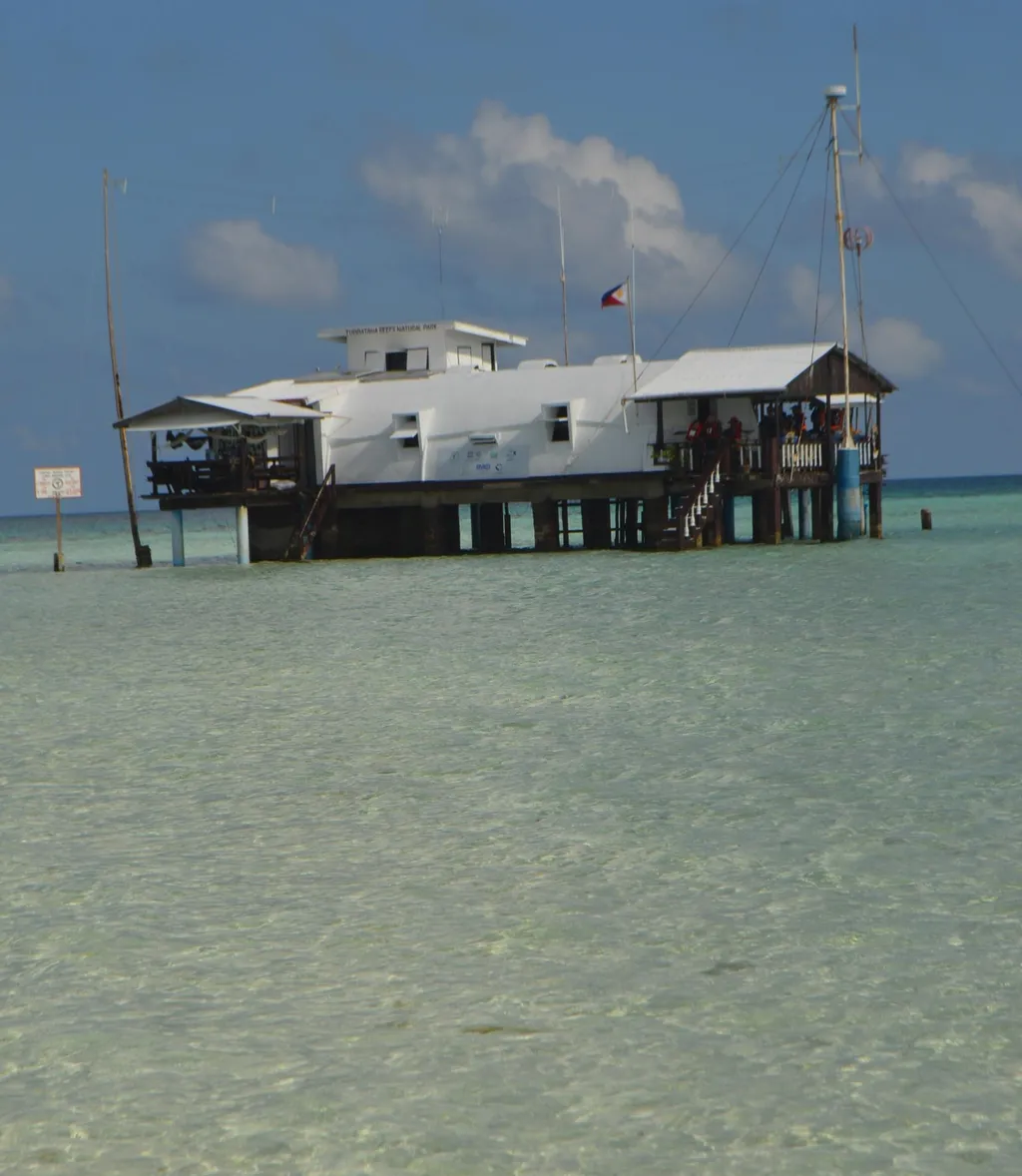
Tubbataha Reefs Natural Park sits alone in the middle of the Sulu Sea—two coral atolls and a nearby bank that you only reach by liveaboard. For roughly ninety days each year (mid-March to mid-June), boats steam overnight from Puerto Princesa, drop anchor in reef lagoons, and spend the week on walls that drop into deep blue. Soft and hard coral cover is dense and healthy; the water column fills with schooling jacks, snappers, and bumphead parrotfish. Reef sharks are routine, hammerheads and whale sharks show when the blue cooperates, and mantas cruise cleaning stations. There is no shore diving, no day-boat option, and no resort on the reef—just park patrol boats, a ranger station, and the liveaboard fleet. If you want remote Philippine wall diving with shark density to match the marketing, this is the short season to book.
Difficulty
Advanced
Temperature
26–30°C
Visibility
20–40 m
Diving Highlights
Best Months to Dive
Getting to Tubbataha for Diving
✈️Transportation
Tubbataha is liveaboard-only. Fly into Puerto Princesa (PPS) on Palawan—domestic connections from Manila (MNL) or Cebu (CEB) are the usual feeders—then board your boat in the afternoon or evening for an overnight crossing of roughly 10–12 hours into the park. The diving season is short: roughly mid-March to mid-June; outside that window the park is closed and boats do not run. Expect a park fee of about PHP 5,000 per diver (confirm current rate with your operator). There are no day boats from shore, no skilled-entry beach dives, and no lodging on the reef itself. Nearest recompression chamber support is back in Puerto Princesa—buffer a night or two before embarkation and after disembarkation for flight delays and sea state. Crew tips on Filipino liveaboards commonly run 10–15% of the package; cash in PHP or USD helps.
Country
Philippines
Currency
Philippine Peso
Electricity
220V, 60Hz, Type A/B plugs
Cost of a Dive Trip in Tubbataha
Liveaboard
Accommodation
Meal
Transportation
Best Dive Sites in Tubbataha
🐠Amos Rock
Signature northwest wall on North Atoll—often an early-itinerary highlight. Expect a steep drop carpeted in hard coral, soft coral, and fans, with grey reef and whitetip sharks cruising the edge. Schools of fusiliers and jacks regularly fill the blue; barracuda and Napoleon wrasse show when you are lucky. Depths commonly work 15–35 m; current ranges from mild drift to a proper push. Advanced comfort recommended when the set turns on.
🐢Washing Machine
Northeast North Atoll channel/wall combo famous for swirling, switching currents—hence the name. Do not confuse it with South Atoll lore; local and dive-blog reports place the classic Washing Machine on the northeast North Atoll. When the tide runs, you ride the flow past coral heads and out toward blue water, watching reef sharks and big schools use the same highway. Depth often 18–35 m. This is a drift for current-experienced divers, not a static photo stop.
🦈Shark Airport
East-side North Atoll wall where reef sharks often patrol so predictably that operators nicknamed it like a runway. Grey reefs and whitetips are the regulars; eagle rays and turtles add traffic. Coral cover on the wall is healthy, and visibility in peak season can stretch past 30 m. Depth profile frequently 20–40 m with intermittent current. Bring your shark patience— hover off the wall, watch the blue, do not chase.
🐙Malayan Wreck
West North Atoll wreck dive among otherwise wall-dominated days. The broken remains sit on a sandy/coral bottom and attract schooling fish, sweetlips, and often resting whitetips. Depth is typically moderate for Tubbataha (often mid-teens to around 30 m depending on how you work the debris), but surge and residual current can complicate swim-throughs. A welcome wide-angle change of pace between endless walls.
🐚Wall Street
North Atoll wall stretch known for continuous coral real estate—think long, scenic drop-offs rather than a single pinnacle. Soft corals and fans decorate ledges; bumphead parrotfish and surgeonfish herds move along the contour. Reef sharks make passes in the blue. Depths 15–35 m with classic Tubbataha drift potential. Excellent for divers who want to log horizontal covered distance without hunting a single “star” animal.
🦑Seafan Alley
North Atoll site celebrated for dense sea fans packing the wall faces—photographers eat this up when the vis is glass. Expect anthias and other small reef fish in the fans, the usual Tubbataha wall fish cloud offshore, and occasional shark fly-bys. Depth commonly 12–30 m; currents are usually manageable but still tide-dependent. Slow down and shoot up into the fan forest under natural light.
🐡South Park
Despite the name, South Park is a North Atoll site—another healthy coral wall with strong schooling-fish days and reef-shark traffic. Topography mixes drop-offs with shallower reef caps where you can finish the dive. Typical depths 15–35 m. Good “honest Tubbataha” dive when you want coral coverage and fish density without a gimmick nickname.
🦀Black Rock
South Atoll landmark with dramatic rock/coral structure and frequent pelagic blue. Walls and outcrops funnel current; reef sharks use the edges, and schooling fish stack on the points. Working depths often land 18–40 m. When the set is running this can feel more exposed than calm North Atoll mornings—treat it as advanced wall diving with a proper SMB and buddy discipline.
🐋Delsan Wreck
South Atoll wreck—another break from pure wall itineraries. The site combines debris interest with surrounding reef life: snappers, sweetlips, and curious reef sharks nosing the structure. Depths vary with how deep the wreck sections sit, often overlapping the mid-20s to mid-30s for the interesting bits. Current around the wreck can be surprising; approach as a guided advanced dive rather than a casual poke.
🦐Triggerfish City
South Atoll reef/wall nicknamed for the sheer density of triggerfish—and usually plenty of other reef traffic piled on. Expect busy mid-water, healthy hard coral shelves, and the occasional shark cutting through the circus. Depths often 12–30 m with light-to-moderate current. Fun, colorful, and a mental break from deep blue walls when you want closer-range action.
🐠Jessie Beazley Reef
Separate reef bank roughly 20 km north of the main atolls—often dived on the transit in or out of the park. Smaller footprint than North/South Atoll, but the same UNESCO water: healthy coral, reef sharks, and schooling fish pressed against drop-offs. Depths typically 15–35 m depending on the route your DM picks. Treat it as a destination dive, not filler—visibility and animal density can rival the main atolls on a good day.
🐢Southwest Wall
South Atoll’s southwest-facing wall—long vertical real estate facing open water. Soft corals and fans cling to the drop; jacks, barracuda, and reef sharks work the blue edge. When current wraps the corner you get classic Tubbataha drift lines. Depths commonly 20–40 m. A strong closer for itineraries that want one last big topographic wall before steam-back to Puerto Princesa.
What Divers Say About Diving in Tubbataha

Yuki Tanaka
Underwater Photographer / Master Scuba DiverI booked Tubbataha for the walls and left talking about shark frequency. Amos Rock and Shark Airport set the tone early: grey reefs and whitetips on patrol, barracuda and trevallies packing the blue, coral looking like it has not been kicked half to death. Washing Machine on the northeast North Atoll lived up to the name—when the current switches on you stop fighting and start drifting, which is half the fun if you are current-comfortable. South Atoll days felt wilder in places: Black Rock and Southwest Wall for big topography, Triggerfish City when the tithes of reef fish thicken, and Delsan Wreck as a change of pace among the hard-coral walls. Jessie Beazley on the transit was a bonus dive I would not skip—different angle on the same park DNA. Hammerheads? We got brief blue-water glimpses, not a Cocos-style circus. That is Tubbataha: reef health and shark occupancy are the floor; pelagics are the bonus round. Life between dives is liveaboard rhythm—meals, fills, naps, and a ranger-station visit if the schedule allows. Book the season early; the park calendar does not negotiate.
Frequently Asked Questions About Diving in Tubbataha
Can I day-trip Tubbataha from Puerto Princesa?
No. The reef is an overnight liveaboard crossing (about 10–12 hours each way). There are no day boats, shore dives, or reef lodging. Plan a full liveaboard itinerary inside the mid-March to mid-June season.
What certification and experience do I need?
Operators typically want Advanced Open Water (or equivalent) plus solid logged experience with drift, current, and deeper wall diving. Many sites sit in the 20–40 m working range with blue-water exits; this is not a beginner resort reef.
When should I book a Tubbataha liveaboard?
As early as you can—often 6–12 months out for peak April–May cabins. The park is only open roughly mid-March to mid-June, so the entire season competes for limited boats.
How much is the park fee?
Budget about PHP 5,000 per diver (confirm the current rate with your operator). It is usually collected or arranged via the liveaboard as part of embarkation paperwork.
Are hammerhead sharks guaranteed?
No. Reef sharks are far more reliable. Scalloped hammerheads and whale sharks are seasonal/blue-water extras—treat them as bonuses, not the booking thesis.
Is nitrox available?
Most Tubbataha liveaboards offer nitrox (often at extra cost). Given multi-dive wall days and typical depths, nitrox is worth taking if you are certified.
How rough is the crossing—will I get seasick?
The Puerto Princesa–park run is open Sulu Sea. Bring motion-sickness meds even if you are usually fine; first night out and last night back are when people struggle most.
Can we visit the ranger station?
Many itineraries include a stop at the park ranger station when conditions and schedule allow—ask your boat. It is a great reality check on how remote this UNESCO site actually is.