
Ambon Scorpionfish
Pteroidichthys amboinensis
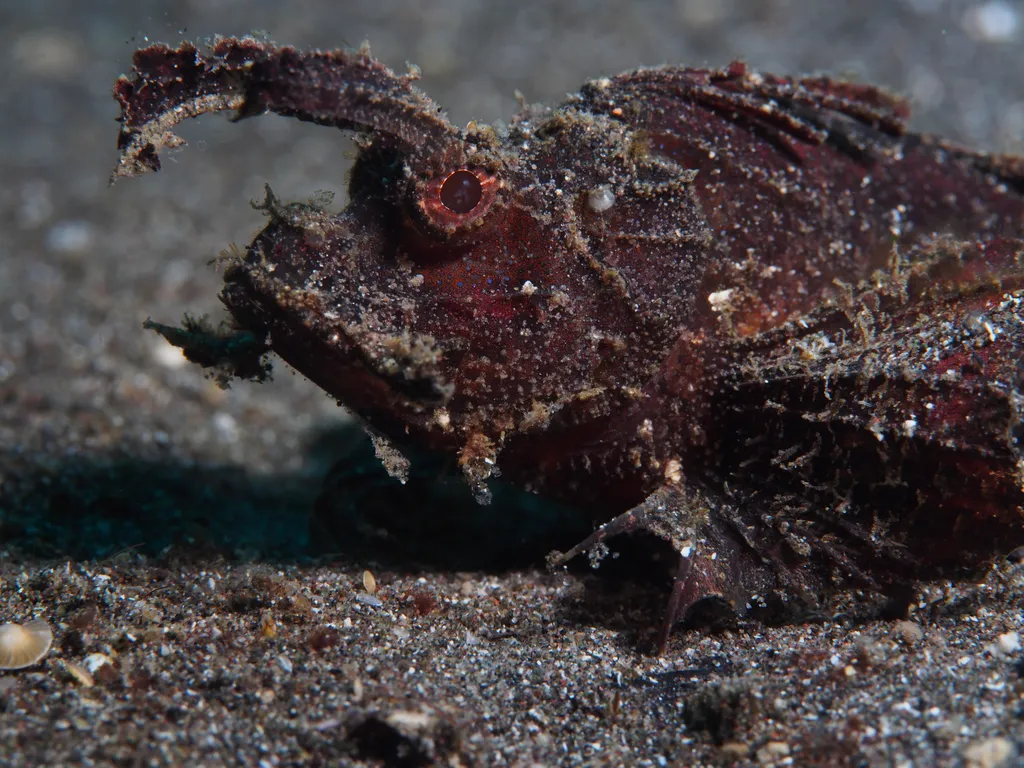
Photo by Rickard Zerpe / CC BY-SA 2.0 via Wikimedia Commons
Ambon Scorpionfish are peak muck diving: tiny, venomous, and so well camouflaged that you can hover over one for a full minute before your brain accepts it is an animal. They live on soft sand, mud, and algae rather than pretty coral gardens, which is exactly why Ambon Bay's Laha slopes and similar Indo-Pacific muck sites treat them like trophy finds.
This species belongs to the odd genus Pteroidichthys—elongate, compressed scorpionfish loaded with fleshy tentacles on the body and fins. Color is almost irrelevant for ID: yellow, brown, red, pink, or dirty blackish mottling can all appear on the same dive site depending on substrate and mood.
For photographers, the payoff is a surreal, filigree-covered face and those absurdly long supraorbital tentacles once you get close enough. For everyone else, the lesson is simpler: keep your hands off the bottom, and never brush what looks like a clump of weed sitting alone on the sand.
🔬Classification
📏Physical Features
🌊Habitat Info
⚠️Safety & Conservation
Identification Guide
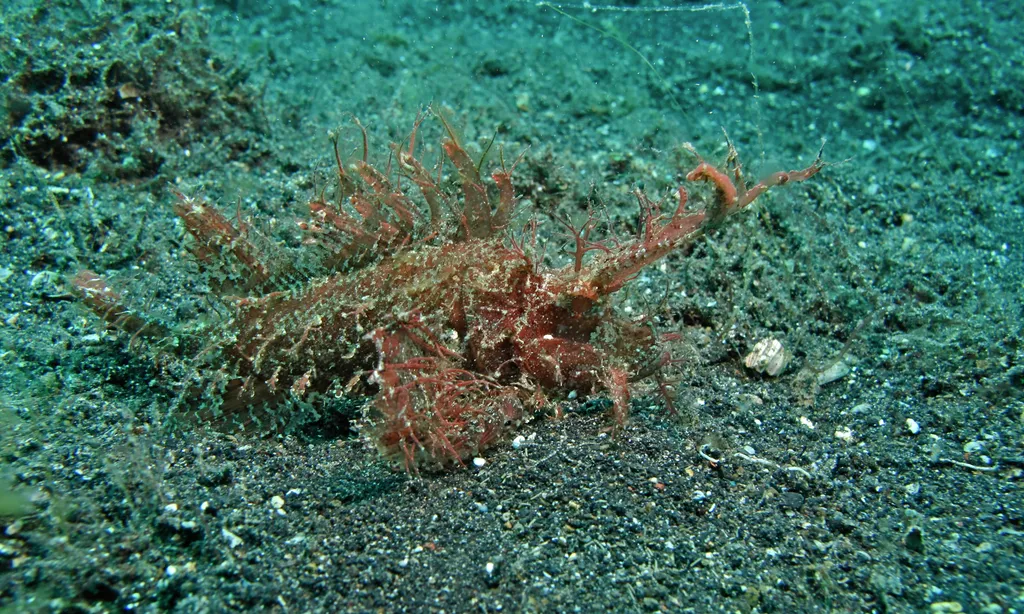
Photo by Bernard DUPONT from FRANCE / CC BY-SA 2.0 via Wikimedia Commons
Tentacles Over Color
Look for well-developed supraorbital tentacles and long posterior lacrimal spine projections that often exceed the eye diameter. Body and fins are usually peppered with smaller fleshy flaps—more "hairy rubble" than clean leaf outline.
Soft-Bottom Context
Expect them on sand, mud, algae, or silty rubble rather than dense hard coral. A solitary mottled lump sitting slightly proud of the substrate is a classic first cue.
Separate From Lookalikes
Flexible dorsal spines and absence of a clear black blotch on the soft dorsal help separate P. amboinensis within its genus. Versus weedy Rhinopias, Ambon Scorpionfish stay smaller and more elongate, with a less "costume-weed" overall profile.
Top 10 Fun Facts about Ambon Scorpionfish
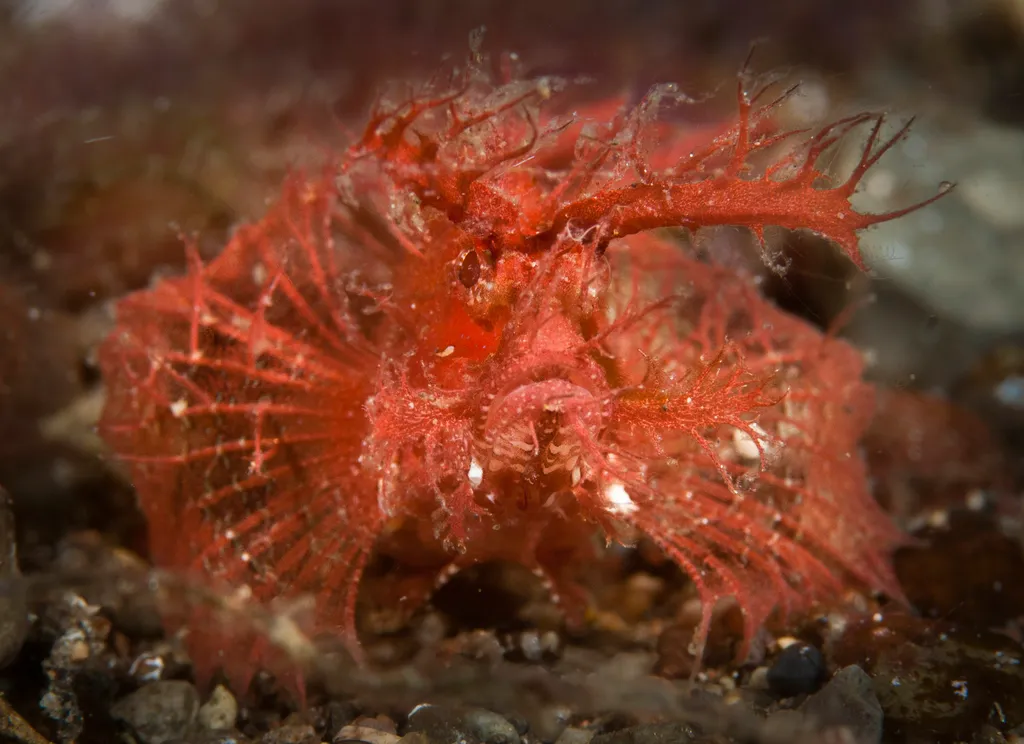
Photo by Jason Marks / CC BY-SA 3.0 via Wikimedia Commons
1. Named for Ambon—And Still a Cult Critter There
The species was described from Ambon and nearby Sulawesi waters, and Ambon Bay muck sites remain among the most reliable places recreational divers hear guides whisper "Ambon scorpionfish" mid-dive.
2. Godfrey's Scorpionfish Is the Same Fish
Older literature and some books still list Godfrey's scorpionfish (Rhinopias godfreyi) as separate. Modern revisions treat that name as a junior synonym of P. amboinensis.
3. Built Like a Soft-Bottom Ambush Machine
Elongate compressed body, cryptic mottling, and a mouth ready for vacuum-style strikes on crustaceans and small fish—classic sit-and-wait predation.
4. Color Morphs Will Fool Your Memory Card
Individuals can look blackish-red, muddy brown, pink-yellow, or algae-green on the same slope. Photographers often leave thinking they saw "different species" until they check the tentacle layout later.
5. Skin Flaps Are Part of the Camouflage System
Numerous tentacles on trunk and fins break the animal outline into detritus-like edges, especially under silty or low-visibility muck conditions.
6. Venom Is Not a Party Trick
Spines deliver potent venom; serious pain is the baseline, and sources explicitly flag rare fatal outcomes. Treat every perched "weed clump" as hazardous until identified.
7. Depth Sweet Spot Matches Recreational Muck
Documented roughly 3–43 m, with many photo encounters in the teens and twenties—convenient for long bottom times and careful approaches.
8. Indo-West Pacific Broad, Locally Rare Feeling
Range runs from the Red Sea through the Indian Ocean into the West Pacific (Fiji, southern Japan, northern Australia), yet at any one site it often feels "rare" because detection is hard.
9. Male Skin Flaps Can Look Extra Dramatic
Dive-site notes (e.g. Lembeh) remark that fleshy skin flaps can be more prominent in males—useful trivia when comparing individuals on successive dives.
10. Flexible Spines Help Separate Congeners
Within Pteroidichthys, flexible dorsal spines and well-developed supraocular/posterior lacrimal tentacles are key traits for P. amboinensis versus deeper-water relatives.
Diving & Observation Notes
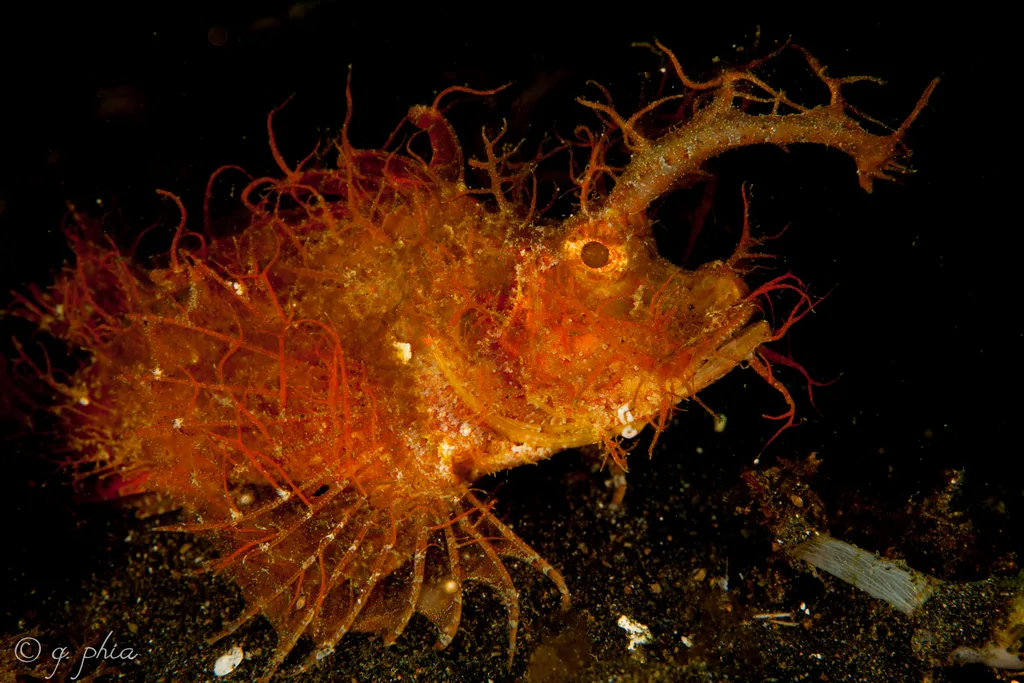
Photo by q phia / CC BY 2.0 via Wikimedia Commons
🧭 Where Guides Actually Find Them
Prioritize classic Indo-Pacific muck: Ambon Bay (especially Laha), Lembeh Strait sand slopes, and Philippine black-sand sites around Anilao and Dumaguete. Tell the guide early—local eyes beat random searching for this species.
Searching Technique
Fin slowly, stay off the bottom, and scan with a narrow cone of light or a focused beam rather than floodlighting the whole slope. Pause on any solitary textured lump; ask yourself if the "detritus" has bilateral symmetry or a hidden eye.
Approach and Photography
Settle upstream or beside—not above with a silty kick—then edge in with elbows tucked and fins still. Prefer longer focal length for face/tentacle detail; get exit clearance before you lift your camera so you do not plant a hand on the fish.
Safety
Venomous spines mean no fingertips, no "nudge for pose," and no resting on the sand near a possible perch. If stung: exit water, immerse the wound in hot (not scalding) water as first aid while seeking medical care.
Best Places to Dive with Ambon Scorpionfish
Ambon
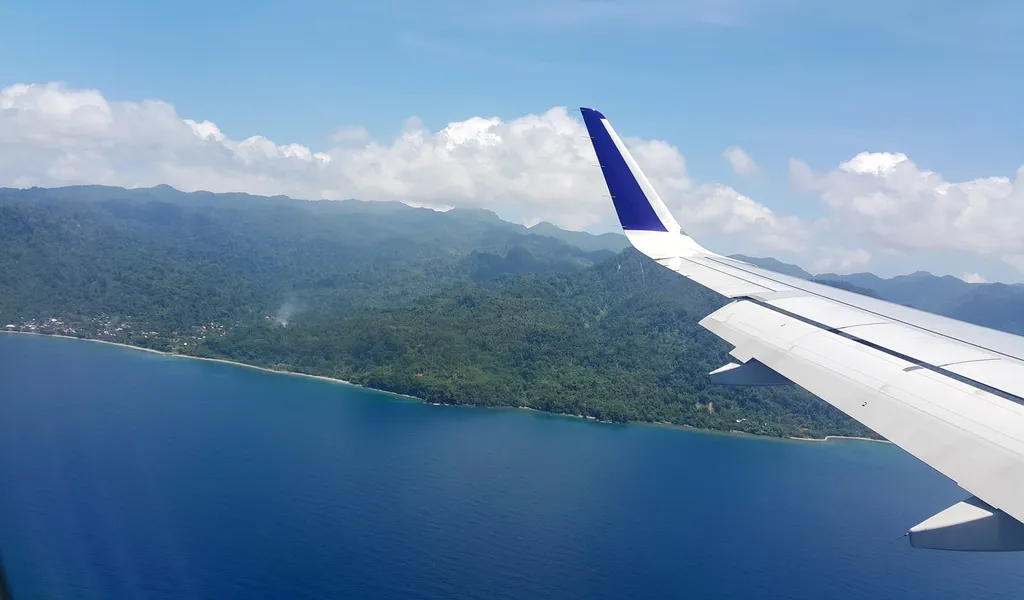
Ambon sits in Indonesia’s Maluku (Spice Islands) and is one of the world’s elite muck destinations—often ranked alongside Lembeh for rare critters, without the crowds. The heart of the action is Ambon Bay around Laha village near the airport: black volcanic sand slopes, rubble, pier posts and discarded debris that somehow host psychedelic frogfish (endemic to Ambon waters), rhinopias, flamboyant cuttlefish, mimic and wonderpus octopuses, ghost pipefish and endless nudibranchs. Most bay dives stay 5–35 m with long bottom times that photographers love. When weather allows, the south and east coasts flip the script—healthy hard coral, walls, arches at Pintu Kota, the swim-throughs of Hukurila Cave, and the critter-coated Duke of Sparta wreck. Expect modest lodging in Laha or resort packages further around the bay; July–August monsoon often closes operators.
Lembeh
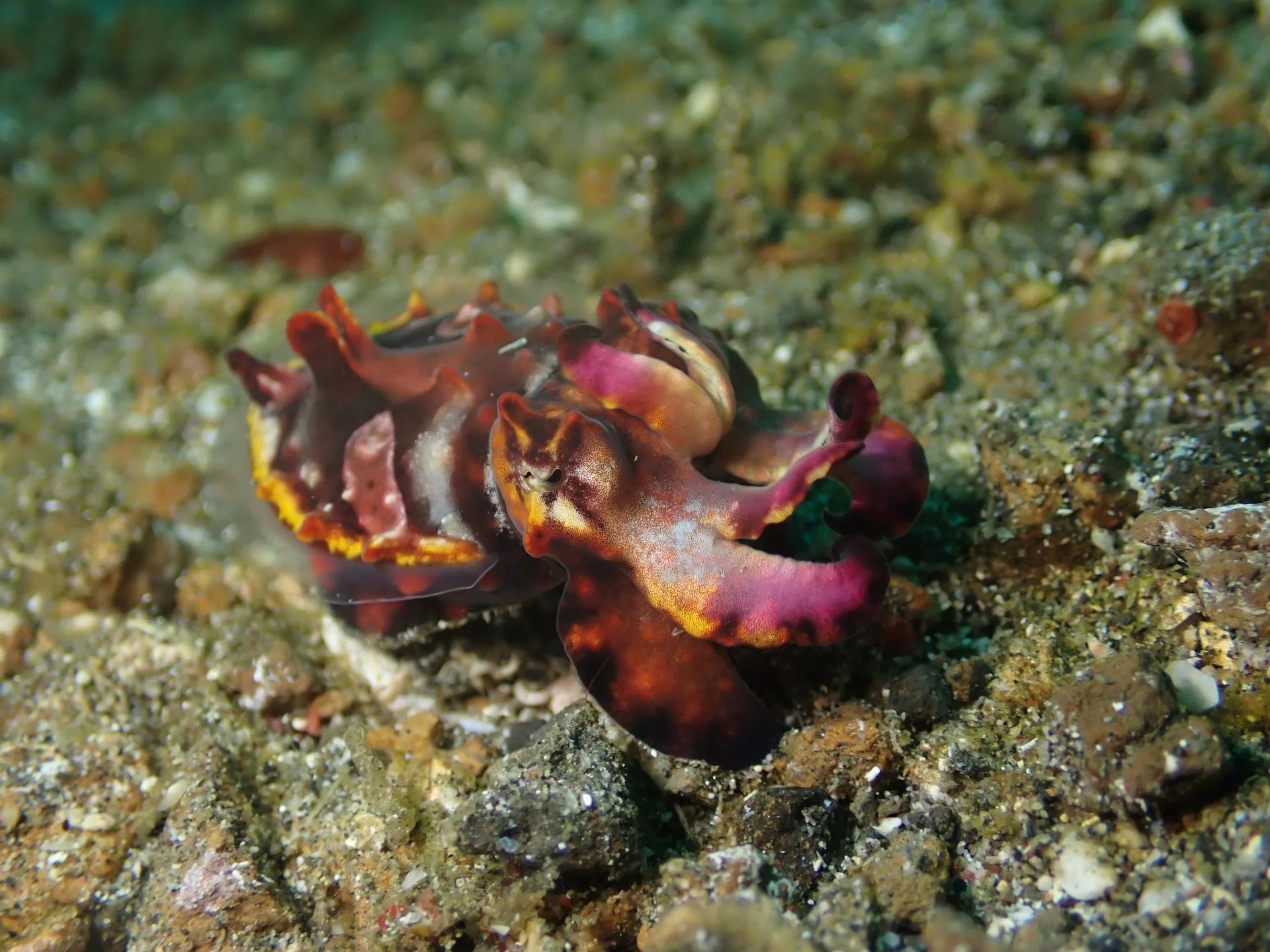
The Lembeh Strait in North Sulawesi has become famous as the muck‑diving capital of the world. At first glance its gently sloping seabed of black volcanic sand, rubble and discarded debris looks bleak. Look closer and it is teeming with weird and wonderful life: hairy and painted frogfish, flamboyant cuttlefish, mimic and blue‑ringed octopuses, ornate ghost pipefish, tiny seahorses, shrimp, crabs and a rainbow of nudibranchs. Most dives are shallow and calm with little current, making it an ideal playground for macro photographers. There are a few colourful reefs for a change of scenery, but Lembeh is all about searching the sand for critter treasures.
Anilao
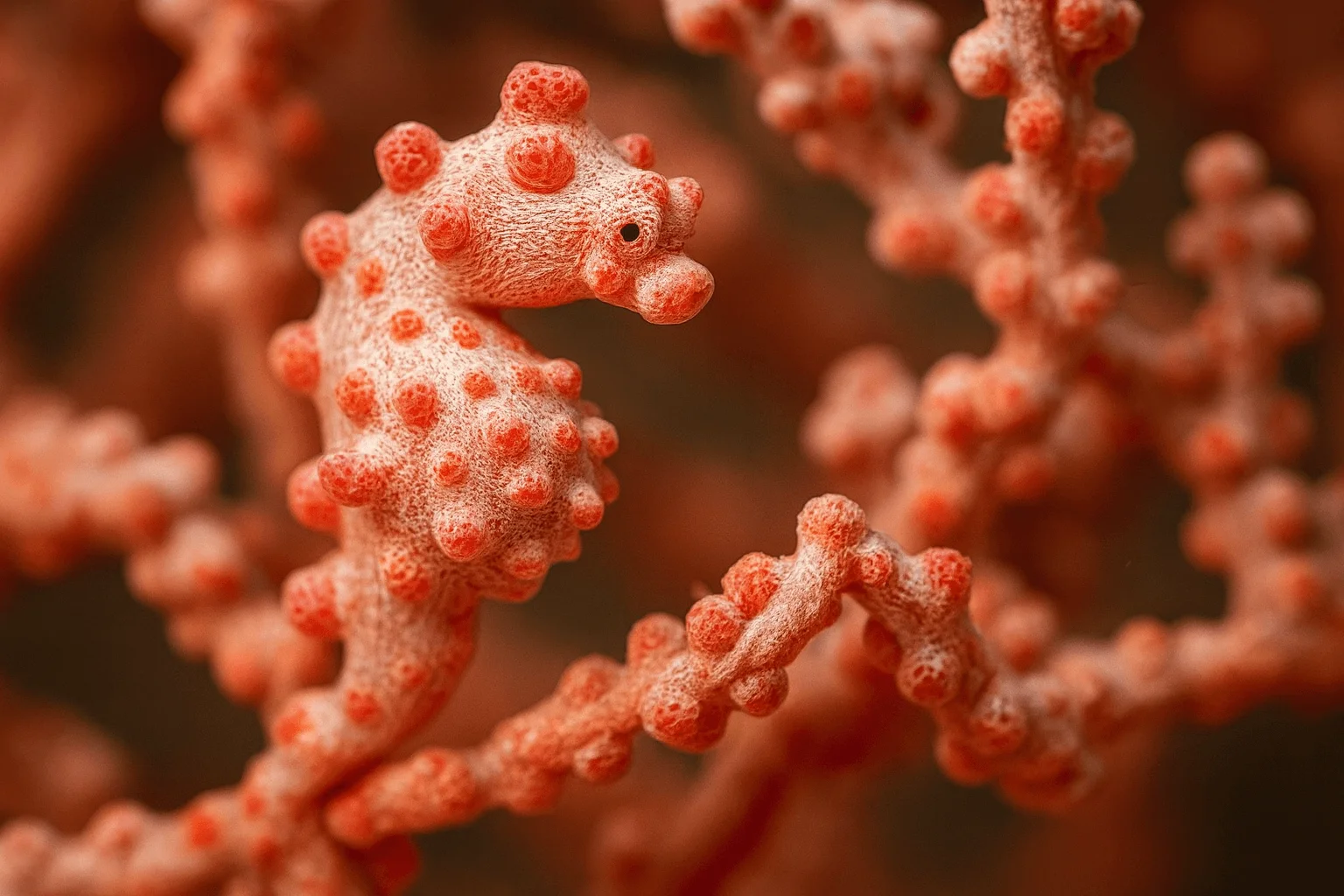
Anilao, a small barangay in Batangas province just two hours south of Manila, is often called the macro capital of the Philippines. More than 50 dive sites fringe the coast and nearby islands, offering an intoxicating mix of coral‑covered pinnacles, muck slopes and blackwater encounters. Critter enthusiasts come for the legendary muck dives at Secret Bay and Anilao Pier, where mimic octopuses, blue‑ringed octopuses, wonderpus, seahorses, ghost pipefish, frogfish and dozens of nudibranch species lurk in the silt. Shallow reefs like Twin Rocks and Cathedral are covered in soft corals and teem with reef fish, while deeper sites such as Ligpo Island feature gorgonian‑covered walls and occasional drift. Because Anilao is so close to Manila and open year‑round, it’s the easiest place in the Philippines to squeeze in a quick diving getaway.
Dumaguete
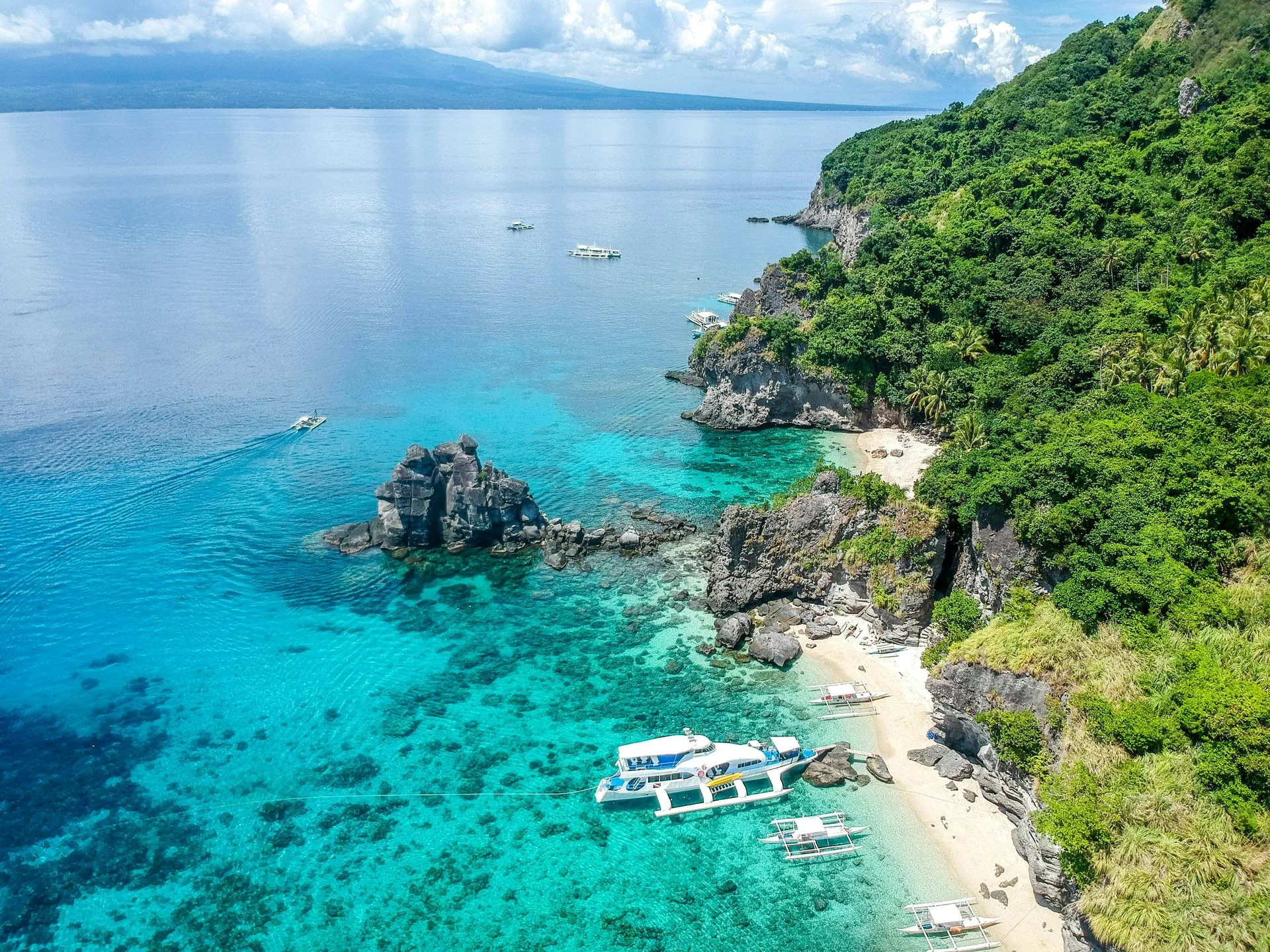
Dumaguete on the southeast coast of Negros is the jumping‑off point for some of the Philippines’ most diverse diving. Along the nearby town of Dauin, a series of shallow marine sanctuaries and black‑sand slopes hide critters galore: frogfish, flamboyant cuttlefish, mimic octopus, ghost pipefish, seahorses, pipefish and nudibranchs. Artificial reefs made from car tyres and pyramids provide extra habitat. Offshore, Apo Island’s walls and plateaus burst with hard and soft corals, schooling jacks and barracudas, and friendly green turtles. With day trips to Oslob’s whale sharks or Bais’ dolphin‑watching, and excursions to nearby Siquijor, Dumaguete offers a perfect mix of macro muck diving and classic coral reefs.
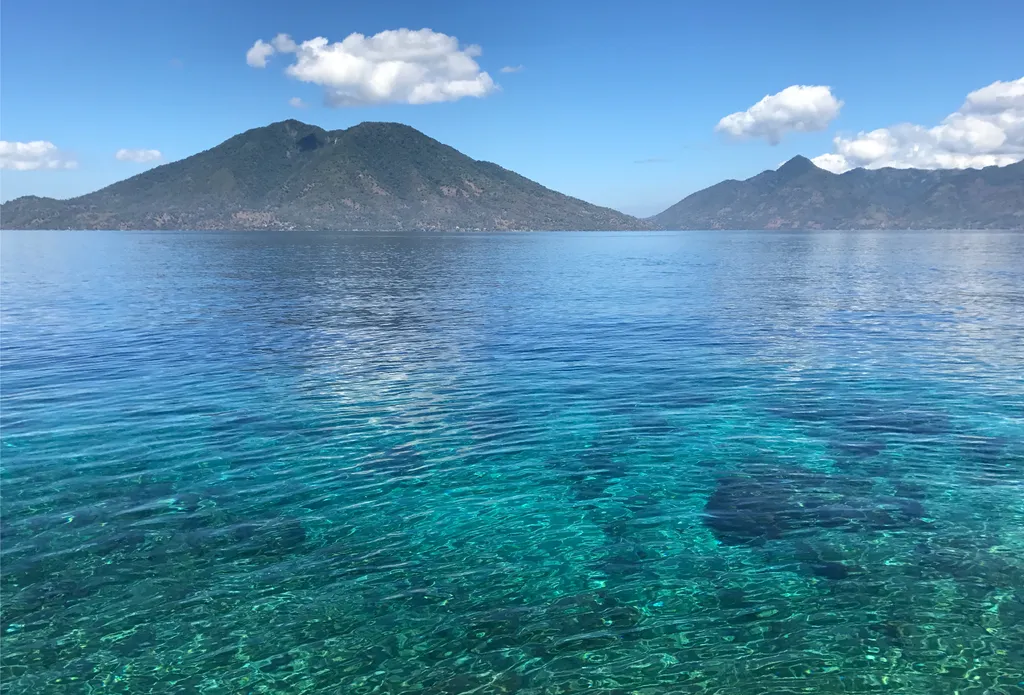
Alor
Alor rewards a trip that moves between two very different kinds of diving. In Pantar Strait, walls and coral slopes meet moving water, with schooling fish along exposed edges. Inside Kalabahi Bay, volcanic sand, rubble and silty bottoms turn the dive into a slow search for small animals. The diving area spans the shores of Alor, Pantar and Pura; where you stay affects which of these habitats fits comfortably into a boat day. Water movement explains much of the variation. Cold water enters the strait from the south, and local operators associate upwelling and stronger currents with new and full moons. A warm surface does not tell you what awaits below: a thermocline can change both the temperature and the demands of a dive. Site choice matters more than a single forecast for the archipelago. Build the itinerary around reefs, walls and macro life, with large animals as a possible encounter. There is no dependable shared season for hammerheads, mola or threshers on which to base a booking. A guide who can switch between exposed sites and sheltered searches is more useful than a fixed list of promised sightings.