
Blue-ringed Octopus
Hapalochlaena spp.
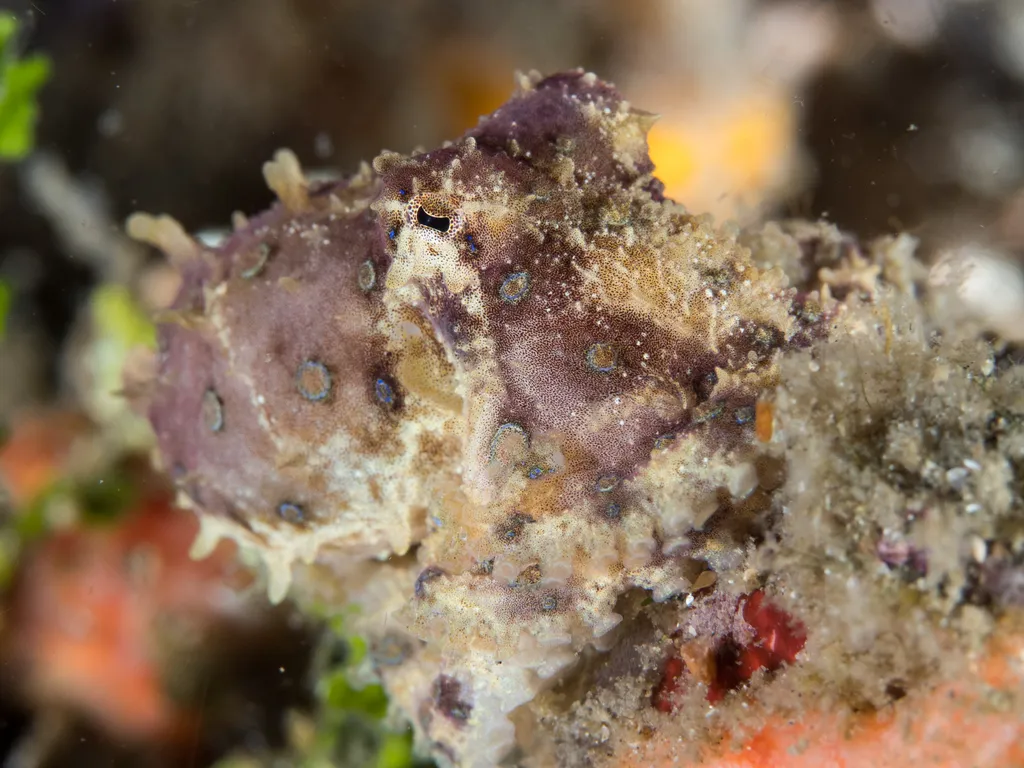
Photo by Rickard Zerpe / CC BY 2.0 via Wikimedia Commons
The Blue-ringed Octopus is macro diving's ultimate paradox: a golf-ball-sized cephalopod that can shut down a human nervous system with a bite most victims never feel. Hapalochlaena species cruise Indo-Pacific rubble and muck looking like harmless brown octopuses until stress triggers those neon-blue rings—nature's last warning before tetrodotoxin-loaded saliva does its work. For experienced critter hunters, finding one tucked in a shell or bottle is a bucket-list moment wrapped in genuine respect: you are photographing one of the ocean's most potent venoms in a body smaller than your fist. This is not a species for handling, chasing, or "just one closer shot." It's a masterclass in why macro diving rewards patience, optics, and keeping your hands to yourself.
🔬Classification
📏Physical Features
🌊Habitat Info
⚠️Safety & Conservation
Identification Guide
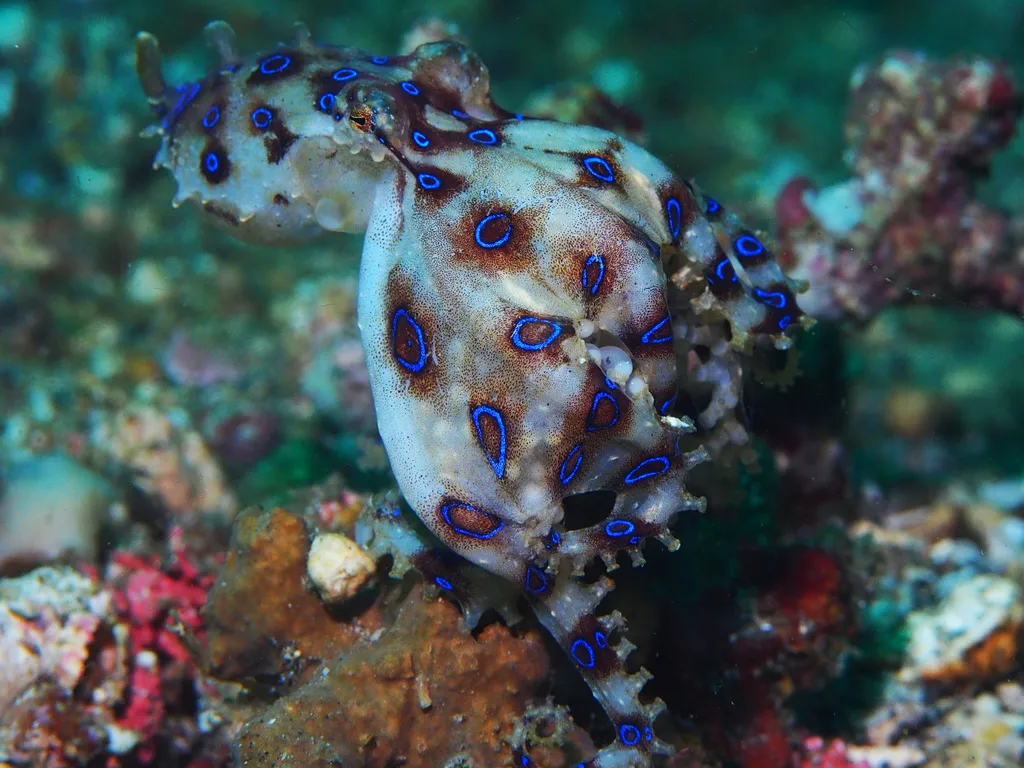
Photo by Rickard Zerpe / CC BY-SA 2.0 via Wikimedia Commons
Size alone is a clue: tiny octopus, mantle roughly thumb-sized, arms relatively short compared to wonderpus or mimic octopus.
Calm vs. Alarm Color
- Calm: mottled yellow-brown; blue rings present but often subdued or dull
- Alarmed: rings flash electric blue; body may darken; papillae erect
Habitat Clues
- Inside empty shells, beer bottles, rubble piles, or tight coral crevices
- Shallow 3–15 m rubble/muck more common than deep walls
- Often spotted on night dives when torch light catches ring iridescence
Differences from Similar Species
- Greater Blue-ringed Octopus (Hapalochlaena lunulata): ~50 blue rings; common on Australian reefs and widespread Indo-Pacific
- Southern Blue-ringed Octopus (H. maculosa): fewer, larger rings; classic Australian rock-pool species
- Small brown reef octopuses: lack consistent ring pattern; never assume "tiny = safe"
- Mimic/Wonderpus: far larger arm span; dramatic white mantle marks (mimic/wonderpus), not blue rings
Safety Field Mark
If blue rings pulse brighter as you approach, you are too close—back off immediately.
Top 10 Fun Facts about Blue-ringed Octopus
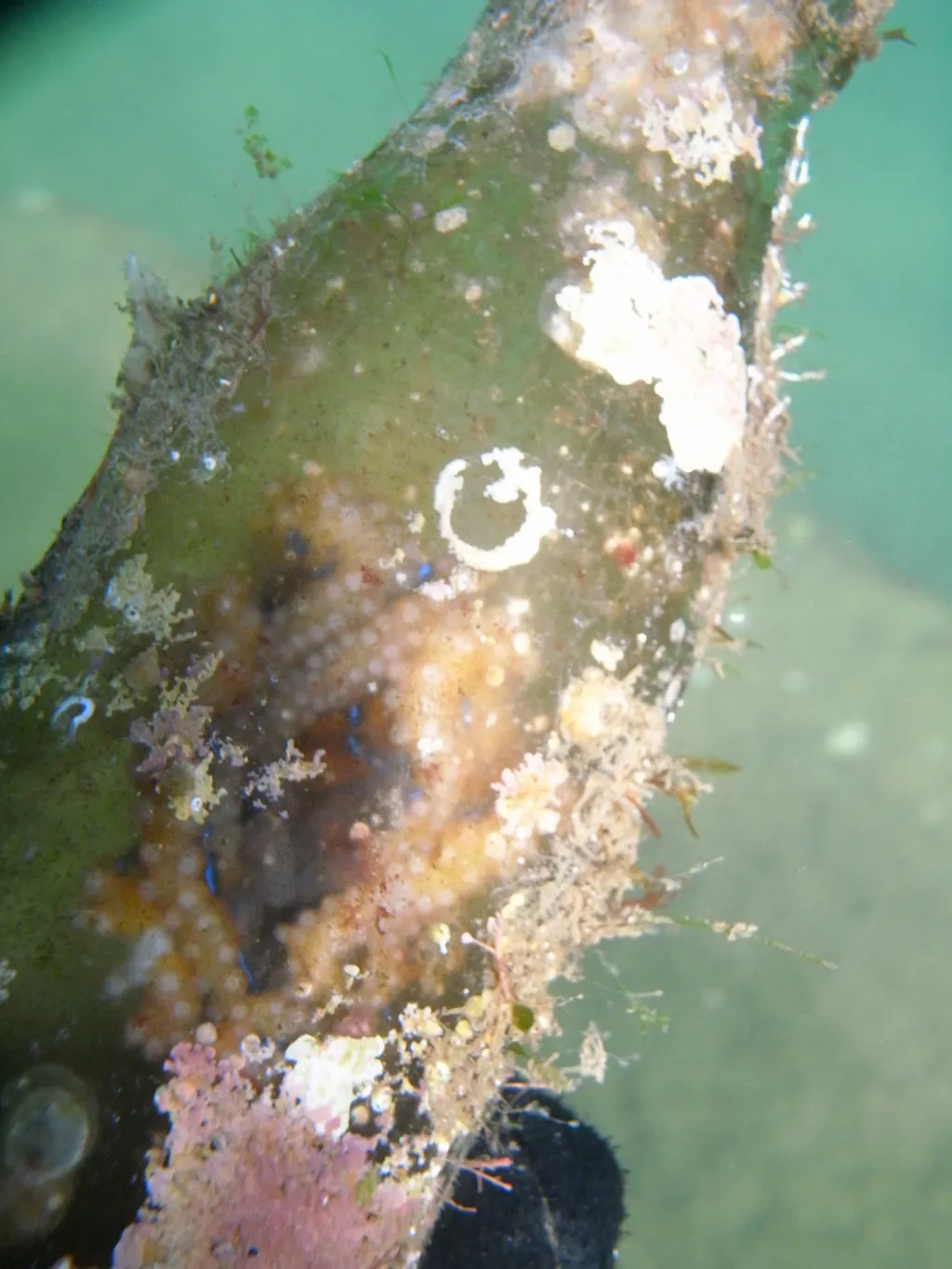
Photo by Sylke Rohrlach from Sydney / CC BY-SA 2.0 via Wikimedia Commons
1. Tetrodotoxin in a Golf Ball
Blue-ringed octopuses pack tetrodotoxin (TTX)—the same class of neurotoxin found in pufferfish and some newts—in their salivary glands and beak. A single animal reportedly carries enough TTX to kill multiple adult humans, though actual bites are rare. The toxin blocks sodium channels, paralyzing muscles including those needed to breathe. There is no antivenom; treatment is prolonged artificial respiration until the toxin clears (often hours). For divers, the takeaway is blunt: respect beats curiosity.
2. The Bite You Might Not Feel
Unlike a stonefish sting, a blue-ringed octopus bite is often painless or barely noticeable—sometimes a tiny puncture you dismiss. Symptoms can escalate within minutes: numbness, paralysis, respiratory failure. Most serious envenomations involve handling (picking up shells, tide-pool collecting, aquarium trade), not routine open-water diving at respectful distance. Macro photographers who "herd" subjects with prods are playing a different risk game entirely.
3. Rings Are a Billboard, Not a Weapon
The iconic blue rings are iridescent structural color produced by chromatophores and reflectors—not glands dripping poison. They intensify under threat as an aposematic signal: "I am dangerous, back off." The actual delivery system is the parrot-like beak hidden at the arm base. Divers who only chase the glowing ring display for Instagram may miss that a calm, dull-looking individual is equally armed.
4. Four Species, One Reputation
The genus Hapalochlaena includes species such as greater blue-ringed octopus (H. lunulata), southern blue-ringed octopus (H. maculosa), H. fasciata, and H. nierstraszi—ring count, size, and range differ, but all share TTX and the warning coloration. Underwater, you're usually logging "blue-ringed octopus" unless you're doing serious taxonomy on mantle patterns and ring morphology.
5. Shorter Lives, Fast Burn Reproduction
Like many small octopuses, blue-ringed species live roughly 1–2 years. Males use a modified arm (hectocotylus) to pass spermatophores; females lay relatively few eggs compared to giant Pacific octopus, tending them until hatch. Brooding females stop feeding and die after the eggs hatch—classic semelparous cephalopod life history compressed into a tiny, toxic package.
6. Daytime Ghost, Night Dive Star
They are cryptic and nocturnal by habit—hiding in crevices, shells, and human litter by day. Night dives on rubble slopes flip the odds: torch beams catch ring iridescence, and hunting behavior brings them into open sand patches. Lembeh, Anilao, and Dumaguete guides routinely score them on dusk/night muck when day boats have gone home.
7. Bacteria May Brew the Toxin
Research suggests TTX in blue-ringed octopuses (and some other marine animals) may originate from symbiotic bacteria—similar to pufferfish toxin pathways—rather than being synthesized entirely by the animal. The ecological chain is still debated, but it explains why toxicity can vary and why the species remains a focus of marine natural-products science.
8. Tide Pools: Where Divers and Walkers Overlap
Famous incidents cluster around intertidal collection—beachcombers flipping rocks or scooping shells in Australia, Japan, and across the Indo-Pacific. Shallow dive sites that mimic tide-pool structure (rubble at 3–5 m) are where divers encounter them. The same habitat rules apply: don't put bare hands into blind holes; use a pointer for macro, not a grabber for souvenirs.
9. Macro Gear Is the Right Scale
At 10–15 cm arm span, this is a 100 mm macro (sometimes 60 mm) subject—rings are small, so magnification and steady lighting matter more than wide-angle drama. Ring flash or snoot helps isolate the blue without blasting rubble into silt. Video at high frame rate captures the ring pulsing better than a single still.
10. Handling Bans Exist for a Reason
Several Australian states and dive operators enforce no-touch policies partly because of blue-ringed octopus risk in shallow training sites. Even where not illegal, ethical macro practice treats them like medical sharps: observe, document, never collect. Aquarium trade demand has historically pressured wild populations; leave them in the rubble where the next night diver can have the same thrill.
Diving & Observation Notes
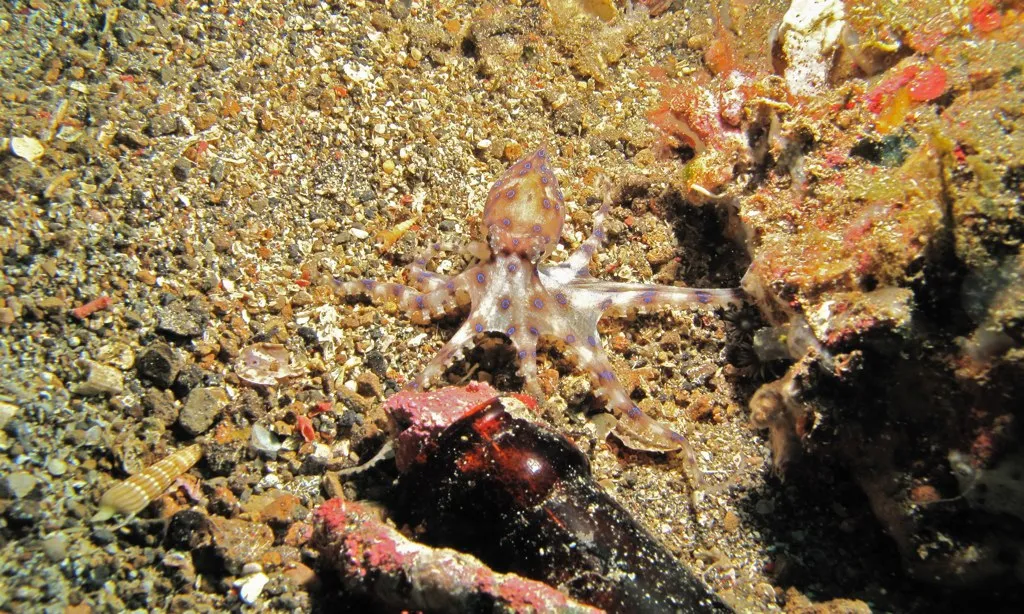
Photo by Bernard DUPONT from FRANCE / CC BY-SA 2.0 via Wikimedia Commons
🧭 Finding Them
Target shallow rubble and muck (3–15 m) with shells, bottles, and coral rubble—not pelagic blue water. Night and dusk dives outperform mid-day wall drifts. Ask guides explicitly for "blue-ring" on night muck schedules in Lembeh, Anilao, Puerto Galera, Dumaguete, Perhentian, and Sipadan-area rubble sites. Scan slowly: a discarded shell with eyes is the classic reveal.
🤿 Approach & Behavior
Default posture is freeze or retreat into cover; prolonged ring flashing means you are stressing the animal. Never block the crevice exit or trap it in a bottle for photos. Do not use tickle sticks to pull it out. Maintain at least arm's-length plus camera reach; if rings brighten, increase distance. They can move in short bursts but rarely flee far—patience beats pursuit.
📸 Photo Tips
100 mm macro with snoot or side lighting isolates blue rings on brown skin. Pre-focus on the shell lip where the mantle often rests. For ring-pulse sequences, video at 60 fps+ outperforms stills. Avoid stacking multiple divers' lights—overexposure blows out the iridescent blue. Shoot calm patterns too; alarmed color is dramatic but documents stress.
⚠️ Ethics & Safety
Zero handling. No gloved grabs, no "passing to buddy," no kiddie-pool transfers for boats. Warn divemasters if teammates attempt touches. Report shore collectors harassing tide-pool fauna when you see it. This species is why look don't touch is not a bumper sticker—it's emergency-room prevention.
Best Places to Dive with Blue-ringed Octopus
Lembeh
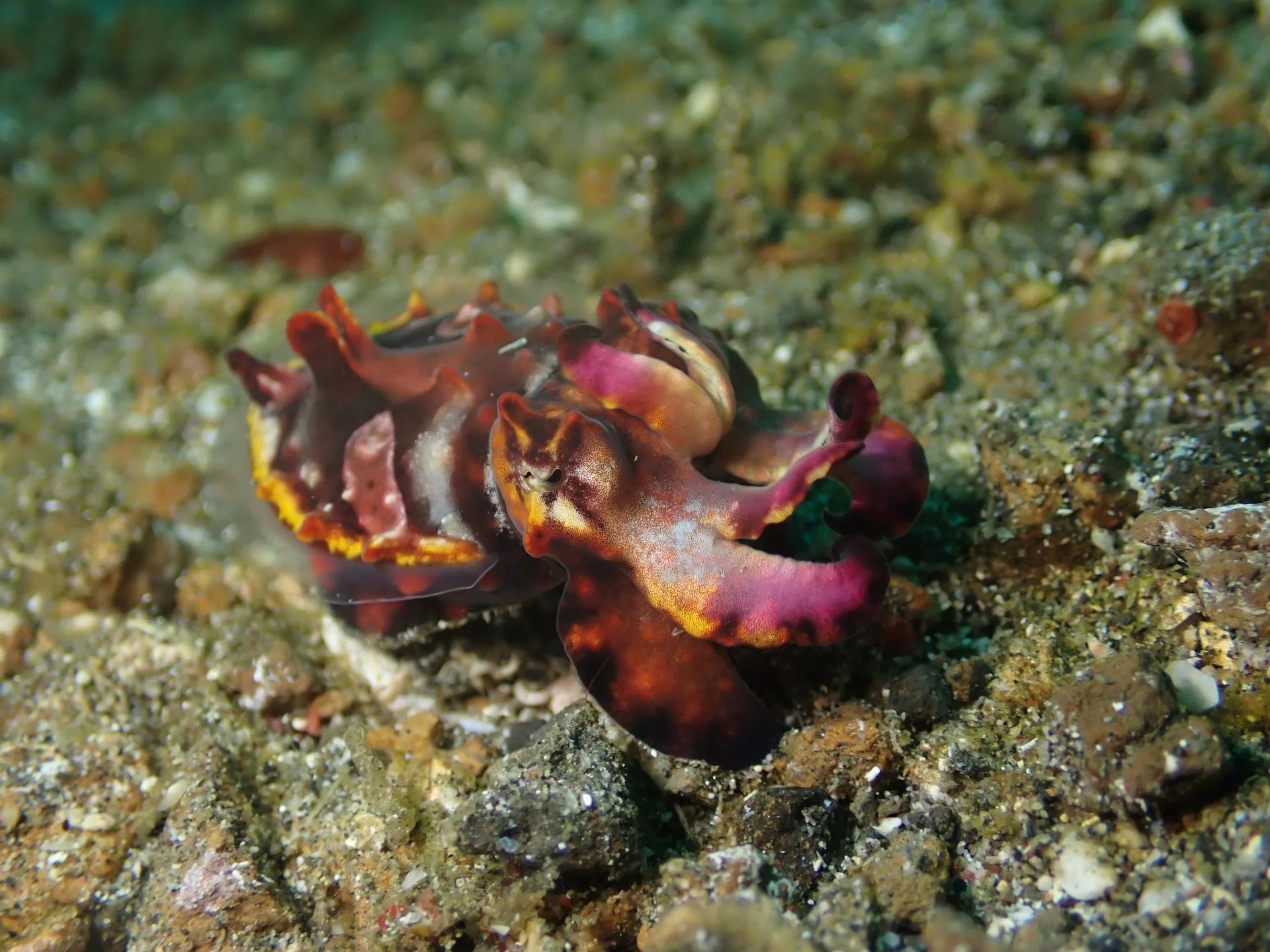
The Lembeh Strait in North Sulawesi has become famous as the muck‑diving capital of the world. At first glance its gently sloping seabed of black volcanic sand, rubble and discarded debris looks bleak. Look closer and it is teeming with weird and wonderful life: hairy and painted frogfish, flamboyant cuttlefish, mimic and blue‑ringed octopuses, ornate ghost pipefish, tiny seahorses, shrimp, crabs and a rainbow of nudibranchs. Most dives are shallow and calm with little current, making it an ideal playground for macro photographers. There are a few colourful reefs for a change of scenery, but Lembeh is all about searching the sand for critter treasures.
Anilao
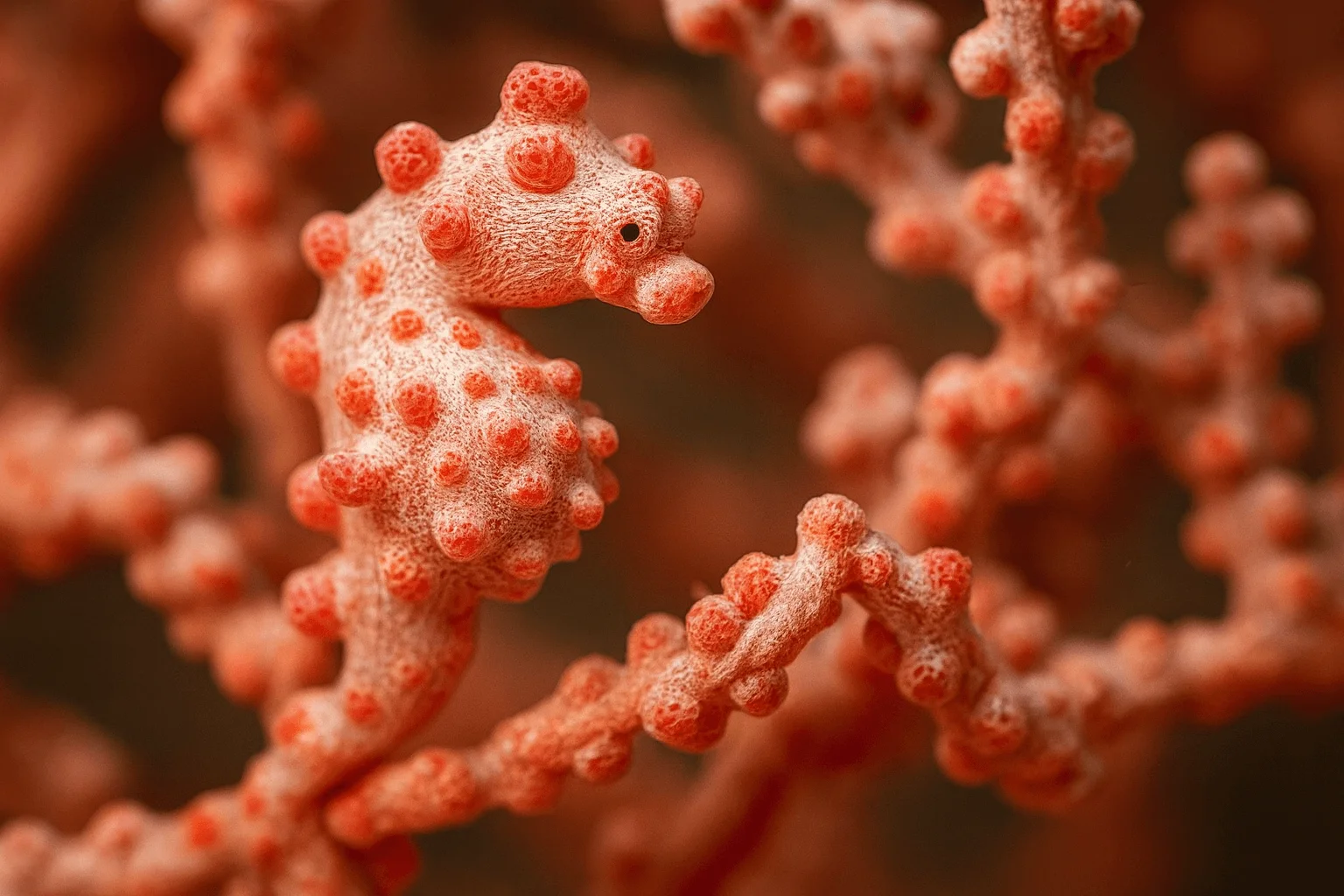
Anilao, a small barangay in Batangas province just two hours south of Manila, is often called the macro capital of the Philippines. More than 50 dive sites fringe the coast and nearby islands, offering an intoxicating mix of coral‑covered pinnacles, muck slopes and blackwater encounters. Critter enthusiasts come for the legendary muck dives at Secret Bay and Anilao Pier, where mimic octopuses, blue‑ringed octopuses, wonderpus, seahorses, ghost pipefish, frogfish and dozens of nudibranch species lurk in the silt. Shallow reefs like Twin Rocks and Cathedral are covered in soft corals and teem with reef fish, while deeper sites such as Ligpo Island feature gorgonian‑covered walls and occasional drift. Because Anilao is so close to Manila and open year‑round, it’s the easiest place in the Philippines to squeeze in a quick diving getaway.
Puerto Galera
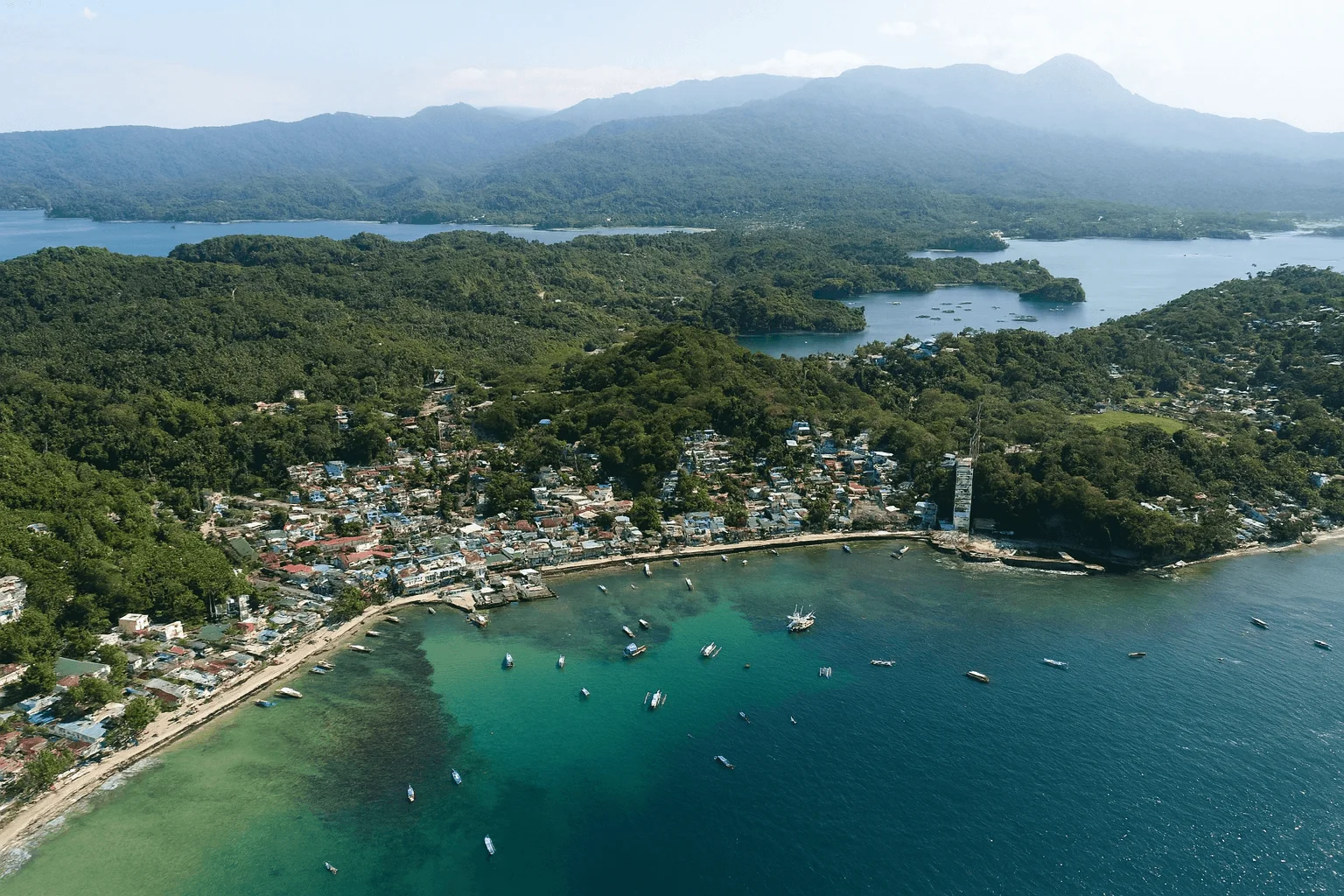
Puerto Galera sits on the northeast tip of Mindoro Island in the Philippines and has long been rated among Asia’s best and most diverse diving areas. The town faces the Verde Island Passage – part of the Coral Triangle – so its reefs host an incredible mix of hard and soft corals, seahorses, frogfish and other critters alongside schooling jacks and occasional pelagics. More than forty sites line the bays and headlands around Sabang and Small La Laguna, meaning everything from easy house‑reef dives and shallow muck sites to current‑swept canyons and colourful wrecks is only a short boat ride away. Currents are governed by the lunar cycle; strong spring tides around full and new moon create exciting drift dives, while neap tides offer gentle conditions that are perfect for macro photography. Because the water stays warm all year (27–30 °C) and visibility often reaches 15–30 m, Puerto Galera attracts both beginners and experienced divers seeking a fun, affordable destination with lively nightlife on land.
Dumaguete
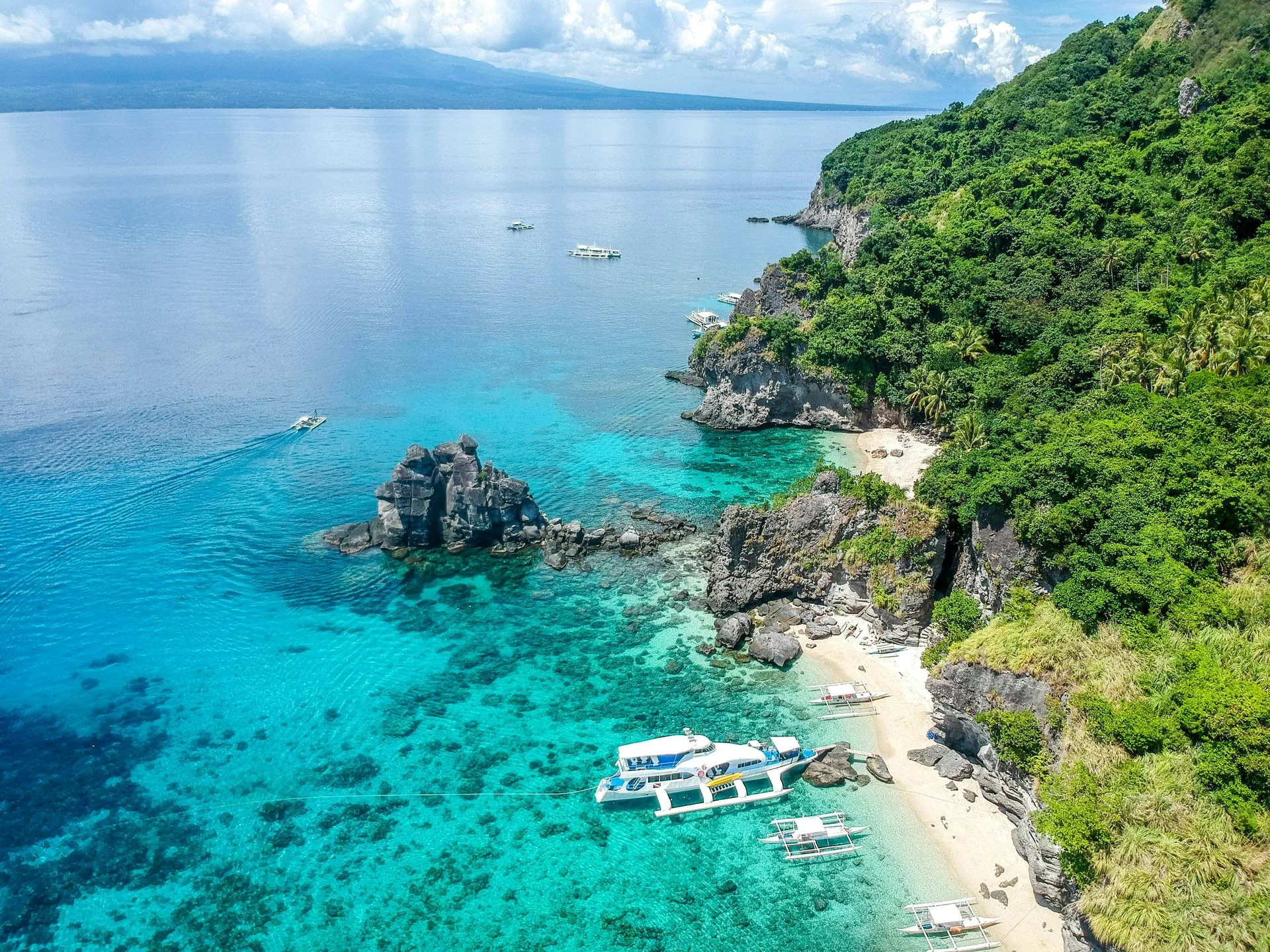
Dumaguete on the southeast coast of Negros is the jumping‑off point for some of the Philippines’ most diverse diving. Along the nearby town of Dauin, a series of shallow marine sanctuaries and black‑sand slopes hide critters galore: frogfish, flamboyant cuttlefish, mimic octopus, ghost pipefish, seahorses, pipefish and nudibranchs. Artificial reefs made from car tyres and pyramids provide extra habitat. Offshore, Apo Island’s walls and plateaus burst with hard and soft corals, schooling jacks and barracudas, and friendly green turtles. With day trips to Oslob’s whale sharks or Bais’ dolphin‑watching, and excursions to nearby Siquijor, Dumaguete offers a perfect mix of macro muck diving and classic coral reefs.
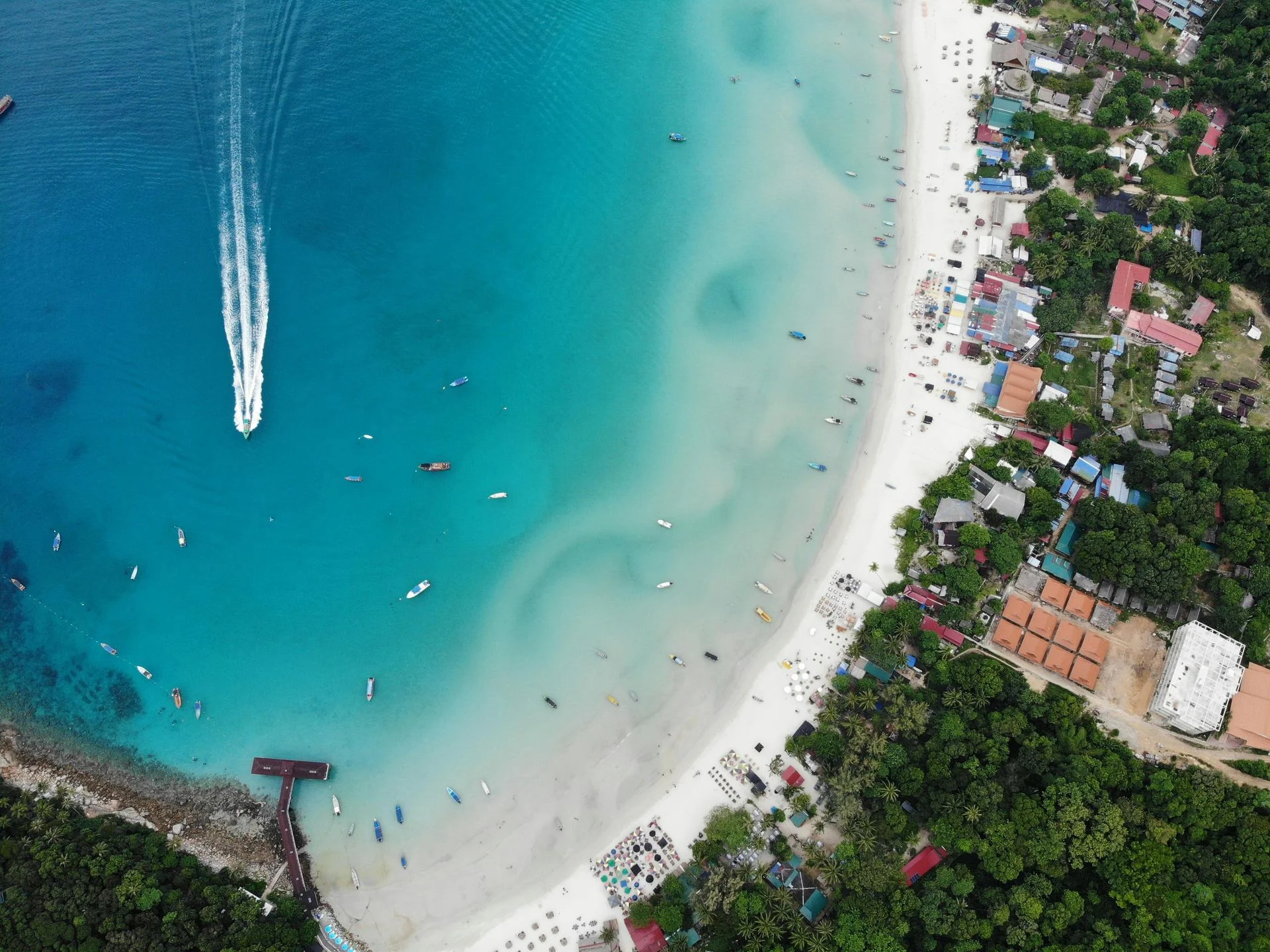
Perhentian Islands
The Perhentian Islands consist of two lush, jungle‑clad islands—Pulau Perhentian Besar (Big Island) and Pulau Perhentian Kecil (Small Island)—located about 20 kilometres off Malaysia’s north‑east coast. Known for their powder‑white beaches and turquoise water, they offer relaxed, beginner‑friendly diving on shallow reefs, pinnacles and wrecks. Visibility is respectable, water is bathtub‑warm and currents are generally mild, making the archipelago a perfect spot to learn to dive or simply enjoy colourful coral gardens teeming with reef fish. Sea turtles nest on the beaches, blacktip reef sharks patrol the edges and a handful of wrecks provide a refuge for schooling fish and critters.
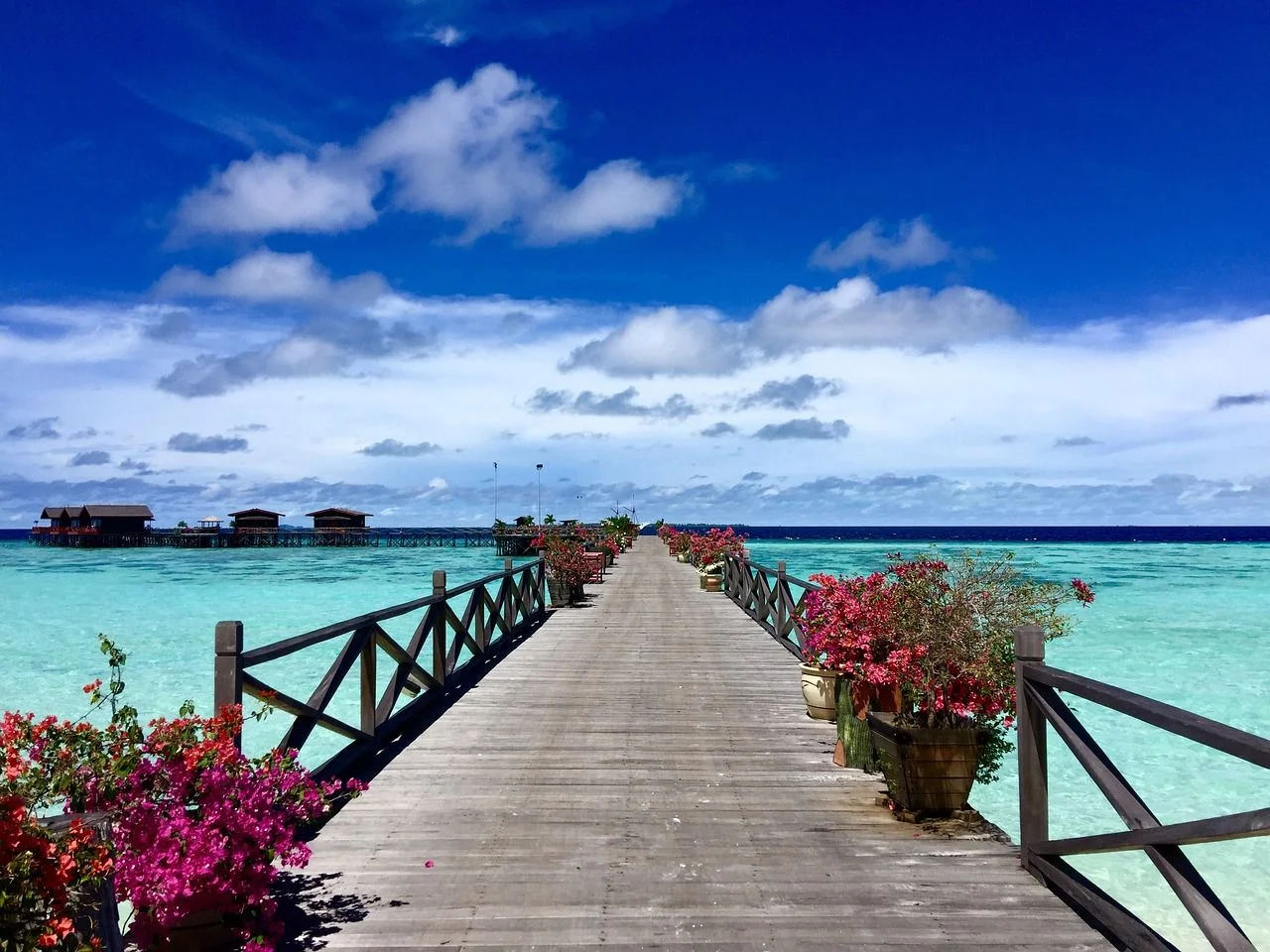
Sipadan & Semporna
Sipadan Island off the coast of Sabah is Malaysia’s crown jewel of diving – a steep limestone pinnacle rising more than 600 metres from the sea floor and teeming with pelagic life. Currents sweep past vertical walls encrusted in hard and soft corals, bringing in barracudas, jacks, reef sharks and bumphead parrotfish in breathtaking numbers. Nearby Mabul and Kapalai offer an entirely different experience on shallow sand‑slope reefs and artificial structures, where flamboyant cuttlefish, frogfish, mandarin fish and other macro critters hide among sponges and tyres. With limited daily permits, a visit to Sipadan is a privilege; most divers base themselves in the frontier town of Semporna or at water‑bungalow resorts on Mabul and Kapalai and make day trips into the park.