
Blue Whale
Balaenoptera musculus
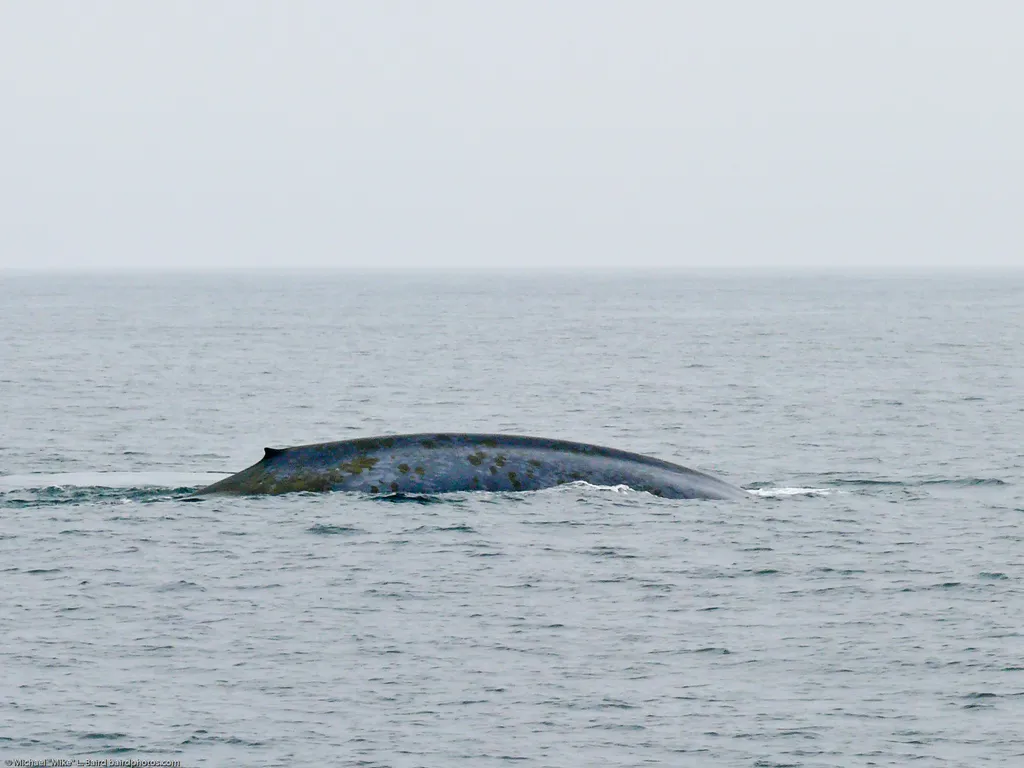
Photo by Mike Baird from Morro Bay / CC BY 2.0 via Wikimedia Commons
The Blue Whale is the largest animal that has ever lived—heavier than any dinosaur, longer than a city bus, and still almost impossible to find on most dive trips. For divers, the encounter is almost always from a boat: a towering vertical blow 9–12 meters high, a long roll of mottled blue-grey back that seems to go on forever, and sometimes a slow fluke-up before the animal vanishes into deep water. They are filter feeders built for efficiency, gulping tonnes of krill near the surface in short feeding bursts, then cruising the open ocean between seasonal feeding grounds. Seeing one is less about reef skills and more about being in the right latitude at the right month—with patience and a responsible operator.
🔬Classification
📏Physical Features
🌊Habitat Info
⚠️Safety & Conservation
Identification Guide
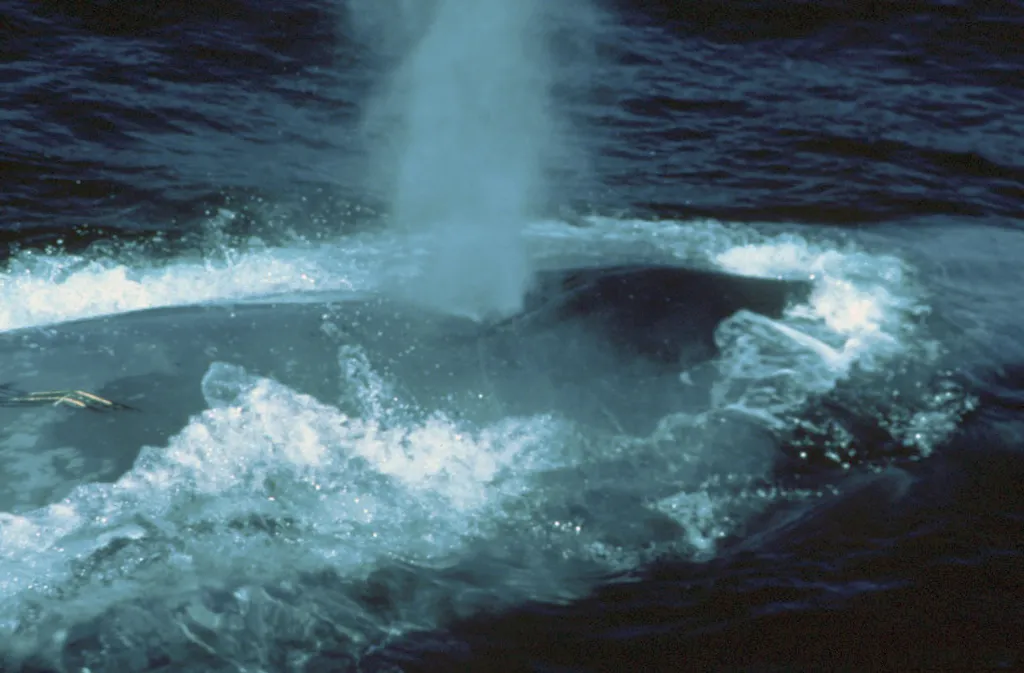
Photo by MPF via Wikimedia Commons
Field marks:
- Immense Scale: Even a partial surfacing dwarfs the boat; the head is broad and U-shaped when seen from above.
- Tall Blow: A single, powerful, columnar spout roughly 9–12 m high—among the tallest of any whale.
- Mottled Blue-Grey Back: Not uniform navy; the skin shows a marbled, lighter grey-blue pattern.
- Tiny Dorsal Fin: Very small relative to body size, placed far back—often the last feature you see before a dive.
- Long, Slender Body: Compared to humpbacks, the profile is streamlined with no long pectoral fins or knobby head.
- Fluke (Sometimes): Not all individuals fluke-up; when they do, the tail is broad but usually lacks the bold white patterns of humpbacks.
Differences from Similar Species
- Fin Whale: Smaller; asymmetric jaw (white on right lower jaw); prominent dorsal fin farther forward; faster surfacing rhythm.
- Humpback Whale: Much smaller; extremely long white-marked pectoral fins; knobby head; frequent breaching; distinctive tail pattern.
- Sei Whale: Smaller; taller, more falcate dorsal fin; rarely shows a tall vertical blow.
- Bryde's Whale: Tropical/subtropical; three head ridges; smaller overall; blow less towering.
Subspecies Notes
Antarctic blue whales (B. m. intermedia) are the largest. Pygmy blue whales (B. m. brevicauda) occur in the Indian Ocean and off Australia—relevant to Sri Lanka and Ningaloo sightings—and are shorter but still massive.
Top 10 Fun Facts about Blue Whale
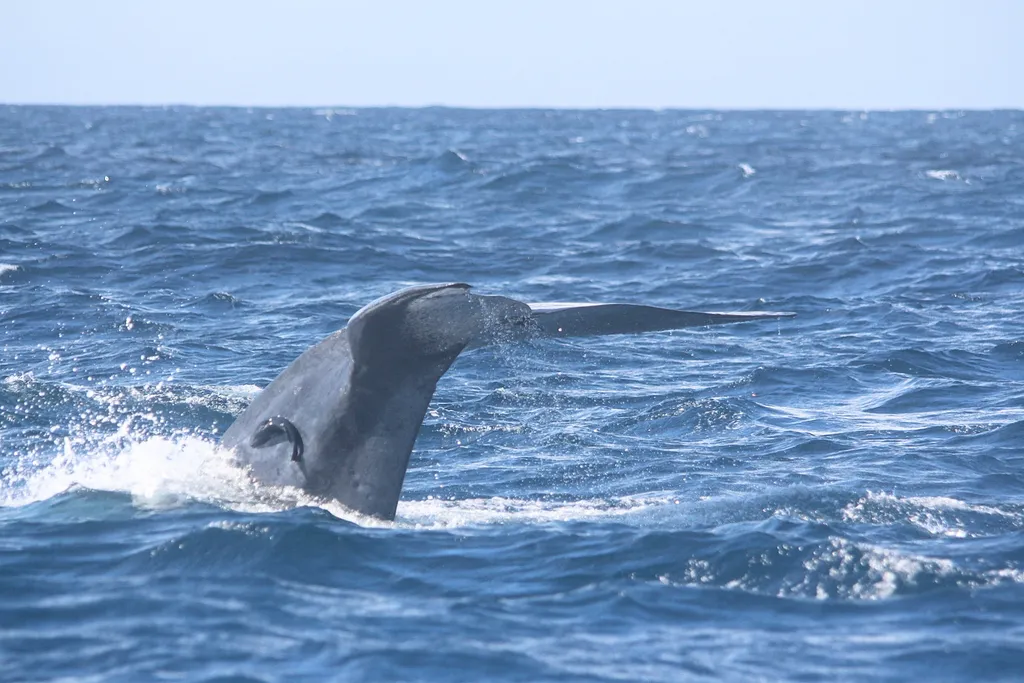
Photo by Peter van der Sluijs / CC BY-SA 3.0 via Wikimedia Commons
1. Heavier Than Any Dinosaur
Blue whales reach confirmed lengths around 30 m and weights up to 190 tonnes—making them the largest animal known to have ever existed, land or sea. A single adult can weigh as much as 30 African elephants. For divers on a whale-watching boat, the scale is humbling: you rarely see the whole animal at once.
2. A Heart the Size of a Small Car
A blue whale's heart weighs roughly 180 kg (400 lb) and is about the size of a compact car. At the surface, its heart rate can surge to around 37 beats per minute after a dive; during deep feeding dives it may drop to just 2 bpm—one of the most extreme cardiovascular ranges in the animal kingdom.
3. Built for Krill, Not Fish
Despite their size, blue whales feed almost exclusively on tiny krill (Euphausia spp.) and occasionally other zooplankton. They lunge-feed at the surface, taking in water and prey, then push the water out through their baleen plates—fringed keratin filters that hang from the upper jaw like a curtain.
4. The Loudest Animals on Earth
Blue whales produce low-frequency calls that can reach around 188 decibels—louder than a jet engine. Most of the sound is below human hearing range, but the calls can travel hundreds of kilometers underwater, likely used for communication across ocean basins between widely separated individuals.
5. Nearly Hunted to Extinction
Commercial whaling killed an estimated 350,000+ blue whales in the 20th century. The global population may have fallen to a few thousand by the 1960s. Full protection since 1966 has allowed some stocks to recover slowly—around 3–7% per year in places—but many populations remain a fraction of pre-whaling levels.
6. Five Recognized Subspecies
Scientists recognize multiple subspecies including Antarctic (intermedia), northern hemisphere (musculus), pygmy blue (brevicauda), and others with distinct size ranges and ocean basin distributions. What you see off Sri Lanka or Western Australia is often the pygmy form—still enormous by any normal standard.
7. Deep Divers When Feeding
Although whale watchers usually see them at the surface, tagged blue whales routinely dive 200–300 m while foraging, with recorded depths exceeding 500 m for pygmy blues. Surface intervals are rhythmic: several blows 15–20 seconds apart, then a dive of up to 15–30 minutes.
8. Fast Starters, Slow Cruisers
Blue whales can briefly exceed 30 km/h when startled or during lunge feeding, but they typically cruise around 5–20 km/h—a pace that makes ship strikes a serious threat. Their migration routes often overlap busy shipping lanes, especially off Sri Lanka and California.
9. Sri Lanka's Shelf Edge Highway
Off Mirissa and Trincomalee, blue whales feed along the continental shelf break where deep water meets shallow coastal water—sometimes less than an hour by boat. This is why Sri Lanka became one of the world's most reliable blue whale destinations, with peak sighting rates in the November–April window.
10. Gulf of California Nursery
The Sea of Cortez near La Paz hosts a population of pygmy blue whales that use the gulf for feeding and calving. Winter and spring boat trips from Baja can yield blows and long surface rolls in relatively sheltered water—a different vibe from open-ocean Sri Lanka but equally memorable for megafauna lovers.
Diving & Observation Notes
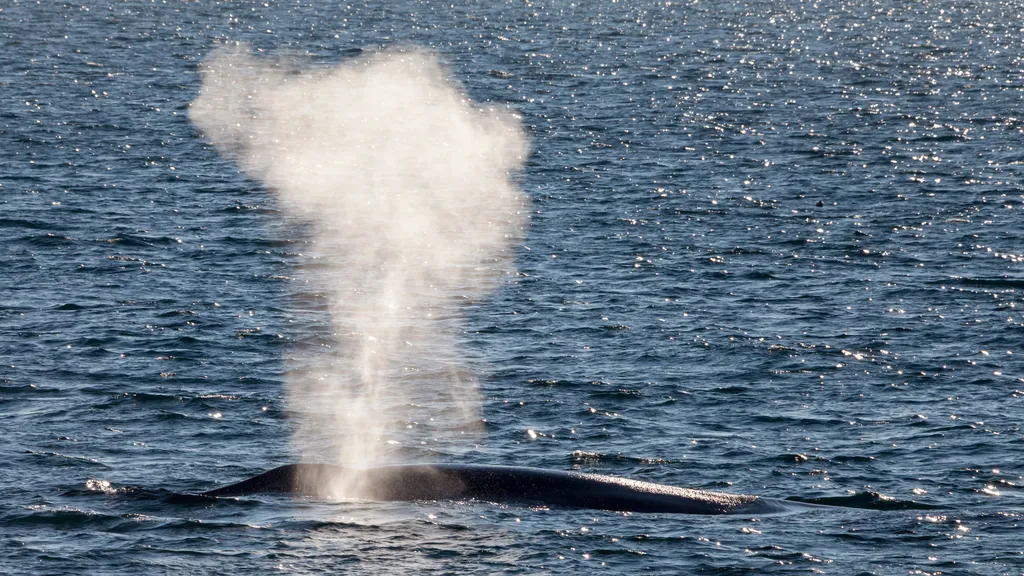
Photo by AWeith / CC BY-SA 4.0 via Wikimedia Commons
🧭 Finding Blue Whales
Blue whales are open-ocean specialists—not reef residents. Reliable encounters happen at shelf edges and upwelling zones: Mirissa/Trincomalee (Nov–Apr), La Paz / Sea of Cortez (winter–spring), and Ningaloo / Exmouth offshore (pygmy blues, often overlapping whale shark season). Book dedicated whale-watching boats, not standard two-tank dive charters unless they explicitly run cetacean trips.
🤿 Boat Encounter Etiquette
- Scuba is rarely appropriate: Most operators run sighting trips from RIBs or catamarans; in-water contact is uncommon and often restricted.
- Let the whale set distance: Do not chase, circle ahead, or cut across the path. Good skippers parallel the animal at low speed.
- Read the surfacing pattern: Several blows 15–20 s apart, then a long dive—position the boat for the next rise, not the last one.
- Calm surface: Splashing, shouting, and drone harassment stress animals—keep voices low and cameras ready before the approach.
📸 Photo Tips
- Telephoto from the boat: A 100–400 mm lens often beats wide-angle; you may only see 10–15 m of back.
- Capture the blow first: The vertical spout is diagnostic—shoot backlit for steam effect in cool air.
- Fluke shots: If it dives with tail raised, fire burst mode—the broad fluke is your best ID frame.
- Scale reference: Include the boat gunwale or horizon to convey size; the whale alone can look deceptively small in photos.
⚠️ Ethics & Conservation
- Endangered species: Maintain legal approach distances (varies by country—often 100 m minimum for boats).
- Avoid overcrowded fleets: Multiple boats boxing a whale causes stress and collision risk—choose operators with spacing rules.
- Ship-strike awareness: Sri Lanka and California are hotspots; support operators engaged with research and speed-limit campaigns.
- No in-water harassment: If snorkeling is permitted, enter only on guide instruction; never free-dive under a surfacing whale.
Best Places to Dive with Blue Whale
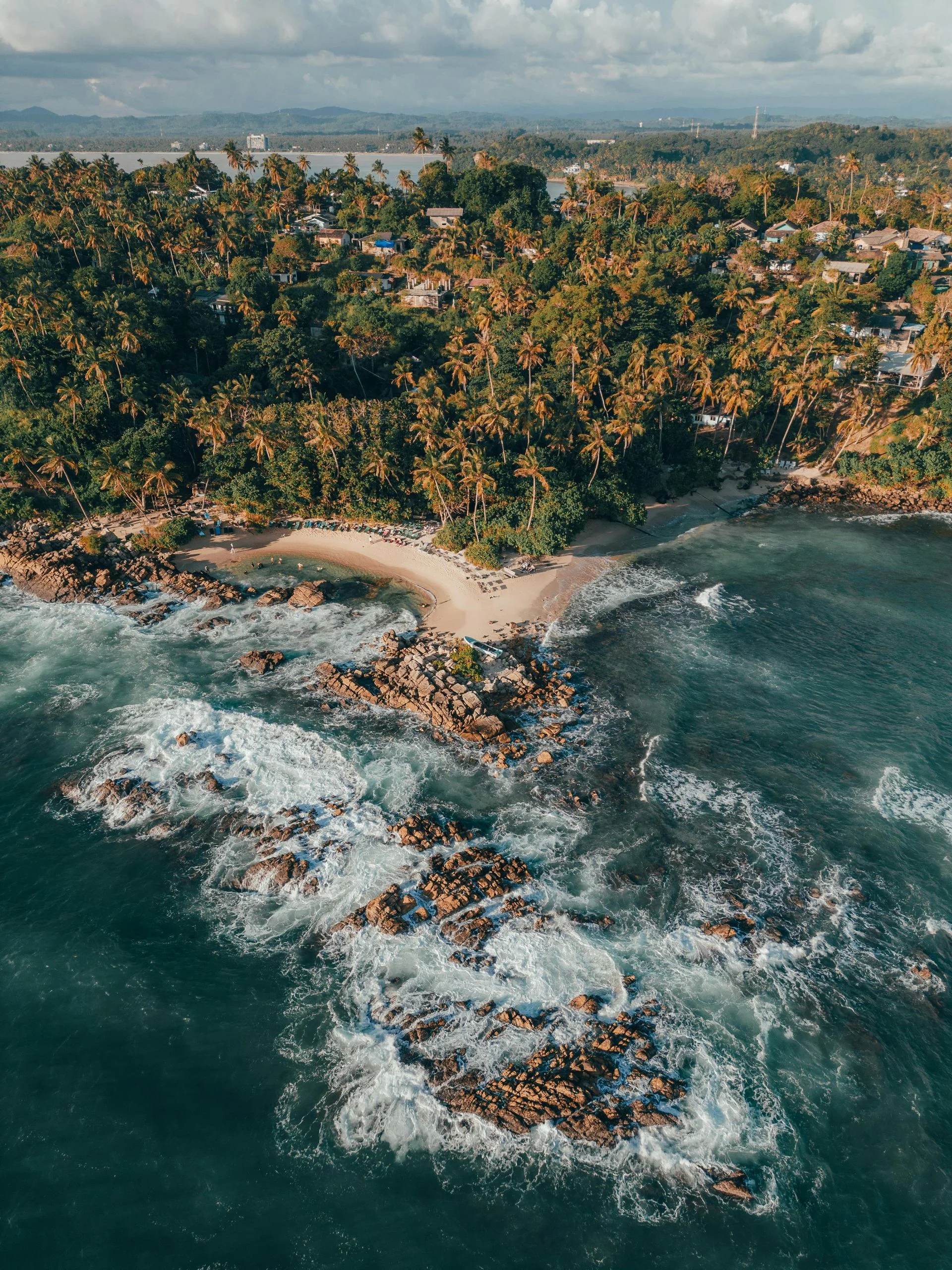
Mirissa
Mirissa is a mellow fishing town on Sri Lanka’s south coast that doubles as a great base for easy reef diving. Its sheltered bay leads to a string of near‑shore sites where coral bommies and sandy patches host hawksbill turtles, oriental sweetlips, triggerfish and schools of fusiliers. Macro critters such as nudibranchs, octopus and pipefish hide among the rocks, while seasonal plankton blooms occasionally attract whale sharks. Calm conditions and shallow depths make Mirissa perfect for beginners and casual divers looking for warm, colourful waters without the crowds.
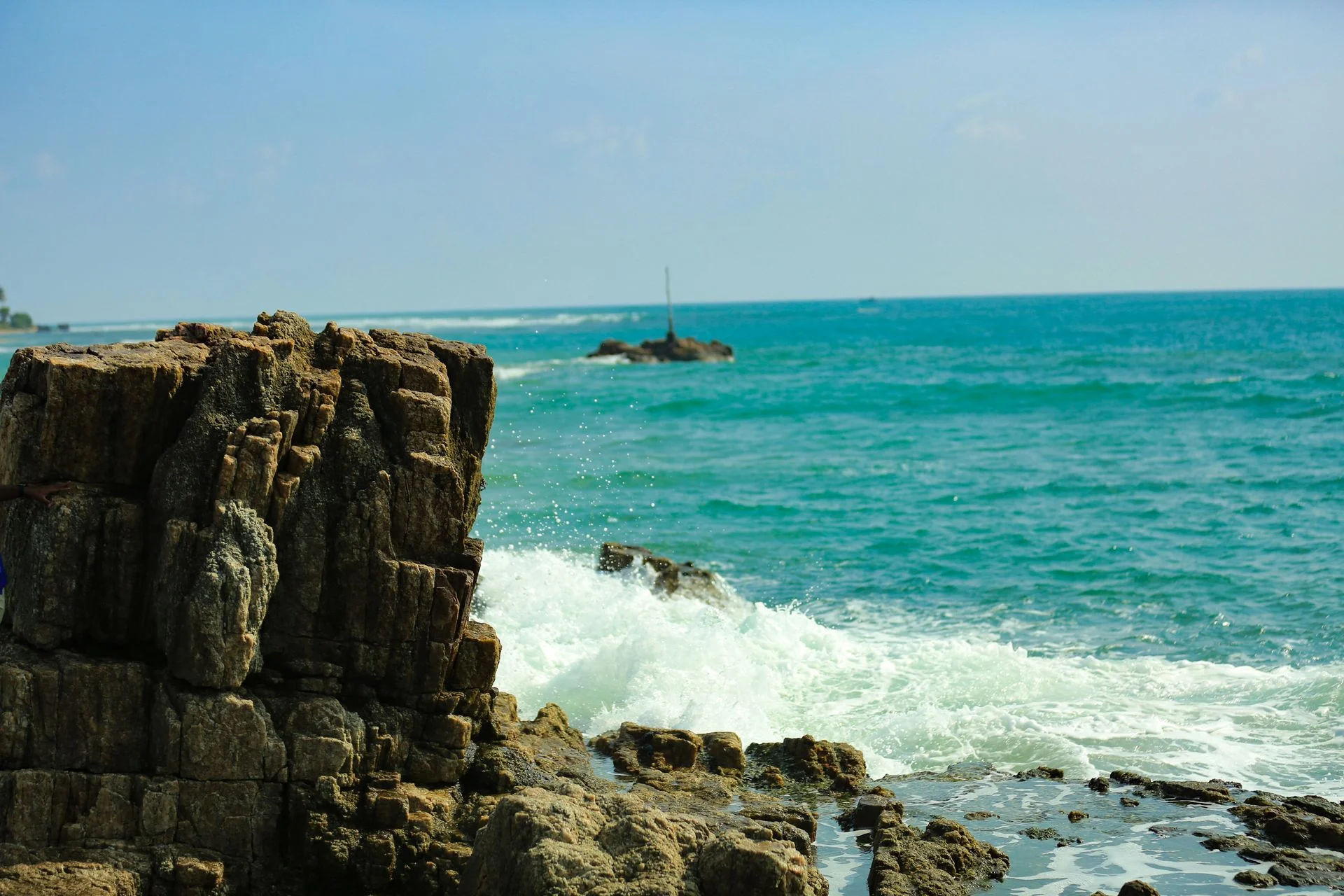
Trincomalee
Trincomalee sits on Sri Lanka’s eastern coast and is famous for its sheltered natural harbour and nearby coral reefs. The region offers a mix of shallow fringing reefs, dramatic drop‑offs and historic wrecks like the HMS Hermes, the world’s first purpose‑built aircraft carrier. Pigeon Island Marine Park protects vibrant coral gardens where blacktip reef sharks patrol and hawksbill turtles graze, while Swami Rock’s vertical wall teems with reef fish and soft corals. During the calm months the waters are crystal clear, and blue and sperm whales cruise just offshore, adding to Trincomalee’s appeal as an emerging dive destination.
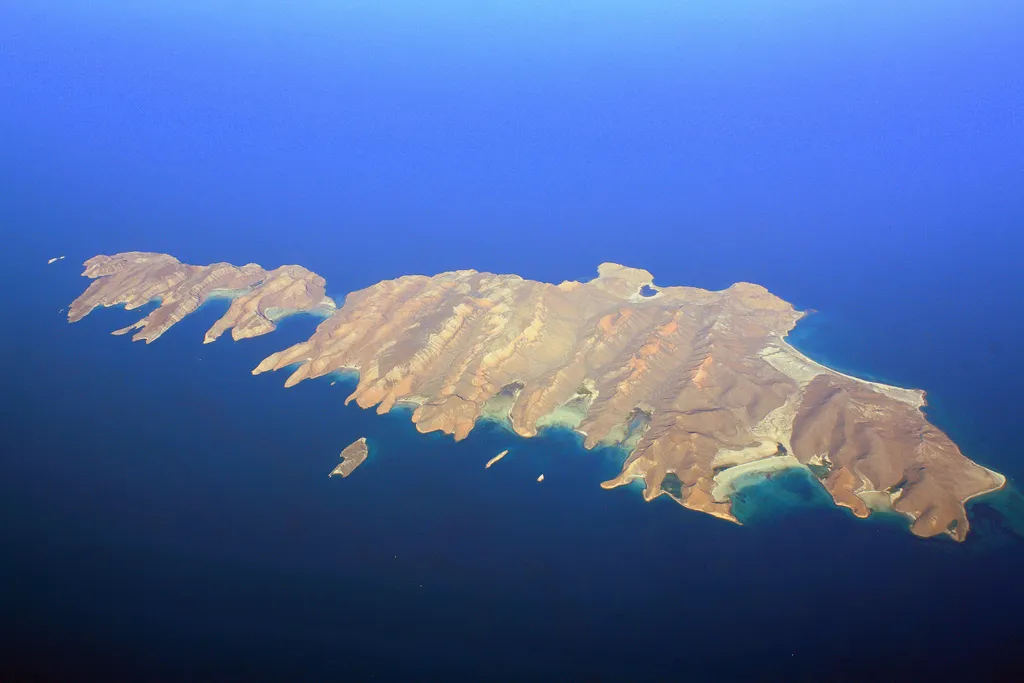
La Paz
La Paz is the practical gateway to the southern Sea of Cortez—Jacques Cousteau's "world aquarium"—without Cabo crowds. Day boats run from the Malecón and local marinas out to Isla Espíritu Santo National Park for California sea lions at Los Islotes, shipwrecks in the San Lorenzo Channel, and blue-water seamounts like El Bajo. In winter, the Bay of La Paz hosts one of the world's most accessible whale shark snorkel seasons (scuba is not allowed in the refuge zone). ### What Makes It Different This is a city-based wildlife trip, not a remote reef camp. You sleep in a real Mexican capital, eat well on the waterfront, then motor 30–90 minutes to sites that punch far above their logistics. Los Islotes is the headline scuba day (playful juveniles at 5–18 m); whale sharks are a separate early-morning snorkel; El Bajo is the advanced pelagic add-on when current and season line up. ### Conditions and Dive Style Expect 2-tank boat days with a beach lunch on Espíritu Santo between dives. Water runs cool in winter (18–22 °C, 5 mm recommended) and warm in summer (28–30 °C). Visibility commonly 15–30 m, dropping when plankton blooms. Critical timing: Los Islotes closes to diving and snorkeling 1 June–31 August for breeding season under CONANP rules—plan around that if sea lions are the reason you booked.
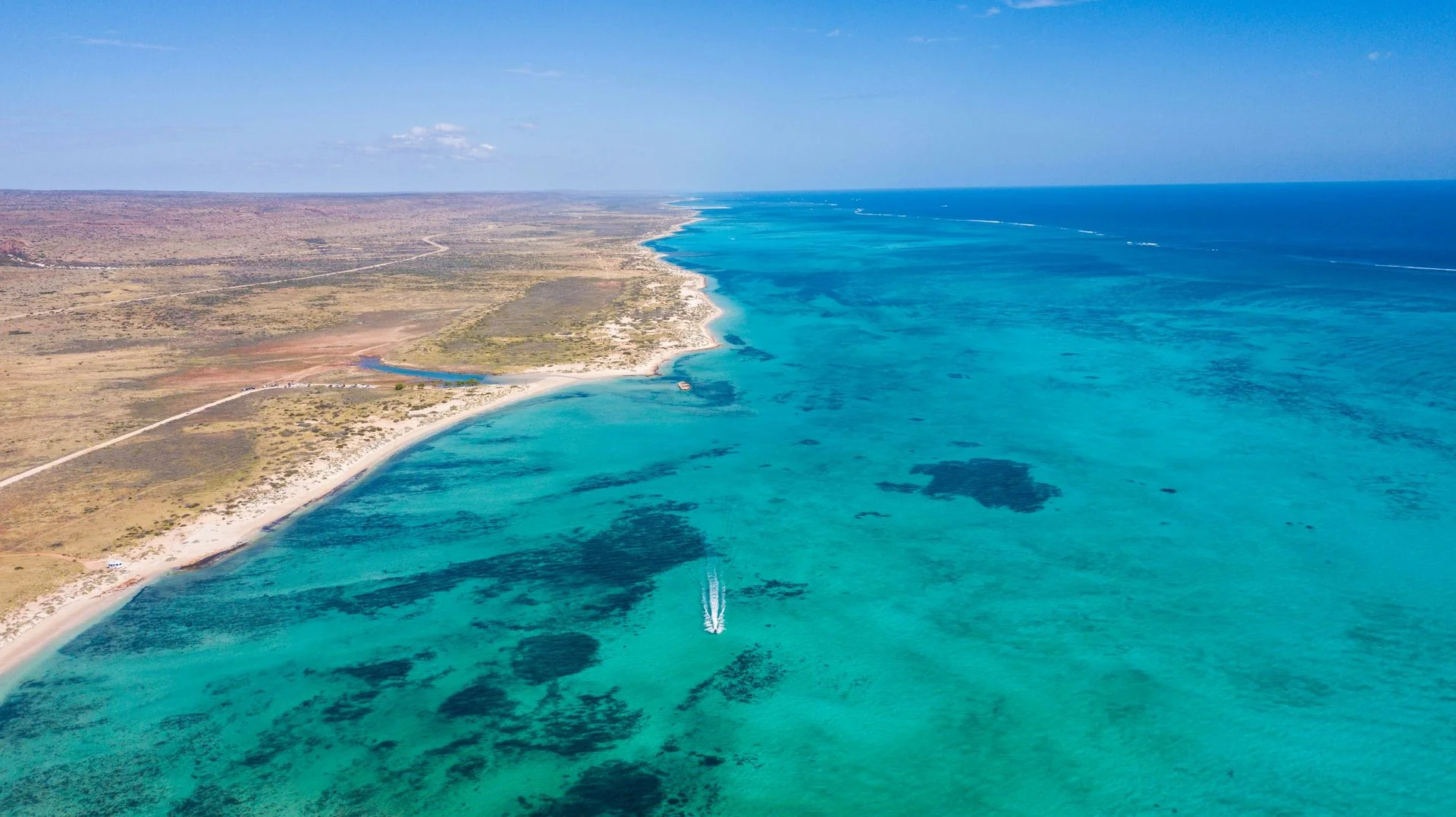
Ningaloo Reef
Stretching for over 300 km along Western Australia’s remote mid‑north coast, Ningaloo Reef is one of the world’s longest fringing reefs and a UNESCO World Heritage site. Unlike the barrier reefs further east, Ningaloo sits just off the beach—often no more than a few fin kicks from the shoreline—making its turquoise lagoons and outer drop‑offs incredibly accessible. The reef is famous for seasonal whale sharks (March–August) and migrating humpback whales (June–November), and its manta ray cleaning stations, dugongs, reef sharks, turtles and colourful coral gardens mean there’s always something to see. Dive operators based in Exmouth and Coral Bay offer day trips to sites like Central Station, The Canyon and the legendary Exmouth Navy Pier, as well as expeditions to the coral‑clad Murion Islands. With clear, warm water and gentle currents, Ningaloo is ideal for both snorkellers and divers seeking megafauna encounters without the crowds.