
Candy Crab
Hoplophrys oatesii
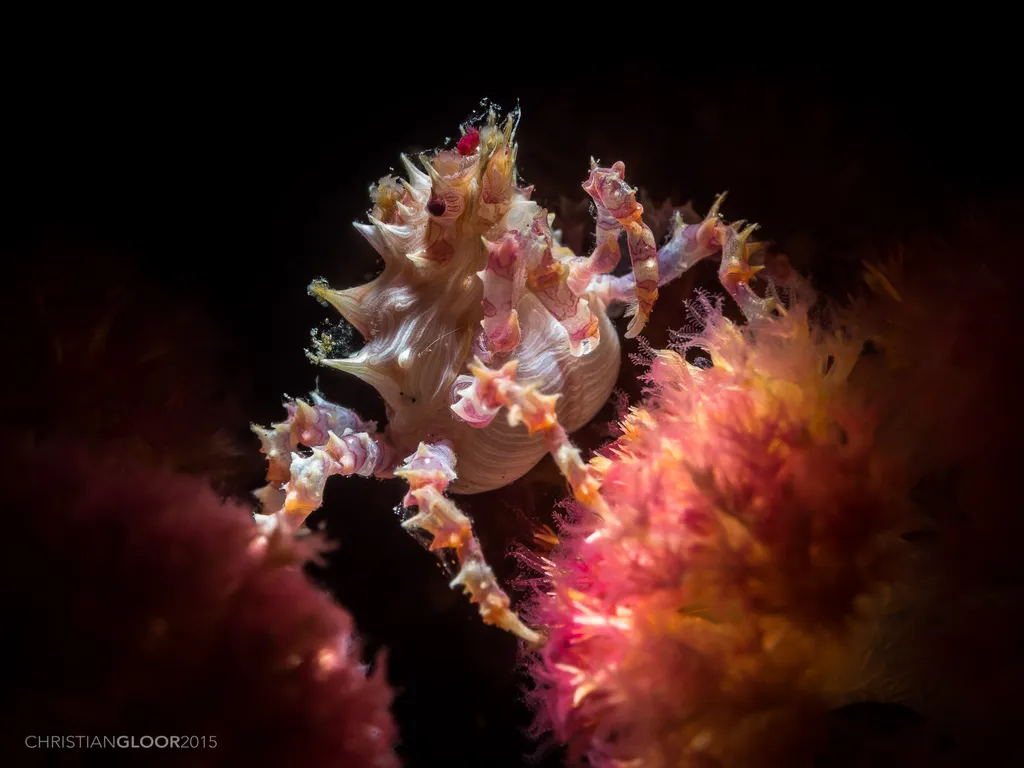
Photo by Christian Gloor from Wakatobi Dive Resort / CC BY 2.0 via Wikimedia Commons
If nature had a candy shop, the candy crab would be its most adorable product - a tiny, pastel-colored crustacean that looks like it was dipped in cotton candy frosting. Measuring barely 2 centimeters across, these miniature masters of disguise have perfected one of the ocean's most impressive camouflage acts: they not only match their soft coral host in color (from bubble-gum pink to lemon yellow), but they actually decorate themselves by plucking coral polyps and sticking them onto their shells like living costume accessories. The result is so convincing that even experienced divers can stare directly at a candy crab and see nothing but coral. For macro photographers, finding and photographing candy crabs is the ultimate treasure hunt - equal parts Where's Waldo and wildlife photography, requiring sharp eyes, patience, and a good guide who knows which soft coral heads to check.
🔬Classification
📏Physical Features
🌊Habitat Info
⚠️Safety & Conservation
Identification Guide
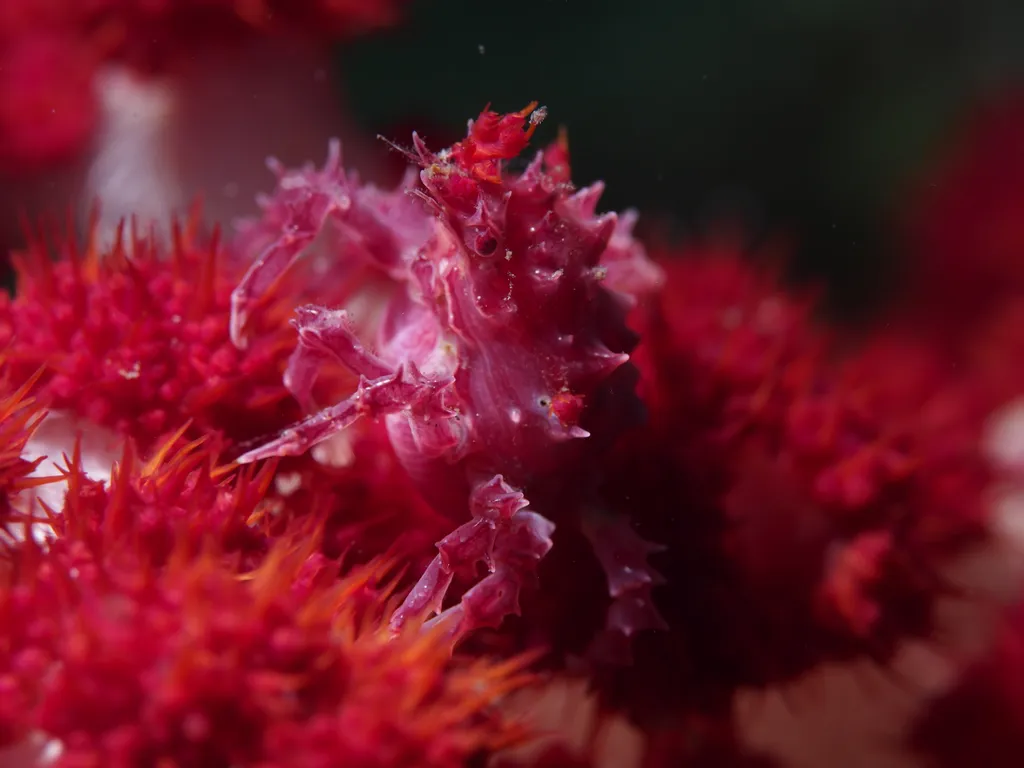
Photo by Rickard Zerpe / CC BY-SA 2.0 via Wikimedia Commons
- Tiny Size: Usually 1.5-2cm across - smaller than a thumbnail
- Spiny Shell: Covered in tubercles and spines matching coral texture
- Translucent Body: Semi-transparent with colored patterns
- Coral Decorations: Actual coral polyps stuck to carapace and legs
- Perfect Color Match: Exactly matches host soft coral color
- Eight Legs: Like all crabs, but often splayed out flat against coral
- On Soft Corals: Almost exclusively found on Dendronephthya soft corals
- Stationary: Moves very little; tends to stay on same coral head
Top 10 Fun Facts about Candy Crab
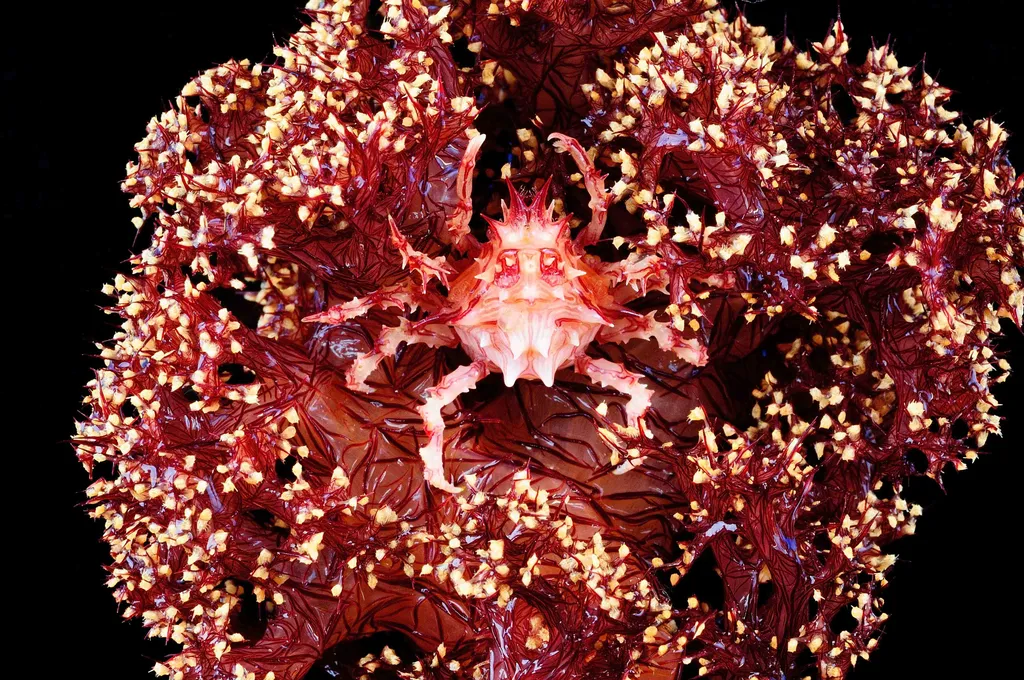
Photo by Chan T. Y. & Lin C.W. / CC BY 4.0 via Wikimedia Commons
1. The Ultimate Decorator Crab
Candy crabs take "dressing up" to the extreme. As decorator crabs, they don't just rely on natural camouflage - they actively modify their appearance by plucking individual polyps from their host soft coral and attaching them to hook-like setae (bristles) covering their carapace and legs. These stolen coral pieces remain alive on the crab's body, waving their tentacles just like the surrounding coral. The crab essentially becomes a walking, living bouquet of its host coral. This isn't random decoration - candy crabs are meticulous interior decorators, carefully selecting and placing polyps to achieve perfect camouflage coverage.
2. Chameleon Crabs: Color-Changing Masters
While candy crabs can't change color instantly like cuttlefish, they do undergo remarkable color transformations over time. When a candy crab settles on a new soft coral host, it gradually shifts its body coloration to match the new environment. Scientists believe this color change occurs through diet - by consuming coral polyps, the crab ingests pigments that eventually alter its exoskeleton color during molting. This means a crab that's bubble-gum pink on a pink coral could become lemon-yellow if it moves to a yellow coral, though the process takes weeks or months rather than seconds.
3. Miniature Marvels: Smaller Than Your Thumbnail
At just 1.5-2 centimeters across (about the size of a pea), candy crabs are among the ocean's tiniest crabs. Their diminutive size makes them incredibly difficult to spot even when you know exactly where to look. A typical candy crab would fit comfortably on your fingernail with room to spare. This miniaturization comes with advantages: they can live their entire lives on a single soft coral branch, have minimal food requirements, and can hide in spaces too small for predators to access. But for divers, it means you need sharp eyes and often a guide's pointed finger to find them.
4. Soft Coral Specialists: Picky Home Choosers
Candy crabs are almost exclusively found on Dendronephthya species of soft corals - the fluffy, colorful "cotton candy corals" that don't build calcium carbonate skeletons. These soft corals wave gently in currents, and the candy crab's strategy is to become just another polyp-cluster in the bouquet. Different soft coral species have different colors, textures, and polyp structures, and candy crabs show strong preferences for specific coral types. Once settled, they tend to be remarkably faithful to their chosen coral head, rarely wandering to neighboring colonies unless their host dies or is damaged.
5. Living Coral Gardens: Symbiotic or Parasitic?
The candy crab's relationship with soft coral sits in a gray area between symbiosis and parasitism. On one hand, the crab harms its host by removing polyps (though usually not enough to seriously damage the colony). On the other hand, some researchers suggest candy crabs may provide benefits: they might defend their coral from predators like nudibranchs or sea stars, and their frequent grooming behavior could help remove sediment and parasites. The jury is still out on whether soft corals would prefer to host candy crabs or not - it's likely a relationship where the crab benefits significantly while the coral suffers minor costs.
6. The "Now You See Me" Problem
Finding candy crabs presents one of diving's most frustrating challenges: even when you're looking directly at one, your brain refuses to register it as a crab. The combination of perfect color matching, coral polyp decorations, spiny texture, and tiny size creates such effective camouflage that the crab disappears into visual noise. Many divers report the surreal experience of staring at a coral head their guide is pointing to, seeing nothing, then suddenly having the candy crab "appear" as their eyes finally parse the image correctly - like one of those magic eye pictures clicking into focus.
7. Plankton Picnickers
Despite their plant-like appearance and stationary lifestyle, candy crabs are active predators of zooplankton. Positioned on their soft coral perch, they use their delicate claws to snatch passing copepods, tiny crustaceans, and other microscopic prey from the water current. Their feeding behavior is subtle - a quick dart of one claw, a moment of manipulation, and the prey disappears into the crab's mouth. This foraging happens constantly but is so discrete that you can watch a candy crab for several minutes without noticing it's actively feeding.
8. Molting Makeovers
Like all crustaceans, candy crabs must molt their exoskeleton to grow. During molting, they shed their entire hard covering - including all those carefully arranged coral polyp decorations. After molting, a candy crab is temporarily vulnerable and must quickly re-decorate itself with fresh coral polyps. This post-molt redecorating frenzy is one of the few times candy crabs show hurried movement, frantically plucking and attaching polyps to regain their camouflage. The soft new exoskeleton also provides an opportunity for color change if the crab has been consuming polyps of a different color.
9. Photography's Holy Grail
Among macro photographers, successfully capturing a quality candy crab image is considered a significant achievement. The challenges are numerous: finding the crab requires expert eyes, approaching without disturbing the delicate soft coral is difficult, the crab's texture and color make auto-focus unreliable, the coral constantly waves in current (killing sharpness), and the tiny size demands precise macro work. Many photographers spend entire dives searching and still come up empty. Those who succeed often treasure their candy crab shots as crown jewels of their portfolio.
10. Indicator Species: Signs of Healthy Reefs
The presence of candy crabs indicates healthy soft coral populations, which in turn suggest good water quality, appropriate depth, and sufficient current. Soft corals like Dendronephthya are filter feeders that require clean, plankton-rich water and gentle to moderate currents to thrive. Seeing candy crabs on a dive means the reef is doing well enough to support these delicate, specialized relationships. Conversely, reefs degraded by pollution, sedimentation, or warming waters often lose their soft coral populations - and the candy crabs disappear with them.
Diving & Observation Notes
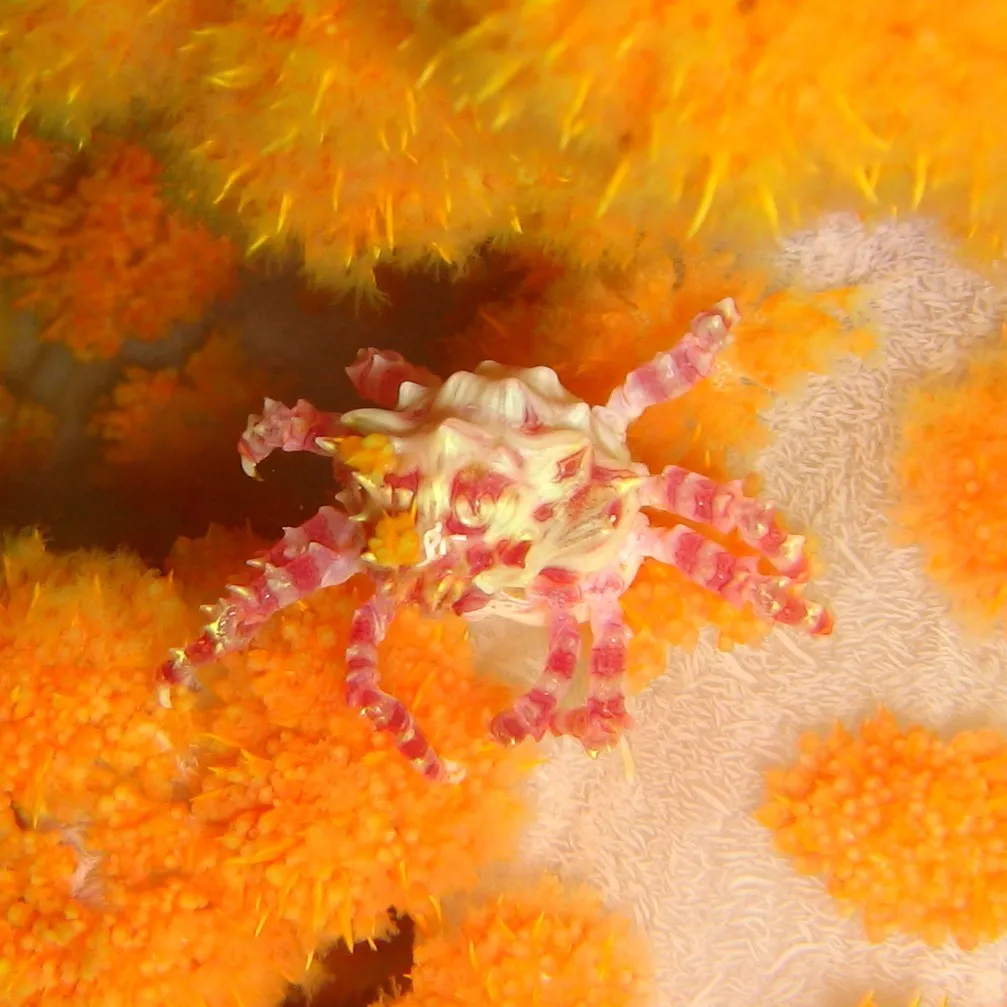
Photo by TANAKA Juuyoh (田中十洋) / CC BY 2.0 via Wikimedia Commons
🧭 Finding Candy Crabs
These masters of disguise won't come to you—you have to hunt for them.
- Target the Right Corals: Focus exclusively on Dendronephthya soft corals (the fluffy, colorful ones). Look for colonies 20cm+ in diameter in pink, purple, yellow, or red.
- Scan Slowly: Your eyes need time to adjust. Look for subtle asymmetries or shapes that don't quite match the coral pattern.
- Check the Current: They prefer corals in moderate current (well-fed hosts), so don't shy away from flow.
🤿 Approach & Behavior
- The "Magic Eye" Effect: Even when a guide points it out, you might not see it immediately. Relax your eyes and look for legs splayed flat against the coral stem.
- Patient Observation: Once found, watch for feeding behavior (claws darting for plankton) or, if lucky, decorating (plucking polyps to attach to their shell).
- Stationary Subjects: They move very little, making them excellent subjects if you can manage the swaying coral.
📸 Photo Tips
- Manual Focus is King: Autofocus struggles with the spiny texture. Focus on the eyes (if you can find them!) or the contrasty edge of the carapace.
- Freeze the Motion: Soft corals sway constantly. Use a fast shutter speed (1/250s+) and time your shots between wave cycles.
- Lighting: Use dual strobes to fill shadows, but be careful with heat—it can make polyps close. A snoot can help isolate the crab from the busy background.
- Depth of Field: Shoot at f/16-f/22 to get the whole crab in focus.
⚠️ Ethics & Safety
- NO Touching: Soft corals are extremely fragile. Never break a branch to get a better angle.
- Do Not Move: Never detach a crab for a "better" background. They are physically attached to their camouflage.
- Buoyancy Control: Be hyper-aware of your fins. These corals often grow on walls or slopes where it's easy to accidentally kick something.
🌏 Candy Crab Hotspots
- Lembeh Strait, Indonesia: The muck diving capital; high chance of seeing multiple color variations.
- Anilao, Philippines: Famous for its pristine soft coral gardens and macro-savvy guides.
- Raja Ampat, Indonesia: Abundant healthy reefs mean abundant candy crabs.
- Bali (Tulamben/Amed): Accessible shore dives with great soft coral patches.
Best Places to Dive with Candy Crab
Lembeh
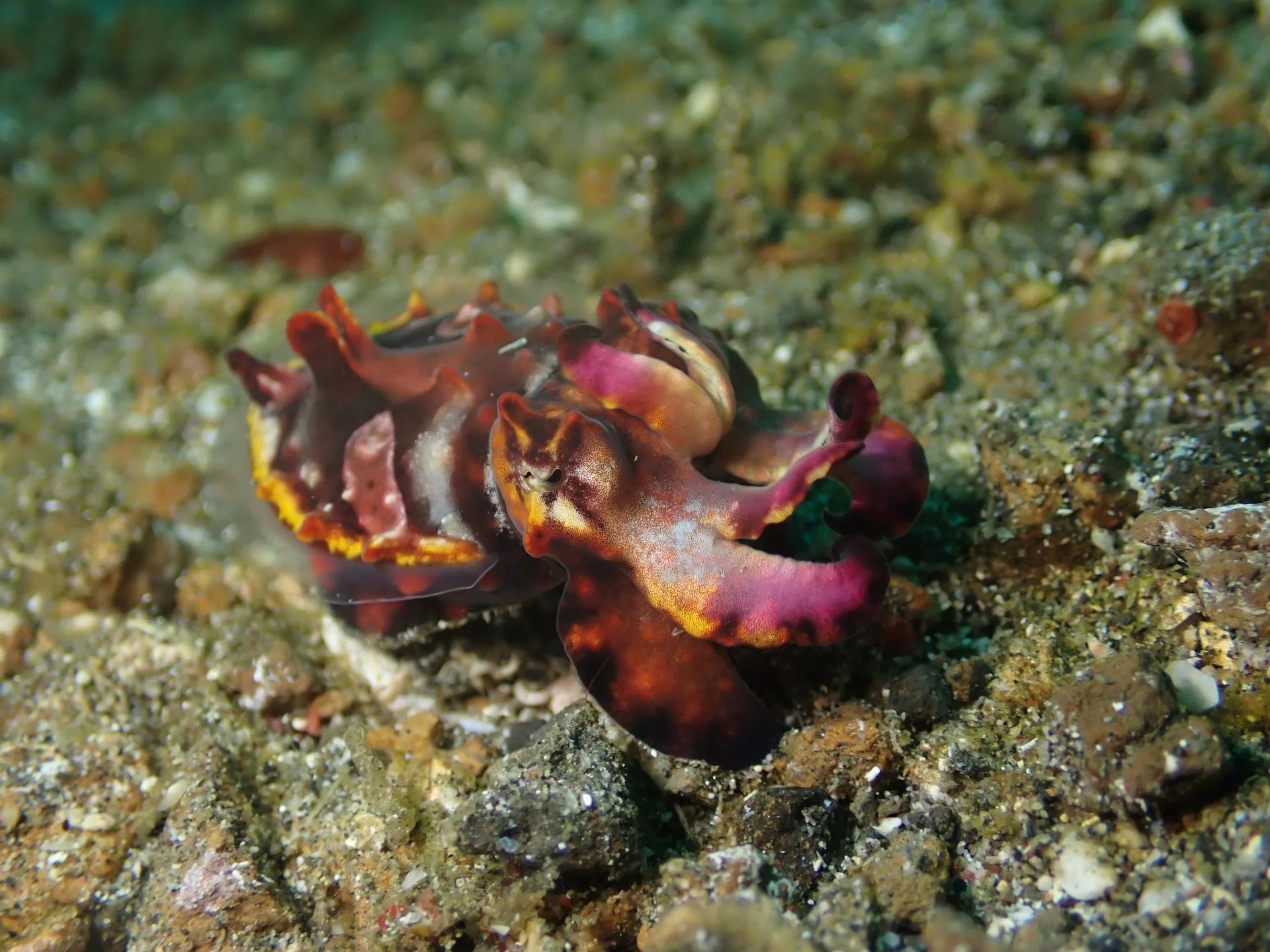
The Lembeh Strait in North Sulawesi has become famous as the muck‑diving capital of the world. At first glance its gently sloping seabed of black volcanic sand, rubble and discarded debris looks bleak. Look closer and it is teeming with weird and wonderful life: hairy and painted frogfish, flamboyant cuttlefish, mimic and blue‑ringed octopuses, ornate ghost pipefish, tiny seahorses, shrimp, crabs and a rainbow of nudibranchs. Most dives are shallow and calm with little current, making it an ideal playground for macro photographers. There are a few colourful reefs for a change of scenery, but Lembeh is all about searching the sand for critter treasures.
Anilao
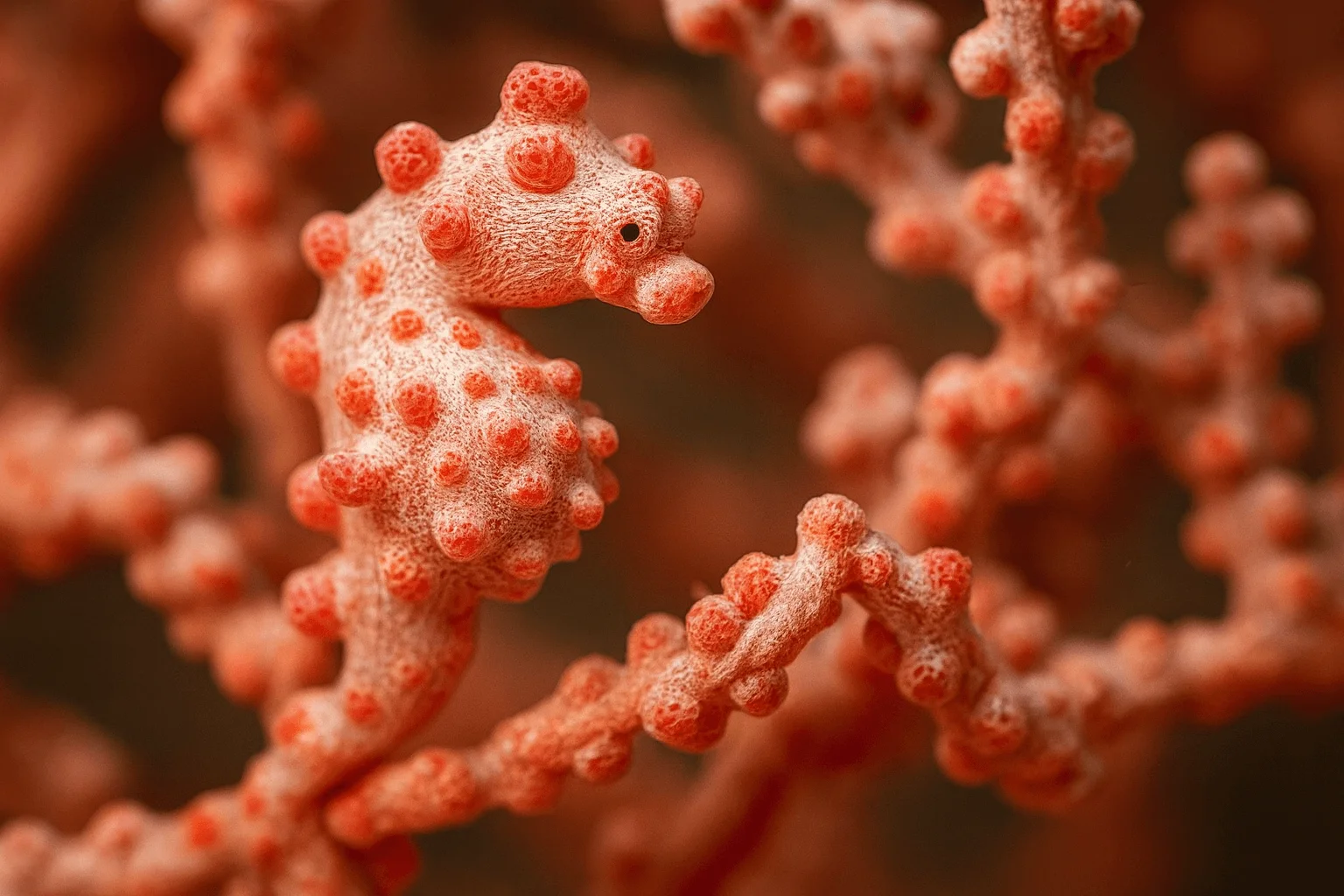
Anilao, a small barangay in Batangas province just two hours south of Manila, is often called the macro capital of the Philippines. More than 50 dive sites fringe the coast and nearby islands, offering an intoxicating mix of coral‑covered pinnacles, muck slopes and blackwater encounters. Critter enthusiasts come for the legendary muck dives at Secret Bay and Anilao Pier, where mimic octopuses, blue‑ringed octopuses, wonderpus, seahorses, ghost pipefish, frogfish and dozens of nudibranch species lurk in the silt. Shallow reefs like Twin Rocks and Cathedral are covered in soft corals and teem with reef fish, while deeper sites such as Ligpo Island feature gorgonian‑covered walls and occasional drift. Because Anilao is so close to Manila and open year‑round, it’s the easiest place in the Philippines to squeeze in a quick diving getaway.
Komodo
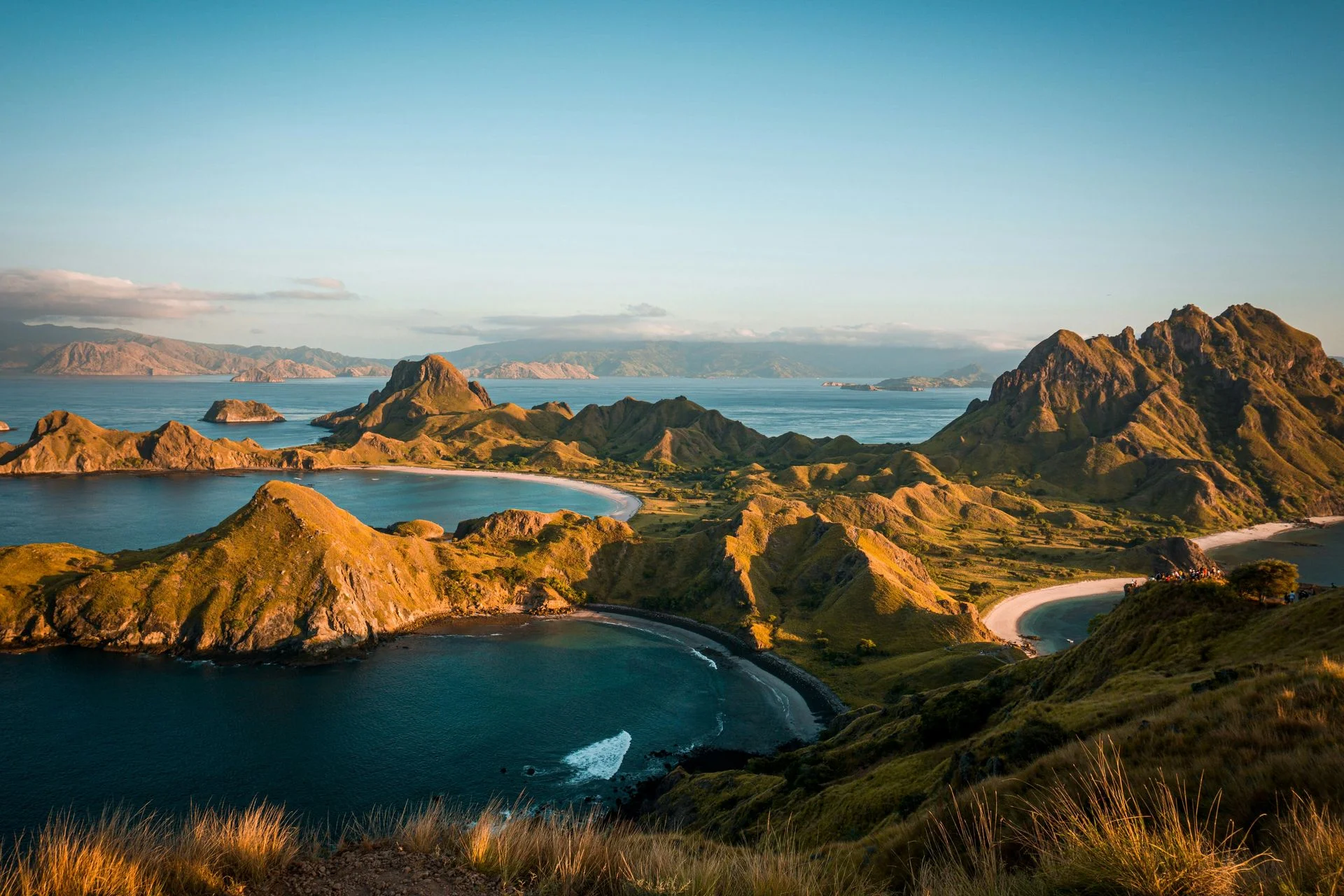
Komodo National Park is a diver’s paradise full of marine diversity: expect healthy coral gardens, reef sharks, giant trevallies, countless schools of fish, and frequent manta ray sightings at sites like Manta Point and Batu Bolong. Drift dives and dramatic reef structures add excitement, while both macro lovers and big-fish fans will find plenty to love. Above water, the wild Komodo dragons roam, giving a touch of prehistoric wonder to the whole trip.
Palau
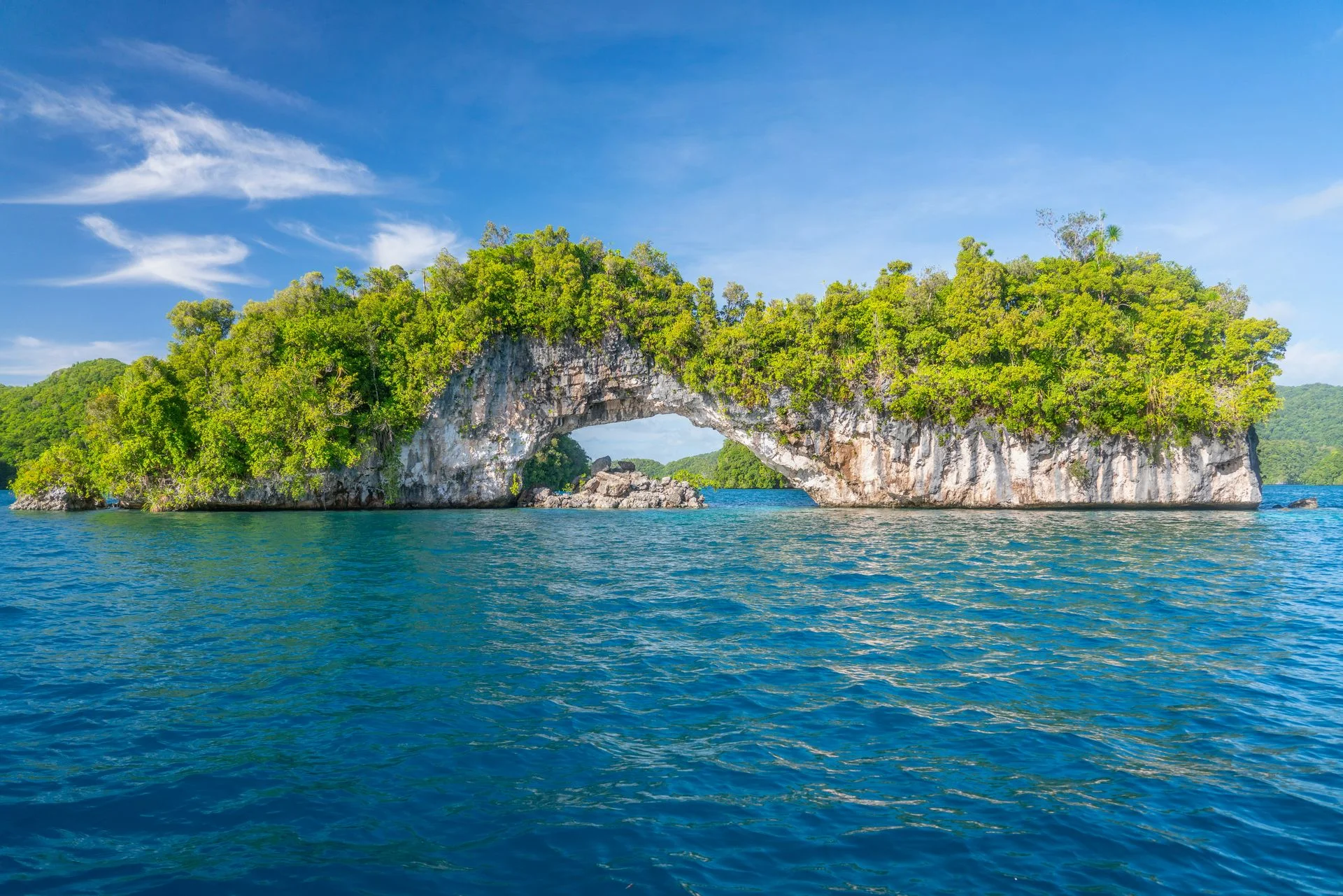
Rising out of the western Pacific at the meeting point of two great oceans, Palau is an archipelago of more than 500 jungle‑cloaked islands and limestone rock pinnacles. Its barrier reef and scattered outcrops create caverns, walls, tunnels and channels where nutrient‑rich currents sweep in from the Philippine Sea. These flows feed carpets of hard and soft corals and attract vast schools of jacks, barracudas and snappers, as well as an impressive cast of pelagics. Grey reef and whitetip sharks parade along the legendary Blue Corner; manta rays glide back and forth through German Channel’s cleaning stations; and Ulong Channel offers a thrill‑ride drift over giant clams and lettuce corals. Between dives you can snorkel among non‑stinging jellyfish in Jellyfish Lake or explore WWII ship and plane wrecks covered in colourful sponges.
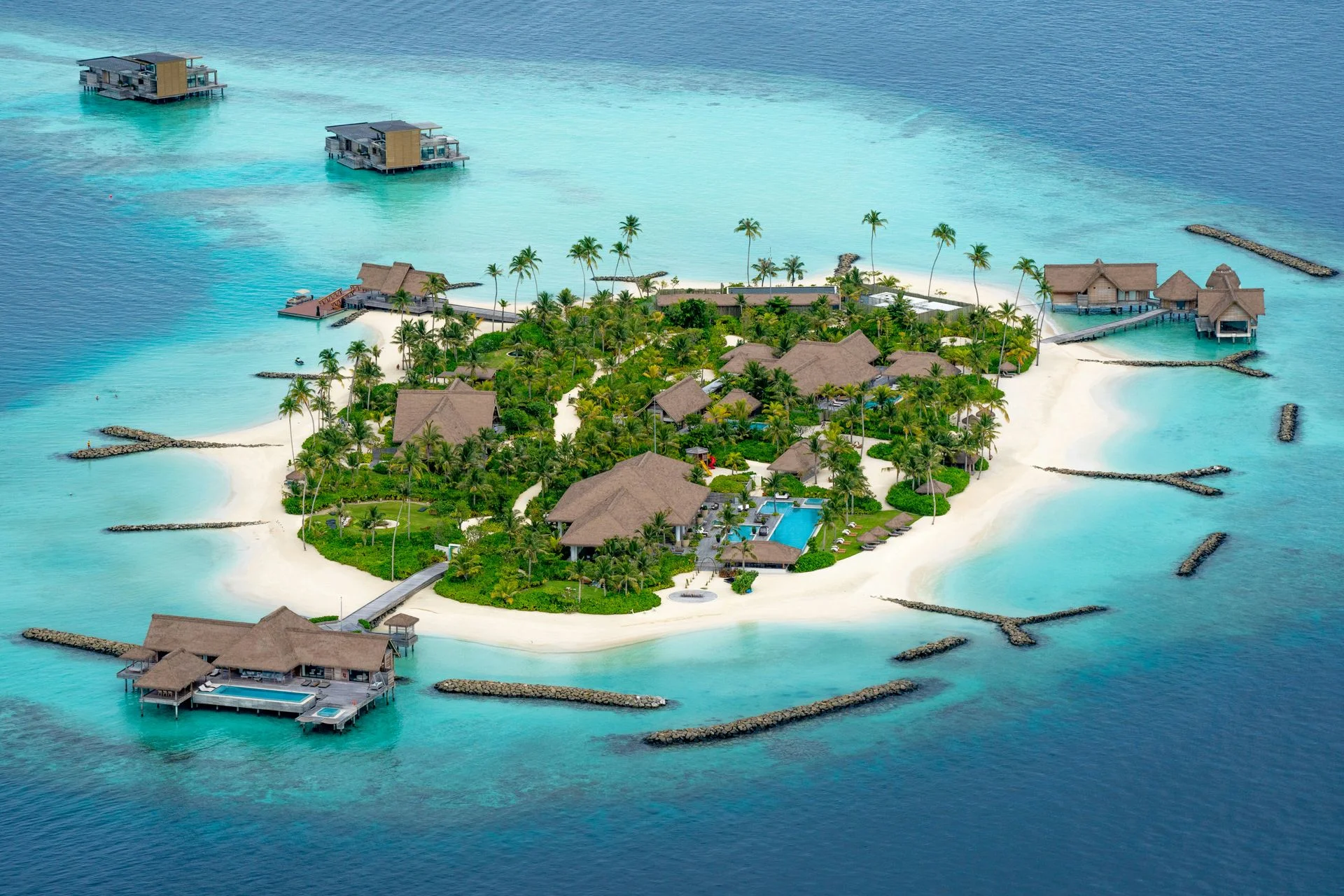
Maldives
Scattered across the Indian Ocean like strings of pearls, the Maldives’ 26 atolls encompass more than a thousand low‑lying islands, reefs and sandbanks. Beneath the turquoise surface are channels (kandus), pinnacles (thilas) and lagoons where powerful ocean currents sweep past colourful coral gardens. This nutrient‑rich flow attracts manta rays, whale sharks, reef sharks, schooling jacks, barracudas and every reef fish imaginable. Liveaboards and resort dive centres explore sites such as Okobe Thila and Kandooma Thila in the central atolls, manta cleaning stations in Baa and Ari, and shark‑filled channels like Fuvahmulah in the deep south. Diving here ranges from tranquil coral slopes to adrenalin‑fuelled drifts through current‑swept passes, making the Maldives a true pelagic playground.