
Clown Triggerfish
Balistoides conspicillum
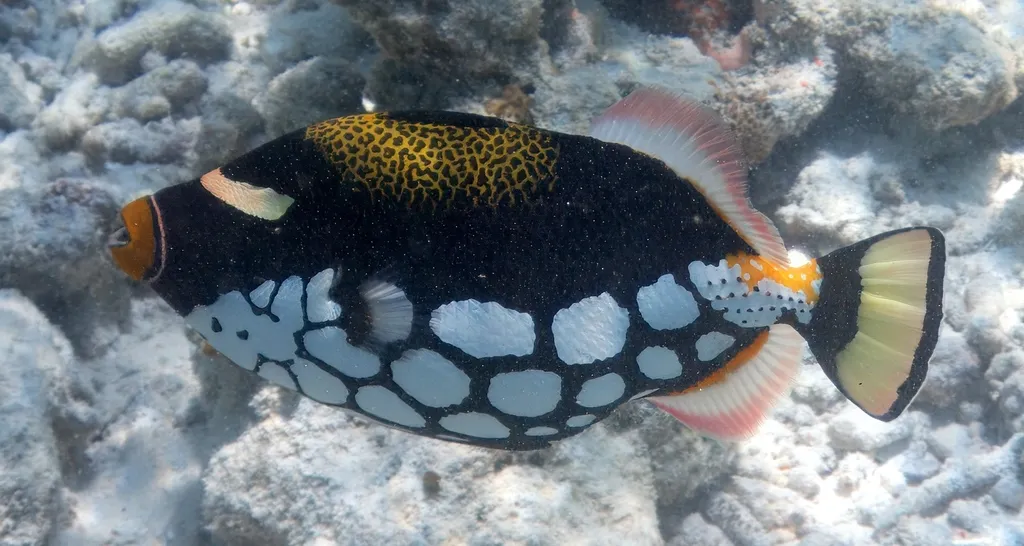
Photo by (c) Darren Obbard / CC BY 4.0 via Wikimedia Commons
If reef fish had a red-carpet category, the clown triggerfish would walk it every time. Balistoides conspicillum is one of those species that makes even burned-out liveaboard divers glance up from their computers—jet-black back laced with gold mesh, a polka-dot belly that looks painted on, and a mouth ringed in yellow like stage makeup. Unlike the famously aggressive titan triggerfish, clown triggers are usually shy and solitary, slipping along outer reef slopes and peering from behind coral heads rather than charging your fins. They're widespread across the Indo-Pacific and Red Sea but never common on any given dive—you remember each one. Adults cruise slowly with that stiff triggerfish swagger; juveniles look like a different fish entirely, covered head-to-tail in spots until the upper pattern fades with age.
🔬Classification
📏Physical Features
🌊Habitat Info
⚠️Safety & Conservation
Identification Guide
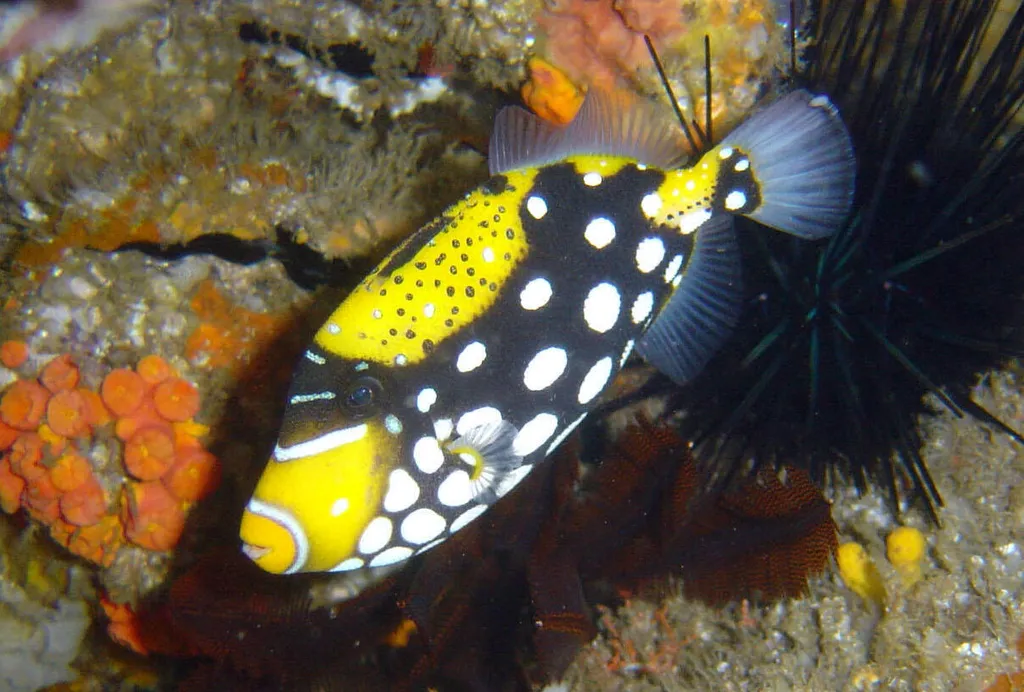
Photo by (c) Peter Southwood / CC BY-SA 4.0 via Wikimedia Commons
Field marks:
- Lower-body white spots: Large rounded white blotches on the lower half—diagnostic at a glance
- Yellow mouth ring: Bright yellow lips, often with a thin white line outside the yellow
- Upper reticulation: Yellow-orange net or leopard pattern on the dark dorsal half (adults)
- Eye band: Pale/yellow band between snout and eye; real eye sits deep in dark head—confuses predators
- Trigger spine: First dorsal spine erect and lockable; visible when fish wedges into holes
Similar Species
- Balistoides viridescens (Titan triggerfish): Grey-green, no clown spots; far more aggressive and common in shallow sand channels
- Balistapus undulatus (Orange-lined triggerfish): Orange lines and blue fin margins; smaller, more social
- Abalistes stellatus (Starry triggerfish): White spots but star-shaped and overall paler; different head profile
- Juvenile clown trigger: Fully spotted including dorsum; yellow snout prominent—easy to mis-ID as another species until size reveals the adult pattern
Juvenile vs Adult
Juveniles are spot-covered with a bright yellow snout and often stay deeper on walls and caves (>20 m). Adults lose dorsal spotting, develop the reticulated black-and-gold back, and move to outer reef slopes. Transition is gradual over roughly 15–20 cm.
Top 10 Fun Facts about Clown Triggerfish
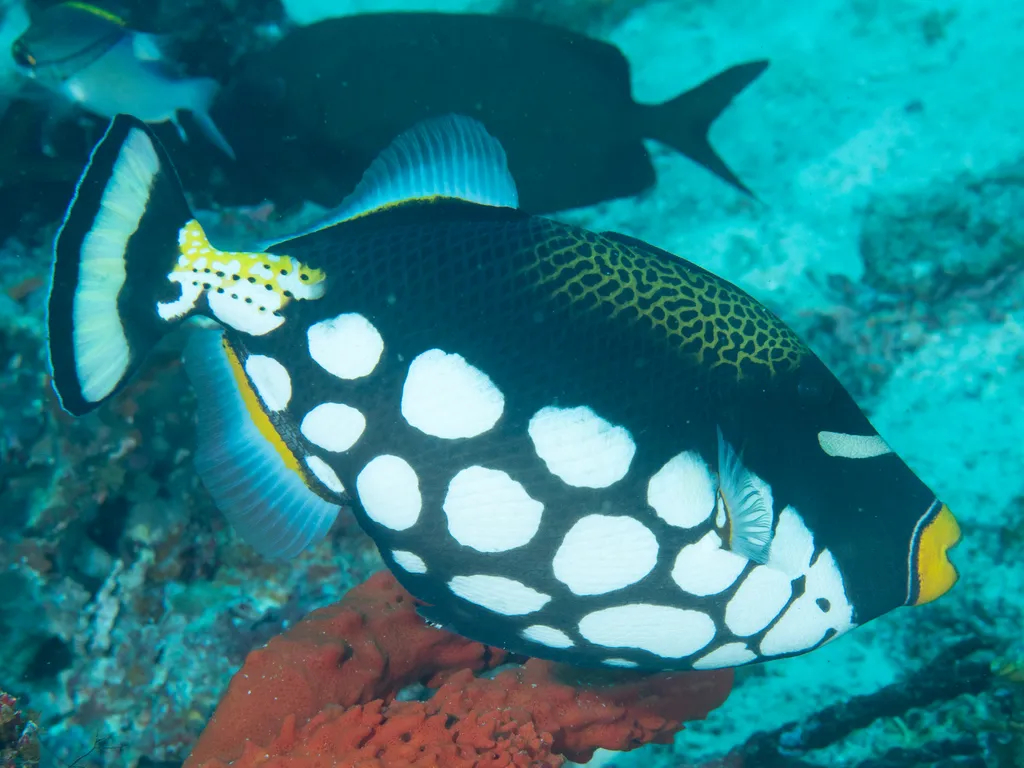
Photo by Rickard Zerpe / CC BY 2.0 via Wikimedia Commons
1. The Name Is the Pattern
"Clown" refers to the circus-paint job: white polka dots on black, yellow lips, and a harlequin contrast that reads instantly against blue water. The scientific name conspicillum means "conspicuous" or "marked with spots"—taxonomists rarely nail the marketing this well.
2. Trigger Lock: Reef Wedge Technology
Like all triggerfish, B. conspicillum has a first dorsal spine that snaps erect and a smaller second spine that locks it in place. Frightened or sleeping fish dive into a crevice and inflate, turning into a living doorstop that predators cannot yank free. Divers who try to pull one out of a hole for a photo learn quickly why the family is called "triggerfish."
3. Jaws Built for Hard Food
Thick lips hide beak-like teeth evolved to crush sea urchins, mollusks, crustaceans, and coral rubble invertebrates. They'll flip urchins to attack the unprotected underside. On a dive, you may see fresh bite marks on urchin tests near a trigger's territory—evidence of last night's menu.
4. Juveniles Wear a Different Costume
Young clown triggers are fully spotted, including the dorsal half, with a standout yellow snout. As they grow, spots above the pectoral line fade and the adult reticulated pattern emerges. Collectors pay premiums for juveniles in the aquarium trade precisely because they look like a separate species.
5. Rare on the Reef, Prized in Tanks
Wild adults are uncommon to rare across much of their range despite being widespread from East Africa to Japan and Australia. You might dive a week in Raja Ampat and see two. Meanwhile, they're among the most expensive and sought-after marine aquarium fish—large systems only, because adults need space and they eat like linebackers.
6. Nesting Season Changes the Mood
Normally shy, breeding clown triggers defend nest patches on sand and rubble. Territory extends upward in a cone from the nest—swimming up over a guarding fish can put you deeper in its space than swimming sideways and slightly down. Bites are rare but painful; respect nesting season (timing varies by region).
7. Fake Eye, Real Head Armor
The pale band below the eye mimics an eye spot, drawing predator strikes away from the actual eye buried in the dark facial mask. Combined with bold aposematic coloration, the fish advertises both "I'm hard to eat" and "don't aim here."
8. Flesh Toxic—Look, Don't Lunch
Clown triggerfish flesh can carry ciguatera toxin from reef food-chain bioaccumulation. They're not a food fish in most range countries. The danger to divers is bite, not spine venom—unlike lionfish, the issue is on the plate, not in the dorsal fin.
9. Depth Split by Life Stage
Adults favor outer reef slopes and drop-offs in clear water, often 10–40 m. Juveniles hang deeper on walls and in caves. If you're hunting adults for photography, spend time on the blue-water shoulder of the reef rather than the shallow lagoon.
10. Aquarium Escapees in the Wrong Ocean
Isolated non-native records (e.g., Florida, Caribbean) are linked to aquarium releases. The species does not naturally occur in the Atlantic. Never release marine aquarium stock—one escaped clown trigger is an ecological wildcard and a waste of a fish that belongs on an Indo-Pacific wall.
Diving & Observation Notes
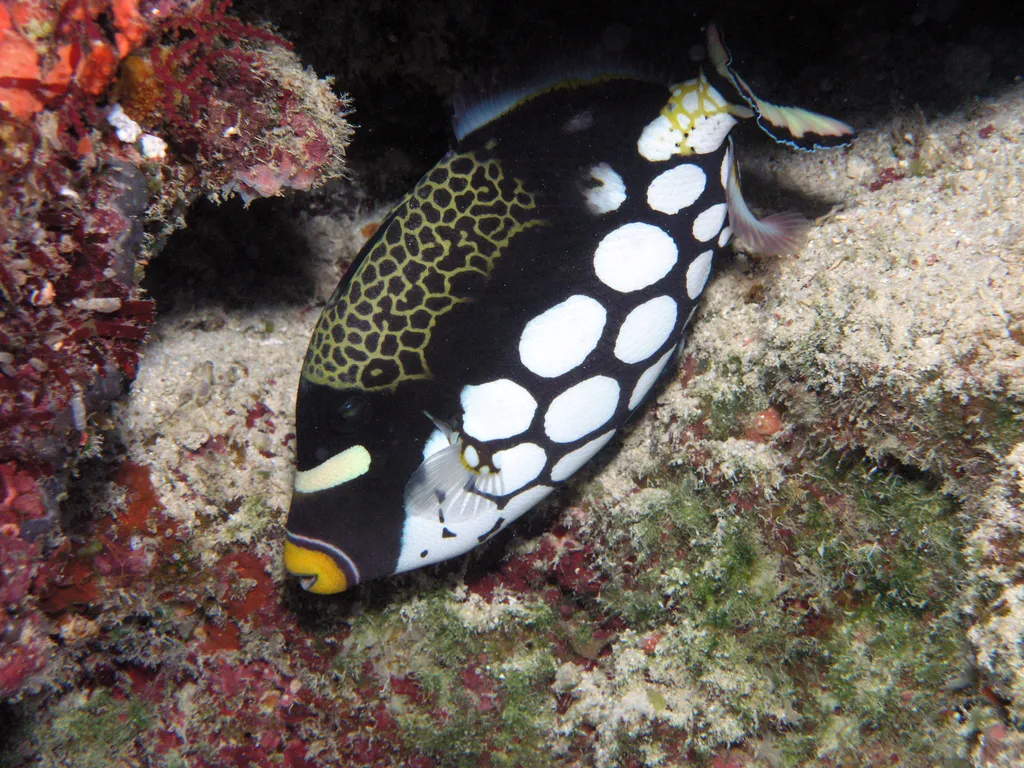
Photo by Julie Bedford via Wikimedia Commons
🧭 Finding Clown Triggers
Work outer reef slopes and drop-off shoulders at 12–35 m. Scan slowly along the wall—adults often hover just off the reef face or peek from behind large coral bommies. Juveniles: deeper caves and overhangs below 20 m. One per dive is typical; two is a very good day. Hot zones: Maldives atolls, Raja Ampat walls, Bunaken, Komodo, Fiji outer reefs, Aliwal Shoal.
🤿 Approach & Behavior
- Slow and lateral: They spook easily; fin kicks and direct approaches send them into holes
- Don't chase: Let the fish return to its patrol line; hovering at a distance beats pursuit
- Nesting caution: If one holds ground and faces you aggressively near sand/rubble, back off sideways and slightly downward—avoid swimming up over the nest cone
- Night dives: Usually tucked in crevices with dorsal spine locked; poor subject for night photography compared to day patrols
📸 Photo Tips
- Side profile captures spots, yellow mouth, and dorsal pattern; shoot slightly below to avoid surface glare
- Include reef context—bommie, wall, or blue water—to show habitat; pure fish portraits miss the "rare sighting" story
- Macro-friendly at 30–50 cm length; 60–100 mm equivalent works for full body with reef backdrop
- Patience: wait for the fish to emerge from cover rather than flashing repeatedly into its hole
⚠️ Ethics
- Never touch or harass out of holes; stress triggers locking behavior and wastes your air
- Do not collect for aquarium trade while diving—wild removal pressures local populations
- Report nesting aggression to your guide so the site can be briefed for the next group
Best Places to Dive with Clown Triggerfish
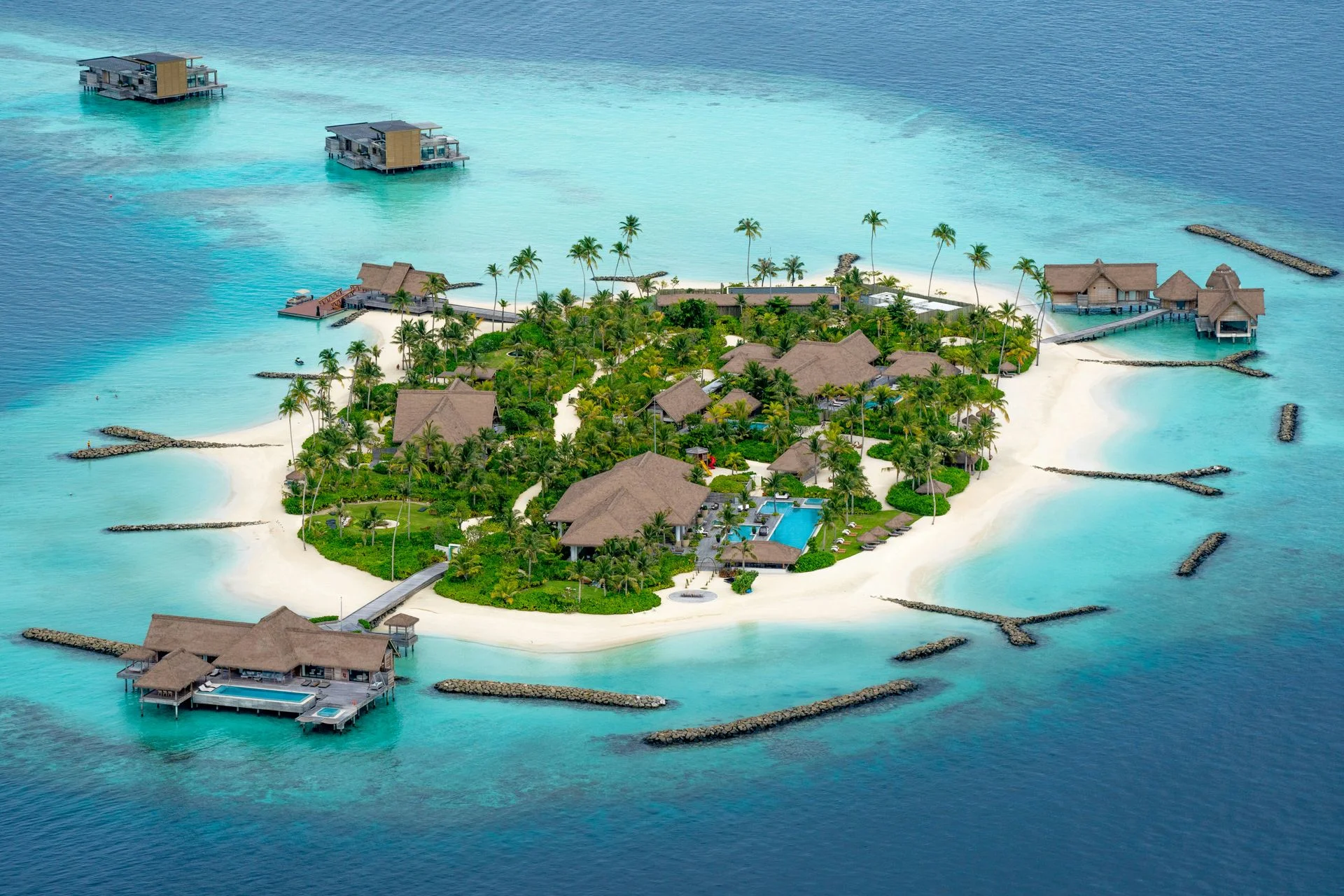
Maldives
Scattered across the Indian Ocean like strings of pearls, the Maldives’ 26 atolls encompass more than a thousand low‑lying islands, reefs and sandbanks. Beneath the turquoise surface are channels (kandus), pinnacles (thilas) and lagoons where powerful ocean currents sweep past colourful coral gardens. This nutrient‑rich flow attracts manta rays, whale sharks, reef sharks, schooling jacks, barracudas and every reef fish imaginable. Liveaboards and resort dive centres explore sites such as Okobe Thila and Kandooma Thila in the central atolls, manta cleaning stations in Baa and Ari, and shark‑filled channels like Fuvahmulah in the deep south. Diving here ranges from tranquil coral slopes to adrenalin‑fuelled drifts through current‑swept passes, making the Maldives a true pelagic playground.
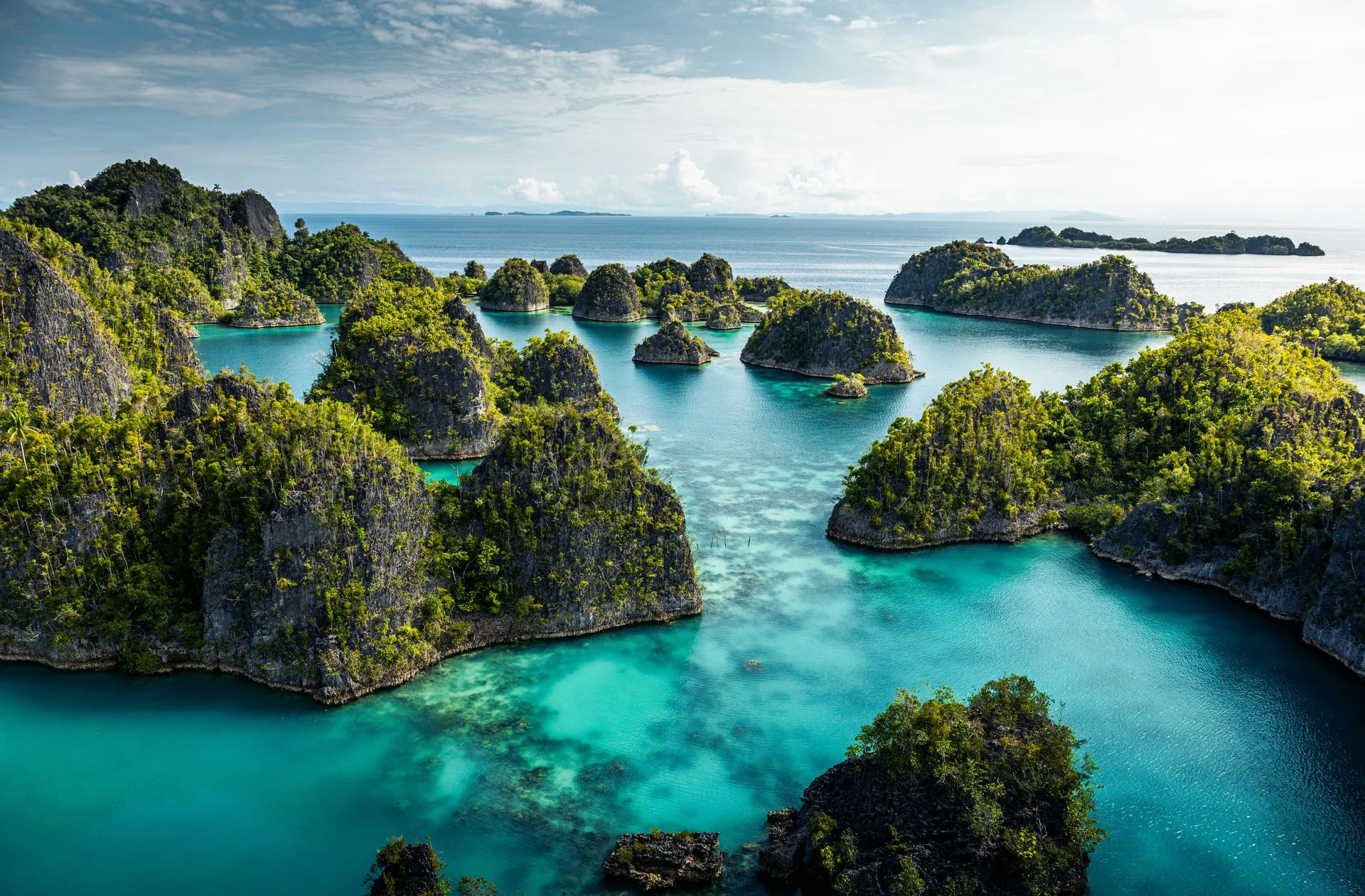
Raja Ampat
Raja Ampat, the “Four Kings,” is an archipelago of more than 1,500 islands at the edge of Indonesian West Papua. Its reefs sit in the heart of the Coral Triangle, where Pacific currents funnel nutrients into shallow seas and feed the world’s richest marine biodiversity. Diving here means gliding over colourful walls and coral gardens buzzing with more than 550 species of hard and soft corals and an estimated 1,500 fish species. You’ll meet blacktip and whitetip reef sharks on almost every dive, witness giant trevally and dogtooth tuna hunting schools of fusiliers, and encounter wobbegong “carpet” sharks, turtles, manta rays and dolphins. From cape pinnacles swarming with life to calm bays rich in macro critters, Raja Ampat offers endless variety. Above water, karst limestone islands and emerald lagoons provide spectacular scenery between dives.
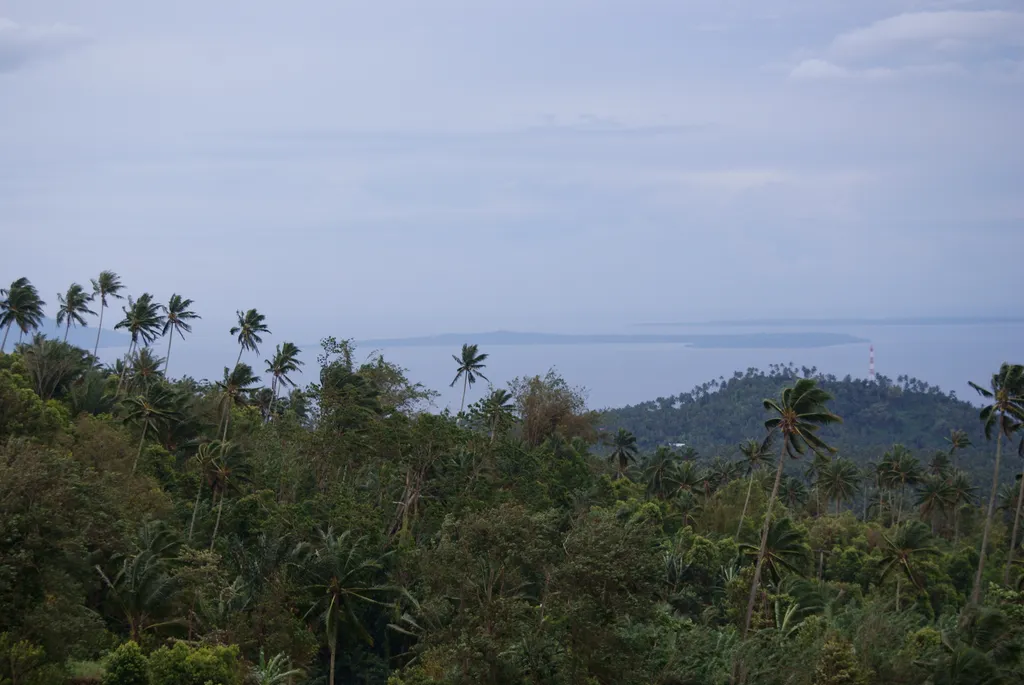
Bunaken
Bunaken National Park is wall-diving country: five volcanic islands—Bunaken, Manado Tua, Siladen, Mantehage, and Nain—ringed by drop-offs that fall from snorkel depth into hundreds of metres of blue. This is not the muck slopes of the Manado mainland; it is vertical reef, drift lines, and current-fed fish schools. The signature move is simple—roll off the boat at Lekuan or Muka Kampung, swim the shallow turtle flats, then hang on the wall while pyramid butterflyfish, fusiliers, and Napoleon wrasse stream past. Reef sharks patrol the corners, eagle rays cruise the blue, and barrel sponges the size of oil drums frame every wide-angle shot. Warm 27–29°C water, park protection since 1991, and island resorts that put you on the first boat at 08:00 make Bunaken the classic North Sulawesi wall trip—fly into MDC, transfer to the strait, and live on the reef for a week.
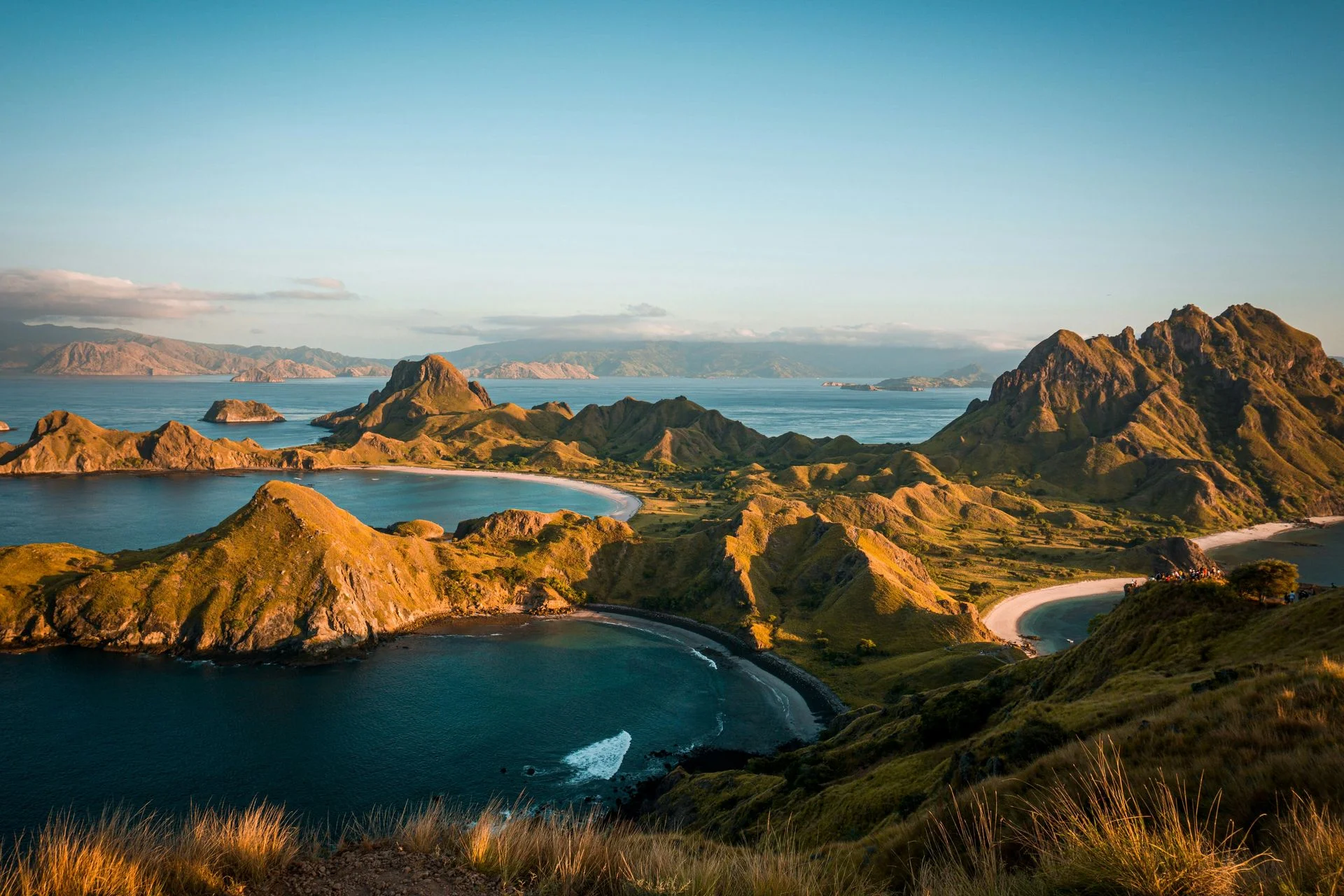
Komodo
Komodo National Park is a diver’s paradise full of marine diversity: expect healthy coral gardens, reef sharks, giant trevallies, countless schools of fish, and frequent manta ray sightings at sites like Manta Point and Batu Bolong. Drift dives and dramatic reef structures add excitement, while both macro lovers and big-fish fans will find plenty to love. Above water, the wild Komodo dragons roam, giving a touch of prehistoric wonder to the whole trip.
Fiji
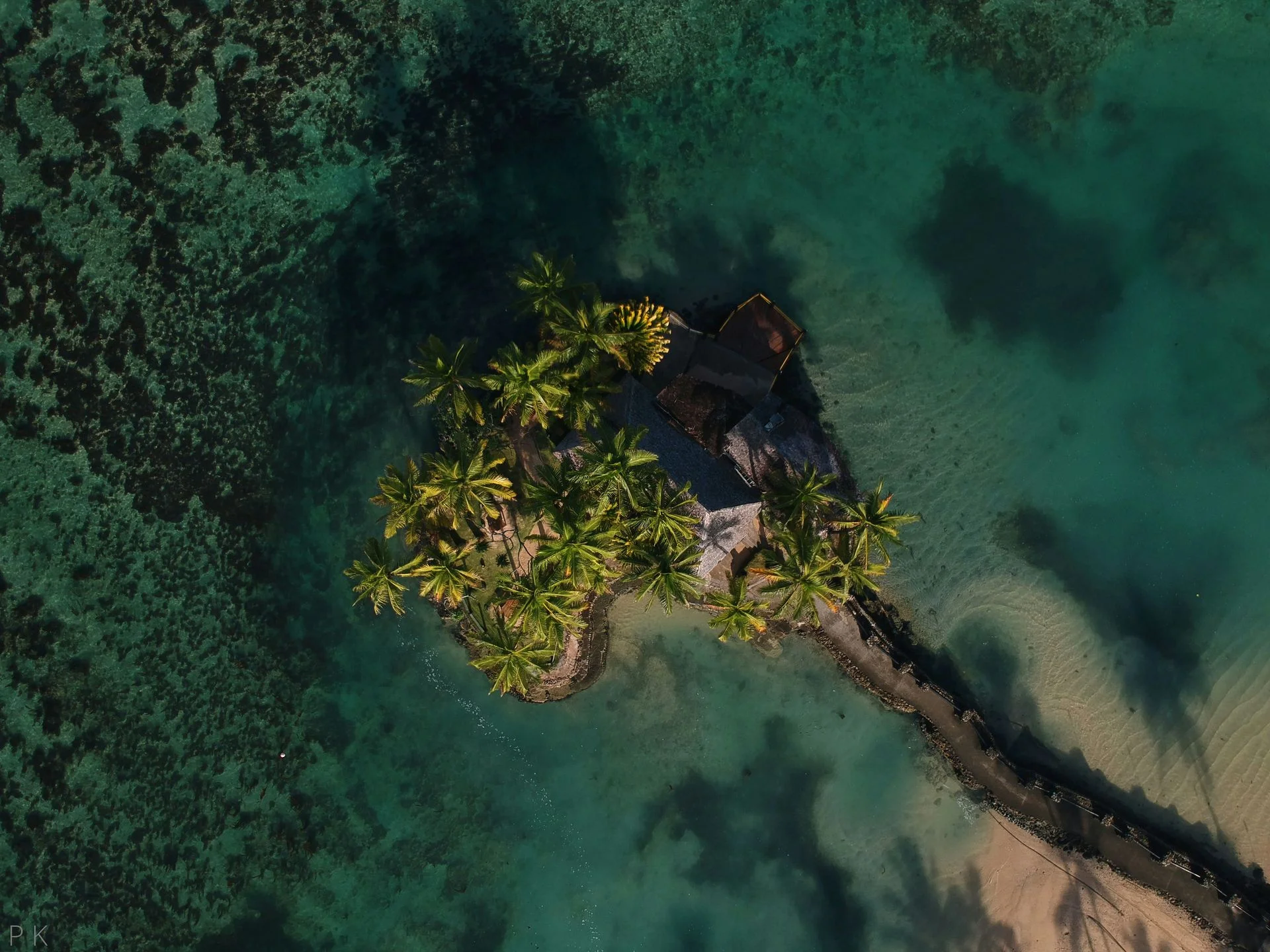
Fiji sits like a necklace of more than 300 inhabited islands and 500 smaller islets in the heart of the South Pacific. Jacques Cousteau dubbed it the “soft coral capital of the world” for good reason – nutrient‑rich currents wash over sloping reefs, walls and bommies that erupt in shades of pink, purple, orange and yellow. The country’s dive sites range from kaleidoscopic coral gardens and pinnacles in the Somosomo Strait to shark dives in Beqa Lagoon, and remote passages in Bligh Water and the Koro Sea. Schools of barracuda, trevally and surgeonfish cruise above while manta rays, turtles, bull sharks and occasionally hammerheads glide past. Friendly locals and a relaxed island vibe make Fiji a favourite for both adventurous liveaboard trips and leisurely resort‑based diving.

Aliwal Shoal
Aliwal Shoal is a fossilised sandstone dune five kilometres off Umkomaas on KwaZulu-Natal's South Coast — a rugged subtropical reef punched with caves, swim-throughs and gullies, not a tropical coral garden. Divers come for sharks: winter packs ragged-tooth sharks (grey nurse / sand tigers) into Cathedral and Raggies Cave; summer brings baited blue-water dives where tiger sharks and blacktips work the chum slick. Two classic wrecks — Produce and Nebo — sit just off the Crown for advanced boat dives. Mornings are beach kit-up, RIB, then launch through the surf. The ride to the shoal is 15–20 minutes when the Mkomazi mouth behaves. Inside the Aliwal Shoal MPA the topography jumps between overhangs, chunnels and sandy patches crowded with ribbontail rays. Visibility swings 5–25 m with plankton and river runoff; water runs 19–27°C. Bring a 5–7 mm or semi-dry and comfort in surge — Aliwal suits experienced recreational divers more than brand-new Open Water students.
Wakatobi
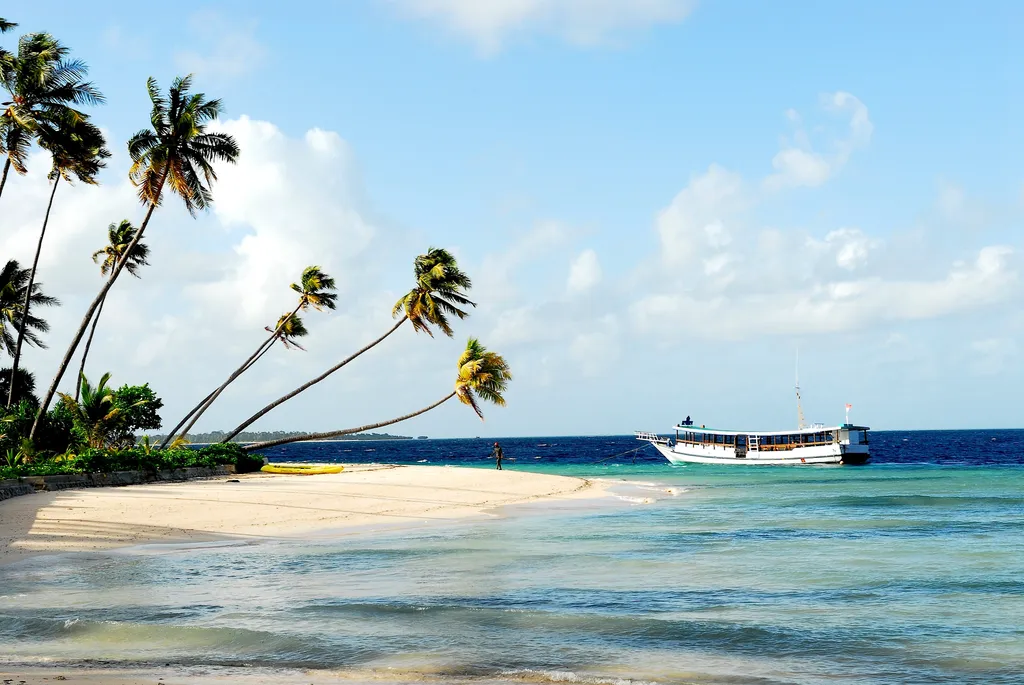
Wakatobi National Park sits on the southeastern rim of Sulawesi, named from its four main islands—Wangi-Wangi, Kaledupa, Tomia, and Binongko. It holds some of the healthiest coral coverage in the Coral Triangle, with walls, seamounts, and fringing reefs that marine biologists still treat as a reference system. Visibility regularly hits 30 m and can stretch past 50 m on calm outer-reef days. Currents are usually mild and predictable, so you get long bottom times on colorful hard-coral gardens instead of fighting blue water. The signature experience is Wakatobi’s House Reef—walk-in shore diving a short swim from the jetty—backed by more than 40 day-boat sites, from beginner pinnacles like Roma to the knife-edge walls of Blade.
Sipadan & Semporna
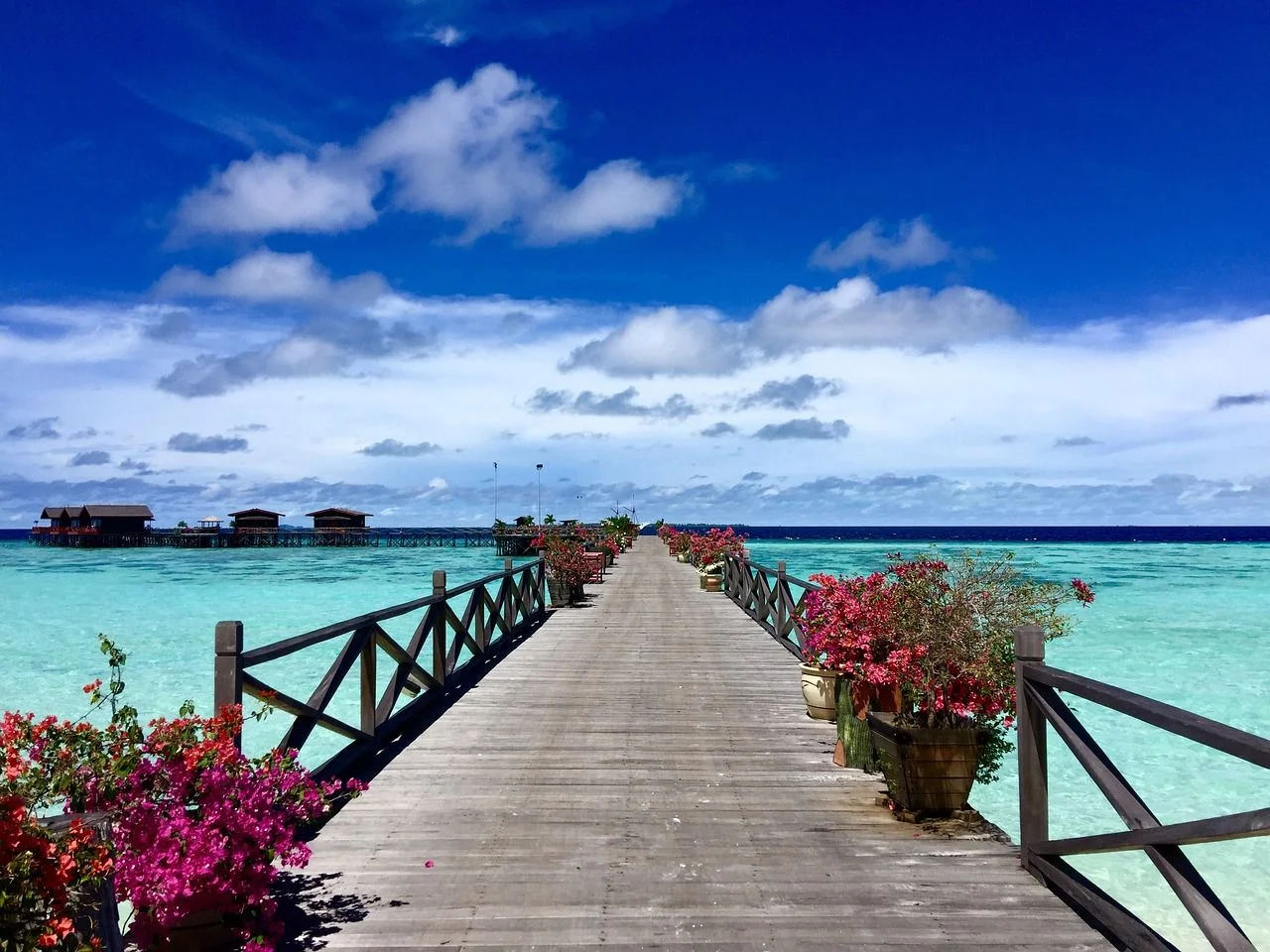
Sipadan Island off the coast of Sabah is Malaysia’s crown jewel of diving – a steep limestone pinnacle rising more than 600 metres from the sea floor and teeming with pelagic life. Currents sweep past vertical walls encrusted in hard and soft corals, bringing in barracudas, jacks, reef sharks and bumphead parrotfish in breathtaking numbers. Nearby Mabul and Kapalai offer an entirely different experience on shallow sand‑slope reefs and artificial structures, where flamboyant cuttlefish, frogfish, mandarin fish and other macro critters hide among sponges and tyres. With limited daily permits, a visit to Sipadan is a privilege; most divers base themselves in the frontier town of Semporna or at water‑bungalow resorts on Mabul and Kapalai and make day trips into the park.