
Coral
Scleractinia (order)
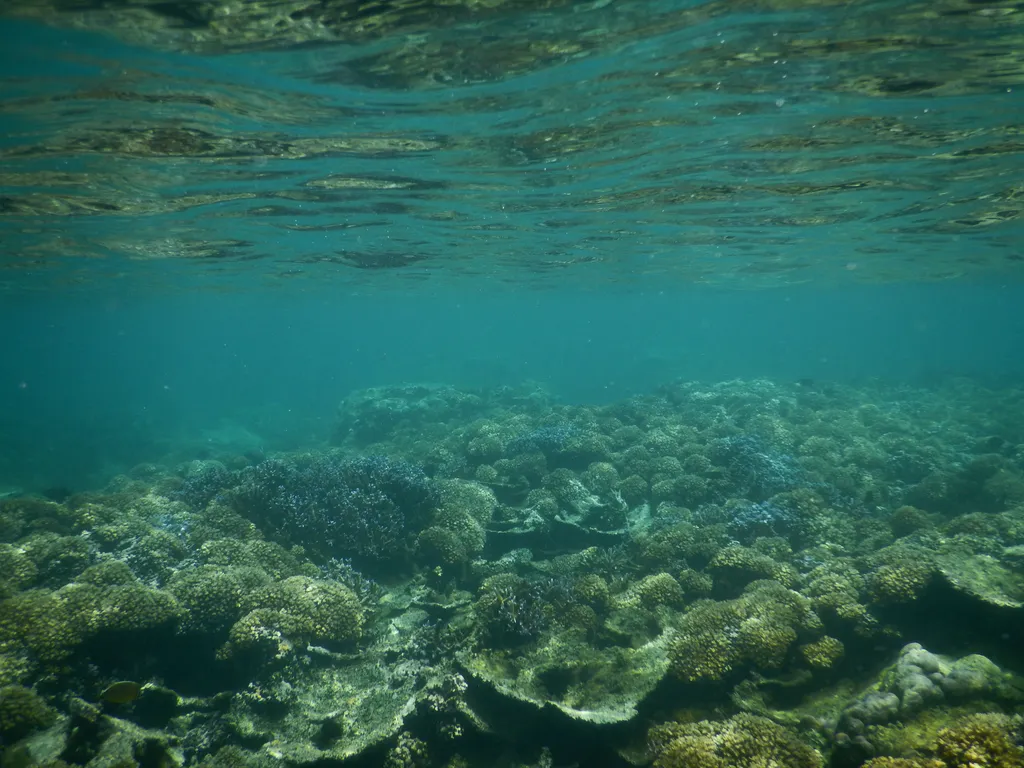
Photo by Rickard Törnblad / CC BY-SA 4.0 via Wikimedia Commons
To a diver, coral reefs are the underwater equivalent of a bustling metropolis—towering skyscrapers of calcium carbonate, painted in impossible colors, teeming with life at every level. But what looks like a colorful rock garden is actually one of nature's most sophisticated biological partnerships. Each coral is a colonial animal made up of thousands of tiny polyps, each one a complete organism with a mouth, tentacles, and a stomach. These polyps are essentially living apartments that build their own limestone buildings, and they've been doing it for over 500 million years. The vibrant colors you see aren't from the coral itself—they come from zooxanthellae, microscopic algae that live inside the coral's tissues in a symbiotic relationship so intimate that the algae provide up to 90% of the coral's energy through photosynthesis. For divers, coral reefs are the foundation of the underwater world—every fish, every invertebrate, every moment of wonder depends on these ancient architects. But they're also fragile, bleaching white when stressed, and disappearing at an alarming rate. Understanding coral means understanding that you're witnessing one of Earth's oldest and most threatened ecosystems, a living city that's been growing for millennia but could vanish in decades.
🔬Classification
📏Physical Features
🌊Habitat Info
⚠️Safety & Conservation
Identification Guide
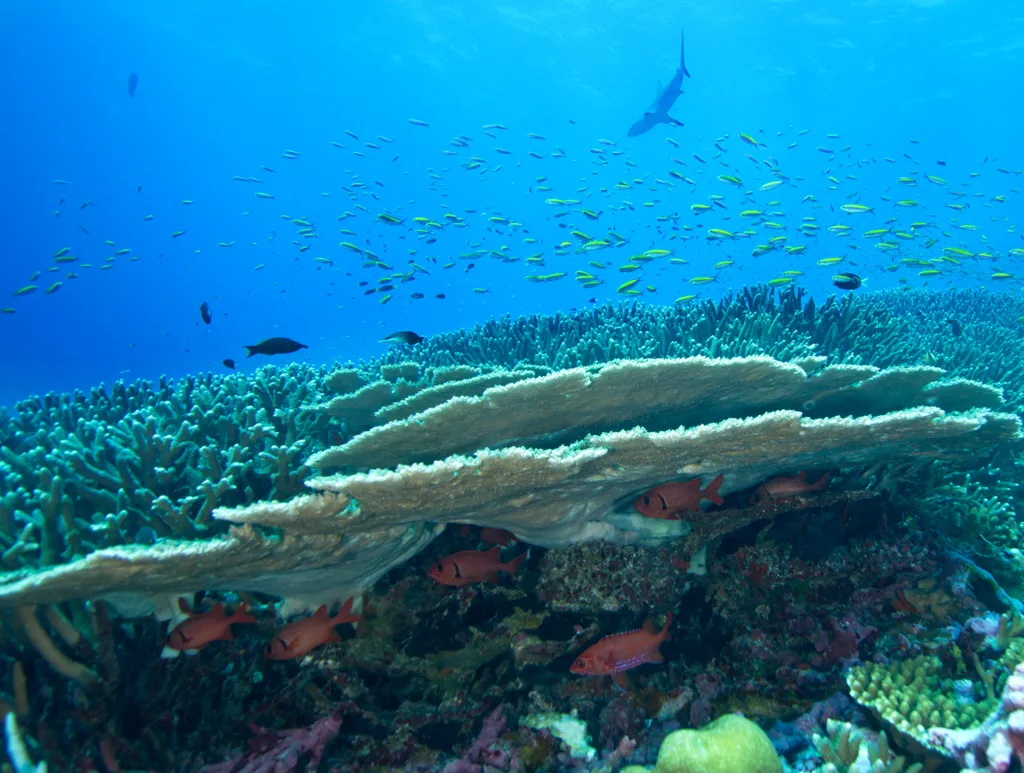
Photo by NOAA Fisheries/Jan Willem Staman via Wikimedia Commons
- Colony Shapes: Branching (staghorn, elkhorn), massive (boulder-like), plate-like (horizontal layers), encrusting (flat sheets), foliaceous (leaf-like)
- Polyp Structure: Look for tiny tentacle rings around small openings (mouths) - polyps retract during day, extend at night
- Color Patterns: Bright colors indicate healthy coral with active zooxanthellae; white or pale colors may indicate bleaching
- Surface Texture: Smooth, bumpy, ridged, or porous depending on species
- Growth Forms:
- Acropora: Fast-growing branching corals, often yellow, green, or brown
- Porites: Massive boulder corals, slow-growing, often brown or green
- Montipora: Encrusting or plate-like, often purple, green, or orange
- Fungia: Solitary disc corals, free-living on sand
- Fluorescence: Under UV light or blue filters, many corals glow with fluorescent proteins
- Coral vs. Sponge: Corals have hard calcium carbonate skeletons; sponges are soft and flexible
Top 10 Fun Facts about Coral
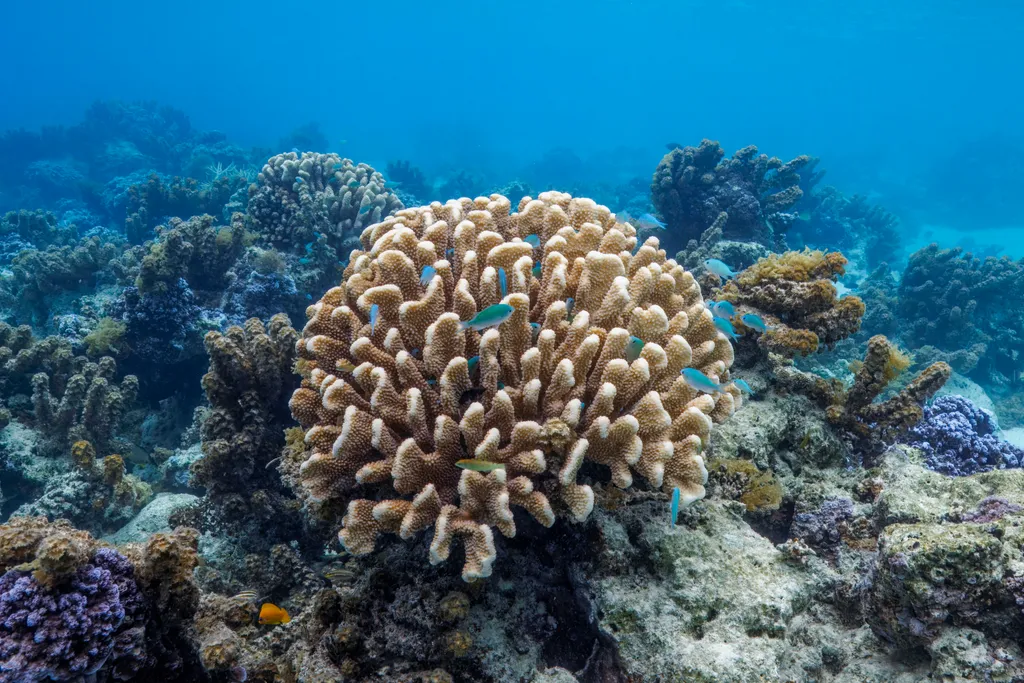
Photo by Charles J. Sharp / CC BY-SA 4.0 via Wikimedia Commons
1. The Ultimate Roommates: A 500-Million-Year Partnership
Coral polyps and zooxanthellae algae have one of the most successful business partnerships in evolutionary history. These single-celled dinoflagellates live inside the coral's tissue, packed so densely that they can number in the millions per square centimeter. During the day, the algae photosynthesize, converting sunlight into sugars and other organic compounds that they share with their coral hosts—providing up to 90% of the coral's energy needs. In return, the coral provides the algae with a safe home, carbon dioxide, and nitrogen-rich waste products that the algae need to grow. It's a perfect closed-loop system: the coral breathes out what the algae need, and the algae produce what the coral needs. This partnership is so essential that when corals lose their zooxanthellae (a process called bleaching), they can starve to death even if they're still alive. Scientists have discovered that corals can actually "shop around" for different strains of zooxanthellae, swapping out less efficient partners for better ones when environmental conditions change. Some corals even host multiple species of algae simultaneously, creating a diverse portfolio of photosynthetic partners. This ancient relationship has been fine-tuned over millions of years, and it's the foundation of every tropical coral reef on Earth.
2. The Great Barrier Reef's Annual Orgy: Mass Spawning
Once a year, usually after a full moon in late spring or early summer, something extraordinary happens on coral reefs across the Indo-Pacific: mass spawning, one of nature's most spectacular synchronized events. On cue, hundreds of coral species release billions of eggs and sperm simultaneously into the water column, turning the ocean into a "snowstorm" of reproductive cells. This synchronized orgy is so precise that different species spawn within minutes of each other, often on the same night, creating a genetic mixing pot that ensures maximum fertilization and genetic diversity. The timing is critical—corals use a combination of water temperature, lunar cycles, and sunset timing to coordinate this event. Scientists believe this mass spawning evolved to overwhelm predators (who can't possibly eat all the eggs) and to maximize the chances of cross-fertilization between different colonies. The event is so predictable that marine biologists can set their calendars by it, and divers who witness it describe it as one of the most magical experiences in the ocean—swimming through clouds of pink, orange, and white gametes while the reef pulses with reproductive energy. After fertilization, the tiny planula larvae drift in the currents for days or weeks before settling on a suitable substrate and beginning to build a new colony. This annual event is the reef's way of ensuring its future, and it's a reminder that coral reefs are living, breathing, reproducing ecosystems, not just static underwater gardens.
3. Building Mountains One Polyp at a Time
Coral reefs are the largest biological structures on Earth, visible from space, yet they're built by animals smaller than your fingernail. Each coral polyp secretes a calcium carbonate skeleton at its base, growing upward and outward millimeter by millimeter. Over thousands of years, these tiny builders create structures that can stretch for hundreds of kilometers and rise tens of meters from the seafloor. The Great Barrier Reef, for example, is composed of over 2,900 individual reefs and 900 islands, covering an area larger than Italy. But here's the mind-bending part: most of what you see is dead. The living coral tissue is just a thin veneer—often only a few millimeters thick—covering a massive skeleton of dead ancestors. When you touch a coral, you're touching the accumulated work of generations, a limestone graveyard that's also a living city. The growth rate is agonizingly slow: fast-growing branching corals might add 10-20 centimeters per year, while massive boulder corals might grow less than 1 centimeter annually. Some of the largest coral colonies are estimated to be over 1,000 years old, making them among the oldest living animals on Earth. These ancient structures have survived ice ages, sea level changes, and countless storms, but they're now facing threats that could destroy them in a single human lifetime.
4. The Bleaching Crisis: When Partnerships Break Down
Coral bleaching is one of the most visible and devastating impacts of climate change on marine ecosystems. When water temperatures rise just 1-2°C above normal for a few weeks, corals become stressed and expel their zooxanthellae algae—the very partners they depend on for survival. Without the colorful algae, the coral's white calcium carbonate skeleton shows through, giving bleached corals their ghostly white appearance. But bleaching isn't just a cosmetic issue—it's a life-threatening condition. Without their photosynthetic partners, corals lose their primary energy source and begin to starve. If temperatures return to normal quickly, corals can sometimes recover by reacquiring zooxanthellae, but prolonged bleaching leads to death. The scale of recent bleaching events is unprecedented: in 2016-2017, the Great Barrier Reef lost approximately 50% of its shallow-water corals in just two years. Scientists predict that if global temperatures rise by 1.5°C, we could lose 70-90% of the world's coral reefs. If temperatures rise by 2°C, that number jumps to 99%. The bleaching crisis isn't just about losing pretty underwater gardens—coral reefs support 25% of all marine species despite covering less than 1% of the ocean floor. They're biodiversity hotspots, coastal protectors, and economic engines for millions of people. When corals bleach, entire ecosystems collapse.
5. Fluorescent Superpowers: Nature's Underwater Light Show
Many corals produce fluorescent proteins that create one of the ocean's most spectacular light shows. When exposed to blue or ultraviolet light, these proteins absorb the light and re-emit it at longer wavelengths, causing corals to glow in brilliant greens, oranges, reds, and purples. This isn't just for show—scientists believe fluorescent proteins serve multiple functions. They may act as sunscreens, protecting the coral's delicate tissues and their zooxanthellae from harmful UV radiation by converting it into less damaging wavelengths. They might also help corals optimize their light environment, redirecting light to areas where zooxanthellae can use it more efficiently for photosynthesis. Some researchers even suggest that fluorescent proteins could help corals recover from bleaching by providing alternative light-harvesting mechanisms. For divers, this creates magical night diving experiences: shining a blue light on a reef reveals a hidden world of glowing colors that's invisible during the day. The discovery of green fluorescent protein (GFP) in jellyfish (a close coral relative) revolutionized biological research, earning scientists the Nobel Prize and leading to breakthroughs in cancer research, neuroscience, and genetic engineering. Corals have been using these molecular flashlights for millions of years, and we're only beginning to understand their full potential.
6. The Slowest Race: Growth Rates That Defy Patience
Coral growth is measured in millimeters per year, making it one of the slowest biological processes on Earth. Fast-growing branching corals like staghorn (Acropora cervicornis) might grow 10-20 centimeters annually under ideal conditions, but most corals grow much slower. Massive boulder corals like brain coral (Diploria) might add less than 1 centimeter per year. Some deep-water corals grow so slowly—just a few millimeters per century—that a coral the size of a basketball could be thousands of years old. This glacial pace means that coral reefs take centuries or millennia to form, but can be destroyed in hours by storms, days by bleaching events, or years by human activities. A single anchor drop can destroy decades of coral growth. A careless fin kick can break branches that took years to form. This is why responsible diving practices are so critical—what takes nature centuries to build, humans can destroy in seconds. Scientists study coral growth rings (similar to tree rings) to understand past climate conditions, and some coral colonies serve as living archives of environmental change spanning hundreds of years. When you see a large coral head, you're looking at a structure that may have started growing before humans invented writing, and it deserves respect and protection.
7. Chemical Warfare: The Battle for Space
Coral reefs are crowded places, and competition for space and light is fierce. Corals have evolved sophisticated chemical weapons to defend their territory and attack competitors. Many corals produce toxic compounds that they release into the water or store in their tissues to deter predators and kill competing organisms. Some corals can extend specialized tentacles called sweeper tentacles that are loaded with extra stinging cells (nematocysts) and can reach up to 10 centimeters to sting and kill neighboring corals. This chemical warfare creates visible "battle zones" on reefs where different coral species meet—you can see dead white patches where one coral has killed another. Some corals are so aggressive that they can kill competitors within weeks of contact. But corals also use chemicals for communication: they can detect chemical signals from damaged neighbors and mount defensive responses, essentially "warning" nearby corals of danger. This chemical communication network helps coordinate colony-wide responses to threats. Scientists are studying these compounds for potential medical applications—coral-derived chemicals have shown promise in treating cancer, inflammation, and bacterial infections. The same compounds that help corals fight for space might one day help humans fight disease.
8. The Deep-Sea Cousins: Corals Without Sunlight
While most people think of corals as tropical, sunlit creatures, some of the most spectacular coral ecosystems exist in the cold, dark depths of the ocean. Deep-sea corals (also called cold-water corals) live at depths from 200 to over 6,000 meters, where sunlight never reaches and temperatures hover near freezing. Unlike their shallow-water relatives, these corals don't host zooxanthellae—they survive entirely through filter-feeding, capturing plankton and organic particles from the water column. Some deep-sea coral reefs are massive: the Lophelia reefs off Norway can be hundreds of meters tall and thousands of years old, creating oases of life in the deep ocean. These corals grow even slower than shallow-water species—some colonies are estimated to be over 4,000 years old. Deep-sea corals face different threats: bottom trawling (dragging nets along the seafloor) can destroy ancient coral forests in minutes, and ocean acidification affects deep corals just as it does shallow ones. Scientists are discovering new deep-sea coral species faster than they can name them, and these mysterious ecosystems may hold keys to understanding how life adapts to extreme environments. For divers, deep-sea corals are mostly out of reach, but they're a reminder that coral diversity extends far beyond the tropical reefs we know and love.
9. The Reef's Immune System: Disease and Recovery
Like all living things, corals get sick. Coral diseases have been increasing in frequency and severity, with names that sound like they belong in a horror movie: white band disease, black band disease, white plague, yellow band disease. These diseases can spread rapidly through a reef, killing entire colonies in weeks or months. Some diseases are caused by bacteria, others by fungi or viruses, and many are associated with environmental stress like pollution or elevated temperatures. The Caribbean has been particularly hard hit: in the 1980s, a disease called white band disease killed 90% of the region's staghorn and elkhorn corals, two of the most important reef-building species. Scientists are racing to understand these diseases and develop treatments, but coral medicine is still in its infancy. However, corals aren't defenseless—they have immune systems that can fight off infections, and some species are more resistant to disease than others. Researchers are studying disease-resistant corals in hopes of breeding or transplanting hardier varieties to struggling reefs. The fight against coral disease is part of a larger battle to save reefs, and it requires understanding not just the pathogens, but the environmental conditions that make corals vulnerable.
10. Ancient Architects: Corals Through Deep Time
Corals have been building reefs for over 500 million years, making them some of the oldest ecosystem engineers on Earth. The first corals appeared in the Ordovician period, long before dinosaurs, and they've survived five mass extinction events that wiped out most of life on Earth. Fossil coral reefs provide windows into ancient oceans, preserving not just the corals themselves, but entire ecosystems of long-extinct creatures. Some of the world's largest mountain ranges, including parts of the Alps and the Rocky Mountains, are made of ancient coral reef limestone that was pushed up by tectonic forces millions of years ago. When you climb a mountain made of coral, you're literally standing on an ancient seafloor. Modern coral reefs are relatively young—most are less than 10,000 years old, having formed after the last ice age when sea levels rose and flooded continental shelves. But the coral-building strategy is ancient and proven: create structure, provide habitat, support biodiversity. Today's reefs face unprecedented challenges, but corals have weathered crises before. The question is whether they can adapt fast enough to survive human-caused climate change. Some scientists are working on assisted evolution—selectively breeding or genetically modifying corals to be more heat-resistant. Others are creating coral nurseries where fragments are grown and then transplanted to damaged reefs. The future of coral reefs may depend on a combination of natural resilience and human intervention, a partnership as complex and essential as the one between corals and their algae.
Diving & Observation Notes
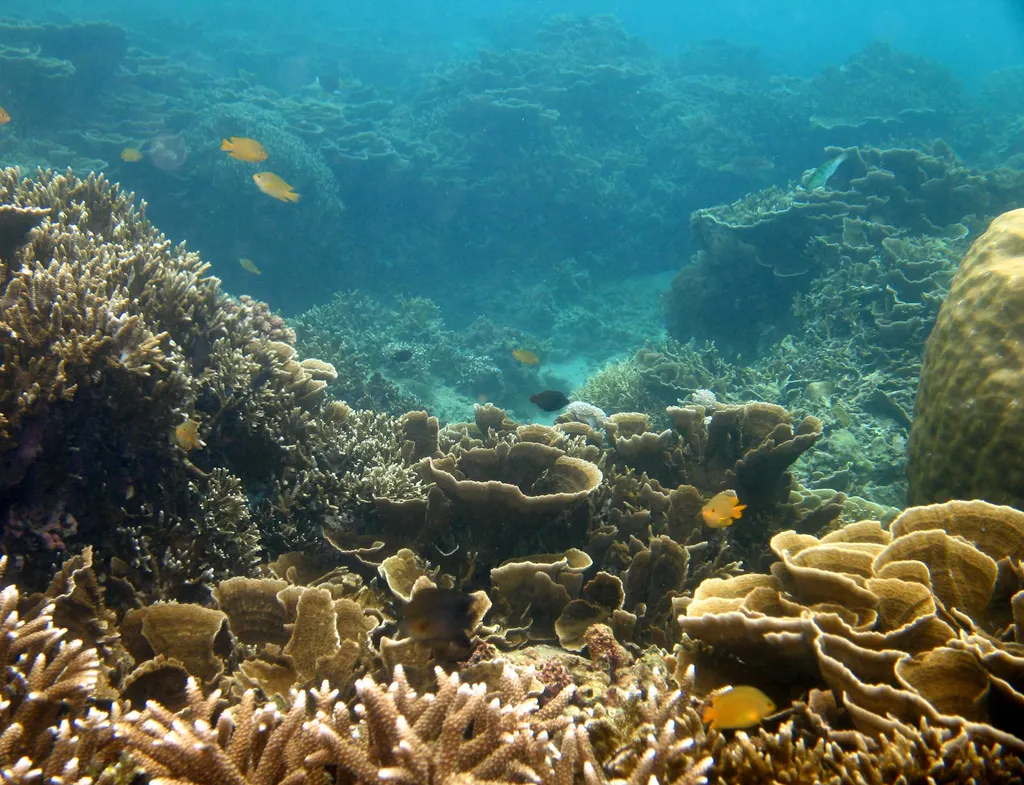
Photo by andre oortgijs / CC BY-SA 3.0 via Wikimedia Commons
🧭 Finding Corals
- Everywhere on Reefs: Corals form the foundation of tropical and subtropical dive sites.
- Depth Zones: Shallow reef flats (0-5m), reef slopes (5-30m), and deeper walls (30m+).
- Light Requirements: Most colorful corals in well-lit areas; deeper corals often less colorful.
- Structure Types: Look for branching, massive, plate, and encrusting forms.
🤿 Behavior & Observation
- Night Feeding: Polyps extend tentacles at night to feed on plankton—best observed during night dives.
- Mass Spawning: Annual synchronized spawning events (usually spring/summer, after full moon) create spectacular underwater "snowstorms."
- Fluorescence: Use blue lights or UV torches to see corals' natural fluorescence—stunning night dive experience.
- Growth Patterns: Observe how different species compete for space and light.
📸 Photo Tips
- Macro Details: Capture individual polyps with tentacles extended—requires patience and steady hands.
- Wide-Angle Reefscapes: Include divers or fish for scale when photographing large coral formations.
- Fluorescence Photography: Blue light + yellow filter reveals hidden fluorescent colors.
- Natural Light: Shoot during golden hour (early morning/late afternoon) when sunlight penetrates water best.
- Avoid Flash on Close-ups: Polyps retract when startled by bright light.
⚠️ Safety & Ethics
- No Touch Rule: Never touch corals—even gentle contact can damage polyps and introduce disease.
- Buoyancy Control: Maintain perfect buoyancy to avoid accidental contact with reef.
- No Anchoring: Support dive operators who use mooring buoys instead of dropping anchors.
- Sunscreen: Use reef-safe sunscreen (zinc oxide/titanium dioxide) that doesn't contain oxybenzone or octinoxate.
- Fins Up: Keep fins elevated when near bottom to avoid stirring sediment that can smother corals.
🌏 Best Locations
- Great Barrier Reef (Australia): World's largest coral reef system, incredible diversity.
- Raja Ampat (Indonesia): Highest coral diversity on Earth, over 500 species.
- Palau: Pristine reefs with massive coral formations and clear visibility.
- Maldives: Atoll reefs with vibrant colors and abundant marine life.
- Red Sea: Unique coral species adapted to high salinity and warm temperatures.
- Philippines & Indonesia: Macro diving paradise with incredible coral diversity.
Best Places to Dive with Coral
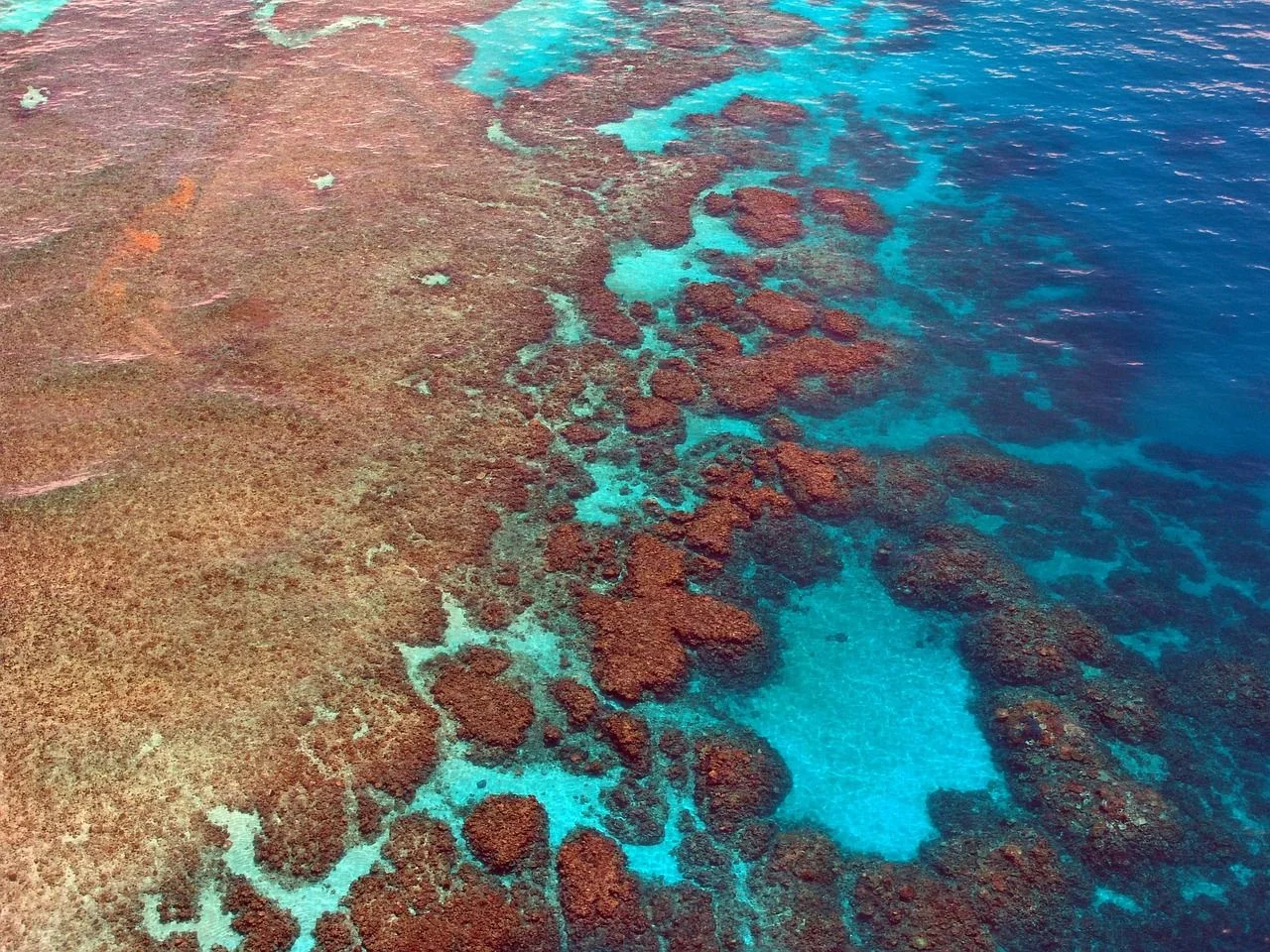
Great Barrier Reef
The Great Barrier Reef stretches for more than 2,300 km along Australia’s Queensland coast and is Earth’s largest coral ecosystem. With over 2,900 individual reefs, hundreds of islands, and a staggering diversity of marine life, it’s a bucket‑list destination for divers. Outer reef walls, coral gardens and pinnacles support potato cod, giant trevallies, reef sharks, sea turtles, manta rays and even visiting dwarf minke and humpback whales. Divers can explore historic wrecks like the SS Yongala, drift along the coral‑clad walls of Osprey Reef or mingle with friendly cod at Cod Hole. Whether you’re a beginner on a day trip from Cairns or an experienced diver on a remote liveaboard, the Great Barrier Reef offers unforgettable underwater adventures.
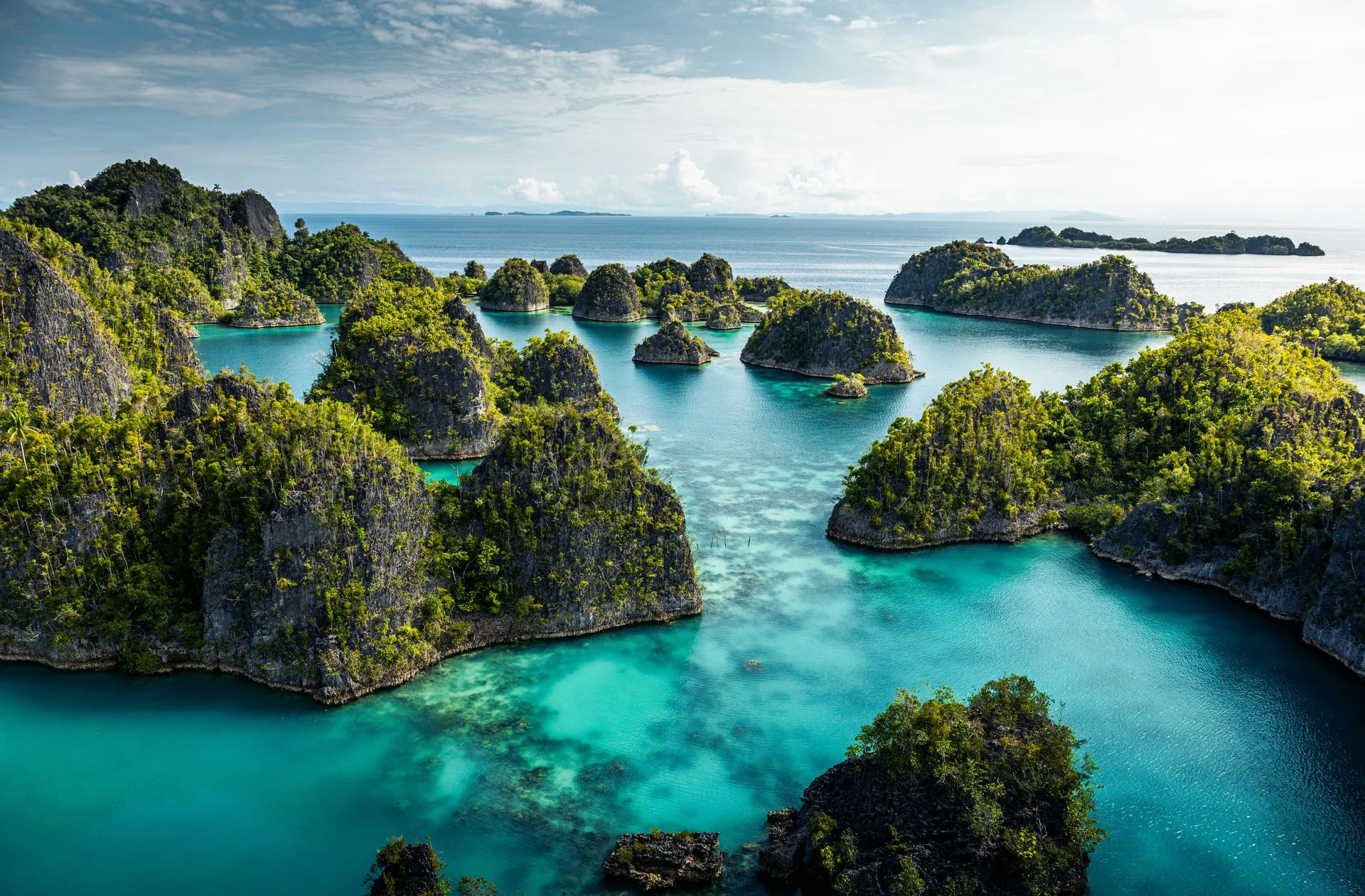
Raja Ampat
Raja Ampat, the “Four Kings,” is an archipelago of more than 1,500 islands at the edge of Indonesian West Papua. Its reefs sit in the heart of the Coral Triangle, where Pacific currents funnel nutrients into shallow seas and feed the world’s richest marine biodiversity. Diving here means gliding over colourful walls and coral gardens buzzing with more than 550 species of hard and soft corals and an estimated 1,500 fish species. You’ll meet blacktip and whitetip reef sharks on almost every dive, witness giant trevally and dogtooth tuna hunting schools of fusiliers, and encounter wobbegong “carpet” sharks, turtles, manta rays and dolphins. From cape pinnacles swarming with life to calm bays rich in macro critters, Raja Ampat offers endless variety. Above water, karst limestone islands and emerald lagoons provide spectacular scenery between dives.
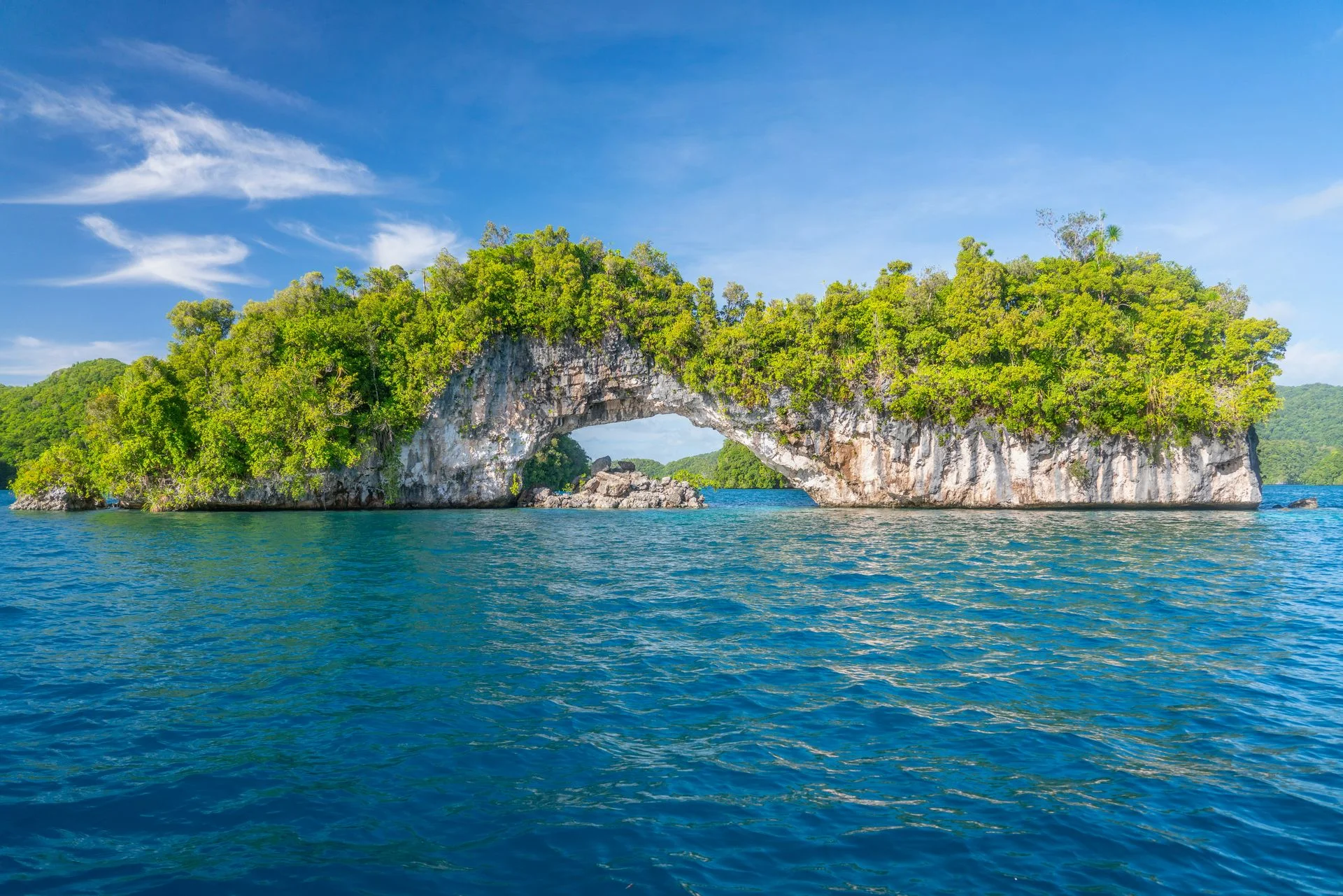
Palau
Rising out of the western Pacific at the meeting point of two great oceans, Palau is an archipelago of more than 500 jungle‑cloaked islands and limestone rock pinnacles. Its barrier reef and scattered outcrops create caverns, walls, tunnels and channels where nutrient‑rich currents sweep in from the Philippine Sea. These flows feed carpets of hard and soft corals and attract vast schools of jacks, barracudas and snappers, as well as an impressive cast of pelagics. Grey reef and whitetip sharks parade along the legendary Blue Corner; manta rays glide back and forth through German Channel’s cleaning stations; and Ulong Channel offers a thrill‑ride drift over giant clams and lettuce corals. Between dives you can snorkel among non‑stinging jellyfish in Jellyfish Lake or explore WWII ship and plane wrecks covered in colourful sponges.
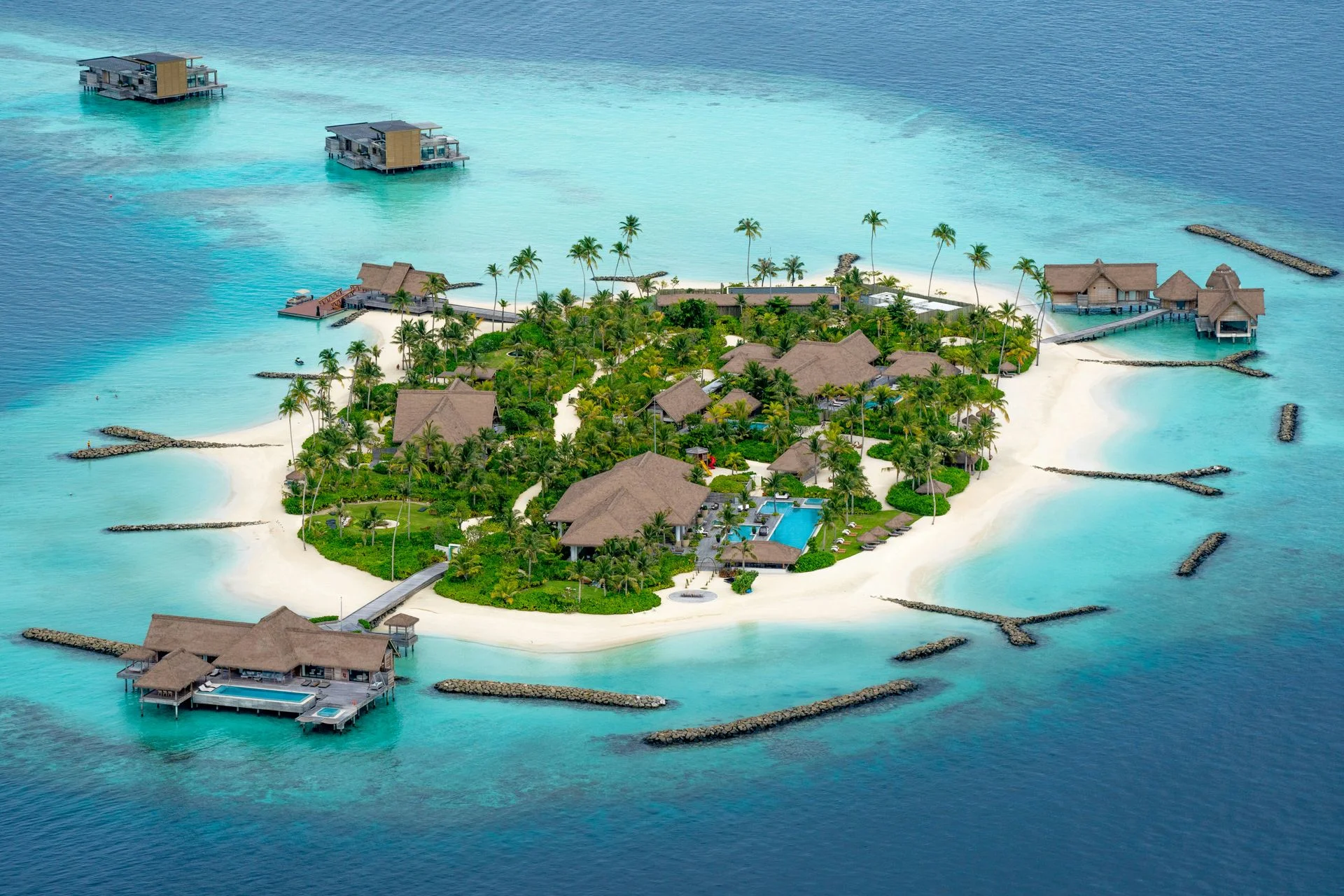
Maldives
Scattered across the Indian Ocean like strings of pearls, the Maldives’ 26 atolls encompass more than a thousand low‑lying islands, reefs and sandbanks. Beneath the turquoise surface are channels (kandus), pinnacles (thilas) and lagoons where powerful ocean currents sweep past colourful coral gardens. This nutrient‑rich flow attracts manta rays, whale sharks, reef sharks, schooling jacks, barracudas and every reef fish imaginable. Liveaboards and resort dive centres explore sites such as Okobe Thila and Kandooma Thila in the central atolls, manta cleaning stations in Baa and Ari, and shark‑filled channels like Fuvahmulah in the deep south. Diving here ranges from tranquil coral slopes to adrenalin‑fuelled drifts through current‑swept passes, making the Maldives a true pelagic playground.
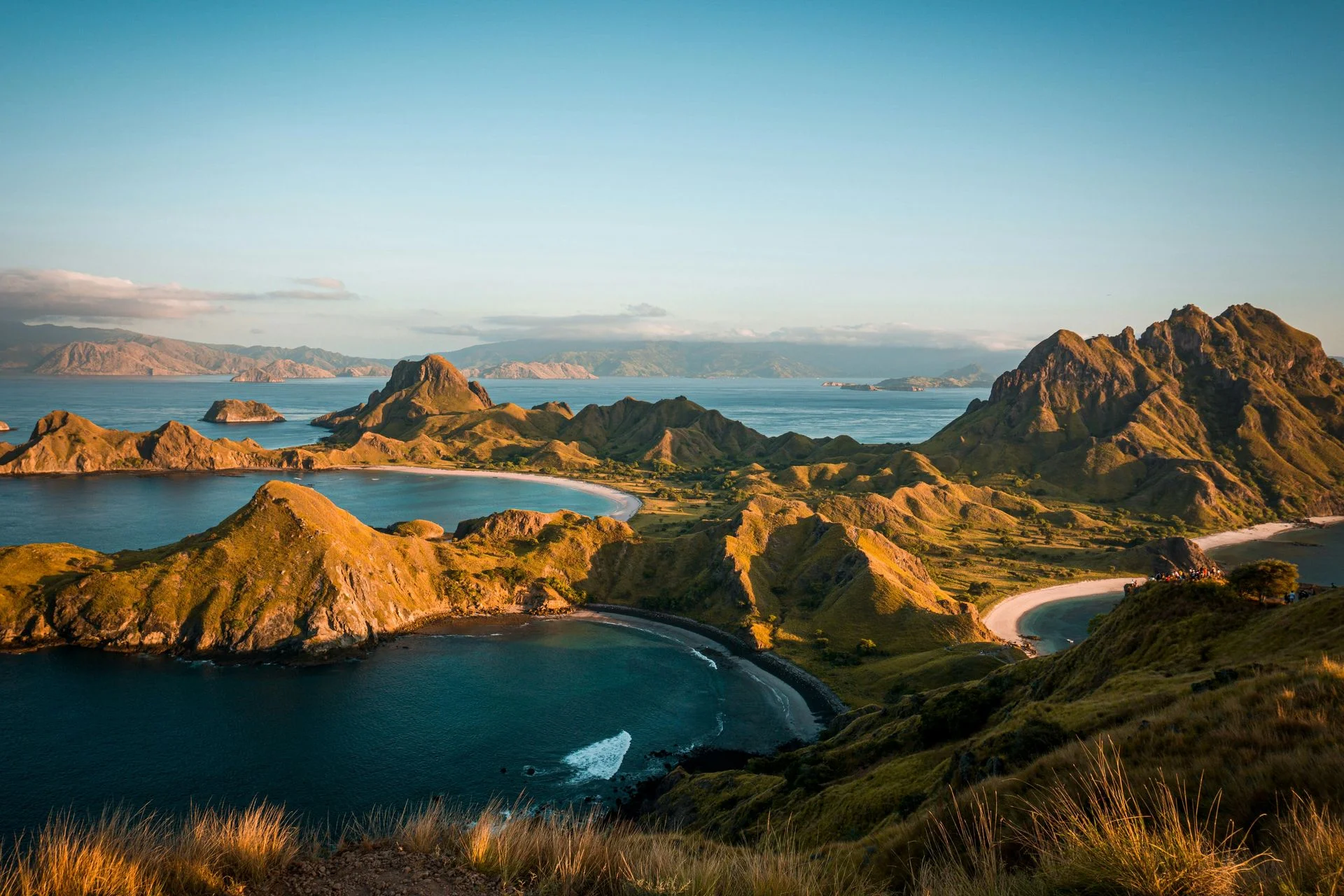
Komodo
Komodo National Park is a diver’s paradise full of marine diversity: expect healthy coral gardens, reef sharks, giant trevallies, countless schools of fish, and frequent manta ray sightings at sites like Manta Point and Batu Bolong. Drift dives and dramatic reef structures add excitement, while both macro lovers and big-fish fans will find plenty to love. Above water, the wild Komodo dragons roam, giving a touch of prehistoric wonder to the whole trip.
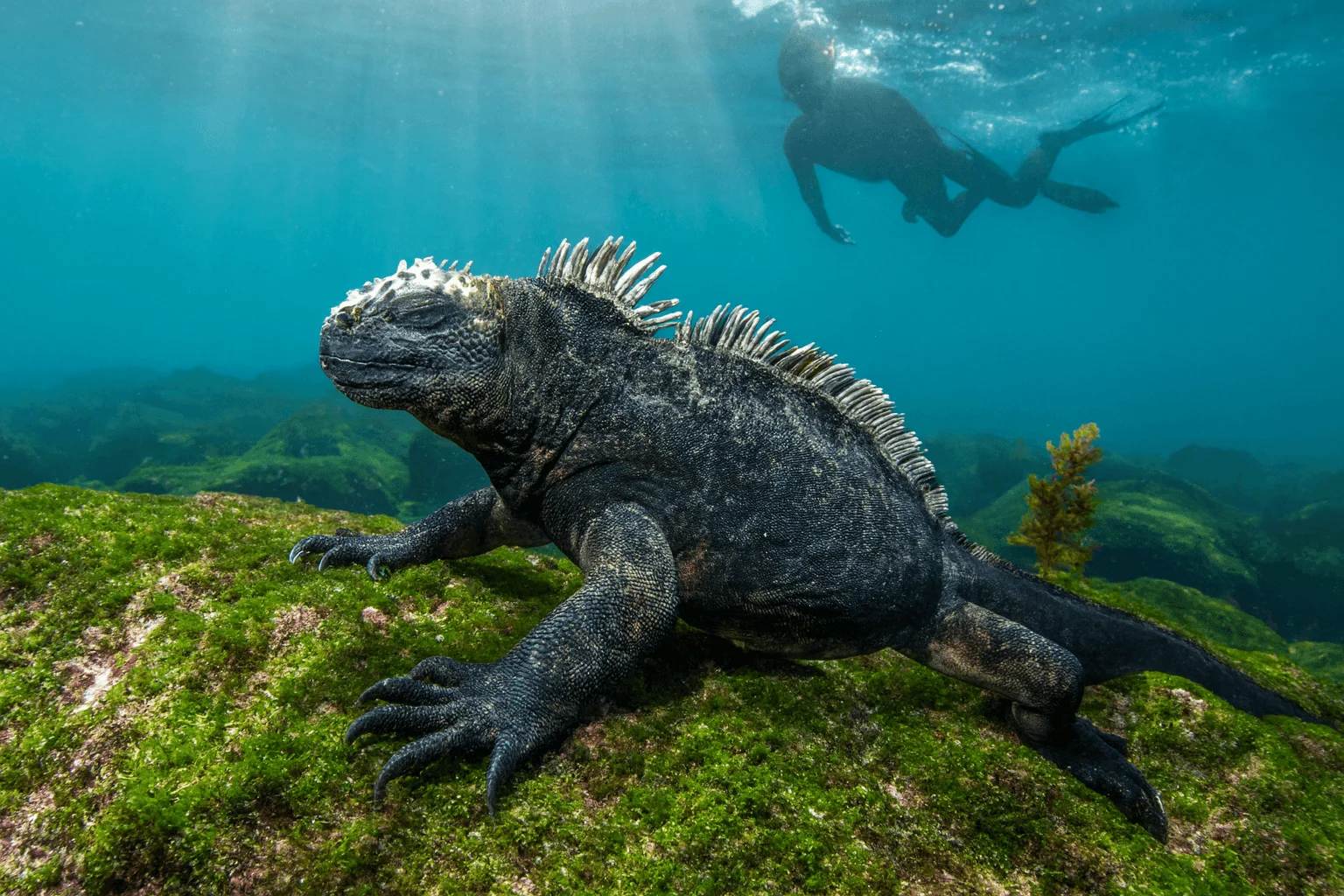
Galapagos
The Galápagos Islands sit 1 000 km off mainland Ecuador and are famous for their remarkable biodiversity both above and below the water. Created by volcanic hot spots and washed by the converging Humboldt, Panama and Cromwell currents, these remote islands offer some of the most exhilarating diving on the planet. Liveaboard trips venture north to Darwin and Wolf islands, where swirling schools of scalloped hammerheads and hundreds of silky and Galápagos sharks patrol the drop‑offs. Other sites host oceanic manta rays, whale sharks, dolphins, marine iguanas, penguins and playful sea lions. Strong currents, cool upwellings and surge mean the dives are challenging but incredibly rewarding. On land you can explore lava fields, giant tortoise sanctuaries and blue‑footed booby colonies.
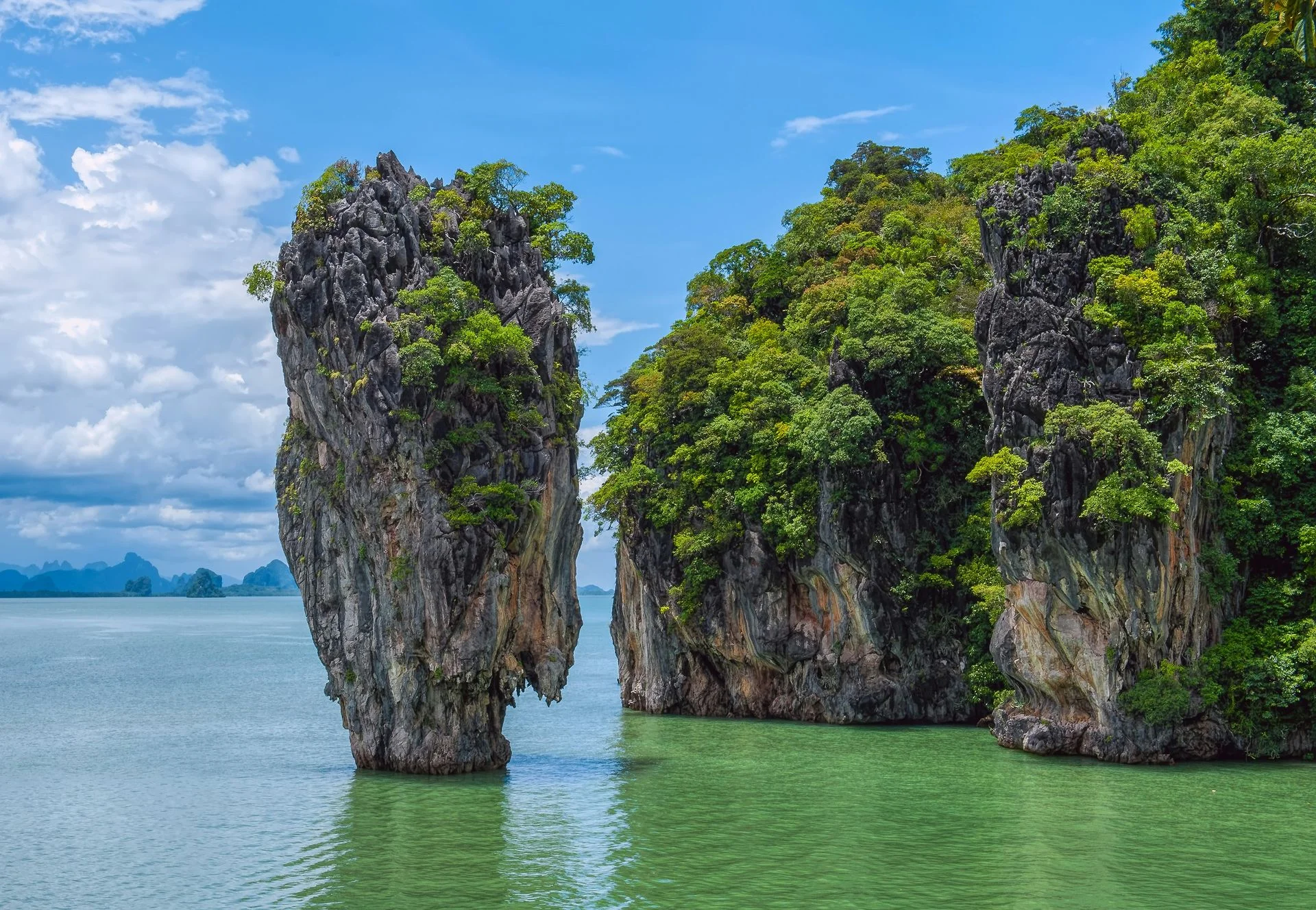
Phuket
Phuket is Thailand’s largest island and a gateway to the Andaman Sea’s best diving. While its beaches draw sun‑seekers, just offshore you’ll find coral slopes, granite pinnacles, dramatic walls and an intriguing shipwreck teeming with life. The nearby Racha islands offer year‑round clear water and easy dives, while to the east the King Cruiser ferry wreck, Shark Point, Anemone Reef and Koh Doc Mai deliver deeper currents, leopard sharks and superb soft corals. With a busy international airport and plenty of dive centres, Phuket is a convenient base for day trips and liveaboards further afield.
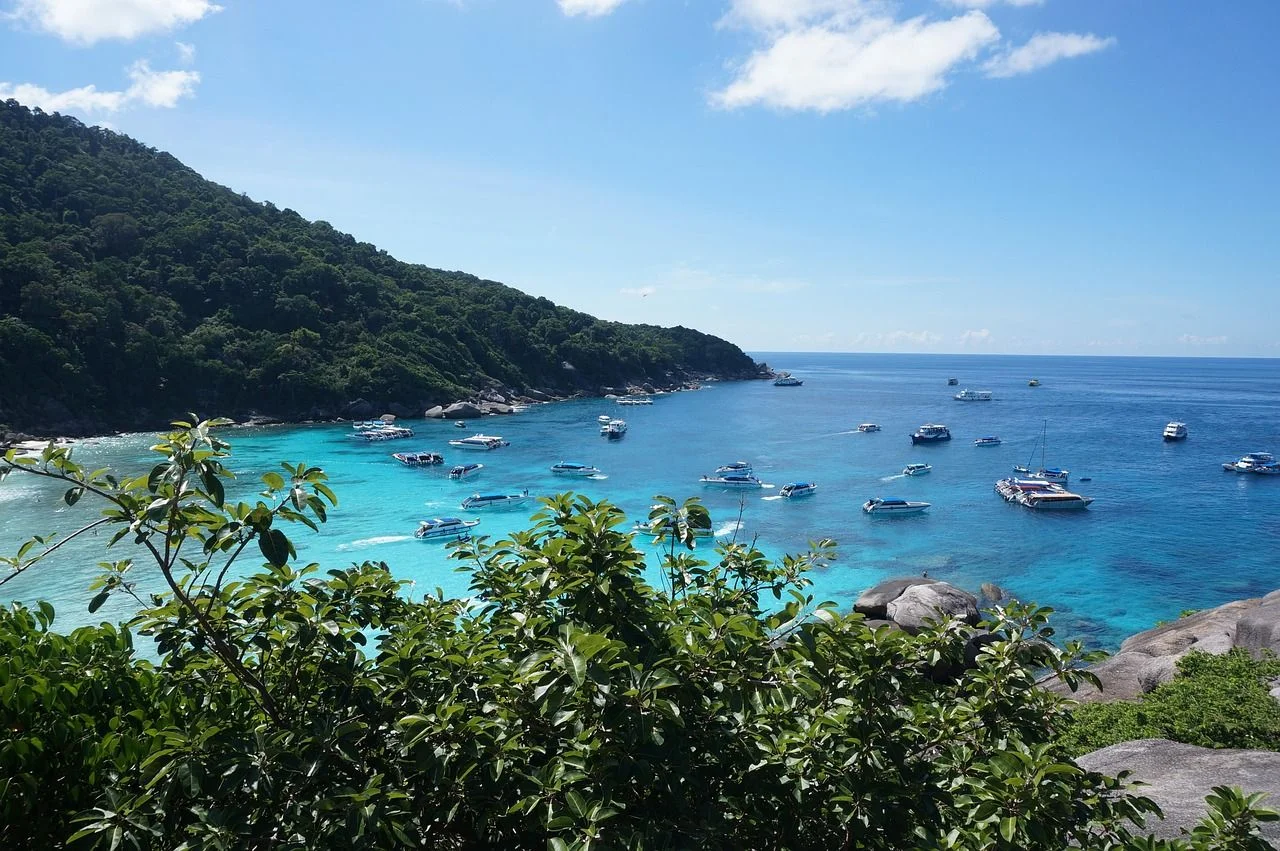
Similan
The Similan Islands are an archipelago of nine granite islands in the Andaman Sea off Thailand’s west coast, protected as part of Mu Ko Similan National Park. Underwater you’ll find dramatic boulder formations, swim‑throughs, coral gardens and drop‑offs teeming with life. Manta rays and whale sharks cruise by at sites like Richelieu Rock and Koh Tachai, while reef sharks, leopard sharks, turtles and swarming schools of fusiliers and trevally are common. The park is only open from mid‑October to mid‑May, when calm seas and clear water make for world‑class liveaboard trips or speedboat day tours.
Anilao
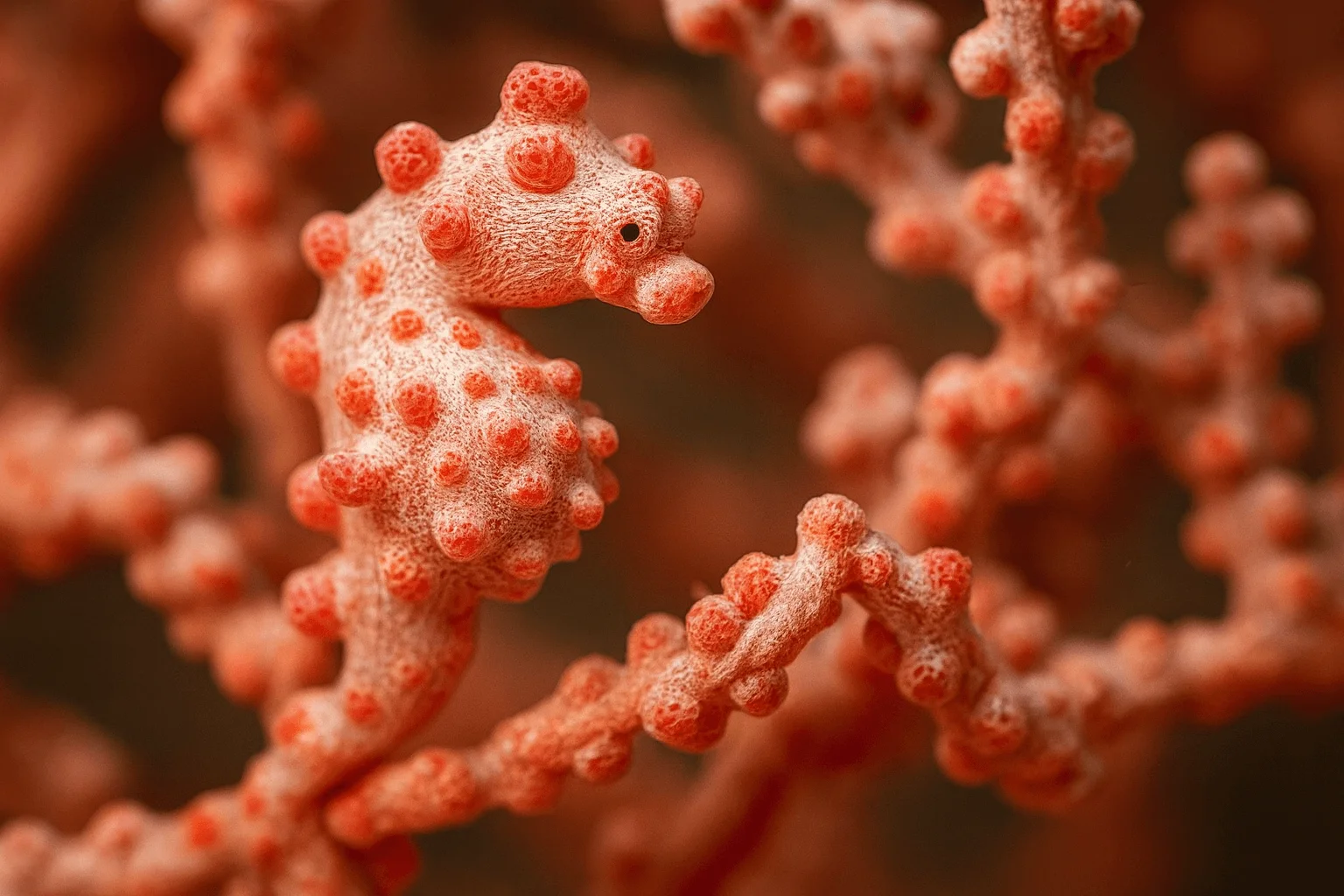
Anilao, a small barangay in Batangas province just two hours south of Manila, is often called the macro capital of the Philippines. More than 50 dive sites fringe the coast and nearby islands, offering an intoxicating mix of coral‑covered pinnacles, muck slopes and blackwater encounters. Critter enthusiasts come for the legendary muck dives at Secret Bay and Anilao Pier, where mimic octopuses, blue‑ringed octopuses, wonderpus, seahorses, ghost pipefish, frogfish and dozens of nudibranch species lurk in the silt. Shallow reefs like Twin Rocks and Cathedral are covered in soft corals and teem with reef fish, while deeper sites such as Ligpo Island feature gorgonian‑covered walls and occasional drift. Because Anilao is so close to Manila and open year‑round, it’s the easiest place in the Philippines to squeeze in a quick diving getaway.
Lembeh
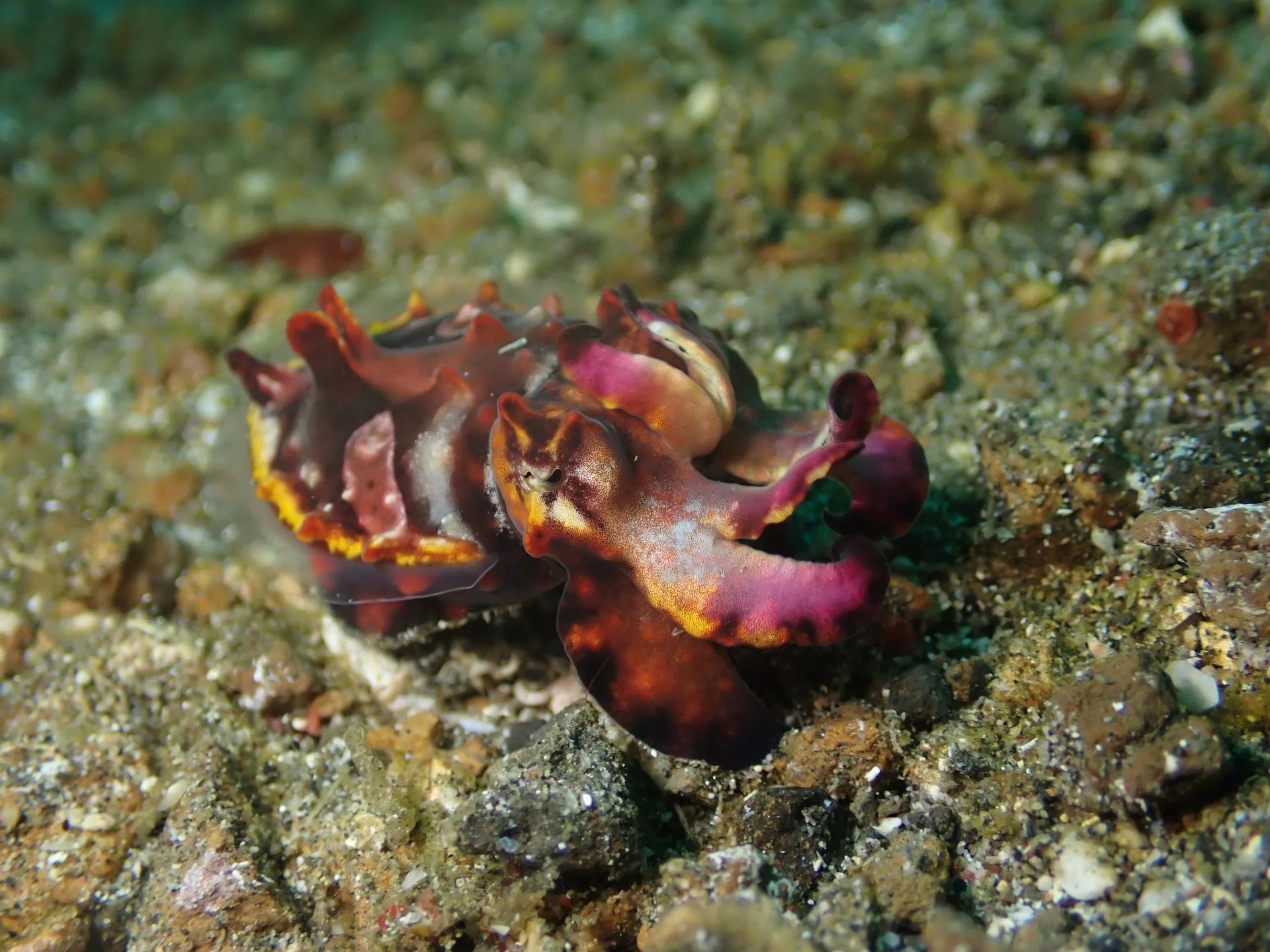
The Lembeh Strait in North Sulawesi has become famous as the muck‑diving capital of the world. At first glance its gently sloping seabed of black volcanic sand, rubble and discarded debris looks bleak. Look closer and it is teeming with weird and wonderful life: hairy and painted frogfish, flamboyant cuttlefish, mimic and blue‑ringed octopuses, ornate ghost pipefish, tiny seahorses, shrimp, crabs and a rainbow of nudibranchs. Most dives are shallow and calm with little current, making it an ideal playground for macro photographers. There are a few colourful reefs for a change of scenery, but Lembeh is all about searching the sand for critter treasures.