
Donut Doto
Doto greenamyeri
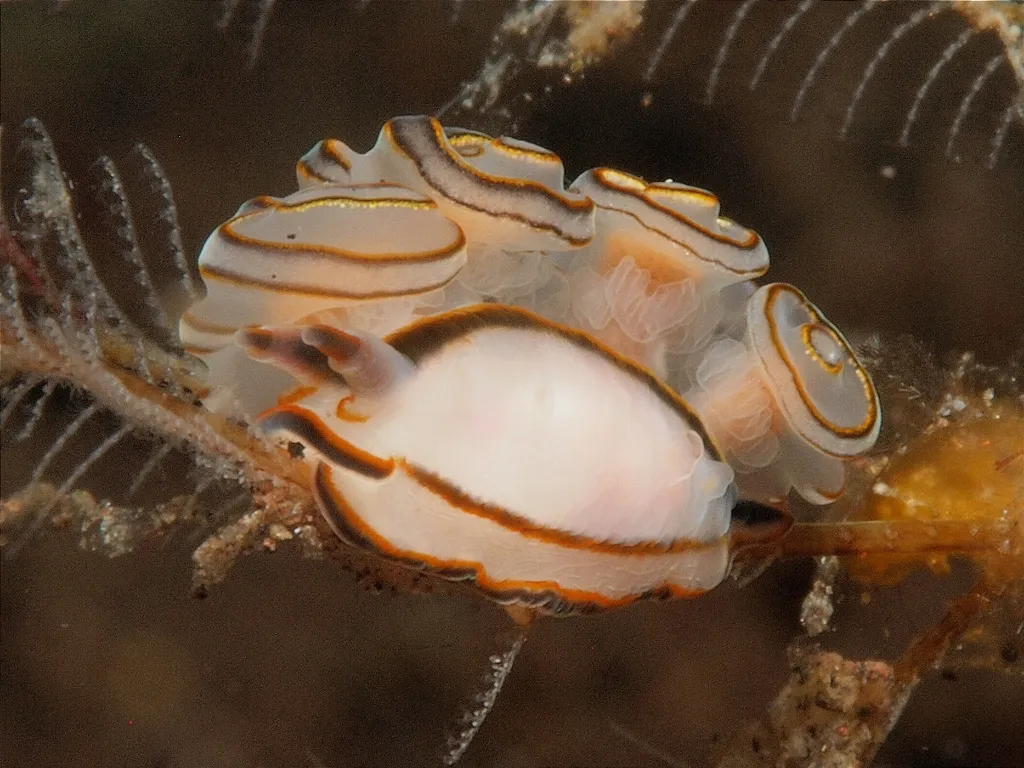
Photo by Steve Childs / CC BY 2.0 via Wikimedia Commons
The Donut Doto earned its nickname from cerata that look like stacked pastry rings—concentric bands of gray-brown or black outlined in gold-orange, unique among Indo-Pacific Doto. Doto greenamyeri was formally described in 2015 by Shipman & Gosliner and named for underwater photographer John Greenamyer, who first brought the species to taxonomists' attention from Milne Bay, Papua New Guinea. At 7–15 mm, it is a textbook macro subject: you find the hydroid bush first, then glass the stems for a slug that often crawls upside down beneath the colony. Tulamben on Bali is the most photographed population; Wakatobi, Lembeh, and North Sulawesi guides also list it on wishlists. The cerata are not simple breathing tubes—each houses a gill opening and a ruffled pseudobranch at the base, a Dotidae signature that rewards a close look through a diopter.
🔬Classification
📏Physical Features
🌊Habitat Info
⚠️Safety & Conservation
Identification Guide
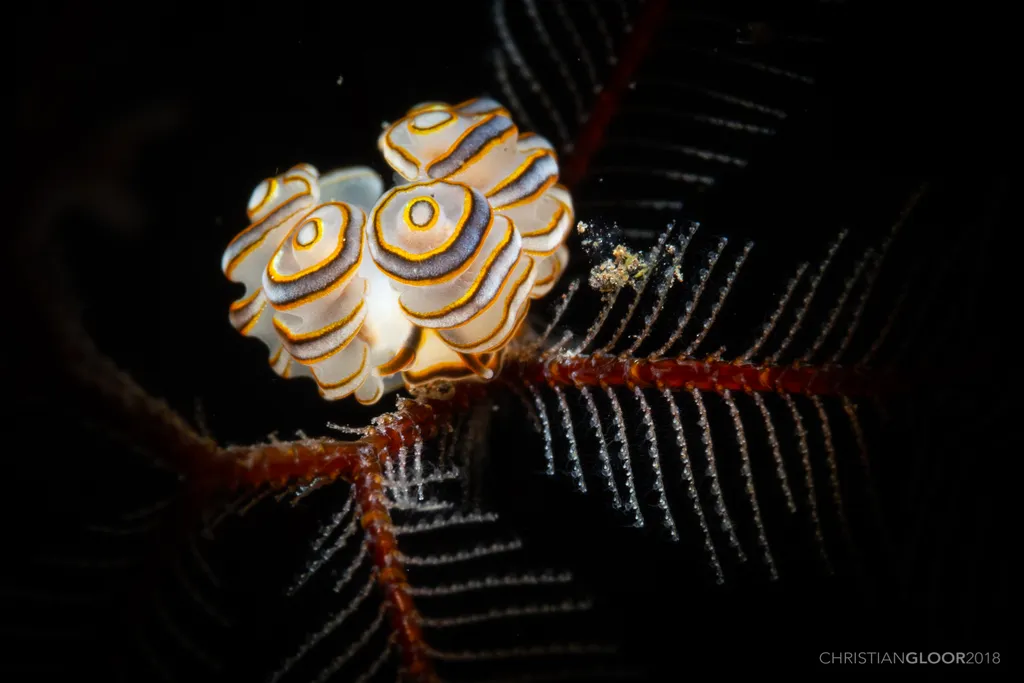
Photo by Christian Gloor from Wakatobi Dive Resort / CC BY 2.0 via Wikimedia Commons
Cerata = Donut Stack
- 3–5 concentric rings per ceras, solid or outlined in gray-black, edged in gold-orange—no other Indo-Pacific Doto matches this
- Broad cerata in 4–5 pairs almost hide the dorsum; short-bodied Doto silhouette
Head & Stripe
- Translucent white body; brown dorsal midline splits on the head and runs to dark brown rhinophores with gold-orange edges
- Two gold loops on the head below rhinophores; mature animals may show pink reproductive tissue through the body wall
Host Hydroid Lock
- Lives on plumularid / aglaopheniid hydroid colonies—not bare sand
- Slug often under the hydroid, cerata pointing down; contortionist angles needed for face-on shots
Color Morphs
- Light morph: pale cerata, fine white edging
- Dark morph: gray-black cerata and body; rings still readable
- Size check: adults to ~15 mm preserved; live animals often 7–10 mm in the field
Not Every Ringed Slug
- Other Doto spp. have tubercles or different ceratal shapes—stacked pancake rings are the field ID clincher for D. greenamyeri
Top 10 Fun Facts about Donut Doto
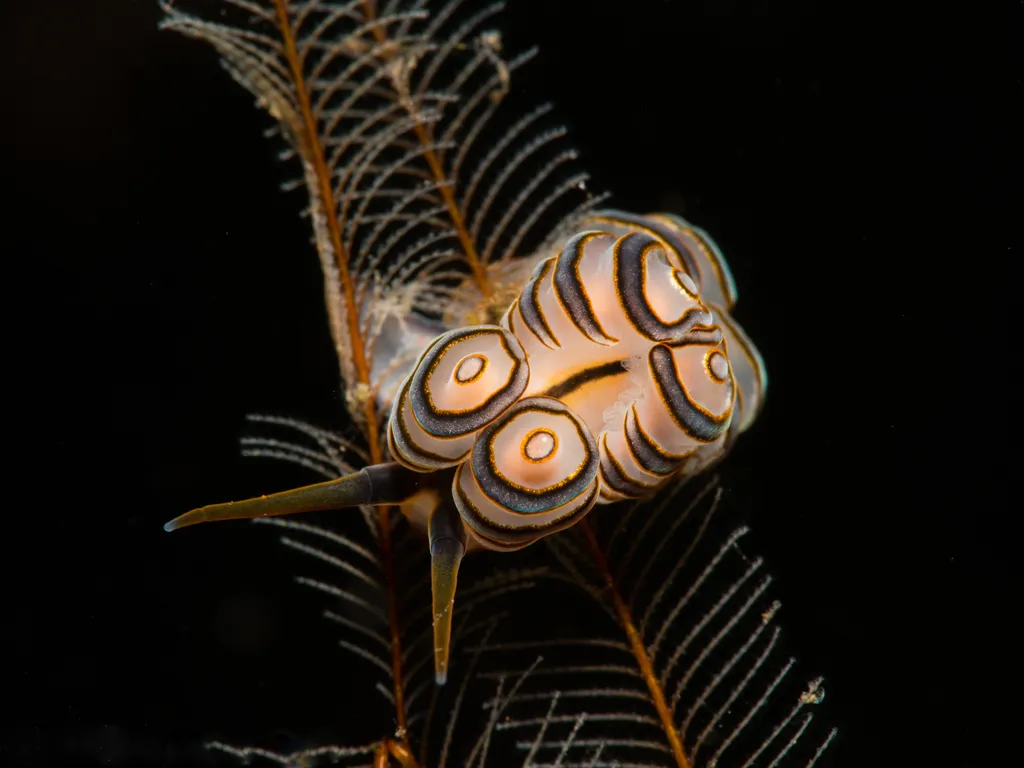
Photo by alif_abdulrahman / CC BY-SA 2.0 via Wikimedia Commons
1. Named for the Photographer Who Found It
John Greenamyer photographed this slug in Milne Bay, PNG, years before science caught up. Shipman & Gosliner (2015) honored him in the epithet greenamyeri—a rare case where the diver who popularized a critter gets permanent billing in Latin.
2. Donut Cerata Are Diagnostic
Molecular work placed D. greenamyeri as sister to the rest of the short-bodied Indo-Pacific Doto clade. Morphologically, the stacked concentric rings on each ceras are enough to separate it from every other regional Doto without a microscope.
3. Honey-Dipper Doto, Same Animal
Early diver chatter called it the Honey Dipper Doto before "Donut" won social media. Both nicknames describe the same ceratal architecture—raised rings like a wooden honey wand or a pile of mini doughnuts.
4. Hydroid Specialist
Feeding records point to plumularid hydroids, including aglaopheniid colonies such as Aglaophenopsis. Like other Doto, it pierces hydroid stems and sucks internal fluids—find the food plant, find the slug.
5. Tulamben Macro Celebrity
Bali's Tulamben black-sand sites (e.g. Petti San) produced some of the best-known images, including competition-grade macro frames. Local guides treat active hydroid patches as semi-reliable waypoints on dedicated critter dives.
6. Type Locality: Milne Bay, PNG
The holotype came from ~20 m at Samarai Island, Kwato Channel, Milne Bay Province. PNG muck diving with operators like the Chertan put this species on the map before the 2015 paper.
7. Pseudobranchs and Gill Openings
Dotidae cerata are digestive extensions, not simple snorkels. Each ceras bears a semicircular gill opening and a ruffled pseudobranch on the inner face—visible in careful macro if the slug rolls slightly.
8. Upside-Down Habit
Field photographers complain that D. greenamyeri "makes it difficult by systematically being upside down" under hydroids. Plan for low angles, a snoot, or a patient guide holding a focus light while you wedge in from the side.
9. Light vs. Dark Morphs
Color forms range from almost black cerata and body to a pale morph with only fine white edging on the rings. The ring stack pattern persists across morphs—do not dismiss a dark individual as a different species.
10. Five New Species in One Paper
The 2015 Zootaxa revision described five new Doto species and erected the genus Kabeiro for long-bodied Indo-Pacific dotids. D. greenamyeri stayed in Doto because it belongs to the short-bodied clade—a useful reminder that "Doto" on a slate is not always the same lineage.
Diving & Observation Notes
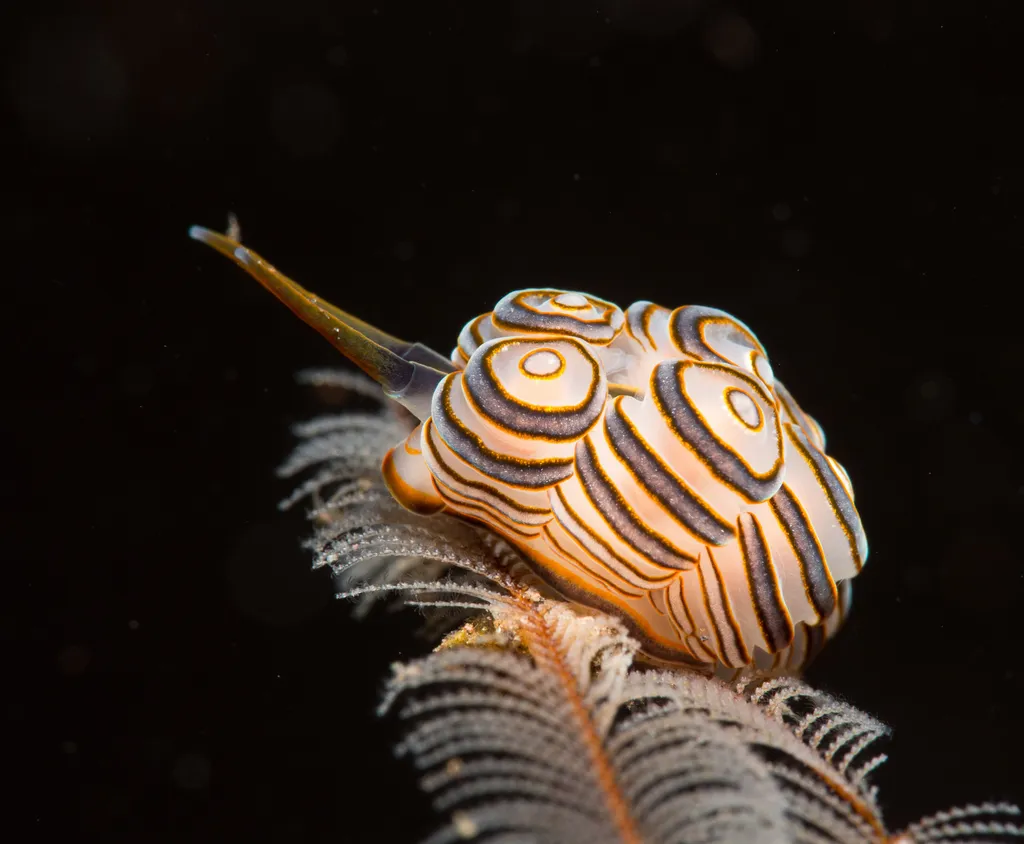
Photo by alif_abdulrahman / CC BY-SA 2.0 via Wikimedia Commons
🧭 Finding Donut Doto
- Tulamben, Bali is the default bet—black-sand macro dives on hydroid-rich slopes around 14–20 m
- Also reported from Wakatobi, Lembeh, and Milne Bay PNG; treat any Indo-Pacific muck site with aglaopheniid hydroids as possible
- Ask guides for "Donut Doto" or Doto greenamyeri on critter wishlists before the dive
🔍 Search Technique
- Scan hydroid bushes on sand/rubble, not open bottom
- Slugs often cling under stems—check the underside of each colony
- Move slowly; animals are 7–15 mm and easy to overlook
📷 Photo Tips
- 60–105 mm macro plus a diopter for ring detail
- Expect upside-down posture—side and low angles beat top-down
- Snoot or pinpoint focus light helps isolate the ring pattern from busy hydroid background
- Bryan Blauvelt's competition frame from Tulamben used strobe + snoot with blue backlight on the host hydroid—a workable recipe
🤿 Buoyancy & Ethics
- Fin wash destroys hydroids and buries slugs in silt—kneel or hover stable on sand
- Do not tear hydroid colonies to expose animals; wait or ask the guide to rotate a small stem
- Nudibranchs are slow—limit chase time and share the subject with the group
Best Places to Dive with Donut Doto
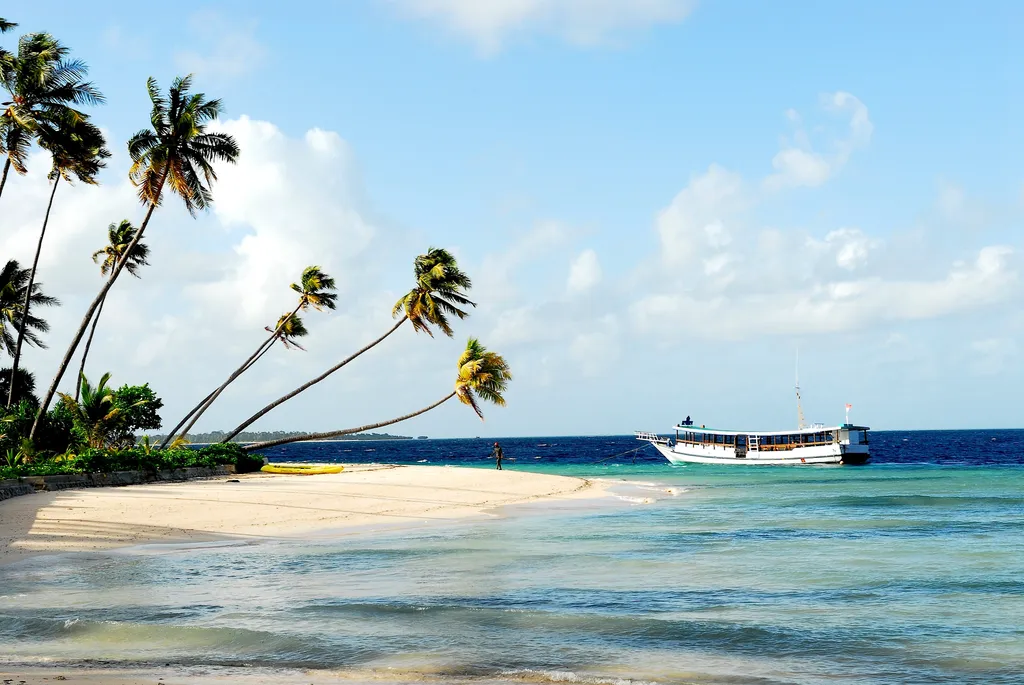
Tulamben(Bali)
Tulamben sits on Bali’s northeast coast and is best known for the USAT Liberty shipwreck – a 125‑metre cargo ship torpedoed in WWII that now lies just a short swim from shore. Warm water, mild currents and straightforward shore entries make diving here relaxed for all levels. Besides the wreck, divers can explore coral gardens, black‑sand muck sites and dramatic drop‑offs. Macro lovers will find nudibranchs, ghost pipefish, mimic octopus and pygmy seahorses, while big‑fish fans can encounter schooling jackfish, bumphead parrotfish and reef sharks. With a compact coastline packed with variety, Tulamben delivers world‑class wreck and critter diving without long boat rides.
Wakatobi
Wakatobi National Park sits on the southeastern rim of Sulawesi, named from its four main islands—Wangi-Wangi, Kaledupa, Tomia, and Binongko. It holds some of the healthiest coral coverage in the Coral Triangle, with walls, seamounts, and fringing reefs that marine biologists still treat as a reference system. Visibility regularly hits 30 m and can stretch past 50 m on calm outer-reef days. Currents are usually mild and predictable, so you get long bottom times on colorful hard-coral gardens instead of fighting blue water. The signature experience is Wakatobi’s House Reef—walk-in shore diving a short swim from the jetty—backed by more than 40 day-boat sites, from beginner pinnacles like Roma to the knife-edge walls of Blade.
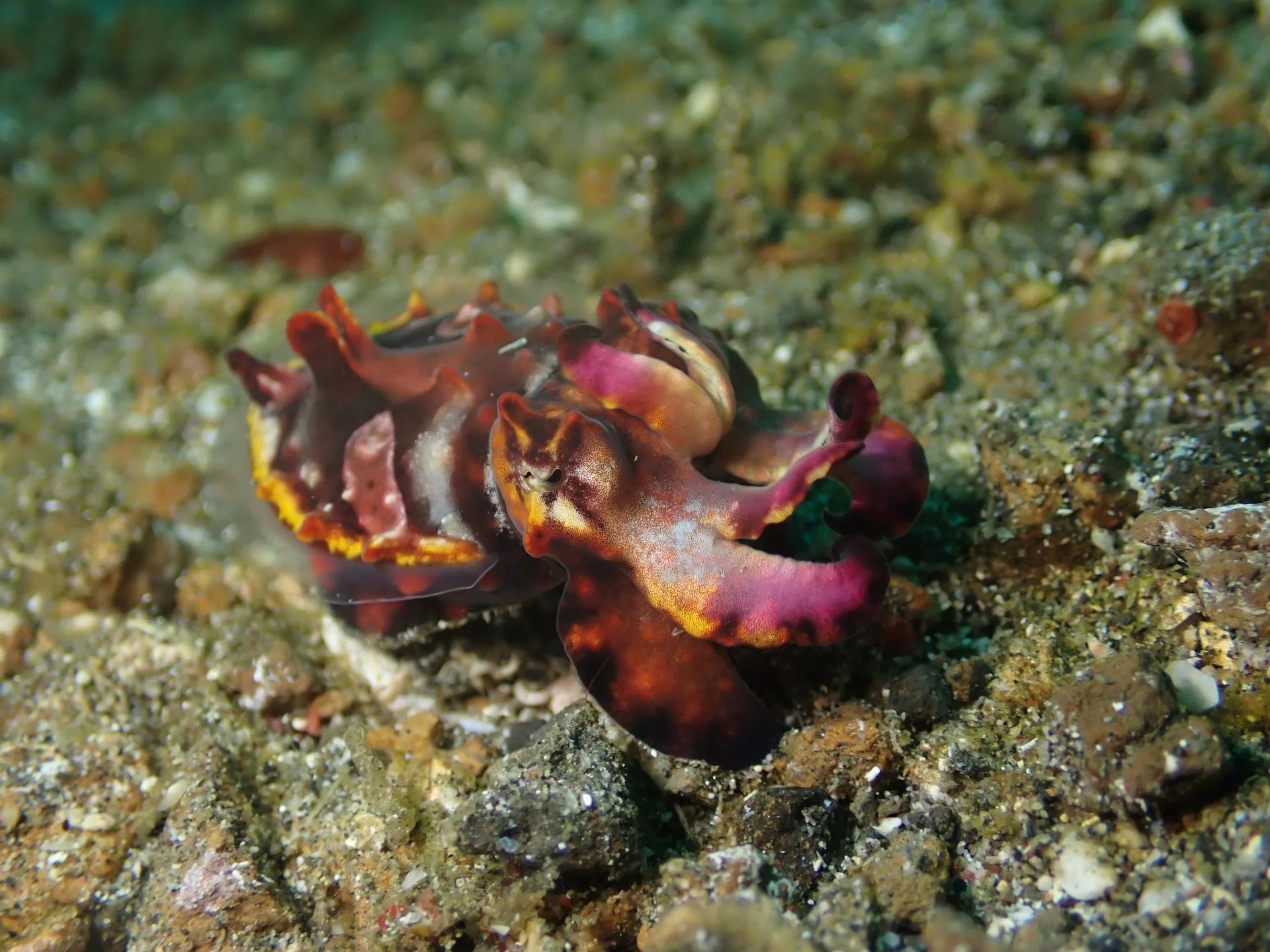
Lembeh
The Lembeh Strait in North Sulawesi has become famous as the muck‑diving capital of the world. At first glance its gently sloping seabed of black volcanic sand, rubble and discarded debris looks bleak. Look closer and it is teeming with weird and wonderful life: hairy and painted frogfish, flamboyant cuttlefish, mimic and blue‑ringed octopuses, ornate ghost pipefish, tiny seahorses, shrimp, crabs and a rainbow of nudibranchs. Most dives are shallow and calm with little current, making it an ideal playground for macro photographers. There are a few colourful reefs for a change of scenery, but Lembeh is all about searching the sand for critter treasures.
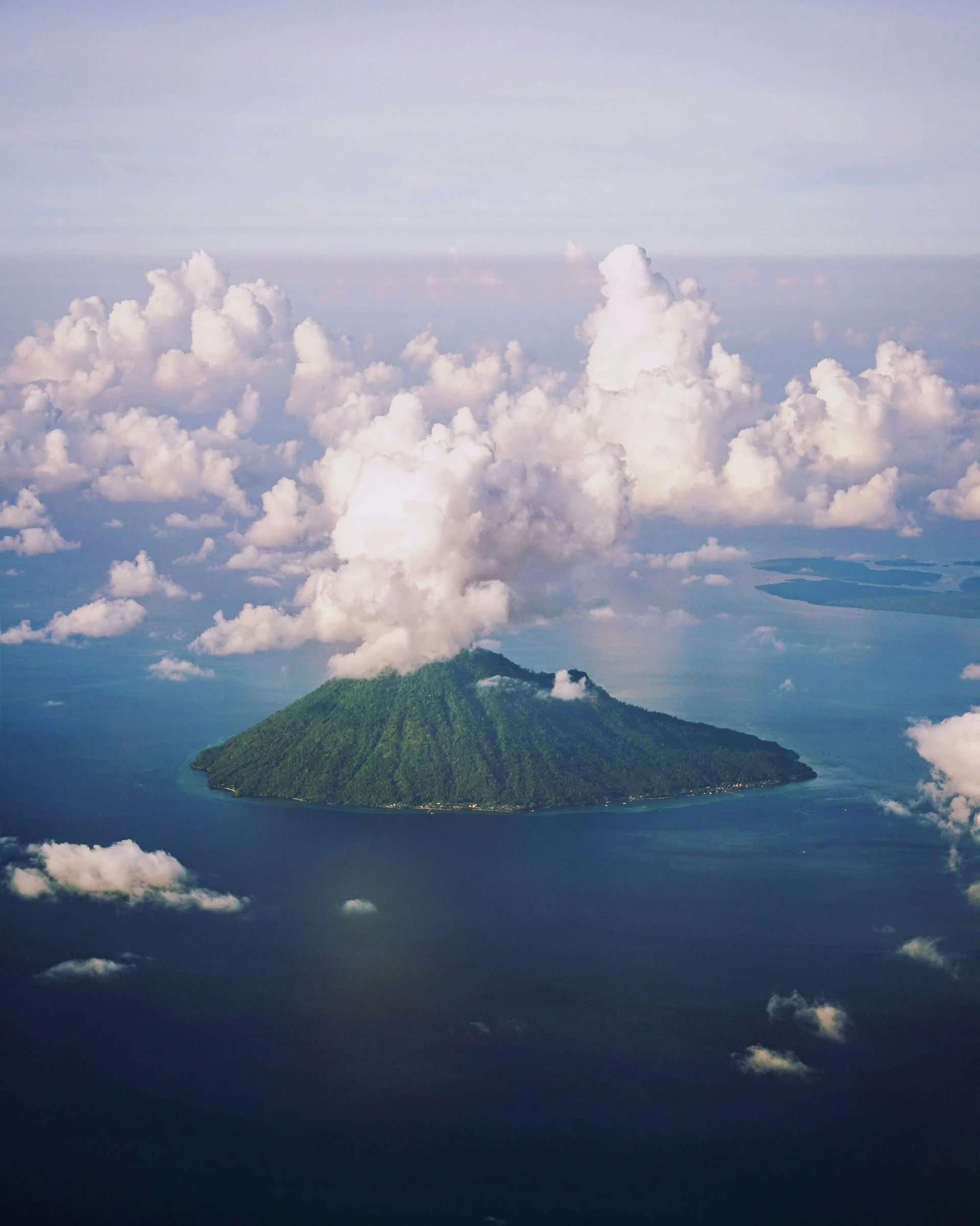
Manado
Tucked away in northern Sulawesi, Manado’s coastal waters and Bunaken National Park are a diver’s dream. Sheer coral walls plunge into the deep blue, exploding with sponges, sea fans and tropical fish, while the mainland coast hides muck‑diving gems with seahorses, ghost pipefish and mimic octopus. Dolphins and pilot whales sometimes cruise past, green turtles nap on the reef, and reef sharks and schooling jacks patrol the drop‑offs. Whether you like effortless drift dives along walls or critter hunting in sand and seagrass, Manado balances big‑fish thrills with macro treasures. Warm waters, friendly locals and laid‑back resorts make it perfect for both serious underwater photographers and casual holidaymakers.
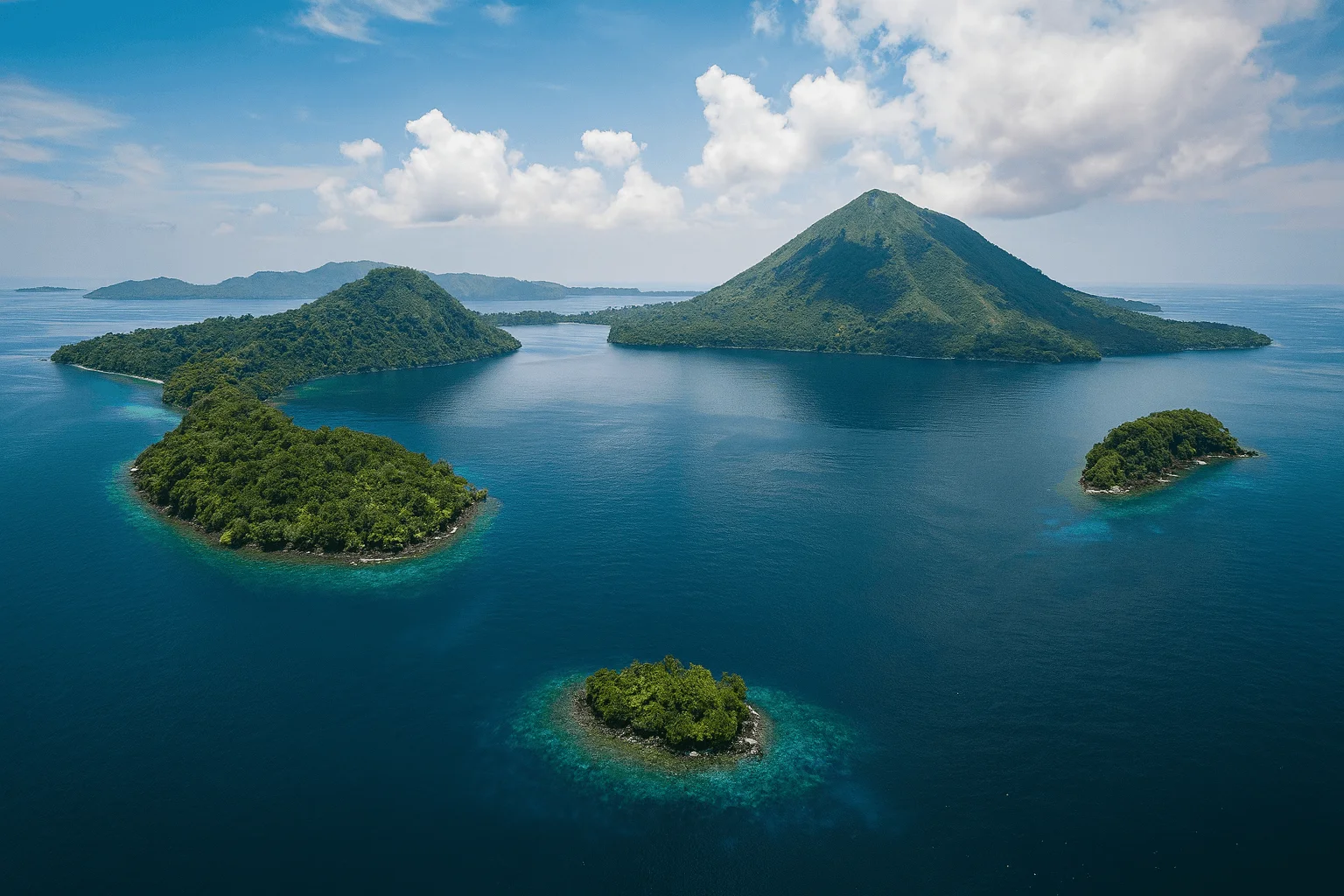
Banda Sea
Hidden between Indonesia’s Maluku Islands lies the Banda Sea – an untouched stretch of ocean famous for its schools of hammerhead sharks and abundant sea snakes. Part of the Coral Triangle, this remote sea spans over half a million square kilometres and plunges to depths beyond 7 km. Cold, nutrient‑rich upwellings feed pristine reefs bursting with life: imagine gliding along steep walls encrusted with giant gorgonians while dogtooth tuna, thresher sharks and squadrons of mobula rays cruise past. Volcanic islands such as Manuk and Gunung Api rise from the blue, their warm vents attracting banded sea kraits by the dozen and drawing divers from all over the world. Because there are no large towns here, the Banda Sea is usually explored on liveaboards – the reward is some of Indonesia’s wildest and most exhilarating diving.