Feather Star
Comatulida (feather stars; multiple families)
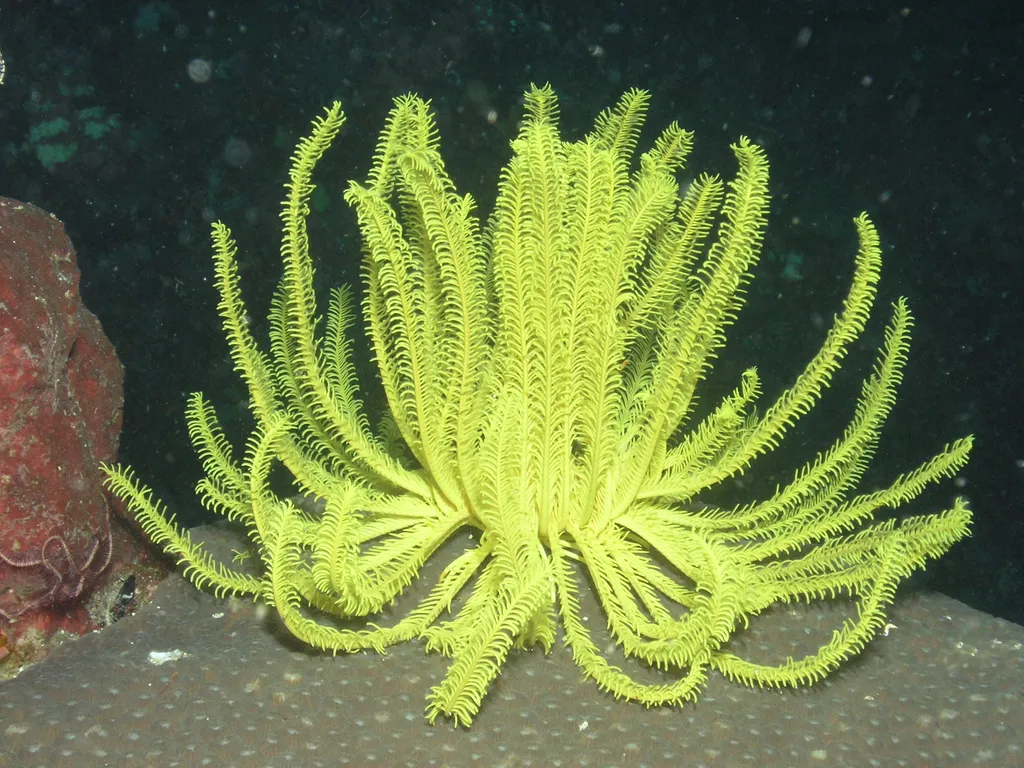
Photo by Rob / CC BY 2.0 via Wikimedia Commons
Feather stars—unstalked comatulid crinoids—are the living heirs of one of Earth's oldest animal designs. Fossil crinoids dominated Paleozoic seas; today's feather stars kept the feathery arm crown but dropped the stem, gripping reefs with cirri at the base of the cup and swimming when they need a new perch. On a typical Indo-Pacific wall you'll find them draped over sponges, tucked into gorgonian branches, or fanned open on a current line like a bouquet of living filters. They are not plants, not soft corals, and not sea fans—they are echinoderms with a water-vascular system, tube feet on the arms, and a mouth on the upper surface of the central calyx. For divers they are reef wallpaper with depth: color morphs shift by site, symbiotic shrimp and crinoid clingfish hide in the pinnules, and a disturbed animal can curl into a tight ball or pulse its arms to swim to the next holdfast. Learning to read feather stars turns every sponge head and sea whip into a searchable micro-habitat.
🔬Classification
📏Physical Features
🌊Habitat Info
⚠️Safety & Conservation
Identification Guide
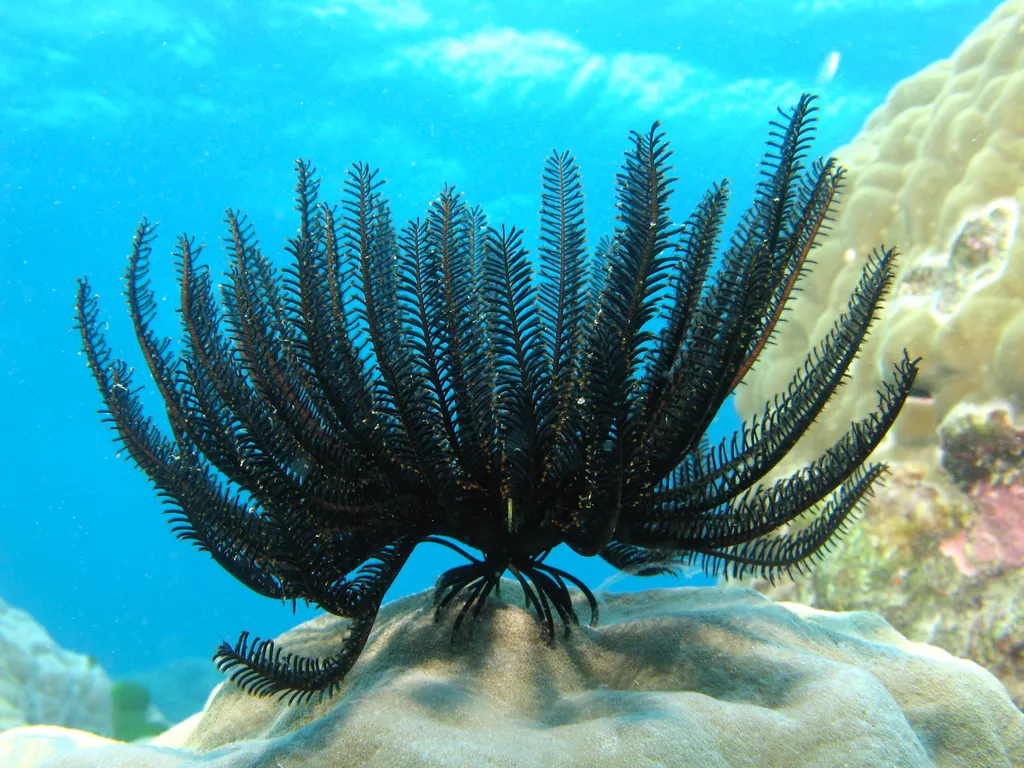
Photo by Preview_H / CC BY-SA 2.0 via Wikimedia Commons
Body plan
- Central calyx (cup) with mouth and anus on the upper (oral) surface
- 5 to 200+ arms depending on species; each arm bears rows of pinnules (side branches) → the "feather" look
- Cirri at the base: short, jointed, claw-like holdfasts—not a full stalk
vs. sea lily
- Feather stars (comatulids): unstalked adults; can walk/swim
- Sea lilies: retain a stalk into adulthood; mostly deep or restricted habitats divers rarely visit
vs. gorgonians / soft corals
- Gorgonians: 8-fold polyp symmetry, often one continuous axis; no echinoderm calyx
- Feather stars: 5-fold (pentaradial) arm arrangement from a distinct cup; arms independently mobile
Behavior cues
- Feeding posture: arms extended, pinnules perpendicular to current, often on exposed rock or whip coral tips
- Resting: arms folded inward → loose ball on substrate
- Disturbed: rapid arm flexion; some species swim by rhythmic arm beats
Color & size
- Extreme color polymorphism within and between species—don't ID from color alone
- Typical reef arm span 10–30 cm; density can be high on current-swept reefs (dozens per square meter in some Indo-Pacific bays)
Top 10 Fun Facts about Feather Star
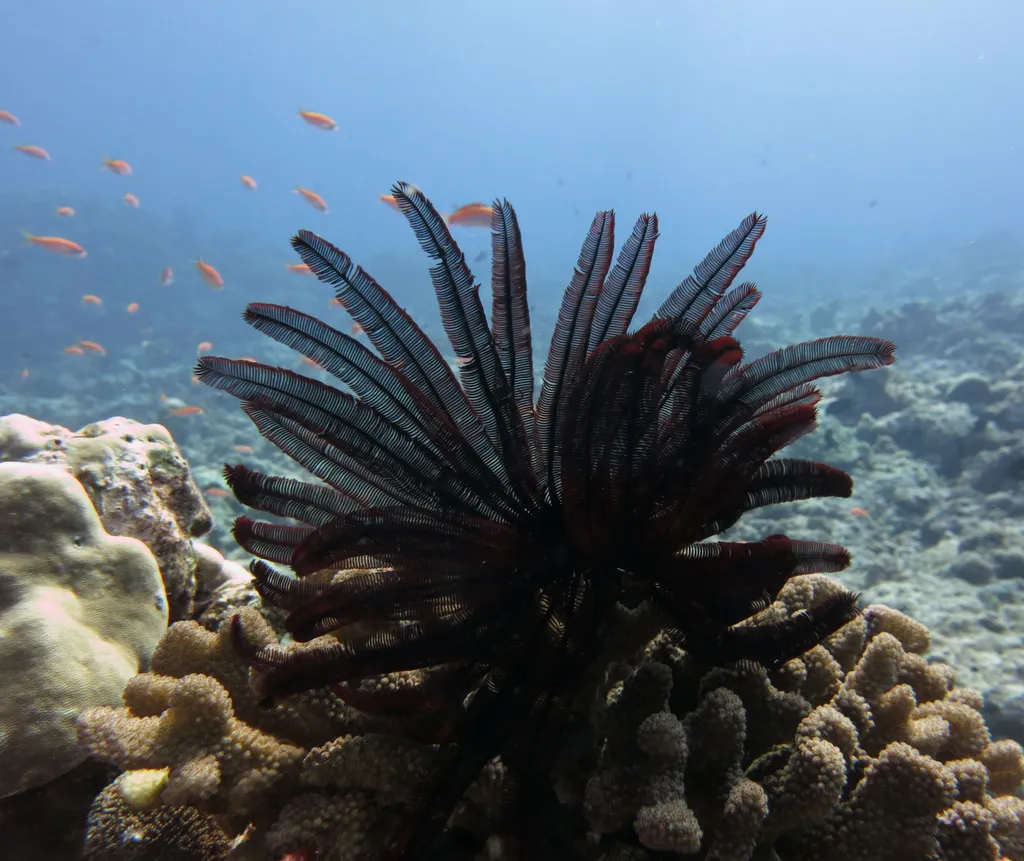
Photo by PoojaRathod / CC BY-SA 4.0 via Wikimedia Commons
1. Older Than Dinosaurs, Still on Your Reef
Crinoids appear in the fossil record roughly 450+ million years ago—among the oldest complex animal body plans still represented by living species. Feather stars are not "primitive leftovers"; they are a successful modern radiation with hundreds of comatulid species across tropical shelves and deep trenches.
2. They Dropped the Stalk and Learned to Commute
Juvenile comatulids often start with a short stem; adults shed it and anchor with cirri. When a perch fails—predator, surge, diver bump—many species swim by metachronal arm waves, then re-grip with cirri. That mobility is why you find them on sponges, whips, and walls instead of only on sand.
3. Each Arm Is a Filter Conveyor
Feeding arms extend pinnules into current. Cilia and tube feet move captured plankton along grooves toward the mouth on the calyx. Some species show multidirectional postures—different arm sets angled for attachment vs. filtration—visible to patient divers as a split "grip arms vs. food arms" layout.
4. Living Apartments for Crinoid Specialists
Feather stars host a symbiosis guild: crinoid clingfish, emperor-type shrimp, polychaete worms, and tiny snails use the crown as shelter and feeding platform. A "plain" crinoid shot often hides two or three other species if you pause and scan pinnules with a macro eye.
5. Density Can Be Absurd on Current Reefs
In Indo-West Pacific bays with strong tidal exchange, scientists have recorded very high local densities (tens to 100+ individuals per square meter on suitable rock). For divers that means feather stars aren't rare curios—they can be dominant benthic biomass on current-facing slopes.
6. Color Means Almost Nothing Underwater
White, black-orange, lemon-yellow, and banded morphs can occur within related species or across sites. Taxonomy relies on arm branching, cirri counts, and pinnule structure—field logs saying "feather star / comatulid" are honest; species-level ID often needs a specialist and a specimen.
7. Night vs. Day Is a Real Split
Many reef comatulids hide in crevices by day and crawl to exposed feeding stations at night. Others—especially in clear, current-rich outer reefs—feed fully exposed in daylight. Ask local guides which pattern dominates; it changes your dive schedule more than your camera settings.
8. Not Toxic, But Fragile
No venomous sting for divers at normal distance. Damage comes from breaking arms or cirri—regeneration is possible but costly. Crushed crowns on fragile perches (whip corals, soft sponges) are almost always buoyancy or fin mistakes, not malice.
9. Deep Roots in Echinoderm Family Tree
Crinoids sit alongside sea stars, brittle stars, sea urchins, and sea cucumbers in Echinodermata, all sharing radial symmetry (often pentaradial) and a water-vascular system. Feather stars are the branch most divers confuse with sessile cnidarians—until they watch one walk.
10. Indicator of Healthy Current and Substrate
High feather-star abundance usually signals clean, oxygenated water, hard substrate, and adequate plankton supply. Trawling, siltation, and reef rubble burial hit crinoids hard because cirri need grip points. Seeing diverse color morphs on a wall is a quiet sign the filter-feeding layer of the reef is still working.
Diving & Observation Notes
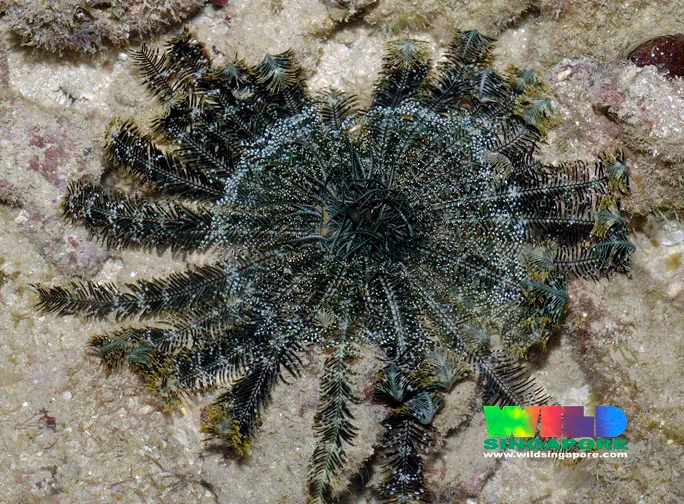
Photo by Ria Tan from singapore / CC BY-SA 2.0 via Wikimedia Commons
🧭 Where to look
Scan current-facing rock, whip coral tips, sponge heads, and gorgonian branches on walls and slopes. Outer reef zones (Bunaken, Wakatobi, Raja Ampat, GBR) often show diurnal, exposed animals; lagoon and muck margins may require night dives to see crowns fully open. Check the lee side of the same structure for curled "balls" at rest.
🌊 Reading posture
Extended, multidirectional arms = feeding. Tight ball = resting or stressed. If an animal starts pulsing arms toward open water, back off—you're blocking its escape route or perch recovery.
📷 Photography
- Wide context sells the reef-ecology story: crinoid on whip + current + color morph
- Macro for symbionts in pinnules; minimum focus distance matters on dense crowns
- Side lighting reveals pinnule texture; avoid forcing animals off delicate perches for "better angles"
🤝 Ethics & buoyancy
Never peel a feather star off its holdfast. Fin and knee strikes break arms and damage whip corals/sponges simultaneously. Neutral hover, single-hand reef touch only if required for safety—not for framing.
🗺️ Site mindset
Treat IDs as comatulid morph unless you're with a biologist. Diversity is high; logs noting color, perch type (whip vs. rock), and depth help science more than a guessed Latin name.
Best Places to Dive with Feather Star
Bunaken
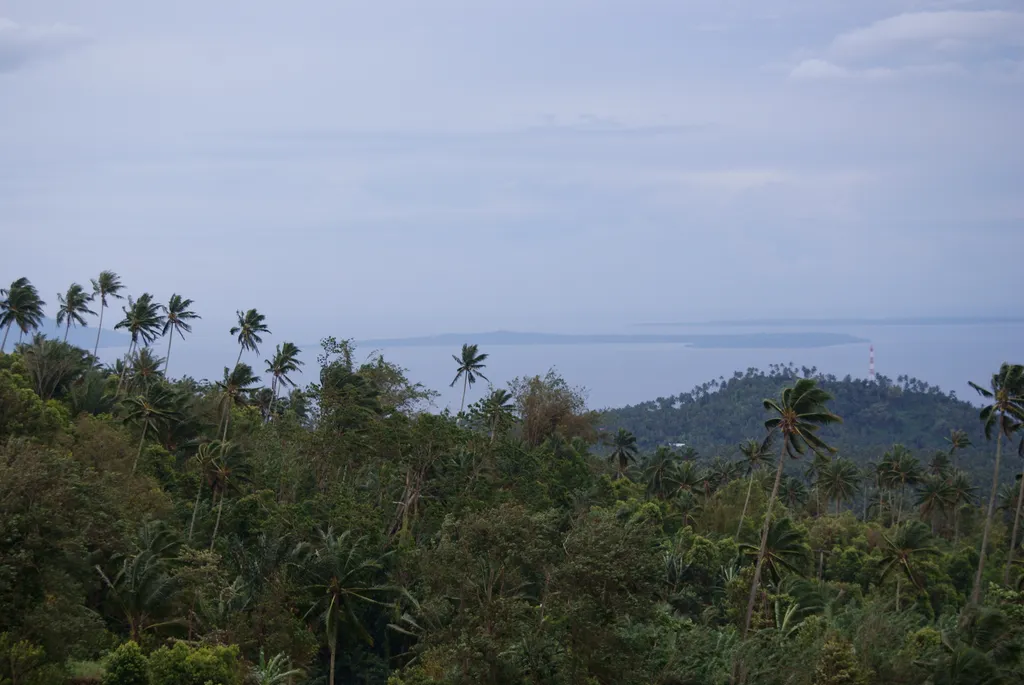
Bunaken National Park is wall-diving country: five volcanic islands—Bunaken, Manado Tua, Siladen, Mantehage, and Nain—ringed by drop-offs that fall from snorkel depth into hundreds of metres of blue. This is not the muck slopes of the Manado mainland; it is vertical reef, drift lines, and current-fed fish schools. The signature move is simple—roll off the boat at Lekuan or Muka Kampung, swim the shallow turtle flats, then hang on the wall while pyramid butterflyfish, fusiliers, and Napoleon wrasse stream past. Reef sharks patrol the corners, eagle rays cruise the blue, and barrel sponges the size of oil drums frame every wide-angle shot. Warm 27–29°C water, park protection since 1991, and island resorts that put you on the first boat at 08:00 make Bunaken the classic North Sulawesi wall trip—fly into MDC, transfer to the strait, and live on the reef for a week.
Great Barrier Reef
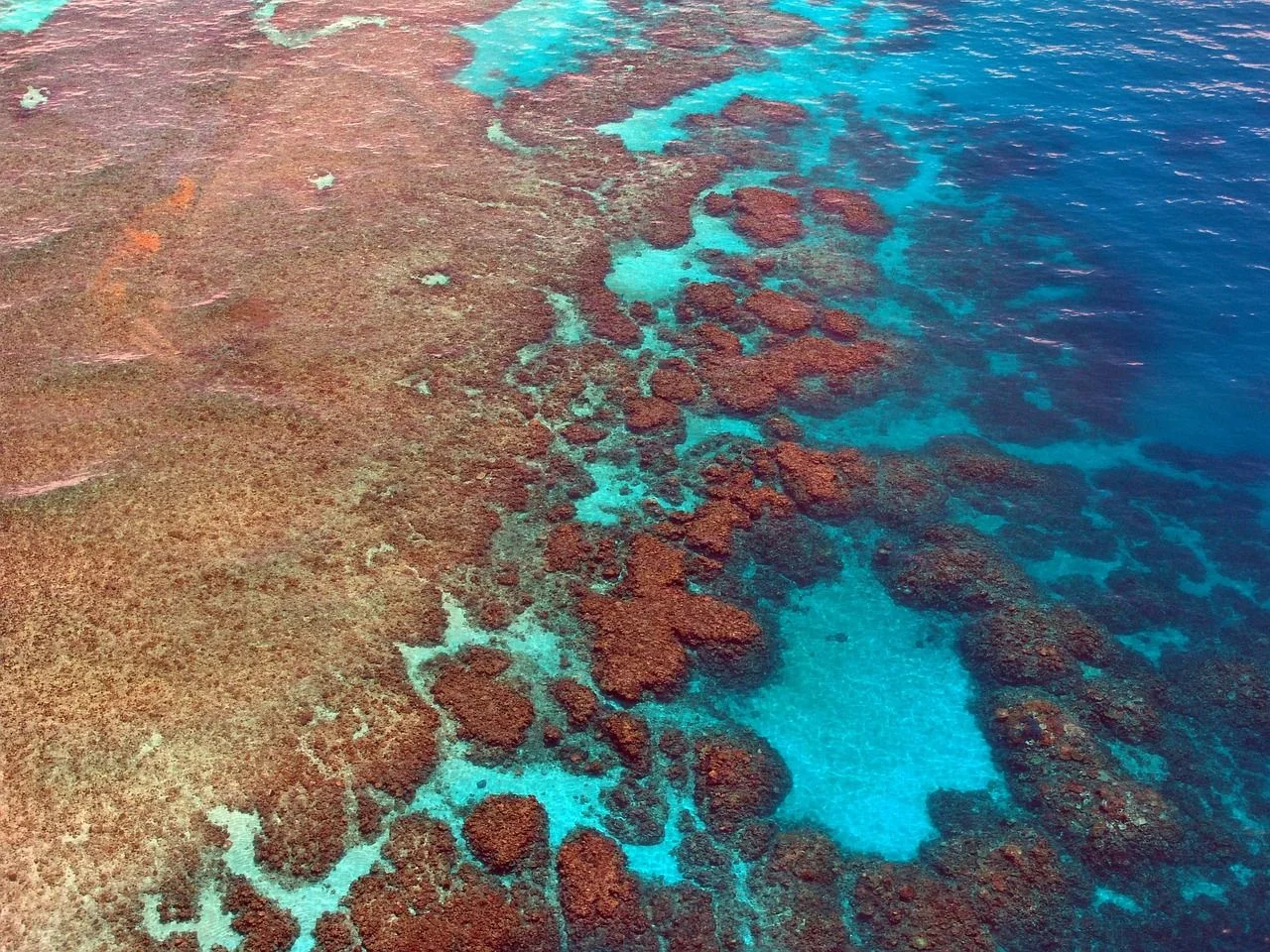
The Great Barrier Reef stretches for more than 2,300 km along Australia’s Queensland coast and is Earth’s largest coral ecosystem. With over 2,900 individual reefs, hundreds of islands, and a staggering diversity of marine life, it’s a bucket‑list destination for divers. Outer reef walls, coral gardens and pinnacles support potato cod, giant trevallies, reef sharks, sea turtles, manta rays and even visiting dwarf minke and humpback whales. Divers can explore historic wrecks like the SS Yongala, drift along the coral‑clad walls of Osprey Reef or mingle with friendly cod at Cod Hole. Whether you’re a beginner on a day trip from Cairns or an experienced diver on a remote liveaboard, the Great Barrier Reef offers unforgettable underwater adventures.
Raja Ampat
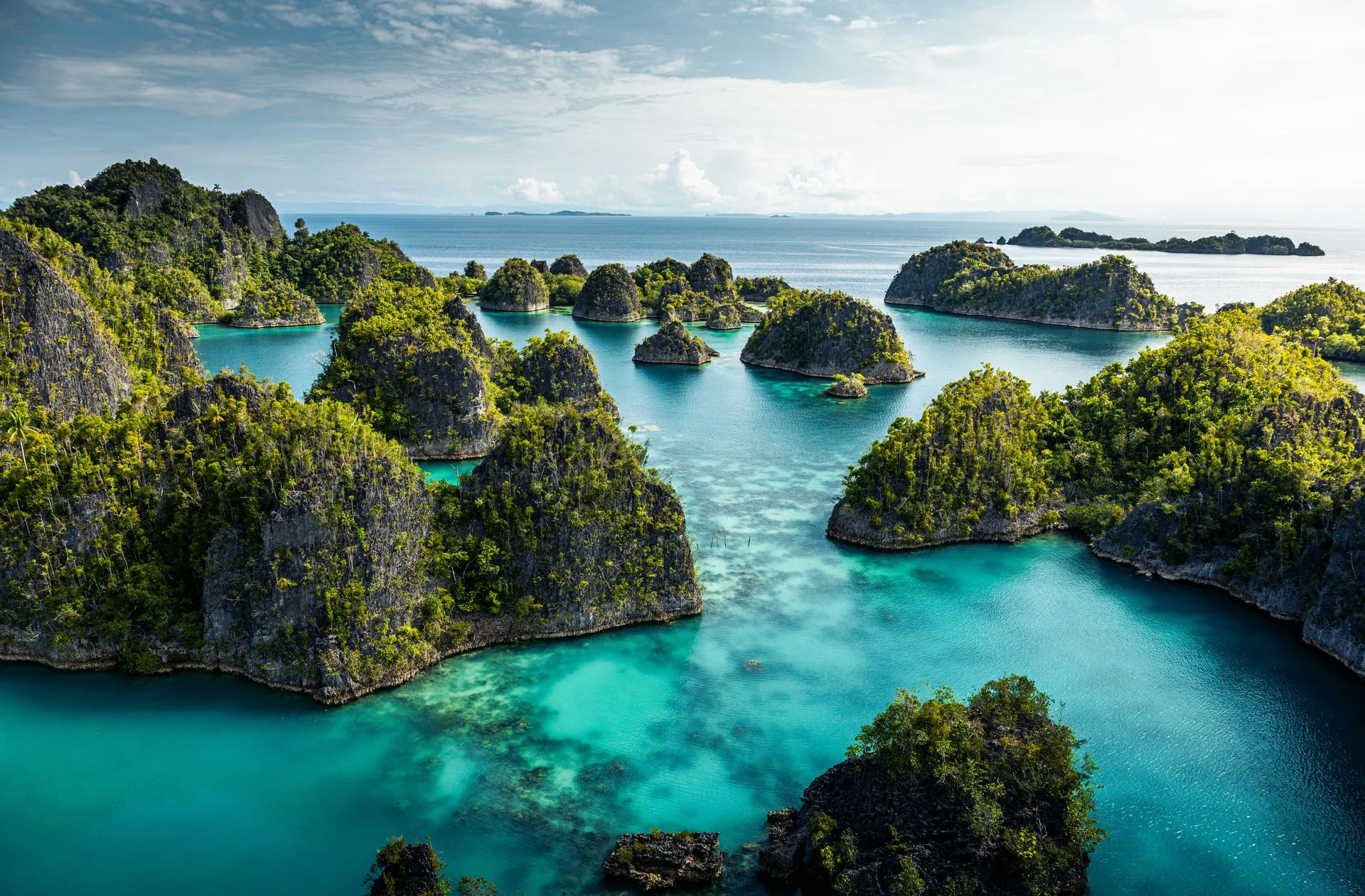
Raja Ampat, the “Four Kings,” is an archipelago of more than 1,500 islands at the edge of Indonesian West Papua. Its reefs sit in the heart of the Coral Triangle, where Pacific currents funnel nutrients into shallow seas and feed the world’s richest marine biodiversity. Diving here means gliding over colourful walls and coral gardens buzzing with more than 550 species of hard and soft corals and an estimated 1,500 fish species. You’ll meet blacktip and whitetip reef sharks on almost every dive, witness giant trevally and dogtooth tuna hunting schools of fusiliers, and encounter wobbegong “carpet” sharks, turtles, manta rays and dolphins. From cape pinnacles swarming with life to calm bays rich in macro critters, Raja Ampat offers endless variety. Above water, karst limestone islands and emerald lagoons provide spectacular scenery between dives.
Maldives
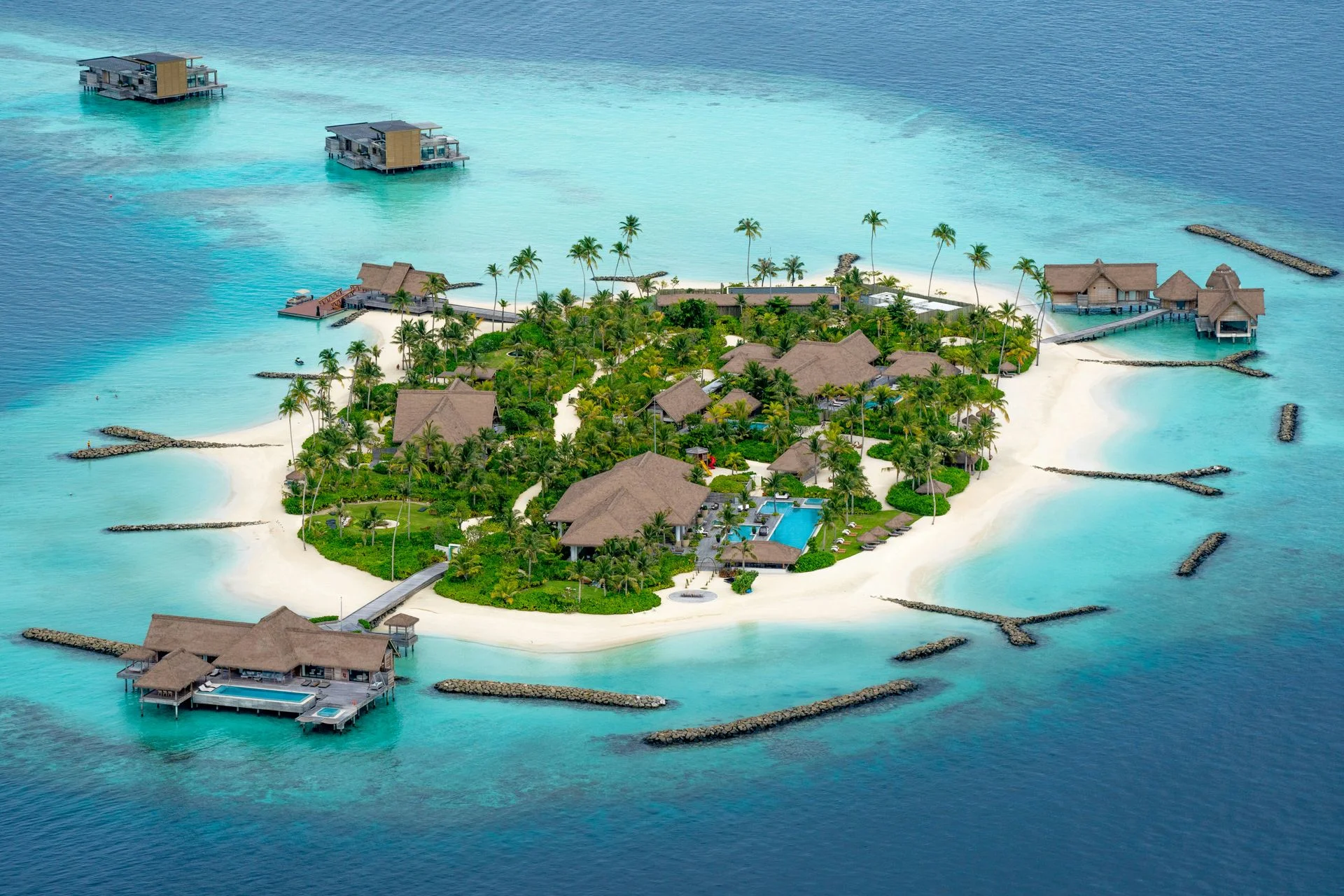
Scattered across the Indian Ocean like strings of pearls, the Maldives’ 26 atolls encompass more than a thousand low‑lying islands, reefs and sandbanks. Beneath the turquoise surface are channels (kandus), pinnacles (thilas) and lagoons where powerful ocean currents sweep past colourful coral gardens. This nutrient‑rich flow attracts manta rays, whale sharks, reef sharks, schooling jacks, barracudas and every reef fish imaginable. Liveaboards and resort dive centres explore sites such as Okobe Thila and Kandooma Thila in the central atolls, manta cleaning stations in Baa and Ari, and shark‑filled channels like Fuvahmulah in the deep south. Diving here ranges from tranquil coral slopes to adrenalin‑fuelled drifts through current‑swept passes, making the Maldives a true pelagic playground.
Lembeh
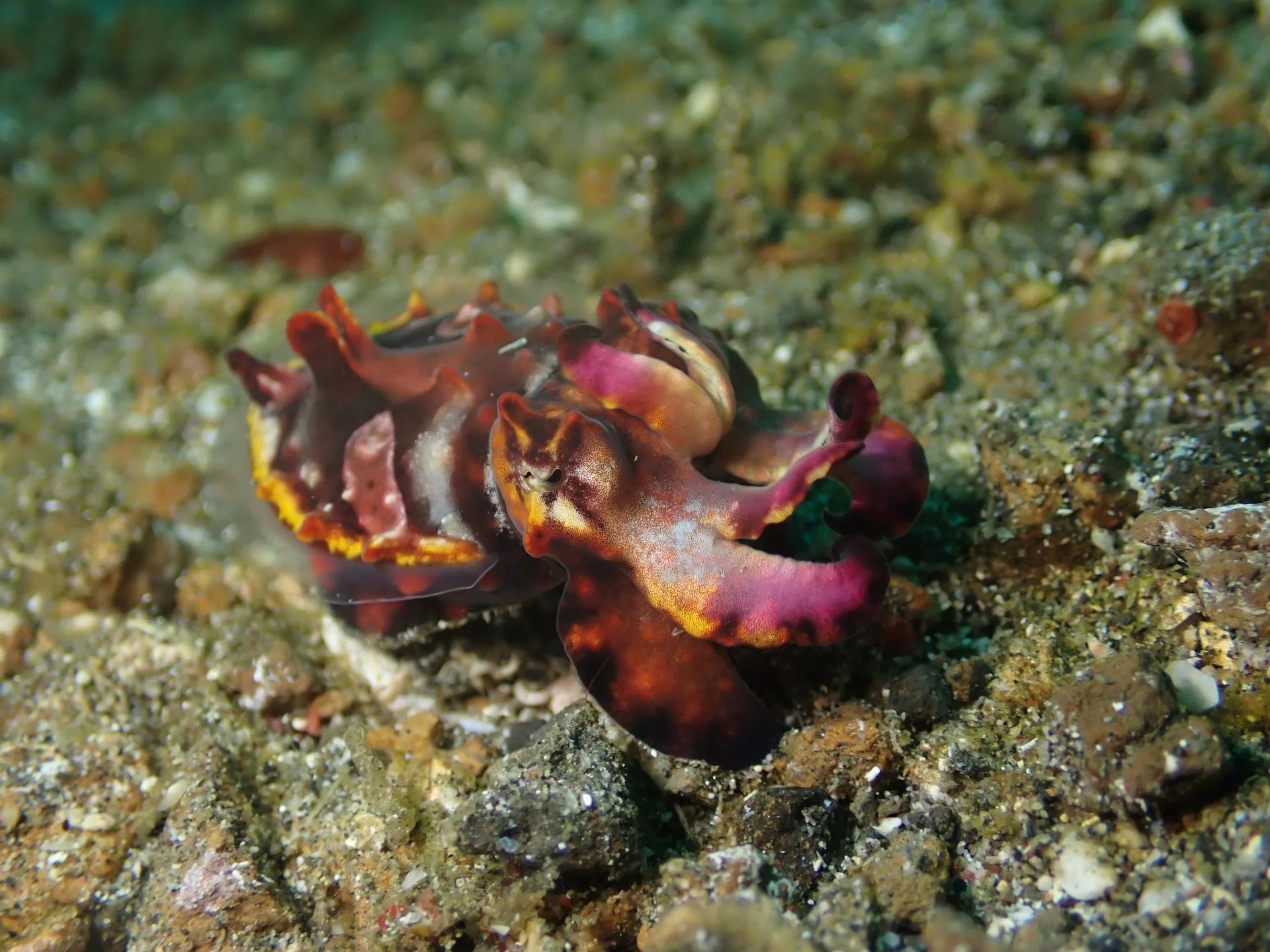
The Lembeh Strait in North Sulawesi has become famous as the muck‑diving capital of the world. At first glance its gently sloping seabed of black volcanic sand, rubble and discarded debris looks bleak. Look closer and it is teeming with weird and wonderful life: hairy and painted frogfish, flamboyant cuttlefish, mimic and blue‑ringed octopuses, ornate ghost pipefish, tiny seahorses, shrimp, crabs and a rainbow of nudibranchs. Most dives are shallow and calm with little current, making it an ideal playground for macro photographers. There are a few colourful reefs for a change of scenery, but Lembeh is all about searching the sand for critter treasures.
Wakatobi
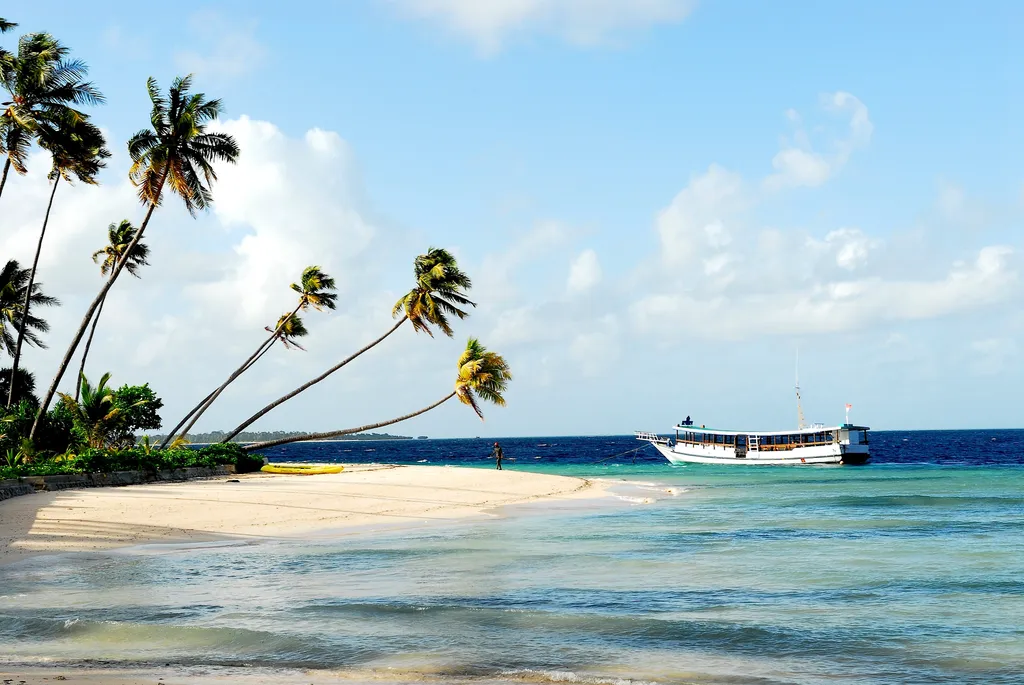
Wakatobi National Park sits on the southeastern rim of Sulawesi, named from its four main islands—Wangi-Wangi, Kaledupa, Tomia, and Binongko. It holds some of the healthiest coral coverage in the Coral Triangle, with walls, seamounts, and fringing reefs that marine biologists still treat as a reference system. Visibility regularly hits 30 m and can stretch past 50 m on calm outer-reef days. Currents are usually mild and predictable, so you get long bottom times on colorful hard-coral gardens instead of fighting blue water. The signature experience is Wakatobi’s House Reef—walk-in shore diving a short swim from the jetty—backed by more than 40 day-boat sites, from beginner pinnacles like Roma to the knife-edge walls of Blade.
Komodo
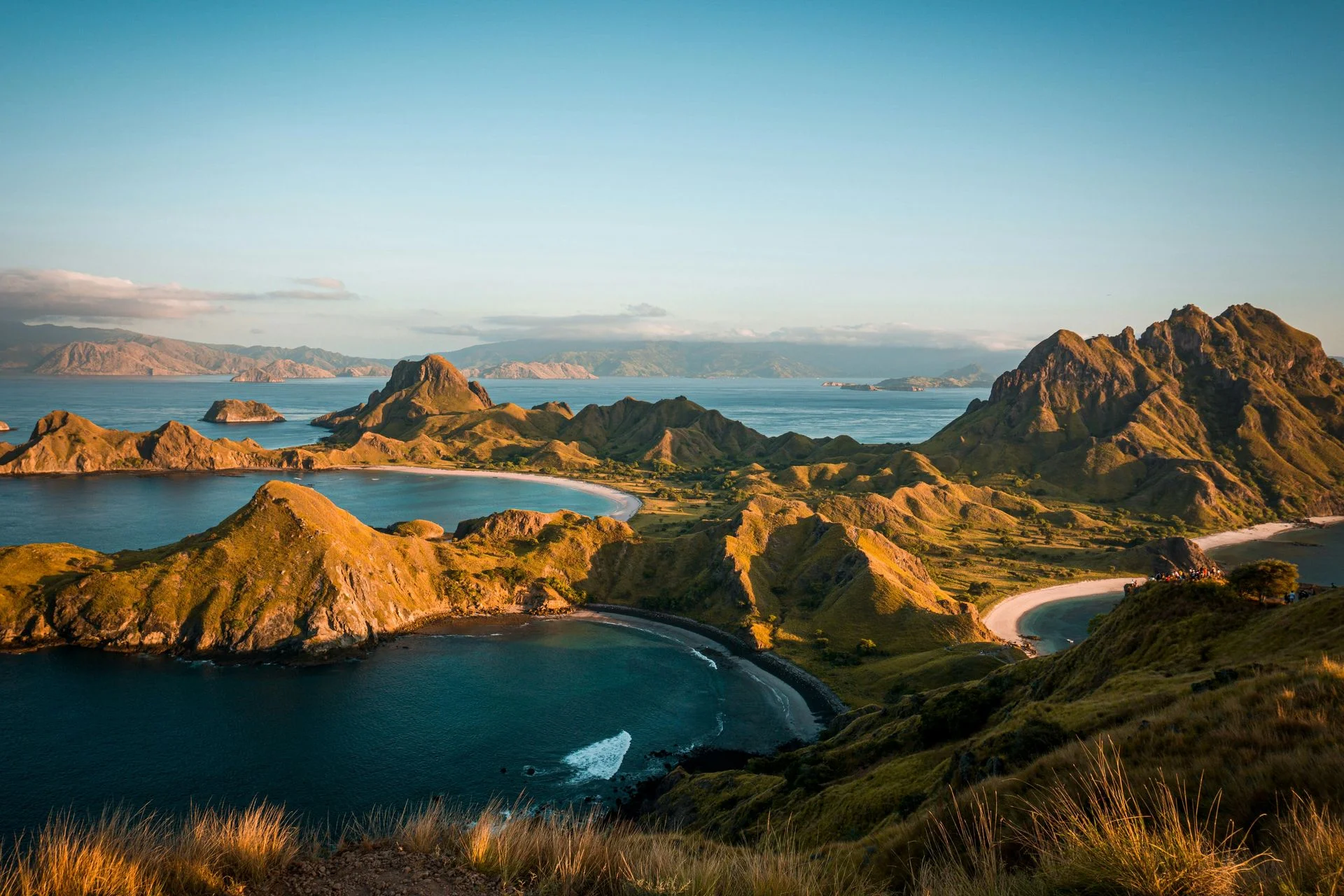
Komodo National Park is a diver’s paradise full of marine diversity: expect healthy coral gardens, reef sharks, giant trevallies, countless schools of fish, and frequent manta ray sightings at sites like Manta Point and Batu Bolong. Drift dives and dramatic reef structures add excitement, while both macro lovers and big-fish fans will find plenty to love. Above water, the wild Komodo dragons roam, giving a touch of prehistoric wonder to the whole trip.
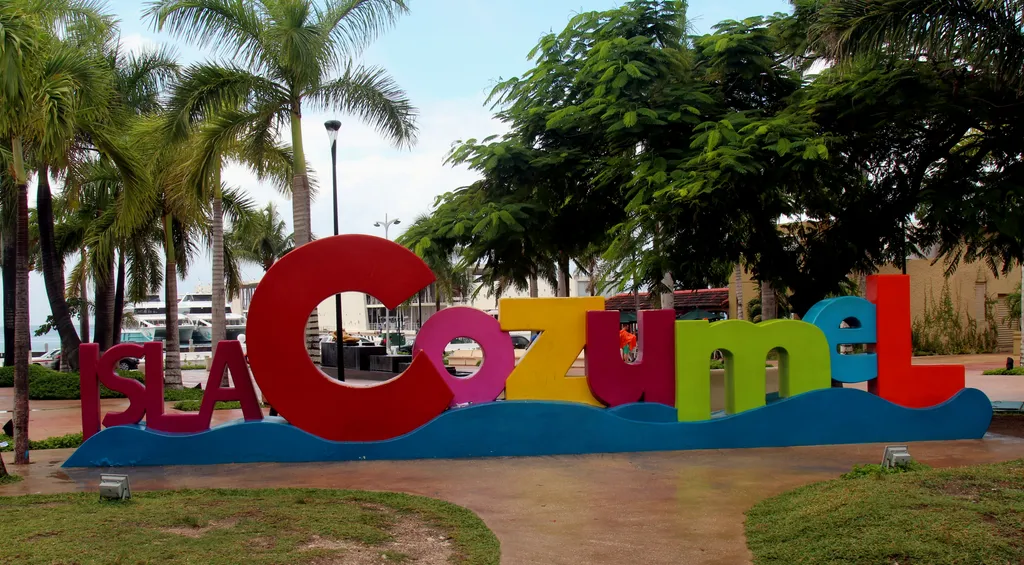
Cozumel
Cozumel sits on the Mesoamerican Barrier Reef—the second-largest reef system on the planet—and earned its place in dive history when Jacques Cousteau filmed its walls in the 1960s. Today the island is a boat-centric Caribbean classic: two-tank mornings from San Miguel, drift along coral cliffs in gin-clear water, surface for ceviche between dives. Almost everything worth diving lies inside Arrecifes de Cozumel National Marine Park, where mooring buoys, no-gloves rules, and park fees keep the reef in remarkably good shape. The signature experience is drift diving. Prevailing currents carry you along Santa Rosa, Colombia, and Palancar while you fin minimally and watch eagle rays, turtles, and schooling jacks slide past the drop-off. Walls plunge from 15 m to blue infinity; swim-throughs at Palancar Caves and the advanced cavern entry at Devil's Throat reward divers who like topography. Macro hunters scan for the splendid toadfish—an endemic bottom-dweller found almost nowhere else. Night dives on Paradise Reef and the C-53 wreck round out a week that feels busy without ever rushing. What Cozumel is not: a whale-shark island (head to Isla Mujeres or Holbox for that) or a liveaboard hub—operations are day boats from town. Watch the Norte wind in winter; it can cancel southern sites like Punta Sur. Bring cash for park fees, tip your crew, carry an SMB, and consider nitrox—you'll want the extra bottom time on these drifts.