
Harlequin Shrimp
Hymenocera picta / Hymenocera elegans
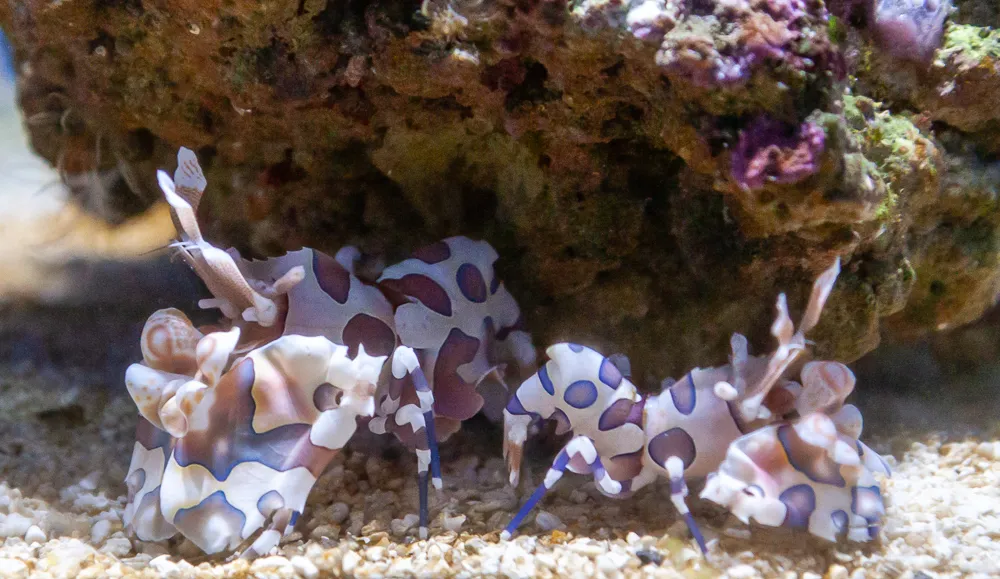
Photo by Julia Sumangil / CC BY-SA 4.0 via Wikimedia Commons
Imagine a shrimp dressed for a ball - porcelain-white body adorned with purple and red spots, oversized paddle-shaped claws held delicately aloft like a dancer's arms. Now imagine that this exquisitely beautiful creature is actually a serial killer that specializes in torturing sea stars to death over the course of weeks. That's the harlequin shrimp: nature's gorgeous nightmare. These tiny crustaceans (barely 5cm long) are so hyper-specialized that they eat nothing but living starfish, which they hunt in monogamous pairs, flip upside down to immobilize, then slowly dismember and consume alive, starting with the arm tips and working inward. For divers, finding a harlequin shrimp pair during their gruesome feast is both mesmerizing and horrifying - like stumbling upon a crime scene where the perpetrator is too beautiful to arrest.
🔬Classification
📏Physical Features
🌊Habitat Info
⚠️Safety & Conservation
Identification Guide
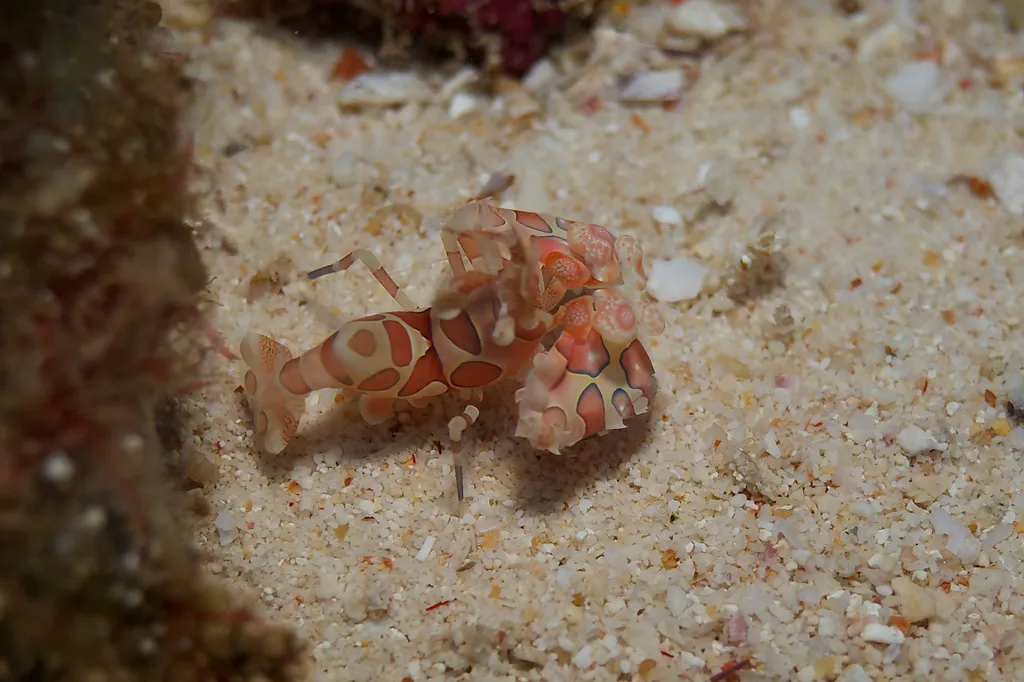
Photo by Elias Levy / CC BY 2.0 via Wikimedia Commons
- Ornate Coloration: Cream/white base with bold purple, red, or blue spots
- Paddle Claws: Massively enlarged, flattened first pair of legs like decorative fans
- Small Size: Usually 2-5cm, females larger than males
- Spots Pattern: Large irregular blotches, often with colored borders
- Body Shape: Rounded, chunky body unlike typical shrimp
- Antennae: Short, held forward
- Always in Pairs: Almost never seen alone - look for the partner
- With Prey: Often found near or on top of an immobilized sea star
Top 10 Fun Facts about Harlequin Shrimp
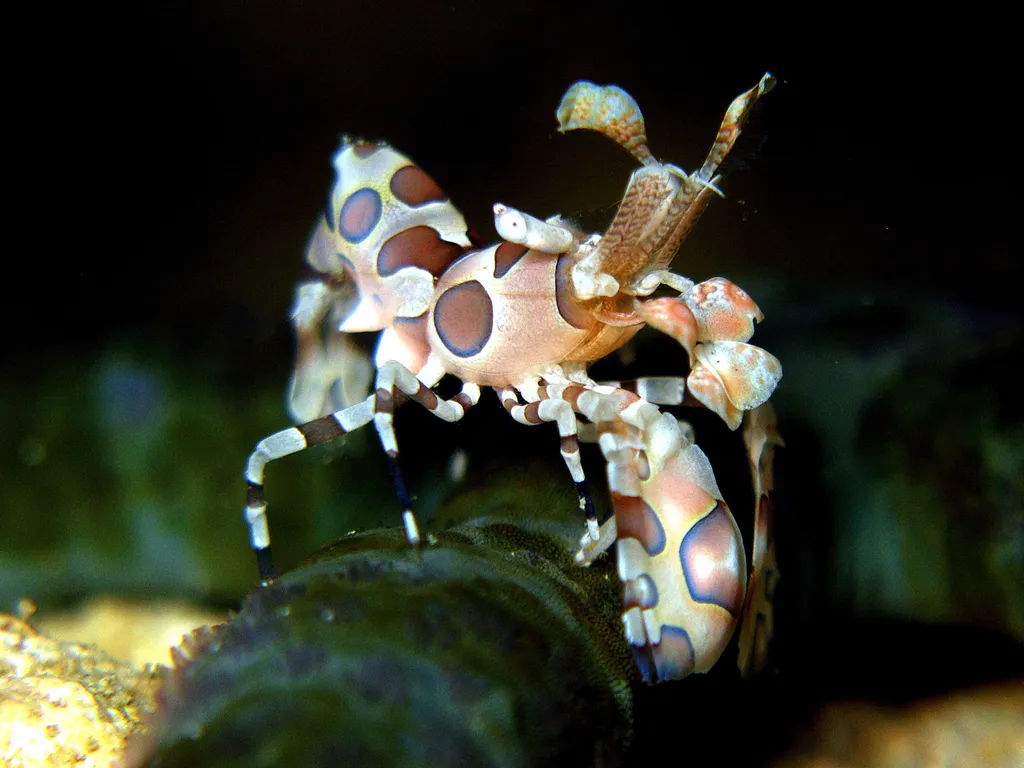
Photo by Chad Ordelheide / CC BY-SA 3.0 via Wikimedia Commons
1. Starfish Serial Killers: The Most Specialized Diet
Harlequin shrimp are obligate predators of sea stars - they eat nothing else. No fish, no algae, no detritus. Just starfish. This extreme dietary specialization makes them one of the ocean's pickiest eaters. In aquariums, keepers must constantly supply live starfish or the shrimp will starve. Different starfish species have different nutritional value, and harlequin shrimp show preferences, often favoring certain types. This specialization likely evolved because starfish are abundant, slow-moving, and offer substantial nutrition - but it's a risky strategy that ties the shrimp's survival completely to starfish availability.
2. The Torture Method: Eating Prey Alive for Weeks
Here's where it gets dark. Harlequin shrimp don't kill their prey quickly - they keep starfish alive as long as possible while consuming them. After flipping the starfish upside-down (rendering its tube feet useless for escape), they begin eating from the tips of the arms, working slowly inward toward the central disc. They consume tube feet, skin, and soft tissues while carefully avoiding vital organs. A large starfish can feed a pair of harlequin shrimp for 1-2 weeks, during which the starfish remains alive but helpless. Some starfish can even regenerate tissue as it's being eaten, extending the feeding period. It's like a horror movie, except it's real and the monster is adorable.
3. Power Couples: Monogamous Partnerships
Harlequin shrimp form lifelong monogamous pairs, staying together for years and cooperatively hunting and feeding. The pair maintains a territory - often a specific coral head or rock outcrop - which they defend against other harlequin shrimp. During hunts, they work as a team: one shrimp might cut the starfish's tube feet while the other pulls it away from the reef. When feeding, they share the meal peacefully, often positioning themselves on opposite sides of the starfish. Research shows that paired harlequin shrimp have lower stress levels than solitary individuals. It's surprisingly romantic - except for the whole "torturing starfish together" part.
4. Sexual Dimorphism: Ladies First
Female harlequin shrimp are noticeably larger than males, sometimes nearly twice the size. This size difference (sexual dimorphism) is unusual in the shrimp world and reflects their cooperative hunting strategy - the larger female can handle bigger starfish, while the smaller male assists. Females also have larger, more elaborate spots. Despite the size difference, pairs seem to have egalitarian relationships, sharing food and territory maintenance. The larger female isn't dominant in an aggressive sense; she's simply built for different tasks in the partnership.
5. The Paddle Claws: Form Follows Function
Those oversized, flattened claws (technically their first pair of legs, called chelipeds) are one of nature's most ornate appendages - shaped like decorative paddles or fans and often brightly colored with spots that mirror the body pattern. While beautiful, they're also functional: the flat surface provides leverage for flipping and dragging starfish, and the pincer tips can snip tube feet and pierce starfish skin. The claws are more "multipurpose tool" than weapon, used for hunting, defense, communication (waving displays), and even courtship. They're held high and forward, giving harlequin shrimp a perpetual "surprise!" posture.
6. Reef Protectors: Enemy of the Crown-of-Thorns
While most starfish are relatively benign, the crown-of-thorns starfish (Acanthaster planci) is a voracious coral predator that can devastate entire reef systems. Enter the harlequin shrimp, which happily feeds on crown-of-thorns despite their venomous spines. In this context, harlequin shrimp are actually reef protectors, providing natural biological control of these destructive starfish. Some scientists have explored using harlequin shrimp in reef restoration efforts, though their slow feeding rate means they're not a quick solution to crown-of-thorns outbreaks. Still, it's nice to know the beautiful torturer has a helpful side.
7. Color Variation: Geography Makes the Spots
There are two recognized species with distinct color patterns. Hymenocera picta (primarily Hawaii and Eastern Pacific) typically has reddish-purple spots with yellow or orange borders. Hymenocera elegans (Indo-Pacific) tends toward blue-purple or brown-purple blotches. However, variation exists within species, and some researchers debate whether they should be considered separate species or geographic variants. Diet may also influence color intensity - shrimp fed certain starfish species sometimes develop more vibrant spots, suggesting pigments from prey are incorporated into the shrimp's appearance.
8. Slow-Motion Ballet: Graceful Hunters
Despite being predators, harlequin shrimp move with surprising elegance and slowness. Their hunting style is more "careful stalking" than "pouncing" - they approach starfish deliberately, use their claws and antennae to investigate, then methodically work to flip the prey. Even when feeding, they move with delicate, dance-like motions, using their paddle claws almost like ballet dancers use their arms. This grace makes them mesmerizing subjects for photography and videography - you can watch them for extended periods without much camera movement needed.
9. Territorial Homebodies
Once a harlequin shrimp pair establishes territory, they rarely relocate. Divers frequently report finding the same pair in the exact same spot for months or even years. They create a "home base" - often a small cave, coral crevice, or rubble pile - where they store captured starfish and retreat when disturbed. This territorial fidelity makes them great photo subjects; if you find a pair and note the location, you can return repeatedly to document their behavior. It also means populations are vulnerable to habitat destruction, as displaced pairs may not successfully find new territories.
10. The Aquarium Trade Dilemma
Harlequin shrimp's stunning appearance makes them highly sought after for marine aquariums, but their specialized diet creates ethical and practical challenges. Keeping them alive requires constant supply of live starfish - expensive, difficult to source sustainably, and arguably cruel both to the shrimp (if starfish supply fails) and the starfish (obvious reasons). Some aquarists breed starfish specifically as harlequin shrimp food, creating a bizarre scenario where one beautiful creature is raised to be slowly tortured by another beautiful creature, all so humans can watch. This has sparked debates about whether species with such specialized needs should be kept in captivity at all.
Diving & Observation Notes
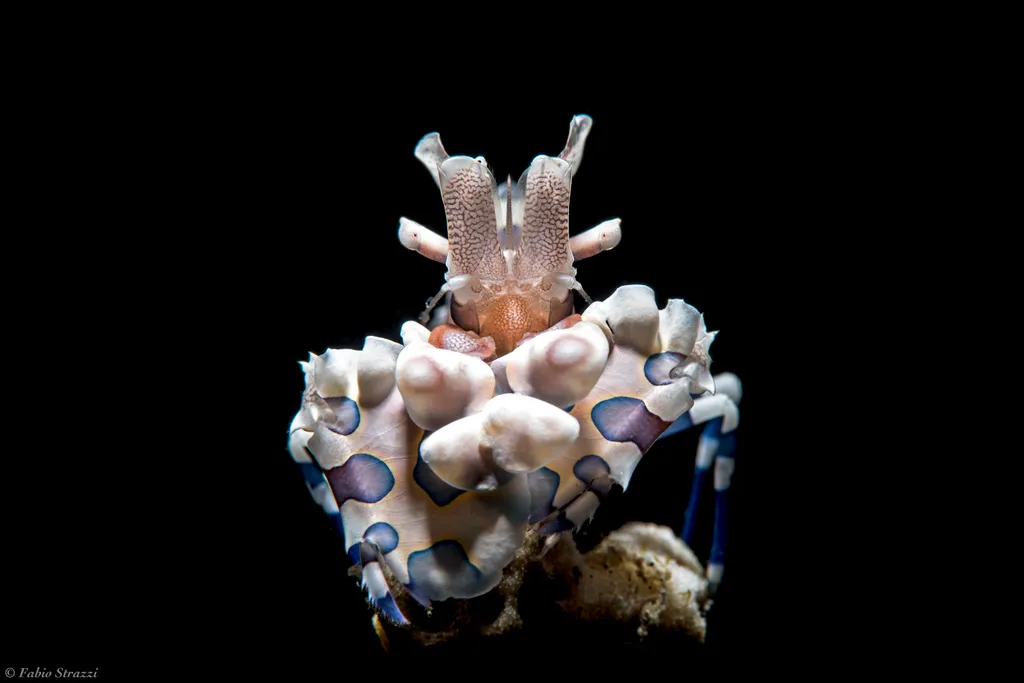
Photo by Fabiostrazzi / CC BY 4.0 via Wikimedia Commons
🧭 Finding Harlequin Shrimp
Cryptic but predictable—once you know where to look.
- The Habitat: Look in coral rubble zones, under plate corals, or in small rocky crevices.
- Follow the Starfish: Abundant blue Linckia starfish often mean harlequin shrimp are nearby.
- Territorial: Pairs stay in the same spot for months. Ask guides for known locations.
🤿 Behavior & Observation
- The Feast: If you find them on a starfish, watch how they work together to flip and dismantle it.
- Claw Waving: Males may wave their large paddle claws to signal or defend territory.
- Don't Touch: Never move the starfish to get a better view; it disrupts their feeding and stresses them.
📸 Photo Tips
- Macro Focus: A 60mm or 100mm macro lens is essential for these small (2-5cm) subjects.
- Lighting: Use side lighting or a snoot to highlight their ornate spots and avoid blowing out their white bodies.
- Composition: Try to get both partners in the frame, or focus on the unique paddle-shaped claws.
- Background: A black background (high shutter speed/small aperture) makes their colors pop.
⚠️ Ethics
- No Collection: Never take them for aquariums; they are difficult to keep and require live starfish.
- Respect the Hunt: Observe the predation without interfering. It's brutal but natural.
- Minimize Disturbance: Don't destroy their rubble home trying to find them.
🌏 Best Locations
- Lembeh Strait (Indonesia): The muck diving capital is famous for them.
- Bali (Tulamben/Seraya): Reliable sightings on rubble slopes.
- Anilao (Philippines): Excellent macro destination with frequent encounters.
- Hawaii: Home to the endemic Hymenocera picta with distinct red/purple spots.
Best Places to Dive with Harlequin Shrimp
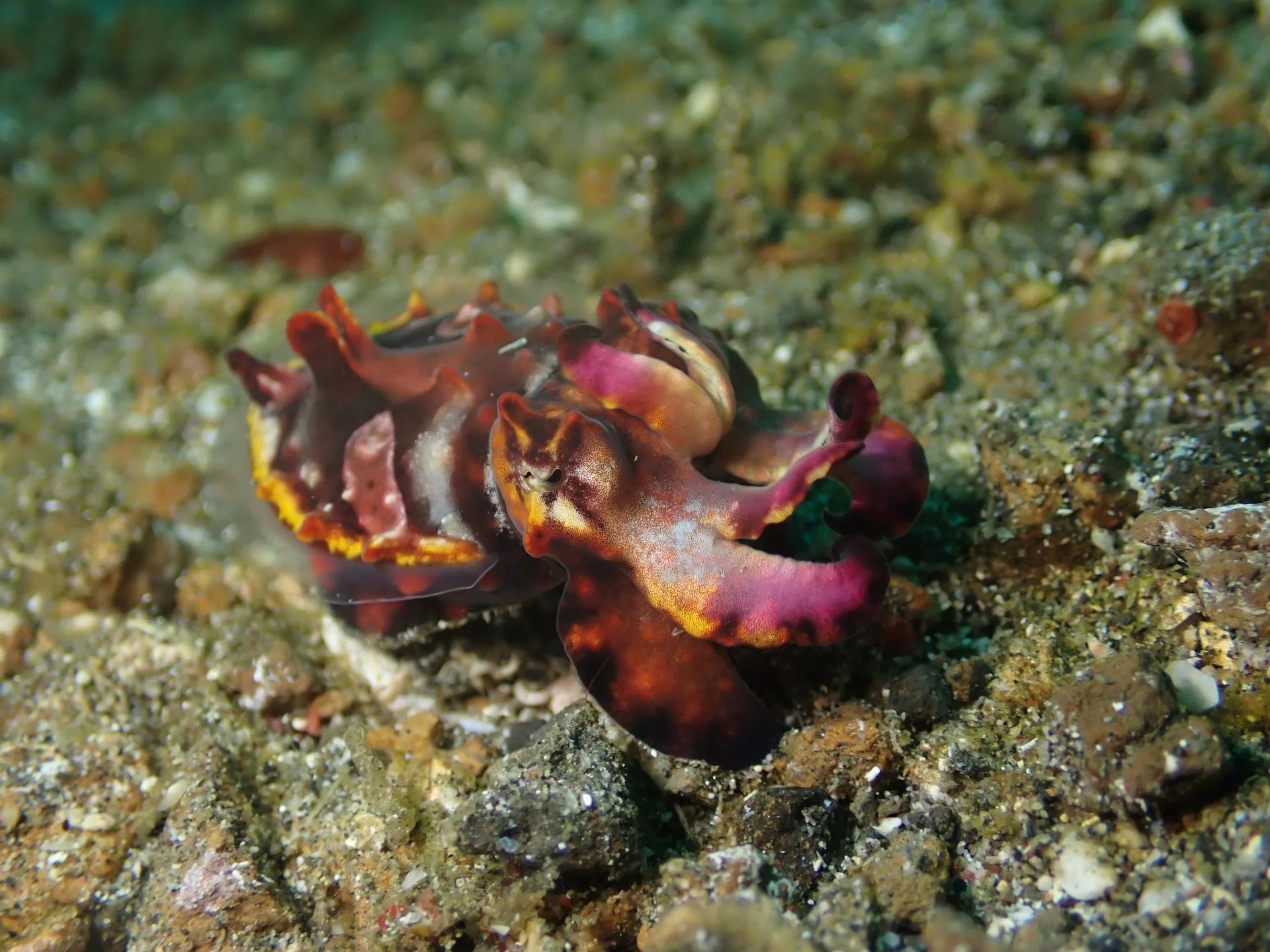
Lembeh
The Lembeh Strait in North Sulawesi has become famous as the muck‑diving capital of the world. At first glance its gently sloping seabed of black volcanic sand, rubble and discarded debris looks bleak. Look closer and it is teeming with weird and wonderful life: hairy and painted frogfish, flamboyant cuttlefish, mimic and blue‑ringed octopuses, ornate ghost pipefish, tiny seahorses, shrimp, crabs and a rainbow of nudibranchs. Most dives are shallow and calm with little current, making it an ideal playground for macro photographers. There are a few colourful reefs for a change of scenery, but Lembeh is all about searching the sand for critter treasures.
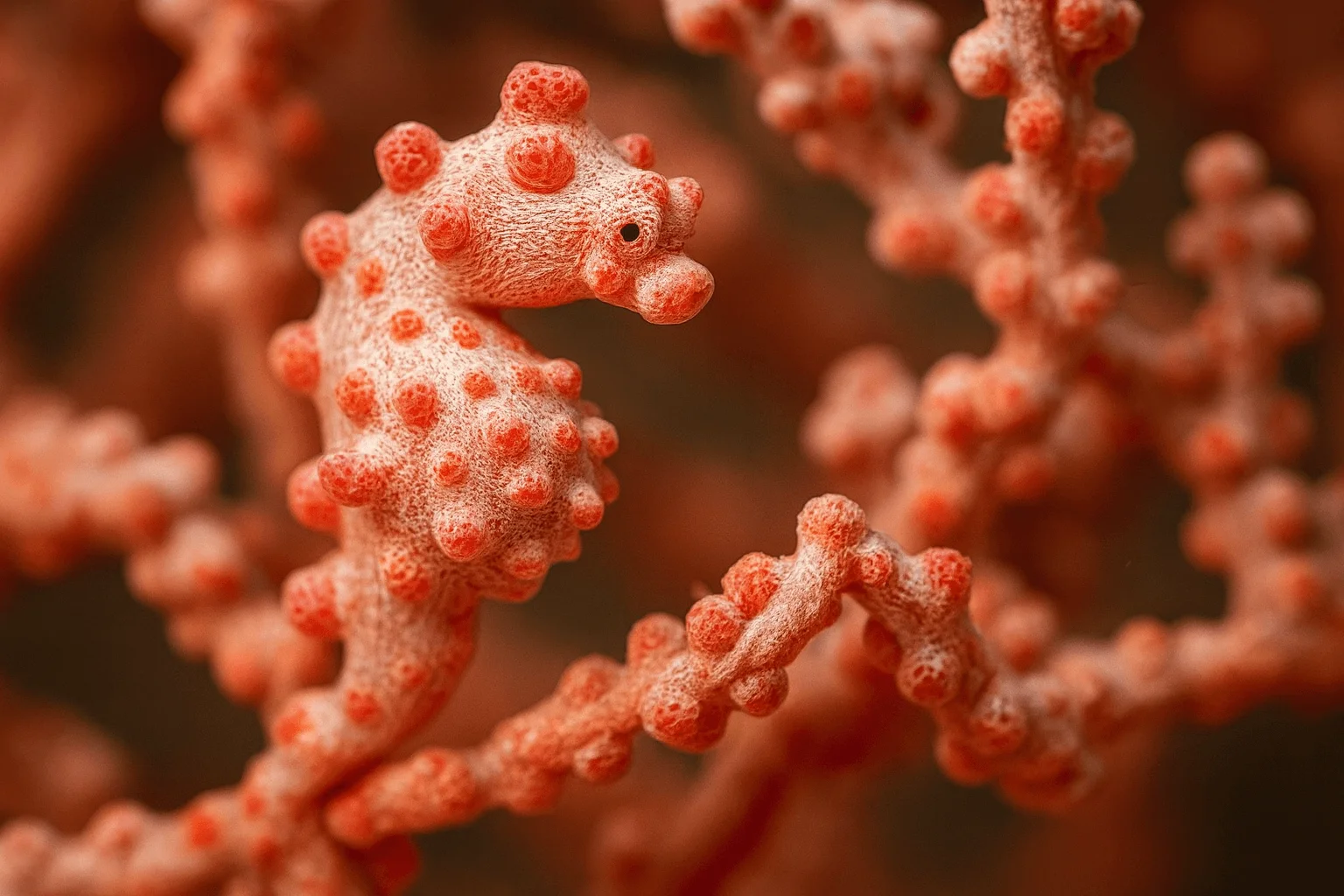
Anilao
Anilao, a small barangay in Batangas province just two hours south of Manila, is often called the macro capital of the Philippines. More than 50 dive sites fringe the coast and nearby islands, offering an intoxicating mix of coral‑covered pinnacles, muck slopes and blackwater encounters. Critter enthusiasts come for the legendary muck dives at Secret Bay and Anilao Pier, where mimic octopuses, blue‑ringed octopuses, wonderpus, seahorses, ghost pipefish, frogfish and dozens of nudibranch species lurk in the silt. Shallow reefs like Twin Rocks and Cathedral are covered in soft corals and teem with reef fish, while deeper sites such as Ligpo Island feature gorgonian‑covered walls and occasional drift. Because Anilao is so close to Manila and open year‑round, it’s the easiest place in the Philippines to squeeze in a quick diving getaway.
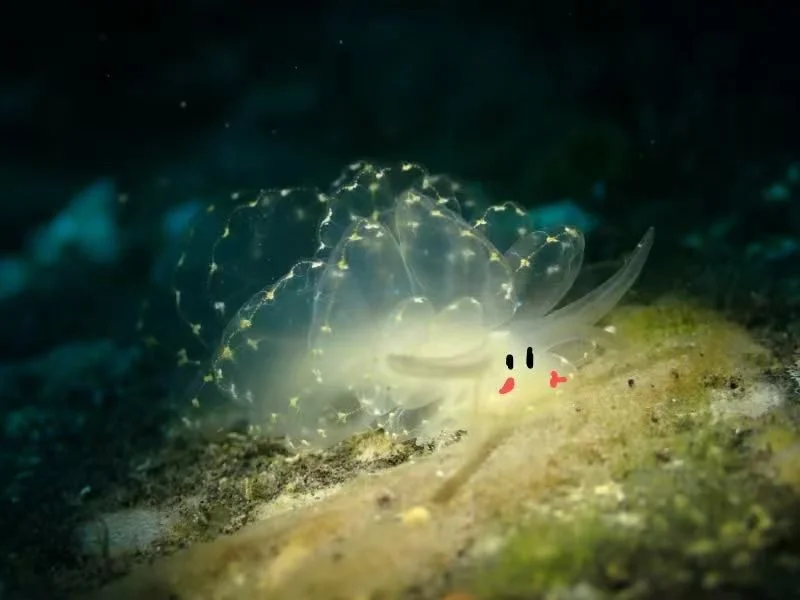
Tulamben(Bali)
Tulamben sits on Bali’s northeast coast and is best known for the USAT Liberty shipwreck – a 125‑metre cargo ship torpedoed in WWII that now lies just a short swim from shore. Warm water, mild currents and straightforward shore entries make diving here relaxed for all levels. Besides the wreck, divers can explore coral gardens, black‑sand muck sites and dramatic drop‑offs. Macro lovers will find nudibranchs, ghost pipefish, mimic octopus and pygmy seahorses, while big‑fish fans can encounter schooling jackfish, bumphead parrotfish and reef sharks. With a compact coastline packed with variety, Tulamben delivers world‑class wreck and critter diving without long boat rides.