
Lionfish
Pterois volitans
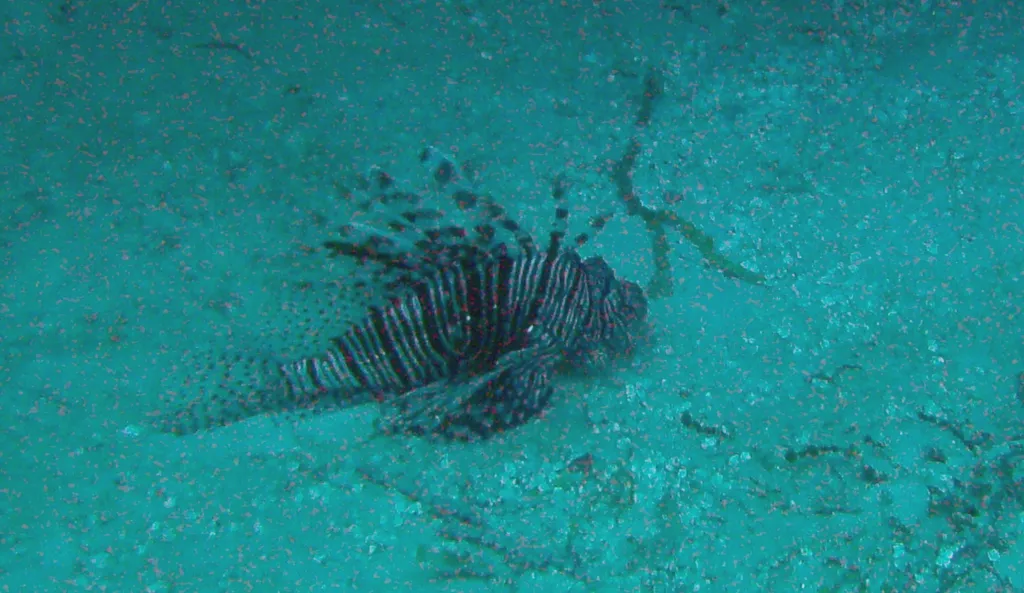
Photo by Tisquesusa / CC BY 4.0 via Wikimedia Commons
The lionfish is the reef's most theatrical warning sign—striped, spined, and utterly unbothered by your presence. Native across the Indo-Pacific and Red Sea, Pterois volitans has become one of diving's most polarizing species since its accidental Atlantic invasion in the 1980s: a beautiful fish that eats juvenile reef fish faster than anything else on the wall. For divers, that duality is the whole story. In Egypt or Indonesia, lionfish are a classic crevice fixture—head down, pectorals spread, waiting for dusk. In Cozumel or Bonaire, they're everywhere on every wreck lip, and local operators actively encourage spearfishing because nothing else reliably controls them. Either way, they're photogenic, slow-moving when resting, and armed with venom that demands respect but not panic.
🔬Classification
📏Physical Features
🌊Habitat Info
⚠️Safety & Conservation
Identification Guide
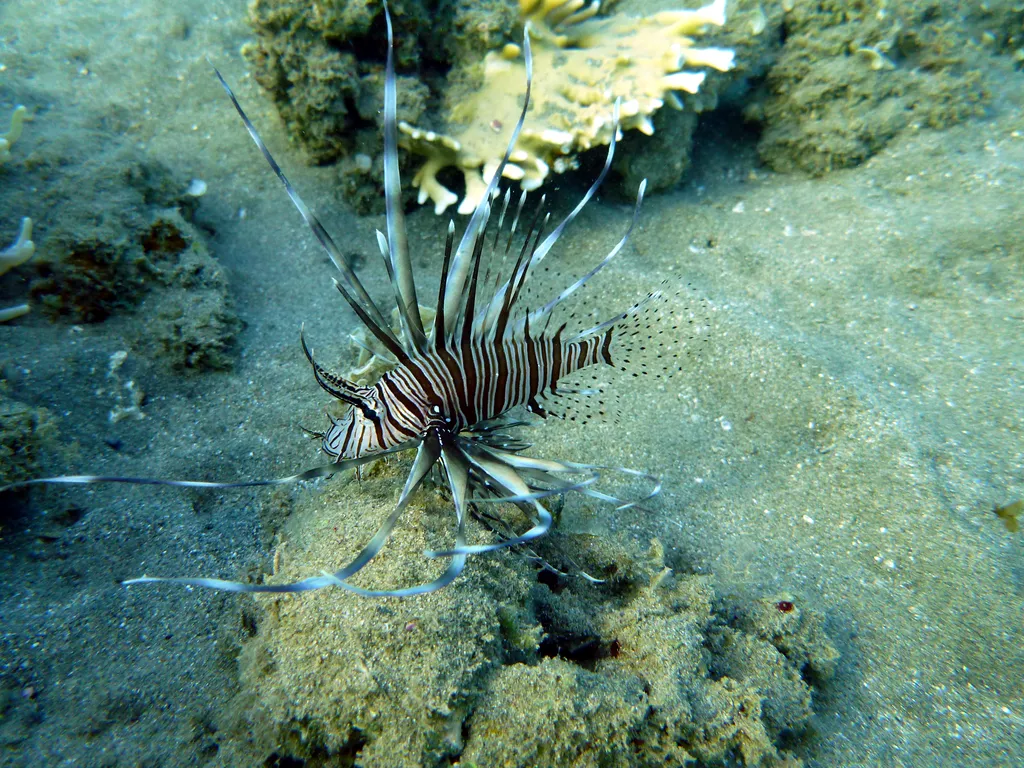
Photo by Wusel007 / CC BY-SA 3.0 via Wikimedia Commons
Field marks:
- Striped body: Alternating reddish-brown/maroon and white vertical bands along flanks
- Fan pectorals: Large, wing-like pectoral fins with incised membranes—key silhouette at distance
- Eye tentacles: Fleshy appendages above eyes (and often below mouth)
- 13 dorsal spines: Long, separated venomous spines; 3 anal and 2 pelvic spines also venomous
- Head-down posture: Daytime rest position—often wedged in crevices, practically motionless
Similar Species
- Pterois miles (Devil firefish): Nearly identical; best separated by DNA or geographic context (miles more common in Indian Ocean/Red Sea). Divers usually lump both as "lionfish."
- Pterois radiata (Clearfin lionfish): Horizontal eye stripes, fewer dorsal spines (11), more delicate appearance—common in Red Sea.
- Scorpionfish (Scorpaenopsis spp.): Stockier body, no dramatic pectoral fans, camouflaged rather than boldly striped.
Juvenile vs Adult
Juveniles are tiny (under 2.5 cm at settlement) with proportionally larger fins. Adults darken in turbid coastal water; open-ocean specimens often show bolder contrast.
Top 10 Fun Facts about Lionfish
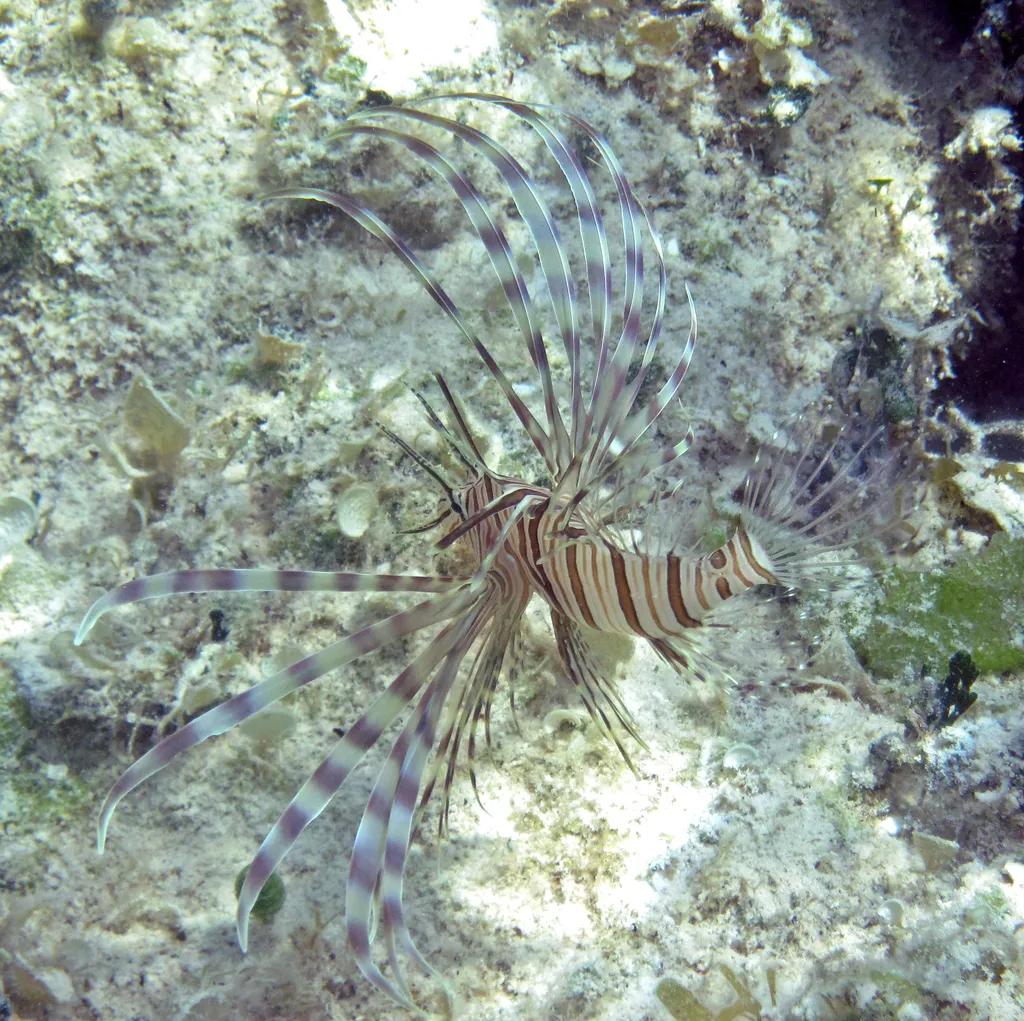
Photo by James St. John / CC BY 2.0 via Wikimedia Commons
1. Thirteen Spines, One Message
The red lionfish carries 13 venomous dorsal spines plus 3 anal and 2 pelvic spines—18 injection points total. The venom is a defensive cocktail of neuromuscular and cytolytic proteins, not a hunting weapon. For divers, the practical takeaway: never grab, never wedge a hand into a crevice without looking, and treat any spine puncture as a medical event (immersion in hot water ~45°C is first aid; seek professional care for severe reactions).
2. The Pectoral Ambush
Lionfish don't chase prey like jacks. At night they spread those enormous pectoral fins and use them like walls, herding small fish and shrimp into a corner before a lightning gulp. Watching a hunting lionfish on a night dive—fins deployed, head tilted—is one of the best behavioral shows on a Caribbean or Indo-Pacific reef.
3. Head Down, World Out
Daytime lionfish are famously sedentary, often hanging vertically with the head pointed down in a crevice or under a ledge. They'll hold this pose for hours, relying on bold aposematic coloration (warning stripes) rather than speed. That stillness is why they're macro-friendly subjects—and why careless photographers get stung reaching into "empty" holes.
4. Atlantic Invasion Timeline
P. volitans and P. miles were first documented off Florida in the mid-1980s, likely from aquarium releases during Hurricane Andrew (1992) and earlier escapes. Within two decades they spread from Venezuela to North Carolina, consuming up to 79% of juvenile reef fish at some Atlantic sites. It's one of the fastest marine fish invasions ever recorded—and divers in the Caribbean now treat lionfish spearfishing as conservation.
5. No Natural Atlantic Predators (Until Recently)
For years, Atlantic reef fish simply didn't recognize lionfish as food. Groupers and snappers that should eat them avoided the spines. Recent observations in the Bahamas suggest reef sharks and Nassau groupers are learning to flip lionfish and eat them spine-side down—often after divers started spearing lionfish and sharks associated the activity with an easy meal.
6. Eat Them to Beat Them
Lionfish flesh is safe and tasty once spines are removed—white, mild, often compared to grouper or snapper. Caribbean restaurants, derbies, and dive shops promote "lionfish dinner" as invasive-species control. Several US states actively encourage harvest. Indo-Pacific populations have no such campaign; there, lionfish are a normal reef resident.
7. Prolific Breeders
A single female can release up to 30,000 eggs every 4 days—roughly 2 million eggs per year. Eggs form a gelatinous mass that floats in the surface current for weeks, letting larvae disperse hundreds of kilometers. This reproductive firepower is why Atlantic eradication is considered impossible; management focuses on local density reduction.
8. Aposematism That Backfired
Those bold stripes aren't camouflage—they're advertising: "I will hurt you." In the Indo-Pacific, predators learned this over evolutionary time. In the Atlantic, naïve fish never got the memo, so lionfish face almost no predation pressure while outcompeting natives. It's a textbook case of aposematic coloration failing when moved to a predator-naïve ecosystem.
9. Popular Aquarium, Problematic Release
Lionfish are staple aquarium fish—hardy, dramatic, easy to feed. The invasion almost certainly started with hobbyist releases and storm-damaged coastal aquariums. Today, many jurisdictions ban import or require permits. If you keep them, never release; the ecological cost of one fish is enormous.
10. Mimicry Target
The mimic octopus (Thaumoctopus mimicus) performs a famous lionfish arm-splay display—spreading arms with contrasting bands to bluff predators. Lionfish are so visually distinctive that multiple unrelated species (including octopuses and juvenile sweetlips) evolve similar patterns. Divers who've seen both know the octopus version moves with intent; the real lionfish just stares.
Diving & Observation Notes
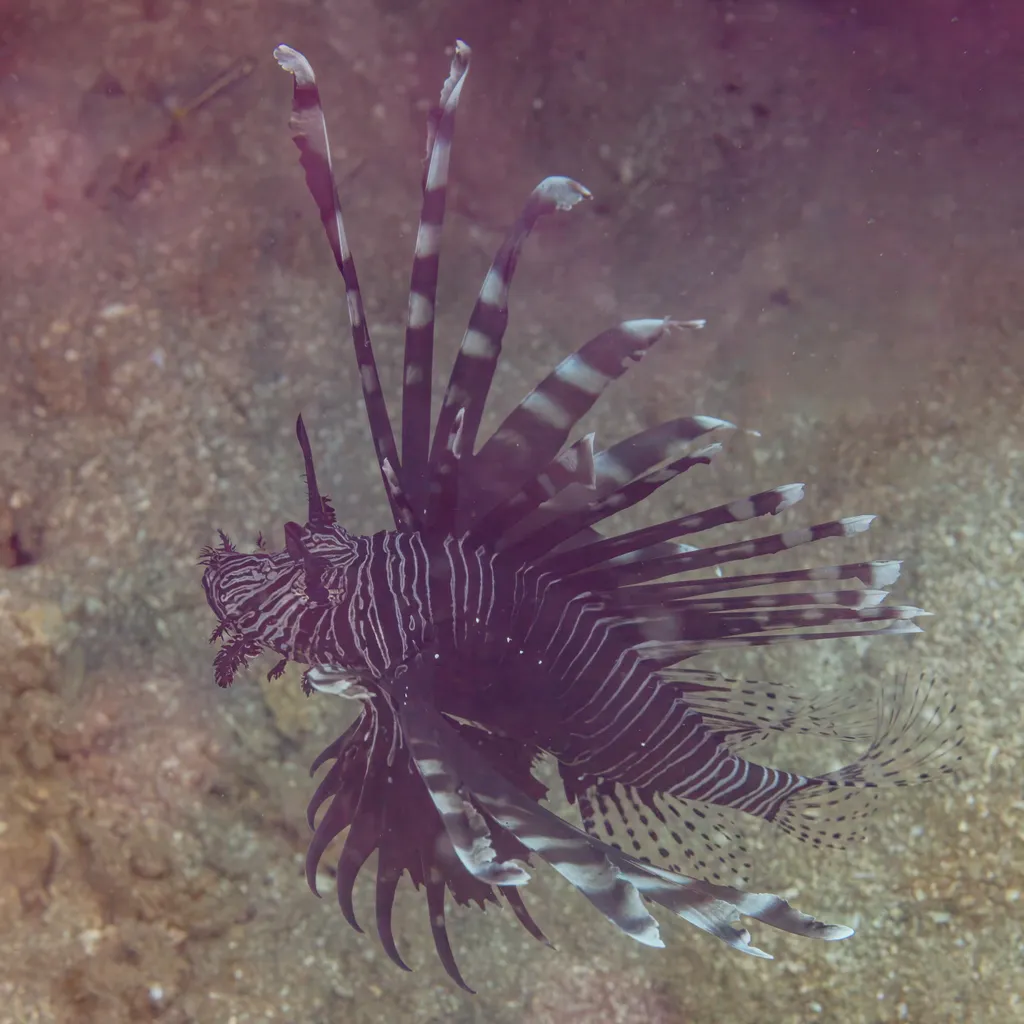
Photo by Diego Delso / CC BY-SA 4.0 via Wikimedia Commons
🧭 Finding Lionfish
Scan reef crevices, overhangs, and wreck rails at 8–25 m. Day dives: look for the head-down silhouette and spread pectorals wedged under ledges. Night dives: they'll leave cover and hunt in the open—often on the same site you saw them resting hours earlier. Caribbean sites (Cozumel, Bonaire, Roatan) often have multiple individuals per dive; Red Sea and Indonesia: one or two per wall section is typical.
🤿 Approach & Safety
- Never touch or tease—venomous spines can puncture through thin gloves
- Maintain arm's length minimum; use a pointer or reef stick to probe crevices, not fingers
- If stung: hot water immersion (~45°C, as hot as tolerated) for 30–90 min; monitor for systemic symptoms
- Lionfish are not aggressive toward divers; stings happen from accidental contact or handling
📸 Photo Tips
- Side profile shows stripes and pectoral fan best; shoot slightly below eye level
- Macro/wide-macro works for face and tentacle detail; they hold still during day rest
- Night hunting shots: video lights or focus light help; avoid constant flash that may disrupt feeding
- Include reef context (wreck, crevice, sponge) to tell the habitat story
⚠️ Ethics & Conservation
- Caribbean/Atlantic: Support licensed lionfish removal programs; don't relocate live fish
- Indo-Pacific: Observe only—native populations are not invasive
- Report unusual density spikes to local reef monitoring if your operator runs citizen science
Best Places to Dive with Lionfish
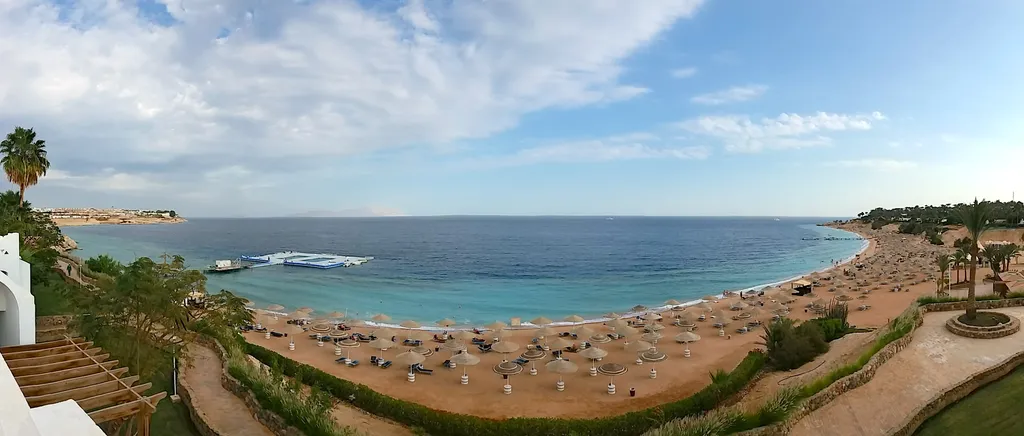
Sharm El Sheikh
Sharm El Sheikh sits at the southern tip of Egypt's Sinai Peninsula and functions as the Red Sea's busiest dive hub for good reason. Day boats run south to Ras Mohammed National Park—walls, current-swept pinnacles and the famous Shark Reef–Yolanda Reef double drop—and north through the Straits of Tiran past four reef towers where hammerheads patrol in season. Wreck divers book the early alarm for SS Thistlegorm, one of the world's great WWII cargo dives, and the coral-encrusted SS Dunraven on calmer days. Closer to Naama Bay and Sharks Bay, house reefs like Ras Um Sid, the Gardens and Temple deliver easy boat dives between the big-ticket runs. Visibility routinely clears 20 m, reefs are healthy by Red Sea standards, and the resort strip makes logistics painless: gear on, coffee, two-tank boat, back for lunch.
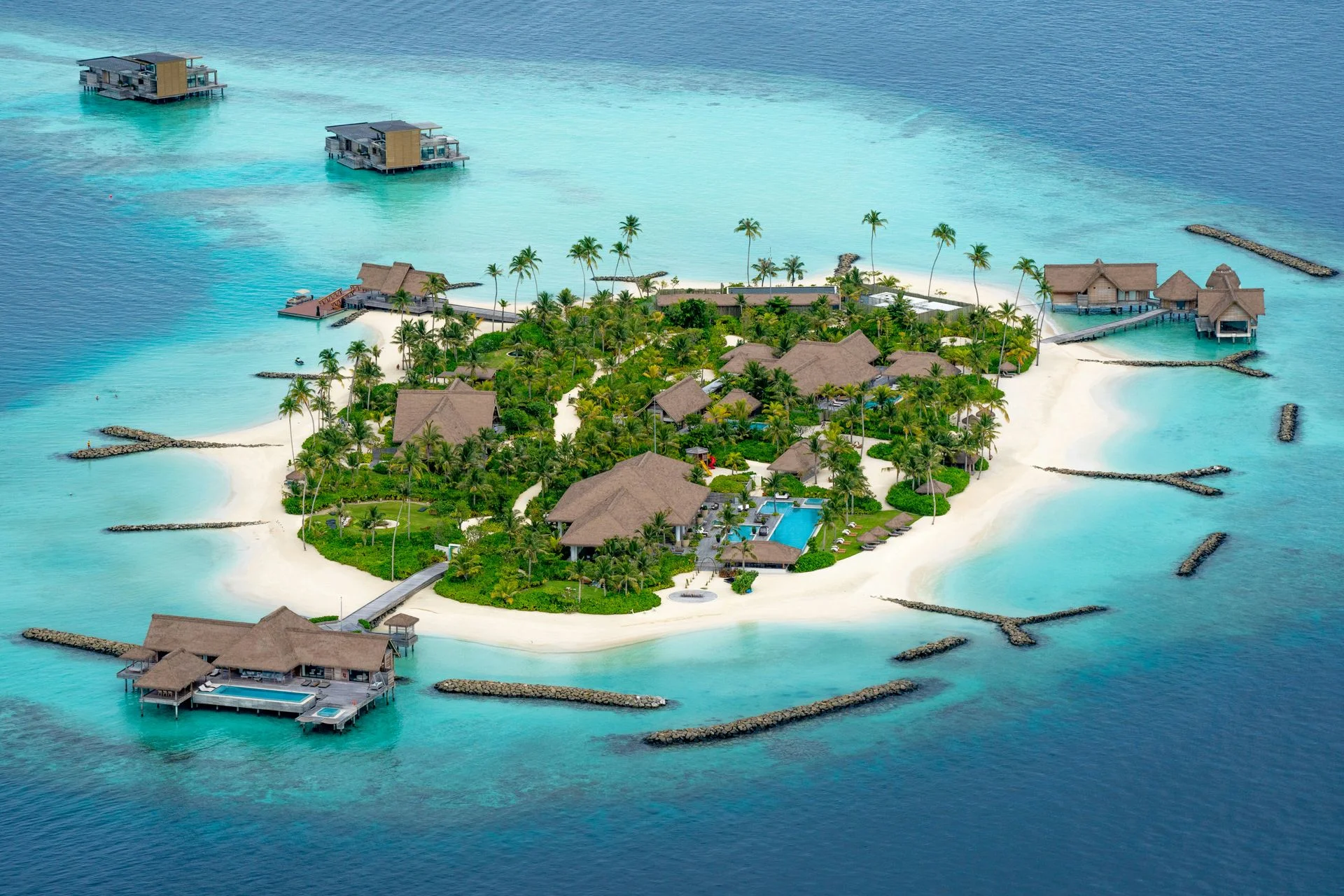
Maldives
Scattered across the Indian Ocean like strings of pearls, the Maldives’ 26 atolls encompass more than a thousand low‑lying islands, reefs and sandbanks. Beneath the turquoise surface are channels (kandus), pinnacles (thilas) and lagoons where powerful ocean currents sweep past colourful coral gardens. This nutrient‑rich flow attracts manta rays, whale sharks, reef sharks, schooling jacks, barracudas and every reef fish imaginable. Liveaboards and resort dive centres explore sites such as Okobe Thila and Kandooma Thila in the central atolls, manta cleaning stations in Baa and Ari, and shark‑filled channels like Fuvahmulah in the deep south. Diving here ranges from tranquil coral slopes to adrenalin‑fuelled drifts through current‑swept passes, making the Maldives a true pelagic playground.
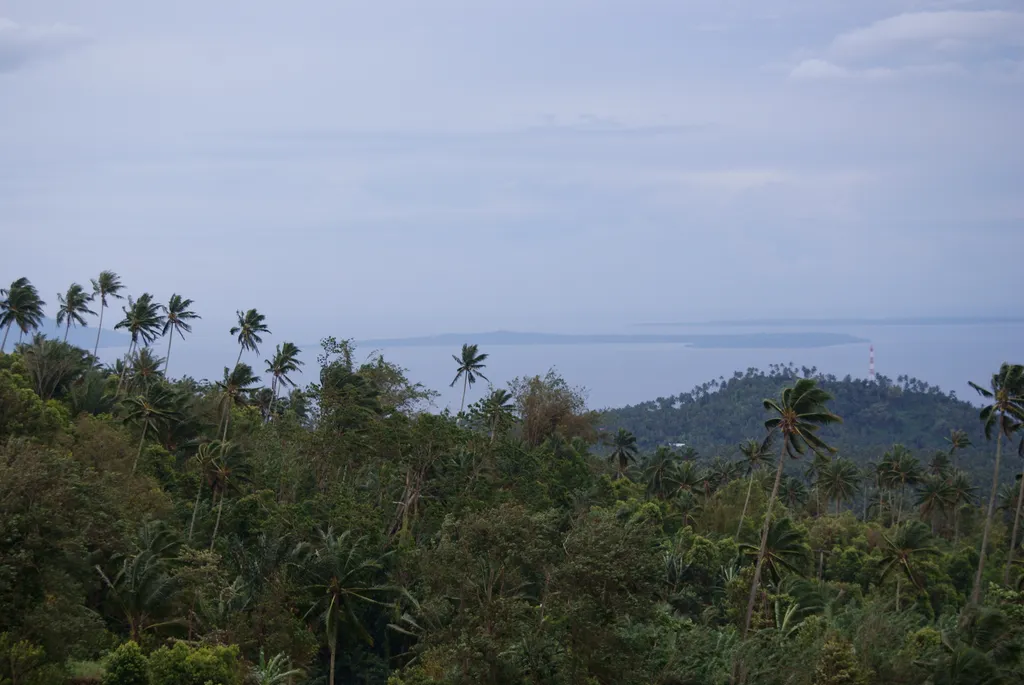
Bunaken
Bunaken National Park is wall-diving country: five volcanic islands—Bunaken, Manado Tua, Siladen, Mantehage, and Nain—ringed by drop-offs that fall from snorkel depth into hundreds of metres of blue. This is not the muck slopes of the Manado mainland; it is vertical reef, drift lines, and current-fed fish schools. The signature move is simple—roll off the boat at Lekuan or Muka Kampung, swim the shallow turtle flats, then hang on the wall while pyramid butterflyfish, fusiliers, and Napoleon wrasse stream past. Reef sharks patrol the corners, eagle rays cruise the blue, and barrel sponges the size of oil drums frame every wide-angle shot. Warm 27–29°C water, park protection since 1991, and island resorts that put you on the first boat at 08:00 make Bunaken the classic North Sulawesi wall trip—fly into MDC, transfer to the strait, and live on the reef for a week.
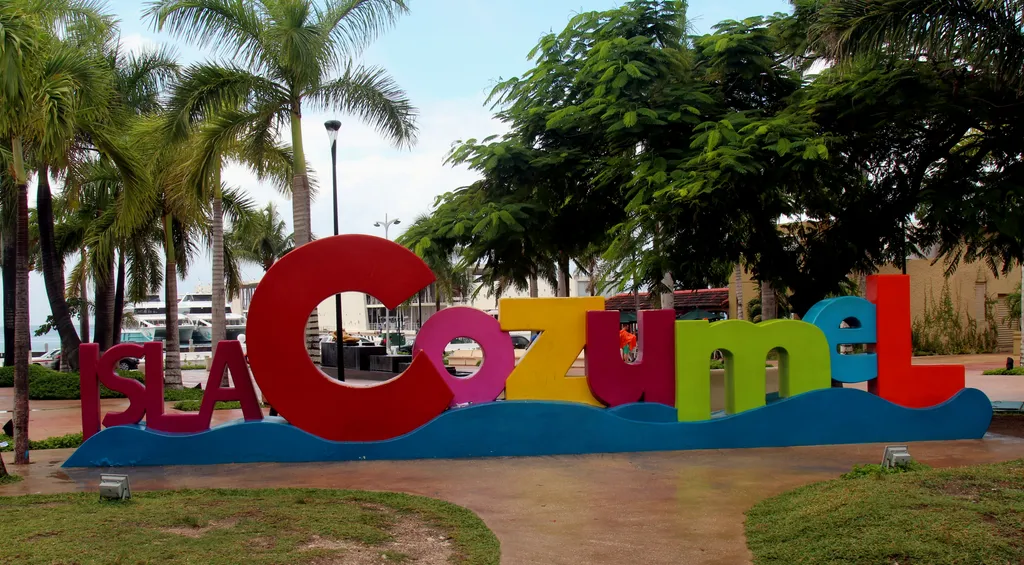
Cozumel
Cozumel sits on the Mesoamerican Barrier Reef—the second-largest reef system on the planet—and earned its place in dive history when Jacques Cousteau filmed its walls in the 1960s. Today the island is a boat-centric Caribbean classic: two-tank mornings from San Miguel, drift along coral cliffs in gin-clear water, surface for ceviche between dives. Almost everything worth diving lies inside Arrecifes de Cozumel National Marine Park, where mooring buoys, no-gloves rules, and park fees keep the reef in remarkably good shape. The signature experience is drift diving. Prevailing currents carry you along Santa Rosa, Colombia, and Palancar while you fin minimally and watch eagle rays, turtles, and schooling jacks slide past the drop-off. Walls plunge from 15 m to blue infinity; swim-throughs at Palancar Caves and the advanced cavern entry at Devil's Throat reward divers who like topography. Macro hunters scan for the splendid toadfish—an endemic bottom-dweller found almost nowhere else. Night dives on Paradise Reef and the C-53 wreck round out a week that feels busy without ever rushing. What Cozumel is not: a whale-shark island (head to Isla Mujeres or Holbox for that) or a liveaboard hub—operations are day boats from town. Watch the Norte wind in winter; it can cancel southern sites like Punta Sur. Bring cash for park fees, tip your crew, carry an SMB, and consider nitrox—you'll want the extra bottom time on these drifts.
Bonaire
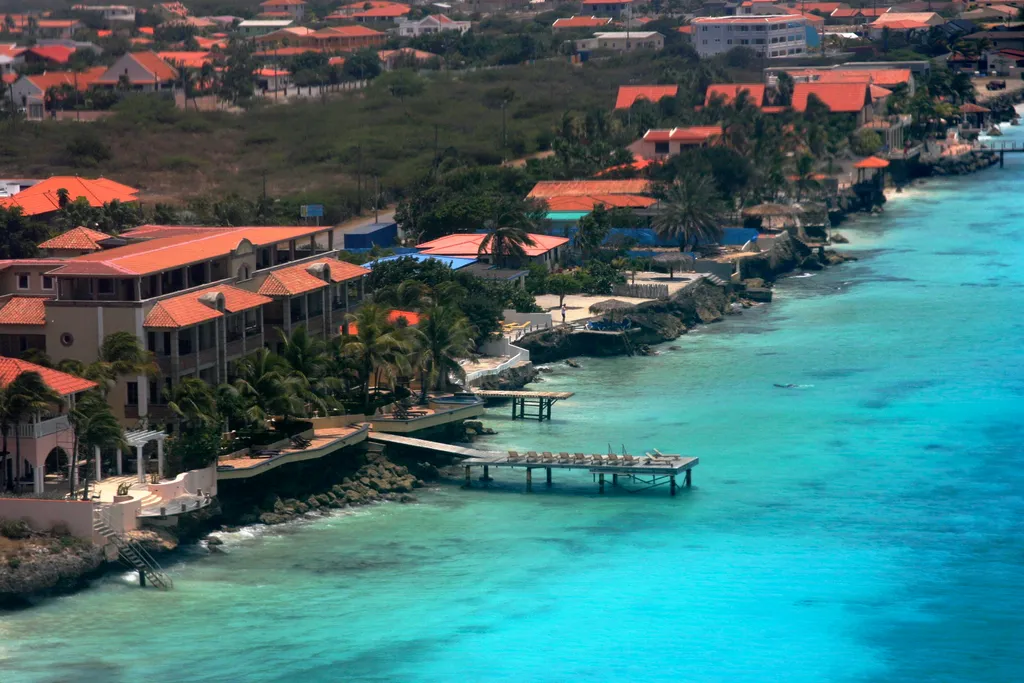
Bonaire is the Caribbean's shore-diving capital: pick up tanks at your shop, load the pickup, follow yellow-painted roadside markers to the entry, and you're on the reef in minutes. The entire leeward coast sits inside the Bonaire National Marine Park (BNMP), where decades of protection have left hard and soft corals in genuinely healthy shape—visibility often 20–40 m and water a comfortable 26–29 °C year-round. Most divers rent a truck, buy an unlimited shore-tank package, complete a mandatory orientation dive, then buddy-dive independently for the rest of the trip. Signature sites span easy west-coast reefs (Bari Reef, Angel City), iconic entries like 1000 Steps and Oil Slick Leap, the Hilma Hooker wreck, and short boat hops to Klein Bonaire. Macro hunters get frogfish and nudibranchs; wide-angle shooters chase schooling fish, turtles, eagle rays, and reef sharks. It's not a liveaboard rhythm—it's early-morning doubles, long surface intervals, and sunset or night dives when pier access allows.