
Peacock Mantis Shrimp
Odontodactylus scyllarus
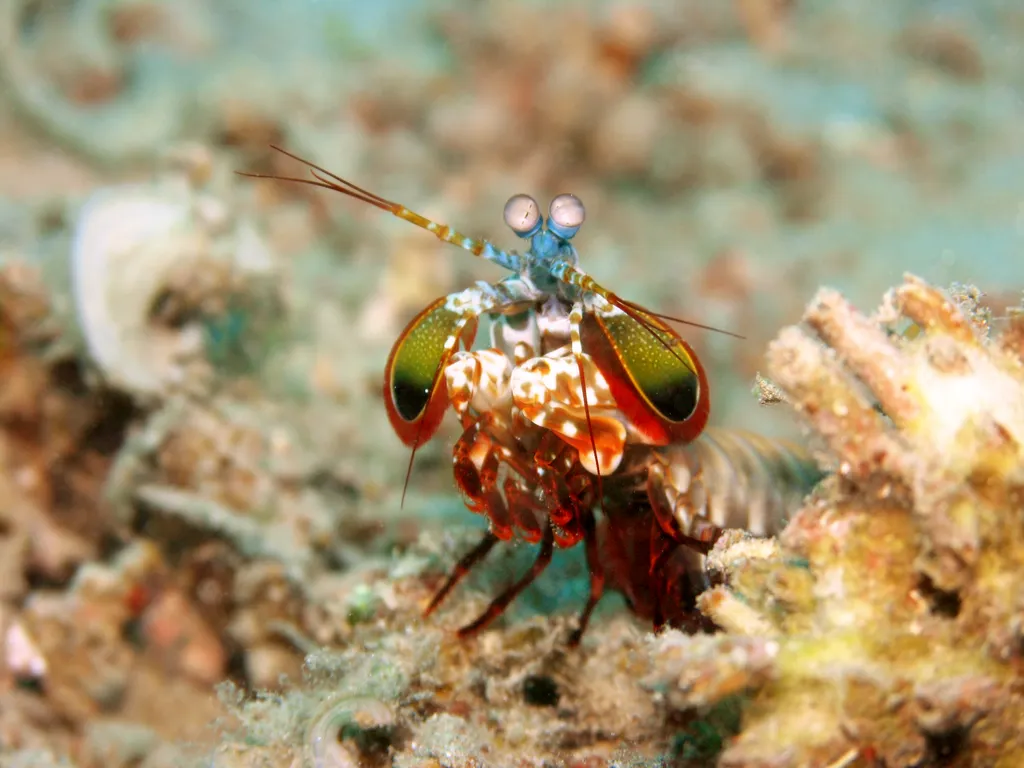
Photo by Jens Petersen / CC BY 2.5 via Wikimedia Commons
If you've ever watched a macro guide spend ten minutes staring at what looks like an empty hole in the rubble, only to have a peacock mantis shrimp suddenly flare its eyes and brandish candy-red clubs—you understand why this species sits at the top of many critter hunters' lists. Odontodactylus scyllarus is a smasher, not a spearer: those bulbous dactyl clubs accelerate faster than a .22 bullet and can crack snail shells, smash crabs, and, famously, aquarium glass. Underwater they are usually burrow specialists, living in U-shaped tunnels dug into sand and rubble at reef bases and muck slopes. Most encounters are brief—a head and thorax poking from the entrance, compound eyes swiveling independently, assessing whether you're prey, threat, or irrelevant. They are not shy in the sense of hiding forever; they are calculating. Get too close and the strike is real. Back off and they may hold position for minutes, giving patient macro shooters the shot of a lifetime.
🔬Classification
📏Physical Features
🌊Habitat Info
⚠️Safety & Conservation
Identification Guide
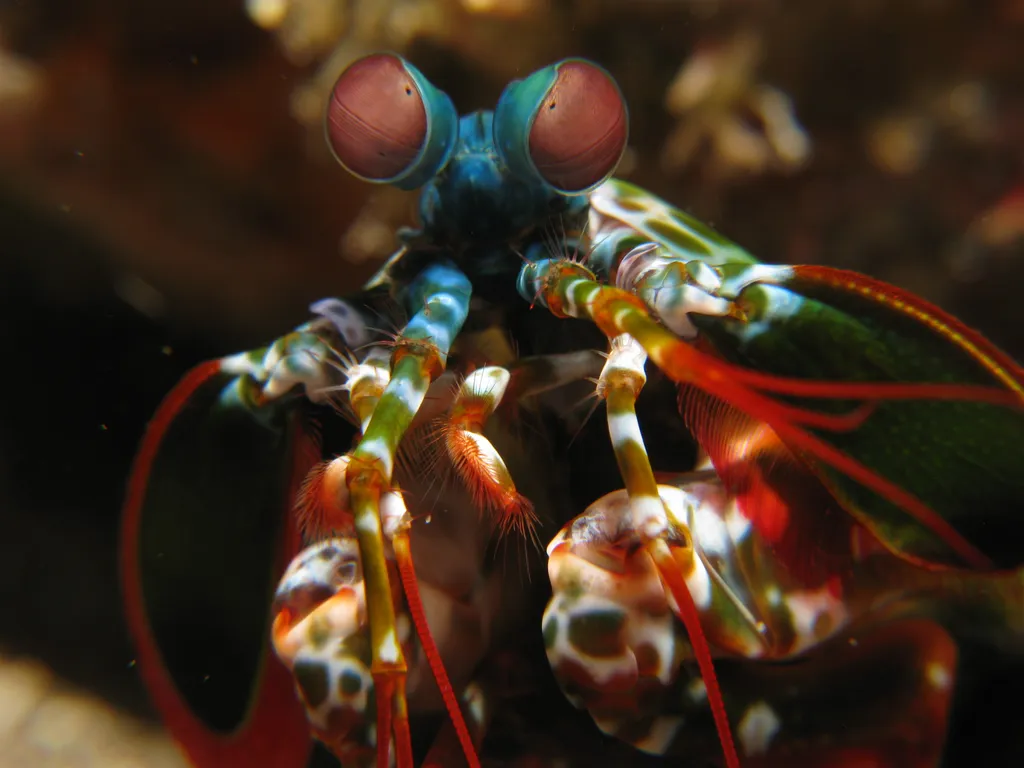
Photo by prilfish from Vienna / CC BY 2.0 via Wikimedia Commons
Body & Color
- Olive-green carapace with irregular leopard-like spots—not the flat neon patterns of harlequin shrimp
- Orange to reddish appendages on walking legs and mouthparts; clubs are distinctly red/orange at the tips
- Blue stalked eyes on mobile turrets; each eye moves independently—an instant tell at macro range
The Smasher Claws
- Bulbous, rounded clubs (not thin spear tips)—identifies it as a smasher stomatopod
- Clubs often held folded under the thorax until the animal threatens or strikes
- Asymmetry is normal: one club may look slightly larger depending on angle and molt stage
Size & Posture
- Typically 7–10 cm in the field; larger individuals up to ~18 cm exist but are uncommon on casual dives
- Elongate, mantis-like body; often partially emerged from a burrow rather than fully exposed on open sand
Habitat Clues
- Look for clean sand/rubble patches at reef bases, under coral heads, or along muck slopes
- U-shaped burrow entrances—a neat round hole with scattered excavated debris nearby
- Daytime: animal frequently sits at the entrance, retreating tail-first when spooked
Top 10 Fun Facts about Peacock Mantis Shrimp
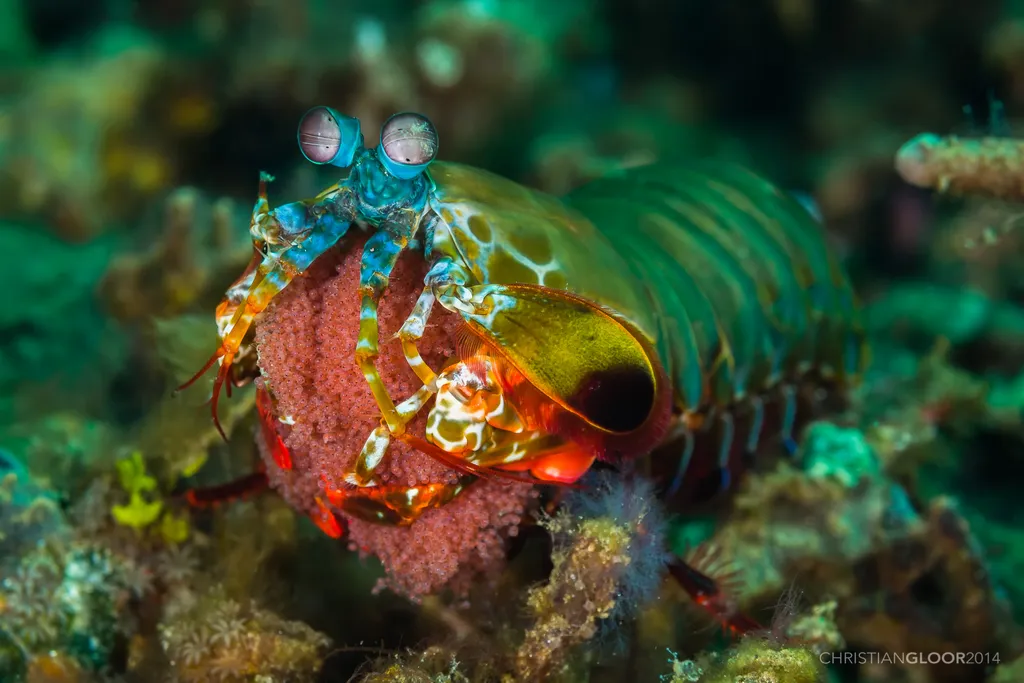
Photo by Christian Gloor from Wakatobi Dive Resort / CC BY 2.0 via Wikimedia Commons
1. Faster Than a Bullet—Literally
Smasher stomatopods strike with one of the fastest movements in the animal kingdom. The club of Odontodactylus scyllarus can reach speeds around 23 m/s with accelerations exceeding 10,000 g. The impact generates a cavitation bubble that collapses with a secondary shock—useful for stunning prey even on a near-miss. For divers, this is not trivia: a finger in the strike zone can mean fractures or deep lacerations.
2. Eyes That See What You Cannot
Peacock mantis shrimp eyes are among the most complex in nature. Each compound eye has trinocular depth perception on its own—three regions giving independent distance cues. They detect polarized light and may use up to 12–16 photoreceptor types for color (humans use three). Some research suggests they see a world of color we cannot reconstruct; others argue their processing is tuned for contrast and prey detection rather than rainbow vision. Either way, those swiveling blue eye stalks are doing far more than looking pretty in your photo.
3. Smasher vs Spearer: Know Your Stomatopod
Stomatopods split into two feeding guilds. Spearers (like many Lysiosquilla species) have thin, barbed tips for impaling soft fish. Smashers like the peacock mantis shrimp carry heavy clubs built to crack calcified armor—snails, hermit crabs, mollusks. The peacock's rounded, reddish clubs and robust merus are the field marks. Confusing the two leads to bad approach decisions: spearers can slash; smashers can shatter.
4. Burrow Architects of the Rubble Zone
These animals are engineering-minded homebodies. They excavate U-shaped burrows in sand and rubble, often under coral heads or at the reef-sand interface. The tunnel provides refuge, a staging area for ambush, and sometimes a cache for smashed prey fragments. Guides who know a resident animal will return to the same hole for weeks—making burrow spotting a repeatable skill rather than a one-off lottery.
5. Aquarium Industry Legend
Odontodactylus scyllarus is infamous in the marine aquarium trade for breaking thick glass panels with a single strike. Even acrylic isn't always safe at standard thickness. Combined with their territorial aggression toward tank mates and need for deep sand/rubble to burrow, they are widely considered expert-only captives. Responsible diving ethics: enjoy them in situ; wild collection for home tanks has driven localized depletion at popular sites.
6. Leopard Spots Aren't Just Camouflage
The mottled leopard-like carapace breaks up the animal's outline against mixed rubble and algae-stained substrate. But individual spot patterns vary, and some researchers and photographers use spot arrangements to recognize repeat individuals at a given burrow—similar to how nudibranch enthusiasts track favorites. Not a formal photo-ID program, but experienced guides absolutely remember "the one by the pink sponge."
7. Molt Means Vulnerability
Like all crustaceans, mantis shrimp must molt to grow. Around ecdysis they are soft-bodied and secretive, often sealing themselves in the burrow. Freshly molted animals show brighter colors and slightly duller clubs until the exoskeleton hardens. If you find a discarded molt at a burrow mouth, the occupant is nearby and stressed—extra distance is warranted.
8. Territorial, Not Randomly Aggressive
They are not hunting divers. Strikes on humans are almost always defensive—a perceived intrusion into the burrow's strike radius. In the wild, most animals hold their ground at the entrance, displaying with raised clubs and spread mouthparts before retreating. Learn to read that display: it's a boundary warning, not an invitation to inch closer for focus stacking.
9. Indo-Pacific Distribution, Local Personalities
From East Africa through the Red Sea, across Southeast Asia, to Japan and Australia, O. scyllarus is a broad Indo-Pacific resident. Depth range extends to ~40 m, but 10–25 m rubble and muck is the sweet spot for divers. Behavior varies by site: some populations are skittish; others tolerate repeated camera approaches if you stay low and still. Local guide knowledge beats species-level generalizations every time.
10. A Macro Subject That Teaches Patience
The best peacock mantis shrimp shots are rarely chase shots. Success comes from burrow identification, low profile approaches, long waits for the animal to re-emerge, and lighting that renders the blue eyes without blowing the orange clubs. Many divers remember their first clear peacock not because it was rare, but because it forced them to slow down—exactly the mindset muck diving rewards.
Diving & Observation Notes
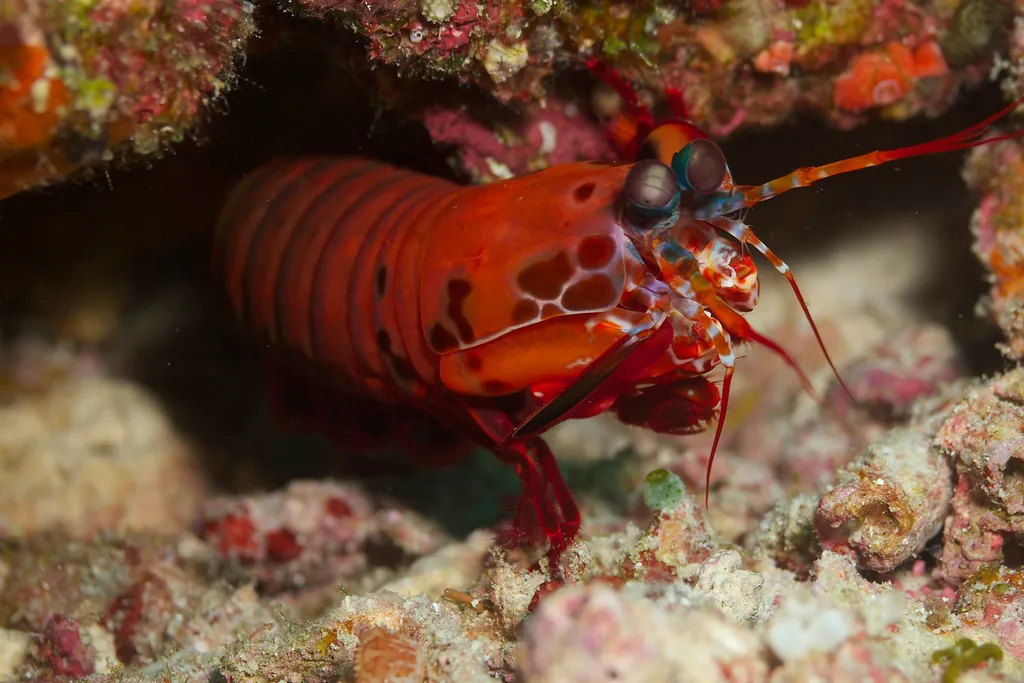
Photo by Elias Levy / CC BY 2.0 via Wikimedia Commons
🧭 Finding Peacock Mantis Shrimp
- Work the rubble-sand edge: Transitions between reef structure and open sand at 10–25 m are prime burrow habitat.
- Muck slopes count: Lembeh-style black sand sites hold them on clean patches near coral rubble—guides often know named burrows.
- Hole first, shrimp second: Scan for round burrow openings with fresh excavated debris; wait 2–5 minutes before writing off a site.
- Under coral heads: Check the sand directly beneath plate corals and bommies on rubble dives (Tulamben, parts of Raja Ampat).
🤿 Approach & Safety
- Never block the burrow entrance or poke into the hole with a muck stick—retreat routes matter to the animal and your fingers.
- Strike radius: Keep hands and camera ports at least one body length away from extended clubs; smashers can lunge outward.
- Let it come to you: After a retreat, hold position low and still; many animals re-emerge to assess the threat level.
- Read the display: Raised clubs and flared mouthparts mean back off, not shoot closer.
📸 Photo & Video Tips
- Lens: 60 mm or 100 mm macro; diopters help only if the animal fully exits the burrow.
- Eyes are the hero: Side or 45° lighting brings out blue eye stalks; avoid flat on-axis strobe that kills depth.
- Exposure: Orange clubs blow out easily— underexpose slightly or use manual strobe power; spot meter on the carapace.
- Snoot optional: Useful for isolating the head from messy rubble backgrounds when the shrimp is partially emerged.
- Video: Tripod or locked buoyancy; sudden strike footage is dramatic but don't provoke it intentionally.
⚠️ Ethics & Conservation
- No collection for aquariums—high mortality, glass-risk, and local depletion at famous macro sites.
- Don't excavate burrows to force an exit; one collapsed tunnel may displace or kill a resident animal.
- Guide-led visits reduce repeated harassment at the same hole; rotate if multiple shooters are present.
🌏 Reliable Regions (from this database)
- Lembeh Strait: Iconic muck; burrow residents on rubble patches are a staple critter target.
- Anilao: Dense macro diversity; peacock mantis shrimp on sand-rubble slopes are regularly logged.
- Tulamben: Rubble fields off the Liberty slope and nearby sites—classic Indo-Pacific burrow habitat.
- Dumaguete (Dauin): Philippines muck; sandy slopes with coral debris hold consistent encounters.
- Raja Ampat: House reefs and rubble zones across the archipelago—pair with local guide burrow intel.
Best Places to Dive with Peacock Mantis Shrimp
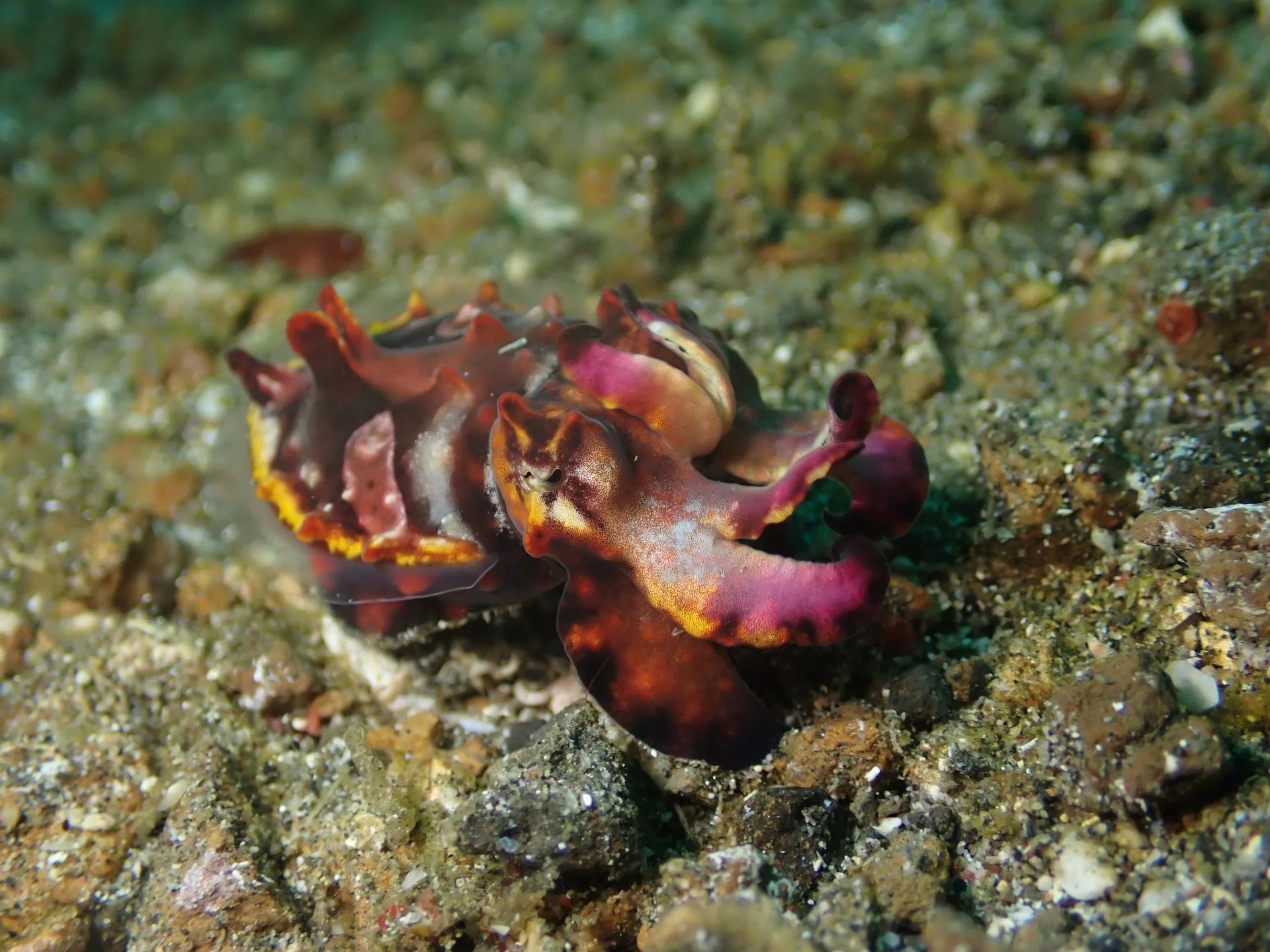
Lembeh
The Lembeh Strait in North Sulawesi has become famous as the muck‑diving capital of the world. At first glance its gently sloping seabed of black volcanic sand, rubble and discarded debris looks bleak. Look closer and it is teeming with weird and wonderful life: hairy and painted frogfish, flamboyant cuttlefish, mimic and blue‑ringed octopuses, ornate ghost pipefish, tiny seahorses, shrimp, crabs and a rainbow of nudibranchs. Most dives are shallow and calm with little current, making it an ideal playground for macro photographers. There are a few colourful reefs for a change of scenery, but Lembeh is all about searching the sand for critter treasures.
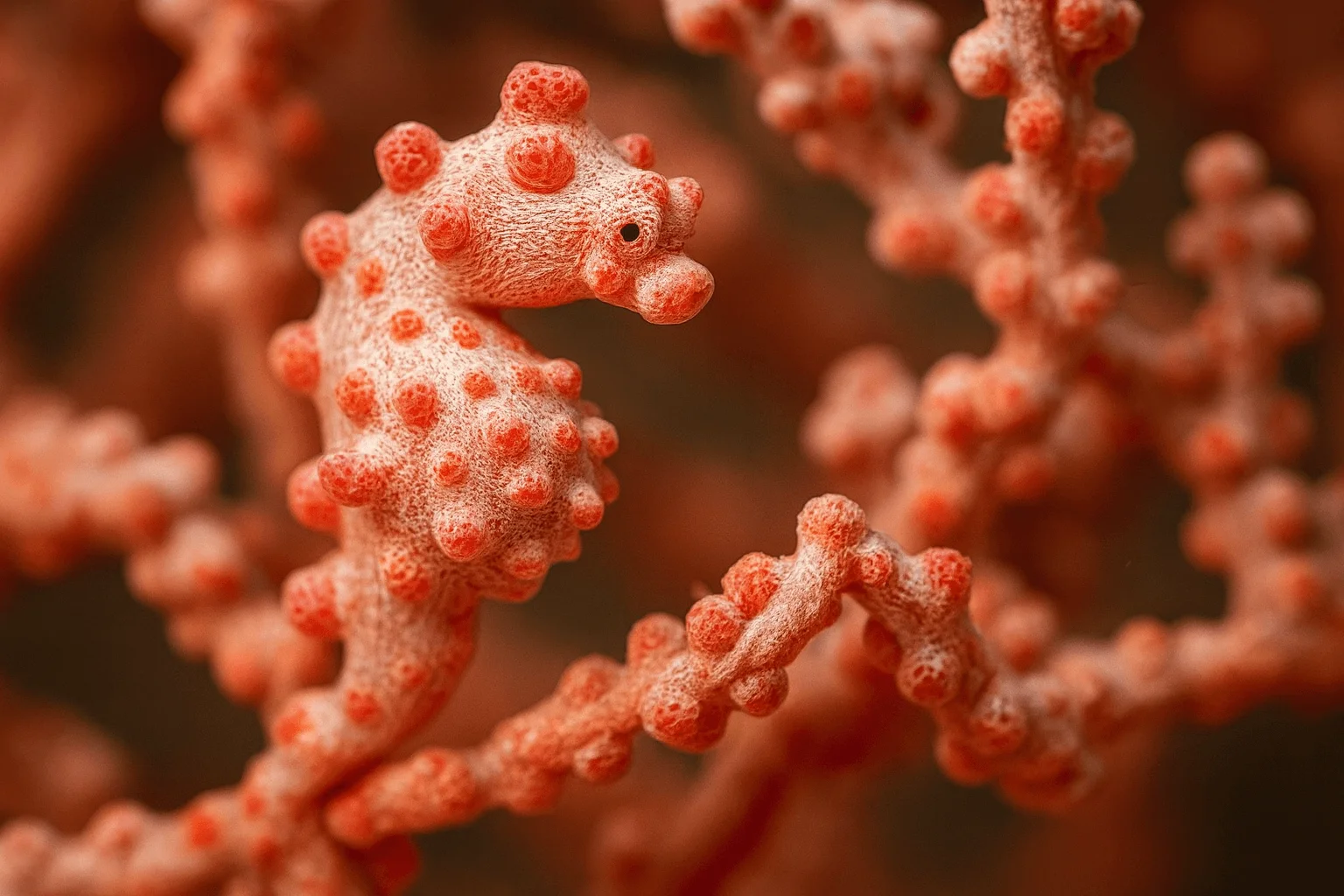
Anilao
Anilao, a small barangay in Batangas province just two hours south of Manila, is often called the macro capital of the Philippines. More than 50 dive sites fringe the coast and nearby islands, offering an intoxicating mix of coral‑covered pinnacles, muck slopes and blackwater encounters. Critter enthusiasts come for the legendary muck dives at Secret Bay and Anilao Pier, where mimic octopuses, blue‑ringed octopuses, wonderpus, seahorses, ghost pipefish, frogfish and dozens of nudibranch species lurk in the silt. Shallow reefs like Twin Rocks and Cathedral are covered in soft corals and teem with reef fish, while deeper sites such as Ligpo Island feature gorgonian‑covered walls and occasional drift. Because Anilao is so close to Manila and open year‑round, it’s the easiest place in the Philippines to squeeze in a quick diving getaway.
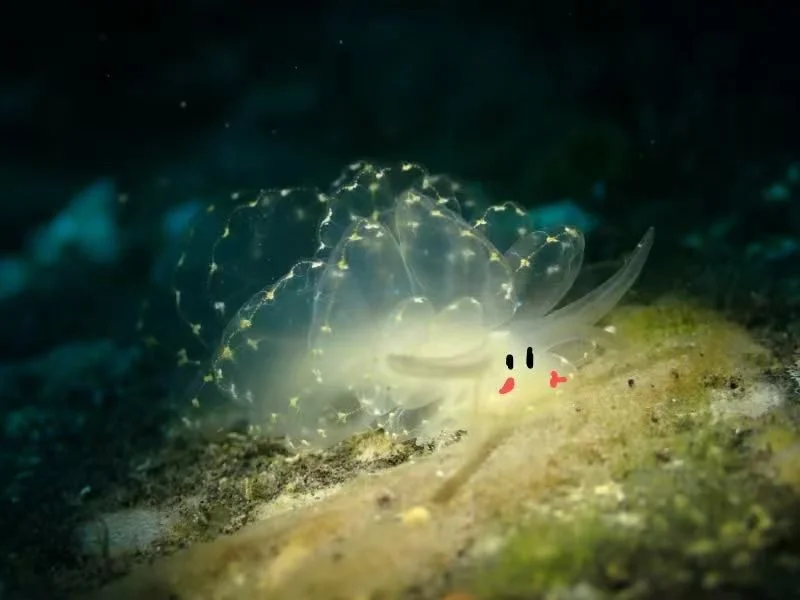
Tulamben(Bali)
Tulamben sits on Bali’s northeast coast and is best known for the USAT Liberty shipwreck – a 125‑metre cargo ship torpedoed in WWII that now lies just a short swim from shore. Warm water, mild currents and straightforward shore entries make diving here relaxed for all levels. Besides the wreck, divers can explore coral gardens, black‑sand muck sites and dramatic drop‑offs. Macro lovers will find nudibranchs, ghost pipefish, mimic octopus and pygmy seahorses, while big‑fish fans can encounter schooling jackfish, bumphead parrotfish and reef sharks. With a compact coastline packed with variety, Tulamben delivers world‑class wreck and critter diving without long boat rides.
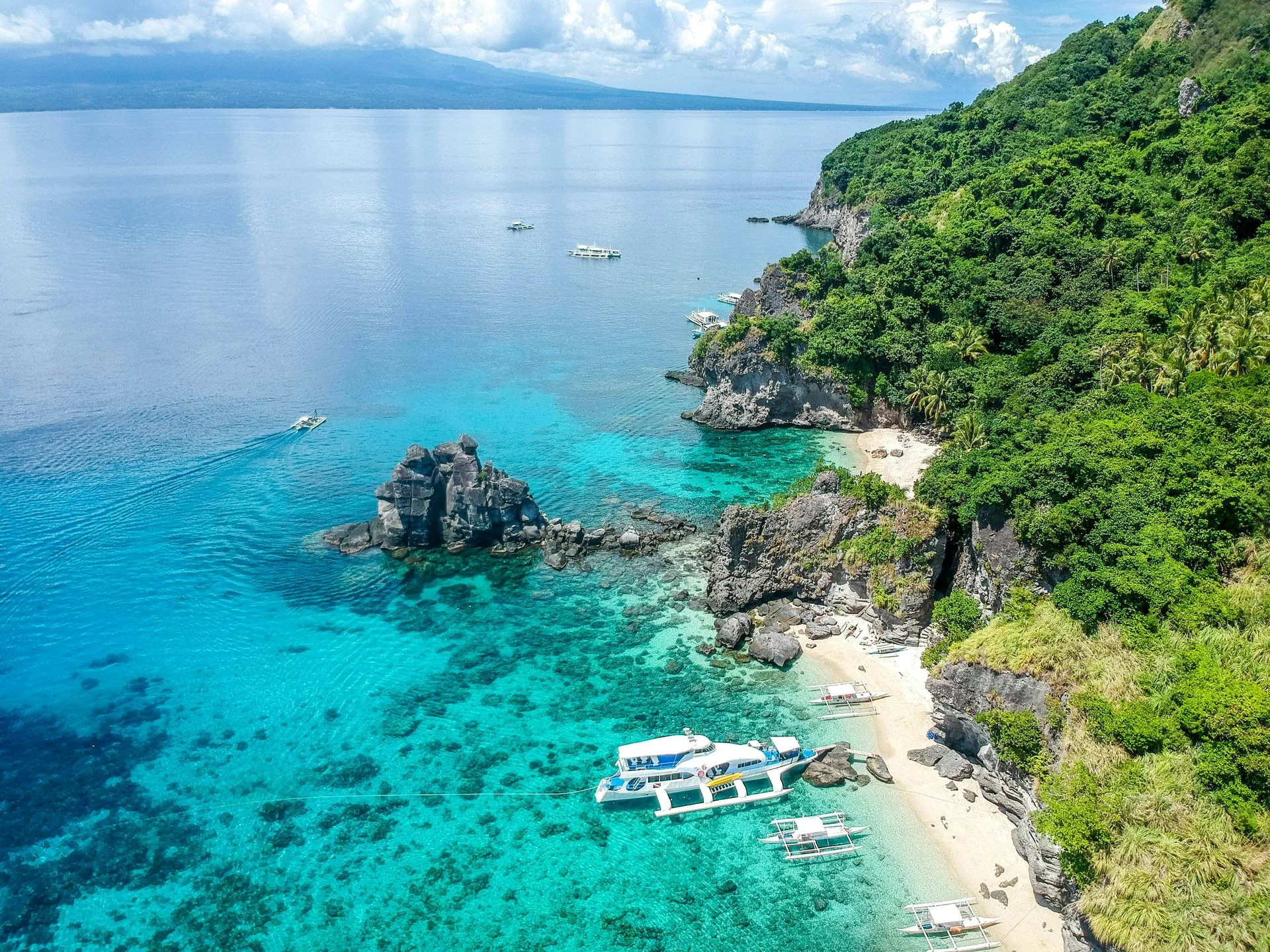
Dumaguete
Dumaguete on the southeast coast of Negros is the jumping‑off point for some of the Philippines’ most diverse diving. Along the nearby town of Dauin, a series of shallow marine sanctuaries and black‑sand slopes hide critters galore: frogfish, flamboyant cuttlefish, mimic octopus, ghost pipefish, seahorses, pipefish and nudibranchs. Artificial reefs made from car tyres and pyramids provide extra habitat. Offshore, Apo Island’s walls and plateaus burst with hard and soft corals, schooling jacks and barracudas, and friendly green turtles. With day trips to Oslob’s whale sharks or Bais’ dolphin‑watching, and excursions to nearby Siquijor, Dumaguete offers a perfect mix of macro muck diving and classic coral reefs.
Raja Ampat
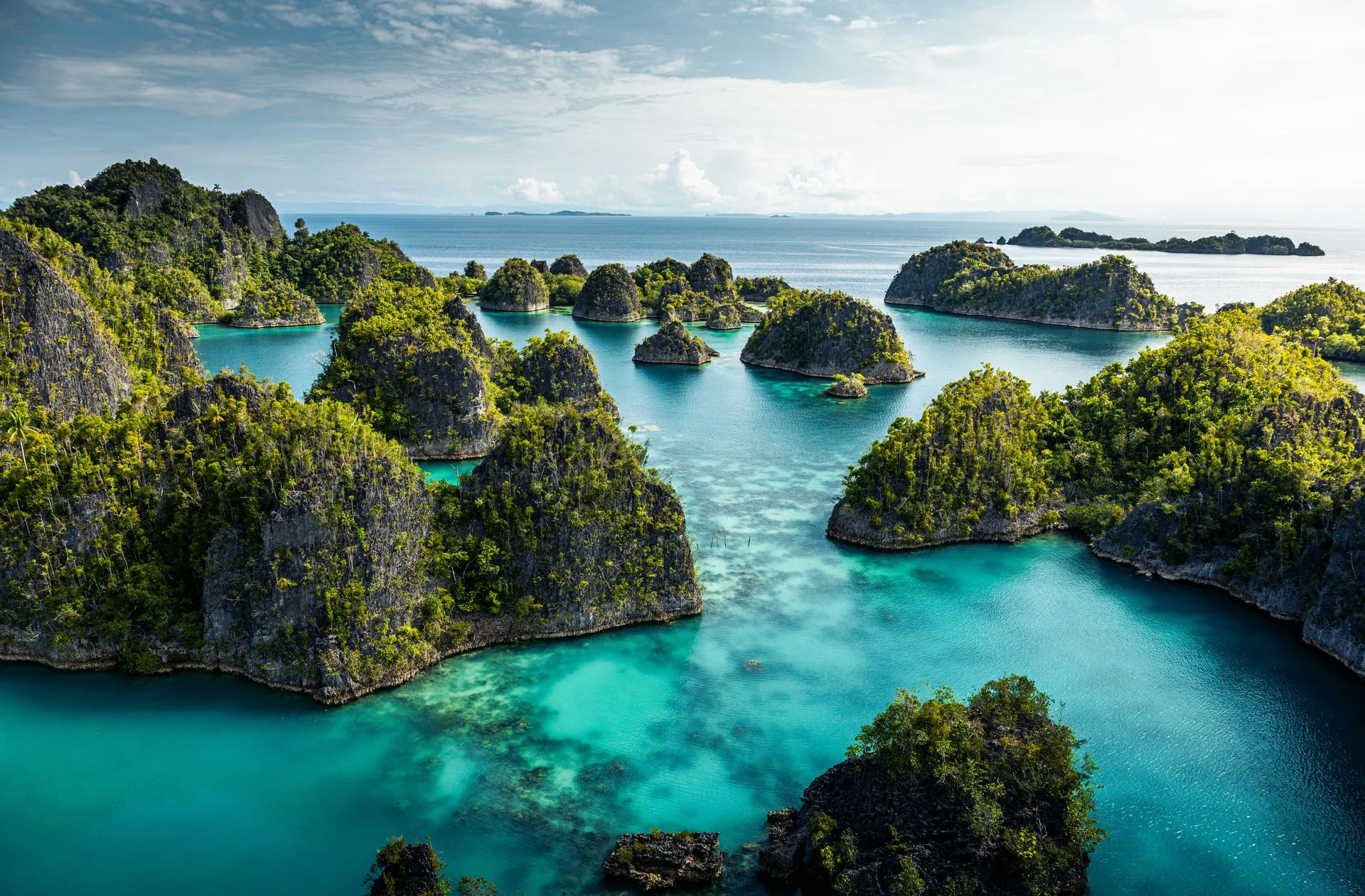
Raja Ampat, the “Four Kings,” is an archipelago of more than 1,500 islands at the edge of Indonesian West Papua. Its reefs sit in the heart of the Coral Triangle, where Pacific currents funnel nutrients into shallow seas and feed the world’s richest marine biodiversity. Diving here means gliding over colourful walls and coral gardens buzzing with more than 550 species of hard and soft corals and an estimated 1,500 fish species. You’ll meet blacktip and whitetip reef sharks on almost every dive, witness giant trevally and dogtooth tuna hunting schools of fusiliers, and encounter wobbegong “carpet” sharks, turtles, manta rays and dolphins. From cape pinnacles swarming with life to calm bays rich in macro critters, Raja Ampat offers endless variety. Above water, karst limestone islands and emerald lagoons provide spectacular scenery between dives.