
Ribbon Eel
Rhinomuraena quaesita
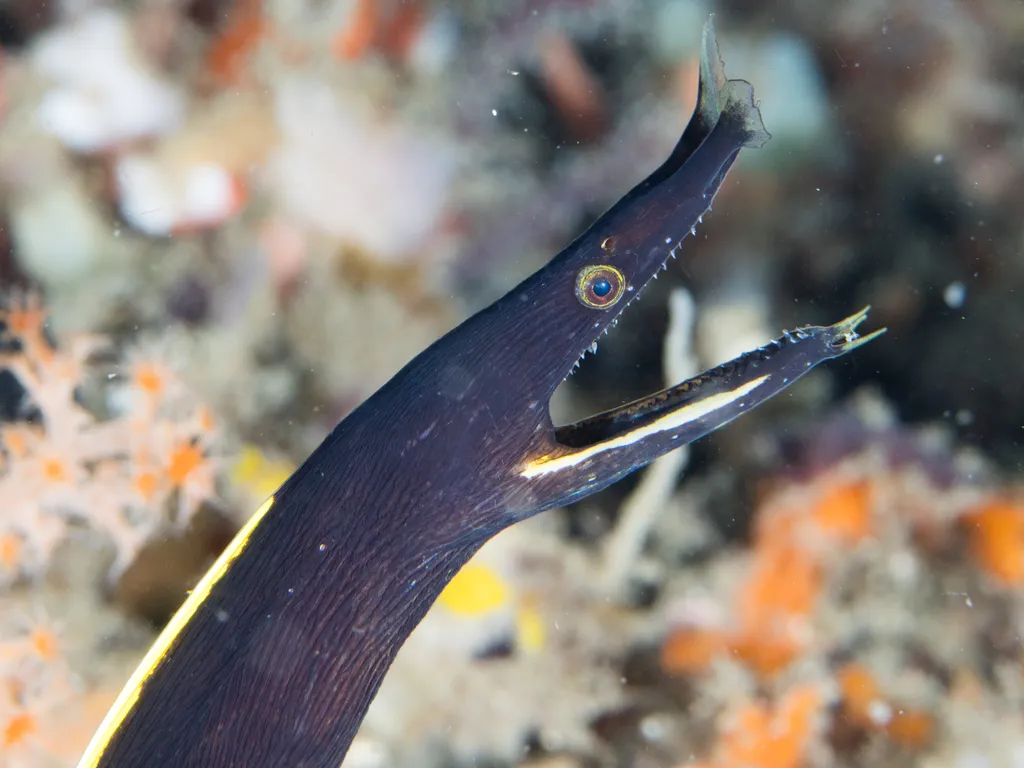
Photo by Rickard Zerpe / CC BY 2.0 via Wikimedia Commons
Ribbon eels are one of those critters that make a macro dive feel cinematic. You usually spot the same individual poking out of a sand burrow, jaws opening and closing in a steady rhythm while current carries scent and plankton past the entrance.
The species is famous for dramatic color changes through life stage and sex transition. Juveniles are mostly black, adult males are vivid blue, and large females shift toward yellow. Seeing those color morphs across different dives is part of the fun for underwater photographers.
For divers, this is a patience species, not a chase species. Hold position, keep your profile low, and let the eel decide whether to extend farther from the hole. When approached respectfully, ribbon eels often give long, stable viewing windows that are perfect for observation and portraits.
🔬Classification
📏Physical Features
🌊Habitat Info
⚠️Safety & Conservation
Identification Guide
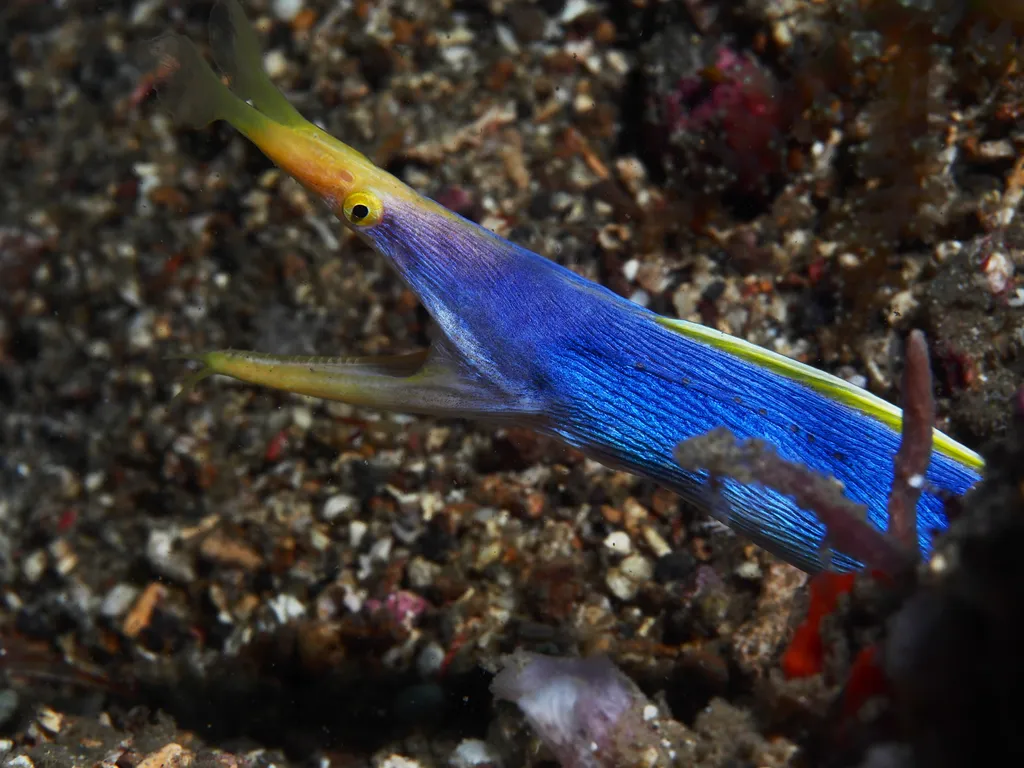
Photo by Rickard Zerpe / CC BY-SA 2.0 via Wikimedia Commons
1. Nose shape first
The fan-like anterior nostrils are the fastest field mark. Even at distance, those flared tubes make the silhouette very different from most morays.
2. Color phase helps age/sex guess
Black phase is usually juvenile, blue phase commonly male, yellow phase commonly female. Use this as a practical dive-side cue, not as strict proof for every individual.
3. Burrow behavior
Ribbon eels often hold a fixed burrow with only the front section exposed. If the whole body is out and moving across open substrate, you are likely catching a less common transition moment.
Top 10 Fun Facts about Ribbon Eel
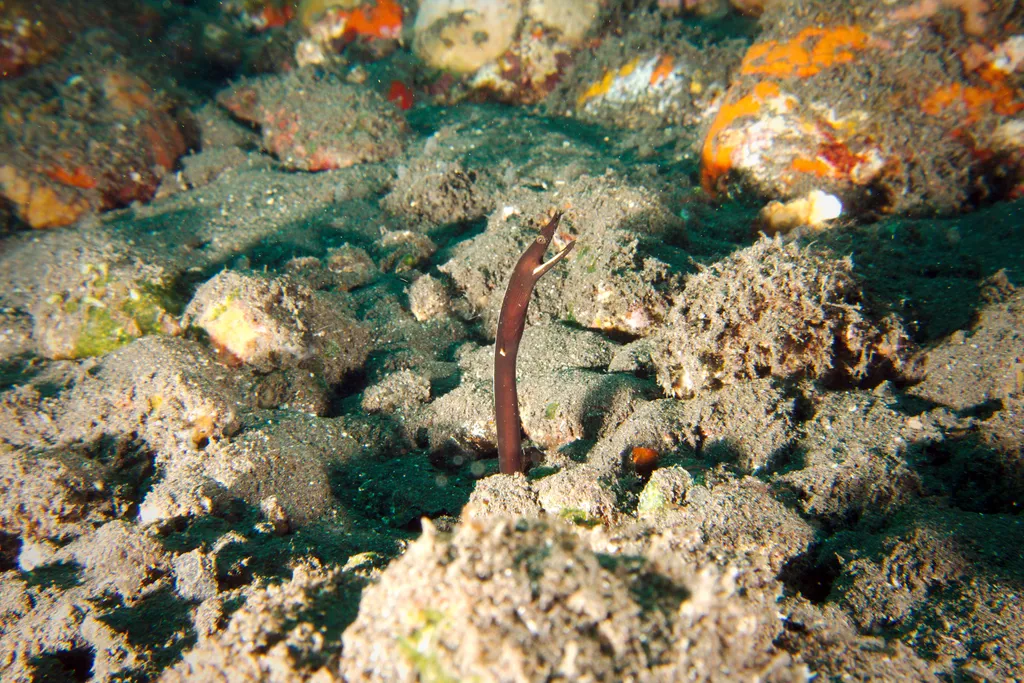
Photo by Paul Kli / CC BY-SA 2.0 via Wikimedia Commons
1. It is the only species in its genus
Rhinomuraena has just one recognized species, so every ribbon eel encounter is a look at an evolutionary oddball among morays.
2. Color change is tied to life history
The famous black-blue-yellow progression is linked to growth and protandrous sex change patterns, which is unusual and highly visible to divers.
3. The nostrils are functional tools
Those exaggerated nasal flaps are not decoration; they improve chemical sensing in moving water, helping detect prey while the eel stays mostly hidden.
4. Mouth gaping is usually ventilation, not threat
Divers often mistake repeated jaw opening for aggression. Most of the time it is routine breathing behavior used by morays to pass water over the gills.
5. Burrow fidelity can be impressive
Individuals can occupy the same patch for long periods, which is why local guides often know exact holes and can revisit them over multiple days.
6. It is a predator of small fishes
Ribbon eels are ambush hunters focused on small reef fish and similar prey drifting within strike range of the burrow entrance.
7. Most sightings are in warm tropical water
The species is strongly Indo-Pacific tropical, and dive logs cluster in warm reef systems rather than cooler subtropical margins.
8. Females can become substantially larger
Large yellow females can reach around 130 cm, making them notably longer than many blue-phase individuals seen on casual dives.
9. It is common in photography portfolios but tricky to shoot well
Everyone wants the iconic head-on frame, yet depth of field, surge, and backscatter near sand make technically clean shots surprisingly hard.
10. Good etiquette increases encounter quality
Slow approach, neutral buoyancy, and no poking produce longer natural behavior sequences than any attempt to force the animal out of its shelter.
Diving & Observation Notes
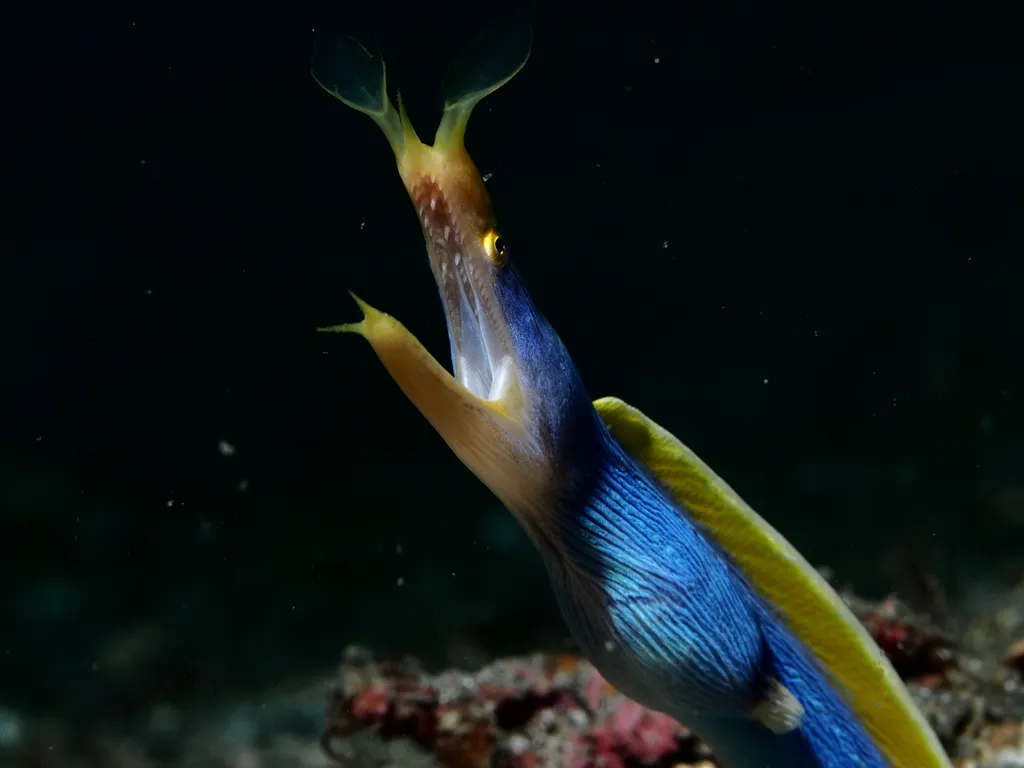
Photo by Rickard Zerpe / CC BY-SA 2.0 via Wikimedia Commons
Finding strategy
Search sandy channels and rubble tongues right next to reef structure. Ask guides for known ribbon eel burrows and approach from the side with current in mind.
Approach and positioning
Keep fins high and avoid thrusting over the hole. Settle at a respectful distance, then inch closer only if the eel remains relaxed and extended.
Camera setup tips
For portraits, use moderate macro range and keep focus on the eye and nostril structures. Slightly faster shutter helps freeze head sway in surge. Watch backscatter over pale sand.
Buddy and ethics
Rotate shooters instead of crowding. Never prod the burrow with pointers. If the eel retracts repeatedly, back off and let the site reset.
Best Places to Dive with Ribbon Eel
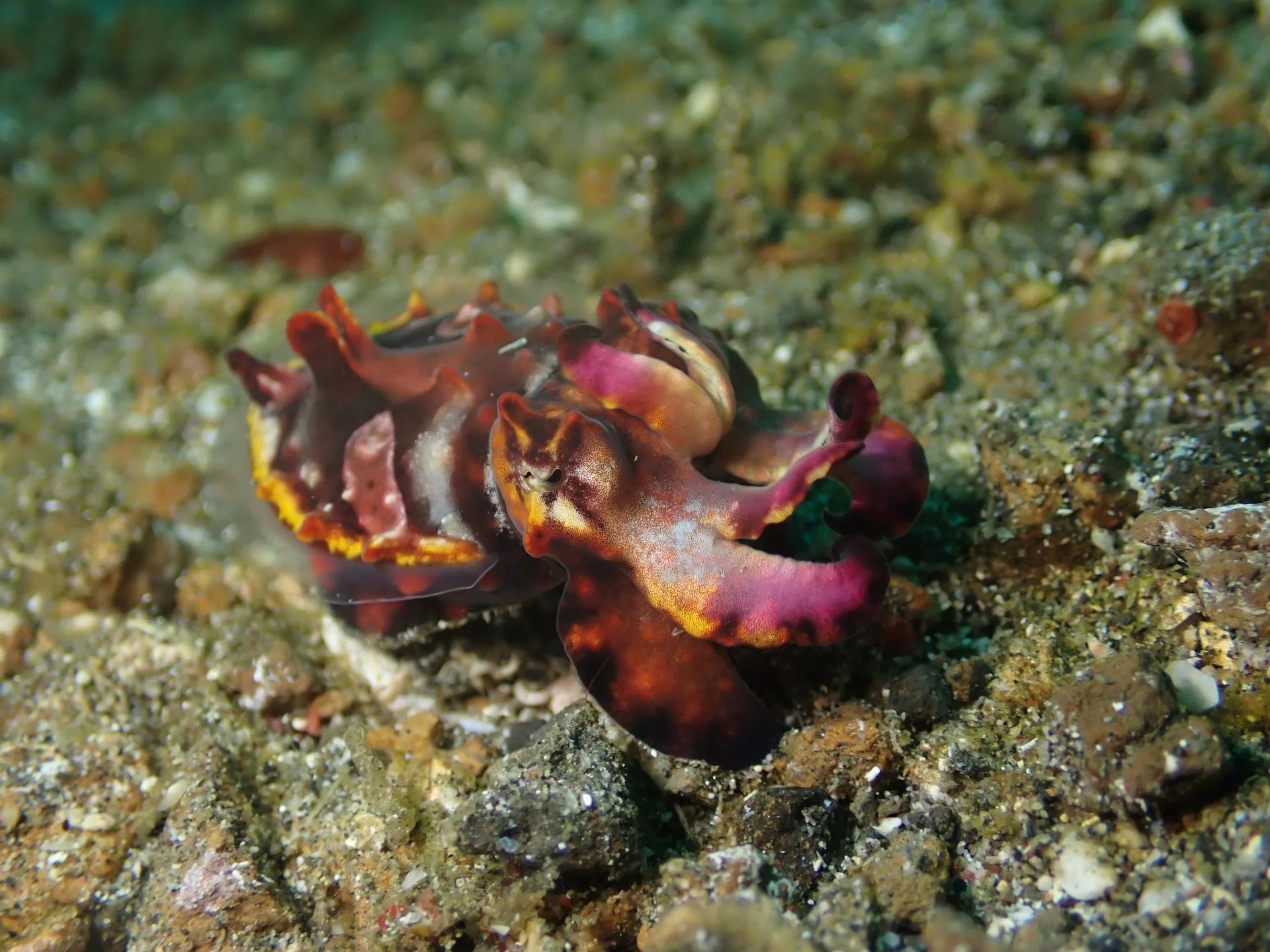
Lembeh
The Lembeh Strait in North Sulawesi has become famous as the muck‑diving capital of the world. At first glance its gently sloping seabed of black volcanic sand, rubble and discarded debris looks bleak. Look closer and it is teeming with weird and wonderful life: hairy and painted frogfish, flamboyant cuttlefish, mimic and blue‑ringed octopuses, ornate ghost pipefish, tiny seahorses, shrimp, crabs and a rainbow of nudibranchs. Most dives are shallow and calm with little current, making it an ideal playground for macro photographers. There are a few colourful reefs for a change of scenery, but Lembeh is all about searching the sand for critter treasures.
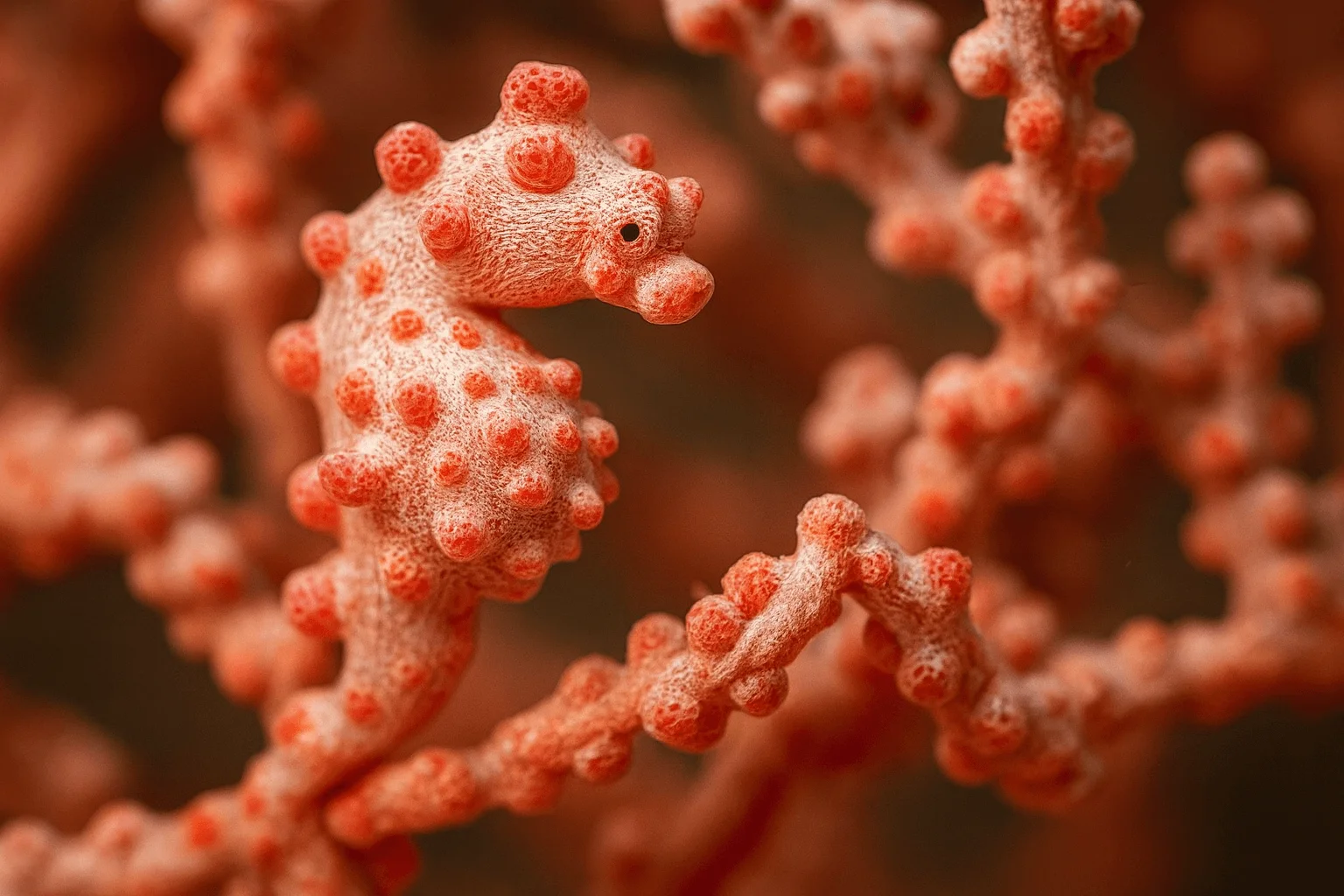
Anilao
Anilao, a small barangay in Batangas province just two hours south of Manila, is often called the macro capital of the Philippines. More than 50 dive sites fringe the coast and nearby islands, offering an intoxicating mix of coral‑covered pinnacles, muck slopes and blackwater encounters. Critter enthusiasts come for the legendary muck dives at Secret Bay and Anilao Pier, where mimic octopuses, blue‑ringed octopuses, wonderpus, seahorses, ghost pipefish, frogfish and dozens of nudibranch species lurk in the silt. Shallow reefs like Twin Rocks and Cathedral are covered in soft corals and teem with reef fish, while deeper sites such as Ligpo Island feature gorgonian‑covered walls and occasional drift. Because Anilao is so close to Manila and open year‑round, it’s the easiest place in the Philippines to squeeze in a quick diving getaway.
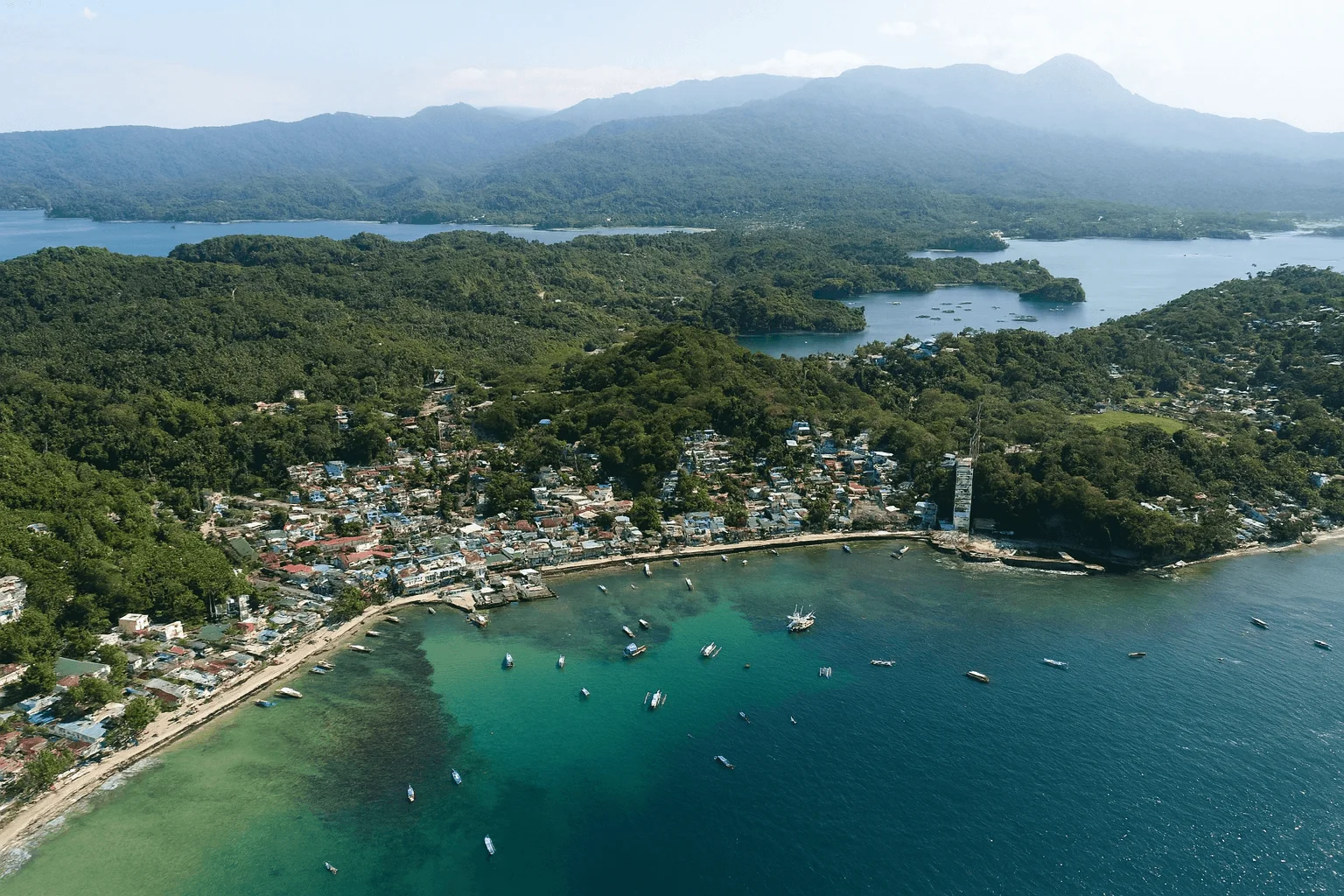
Puerto Galera
Puerto Galera sits on the northeast tip of Mindoro Island in the Philippines and has long been rated among Asia’s best and most diverse diving areas. The town faces the Verde Island Passage – part of the Coral Triangle – so its reefs host an incredible mix of hard and soft corals, seahorses, frogfish and other critters alongside schooling jacks and occasional pelagics. More than forty sites line the bays and headlands around Sabang and Small La Laguna, meaning everything from easy house‑reef dives and shallow muck sites to current‑swept canyons and colourful wrecks is only a short boat ride away. Currents are governed by the lunar cycle; strong spring tides around full and new moon create exciting drift dives, while neap tides offer gentle conditions that are perfect for macro photography. Because the water stays warm all year (27–30 °C) and visibility often reaches 15–30 m, Puerto Galera attracts both beginners and experienced divers seeking a fun, affordable destination with lively nightlife on land.
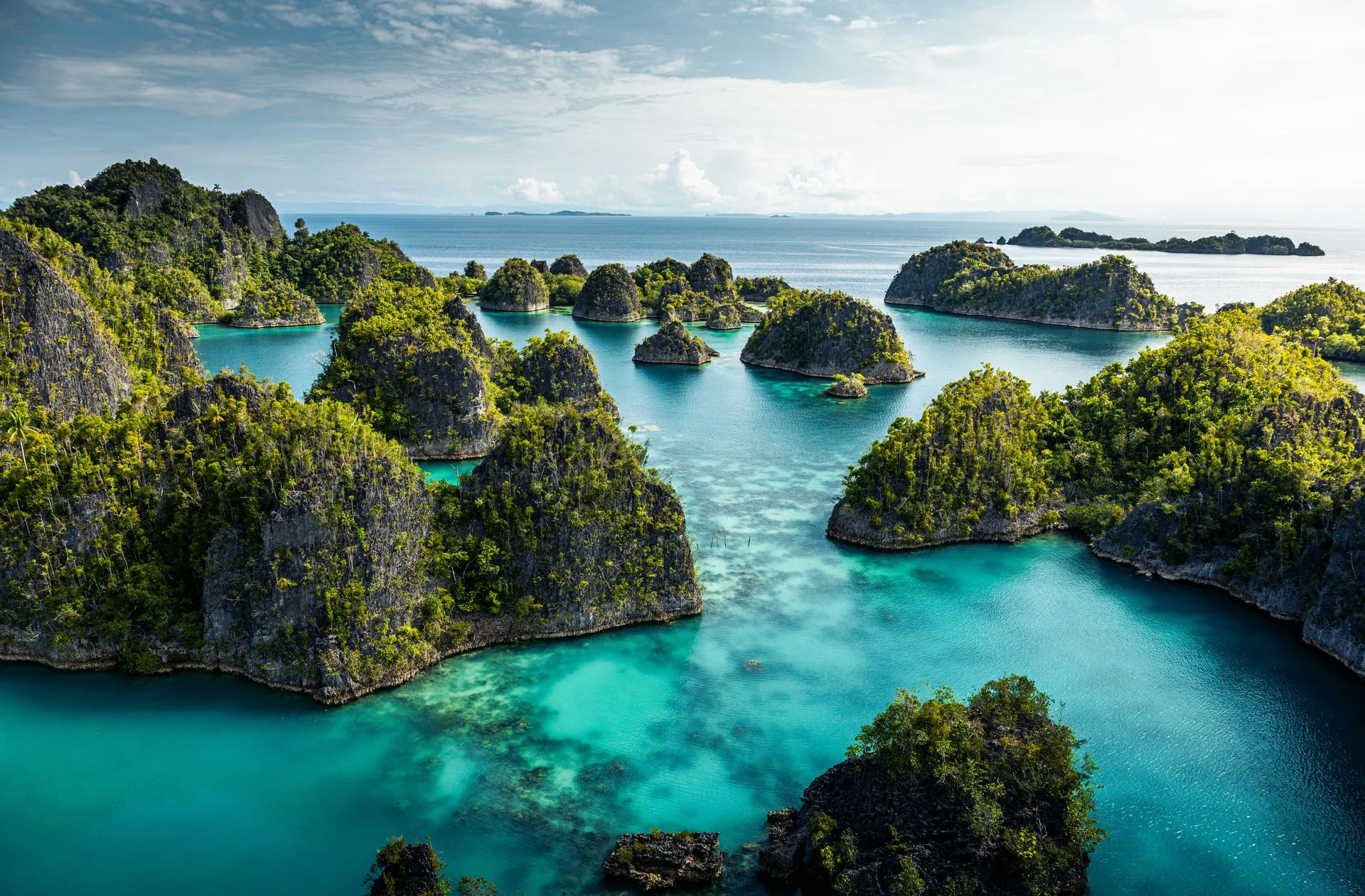
Raja Ampat
Raja Ampat, the “Four Kings,” is an archipelago of more than 1,500 islands at the edge of Indonesian West Papua. Its reefs sit in the heart of the Coral Triangle, where Pacific currents funnel nutrients into shallow seas and feed the world’s richest marine biodiversity. Diving here means gliding over colourful walls and coral gardens buzzing with more than 550 species of hard and soft corals and an estimated 1,500 fish species. You’ll meet blacktip and whitetip reef sharks on almost every dive, witness giant trevally and dogtooth tuna hunting schools of fusiliers, and encounter wobbegong “carpet” sharks, turtles, manta rays and dolphins. From cape pinnacles swarming with life to calm bays rich in macro critters, Raja Ampat offers endless variety. Above water, karst limestone islands and emerald lagoons provide spectacular scenery between dives.
Dahab
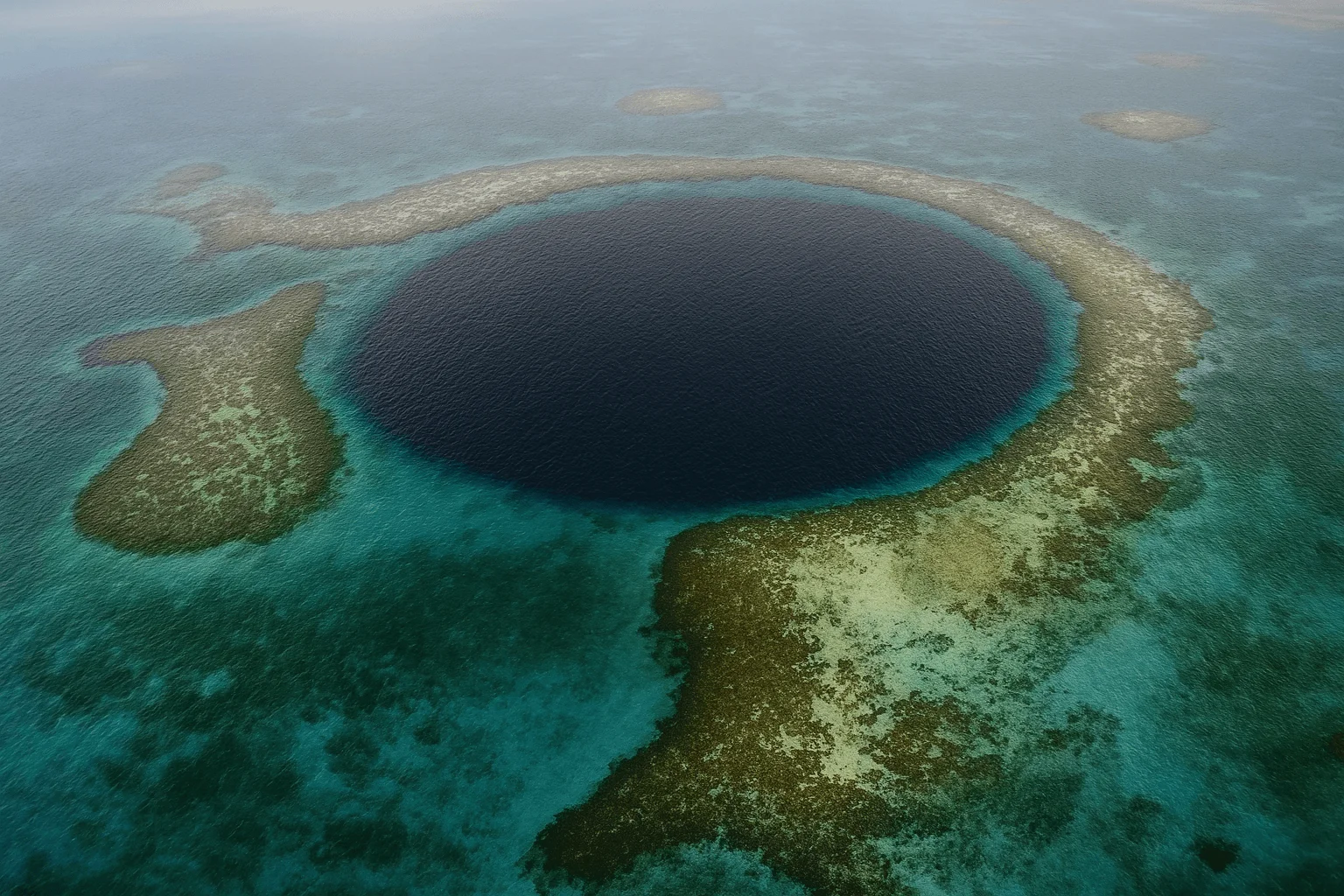
Dahab is a laid‑back Bedouin village on Egypt’s Sinai Peninsula that has become a magnet for divers and free divers alike. The fringing reef starts just a few metres from the beach, dropping into a coral‑covered plateau and steep walls cut by canyons and chimney‑like holes. From beginner‑friendly shore entries at Lighthouse and Coral Garden to the legendary Blue Hole and Canyon, Dahab offers reef gardens full of anthias, butterflyfish and turtles as well as thrilling drift dives and deep blue walls. Year‑round sunshine, clear desert air and a bohemian vibe make it easy to spend weeks exploring the many dive sites along the shoreline and by boat.