
Sea Squirt
Ascidiacea
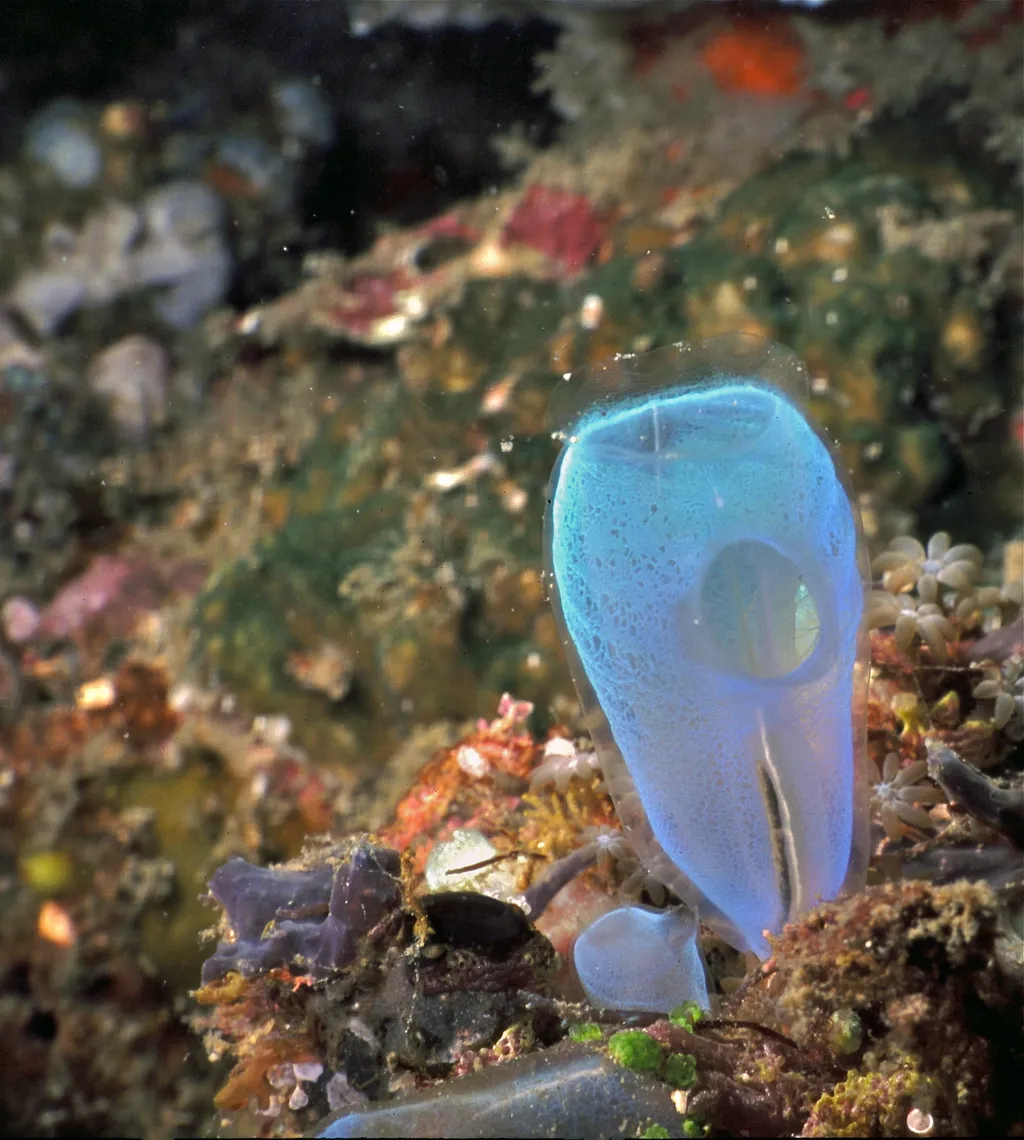
Photo by Bernard DUPONT from FRANCE / CC BY-SA 2.0 via Wikimedia Commons
To a diver, sea squirts might look like colorful, squishy blobs attached to rocks and shipwrecks—simple, static, and perhaps not particularly exciting. But this unassuming appearance hides one of evolution's most fascinating stories. Sea squirts are chordates—members of the same phylum as fish, birds, and humans. Yes, you read that correctly: these squishy, blob-like creatures are distant relatives of vertebrates. But here's the twist: sea squirt larvae look like tiny tadpoles with tails, notochords (the precursor to backbones), and nerve cords—all the hallmarks of chordates. Then something extraordinary happens: when the larva settles and transforms into an adult, it eats its own brain and nervous system, loses its tail and notochord, and becomes a sessile filter-feeder that looks nothing like a chordate. It's evolution in reverse—a sophisticated, mobile larva that deliberately simplifies into a simple, fixed adult. For divers, sea squirts are the colorful, often translucent blobs that cover reef walls and shipwrecks, their two siphons (one for water in, one for water out) creating a constant flow of filtered seawater. Understanding sea squirts means understanding that sometimes the most unassuming creatures have the most remarkable evolutionary histories, and that our own distant ancestors might have looked something like a sea squirt larva swimming in an ancient ocean.
🔬Classification
📏Physical Features
🌊Habitat Info
⚠️Safety & Conservation
Identification Guide
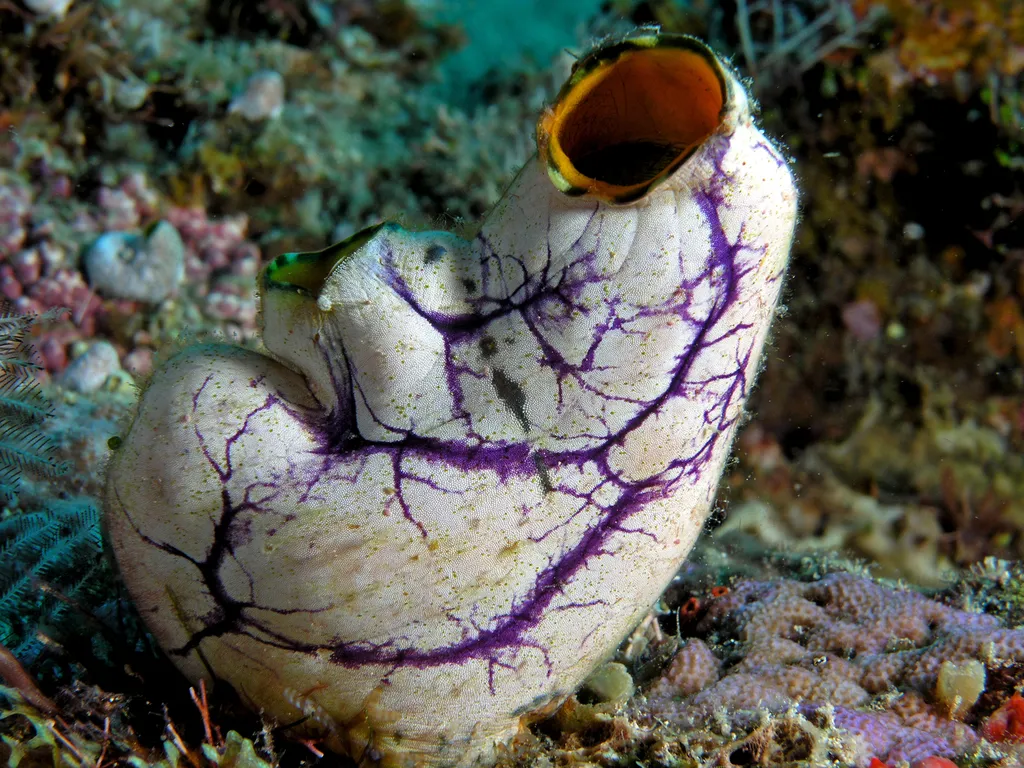
Photo by Nhobgood Nick Hobgood / CC BY-SA 3.0 via Wikimedia Commons
- Two Siphons: Look for two openings—oral/incurrent siphon (water in) and atrial/excurrent siphon (water out)
- Soft, Gelatinous Body: Soft, squishy texture—can be compressed (unlike hard corals or barnacles)
- Tunic: Outer covering (tunic) may be smooth, wrinkled, or covered with encrusting organisms
- Shape Variety:
- Solitary: Individual sac-like or urn-shaped forms
- Colonial: Multiple small zooids embedded in a common tunic, forming mats or sheets
- Color: Often bright and vibrant; some species are translucent, revealing internal structures
- Water Flow: Observe water being drawn in and expelled—active filtering is visible
- No Hard Skeleton: Unlike corals or barnacles, completely soft with no calcareous structures
- Attachment: Firmly attached to substrate with a base or stalk
- Response to Touch: May contract and squirt water when disturbed (hence the name "sea squirt")
Top 10 Fun Facts about Sea Squirt
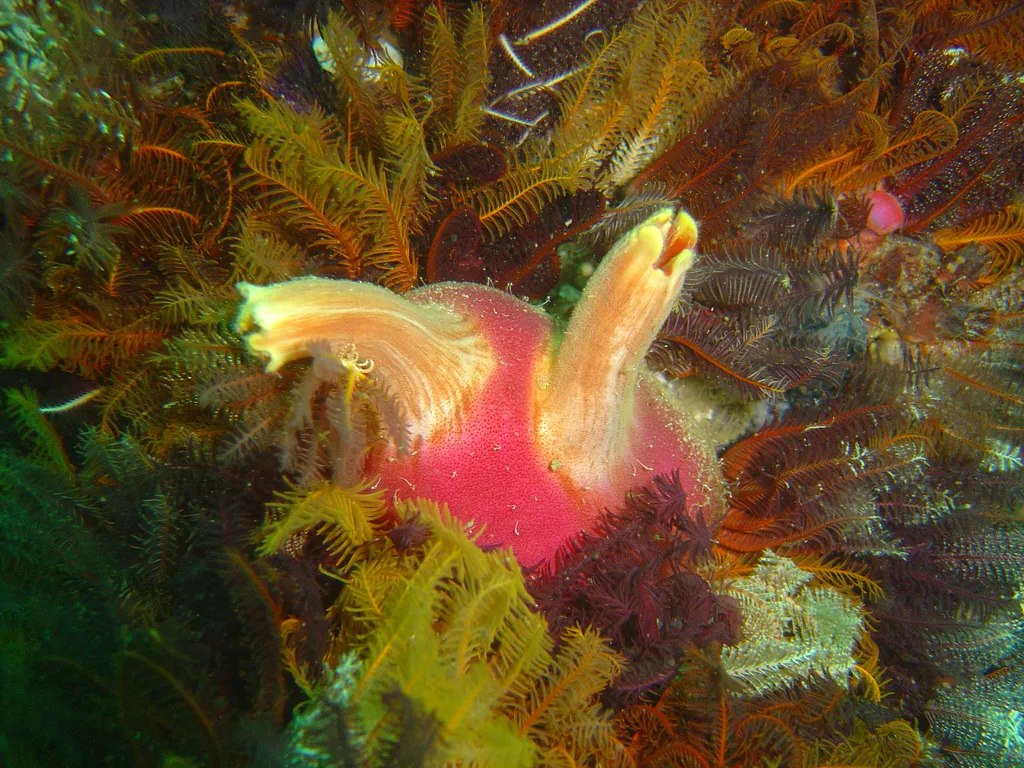
Photo by Peter Southwood / CC BY-SA 3.0 via Wikimedia Commons
1. The Chordate Paradox: Our Distant Relatives
Sea squirts are among the most surprising members of the animal kingdom because they're chordates—members of the same phylum as humans, fish, birds, and all other vertebrates. This means that despite looking like colorful blobs, sea squirts share a fundamental body plan with creatures that have backbones. The connection becomes obvious when you look at sea squirt larvae: they're essentially tiny tadpoles with tails, notochords (the evolutionary precursor to backbones), dorsal nerve cords, and sensory organs. These are all the defining characteristics of chordates. But here's where it gets bizarre: when the larva settles and metamorphoses into an adult, it deliberately destroys these chordate features. The tail is reabsorbed, the notochord disappears, most of the nervous system is consumed, and the larva transforms into a sessile filter-feeder that bears no resemblance to its mobile, chordate youth. It's as if evolution decided to take a sophisticated, mobile animal and simplify it into a stationary blob. Scientists believe this represents an evolutionary strategy: the mobile larva can disperse and find suitable habitat, then the adult specializes for efficient filter-feeding. For divers, understanding this chordate connection means that when you see a sea squirt, you're looking at a distant relative—a creature that shares ancient evolutionary history with all vertebrates, including humans.
2. The Self-Cannibalizing Metamorphosis
Sea squirt metamorphosis is one of the most dramatic transformations in the animal kingdom, and it involves something that sounds like science fiction: the larva eats its own brain. When a sea squirt larva finds a suitable place to settle, it attaches itself and begins a radical transformation. The tail, which contains the notochord and much of the nervous system, is reabsorbed into the body. The cerebral ganglion (a simple brain) is consumed by specialized cells. The sensory organs degenerate. What emerges is a completely different animal—a sessile filter-feeder with two siphons and a pharyngeal basket for filtering food. This self-cannibalization isn't wasteful—it's an efficient way to recycle nutrients and structures that are no longer needed. The adult sea squirt doesn't need a tail (it's not going anywhere), doesn't need complex sensory organs (it's not hunting), and doesn't need much of a brain (filter-feeding is largely automatic). This metamorphosis is so complete that if you didn't know about the larval stage, you'd never guess that sea squirts are chordates. For divers, this means that the colorful blobs on the reef represent the endpoint of one of nature's most extreme makeovers—a mobile, sophisticated larva that deliberately simplifies itself into a stationary adult.
3. The Tunic: Cellulose in an Animal
Sea squirts get their scientific name "Tunicata" from their tunic—a unique outer covering that's unlike anything else in the animal kingdom. The tunic is made of a substance called tunicin, which is chemically very similar to cellulose, the material that makes up plant cell walls. This is remarkable because cellulose is almost never found in animals—it's a plant characteristic. Sea squirts are one of the very few exceptions. The tunic serves multiple functions: it provides structural support, protection from predators, and a surface for attachment. In some species, the tunic is thin and transparent, allowing you to see the internal organs. In others, it's thick and leathery, providing robust protection. Some sea squirts have tunics covered with encrusting organisms like algae, bryozoans, or other sea squirts, creating complex micro-ecosystems. The tunic can also contain defensive chemicals and spicules (tiny skeletal elements) that deter predators. For divers, the tunic is what gives sea squirts their characteristic appearance—that soft, sometimes translucent covering that makes them look like living blobs. Understanding the tunic helps explain why sea squirts feel different from other reef animals and why they can be so diverse in appearance despite sharing the same basic body plan.
4. The Filter-Feeding Mastery: Processing the Ocean
Sea squirts are among the ocean's most efficient filter feeders, processing enormous volumes of water to extract food. The system is elegantly simple: water enters through the oral siphon (incurrent siphon), flows through a pharyngeal basket lined with cilia and slits, where food particles are trapped and oxygen is extracted, then exits through the atrial siphon (excurrent siphon). The pharyngeal slits are the key—they're lined with mucus that traps particles, and cilia that create water currents. Some sea squirts can process hundreds of times their body volume in water per hour, making them incredibly efficient at extracting nutrients from the water column. This filtering ability is so effective that sea squirts play important roles in water quality and nutrient cycling in marine ecosystems. They remove bacteria, plankton, detritus, and dissolved organic matter from the water, essentially acting as living water purifiers. In areas with high sea squirt densities, they can significantly impact water clarity and nutrient availability. For divers, watching a sea squirt filter feed is like watching a biological pump in action—water flows in one end, gets processed, and flows out the other, with the sea squirt extracting everything it needs to survive. This constant flow is what makes sea squirts so effective at their job and so important to reef ecosystems.
5. The Colonial Strategy: Strength in Numbers
Many sea squirt species are colonial, meaning multiple individuals (zooids) live together in a shared tunic, creating what looks like a single organism but is actually a community. Colonial sea squirts can form extensive mats, sheets, or branching structures that cover large areas of substrate. Each zooid in the colony is a complete individual with its own siphons, pharyngeal basket, and digestive system, but they're all connected and share resources. Some colonial species have shared excurrent siphons, where multiple zooids expel water through a common opening. This colonial lifestyle offers several advantages: it provides strength and stability, allows for efficient resource sharing, and creates larger structures that can better compete for space on crowded reefs. Colonial sea squirts can reproduce both sexually (producing larvae) and asexually (through budding or fragmentation), allowing them to spread rapidly. Some invasive colonial sea squirts have become major ecological problems, overgrowing native species and altering habitats. For divers, colonial sea squirts can be spectacular—large, colorful mats covering reef walls or shipwrecks, creating vibrant underwater landscapes. Understanding the colonial strategy helps explain why some sea squirts form such extensive coverings and why they can be so successful in certain environments.
6. The "Sea Squirt" Name: A Defensive Squirt
The common name "sea squirt" comes from one of these animals' most distinctive behaviors: when disturbed, touched, or removed from the water, sea squirts can contract violently and squirt water from their siphons. This defensive behavior is both startling and effective—the sudden water jet can startle potential predators and help the sea squirt expel unwanted material. The contraction is powered by muscles in the body wall, and the water being squirted is the water that was being filtered at that moment. This behavior is so characteristic that it's become the defining feature that gives sea squirts their name. For divers, this means that if you gently touch a sea squirt (though you shouldn't), you might see it contract and squirt—a reminder that even seemingly passive filter-feeders have active defense mechanisms. The squirt is also a sign of a healthy, actively filtering sea squirt—if it's filtering water, it has water to squirt. Understanding this behavior helps explain why sea squirts can't be easily removed from their substrate—they're firmly attached and can actively resist disturbance through contraction and water expulsion.
7. The Hermaphrodite Strategy: Both Sexes at Once
Most sea squirts are simultaneous hermaphrodites, meaning each individual produces both eggs and sperm at the same time. This reproductive strategy is common among sessile marine animals because it maximizes reproductive opportunities—every sea squirt you encounter is a potential mate. However, sea squirts have evolved mechanisms to prevent self-fertilization, which would reduce genetic diversity. Instead, they typically cross-fertilize with neighboring individuals. During spawning, sea squirts release eggs and sperm into the water column, where fertilization occurs. The timing is often synchronized within populations, creating spawning events where many individuals release gametes simultaneously. This synchronization increases the chances of successful fertilization and helps ensure genetic mixing. After fertilization, the eggs develop into free-swimming larvae that can disperse to new locations. Some colonial species can also reproduce asexually through budding or fragmentation, allowing them to spread rapidly across suitable substrates. For divers, understanding sea squirt reproduction helps explain why you might see dense populations in certain areas—successful reproduction and larval settlement can create "sea squirt gardens" that cover extensive areas of reef or artificial structures.
8. The Deep-Sea Colonists: Life in the Abyss
While many sea squirts are found in shallow waters, some species have colonized the deepest parts of the ocean. Deep-sea sea squirts can be found at depths exceeding 6,000 meters, in environments with crushing pressure, near-freezing temperatures, and complete darkness. These deep-sea species have adapted to conditions that would be impossible for most shallow-water animals. They often have more robust tunics, slower metabolisms, and specialized adaptations for life in the abyss. Some deep-sea sea squirts are among the largest known, with individuals reaching sizes that dwarf their shallow-water relatives. The discovery of sea squirts in such extreme environments demonstrates their remarkable adaptability and helps explain why they've been so successful for so long. For most divers, deep-sea sea squirts remain out of reach, but they're a reminder that the world of sea squirts extends far beyond the colorful shallow reefs we know. Understanding these deep-sea adaptations helps us appreciate that sea squirts are true survivors, capable of thriving in environments that challenge the limits of life itself.
9. The Medical Treasure Trove: Compounds from the Sea
Sea squirts are among the ocean's most promising sources of bioactive compounds with potential medical applications. Scientists have discovered numerous chemicals from sea squirts that show promise for treating cancer, bacterial infections, and other diseases. One of the most famous examples is trabectedin (ET-743), a compound isolated from the colonial sea squirt Ecteinascidia turbinata that's been developed into an anti-cancer drug. This compound and others like it work by interfering with DNA replication in cancer cells, making them valuable tools in cancer treatment. The reason sea squirts produce so many defensive chemicals is that they can't escape predators—they're stuck in one place, so they've evolved chemical warfare instead. These compounds deter predators, prevent fouling by other organisms, and protect against disease. The diversity of these chemicals is remarkable: different species produce different compounds, and even the same species can produce different chemicals depending on environmental conditions. Scientists are constantly discovering new compounds from sea squirts, making them one of the most important sources of marine-derived pharmaceuticals. For divers, this means that those colorful blobs on the reef might one day contribute to saving human lives. Understanding this pharmaceutical potential helps us appreciate that protecting sea squirt biodiversity isn't just about preserving pretty reef decorations—it's about preserving potential sources of life-saving medicines.
10. The Invasive Problem: When Success Becomes a Threat
Some sea squirt species have become notorious invasive species, spreading far beyond their native ranges and causing significant ecological and economic damage. Colonial sea squirts are particularly problematic because they can reproduce both sexually and asexually, allowing them to spread rapidly. They often attach to artificial structures like ship hulls, docks, and aquaculture equipment, creating dense mats that can smother native species, alter habitats, and interfere with human activities. Some invasive sea squirts can filter water so efficiently that they outcompete native filter-feeders, while others simply overgrow everything in their path. The economic impacts can be substantial: invasive sea squirts can foul ship hulls, clog water intake systems, and damage aquaculture operations. Control is difficult because sea squirts can regenerate from fragments, making mechanical removal challenging. Some regions have spent millions of dollars trying to control invasive sea squirt populations. For divers, invasive sea squirts are often visible as extensive, monotypic coverings on artificial structures or in areas where they've displaced native species. Understanding the invasive potential of some sea squirts helps us appreciate that even seemingly harmless filter-feeders can become major ecological problems when introduced to new environments. It's a reminder that every species has the potential to become invasive under the right (or wrong) conditions.
Diving & Observation Notes
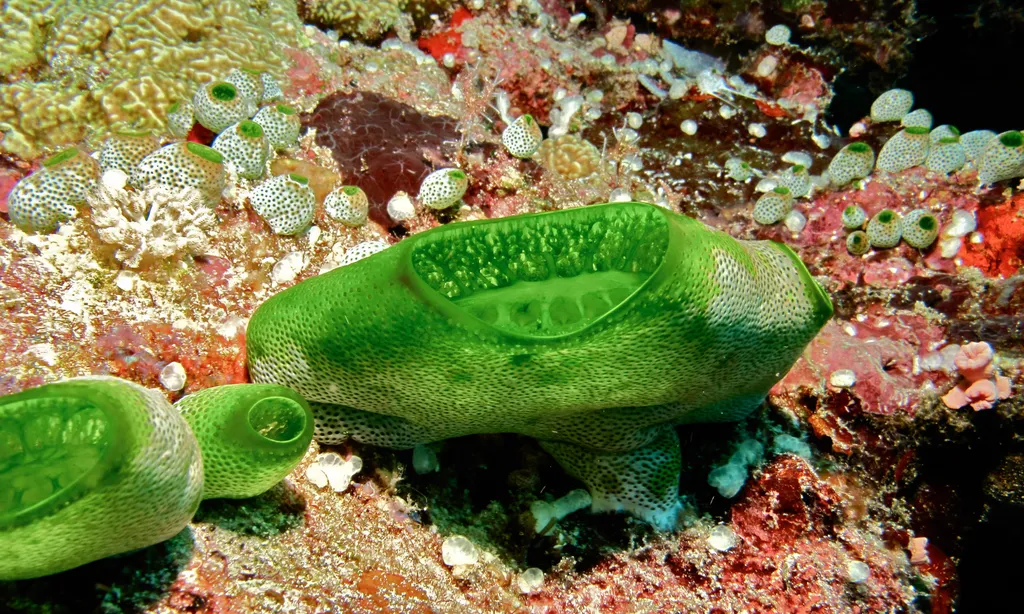
Photo by Bernard DUPONT from FRANCE / CC BY-SA 2.0 via Wikimedia Commons
🧭 Finding Sea Squirts
- Hard Substrates: Look on rocks, coral reefs, shipwrecks, piers, pilings, and artificial structures.
- Current Areas: Often found in areas with good water flow where plankton is abundant.
- Shaded Areas: Some species prefer shaded or protected areas like caves and overhangs.
- Depth Range: Found from intertidal zones (exposed at low tide) to deep walls (40m+), with some species in very deep water.
🤿 Behavior & Observation
- Filter Feeding: Observe water being drawn in through the oral siphon and expelled through the atrial siphon.
- Contraction Response: Watch for contraction and water squirting when disturbed (observe but don't touch).
- Colonial Forms: Look for extensive mats or sheets formed by colonial species covering large areas.
- Color Variations: Notice the wide range of colors and transparency—some species reveal internal structures.
📸 Photo Tips
- Macro Details: Focus on siphons and the tunic surface—reveals intricate structures and textures.
- Translucent Species: Use backlighting to highlight the transparency and internal organs of translucent species.
- Colonial Mats: Wide-angle shots of extensive colonial coverings create dramatic compositions.
- Color Accuracy: Use proper white balance to capture the vibrant colors accurately.
- Water Flow: Capture the active filtering with visible water currents if possible.
⚠️ Safety & Ethics
- No Touch: Never touch sea squirts—they're fragile and can be damaged easily.
- Buoyancy Control: Maintain perfect buoyancy to avoid accidental contact.
- No Collection: Do not collect sea squirts—they play important ecological roles.
- Respect Filtering: Don't block siphons or disturb water flow—sea squirts are actively filtering.
- Avoid Sediment: Don't kick up sediment that could clog siphons or interfere with filtering.
🌏 Best Locations
- Anilao & Lembeh (Philippines/Indonesia): Excellent macro diving with diverse sea squirt species.
- Shipwrecks Worldwide: Artificial structures often host dense sea squirt populations.
- Great Barrier Reef: Diverse sea squirt communities on reef walls and structures.
- Caribbean: Classic sea squirt habitats with both solitary and colonial species.
- Mediterranean: Well-studied sea squirt populations, including some invasive species.
- Red Sea: Unique species adapted to high salinity conditions.
Best Places to Dive with Sea Squirt
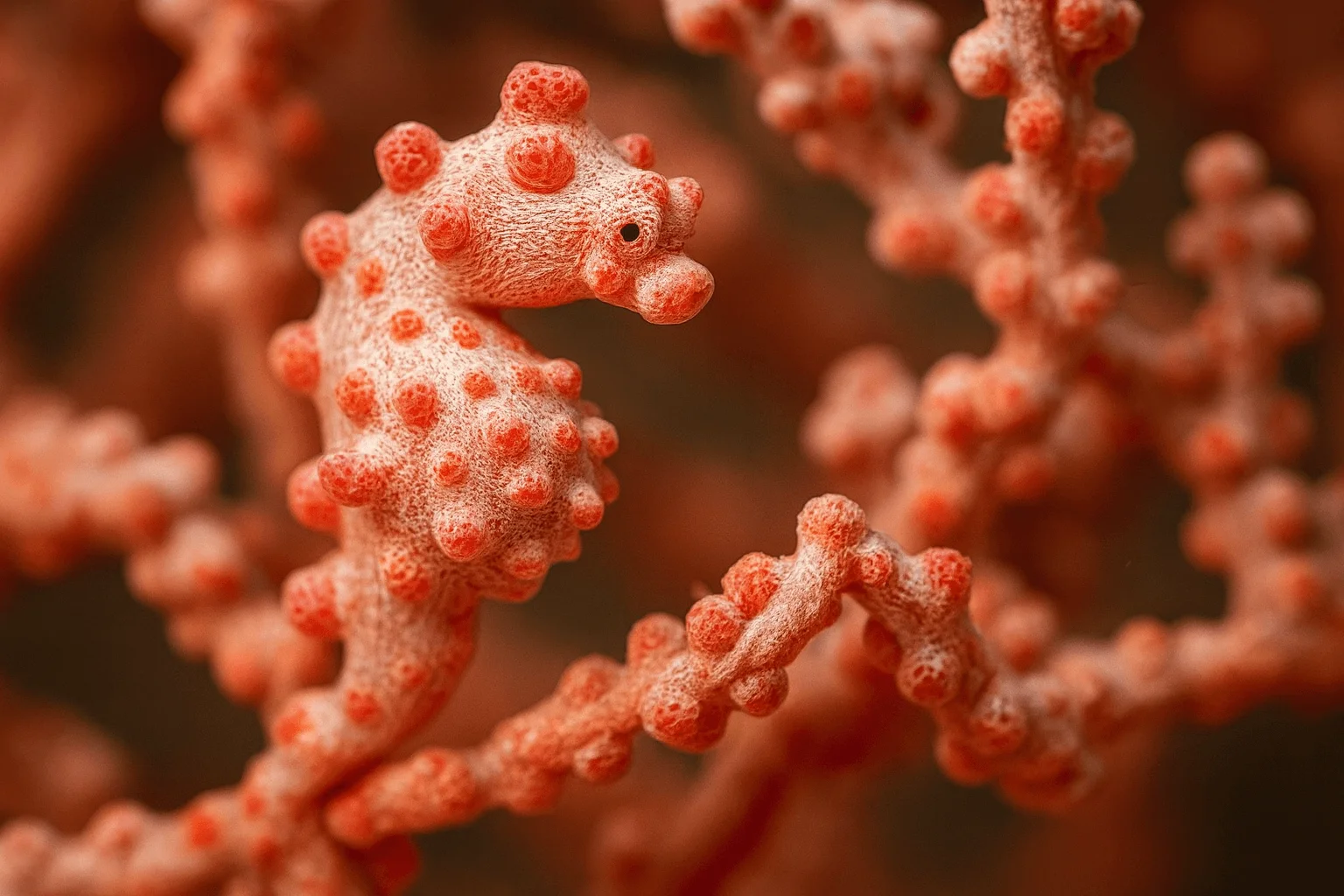
Anilao
Anilao, a small barangay in Batangas province just two hours south of Manila, is often called the macro capital of the Philippines. More than 50 dive sites fringe the coast and nearby islands, offering an intoxicating mix of coral‑covered pinnacles, muck slopes and blackwater encounters. Critter enthusiasts come for the legendary muck dives at Secret Bay and Anilao Pier, where mimic octopuses, blue‑ringed octopuses, wonderpus, seahorses, ghost pipefish, frogfish and dozens of nudibranch species lurk in the silt. Shallow reefs like Twin Rocks and Cathedral are covered in soft corals and teem with reef fish, while deeper sites such as Ligpo Island feature gorgonian‑covered walls and occasional drift. Because Anilao is so close to Manila and open year‑round, it’s the easiest place in the Philippines to squeeze in a quick diving getaway.
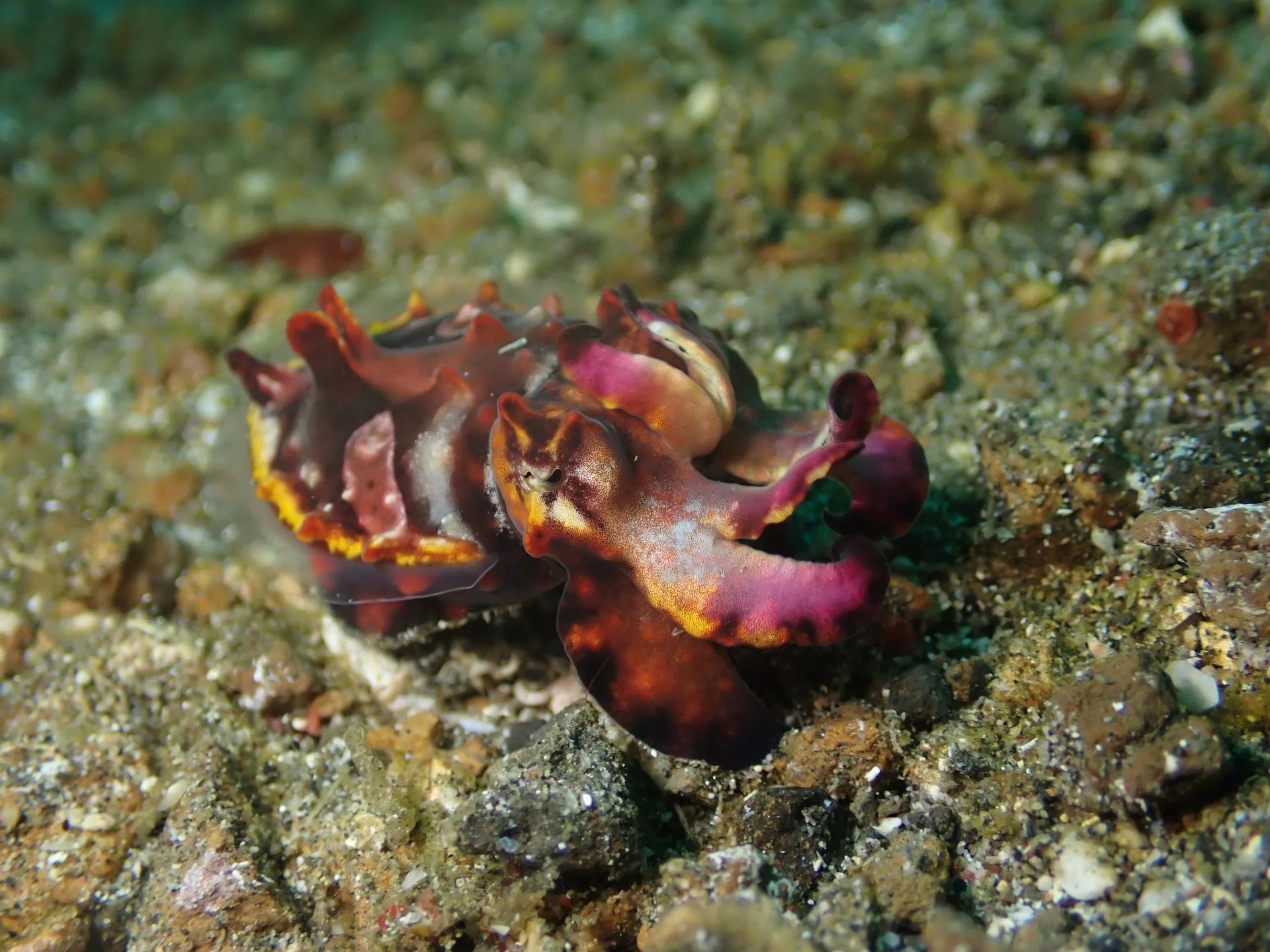
Lembeh
The Lembeh Strait in North Sulawesi has become famous as the muck‑diving capital of the world. At first glance its gently sloping seabed of black volcanic sand, rubble and discarded debris looks bleak. Look closer and it is teeming with weird and wonderful life: hairy and painted frogfish, flamboyant cuttlefish, mimic and blue‑ringed octopuses, ornate ghost pipefish, tiny seahorses, shrimp, crabs and a rainbow of nudibranchs. Most dives are shallow and calm with little current, making it an ideal playground for macro photographers. There are a few colourful reefs for a change of scenery, but Lembeh is all about searching the sand for critter treasures.
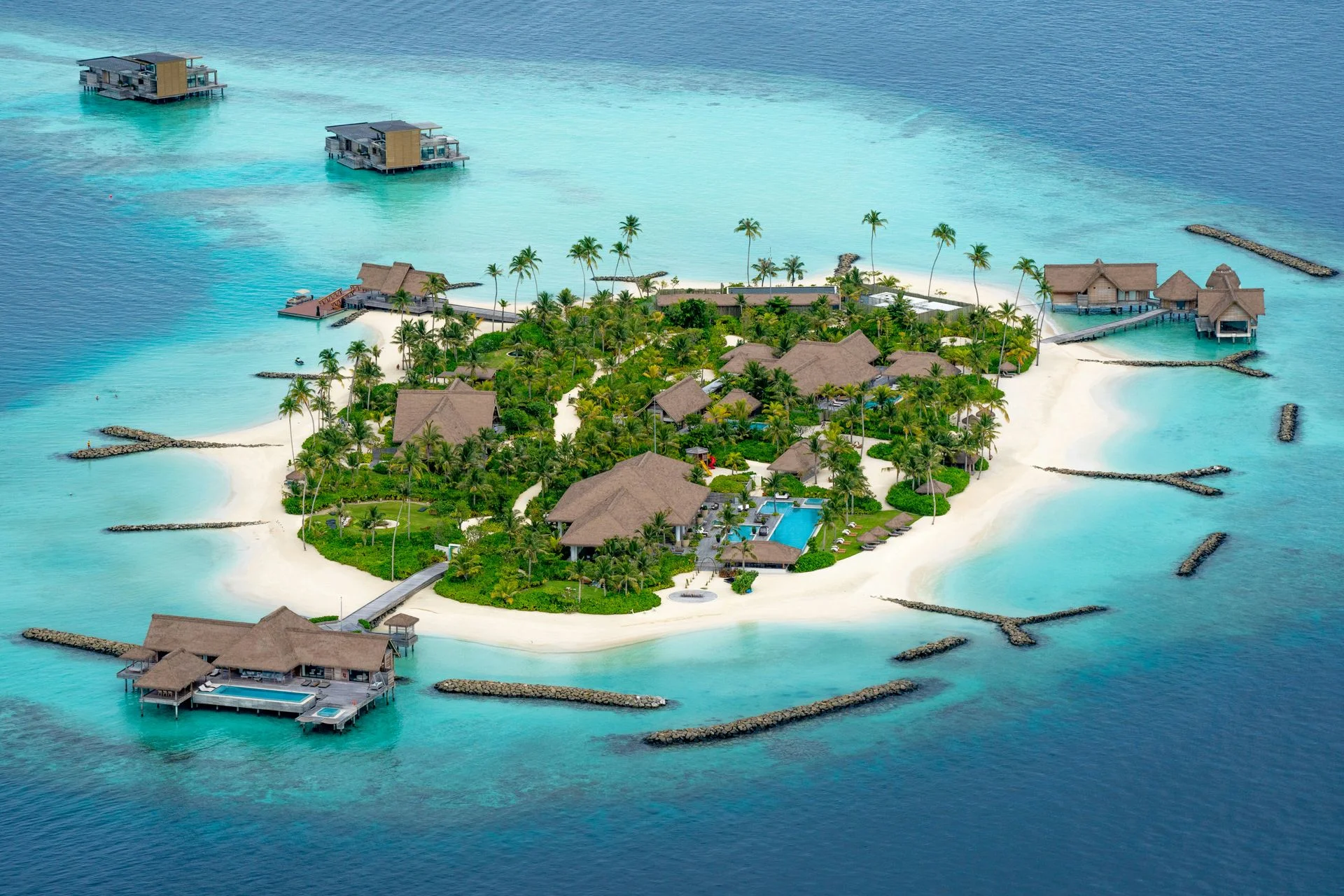
Maldives
Scattered across the Indian Ocean like strings of pearls, the Maldives’ 26 atolls encompass more than a thousand low‑lying islands, reefs and sandbanks. Beneath the turquoise surface are channels (kandus), pinnacles (thilas) and lagoons where powerful ocean currents sweep past colourful coral gardens. This nutrient‑rich flow attracts manta rays, whale sharks, reef sharks, schooling jacks, barracudas and every reef fish imaginable. Liveaboards and resort dive centres explore sites such as Okobe Thila and Kandooma Thila in the central atolls, manta cleaning stations in Baa and Ari, and shark‑filled channels like Fuvahmulah in the deep south. Diving here ranges from tranquil coral slopes to adrenalin‑fuelled drifts through current‑swept passes, making the Maldives a true pelagic playground.
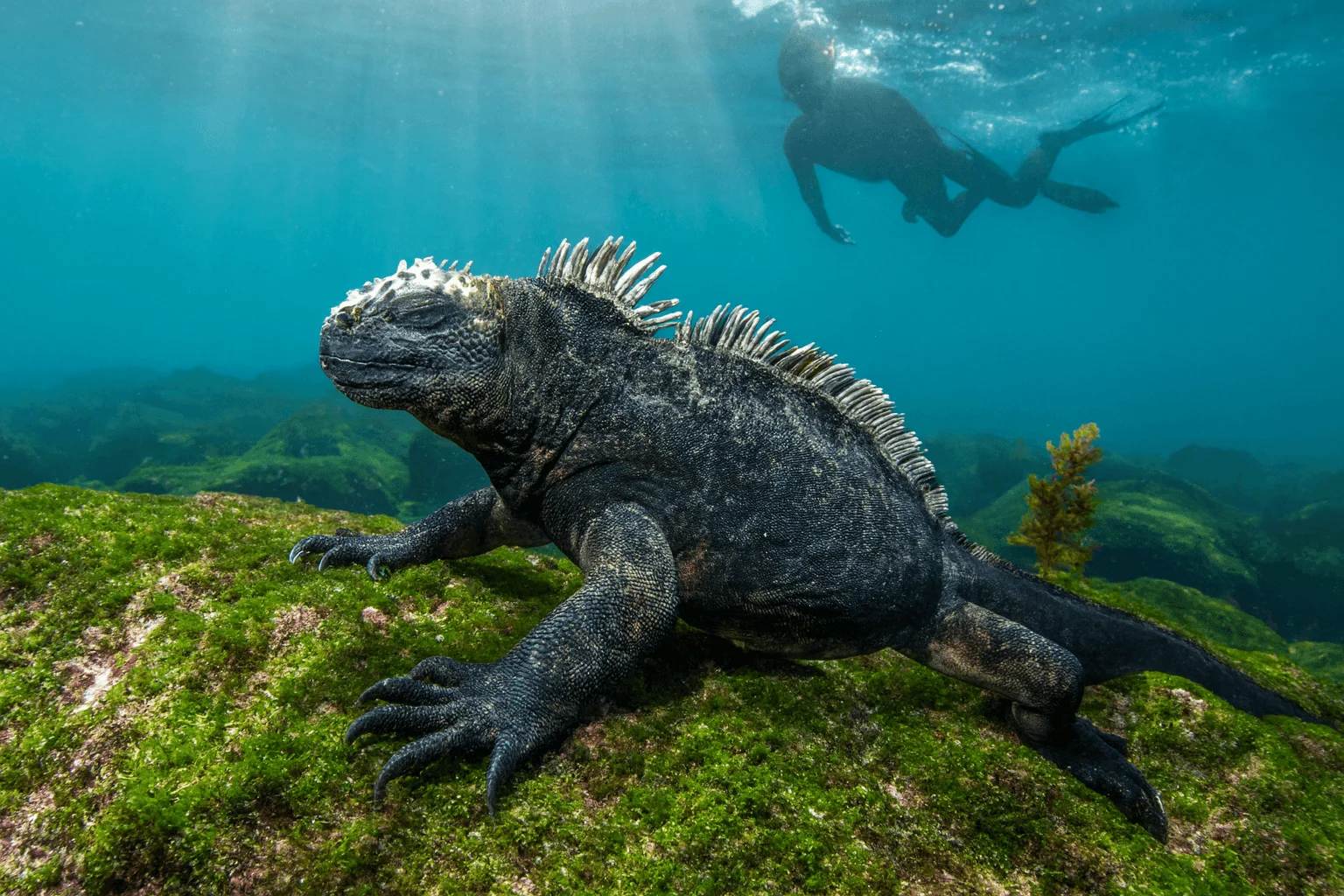
Galapagos
The Galápagos Islands sit 1 000 km off mainland Ecuador and are famous for their remarkable biodiversity both above and below the water. Created by volcanic hot spots and washed by the converging Humboldt, Panama and Cromwell currents, these remote islands offer some of the most exhilarating diving on the planet. Liveaboard trips venture north to Darwin and Wolf islands, where swirling schools of scalloped hammerheads and hundreds of silky and Galápagos sharks patrol the drop‑offs. Other sites host oceanic manta rays, whale sharks, dolphins, marine iguanas, penguins and playful sea lions. Strong currents, cool upwellings and surge mean the dives are challenging but incredibly rewarding. On land you can explore lava fields, giant tortoise sanctuaries and blue‑footed booby colonies.
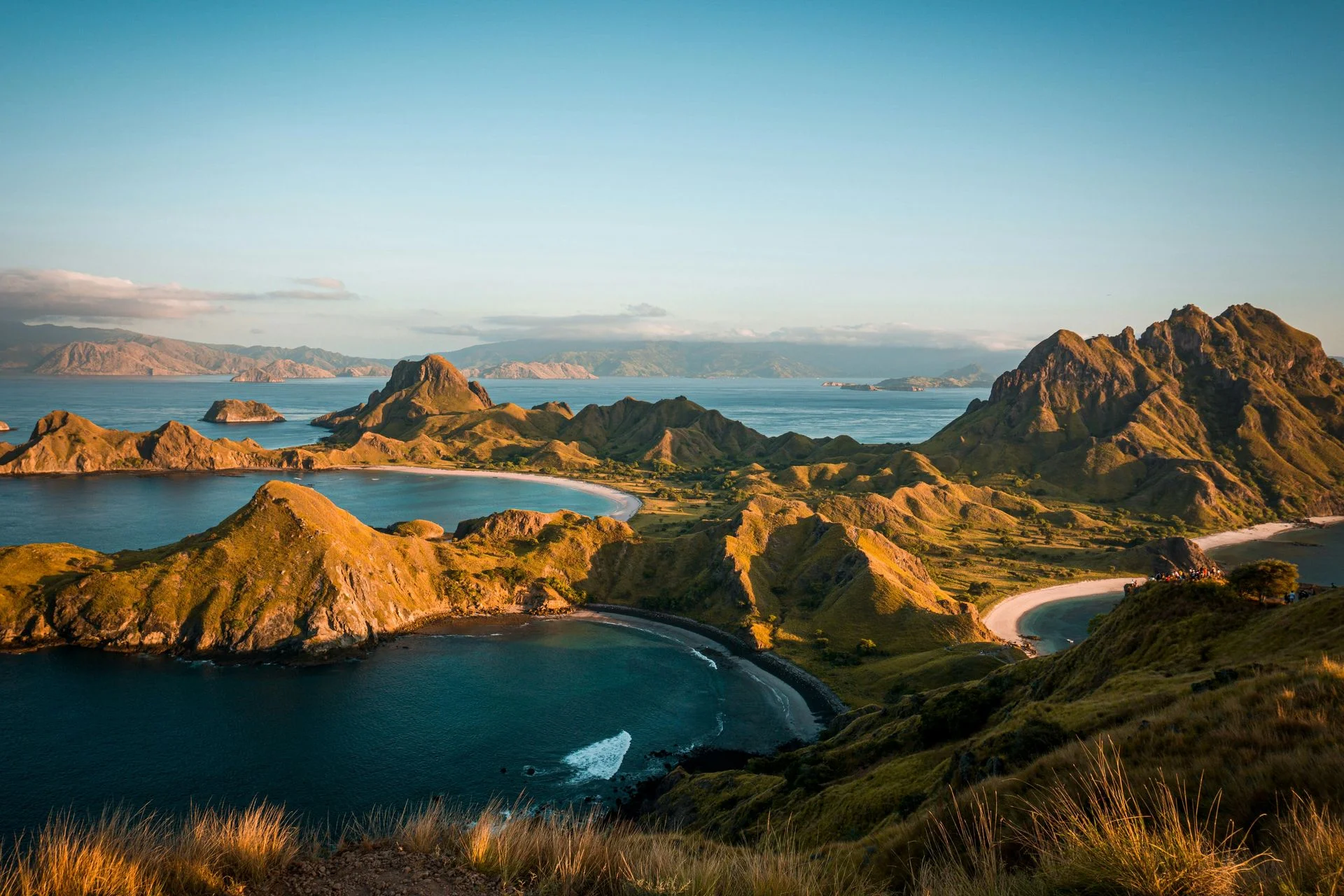
Komodo
Komodo National Park is a diver’s paradise full of marine diversity: expect healthy coral gardens, reef sharks, giant trevallies, countless schools of fish, and frequent manta ray sightings at sites like Manta Point and Batu Bolong. Drift dives and dramatic reef structures add excitement, while both macro lovers and big-fish fans will find plenty to love. Above water, the wild Komodo dragons roam, giving a touch of prehistoric wonder to the whole trip.
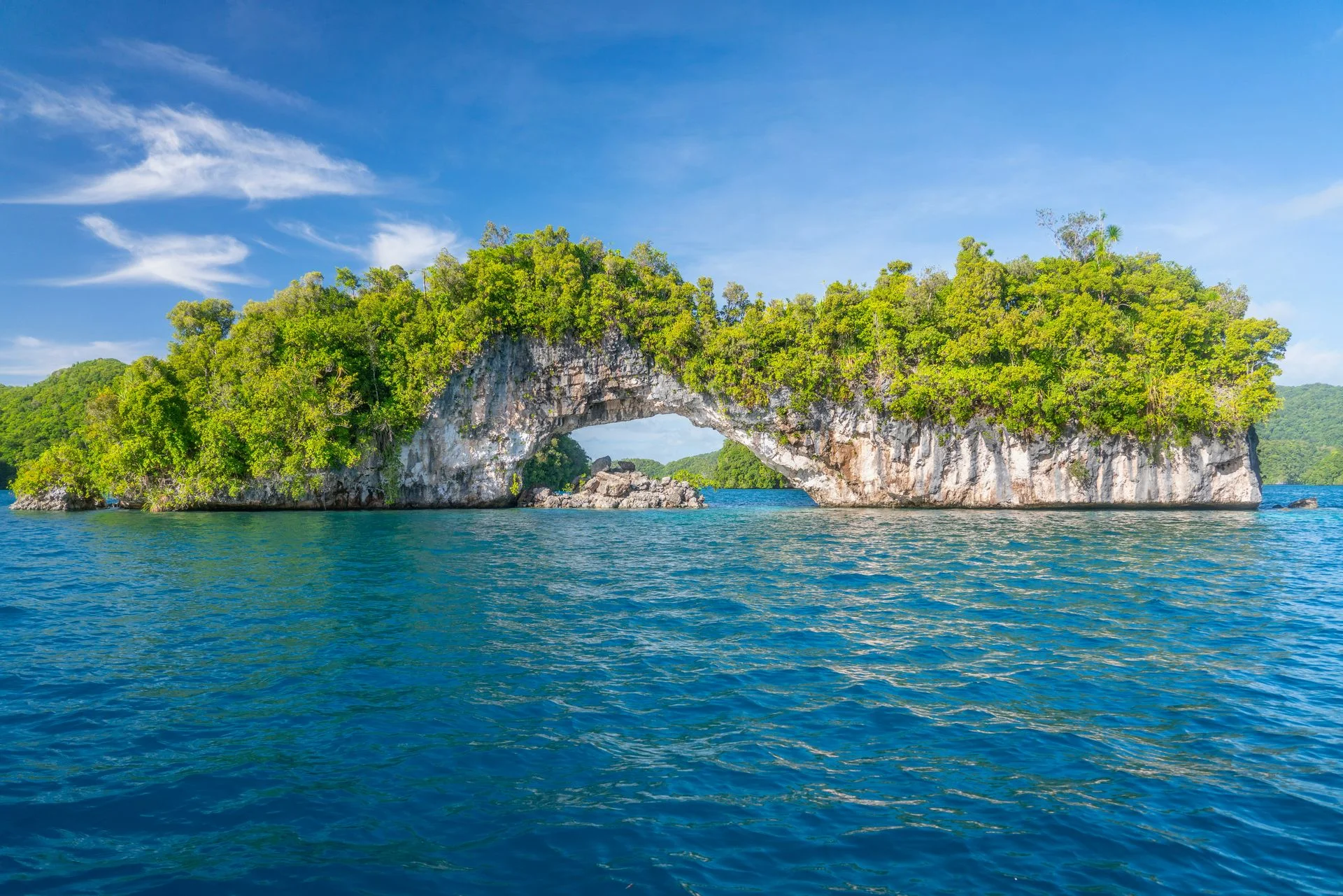
Palau
Rising out of the western Pacific at the meeting point of two great oceans, Palau is an archipelago of more than 500 jungle‑cloaked islands and limestone rock pinnacles. Its barrier reef and scattered outcrops create caverns, walls, tunnels and channels where nutrient‑rich currents sweep in from the Philippine Sea. These flows feed carpets of hard and soft corals and attract vast schools of jacks, barracudas and snappers, as well as an impressive cast of pelagics. Grey reef and whitetip sharks parade along the legendary Blue Corner; manta rays glide back and forth through German Channel’s cleaning stations; and Ulong Channel offers a thrill‑ride drift over giant clams and lettuce corals. Between dives you can snorkel among non‑stinging jellyfish in Jellyfish Lake or explore WWII ship and plane wrecks covered in colourful sponges.
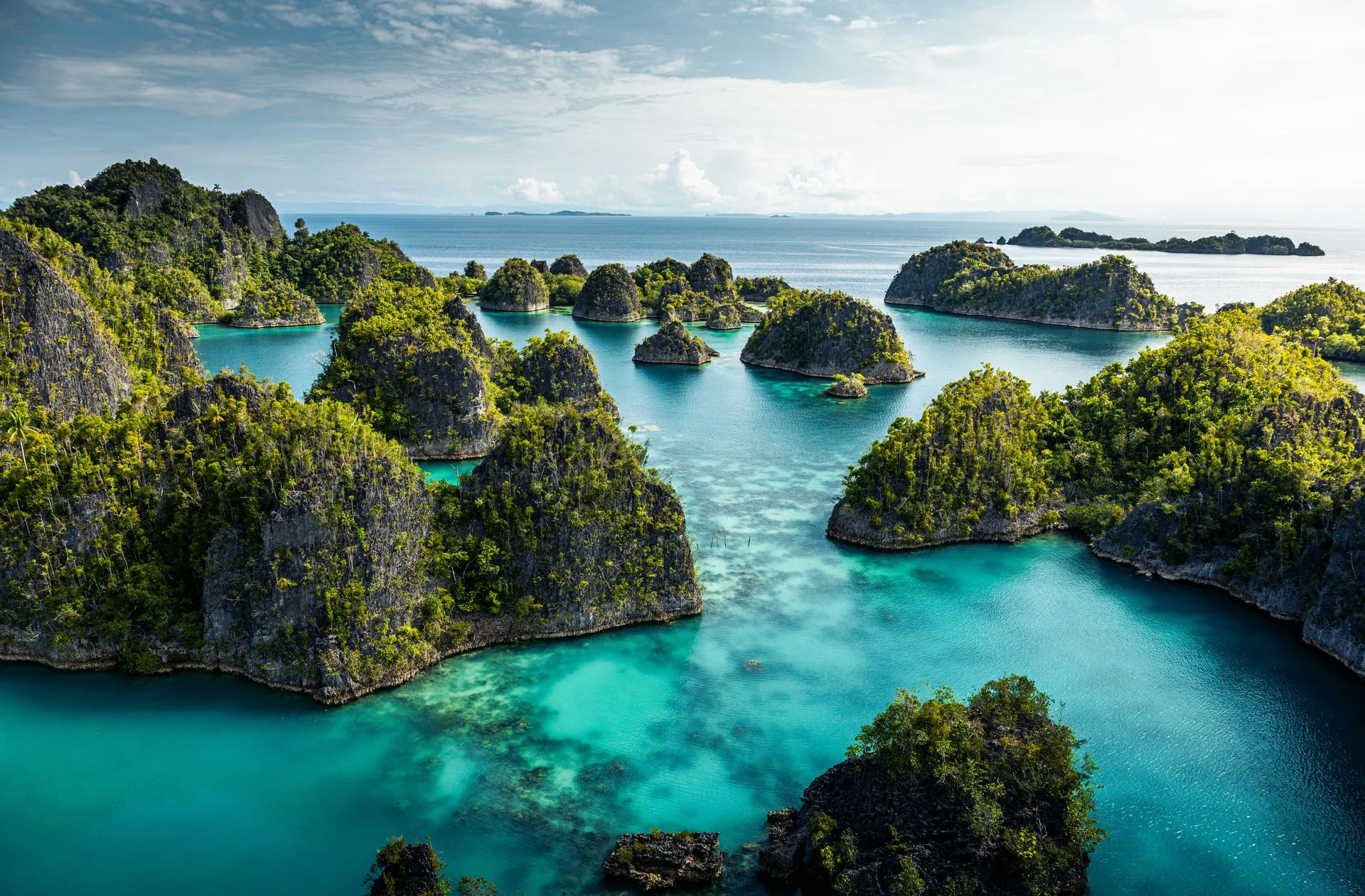
Raja Ampat
Raja Ampat, the “Four Kings,” is an archipelago of more than 1,500 islands at the edge of Indonesian West Papua. Its reefs sit in the heart of the Coral Triangle, where Pacific currents funnel nutrients into shallow seas and feed the world’s richest marine biodiversity. Diving here means gliding over colourful walls and coral gardens buzzing with more than 550 species of hard and soft corals and an estimated 1,500 fish species. You’ll meet blacktip and whitetip reef sharks on almost every dive, witness giant trevally and dogtooth tuna hunting schools of fusiliers, and encounter wobbegong “carpet” sharks, turtles, manta rays and dolphins. From cape pinnacles swarming with life to calm bays rich in macro critters, Raja Ampat offers endless variety. Above water, karst limestone islands and emerald lagoons provide spectacular scenery between dives.