Skeleton Shrimp
Caprella (genus - many species)
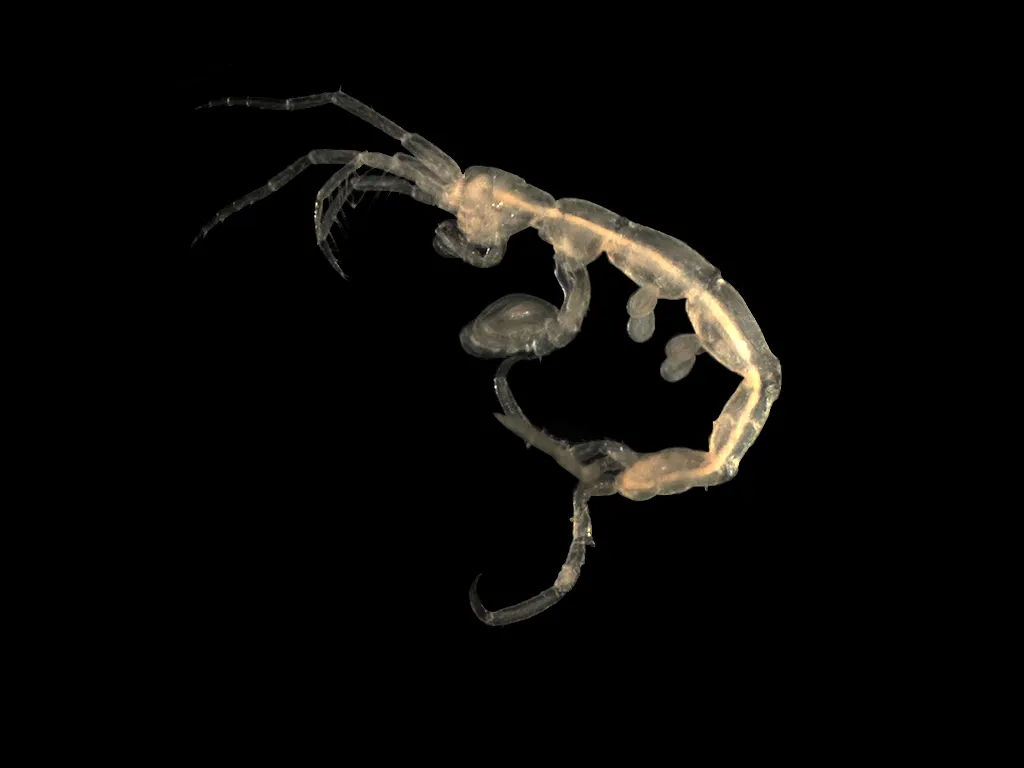
Photo by Hans Hillewaert / CC BY-SA 4.0 via Wikimedia Commons
Meet the ocean's most unlikely predator - a creature so stick-thin and bizarre it looks like a praying mantis crossed with a pipe cleaner and shrunk down to thumbnail size. Skeleton shrimp aren't actually shrimp at all, but amphipods that have evolved one of nature's most extreme body plans: they literally got rid of most of their middle sections, leaving just a thread-like body with grasping claws at one end and hooked feet at the other. Clinging to hydroids, seaweed, and sponges with their rear legs, they stand upright like tiny sentinels, their oversized front claws folded in a perfect "praying" position, waiting to snatch passing zooplankton. Some males even pack venomous punches in territorial cage matches. For macro photographers, skeleton shrimp present the ultimate "you've got to be kidding me" subject - translucent, microscopic, constantly swaying, and so perfectly camouflaged that even when you're looking directly at one, your brain insists it's just another strand of algae.
🔬Classification
📏Physical Features
🌊Habitat Info
⚠️Safety & Conservation
Identification Guide
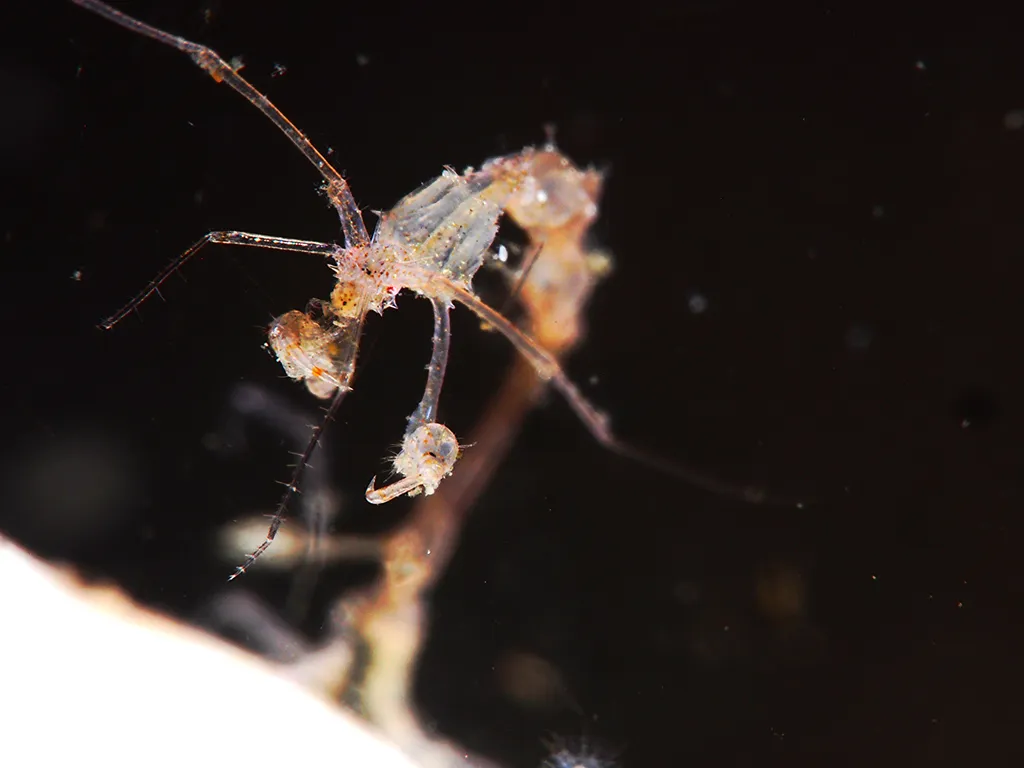
Photo by Rickard Zerpe / CC BY-SA 2.0 via Wikimedia Commons
- Stick-Like Body: Extremely thin, segmented body resembling a twig or stick
- Reduced Middle: Missing most abdominal segments - just head, thorax, and tail
- Praying Mantis Pose: Stands upright with large front claws folded
- Grasping Rear Legs: Hooked back legs cling to substrate
- Two Antennae: Long antennae used for sensing and sometimes filter feeding
- Transparent/Colored: Often see-through or colored to match host
- Size: Very small - typically 1-3cm, but can range 0.5-5cm
- Attachment: Always found clinging to hydroids, algae, or similar structures
Top 10 Fun Facts about Skeleton Shrimp

Photo by Rickard Zerpe / CC BY-SA 2.0 via Wikimedia Commons
1. Not Shrimp at All: Amphipod Imposters
Despite their name, skeleton "shrimp" are actually amphipods - the same group that includes beach hoppers and freshwater scuds. They're more closely related to sandhoppers you see on the beach than to actual shrimp. The confusion comes from their vaguely shrimp-like shape and the fact that early naturalists classified anything small and crustacean-looking as some kind of shrimp. True shrimp are decapods (ten legs), while skeleton shrimp are amphipods with a completely different body plan. This misnomin has stuck for centuries, but taxonomically speaking, calling them "skeleton shrimp" is like calling a whale a "giant fish."
2. The Incredible Disappearing Middle
Skeleton shrimp have undergone one of the most dramatic body reductions in the animal kingdom. Where most crustaceans have a full complement of seven abdominal segments with swimming legs (pleopods), skeleton shrimp have essentially deleted most of their middle sections. What remains is a bizarre stick-figure body plan: a head with oversized grasping claws (gnathopods), a thorax with a few leg pairs, and then... almost nothing until you reach the hooked rear legs and small tail. It's as if evolution took a normal amphipod and pressed "delete" on multiple body segments, leaving just the essential endpoints.
3. Praying Mantis of the Sea
The comparison to praying mantises isn't casual - it's eerily accurate. Skeleton shrimp adopt an upright posture, clinging to their substrate with hooked rear legs while their bodies extend vertically like living sticks. Their oversized front claws are held folded in front of them, exactly like a praying mantis's raptorial forelegs. And like mantises, skeleton shrimp are ambush predators, remaining motionless for long periods then striking with lightning speed when prey drifts within range. The hunting strategy, posture, and even the patient waiting behavior are convergent evolution at its finest.
4. Inchworm Locomotion
When skeleton shrimp need to move along their hydroid or algae substrate, they employ a bizarre inchworm-style crawl. They detach their rear hooked legs, reach forward with them while keeping front legs attached, then release the front and pull forward - creating a looping, stretching motion that looks mechanical and alien. This movement is slow and deliberate, nothing like the rapid scuttling of crabs or swimming of shrimp. Watching a skeleton shrimp relocate is like viewing a microscopic Slinky toy inching along a branch.
5. Venomous Gentlemen: Male Combat
Here's where skeleton shrimp get truly metal: in several species, males possess venomous claws used in territorial combat with other males. When two males meet on the same hydroid, they engage in slow-motion wrestling matches, attempting to inject venom and disable their opponent. The victor claims the territory and mating rights to nearby females. Even more gruesome: in some species, females have been observed killing and consuming males after mating, using the male's own venomous claws against him. It's a miniature drama of sex, violence, and venom playing out on threads of seaweed.
6. Color-Changing Chameleons (Sort Of)
While skeleton shrimp can't change color instantly, they do exhibit remarkable color variation that matches their substrate. Individuals living on red algae tend to be reddish-pink; those on green seaweed appear greenish; specimens on brown hydroids show brown tones. Some of this color matching comes from ingested pigments (they are what they eat), some from chromatophores (color cells) in their exoskeleton, and some from algae or diatoms growing directly on their translucent bodies. The result is near-perfect camouflage that makes them virtually invisible against their chosen substrate.
7. Filter Feeders with a Side of Predation
Skeleton shrimp are dietary opportunists with a flexible menu. Some species are primarily filter feeders, using their long, feathery antennae to sift microscopic particles and plankton from the water current. Others are dedicated predators, using their powerful gnathopods to capture and crush copepods, tiny worms, and other microinvertebrates. Many species do both, switching between filter feeding when plankton is abundant and active hunting when larger prey passes by. This dietary flexibility allows them to thrive in various environments from nutrient-rich estuaries to oligotrophic coral reefs.
8. Living on a Thread: Extreme Habitat Specialists
Skeleton shrimp are found on hydroids, bryozoans, seagrass, algae, sponges, and virtually any other fine, branching structure in the ocean. They're particularly abundant on feathery hydroids, where their stick-like bodies blend perfectly with the hydroid's filaments. Each skeleton shrimp typically occupies a small territory - sometimes just a single hydroid branch. High-quality substrate can host dozens of individuals, creating a miniature forest of upside-down stick creatures all swaying in unison. They're so specialized to this lifestyle that removing them from their substrate usually causes death within hours.
9. Sexual Dimorphism: Size Matters
In many skeleton shrimp species, males are significantly larger than females - sometimes almost twice the size. Males also have much more developed gnathopods (front claws), used both for fighting rival males and grasping females during mating. Females are smaller and more delicate, but possess transparent brood pouches where they carry dozens of developing eggs. Identifying sex underwater is straightforward: if it's huge with massive claws, it's male; if it's smaller with a visible egg pouch, it's female. This size difference is unusual among amphipods and reflects intense male-male competition.
10. The Macro Photographer's Ultimate Challenge
If candy crabs are macro photography on hard mode, skeleton shrimp are macro photography on nightmare difficulty. The challenges stack up: they're 0.5-3cm long (often smaller than your fingernail), nearly transparent, constantly swaying with current, living on delicate structures you can't touch, and possessing thread-thin bodies that confuse autofocus systems. Even finding them requires training your eyes to spot asymmetric movement among algae. Shooting them demands perfect buoyancy, extreme patience, manual focus, high shutter speeds to freeze sway, and often focus stacking to get both the creature and its substrate sharp. A keeper photo of a skeleton shrimp represents hours of work and dozens of failed attempts.
Diving & Observation Notes
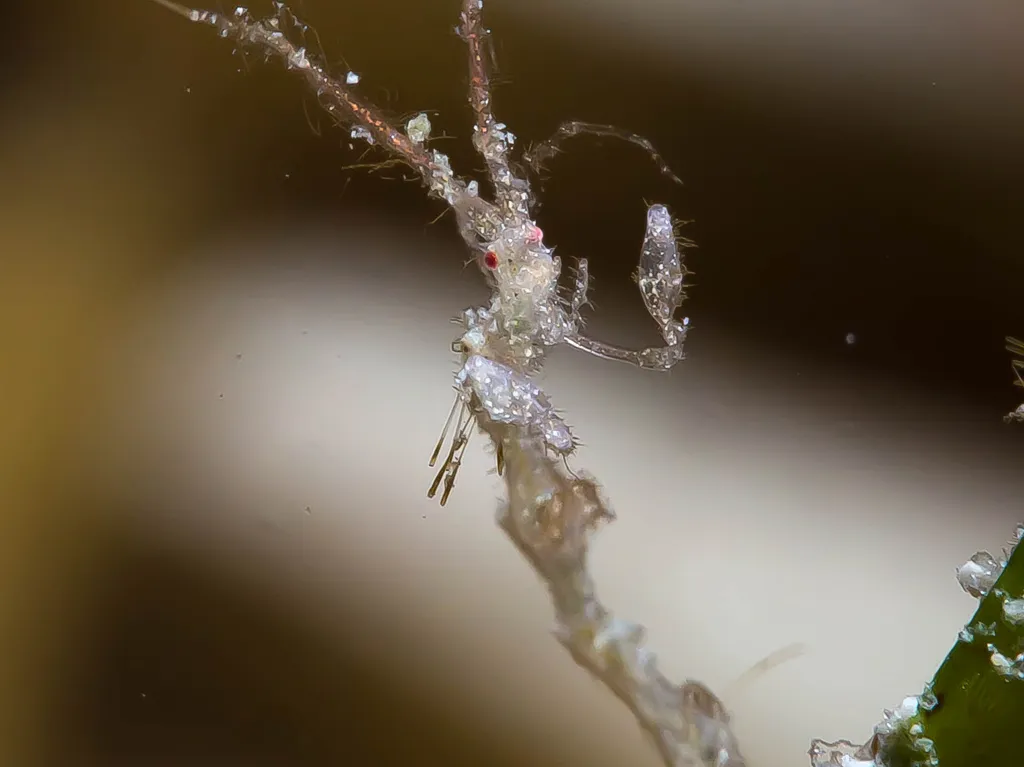
Photo by Rickard Zerpe / CC BY-SA 2.0 via Wikimedia Commons
🧭 Finding Skeleton Shrimp
They are everywhere but invisible.
- Hydroids & Algae: Look for feathery hydroids or fine branching algae.
- Swaying Motion: Look for "algae" that sways rhythmically or moves against the current.
- Colonies: If you find one, there are likely many more on the same branch.
🤿 Behavior & Observation
- Praying Mantis Pose: Watch them stand upright with claws folded, waiting for prey.
- Inchworm Walk: Observe their bizarre looping locomotion if they move.
- Fighting: Males may box with their large claws over territory.
📸 Photo Tips
- Super Macro: A 100mm lens + diopter is often needed. They are tiny (1-2cm).
- High Shutter Speed: Essential (1/250s+) to freeze their constant swaying.
- Manual Focus: Autofocus will struggle with their thin bodies. Focus on the eyes or claws.
- Black Background: Helps isolate them from the cluttered hydroid background.
⚠️ Ethics
- Fragile Homes: Do not touch the hydroids or algae; they are delicate and easily damaged.
- Buoyancy: Be extremely careful not to crash into the reef while focusing.
- Light: Don't bake them with focus lights for too long.
🌏 Best Locations
- Lembeh Strait (Indonesia): The best place to see them in all colors and sizes.
- Anilao (Philippines): Abundant on hydroids in rubble areas.
- Cold Water: Large species found in California kelp forests and Japan.
Best Places to Dive with Skeleton Shrimp
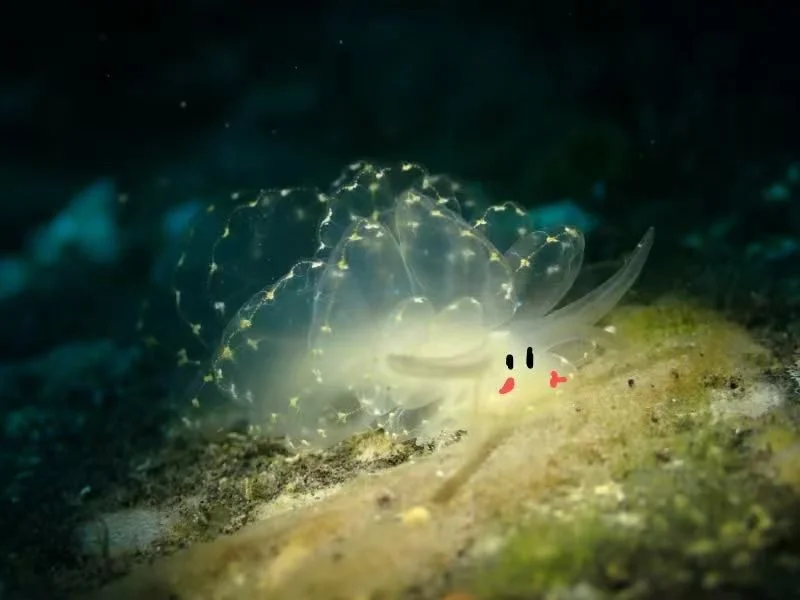
Tulamben(Bali)
Tulamben sits on Bali’s northeast coast and is best known for the USAT Liberty shipwreck – a 125‑metre cargo ship torpedoed in WWII that now lies just a short swim from shore. Warm water, mild currents and straightforward shore entries make diving here relaxed for all levels. Besides the wreck, divers can explore coral gardens, black‑sand muck sites and dramatic drop‑offs. Macro lovers will find nudibranchs, ghost pipefish, mimic octopus and pygmy seahorses, while big‑fish fans can encounter schooling jackfish, bumphead parrotfish and reef sharks. With a compact coastline packed with variety, Tulamben delivers world‑class wreck and critter diving without long boat rides.
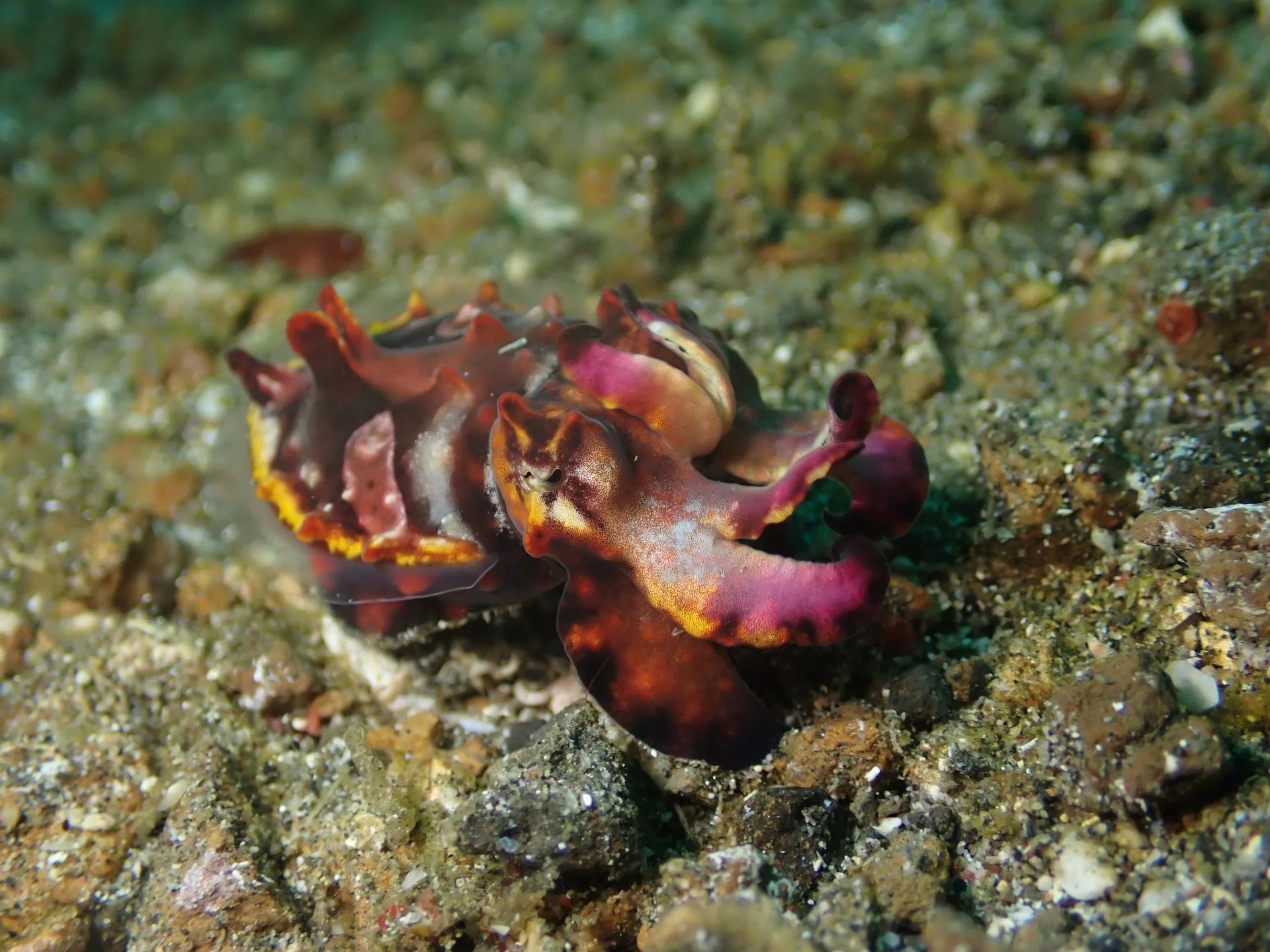
Lembeh
The Lembeh Strait in North Sulawesi has become famous as the muck‑diving capital of the world. At first glance its gently sloping seabed of black volcanic sand, rubble and discarded debris looks bleak. Look closer and it is teeming with weird and wonderful life: hairy and painted frogfish, flamboyant cuttlefish, mimic and blue‑ringed octopuses, ornate ghost pipefish, tiny seahorses, shrimp, crabs and a rainbow of nudibranchs. Most dives are shallow and calm with little current, making it an ideal playground for macro photographers. There are a few colourful reefs for a change of scenery, but Lembeh is all about searching the sand for critter treasures.
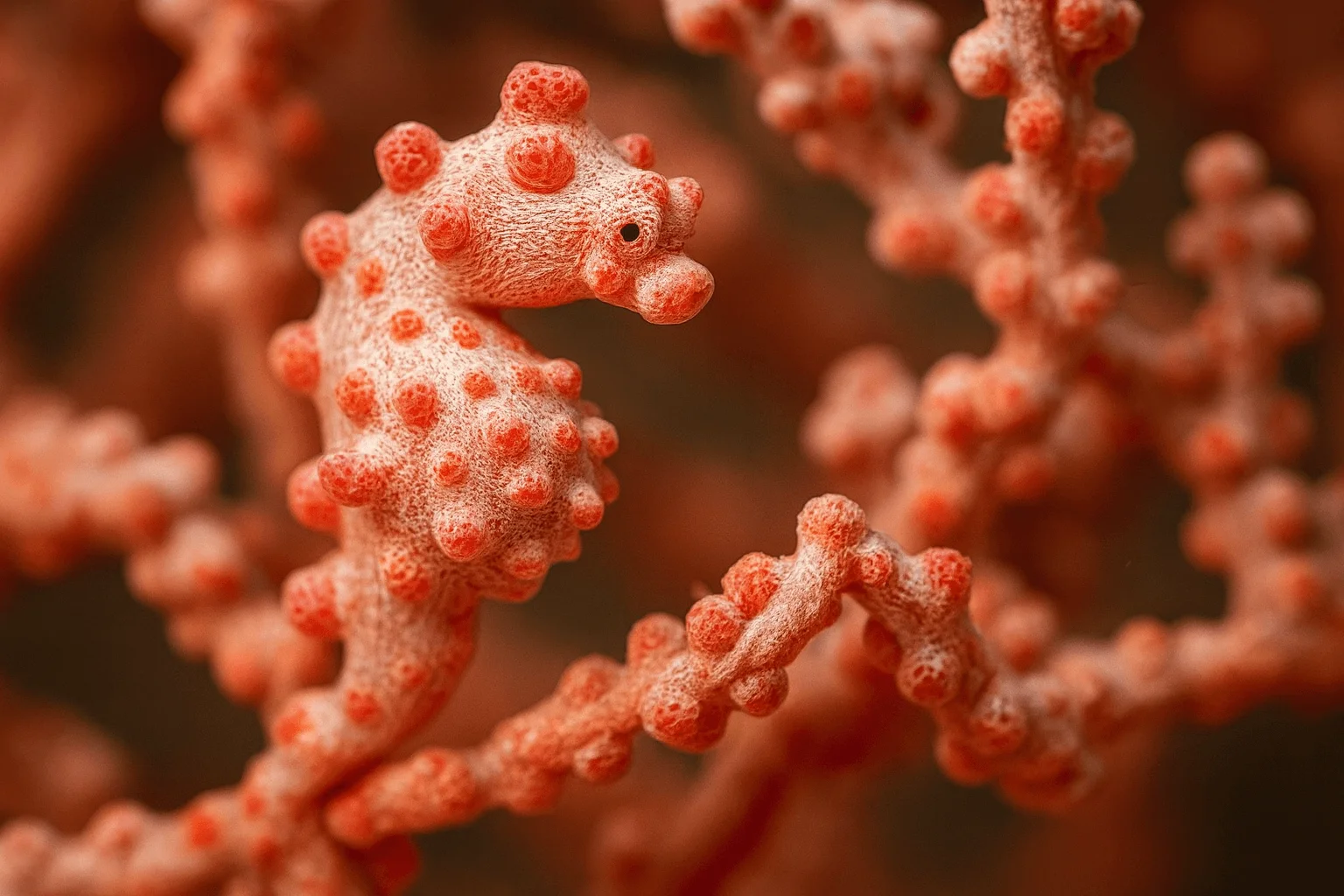
Anilao
Anilao, a small barangay in Batangas province just two hours south of Manila, is often called the macro capital of the Philippines. More than 50 dive sites fringe the coast and nearby islands, offering an intoxicating mix of coral‑covered pinnacles, muck slopes and blackwater encounters. Critter enthusiasts come for the legendary muck dives at Secret Bay and Anilao Pier, where mimic octopuses, blue‑ringed octopuses, wonderpus, seahorses, ghost pipefish, frogfish and dozens of nudibranch species lurk in the silt. Shallow reefs like Twin Rocks and Cathedral are covered in soft corals and teem with reef fish, while deeper sites such as Ligpo Island feature gorgonian‑covered walls and occasional drift. Because Anilao is so close to Manila and open year‑round, it’s the easiest place in the Philippines to squeeze in a quick diving getaway.