
Weedy Scorpionfish(Rhinopias)
Rhinopias frondosa
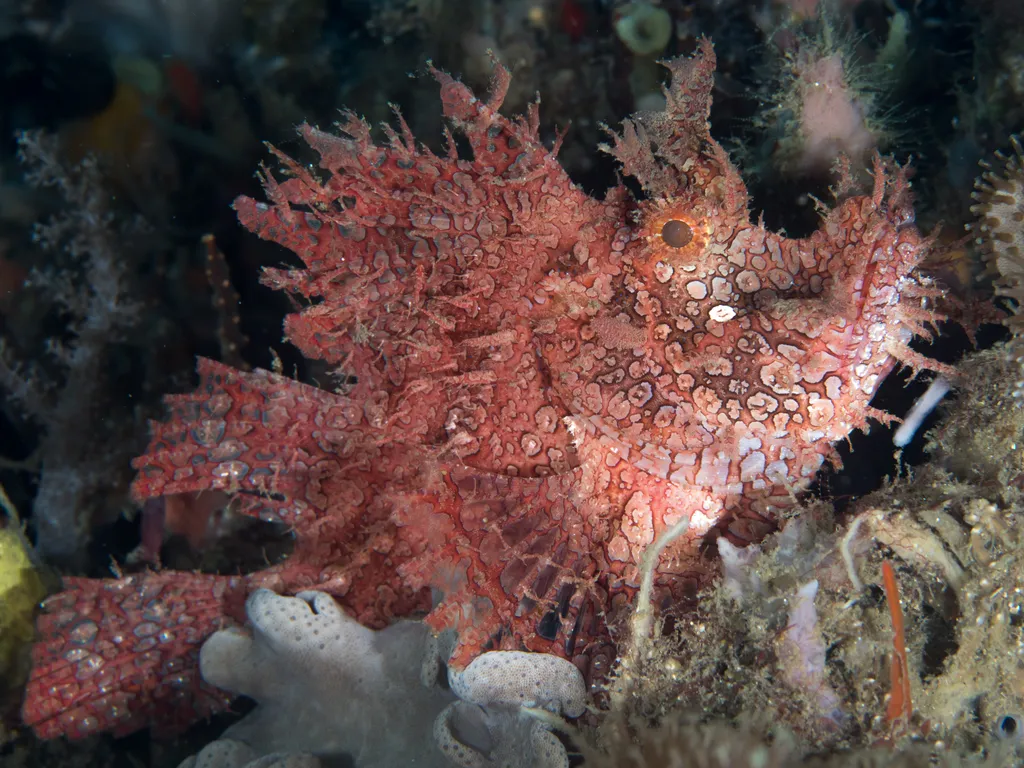
Photo by Rickard Zerpe / CC BY 2.0 via Wikimedia Commons
The Weedy Scorpionfish (Rhinopias frondosa) is one of the most coveted finds in Indo-Pacific muck diving—a slow-moving ambush predator draped in weed-like filaments that make it look more like drifting algae than a fish. Belonging to the genus Rhinopias, alongside the famous paddle-flap and lacy scorpionfish, it sits at the intersection of scorpionfish venom and frogfish-level camouflage. Divers who spot one frozen on a gorgonian or half-buried in black sand often describe it as a "holy grail" macro subject: rare enough to feel like a win, spectacular enough to stop an entire dive group in their tracks.
🔬Classification
📏Physical Features
🌊Habitat Info
⚠️Safety & Conservation
Identification Guide
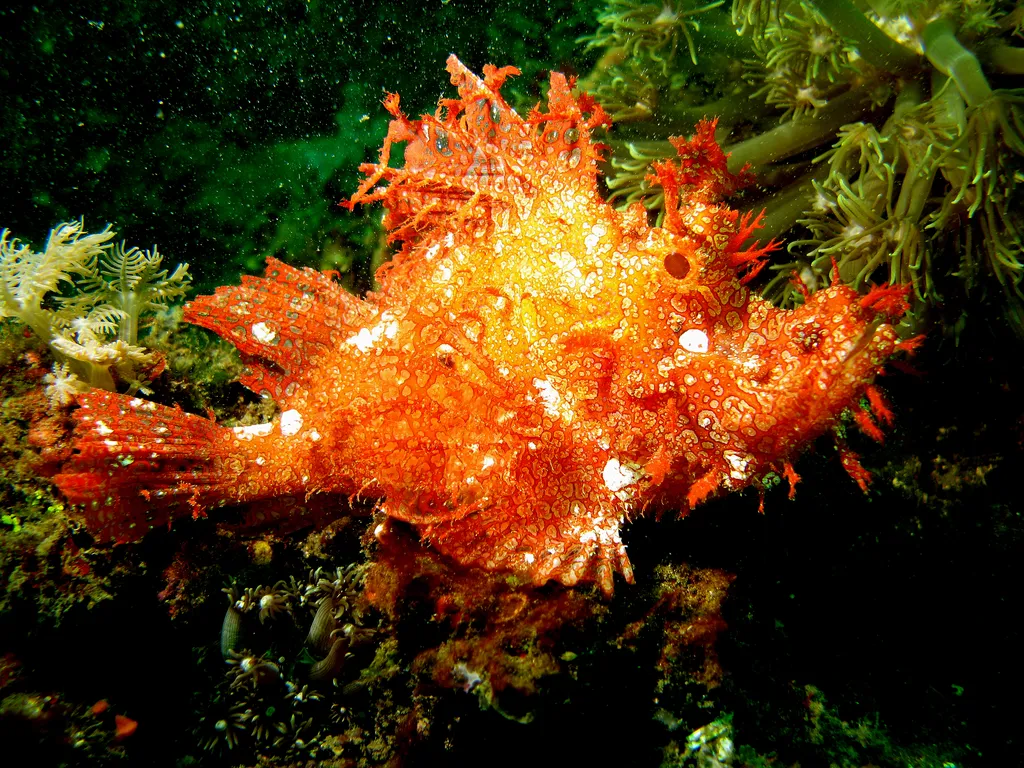
Photo by Steve Childs / CC BY 2.0 via Wikimedia Commons
Look for a compressed, perch-like body with a large upward mouth, prominent eyes on top of the head, and branched, weed-like skin flaps along the head, body, and fin margins. Color is highly variable—yellow, orange, red, purple, brown, or white—with dark-margined circular spots scattered across the body. The fish usually sits motionless, relying on filaments to break up its outline against algae, rubble, or gorgonian branches.
Differences from Similar Species
- Paddle-flap Scorpionfish (Rhinopias eschmeyeri): broader paddle-shaped flaps rather than fine branching filaments; often more uniform reddish tones.
- Lacy Scorpionfish (Rhinopias aphanes): lacier, net-like skin appendages; generally smaller and more delicate in appearance.
- Common scorpionfish (e.g., Scorpaenopsis): lack the extravagant weed-like filaments; more typical scorpionfish silhouette with obvious fin spines.
Where to Scan
Check algae-covered rubble, soft coral and gorgonian fans, and muck slopes at 10–40 m. Guides often find them by spotting an "extra tuft" of algae that has eyes.
Top 10 Fun Facts about Weedy Scorpionfish(Rhinopias)
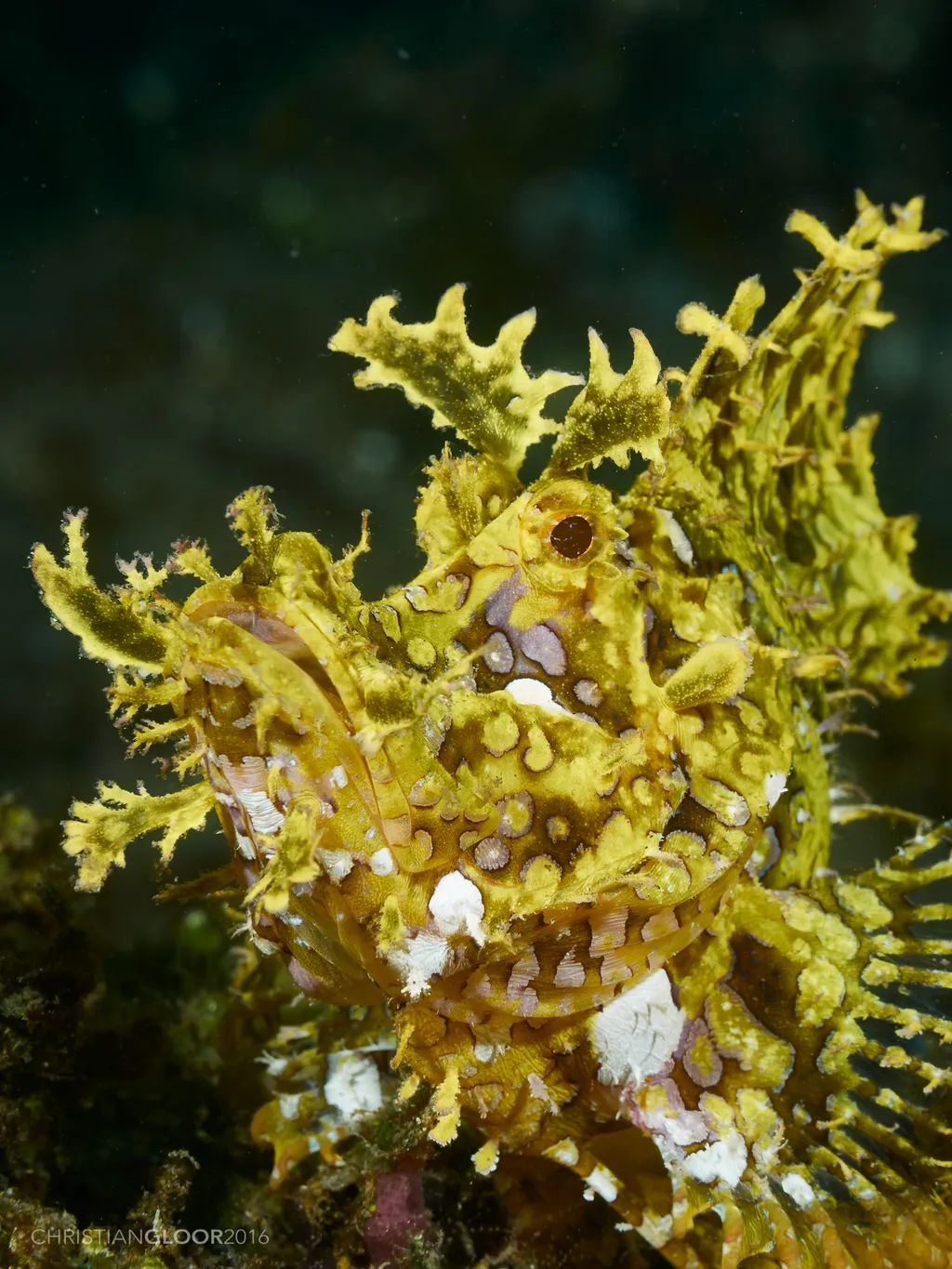
Photo by Christian Gloor from Wakatobi Dive Resort / CC BY 2.0 via Wikimedia Commons
1. Living Seaweed With Teeth
The weedy scorpionfish doesn't just match its background—it wears it. Fleshy, branched filaments sprout from the skin and fin edges like miniature kelp fronds, breaking up the fish's outline so completely that prey (and divers) can swim within centimeters before noticing the eyes. This isn't quick color change like a cuttlefish flash; it's permanent body architecture built for sitting still on algae-covered reef or rubble for days at a time.
2. The Rhinopias "Holy Grail" Club
Within the scorpionfish family, the genus Rhinopias occupies a special tier in underwater photography and critter-hunting culture. Weedy, paddle-flap, and lacy scorpionfish are all rare, spectacular, and stubbornly sedentary—making each sighting feel earned. A weedy scorpionfish on a gorgonian fan is the kind of image that ends up on dive-shop walls and macro competition shortlists.
3. Venomous Fin Spines—Handle With Respect
Like all scorpionfish, Rhinopias frondosa carries venomous dorsal, anal, and pelvic spines. The fish is not aggressive toward divers, but accidental contact during a close macro approach or careless hand placement on the reef can deliver a painful sting. Treat every Rhinopias encounter as a look, don't touch subject— your buoyancy and fin control matter more than any camera setting.
4. A Rainbow of Morphs on One Species
Individual weedy scorpionfish can appear yellow, orange, red, purple, brown, or white, often with dark-margined circular spots that look like someone stamped polka dots along the flanks. Two fish sitting ten meters apart can look like entirely different species. This variability reflects local substrate and algae colors—and keeps even experienced guides guessing on every dive.
5. Deep Fish, Shallow Encounters
FishBase records weedy scorpionfish from 10 to nearly 300 meters, yet recreational divers most often see them between 10 and 40 meters on muck slopes and reef rubble. That gap between scientific depth range and dive-site reality is typical for cryptic reef fish: they can go deep, but the habitats where divers spend time—black sand, gorgonian gardens, algae bommies—concentrate sightings in the recreational band.
6. The Ultimate Sit-and-Wait Predator
Weedy scorpionfish are ambush hunters. By day they barely move, letting current and filaments sell the illusion of harmless debris. At night they become more active, snapping up small fish and crustaceans that wander too close. The strike is fast—scorpionfish family specialty—but you'll almost never see it on a typical day dive because the fish is committed to its camouflage performance.
7. Gorgonian Thrones and Muck-Flat Hideouts
Preferred hangouts include algae-covered reef, soft corals, gorgonian sea fans, and muck habitats with black sand or rubble. A weedy scorpionfish perched on a sea fan is iconic: the filaments echo the fan's polyps, and the circular spots add a surreal polka-dot layer. On muck sites, they melt into volcanic sand and hydroid clumps with equal skill.
8. Least Concern Globally, Rare Locally
IUCN lists the species as Least Concern, reflecting a wide Indo-Pacific distribution. But "not endangered" doesn't mean "easy to find." Rhinopias sightings remain patchy and guide-dependent—one week a site produces multiple individuals, the next month nothing. That unpredictability is part of the allure for repeat muck divers who chase the next weird fish fix.
9. Eyes on the Prize—Literally on Top
Rhinopias eyes sit high on the head, giving the fish a wide upward and lateral view while the body stays flat against the substrate. For photographers, those eyes are the sharpest focal point on an otherwise fuzzy, filament-covered face. A tack-sharp eye with soft filaments trailing into bokeh is the classic weedy scorpionfish shot—and it's harder than it looks because the subject doesn't cooperate by turning toward you.
10. Night Shift on the Reef
Day dives reward patience and slow scanning; night dives can reveal a different energy level. Weedy scorpionfish may shift position, hunt more openly, or appear on substrates they ignored during daylight hours. For divers who have already ticked the daytime portrait, a guided night muck dive offers a second act— same species, different behavior, often under contrasting lighting that makes the filaments glow against the beam.
Diving & Observation Notes
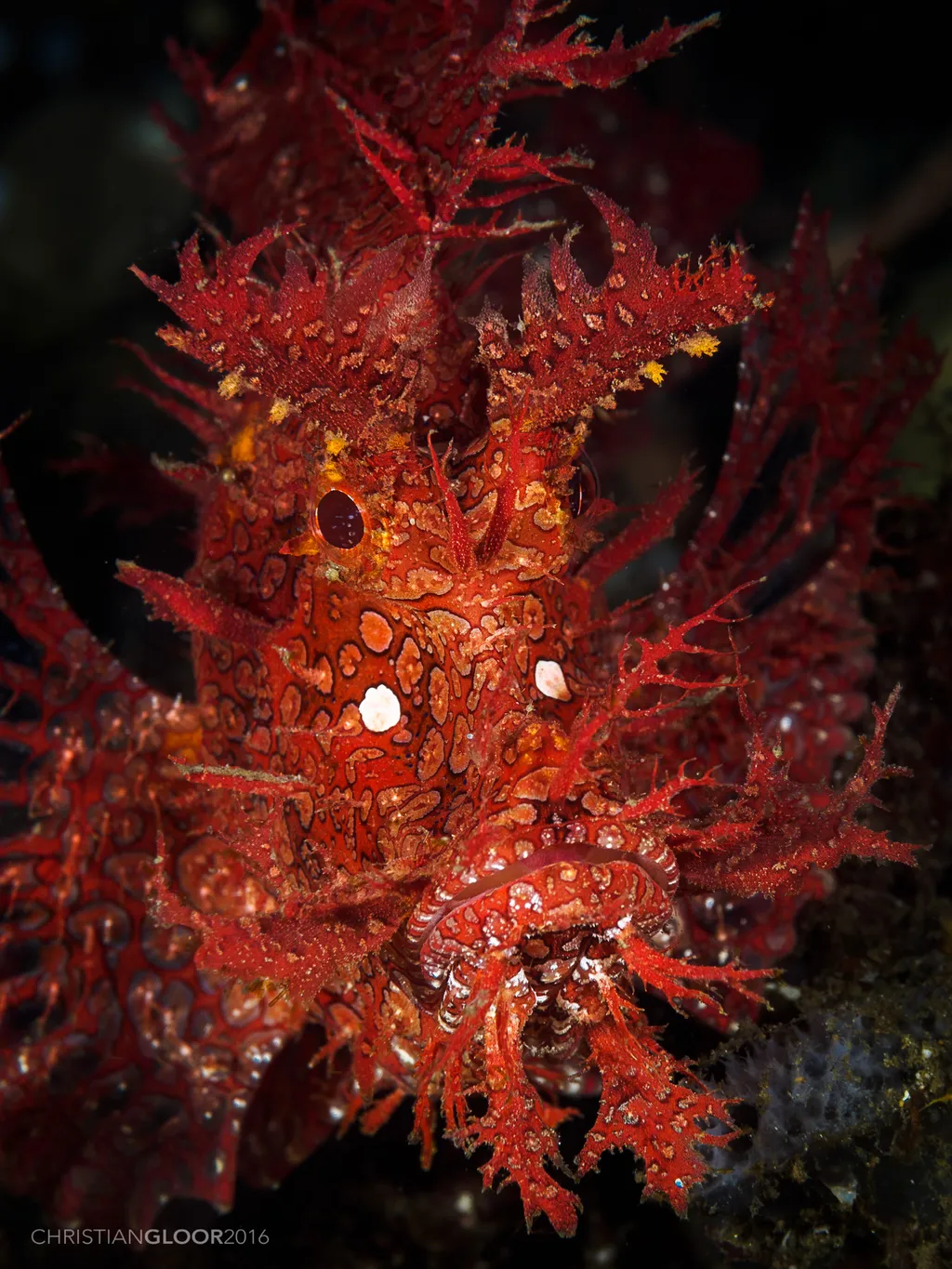
Photo by Christian Gloor from Wakatobi Dive Resort / CC BY 2.0 via Wikimedia Commons
🧭 Finding Weedy Scorpionfish
Slow down on muck slopes, rubble patches, and gorgonian fields at 10–40 m. Scan for circular spots, filament tufts, and eyes that don't belong on algae. Local guides are invaluable—Rhinopias are patchy and easy to swim past. Lembeh, Anilao, Tulamben, Dumaguete, Komodo, Raja Ampat, and select Great Barrier Reef sites produce regular (though never guaranteed) sightings.
🤿 Approach & Behavior
Expect a motionless, camouflaged fish by day. Approach with perfect neutral buoyancy, minimal exhaled bubbles near the face, and no sudden movements. The fish rarely flees if undisturbed but may turn away or tuck tighter into cover if harassed. Never touch or prod—venomous spines and fragile filaments make handling dangerous and unethical.
📸 Photo Tips
- Macro lens (60–100 mm): Frame the eye as primary focus; filaments make excellent soft foreground/background texture.
- Lighting: Low-angle, diffused strobe light reveals filament structure without blowing out pale morphs.
- Patience: Wait for the fish to slightly lift its head or open the mouth—rare but dramatic.
- Night option: A second dive after dark can yield different posture and contrast on black sand.
⚠️ Safety & Ethics
- Venomous spines—keep hands off the bottom and maintain distance; a sting is painful and can ruin a trip.
- Do not relocate the fish for a "cleaner" background; Rhinopias stress easily and filaments tear.
- Avoid fin kicks that silt out muck sites—everyone loses, including the subject.
Best Places to Dive with Weedy Scorpionfish(Rhinopias)
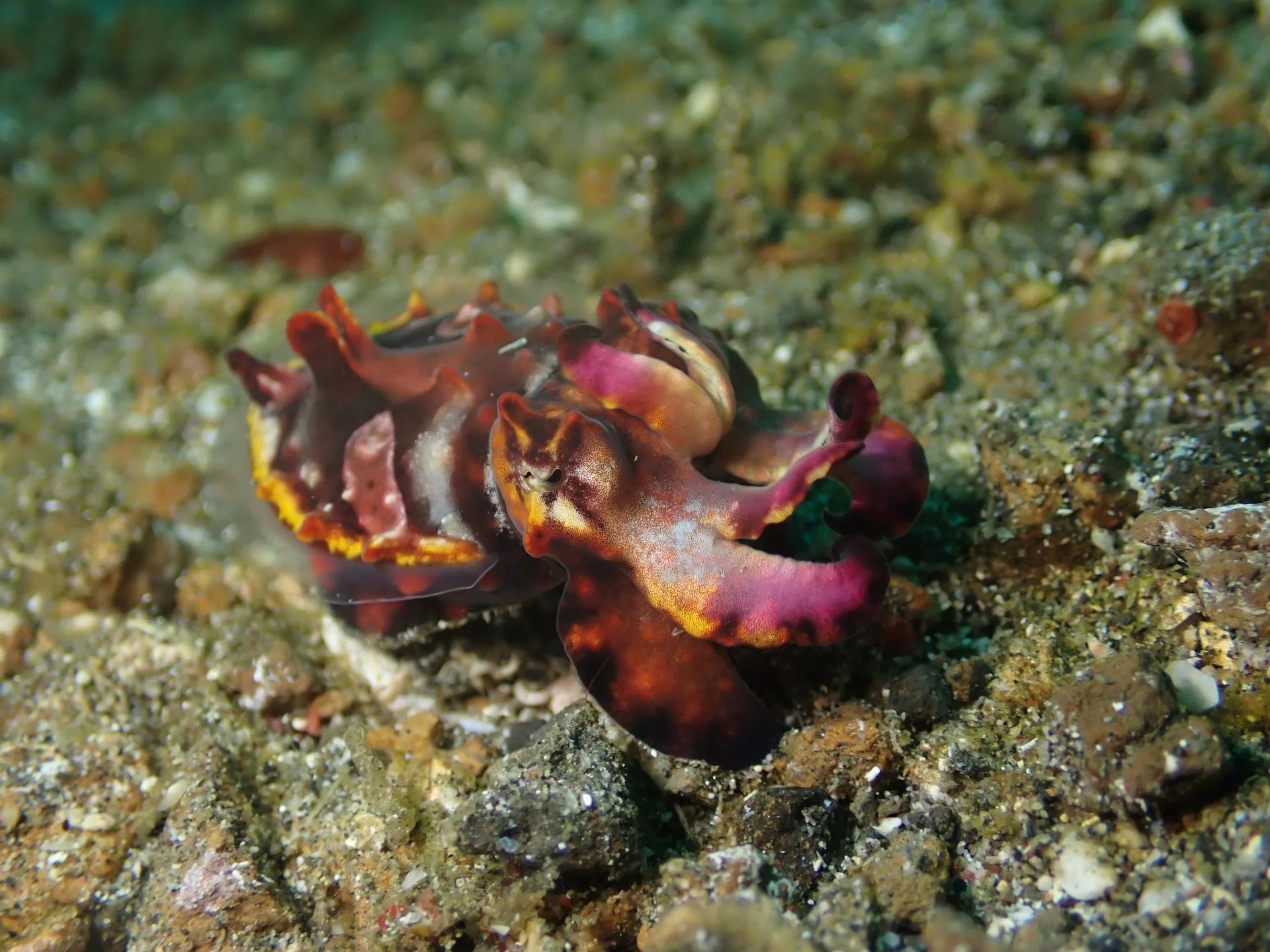
Lembeh
The Lembeh Strait in North Sulawesi has become famous as the muck‑diving capital of the world. At first glance its gently sloping seabed of black volcanic sand, rubble and discarded debris looks bleak. Look closer and it is teeming with weird and wonderful life: hairy and painted frogfish, flamboyant cuttlefish, mimic and blue‑ringed octopuses, ornate ghost pipefish, tiny seahorses, shrimp, crabs and a rainbow of nudibranchs. Most dives are shallow and calm with little current, making it an ideal playground for macro photographers. There are a few colourful reefs for a change of scenery, but Lembeh is all about searching the sand for critter treasures.
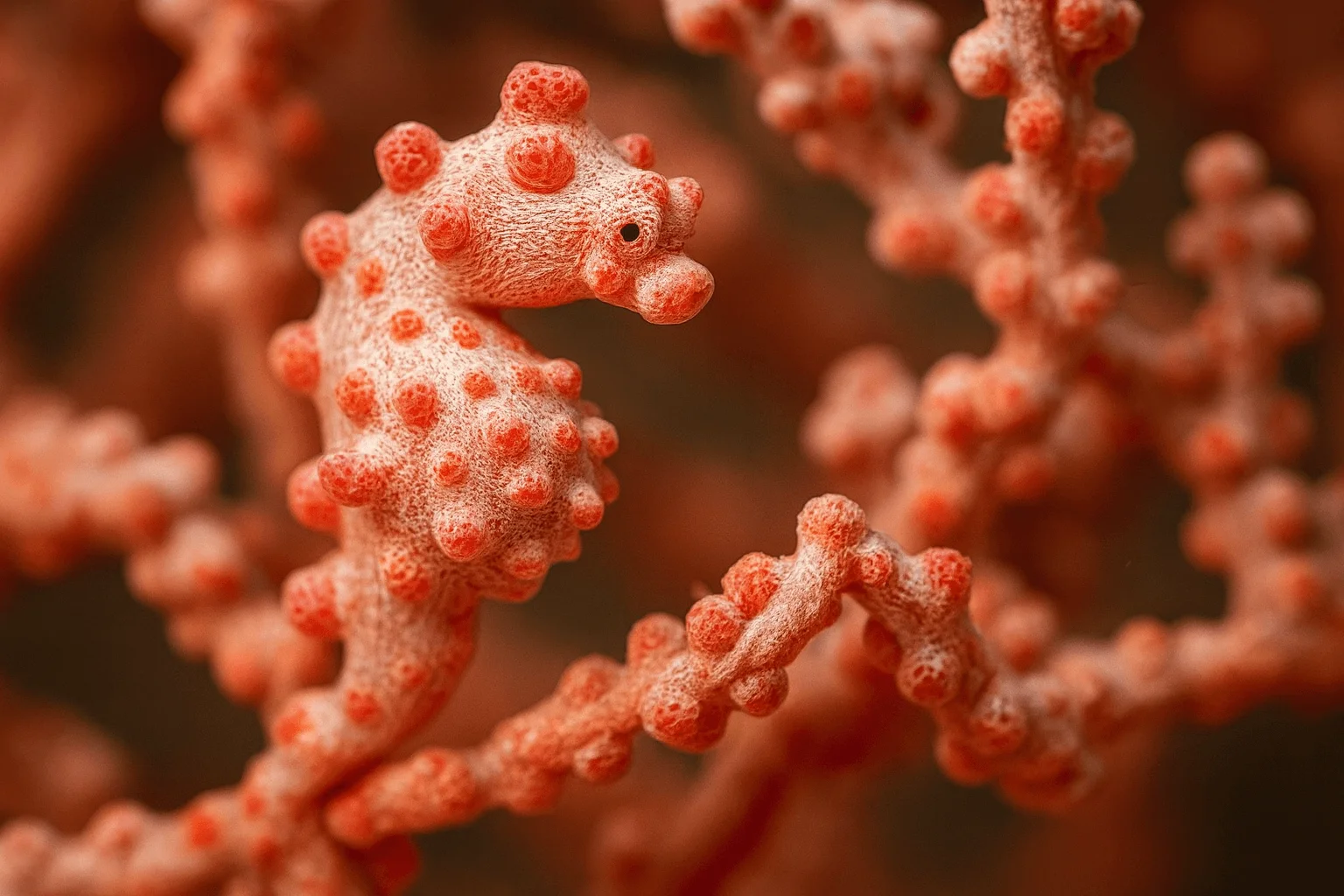
Anilao
Anilao, a small barangay in Batangas province just two hours south of Manila, is often called the macro capital of the Philippines. More than 50 dive sites fringe the coast and nearby islands, offering an intoxicating mix of coral‑covered pinnacles, muck slopes and blackwater encounters. Critter enthusiasts come for the legendary muck dives at Secret Bay and Anilao Pier, where mimic octopuses, blue‑ringed octopuses, wonderpus, seahorses, ghost pipefish, frogfish and dozens of nudibranch species lurk in the silt. Shallow reefs like Twin Rocks and Cathedral are covered in soft corals and teem with reef fish, while deeper sites such as Ligpo Island feature gorgonian‑covered walls and occasional drift. Because Anilao is so close to Manila and open year‑round, it’s the easiest place in the Philippines to squeeze in a quick diving getaway.
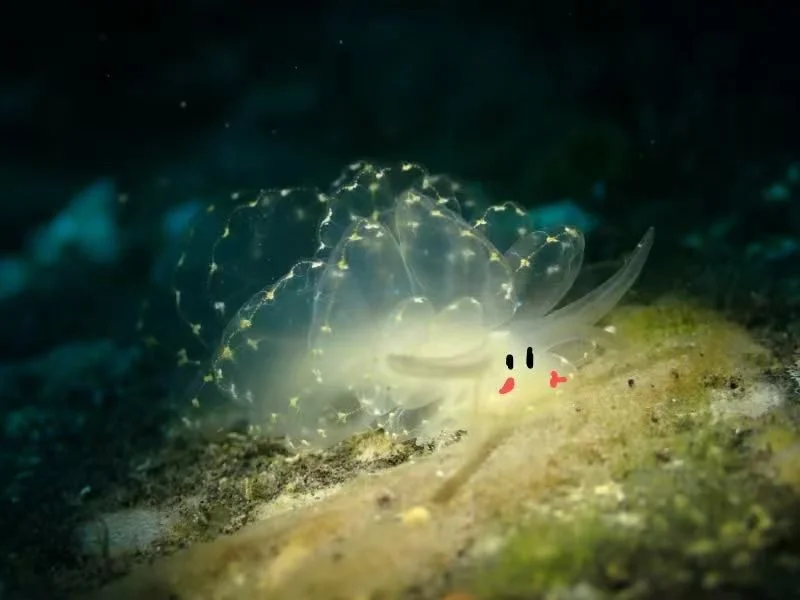
Tulamben(Bali)
Tulamben sits on Bali’s northeast coast and is best known for the USAT Liberty shipwreck – a 125‑metre cargo ship torpedoed in WWII that now lies just a short swim from shore. Warm water, mild currents and straightforward shore entries make diving here relaxed for all levels. Besides the wreck, divers can explore coral gardens, black‑sand muck sites and dramatic drop‑offs. Macro lovers will find nudibranchs, ghost pipefish, mimic octopus and pygmy seahorses, while big‑fish fans can encounter schooling jackfish, bumphead parrotfish and reef sharks. With a compact coastline packed with variety, Tulamben delivers world‑class wreck and critter diving without long boat rides.
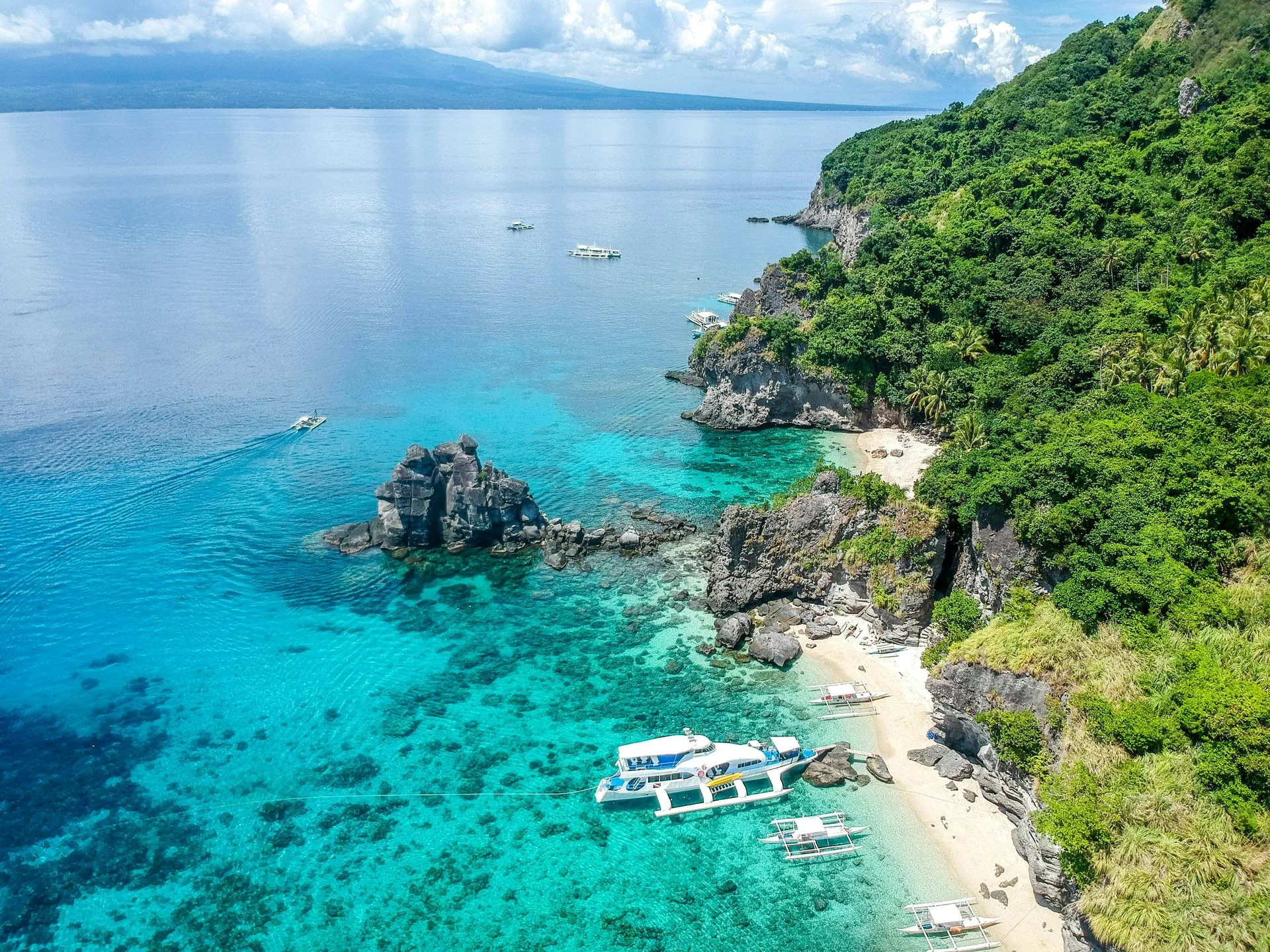
Dumaguete
Dumaguete on the southeast coast of Negros is the jumping‑off point for some of the Philippines’ most diverse diving. Along the nearby town of Dauin, a series of shallow marine sanctuaries and black‑sand slopes hide critters galore: frogfish, flamboyant cuttlefish, mimic octopus, ghost pipefish, seahorses, pipefish and nudibranchs. Artificial reefs made from car tyres and pyramids provide extra habitat. Offshore, Apo Island’s walls and plateaus burst with hard and soft corals, schooling jacks and barracudas, and friendly green turtles. With day trips to Oslob’s whale sharks or Bais’ dolphin‑watching, and excursions to nearby Siquijor, Dumaguete offers a perfect mix of macro muck diving and classic coral reefs.
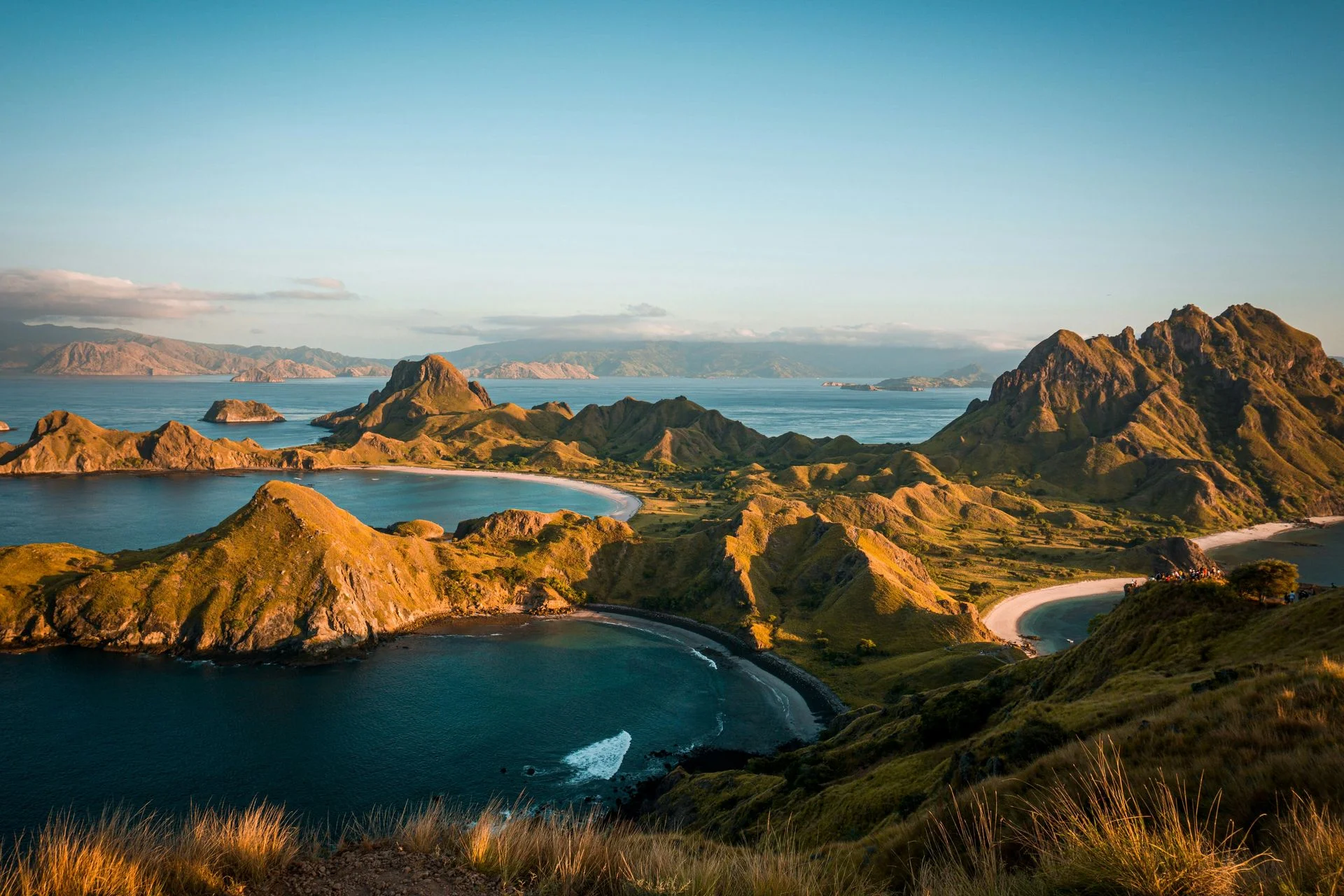
Komodo
Komodo National Park is a diver’s paradise full of marine diversity: expect healthy coral gardens, reef sharks, giant trevallies, countless schools of fish, and frequent manta ray sightings at sites like Manta Point and Batu Bolong. Drift dives and dramatic reef structures add excitement, while both macro lovers and big-fish fans will find plenty to love. Above water, the wild Komodo dragons roam, giving a touch of prehistoric wonder to the whole trip.
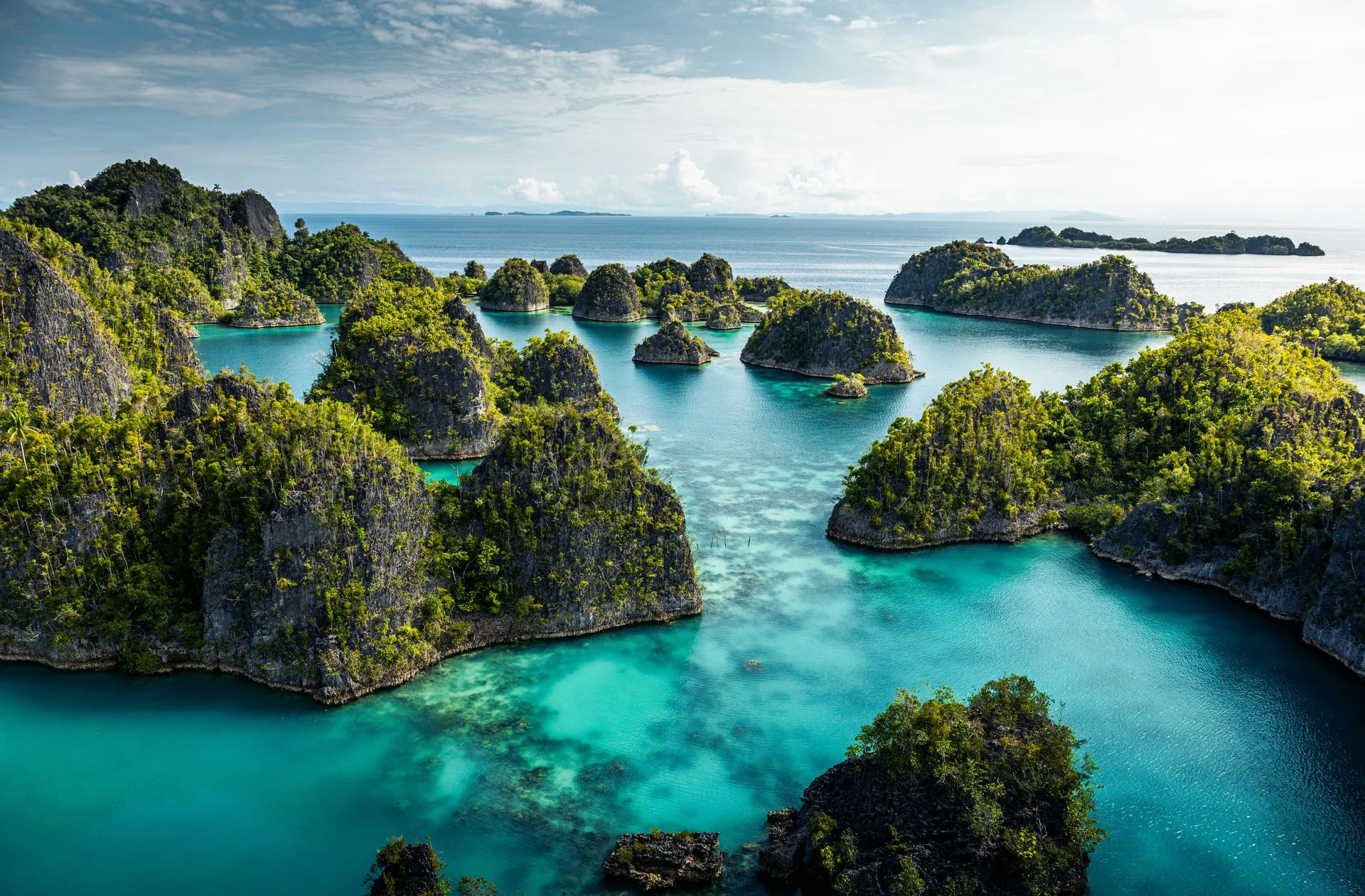
Raja Ampat
Raja Ampat, the “Four Kings,” is an archipelago of more than 1,500 islands at the edge of Indonesian West Papua. Its reefs sit in the heart of the Coral Triangle, where Pacific currents funnel nutrients into shallow seas and feed the world’s richest marine biodiversity. Diving here means gliding over colourful walls and coral gardens buzzing with more than 550 species of hard and soft corals and an estimated 1,500 fish species. You’ll meet blacktip and whitetip reef sharks on almost every dive, witness giant trevally and dogtooth tuna hunting schools of fusiliers, and encounter wobbegong “carpet” sharks, turtles, manta rays and dolphins. From cape pinnacles swarming with life to calm bays rich in macro critters, Raja Ampat offers endless variety. Above water, karst limestone islands and emerald lagoons provide spectacular scenery between dives.
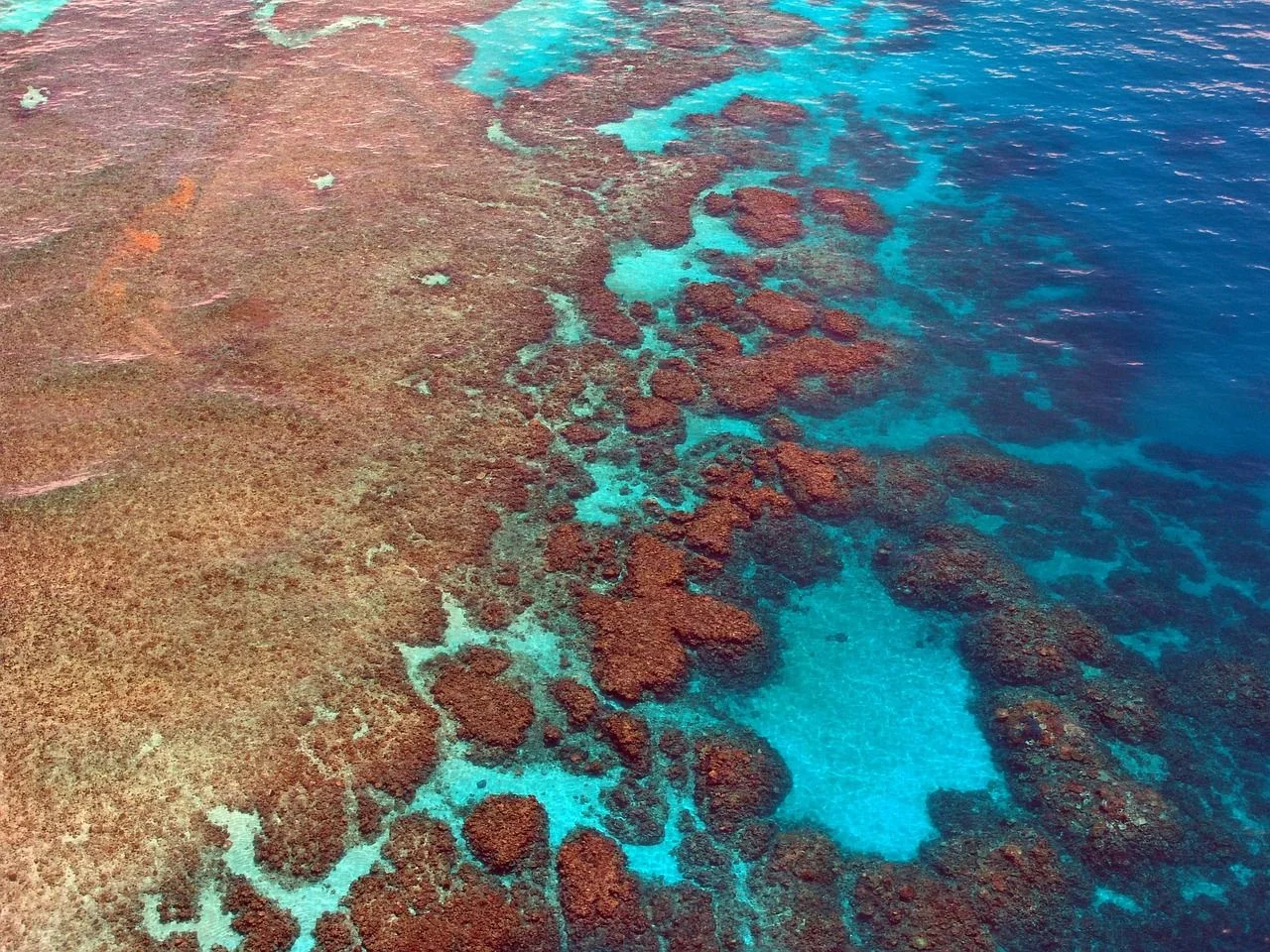
Great Barrier Reef
The Great Barrier Reef stretches for more than 2,300 km along Australia’s Queensland coast and is Earth’s largest coral ecosystem. With over 2,900 individual reefs, hundreds of islands, and a staggering diversity of marine life, it’s a bucket‑list destination for divers. Outer reef walls, coral gardens and pinnacles support potato cod, giant trevallies, reef sharks, sea turtles, manta rays and even visiting dwarf minke and humpback whales. Divers can explore historic wrecks like the SS Yongala, drift along the coral‑clad walls of Osprey Reef or mingle with friendly cod at Cod Hole. Whether you’re a beginner on a day trip from Cairns or an experienced diver on a remote liveaboard, the Great Barrier Reef offers unforgettable underwater adventures.