
Algae Octopus
Abdopus aculeatus
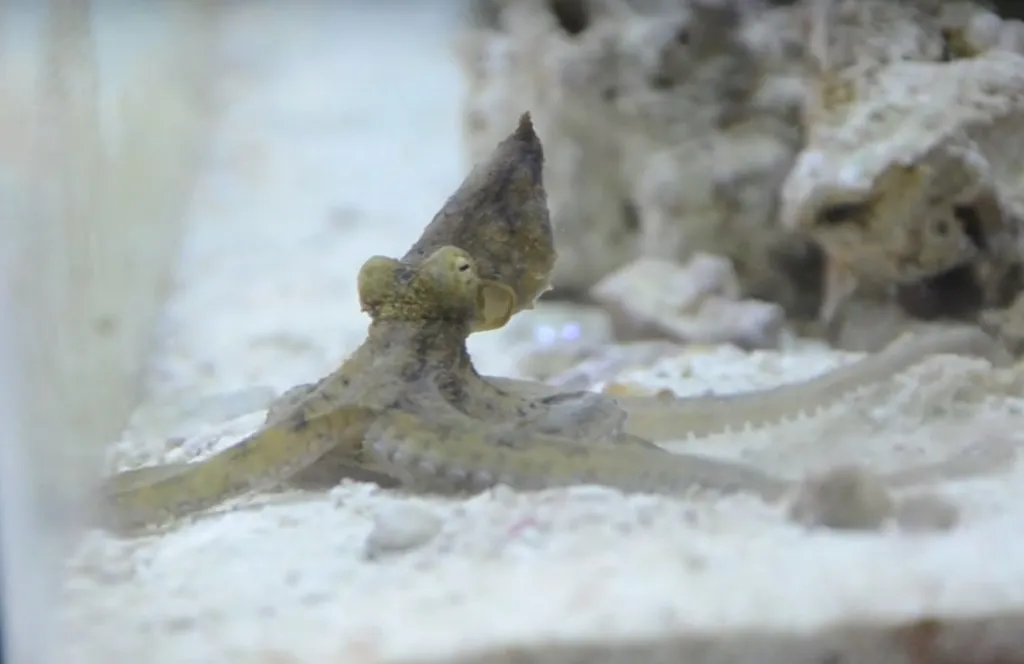
Photo by IchHier--15er (Diskussion) / CC BY-SA 4.0 via Wikimedia Commons
The Algae Octopus (Abdopus aculeatus) earned its common name from a resting disguise so convincing that experienced guides still double-take: curled tight, mottled ochre-gray-brown, with dark arm bars, it reads as a gastropod shell crusted in algae—not a cephalopod at all. Mantle roughly orange-sized (~7 cm), arms stretching to ~25 cm, it is a shallow-water, daylight specialist of Indo-Pacific intertidal benches and seagrass meadows from Indonesia and the Philippines to northern Australia. Unlike the coconut octopus celebrity next door on black-sand muck, algae octopus is the tidepool and reef-flat character—pebble-lined dens, crab hunts at low slack, and a famous bipedal walk on arm tips when it needs to bolt. For macro divers, the payoff is behavioral: watch long enough and cryptic brown lump becomes an animal rearranging pebbles at its den mouth, stalking sideways through Halophila, or standing upright for a fast escape. IUCN lists it Least Concern, but intertidal habitat loss and small-scale harvest for aquarium trade and bait are real local pressures. This is not a blue-ringed emergency—venom serves prey—but hands-off ethics still apply.
🔬Classification
📏Physical Features
🌊Habitat Info
⚠️Safety & Conservation
Identification Guide
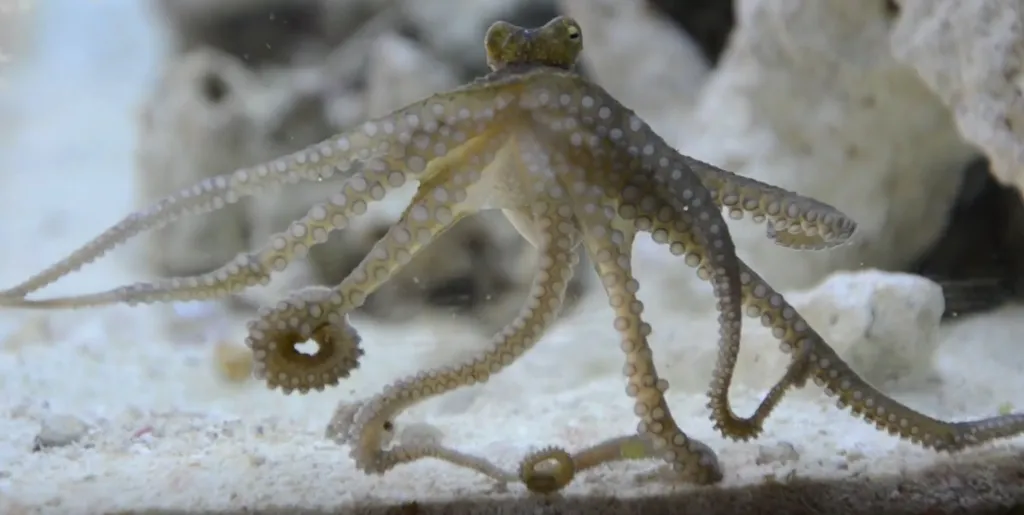
Photo by IchHier--15er (Diskussion) / CC BY-SA 4.0 via Wikimedia Commons
Size & Posture
- Mantle about small-orange size (~7 cm); arms ~25 cm extended—larger arm-to-mantle ratio than many reef octopuses
- Resting posture tight curl mimicking algae-encrusted shell, not open sprawled on rock
- Bipedal arm-tip walking when fleeing—signature alongside coconut octopus (Amphioctopus marginatus)
Color & Pattern
- Base mottled ochre, gray, brown—designed to match algae and rubble, not vein lines of coconut octopus
- Dark transverse bars on arms—field guides compare to hermit crab leg stripes
- Possible green iridescence; can brighten for display when disturbed
Habitat Clues
- Intertidal to ~17 m on sand benches, seagrass (Halophila, Thalassia), shallow reef flats
- Dens in sandy bottom, often rimmed with pebbles (1–5 cm) at entrance—males near females may pile dozens
- Diurnal—day dives and low-tide walks productive; not primarily a black-sand night muck icon
Similar Species
- Coconut Octopus (Amphioctopus marginatus): shell-carrying, vein-line brown pattern, muck slopes—not algae-shell curl on seagrass flats
- Wonderpus (Wunderpus photogenicus): white spots on red-brown arms; fixed burrow on sand
- Mimic Octopus (Thaumoctopus mimicus): dramatic arm postures, white/brown mantle bars
- Blue-ringed octopuses: much smaller; electric blue rings; high-risk venom
Top 10 Fun Facts about Algae Octopus
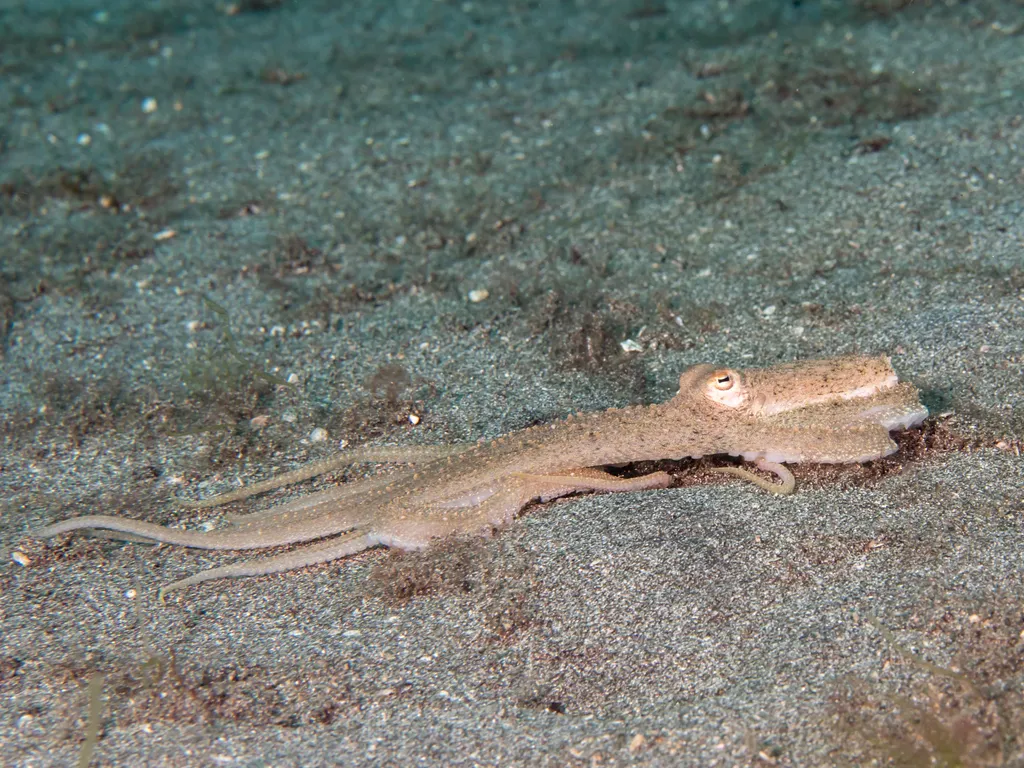
Photo by Rickard Zerpe / CC BY 2.0 via Wikimedia Commons
1. Named for the Shell That Isn't There
"Algae octopus" refers to resting camouflage, not diet. Abdopus aculeatus coils so the mantle and arms mimic a gastropod shell overgrown with algae—ochre, gray, and brown mottling plus dark arm bars that echo hermit crab legs. Guides in Lembeh and Raja Ampat still call out "fake shell" before the eyes twitch. The disguise breaks the moment the animal walks or hunts; patience rewards divers who wait out the performance.
2. One of Two Famous Bipedal Octopuses
Field ethograms document upright locomotion on two arm tips—a fast escape gait shared mainly with coconut octopus (Amphioctopus marginatus). Juveniles and adults use it across intertidal sand, often paired with crypsis in seagrass blades. Video at 60 fps captures the gait better than a single macro frame; track parallel, not from above.
3. Pebble Architecture at the Den Door
Research on Sulawesi and Queensland populations found dens lined and surrounded by pebbles (typically 1–5 cm). Large females near males may sit behind piles of 20–50 stones; smaller males keep ~10 or fewer. Middens of prey shells are less prominent than the deliberate pebble rings—a field clue when you spot a sandy hole on a reef flat.
4. Intertidal Specialist, Not Deep Muck
Recorded 0–17 m, but biology centers on intertidal reef flats with Halophila, Thalassia, Cymodocea, and macroalgae like Padina and Laurencia. Juveniles occupy rubble pieces and burrows within meters of mean low tide. Divers who only hunt black-sand slopes may miss this species entirely—check shallow seagrass patches and sandy benches on the same trip.
5. Diurnal Hunter in Plain Sight
Unlike many octopus headline species pitched for night muck, algae octopus is active by day—crab and small prey ambushes on exposed flats at low slack. Daylight macro with polarizing filters and patient hover often outperforms a rushed night sweep. Tide tables matter: some shore-access sites expose dens at extreme low water.
6. Western Central Pacific Range
Distribution spans Indonesia, Philippines, Papua/New Guinea corridor, and northern Australia (e.g., Queensland reef flats). It is not a Caribbean or Red Sea species—destination slugs should stay Indo-Pacific. Local names include Japanese udenaga kakure dako ("long-arm hiding octopus") and Vietnamese bạch tuộc tảo.
7. Prickly Octopus — aculeatus Means Spiny
The epithet aculeatus ("prickly") references skin texture under magnification—useful for taxonomists, occasionally visible as rough mantle skin in close macro. Vernacular "prickly octopus" appears in fisheries databases alongside "algae octopus." Do not confuse with unrelated "spiny" reef fish common names.
8. Aquarium Trade Footprint
SeaLifeBase notes it is among the most common small octopuses in the home aquarium trade worldwide, with small-scale subsistence fishing and bait use in parts of its range. Wild encounter ethics intersect trade pressure: enjoy the observation, avoid purchasing wild-caught individuals, and support operators who do not collect from dive-site dens.
9. Short Life, Den Fidelity
Like most octopuses, semelparous life history—mate, brood, stop feeding, die. Field monitoring suggests individuals may occupy the same primary den for up to two weeks or longer, with occasional secondary holes while foraging by day. Returning to the same pebble-ringed hole on a multi-day liveaboard schedule can yield repeat behavior shots without harassing multiple animals.
10. Shot List: Cryptic First, Behavior Second
Establishing: wide macro showing algae-shell curl in seagrass context. Behavior: pebble arranging, crab stalk, bipedal walk—50–100 mm video. Detail: arm bars, sucker rows, eye peek from curl—100 mm macro. Lighting: side or snoot to avoid blasting silt on sandy flats. Ethics: if it seals into curl, back off—the show resumes when pressure drops.
Diving & Observation Notes
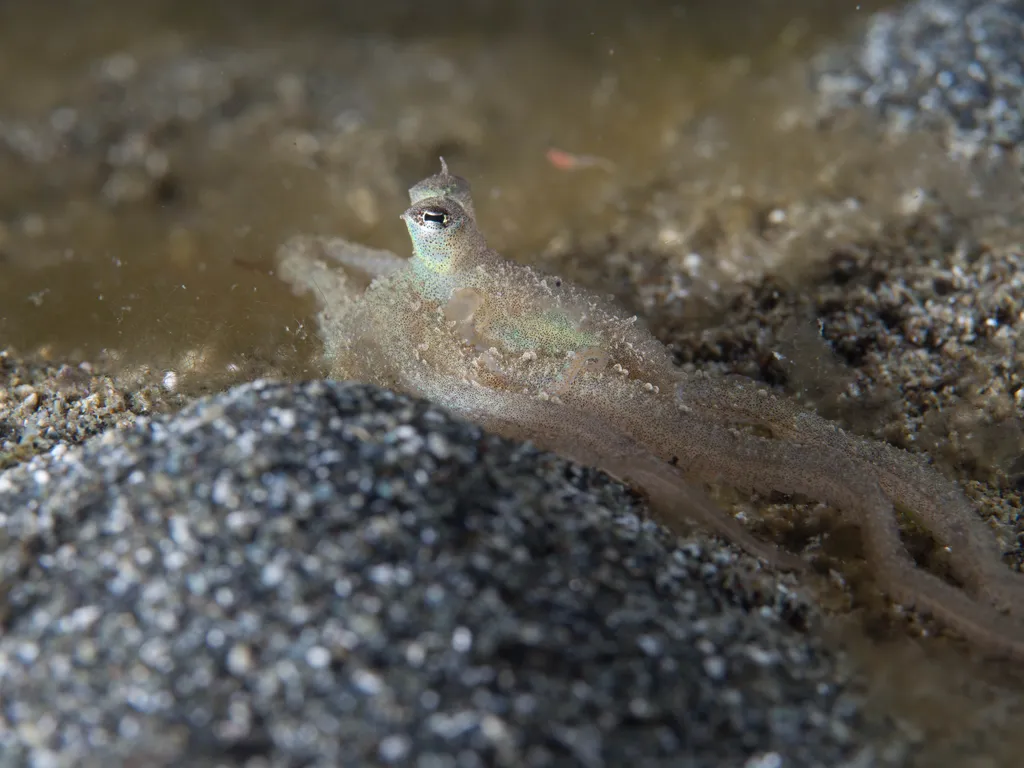
Photo by Rickard Zerpe / CC BY-SA 2.0 via Wikimedia Commons
🧭 Where to Look
Prioritize shallow reef flats, seagrass meadows, and sandy intertidal benches at 0–12 m in Lembeh (grassy patches and flats—not only black sand), Raja Ampat, Manado/Tunggal corridor, Anilao, Dumaguete, Wakatobi, and northern Great Barrier Reef sites with Halophila/Thalassia. Guides scan for pebble-ringed holes, tight brown "shell" lumps, and arm-tip movement at low slack. Day dives outperform pure night muck for this species.
🤿 Approach & Behavior
Animals are cryptic first, curious second—rush the den and they seal into algae-shell curl. Hover 1–2 m, let eyes and arm tips emerge. Never dig out pebbles or probe holes with sticks; den disturbance is lethal stress on a short-lived animal. If bipedal walking starts, track sideways at distance; blocking the escape path triggers full retreat.
📷 Photo & Video
- Camouflage: 60–100 mm showing seagrass context and arm bars
- Behavior: video for pebble work and bipedal gait
- Macro: 100 mm on sucker rows and eye slit from curl
- Sandy flats: low angle, side/snoot light; mind fin wash
⚠️ Safety & Ethics
Not blue-ringed lethal, but bites occur if handled. Do not collect for aquarium trade from dive sites. Intertidal access—watch boat traffic and surge on shallow flats. Take pebbles only in pictures.
Best Places to Dive with Algae Octopus
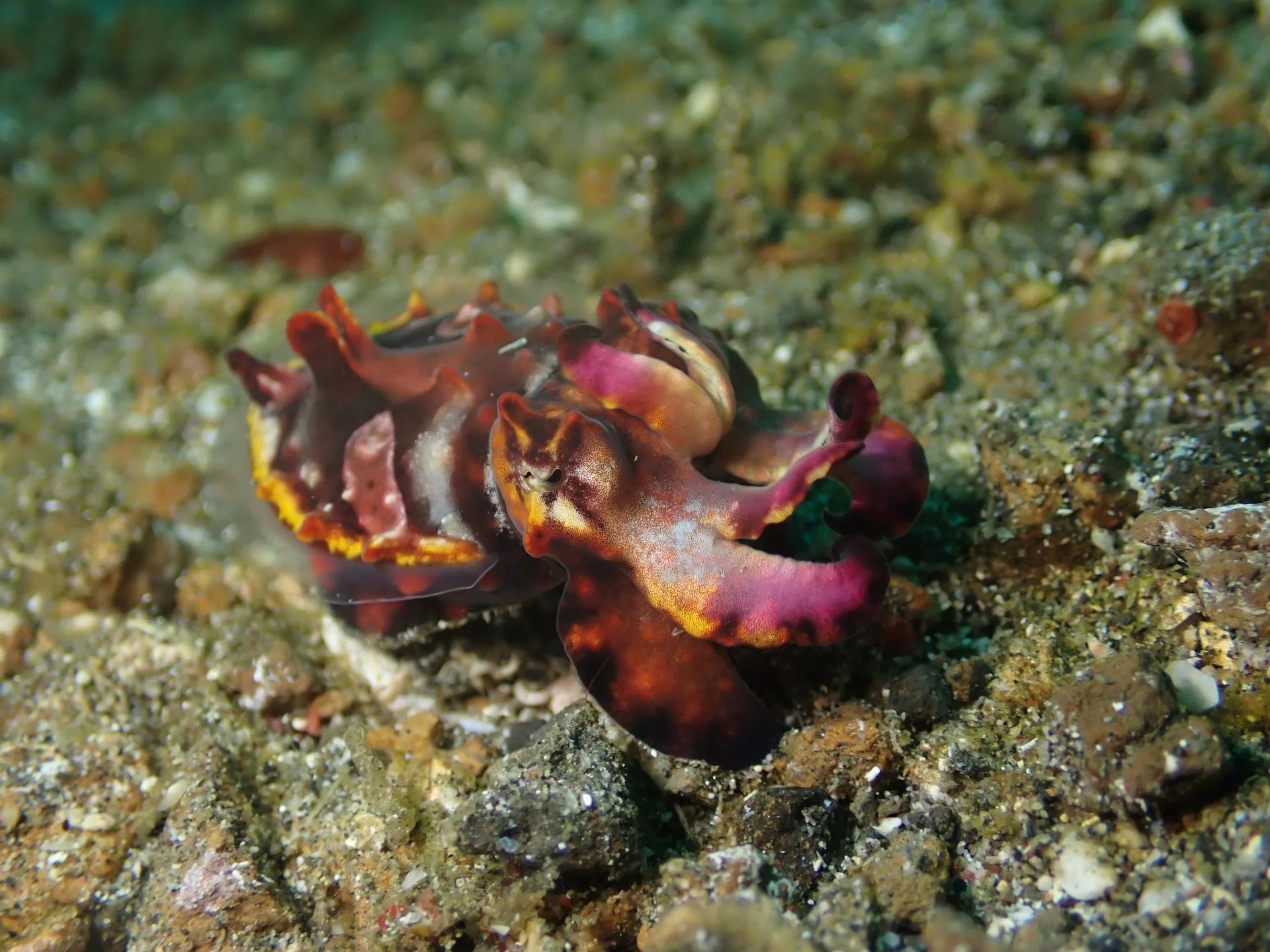
Lembeh
The Lembeh Strait in North Sulawesi has become famous as the muck‑diving capital of the world. At first glance its gently sloping seabed of black volcanic sand, rubble and discarded debris looks bleak. Look closer and it is teeming with weird and wonderful life: hairy and painted frogfish, flamboyant cuttlefish, mimic and blue‑ringed octopuses, ornate ghost pipefish, tiny seahorses, shrimp, crabs and a rainbow of nudibranchs. Most dives are shallow and calm with little current, making it an ideal playground for macro photographers. There are a few colourful reefs for a change of scenery, but Lembeh is all about searching the sand for critter treasures.
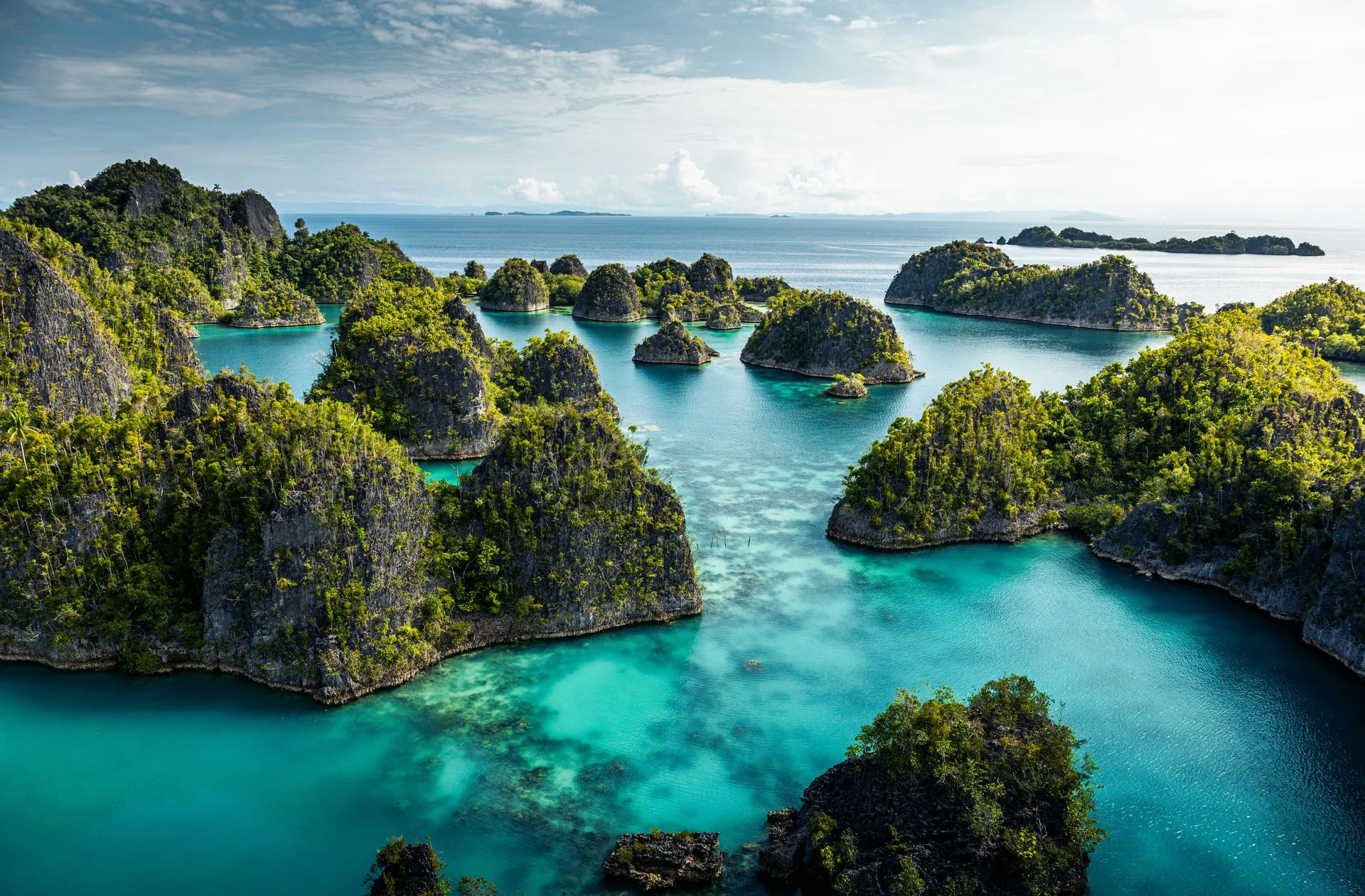
Raja Ampat
Raja Ampat, the “Four Kings,” is an archipelago of more than 1,500 islands at the edge of Indonesian West Papua. Its reefs sit in the heart of the Coral Triangle, where Pacific currents funnel nutrients into shallow seas and feed the world’s richest marine biodiversity. Diving here means gliding over colourful walls and coral gardens buzzing with more than 550 species of hard and soft corals and an estimated 1,500 fish species. You’ll meet blacktip and whitetip reef sharks on almost every dive, witness giant trevally and dogtooth tuna hunting schools of fusiliers, and encounter wobbegong “carpet” sharks, turtles, manta rays and dolphins. From cape pinnacles swarming with life to calm bays rich in macro critters, Raja Ampat offers endless variety. Above water, karst limestone islands and emerald lagoons provide spectacular scenery between dives.
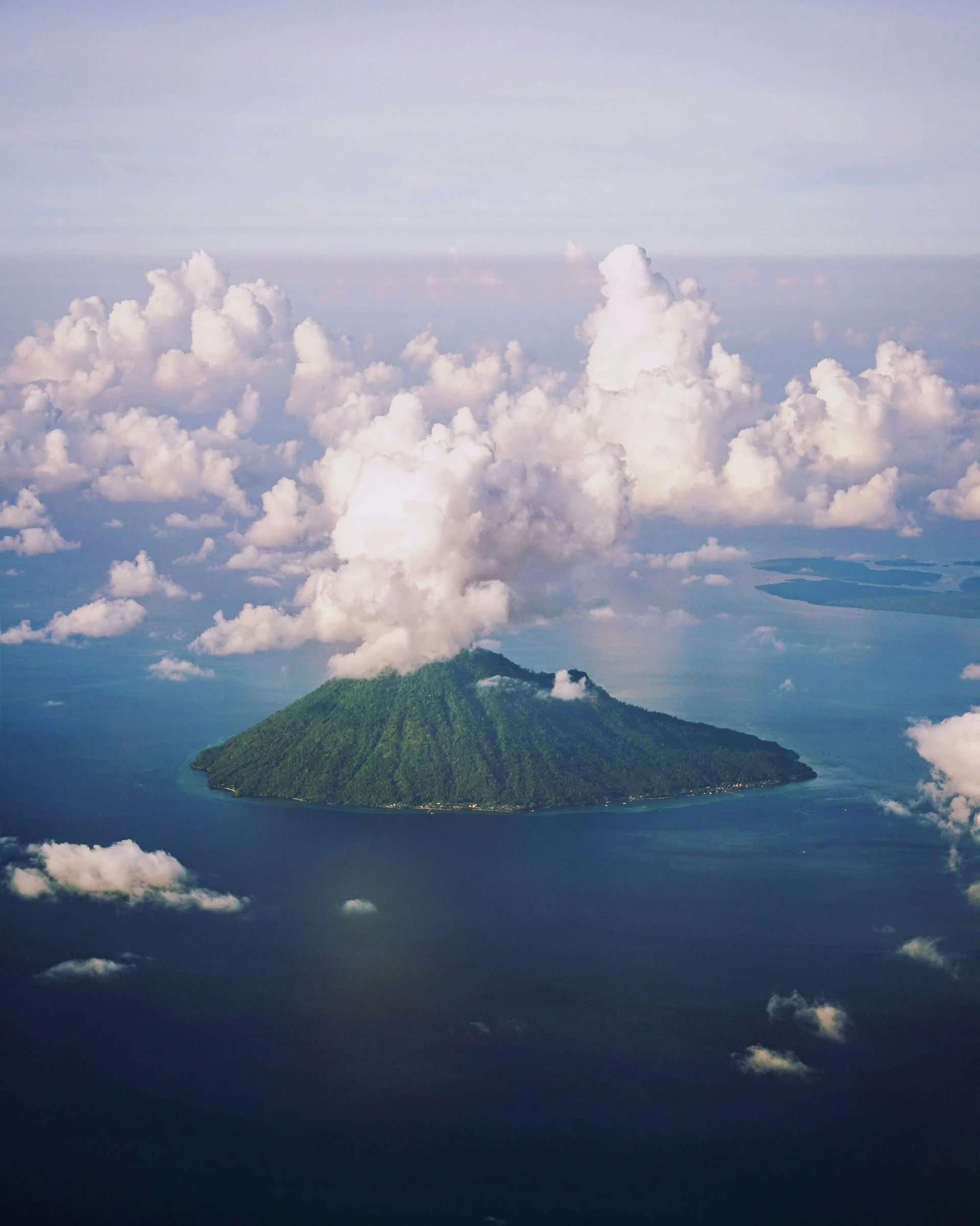
Manado
Tucked away in northern Sulawesi, Manado’s coastal waters and Bunaken National Park are a diver’s dream. Sheer coral walls plunge into the deep blue, exploding with sponges, sea fans and tropical fish, while the mainland coast hides muck‑diving gems with seahorses, ghost pipefish and mimic octopus. Dolphins and pilot whales sometimes cruise past, green turtles nap on the reef, and reef sharks and schooling jacks patrol the drop‑offs. Whether you like effortless drift dives along walls or critter hunting in sand and seagrass, Manado balances big‑fish thrills with macro treasures. Warm waters, friendly locals and laid‑back resorts make it perfect for both serious underwater photographers and casual holidaymakers.
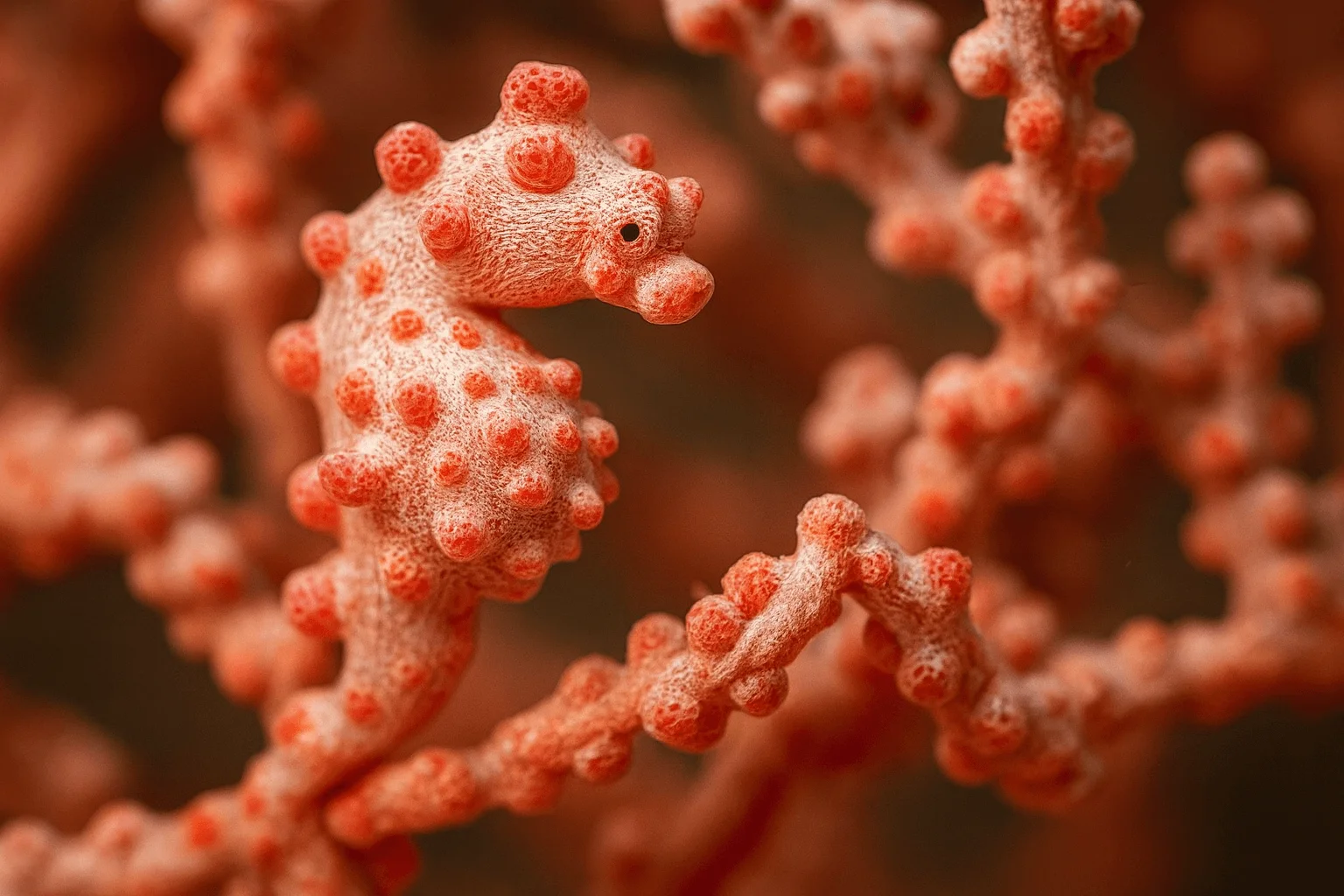
Anilao
Anilao, a small barangay in Batangas province just two hours south of Manila, is often called the macro capital of the Philippines. More than 50 dive sites fringe the coast and nearby islands, offering an intoxicating mix of coral‑covered pinnacles, muck slopes and blackwater encounters. Critter enthusiasts come for the legendary muck dives at Secret Bay and Anilao Pier, where mimic octopuses, blue‑ringed octopuses, wonderpus, seahorses, ghost pipefish, frogfish and dozens of nudibranch species lurk in the silt. Shallow reefs like Twin Rocks and Cathedral are covered in soft corals and teem with reef fish, while deeper sites such as Ligpo Island feature gorgonian‑covered walls and occasional drift. Because Anilao is so close to Manila and open year‑round, it’s the easiest place in the Philippines to squeeze in a quick diving getaway.
Dumaguete
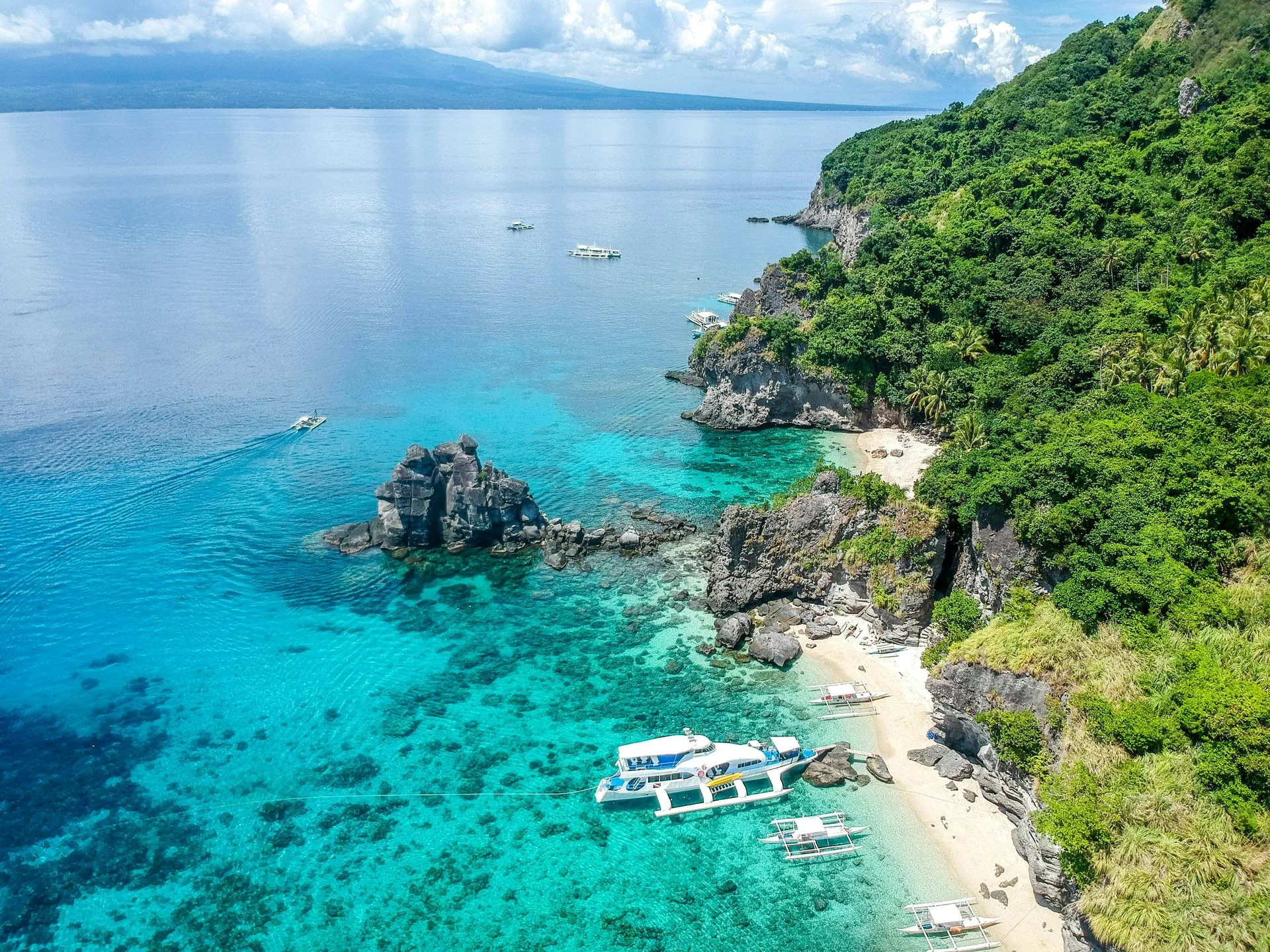
Dumaguete on the southeast coast of Negros is the jumping‑off point for some of the Philippines’ most diverse diving. Along the nearby town of Dauin, a series of shallow marine sanctuaries and black‑sand slopes hide critters galore: frogfish, flamboyant cuttlefish, mimic octopus, ghost pipefish, seahorses, pipefish and nudibranchs. Artificial reefs made from car tyres and pyramids provide extra habitat. Offshore, Apo Island’s walls and plateaus burst with hard and soft corals, schooling jacks and barracudas, and friendly green turtles. With day trips to Oslob’s whale sharks or Bais’ dolphin‑watching, and excursions to nearby Siquijor, Dumaguete offers a perfect mix of macro muck diving and classic coral reefs.
Wakatobi
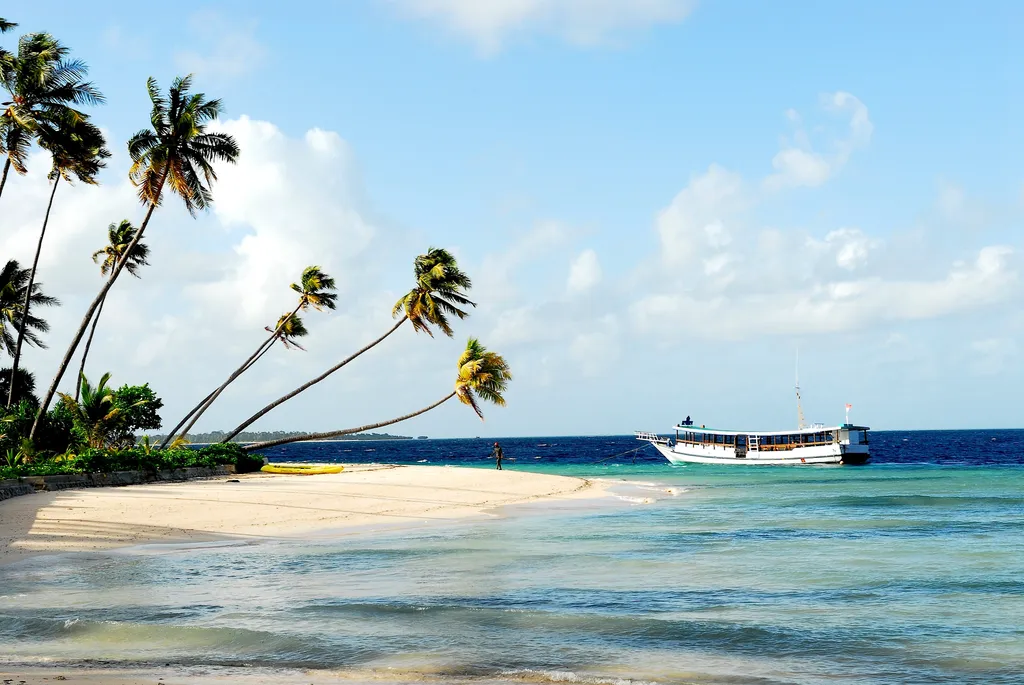
Wakatobi National Park sits on the southeastern rim of Sulawesi, named from its four main islands—Wangi-Wangi, Kaledupa, Tomia, and Binongko. It holds some of the healthiest coral coverage in the Coral Triangle, with walls, seamounts, and fringing reefs that marine biologists still treat as a reference system. Visibility regularly hits 30 m and can stretch past 50 m on calm outer-reef days. Currents are usually mild and predictable, so you get long bottom times on colorful hard-coral gardens instead of fighting blue water. The signature experience is Wakatobi’s House Reef—walk-in shore diving a short swim from the jetty—backed by more than 40 day-boat sites, from beginner pinnacles like Roma to the knife-edge walls of Blade.
Great Barrier Reef
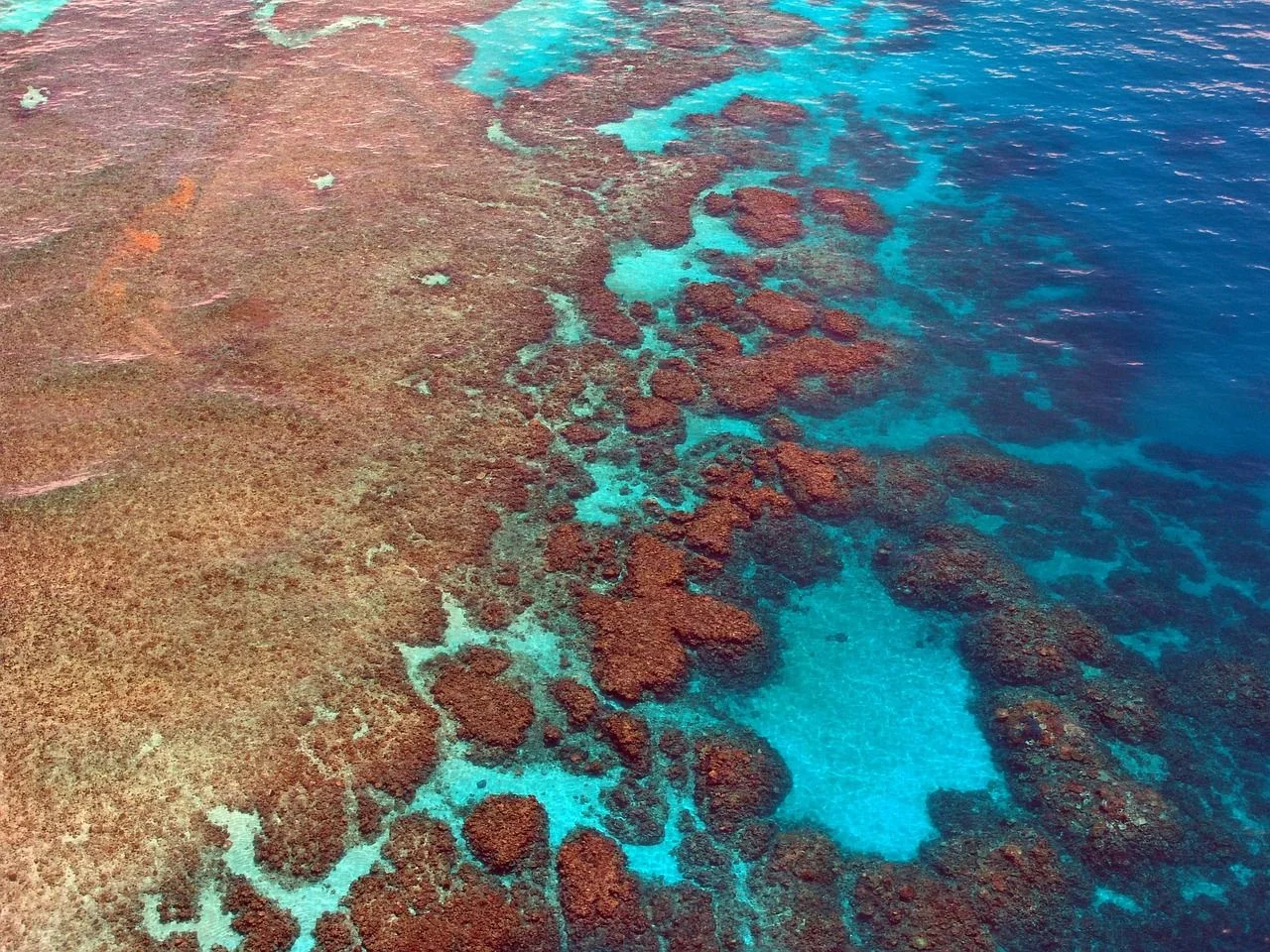
The Great Barrier Reef stretches for more than 2,300 km along Australia’s Queensland coast and is Earth’s largest coral ecosystem. With over 2,900 individual reefs, hundreds of islands, and a staggering diversity of marine life, it’s a bucket‑list destination for divers. Outer reef walls, coral gardens and pinnacles support potato cod, giant trevallies, reef sharks, sea turtles, manta rays and even visiting dwarf minke and humpback whales. Divers can explore historic wrecks like the SS Yongala, drift along the coral‑clad walls of Osprey Reef or mingle with friendly cod at Cod Hole. Whether you’re a beginner on a day trip from Cairns or an experienced diver on a remote liveaboard, the Great Barrier Reef offers unforgettable underwater adventures.