Bumphead Parrotfish
Bolbometopon muricatum
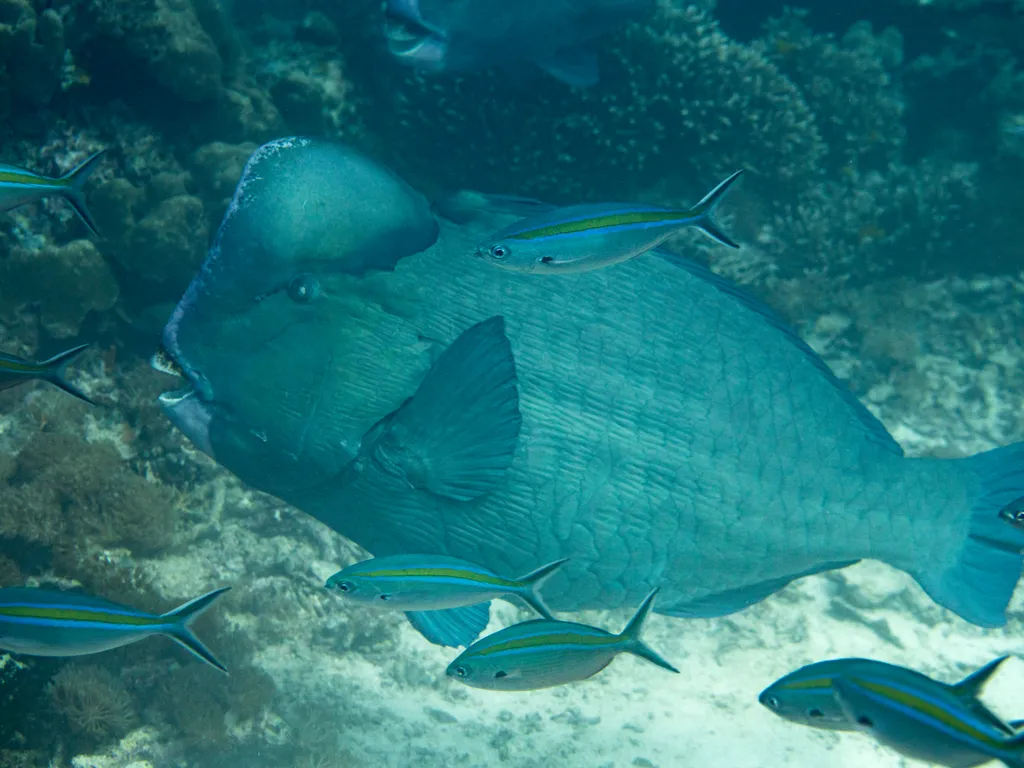
Photo by Rickard Zerpe / CC BY 2.0 via Wikimedia Commons
The Bumphead Parrotfish is the largest parrotfish on Earth—a reef bulldozer that can exceed 1.3 meters and weigh more than a diver's gear bag. Adults cruise outer reefs in loose schools, crunching live coral with fused beak teeth and occasionally ramming coral heads with their massive foreheads to break off chunks. They are among the most important bioeroders on tropical reefs, grinding coral into fine sand that eventually becomes beaches and lagoons. Once common across the Indo-Pacific, heavy spearfishing and slow life history have made them rare at many sites—which makes a calm encounter with a grazing school one of the great wide-angle moments in reef diving.
🔬Classification
📏Physical Features
🌊Habitat Info
⚠️Safety & Conservation
Identification Guide
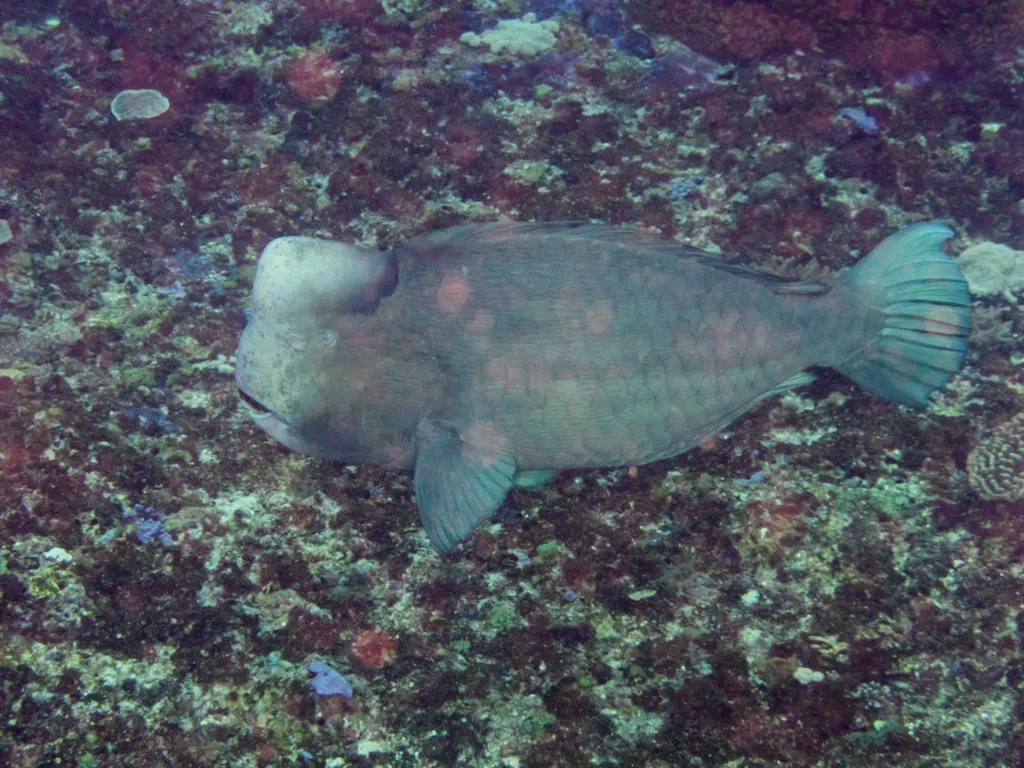
Photo by Rickard Zerpe / CC BY 2.0 via Wikimedia Commons
Field marks:
- Forehead hump: Adults develop a steep profile and prominent bump on the forehead (visible from ~25 cm TL).
- Size: Far larger than any other parrotfish—schools of metre-class fish are unmistakable.
- Beak: Fused teeth form a parrot-like bill with nodules; used to bite and scrape coral.
- Colour: Adults mostly uniform dark green to grey-green; juveniles brownish with vertical rows of white spots.
- Body shape: Deep, steep-sided body (depth 2.0–2.5× SL); pectoral fins with 16–17 rays.
Differences from Similar Species
- Other large parrotfishes (e.g. Chlorurus, Scarus): None approach bumphead size; lack the adult forehead hump and uniform dark green bulk.
- Napoleon wrasse (Cheilinus undulatus): Thick lips and distinct wrasse head shape; no fused parrot beak; different fin ray counts and behaviour.
Juvenile vs. Adult
Juveniles hide in branching Acropora and seagrass beds in sheltered lagoons, often associating with damselfish. Adults move to clear outer reefs and forage in small to large groups; the forehead hump becomes obvious with growth.
Top 10 Fun Facts about Bumphead Parrotfish
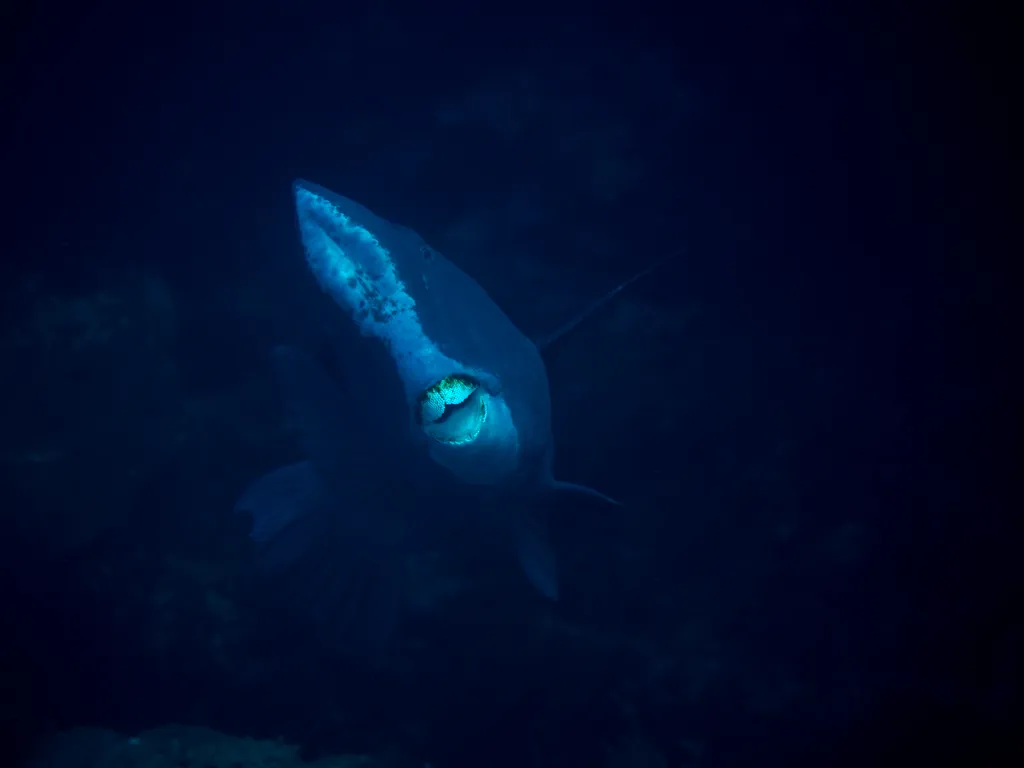
Photo by Rickard Zerpe / CC BY-SA 2.0 via Wikimedia Commons
1. The Reef's Heavy Machinery
Bumpheads are the largest coral predators on most Indo-Pacific reefs. A big individual may consume several tonnes of live coral per year—mostly by biting off chunks, but also by head-ramming brittle colonies. That appetite makes them keystone bioeroders: without them, sand production and reef turnover change dramatically.
2. Beak Built for Demolition
Like all parrotfishes, their teeth are fused into a parrot-like beak with distinctive nodules. The jaw muscles are proportionally huge. They don't just nibble algae—they excavate living coral skeletons, leaving characteristic bite scars that divers learn to read as "bumphead was here."
3. Sand Factory on the Move
Much of the white sand in tropical lagoons and beaches is parrotfish poop—fine ground coral processed through the gut. Bumpheads, being the biggest parrotfishes, are disproportionately important sand producers. One study estimated a large individual could generate tonnes of sediment annually.
4. Slow Life, High Stakes
They grow slowly, mature late, and live decades. Females can change sex to males (protogynous hermaphroditism). This combination means populations recover slowly from fishing—exactly why they slid from "common" to IUCN Vulnerable across much of their range.
5. Headbutting Contests
At remote spawning sites like Wake Atoll, rival males engage in ritualized headbutting—charging each other forehead-to-forehead with audible impacts. Researchers have suggested monitoring these distinctive sounds with underwater recorders to track spawning effort at aggregation sites.
6. Cave Sleepers
Bumpheads "sleep" in caves, ledges, and shipwrecks at night, often in groups. Night divers who know the local hangouts can find them packed into swim-throughs, tails twitching, beaks tucked—vulnerable and easily targeted by spearfishers, which is one reason night spearfishing bans matter for this species.
7. Spawning Aggregations
Adults gather at specific reef points on lunar cycles to spawn in aggregations that can concentrate hundreds of fish in a tiny area. Once a spawning site is discovered by fishers, the aggregation can be wiped out in a few nights—classic boom-and-bust for slow-reproducing reef giants.
8. From Abundant to Absent
Historical accounts describe bumpheads as common and approachable across the Indo-Pacific. Decades of spearfishing, especially on scuba at night near sleeping caves, have emptied many reefs. Sipadan, Raja Ampat, and Tubbataha are now famous precisely because protected areas still hold healthy schools.
9. Only Living Species in Its Genus
Bolbometopon is a monotypic genus—B. muricatum is the sole extant species. Fossil relatives date to the Late Miocene, underscoring how long this lineage of mega-parrotfishes has been shaping reefs.
10. Wide Range, Patchy Presence
They occur from the Red Sea and East Africa across the Indian Ocean to the Pacific—including Australia, Indonesia, Philippines, Micronesia, and Polynesia. But presence is patchy: you can dive a perfect-looking reef and see zero bumpheads, then drop onto a protected outer wall and find thirty grazing in plain sight.
Diving & Observation Notes
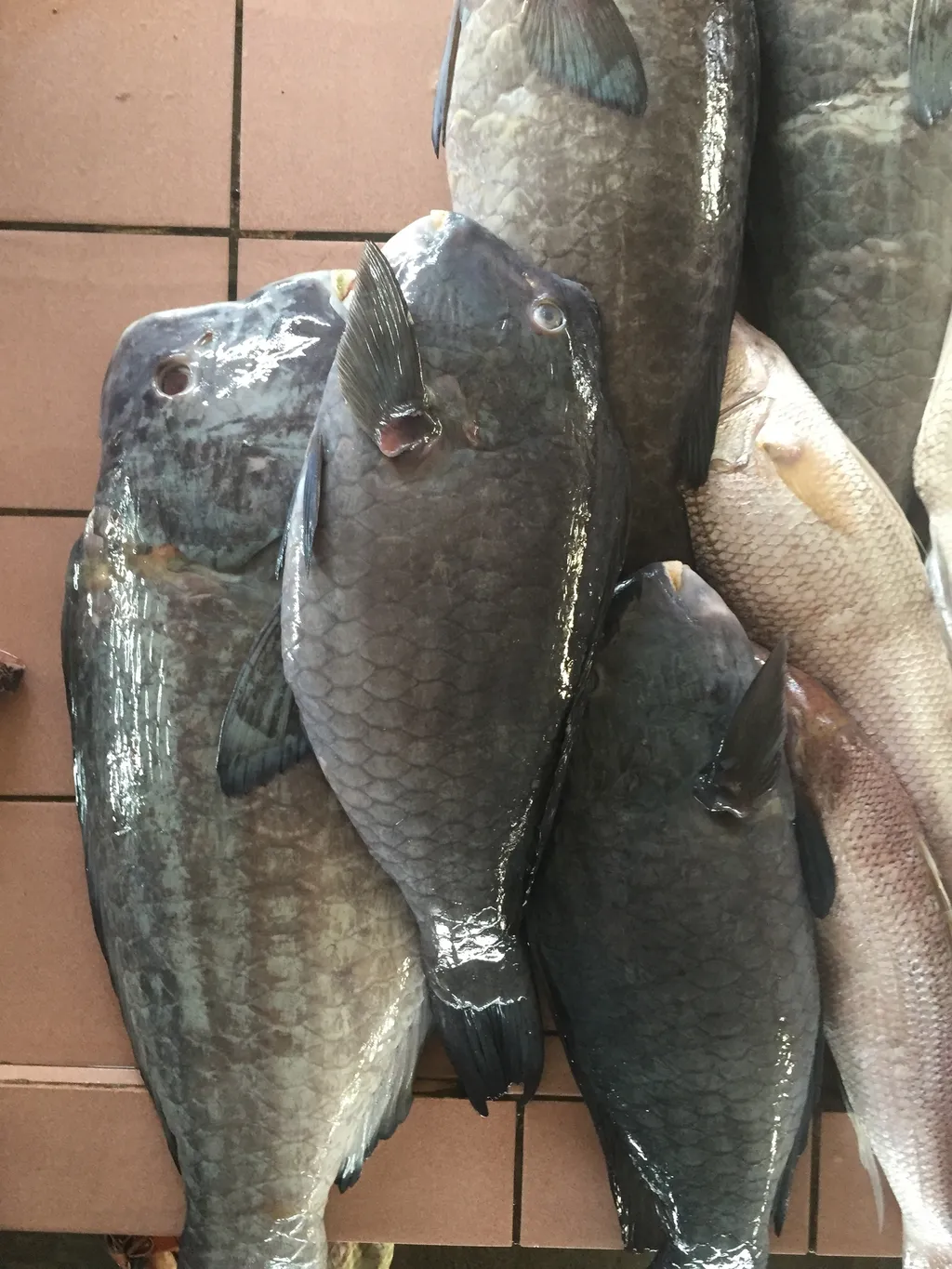
Photo by Jiro Iguchi / CC BY 4.0 via Wikimedia Commons
🧭 Where to Look
Target outer reef crests, lagoon edges, and seaward slopes in 5–25 m—especially early morning when schools graze shallow coral heads. Protected sites (Sipadan Barracuda Point, Raja Ampat's Mioskun, Tubbataha reefs, Wakatobi outer walls) still deliver reliable encounters. Night dives near known cave sleep sites are possible but ethically sensitive—avoid disturbing resting fish.
🤿 Approach & Behaviour
Bumpheads are often wary in fished areas but can be surprisingly calm on well-protected reefs. Approach slowly from the side, avoid blocking their path, and never chase. Schools may mill in place while feeding—hover at the edge and let them come to you. Sudden exhalation bubbles or loud fin kicks will scatter a group instantly.
📷 Photo Tips
Wide-angle with natural light works best—strobes can spook large schools. Shoot from slightly below to emphasize the forehead hump and beak profile. Include coral bite scars in the frame for habitat context. For video, hold position and let grazing fish fill the foreground; panning chase shots rarely end well.
🌊 Current & Conditions
They tolerate moderate current on reef crests where food is abundant. Visibility above 15 m helps for school shots. Dawn dives often coincide with peak feeding; midday they may move deeper or rest in shade.
⚠️ Ethics & Conservation
Never spear or harass—bumpheads are Vulnerable and locally depleted. Do not enter sleeping caves to flash them at night unless your operator has explicit sustainable guidelines. Report illegal fishing if you witness it. Your calm, non-invasive presence supports ecotourism value that helps justify protection.
Best Places to Dive with Bumphead Parrotfish
Sipadan & Semporna
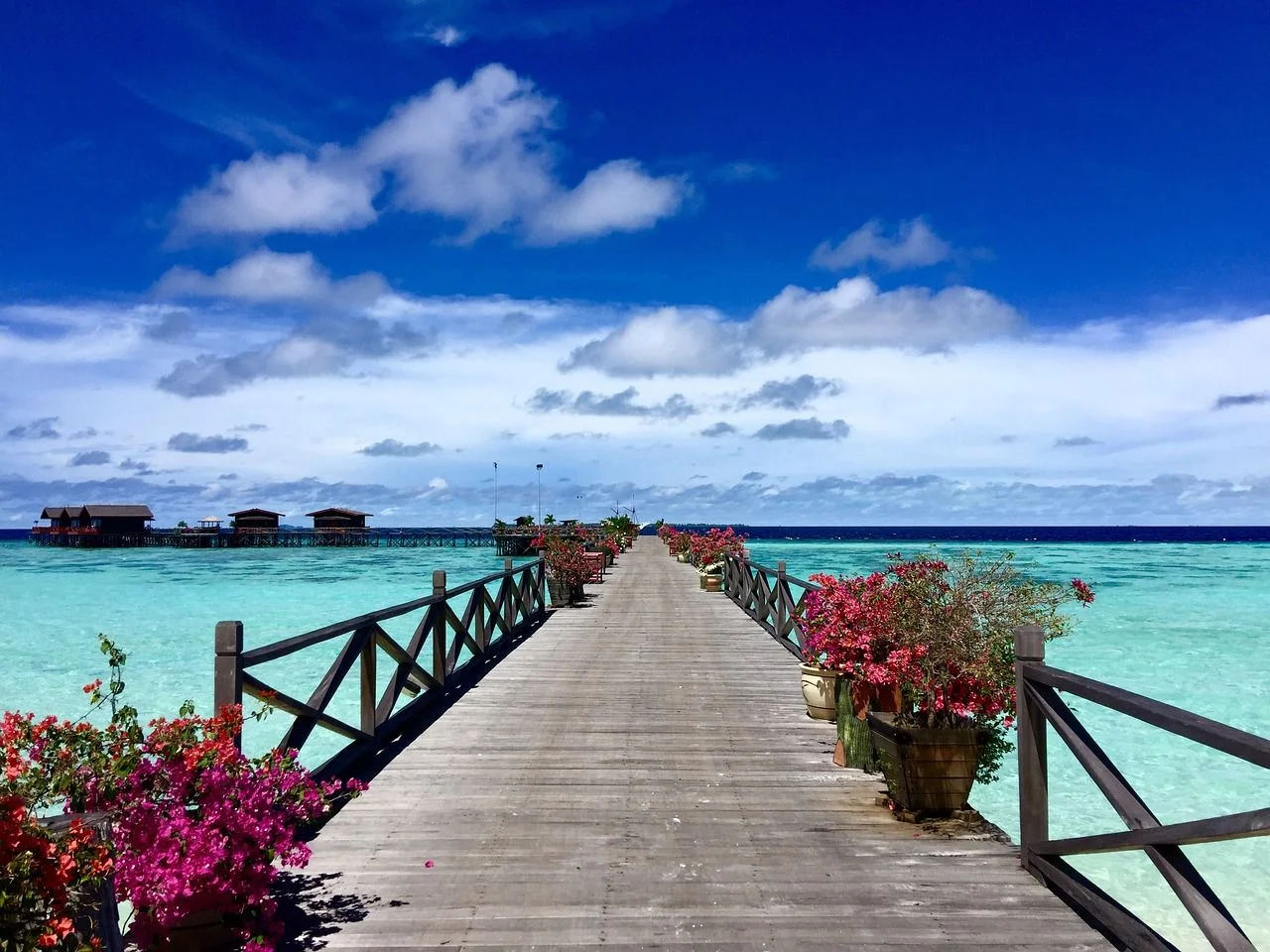
Sipadan Island off the coast of Sabah is Malaysia’s crown jewel of diving – a steep limestone pinnacle rising more than 600 metres from the sea floor and teeming with pelagic life. Currents sweep past vertical walls encrusted in hard and soft corals, bringing in barracudas, jacks, reef sharks and bumphead parrotfish in breathtaking numbers. Nearby Mabul and Kapalai offer an entirely different experience on shallow sand‑slope reefs and artificial structures, where flamboyant cuttlefish, frogfish, mandarin fish and other macro critters hide among sponges and tyres. With limited daily permits, a visit to Sipadan is a privilege; most divers base themselves in the frontier town of Semporna or at water‑bungalow resorts on Mabul and Kapalai and make day trips into the park.
Raja Ampat
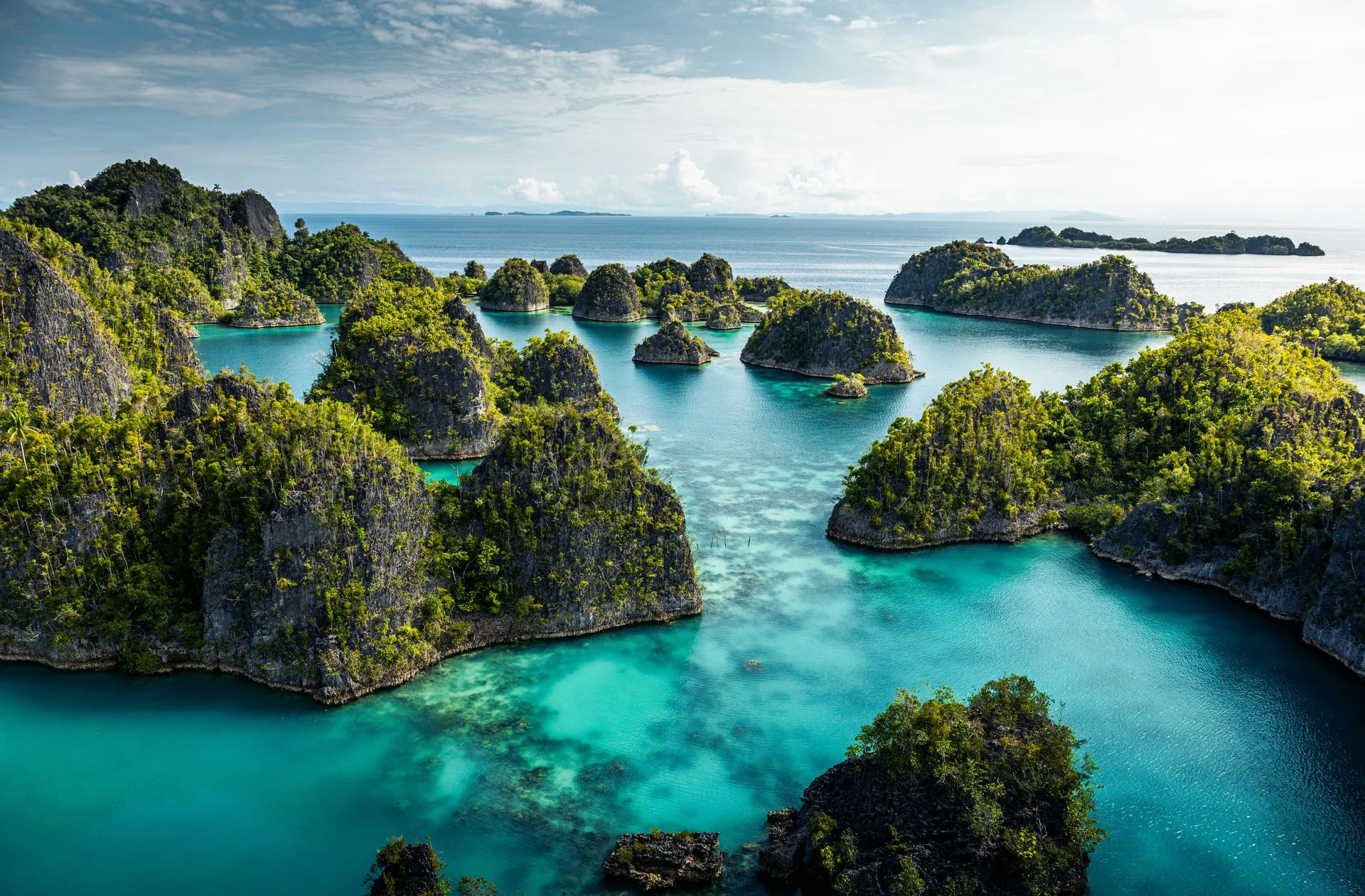
Raja Ampat, the “Four Kings,” is an archipelago of more than 1,500 islands at the edge of Indonesian West Papua. Its reefs sit in the heart of the Coral Triangle, where Pacific currents funnel nutrients into shallow seas and feed the world’s richest marine biodiversity. Diving here means gliding over colourful walls and coral gardens buzzing with more than 550 species of hard and soft corals and an estimated 1,500 fish species. You’ll meet blacktip and whitetip reef sharks on almost every dive, witness giant trevally and dogtooth tuna hunting schools of fusiliers, and encounter wobbegong “carpet” sharks, turtles, manta rays and dolphins. From cape pinnacles swarming with life to calm bays rich in macro critters, Raja Ampat offers endless variety. Above water, karst limestone islands and emerald lagoons provide spectacular scenery between dives.
Tubbataha
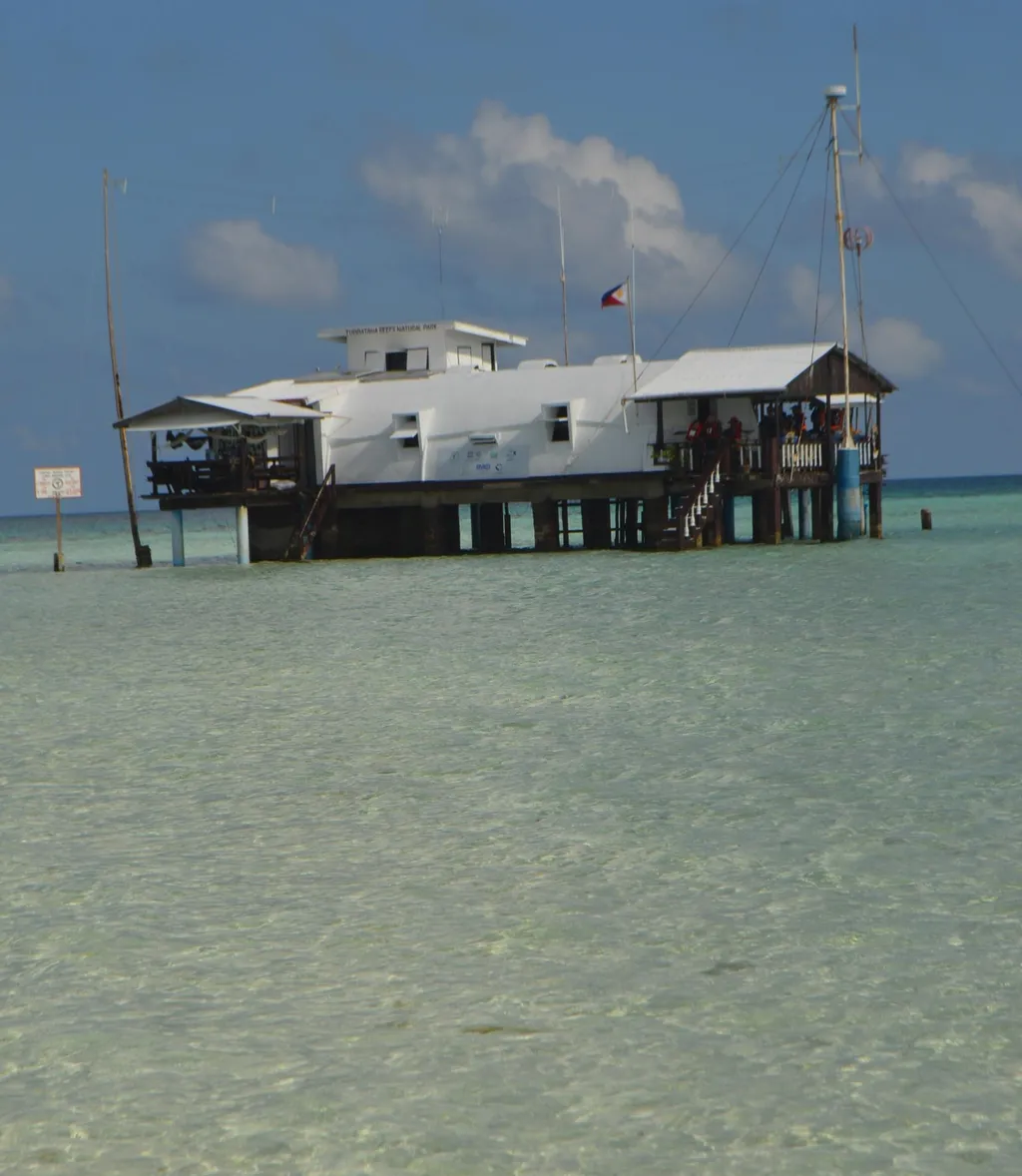
Tubbataha Reefs Natural Park sits alone in the middle of the Sulu Sea—two coral atolls and a nearby bank that you only reach by liveaboard. For roughly ninety days each year (mid-March to mid-June), boats steam overnight from Puerto Princesa, drop anchor in reef lagoons, and spend the week on walls that drop into deep blue. Soft and hard coral cover is dense and healthy; the water column fills with schooling jacks, snappers, and bumphead parrotfish. Reef sharks are routine, hammerheads and whale sharks show when the blue cooperates, and mantas cruise cleaning stations. There is no shore diving, no day-boat option, and no resort on the reef—just park patrol boats, a ranger station, and the liveaboard fleet. If you want remote Philippine wall diving with shark density to match the marketing, this is the short season to book.
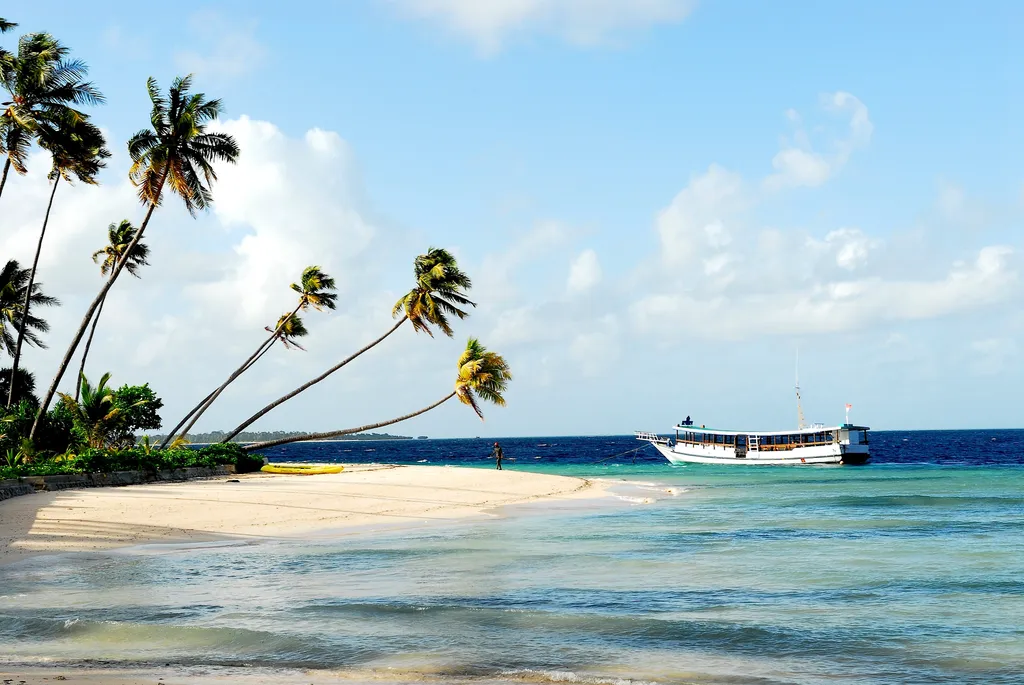
Wakatobi
Wakatobi National Park sits on the southeastern rim of Sulawesi, named from its four main islands—Wangi-Wangi, Kaledupa, Tomia, and Binongko. It holds some of the healthiest coral coverage in the Coral Triangle, with walls, seamounts, and fringing reefs that marine biologists still treat as a reference system. Visibility regularly hits 30 m and can stretch past 50 m on calm outer-reef days. Currents are usually mild and predictable, so you get long bottom times on colorful hard-coral gardens instead of fighting blue water. The signature experience is Wakatobi’s House Reef—walk-in shore diving a short swim from the jetty—backed by more than 40 day-boat sites, from beginner pinnacles like Roma to the knife-edge walls of Blade.
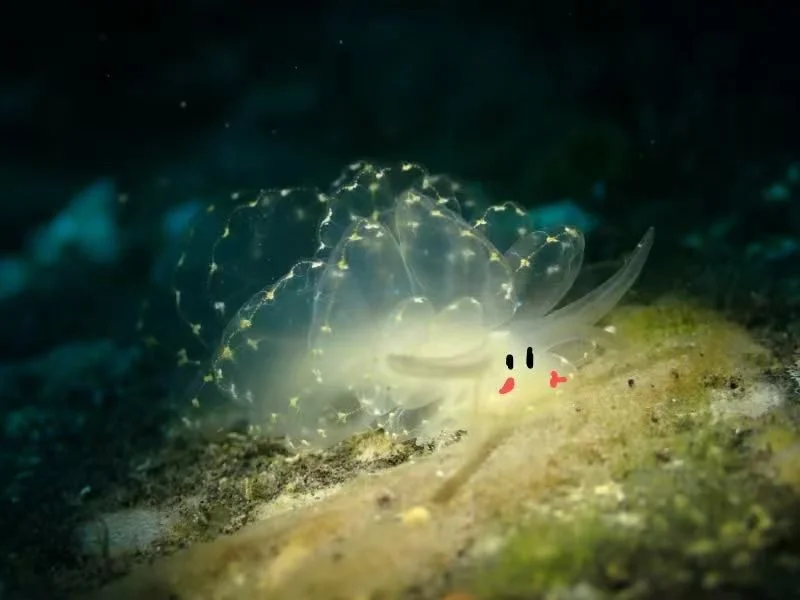
Tulamben(Bali)
Tulamben sits on Bali’s northeast coast and is best known for the USAT Liberty shipwreck – a 125‑metre cargo ship torpedoed in WWII that now lies just a short swim from shore. Warm water, mild currents and straightforward shore entries make diving here relaxed for all levels. Besides the wreck, divers can explore coral gardens, black‑sand muck sites and dramatic drop‑offs. Macro lovers will find nudibranchs, ghost pipefish, mimic octopus and pygmy seahorses, while big‑fish fans can encounter schooling jackfish, bumphead parrotfish and reef sharks. With a compact coastline packed with variety, Tulamben delivers world‑class wreck and critter diving without long boat rides.
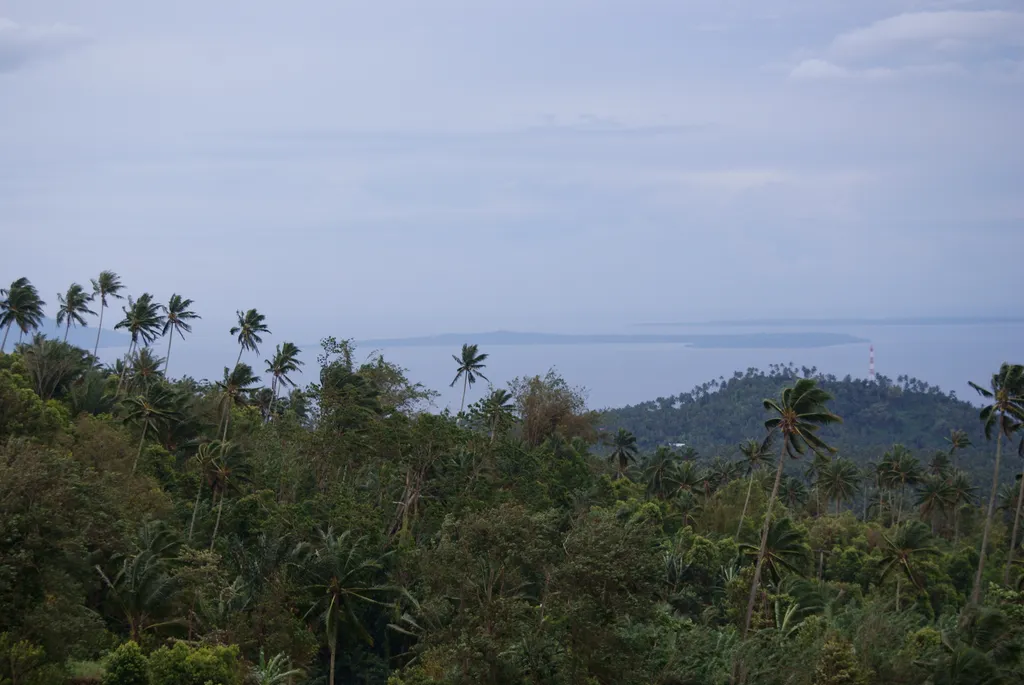
Bunaken
Bunaken National Park is wall-diving country: five volcanic islands—Bunaken, Manado Tua, Siladen, Mantehage, and Nain—ringed by drop-offs that fall from snorkel depth into hundreds of metres of blue. This is not the muck slopes of the Manado mainland; it is vertical reef, drift lines, and current-fed fish schools. The signature move is simple—roll off the boat at Lekuan or Muka Kampung, swim the shallow turtle flats, then hang on the wall while pyramid butterflyfish, fusiliers, and Napoleon wrasse stream past. Reef sharks patrol the corners, eagle rays cruise the blue, and barrel sponges the size of oil drums frame every wide-angle shot. Warm 27–29°C water, park protection since 1991, and island resorts that put you on the first boat at 08:00 make Bunaken the classic North Sulawesi wall trip—fly into MDC, transfer to the strait, and live on the reef for a week.