
Fin Whale
Balaenoptera physalus
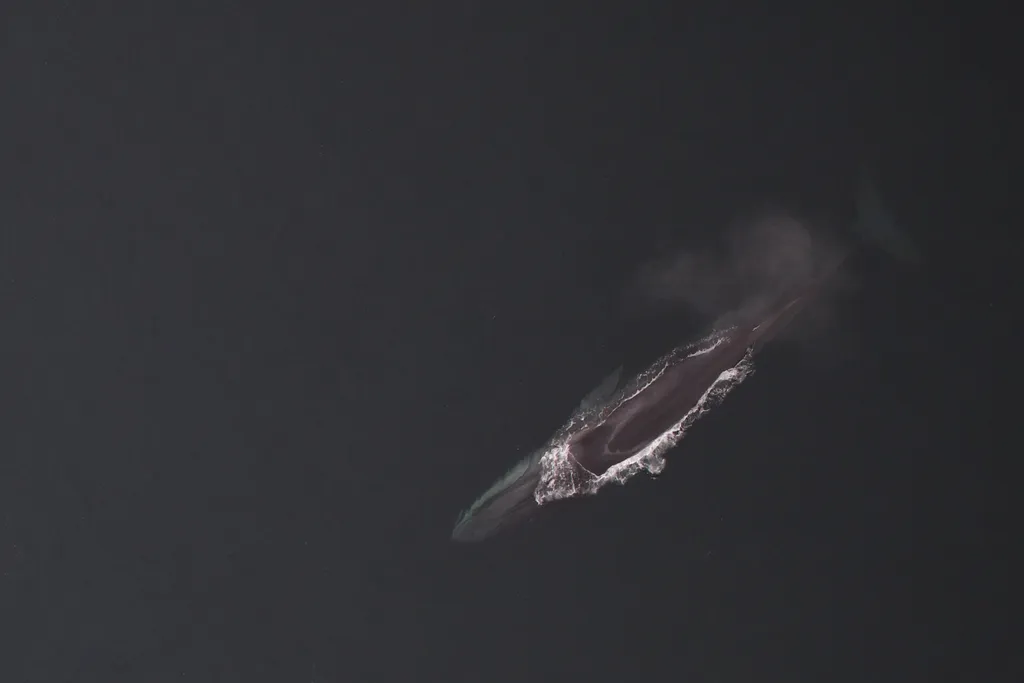
Photo by Laura (Laney) White (USGS Western Ecological Research Center) via Wikimedia Commons
The Fin Whale is the second-largest animal on Earth—only the blue whale outgrows it—and one of the fastest baleen whales in sustained travel. For divers, encounters are almost always from a boat: a tall, columnar blow, a long, sleek grey back rolling past, and sometimes the flash of a white right lower jaw as the animal surfaces at an angle. They are built for speed and efficiency, cruising open ocean and shelf edges on migration, then lunging through krill and small fish schools when food concentrates. Unlike the showy humpback, fin whales are understated giants—harder to follow because they move fast, but unforgettable when a 20-metre body slides alongside your RIB in the Azores spring or off Sri Lanka's shelf break.
🔬Classification
📏Physical Features
🌊Habitat Info
⚠️Safety & Conservation
Identification Guide
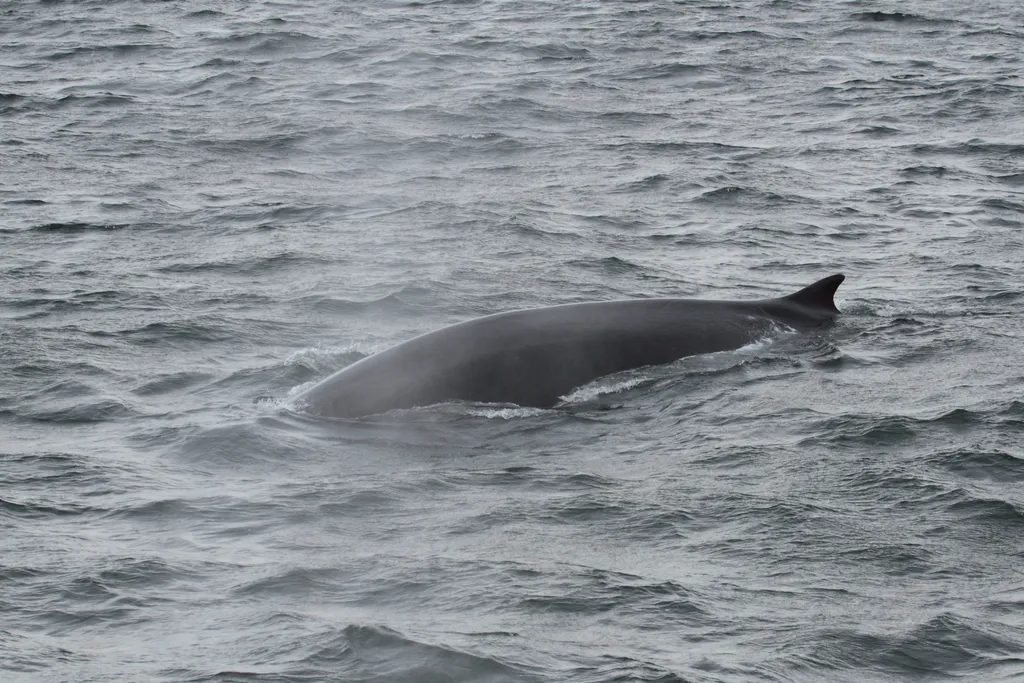
Photo by Cephas / CC BY-SA 3.0 via Wikimedia Commons
Field marks:
- Second-Largest Scale: Adults routinely exceed 18 m; a partial surfacing still dwarfs the boat. Body is slender and hydrodynamic—not bulky like a blue whale.
- Asymmetric Jaw Color: The right lower jaw and baleen plates on the right side are cream or white; the left side is dark. This is the single most reliable field mark at close range.
- Chevron Behind the Head: A pale, V-shaped blaze on the back just behind the blowholes—visible when the animal rolls or in good light.
- Tall, Sickle Dorsal Fin: Prominent relative to blue whales; falcate (curved) and set well back on the body—often visible shortly after the blow.
- Columnar Blow: Tall, narrow spout roughly 6–8 m high; blows are relatively quick and rhythmic compared to blue whales.
- Fast Surfacing Rhythm: Several short blows 10–15 s apart, then a dive; they travel faster than blues and can be frustrating to keep alongside.
Differences from Similar Species
- Blue Whale: Larger; mottled blue-grey back; much smaller dorsal fin set farther back; taller blow (9–12 m); slower, more ponderous surfacing.
- Sei Whale: Smaller; dorsal fin often visible at the same time as the blow; taller, more upright fin; less jaw asymmetry.
- Bryde's Whale: Three prominent head ridges; tropical/subtropical; smaller; no strong right-jaw whitening.
- Humpback Whale: Much smaller; extremely long pectoral fins; knobby head; frequent breaching; no jaw asymmetry.
Subspecies Notes
Northern fin whales (B. p. physalus) are typical in the North Atlantic and Azores. Southern fin whales (B. p. quoyi) reach greater lengths. Hybridization with blue whales has been documented in the wild—a rare reminder of how closely related these giants are.
Top 10 Fun Facts about Fin Whale
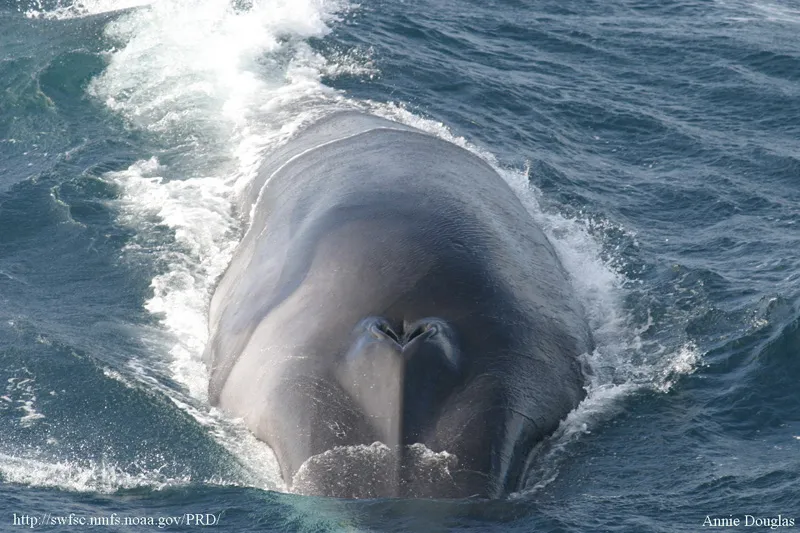
Photo by Head via Wikimedia Commons
1. Second Only to the Blue Whale
Fin whales reach 18–22 m in the Northern Hemisphere and up to 26 m in the Southern Ocean—weighing 40–80 tonnes. They are the second-largest animal that has ever lived, outgrowing every dinosaur. On a whale-watching boat, you still rarely see the whole animal at once; the sheer length of back rolling past is the visual punch.
2. The Greyhound of the Sea
Fin whales are among the fastest baleen whales, capable of bursts over 45 km/h (28 mph) in short sprints—earning the nickname "greyhound of the sea." Sustained cruising is still brisk compared to blues. This speed makes them harder to photograph than slower species and increases ship-strike risk in busy shipping lanes.
3. One-Sided Makeup
The right lower jaw is white while the left is dark—a rare case of bilateral asymmetry in mammals. The right-side baleen is also lighter. Scientists debate whether this helps when rolling to feed on one side, or when schooling fish position themselves predictably relative to the whale's approach angle.
4. Built for Lunge Feeding
Like other rorquals, fin whales have ventral throat grooves (56–100 pleats) that expand like an accordion during a lunge, taking in huge volumes of water and prey. They filter krill, small fish, and squid through 260–480 baleen plates per side—then squeeze the water out and swallow the catch.
5. Azores Spring Highway
Research off Pico Island recorded 214 individual fin whales over seven years, with peak presence March–July (best April–May). Sightings rose from roughly 7% to 35% of whale-watching trips after 2014—possibly reflecting population recovery or a shift in migration routes closer to shore. The Azores is now one of Europe's most reliable fin whale windows.
6. Nearly Hunted to Extinction
Commercial whaling killed an estimated 700,000+ fin whales in the 20th century—the most heavily hunted rorqual after the smaller minke. Populations in the North Atlantic and Mediterranean were devastated. Full protection since the 1980s has allowed slow recovery in some areas, but the species remains Endangered on the IUCN Red List.
7. Hybrid Giants
In 2018, scientists confirmed a living blue-fin whale hybrid off Iceland—and later found the same individual had produced offspring with a blue whale. Fin and blue whales are close enough to interbreed, producing rare hybrids that blur the size and color boundaries between the two largest animals on Earth.
8. Low-Frequency Songsters
Fin whales produce loud, low-frequency pulses and sweeps that can travel hundreds of kilometers underwater. Their vocalizations were used during the Cold War to monitor Soviet submarines—whale song accidentally became military intelligence. Today, acoustic tracking helps researchers map migration corridors without tagging every individual.
9. Sri Lanka's Bonus Whale
Off Mirissa and Trincomalee, fin whales are a secondary prize behind blue and sperm whales—most common in December and January when seas are calm. They are sleek and fast, harder to keep in frame than a slow blue, but a fin whale alongside the boat is a genuine treat on Sri Lanka's already world-class cetacean circuit.
10. They Rarely Show Their Flukes
Unlike humpbacks, fin whales almost never raise their tail flukes before a deep dive. Your best ID frames are the asymmetric jaw, the chevron, the tall dorsal fin, and the blow sequence—not a fluke shot. Accept that and you'll stop missing the whale while waiting for a tail that isn't coming.
Diving & Observation Notes
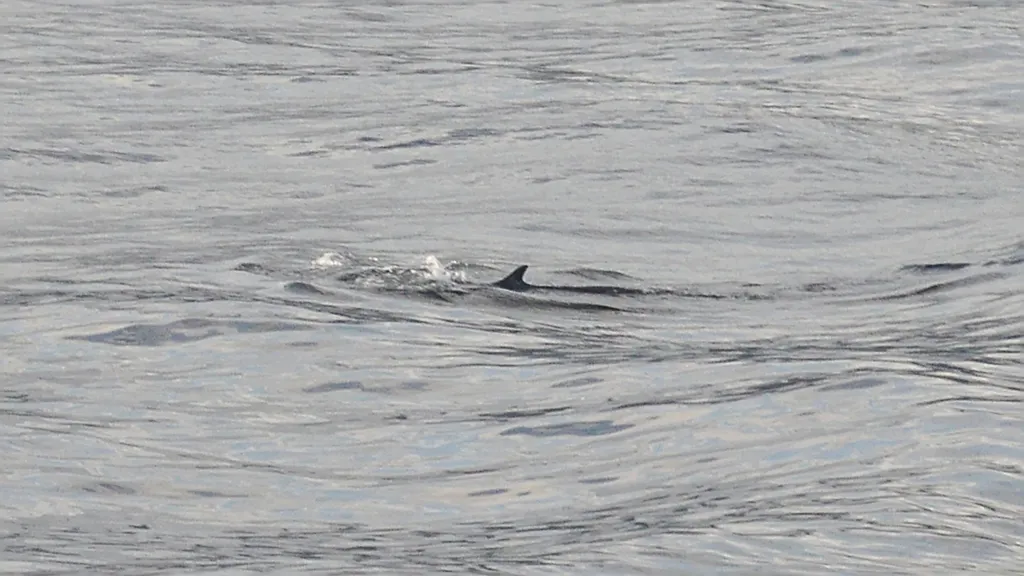
Photo by Ryan Hodnett / CC BY-SA 4.0 via Wikimedia Commons
🧭 Finding Fin Whales
Fin whales are open-ocean migrants, not reef residents. The most reliable window in this database is the Azores (March–July, peak April–May) off Pico and Faial—spring migration brings fin whales south of Pico in travelling and foraging mode. Mirissa/Trincomalee (November–April) yields occasional fin whales, especially December–January, alongside blues and sperm whales. Dominica offers deep-water cetacean trips where fin whales may appear seasonally on the same southwest corridor used for sperm whales.
🤿 Boat Encounter Etiquette
- Scuba is rarely appropriate: Book dedicated whale-watching or cetacean boats, not standard reef charters.
- Speed matters: Fin whales move faster than blues—skippers should parallel at low speed rather than chase from behind.
- Read the blow sequence: Several quick blows 10–15 s apart, then a longer dive; position for the next rise, not the last one.
- Look for the white jaw: When the animal surfaces at an angle, the right lower jaw flash is your best close-range ID—have cameras ready before the approach.
📸 Photo Tips
- Telephoto essential: 100–400 mm from the boat; fin whales often show less back than blues because they surface briefly and move on.
- Capture the chevron and dorsal fin: The pale V behind the head and the tall sickle fin are diagnostic when the jaw isn't visible.
- Burst mode on blows: The columnar spout is tall but quick—continuous shooting beats single shots.
- Don't wait for flukes: Fin whales rarely fluke-up; missing the body while waiting for a tail is the most common beginner mistake.
⚠️ Ethics & Conservation
- Endangered species: Maintain legal approach distances (often 100 m for boats; check local rules in the Azores, Sri Lanka, and Caribbean).
- Azores research context: Studies suggest fin whales show no reaction to boats in most encounters—but that is not permission to crowd them; responsible operators keep spacing.
- Ship-strike hotspots: Mediterranean and North Atlantic shipping lanes overlap migration routes; support operators engaged with conservation and acoustic monitoring.
- No in-water harassment: If snorkeling is permitted, enter only on guide instruction; never free-dive under a surfacing whale.
Best Places to Dive with Fin Whale
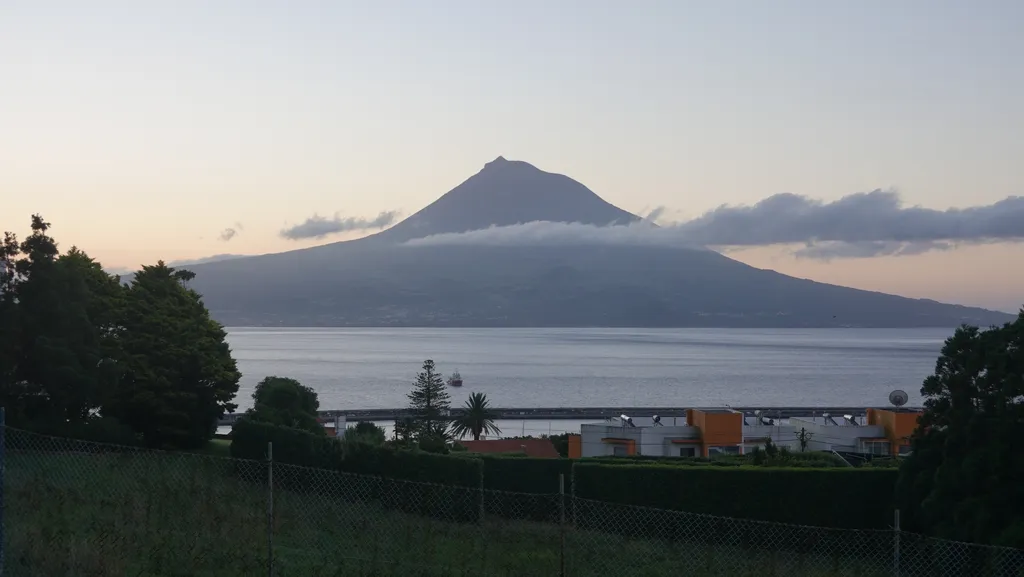
Azores
The Azores sit on the Mid-Atlantic Ridge — nine volcanic islands where the seafloor drops thousands of metres almost at your fins. For divers, the hub that actually delivers megafauna is the Pico–Faial triangle: base in Madalena (Pico) or Horta (Faial) and you are within range of Princess Alice Bank, Condor Bank blue-shark Expeditions, and a shoreline of lava arches, walls, and wrecks. Summer is the story. From July through mid-October, devil rays (Mobula tarapacana) stack over the Princess Alice pinnacle roughly 45–50 nm southwest of Pico, and open-ocean blue sharks — occasionally makos — circle chummed blue-water stations off southwest Pico. Closer in, Arcos de Caneiras swim-throughs, channel drifts between the islands, Capelinhos’ young volcanic bottom, and Faial’s WWII wreck Canção do Mar keep a weather-cancelled week from feeling empty. Water runs cool (about 18–24 °C in season); pack a 5–7 mm suit, SMB, and enough days for the offshore window to open.
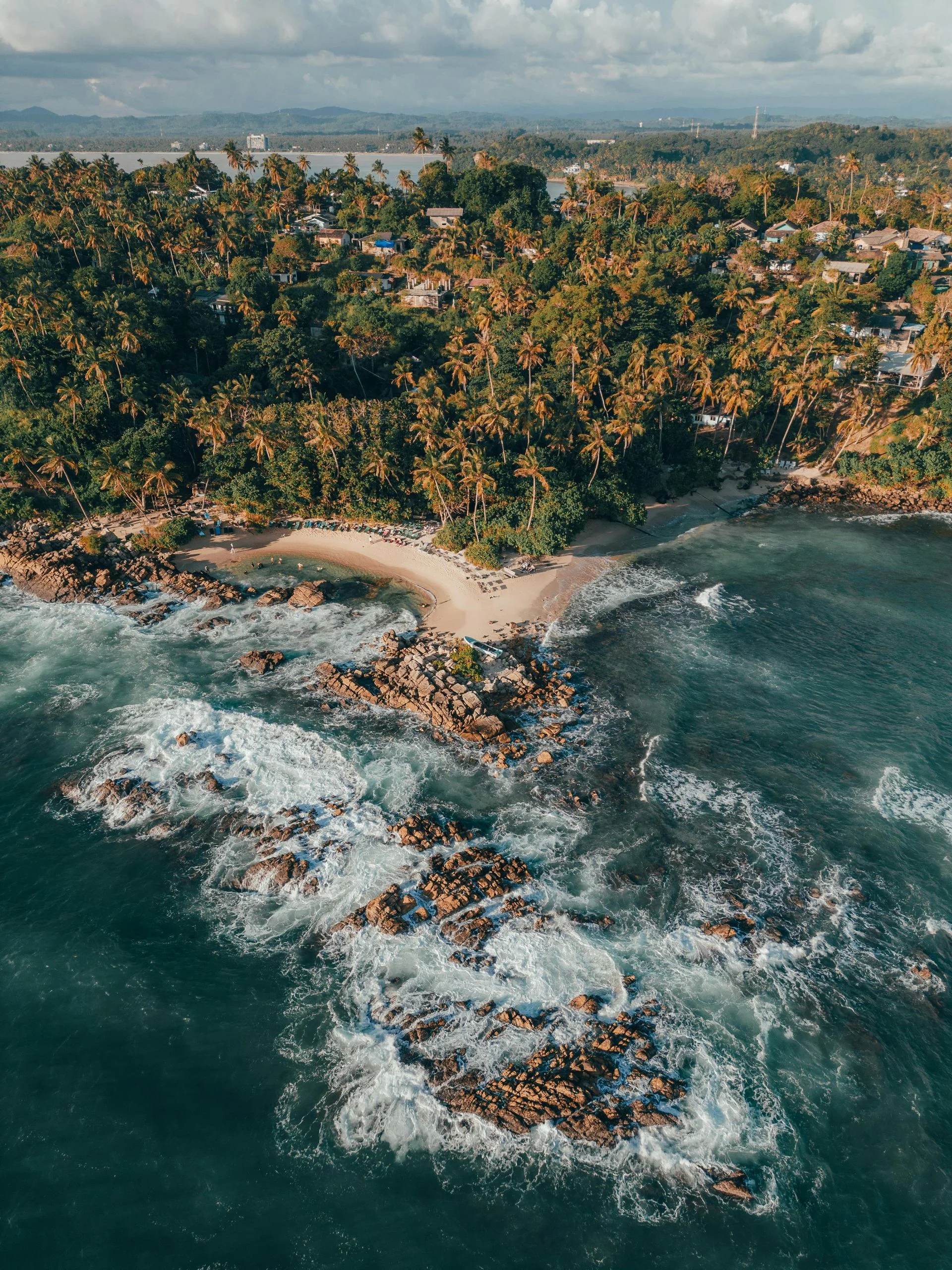
Mirissa
Mirissa is a mellow fishing town on Sri Lanka’s south coast that doubles as a great base for easy reef diving. Its sheltered bay leads to a string of near‑shore sites where coral bommies and sandy patches host hawksbill turtles, oriental sweetlips, triggerfish and schools of fusiliers. Macro critters such as nudibranchs, octopus and pipefish hide among the rocks, while seasonal plankton blooms occasionally attract whale sharks. Calm conditions and shallow depths make Mirissa perfect for beginners and casual divers looking for warm, colourful waters without the crowds.
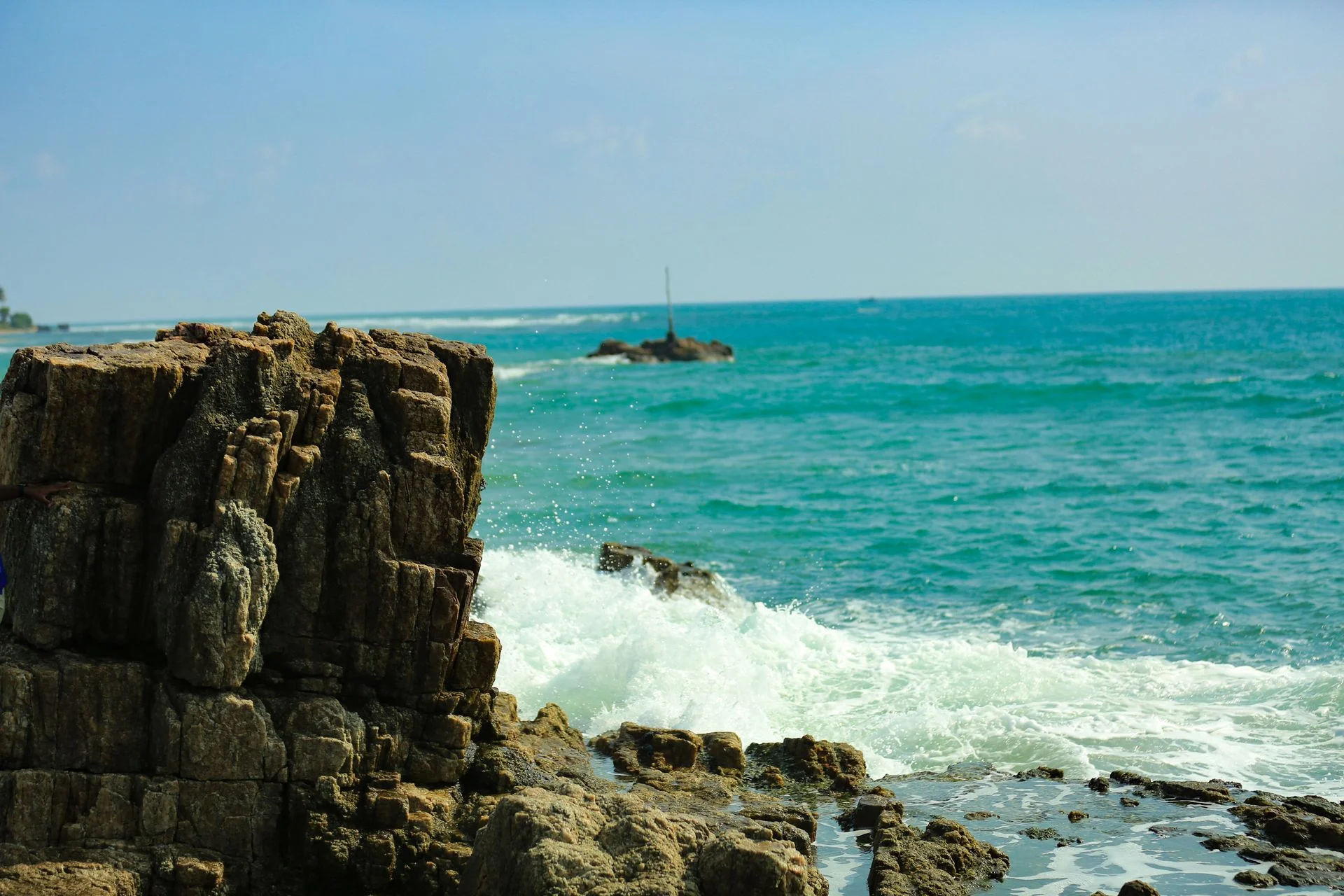
Trincomalee
Trincomalee sits on Sri Lanka’s eastern coast and is famous for its sheltered natural harbour and nearby coral reefs. The region offers a mix of shallow fringing reefs, dramatic drop‑offs and historic wrecks like the HMS Hermes, the world’s first purpose‑built aircraft carrier. Pigeon Island Marine Park protects vibrant coral gardens where blacktip reef sharks patrol and hawksbill turtles graze, while Swami Rock’s vertical wall teems with reef fish and soft corals. During the calm months the waters are crystal clear, and blue and sperm whales cruise just offshore, adding to Trincomalee’s appeal as an emerging dive destination.
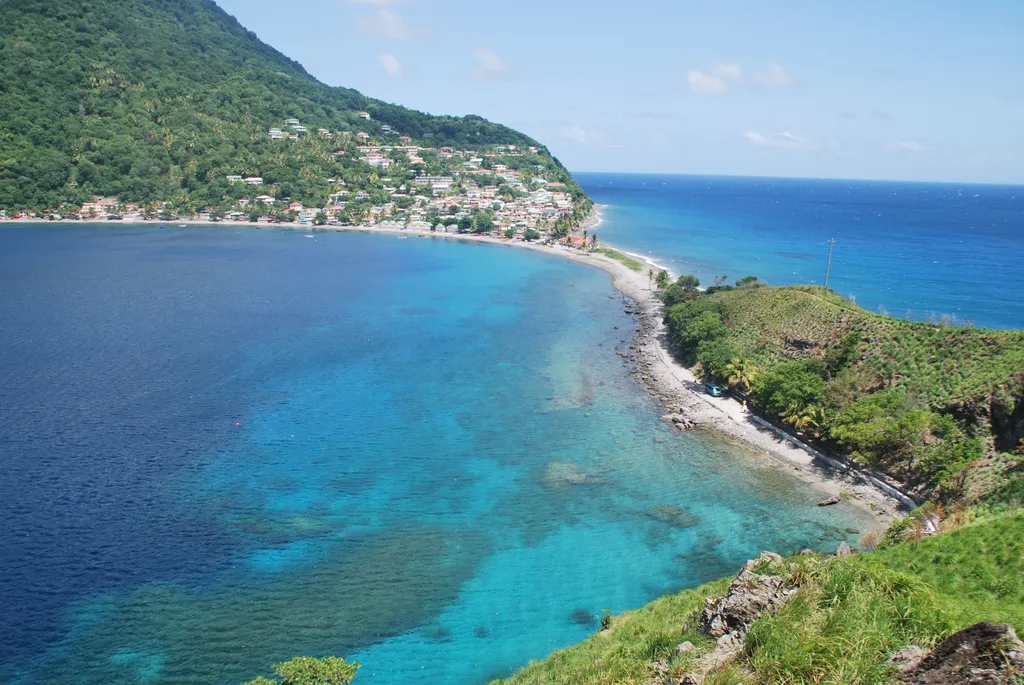
Dominica
Dominica — the Commonwealth Nature Island, not the Dominican Republic — is the Caribbean dive destination that still feels wild. The southwest coast drops from rainforest peaks straight into the flooded crater of Soufriere–Scotts Head Marine Reserve: walls, pinnacles, boulder fields, and active underwater fumaroles. Champagne Reef is the headline act (volcanic bubbles hissing through the sand like a flute glass), but the real diving is the wall-and-pinnacle circuit off Scotts Head — Soldierfish Cave swim-throughs, Crater’s Edge baitball frenzy, and sponge gardens that look more Indo-Pacific than Lesser Antilles. Water stays warm, boats run short hops from Castle Comfort / Roseau, and sperm-whale watching in the same deep coastal waters turns a dive week into a proper nature trip. Come for the bubbles; stay for the topography.