Hairy Frogfish
Antennarius striatus
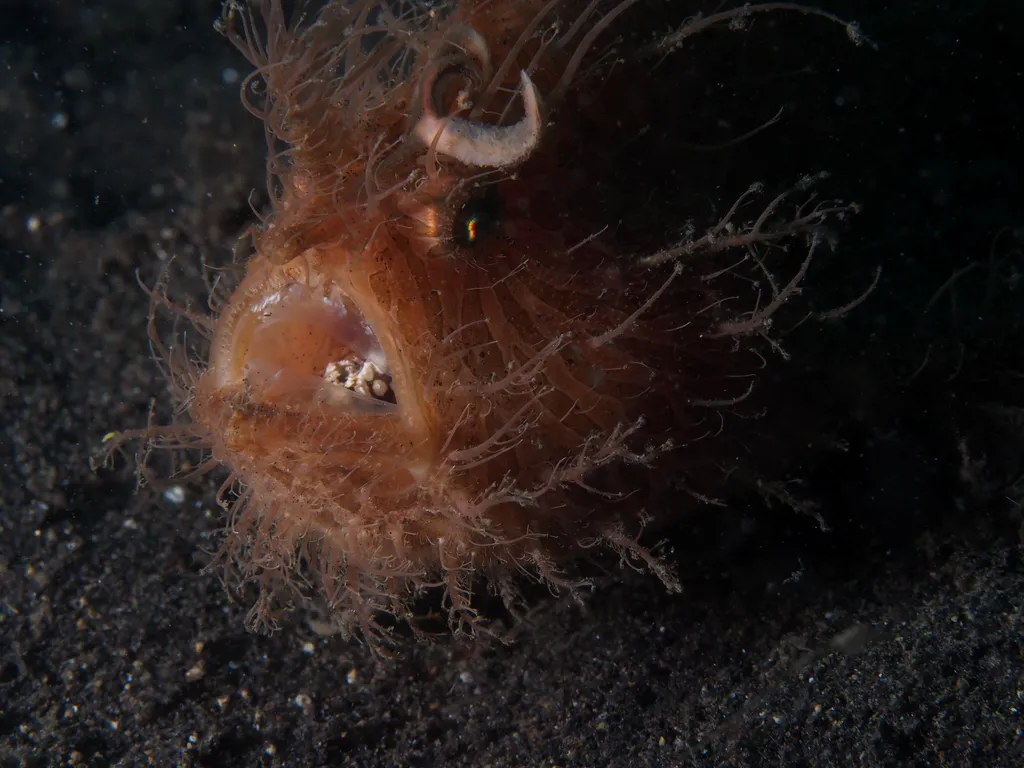
Photo by Rickard Zerpe / CC BY-SA 2.0 via Wikimedia Commons
The Hairy Frogfish (Antennarius striatus) is the shaggy celebrity of muck diving—a globular anglerfish wrapped in branching skin filaments that look like a living tuft of algae or a tiny walking carpet. It does not swim gracefully; it perches, waddles, and occasionally jet-propels across the sand on modified pectoral fins that work like stubby legs.
For macro photographers, this species is the ultimate patience test. A hairy frogfish can sit motionless for an entire dive, its lure (esca) tucked or flicked so subtly you miss the strike. When it does hunt, prey disappears in roughly 6 milliseconds—faster than your blink reflex. Lembeh Strait made the species famous, but it ranges across the Indo-Pacific and into parts of the Atlantic, turning up on black-sand slopes from Anilao to Dumaguete whenever a guide knows where last week's individual was "squatting."
🔬Classification
📏Physical Features
🌊Habitat Info
⚠️Safety & Conservation
Identification Guide
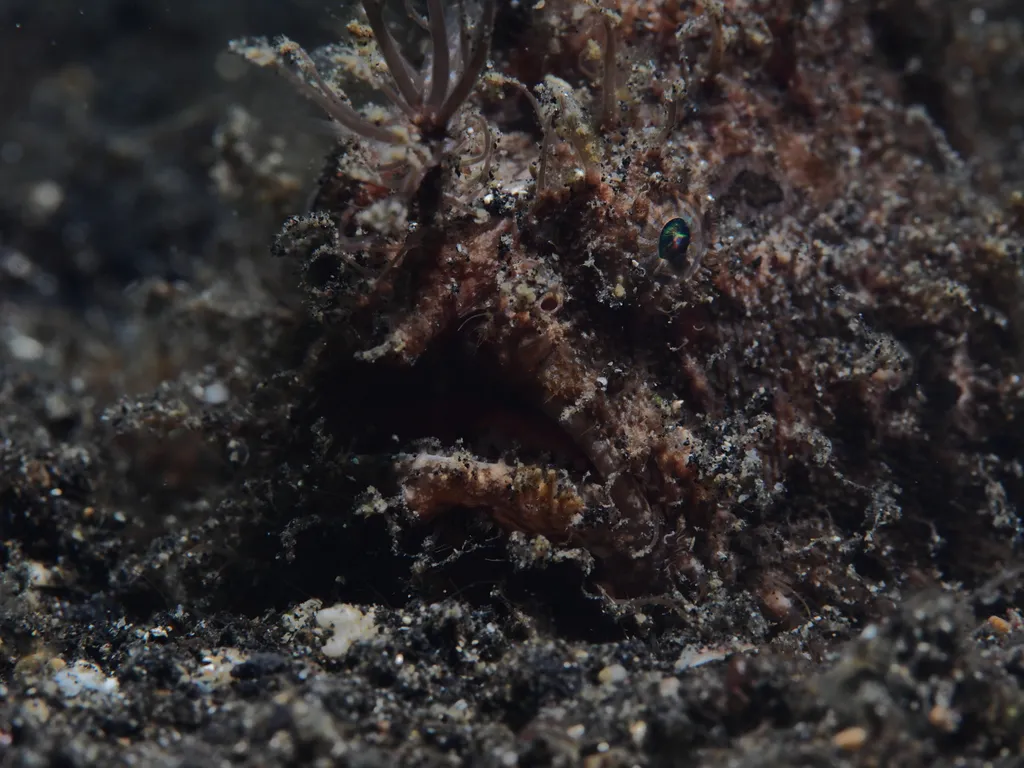
Photo by Rickard Zerpe / CC BY-SA 2.0 via Wikimedia Commons
Scan muck slopes, rubble patches, sponge edges, and artificial reef debris—not open blue water.
Key Field Marks
- Shaggy filaments covering body and fins (more pronounced than painted or giant frogfish)
- Globular body, upturned mouth, and a dorsal lure (illicium + esca) on the snout
- Pectoral fins splayed outward like "feet"; fish often walks rather than swims
- Color highly variable; stripes or mottling may appear depending on mood and substrate
- Size typically fist-sized or smaller on classic muck sites (larger individuals possible)
Similar Species
- Painted Frogfish (Antennarius pictus): smoother skin, bolder palette, less "hairy" texture
- Giant Frogfish (Antennarius commerson): much larger, fewer filaments, bulkier profile
- Shaggy Frogfish (Antennarius hispidus): very close relative; filament density and esca shape help experts separate them
Juvenile vs. Adult
Juveniles show the same shaggy silhouette but may be thumb-sized and harder to spot among algae. Adults develop heavier filaments and a more pronounced lure; neither stage is a strong swimmer.
Top 10 Fun Facts about Hairy Frogfish
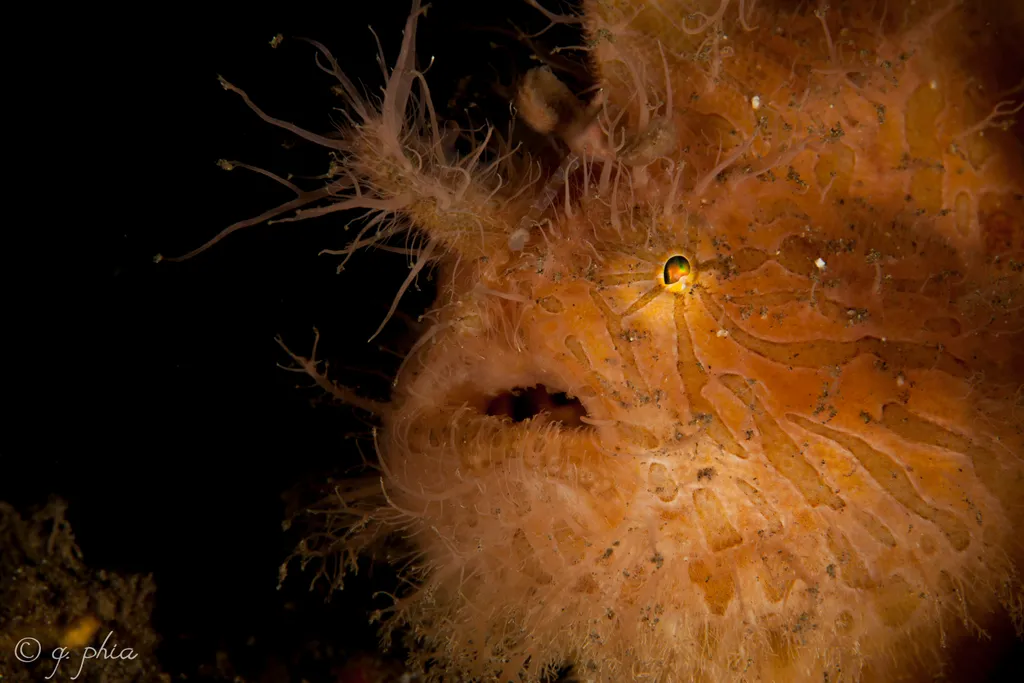
Photo by q phia / CC BY 2.0 via Wikimedia Commons
1. Not Actually "Hairy"
The fuzz is made of dermal spinules—modified skin structures, not mammalian hair. They break up the fish's outline and collect detritus so it blends into sponge, algae, or rubble. Some individuals can change color over days to match a new perch.
2. World's Fastest Vertebrate Strike (Claim to Fame)
Frogfish suction feeding is brutally quick. Research on related species shows prey capture in about 6 milliseconds once the strike starts—among the fastest feeding events measured in vertebrates. Your camera pre-focus matters more than your reaction time.
3. The Lure Is a Separate Organ
The "fishing rod" is the illicium; the bait at the tip is the esca. Hairy frogfish can flick, wave, or hide the lure. Some escas resemble worms or small fish. The lure is not a separate animal—it's part of the dorsal fin, highly modified.
4. Jet Propulsion on Demand
When walking is too slow, frogfish gulp water and expel it through gill openings behind the pectoral fins, jetting forward in short bursts. It looks clumsy but is surprisingly effective for escaping annoyances or repositioning between hunting spots.
5. Walks More Than It Swims
Modified pectoral and pelvic fins act like limbs. On muck dives you'll often watch a hairy frogfish amble across the sand at a comically slow pace—hence nicknames like "slow poke" at Lembeh sites where the same individual is logged for weeks.
6. Globular Body, Garage-Sized Appetite
Despite a small footprint on the reef, it swallows prey up to roughly its own body length thanks to an enormously expandable mouth and elastic stomach. Ambush predators do not chase; they wait until the victim is inside one body length.
7. Masters of Aggressive Mimicry
Beyond color change, some individuals inflate to resemble pufferfish, or perch beside sponges and algae tufts so perfectly that even experienced guides swim past. Disturbed habitats with debris actually provide extra camouflage options.
8. Wide-Ranging but Patchy
Antennarius striatus spans the Indo-Pacific (Red Sea to Hawaii, Japan to Australia) and parts of the Atlantic (West Africa, Caribbean, Brazil). You won't find it in the Mediterranean or Arctic—it's a warm-water benthic specialist.
9. Species Complex Caveat
Taxonomists note that "striated frogfish" may represent a species complex—look-alikes once lumped under one name. Field divers can rely on the shaggy filaments and typical muck-site size, but DNA work continues to split hairs (literally).
10. Lembeh Made It a Macro Icon
The Lembeh Strait's black sand and calm shallow profiles turned hairy frogfish into a bucket-list critter. Resorts and guides maintain informal "resident" logs; returning photographers often shoot the same individual years apart—a testament to site fidelity and slow lifestyle.
Diving & Observation Notes
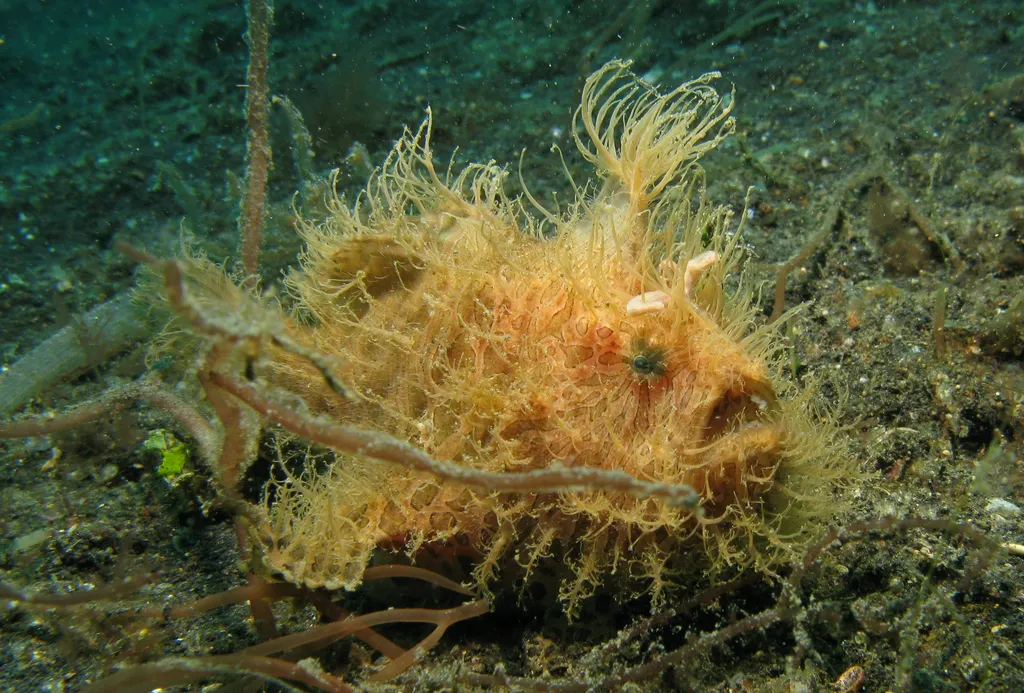
Photo by Silke Baron from Vienna / CC BY 2.0 via Wikimedia Commons
🧭 Where Guides Find Them
Work shallow muck (5–25 m) with your guide's site notes first—hairy frogfish are site-faithful. Lembeh (Nudi Retreat, Jahir, TK), Anilao muck, Dauin sanctuaries, Romblon slopes, and Tulamben's Seraya Secrets are reliable starting points. Scan sponge edges, tyre reefs, and rubble lines at a glacial pace.
👀 Search Technique
Look for wrong texture on the bottom: a tuft that is too fuzzy, too round, or slightly off-color. Check eye glint with a torch angle—frogfish eyes are reflective. If the lure is visible, you found a hunter; if hidden, it may still be digesting from a night feed.
📷 Photo Approach
- Get low and parallel; shooting down on a frogfish flattens the shaggy texture
- Pre-focus on the eye; expect minimal movement until a strike
- Snoot or inward strobe helps separate filaments from black sand without blasting the whole slope
- Video of walking behavior is often more interesting than another static portrait
⚠️ Ethics & Buoyancy
Frogfish tolerate close approaches but hate silt and fin wash. Kneeling in muck destroys the site for the next team. Use a pointer for stability if allowed locally, never poke the fish to "turn it around." If it walks away, let it go—chasing ruins behavior shots and stresses the animal.
Best Places to Dive with Hairy Frogfish
Lembeh
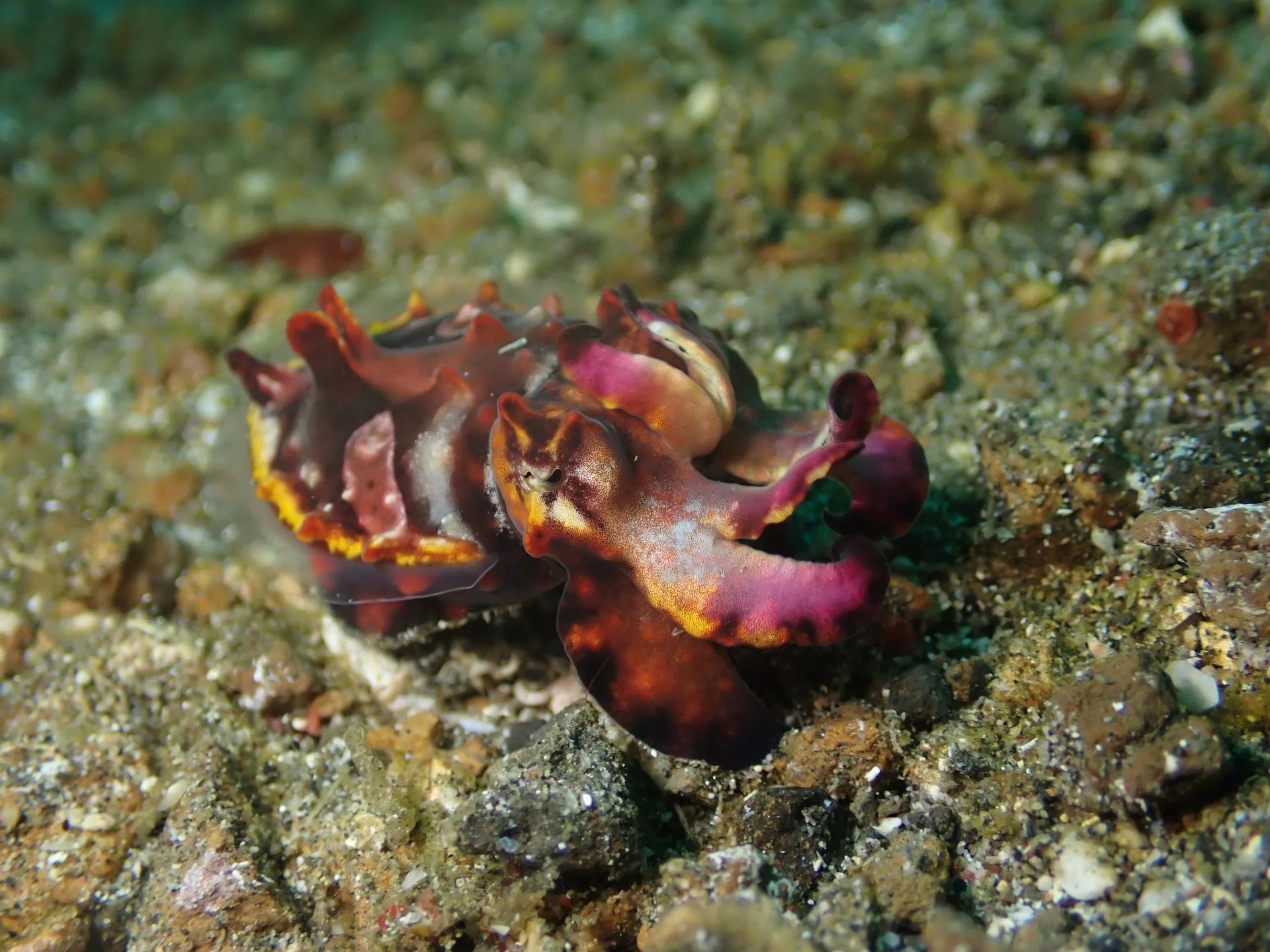
The Lembeh Strait in North Sulawesi has become famous as the muck‑diving capital of the world. At first glance its gently sloping seabed of black volcanic sand, rubble and discarded debris looks bleak. Look closer and it is teeming with weird and wonderful life: hairy and painted frogfish, flamboyant cuttlefish, mimic and blue‑ringed octopuses, ornate ghost pipefish, tiny seahorses, shrimp, crabs and a rainbow of nudibranchs. Most dives are shallow and calm with little current, making it an ideal playground for macro photographers. There are a few colourful reefs for a change of scenery, but Lembeh is all about searching the sand for critter treasures.
Anilao
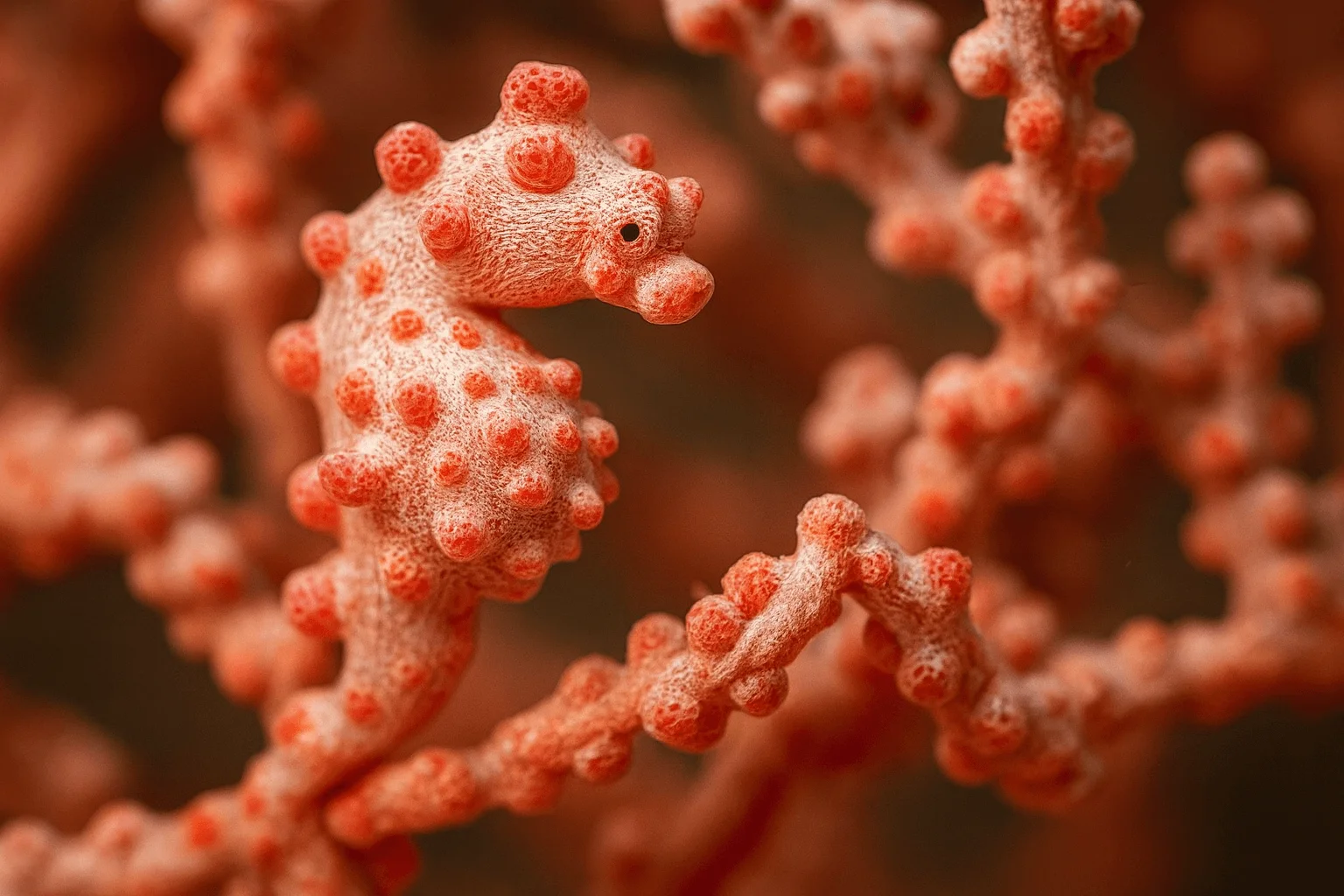
Anilao, a small barangay in Batangas province just two hours south of Manila, is often called the macro capital of the Philippines. More than 50 dive sites fringe the coast and nearby islands, offering an intoxicating mix of coral‑covered pinnacles, muck slopes and blackwater encounters. Critter enthusiasts come for the legendary muck dives at Secret Bay and Anilao Pier, where mimic octopuses, blue‑ringed octopuses, wonderpus, seahorses, ghost pipefish, frogfish and dozens of nudibranch species lurk in the silt. Shallow reefs like Twin Rocks and Cathedral are covered in soft corals and teem with reef fish, while deeper sites such as Ligpo Island feature gorgonian‑covered walls and occasional drift. Because Anilao is so close to Manila and open year‑round, it’s the easiest place in the Philippines to squeeze in a quick diving getaway.
Dumaguete
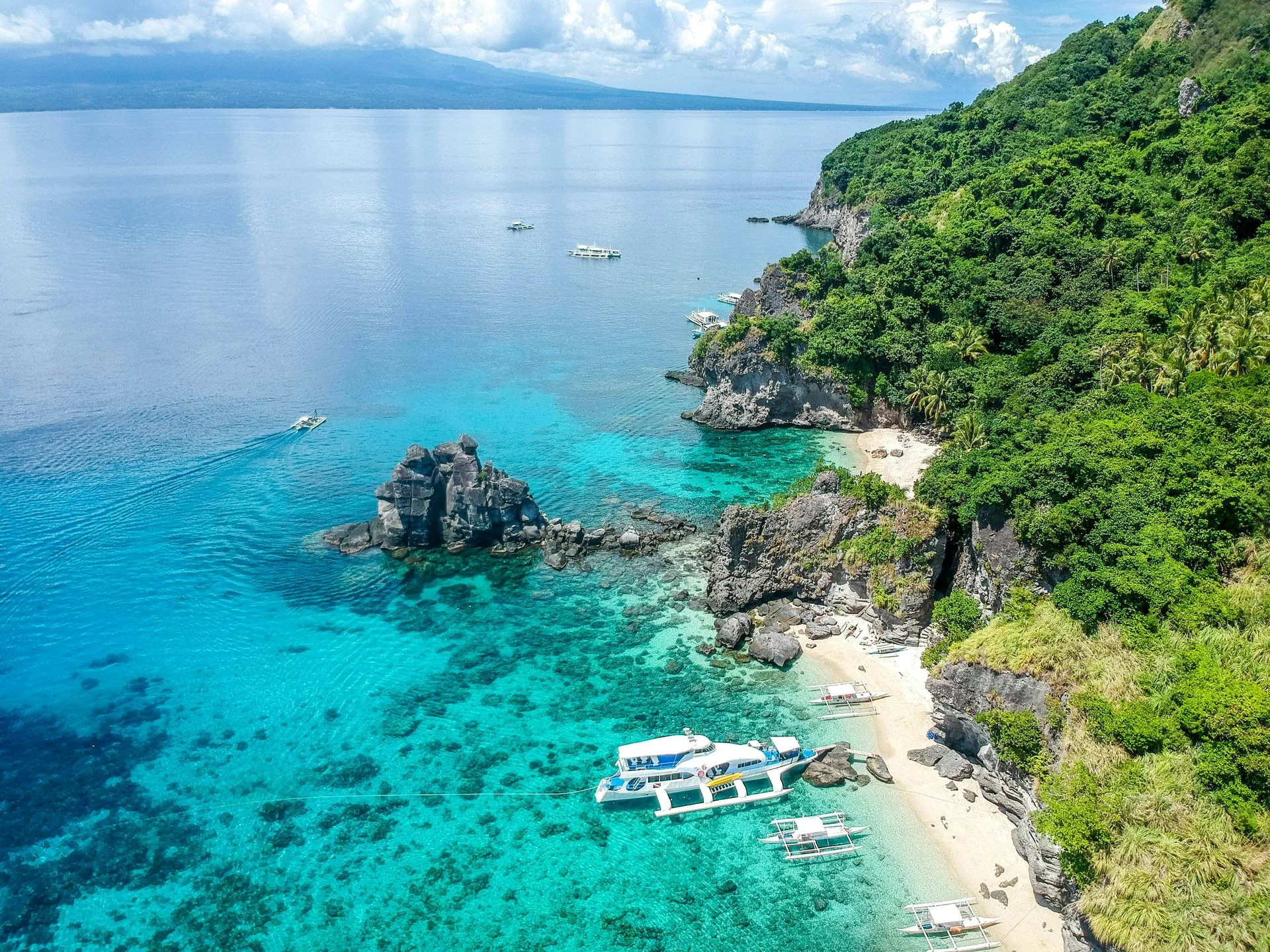
Dumaguete on the southeast coast of Negros is the jumping‑off point for some of the Philippines’ most diverse diving. Along the nearby town of Dauin, a series of shallow marine sanctuaries and black‑sand slopes hide critters galore: frogfish, flamboyant cuttlefish, mimic octopus, ghost pipefish, seahorses, pipefish and nudibranchs. Artificial reefs made from car tyres and pyramids provide extra habitat. Offshore, Apo Island’s walls and plateaus burst with hard and soft corals, schooling jacks and barracudas, and friendly green turtles. With day trips to Oslob’s whale sharks or Bais’ dolphin‑watching, and excursions to nearby Siquijor, Dumaguete offers a perfect mix of macro muck diving and classic coral reefs.
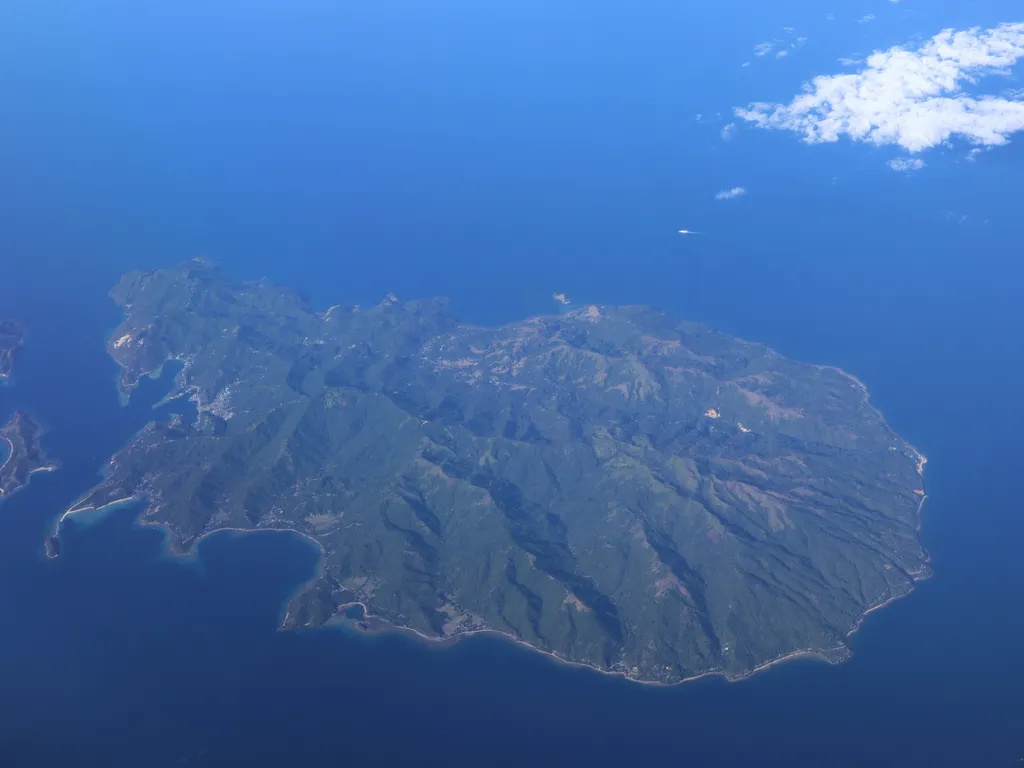
Romblon
Romblon is the Philippines' quiet answer to Lembeh—a province of small islands in the Sibuyan Sea where muck slopes, fan-coral walls and marine sanctuaries stack up without the resort sprawl. Most divers base in Lonos on Romblon Island, a short hop from Tablas, and spend days hopping between black-sand critter hunts and healthier reef drops. Signature finds include wunderpus, flamboyant cuttlefish, blue-ringed octopus, four pygmy seahorse species, Melibe colemani and Cyerce nudibranchs, plus eagle rays, sea snakes and schooling fish on the outer sites. Add a chimney dive at The Blue Hole on Tablas, cavern walls at Agpanabat, and night blackwater drifts over Romblon Pass when you want something stranger than another frogfish portrait.
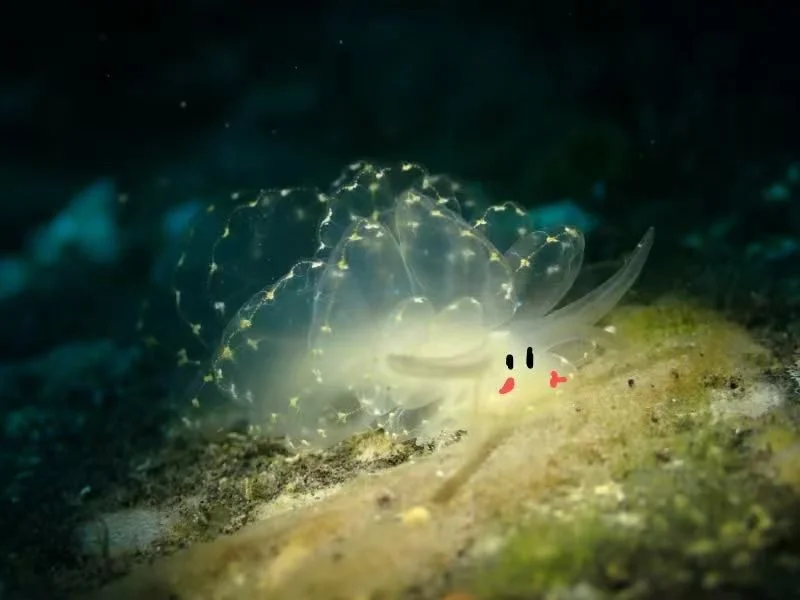
Tulamben(Bali)
Tulamben sits on Bali’s northeast coast and is best known for the USAT Liberty shipwreck – a 125‑metre cargo ship torpedoed in WWII that now lies just a short swim from shore. Warm water, mild currents and straightforward shore entries make diving here relaxed for all levels. Besides the wreck, divers can explore coral gardens, black‑sand muck sites and dramatic drop‑offs. Macro lovers will find nudibranchs, ghost pipefish, mimic octopus and pygmy seahorses, while big‑fish fans can encounter schooling jackfish, bumphead parrotfish and reef sharks. With a compact coastline packed with variety, Tulamben delivers world‑class wreck and critter diving without long boat rides.
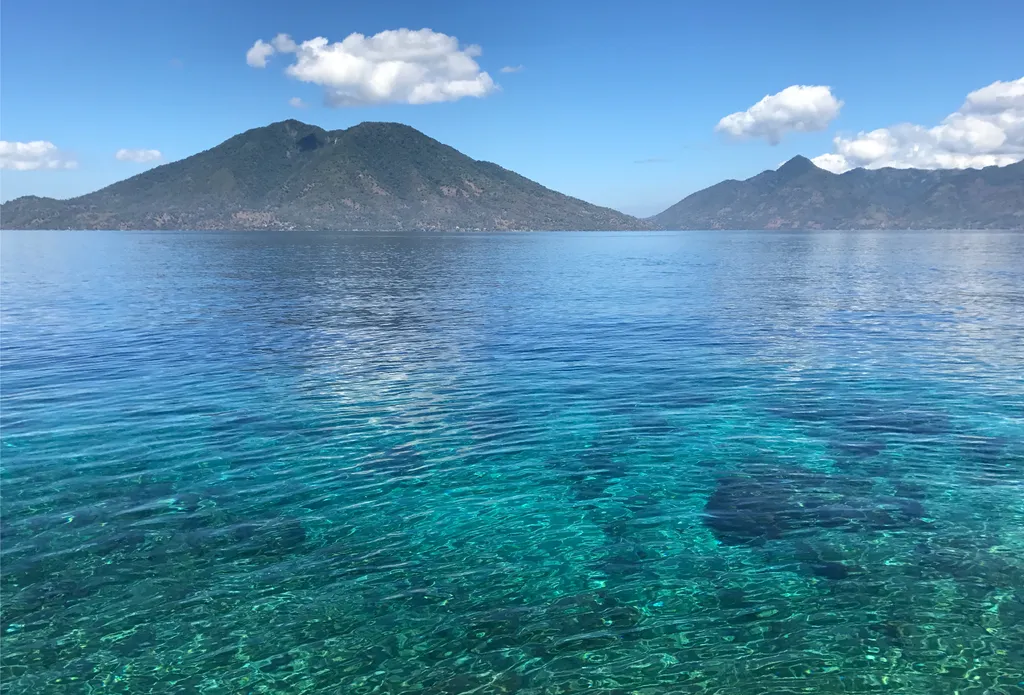
Alor
Alor rewards a trip that moves between two very different kinds of diving. In Pantar Strait, walls and coral slopes meet moving water, with schooling fish along exposed edges. Inside Kalabahi Bay, volcanic sand, rubble and silty bottoms turn the dive into a slow search for small animals. The diving area spans the shores of Alor, Pantar and Pura; where you stay affects which of these habitats fits comfortably into a boat day. Water movement explains much of the variation. Cold water enters the strait from the south, and local operators associate upwelling and stronger currents with new and full moons. A warm surface does not tell you what awaits below: a thermocline can change both the temperature and the demands of a dive. Site choice matters more than a single forecast for the archipelago. Build the itinerary around reefs, walls and macro life, with large animals as a possible encounter. There is no dependable shared season for hammerheads, mola or threshers on which to base a booking. A guide who can switch between exposed sites and sheltered searches is more useful than a fixed list of promised sightings.