
Leaf Scorpionfish
Taenianotus triacanthus
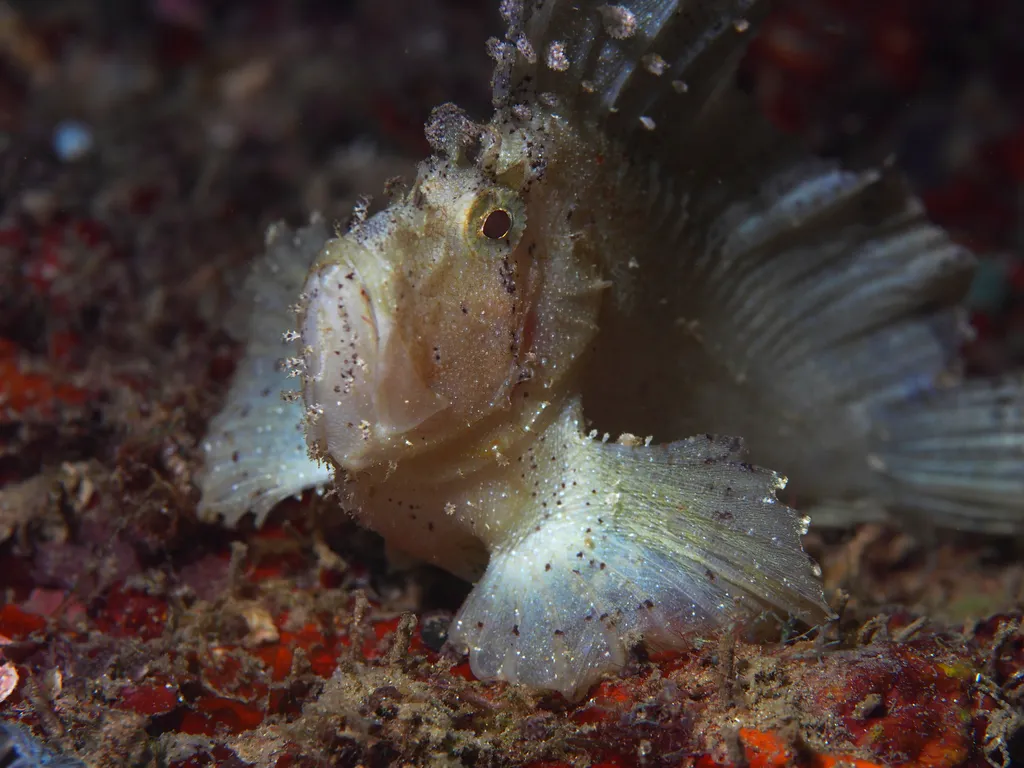
Photo by Rickard Zerpe / CC BY-SA 2.0 via Wikimedia Commons
Leaf Scorpionfish are one of the classic "slow-burn" macro finds: easy to miss at first, then impossible to forget once you lock on. Their body is paper-thin from the front, and they sway with surge like drifting reef debris, so even experienced divers can fin past one at arm's length.
Unlike many cryptic fish that hide deep in cracks, this species often perches in plain sight on rubble, algae patches, or low coral outcrops and simply trusts camouflage. For divers, that makes them a perfect exercise in buoyancy control and patient visual scanning rather than fast searching.
They are ambush predators that inhale small fish and crustaceans in a rapid strike. If you hold position and watch for a few minutes, subtle behavior changes become visible: pectoral fin adjustments, head angle shifts, and sudden short lunges.
🔬Classification
📏Physical Features
🌊Habitat Info
⚠️Safety & Conservation
Identification Guide
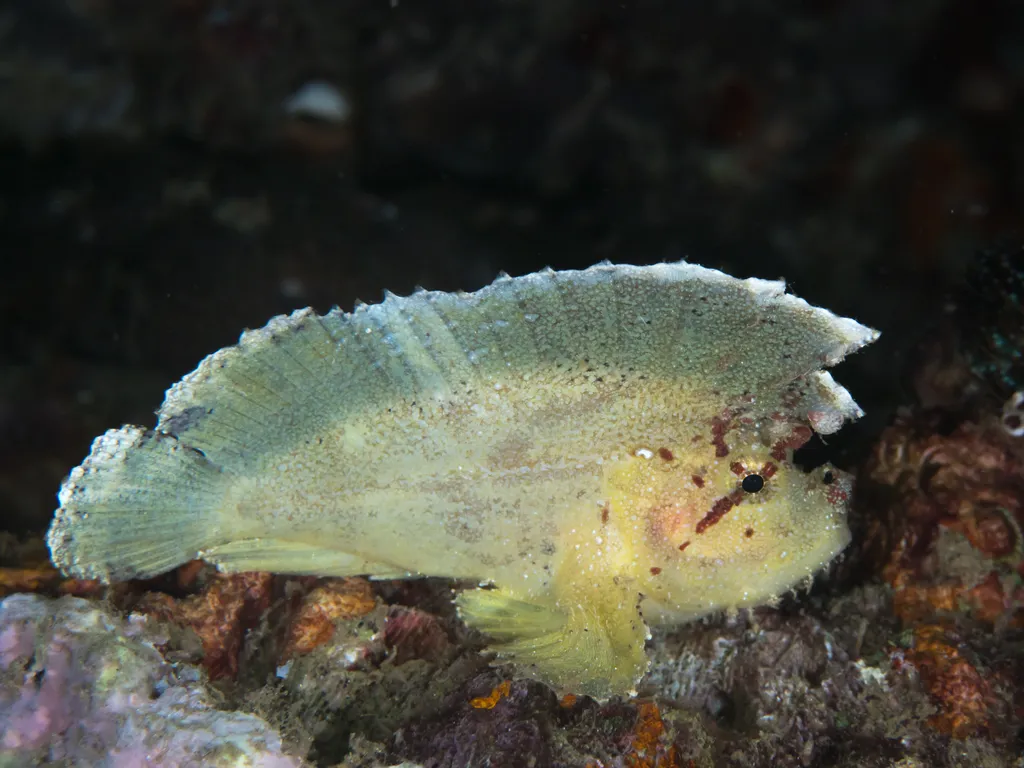
Photo by Rickard Zerpe / CC BY 2.0 via Wikimedia Commons
Profile First, Color Second
Ignore color as your primary cue because this species changes hue across sites and even after molting. Start with shape: deep, leaf-like body, high continuous dorsal fin, and a slightly "frayed" outline.
Watch the Sway Rhythm
A leaf scorpionfish often rocks side to side in current with controlled, repeatable motion rather than random drift. That rhythmic sway is one of the best in-water tells when visibility is mediocre.
Check Mouth Appendages
Fine cirri around the mouth and a large upturned gape help separate it from many juvenile scorpionfish or waspfish lookalikes. If you can see the facial fringe, you've likely confirmed the ID.
Top 10 Fun Facts about Leaf Scorpionfish
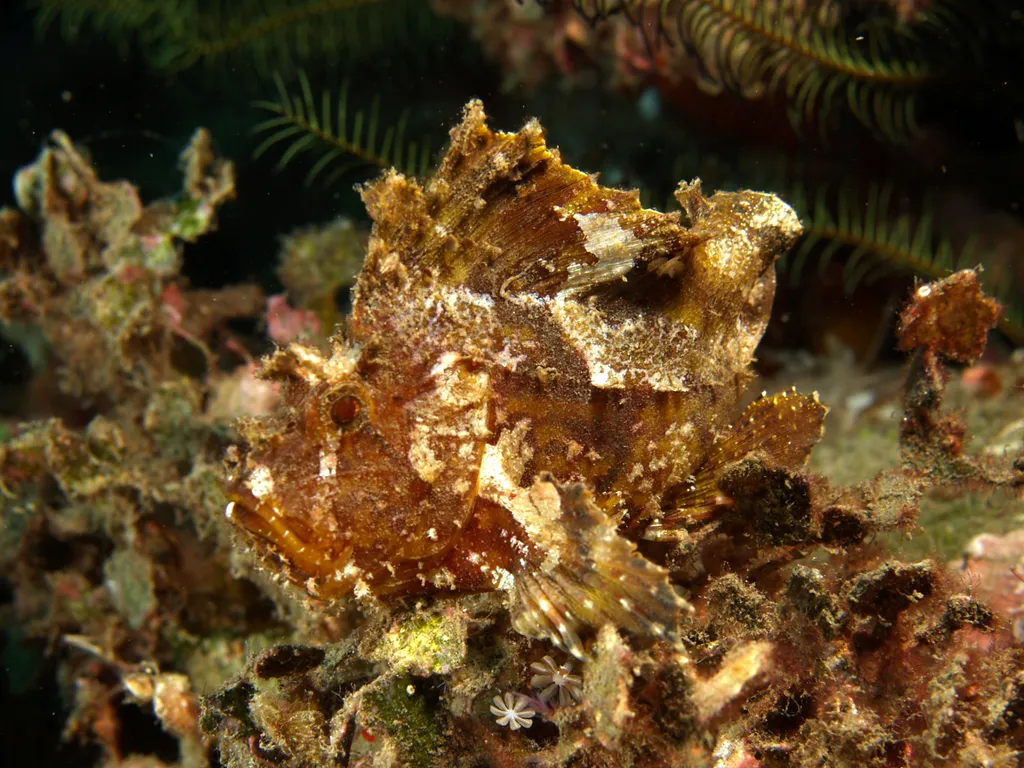
Photo by Nhobgood Nick Hobgood / CC BY-SA 3.0 via Wikimedia Commons
1. A Monotypic Oddball
Leaf Scorpionfish are the only species in the genus Taenianotus, which is unusual in reef fish groups and part of why they stand out taxonomically.
2. Built to Disappear, Not to Chase
Their body design is optimized for camouflage and short-range ambush strikes, not sustained swimming. Divers usually see them perched and waiting rather than cruising.
3. Color Is a Moving Target
Individuals can appear white, yellow, pink, red, brown, or green depending on habitat and molt cycle. This is why shape-based ID is more reliable than color charts underwater.
4. They Molt Their Skin
Like some other scorpionfish relatives, they periodically shed outer skin layers. Molting helps remove fouling organisms and may reset camouflage effectiveness.
5. The "Falling Leaf" Illusion Is Functional
Their side-to-side rocking is not just dramatic behavior; it likely improves deception in surge and current by mimicking drifting plant matter.
6. Small Fish, Big Predation Efficiency
Even at around 10 cm max length, they can engulf surprisingly large prey relative to head size using rapid suction feeding.
7. Venom Is Defensive
Dorsal spines are venomous, but this fish is not aggressive toward divers. Nearly all incidents come from accidental contact during poor buoyancy or hand placement.
8. They Occupy Broad Depth Ranges
Records span from very shallow reef zones down to over 100 m, though recreational sightings cluster in macro-friendly shallow to mid-depth habitats.
9. Classic Indo-Pacific Distribution
The species ranges widely from the western Indian Ocean across Southeast Asia to the central Pacific, including macro hotspots divers already know.
10. A Great "Patience Species" for Training
Looking for leaf scorpionfish is excellent practice for controlled finning, slow visual search, and non-contact positioning around fragile reef substrate.
Diving & Observation Notes
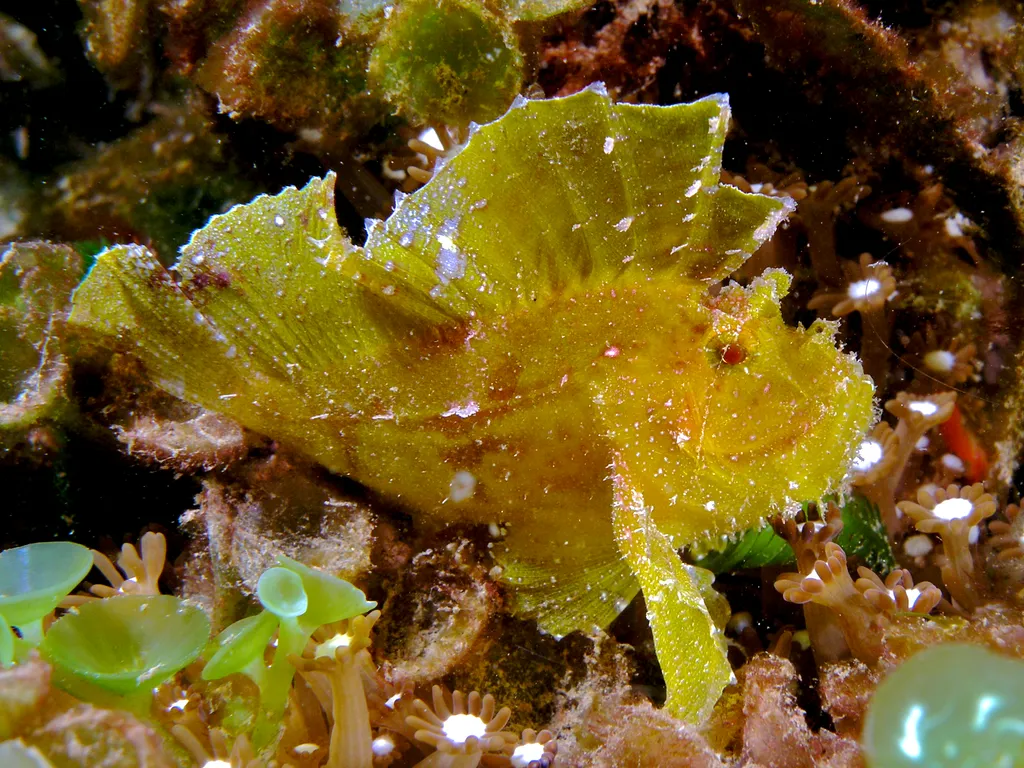
Photo by Nhobgood Nick Hobgood / CC BY-SA 3.0 via Wikimedia Commons
🧭 Where to Search
Start on rubble patches beside healthy reef, algae-covered ledges, and current edges where suspended food is available. Ask guides for recent sightings because individuals may hold micro-territories for days.
🤿 Approach Strategy
Stay slightly below eye level and move laterally rather than directly above the fish. A direct overhead silhouette often causes posture tightening and subtle repositioning.
📸 Camera Setup
For portraits, use moderate magnification and stop down enough to keep the dorsal sail and eye plane sharp. For behavior shots, wait for swaying cycles or feeding lunges instead of firing continuous random bursts.
⚠️ Contact Risk Management
Never brace hands on substrate around a suspected scorpionfish. Maintain neutral buoyancy and fin discipline, especially in surge where accidental drift can cause spine contact.
Best Places to Dive with Leaf Scorpionfish
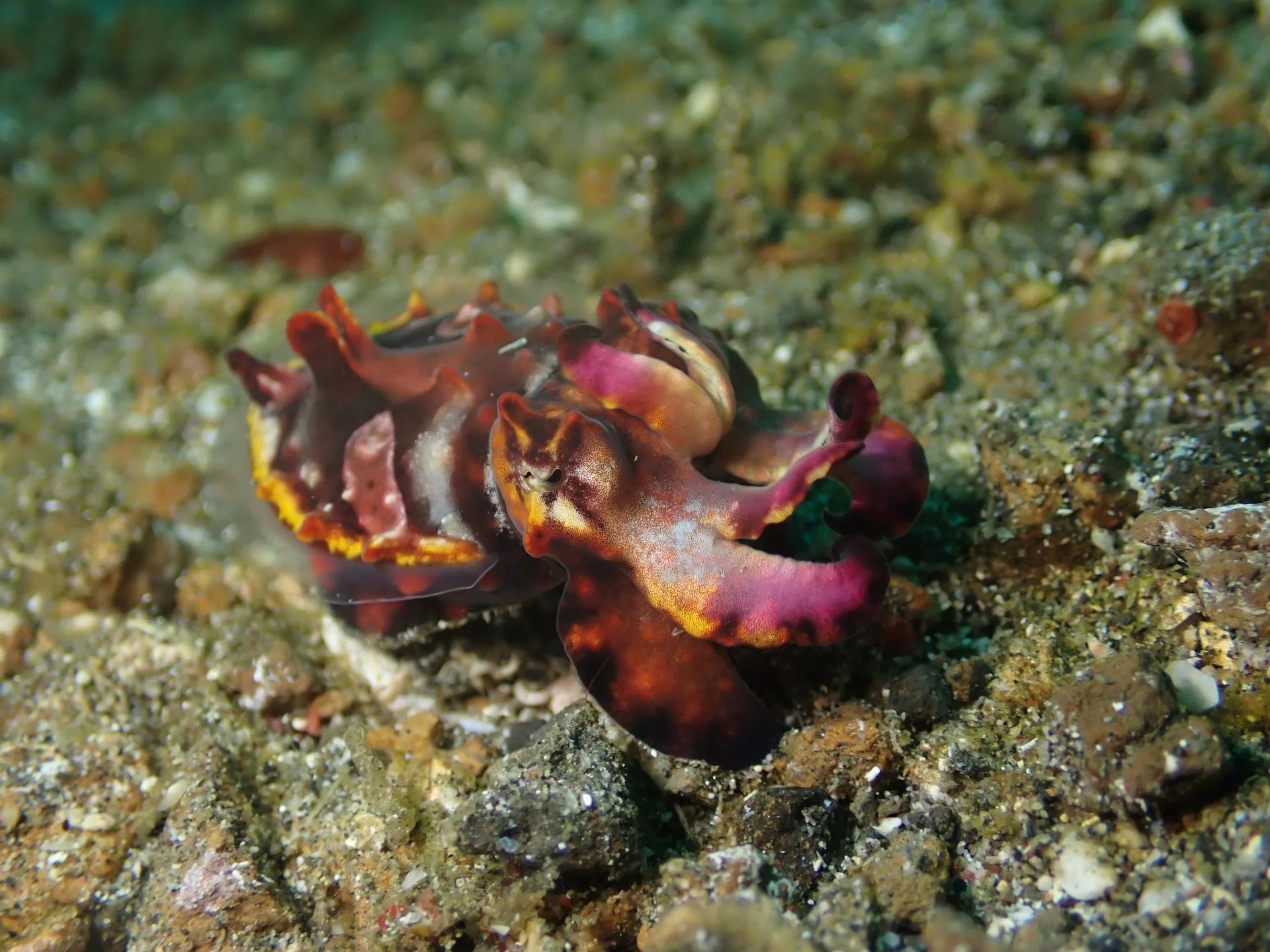
Lembeh
The Lembeh Strait in North Sulawesi has become famous as the muck‑diving capital of the world. At first glance its gently sloping seabed of black volcanic sand, rubble and discarded debris looks bleak. Look closer and it is teeming with weird and wonderful life: hairy and painted frogfish, flamboyant cuttlefish, mimic and blue‑ringed octopuses, ornate ghost pipefish, tiny seahorses, shrimp, crabs and a rainbow of nudibranchs. Most dives are shallow and calm with little current, making it an ideal playground for macro photographers. There are a few colourful reefs for a change of scenery, but Lembeh is all about searching the sand for critter treasures.
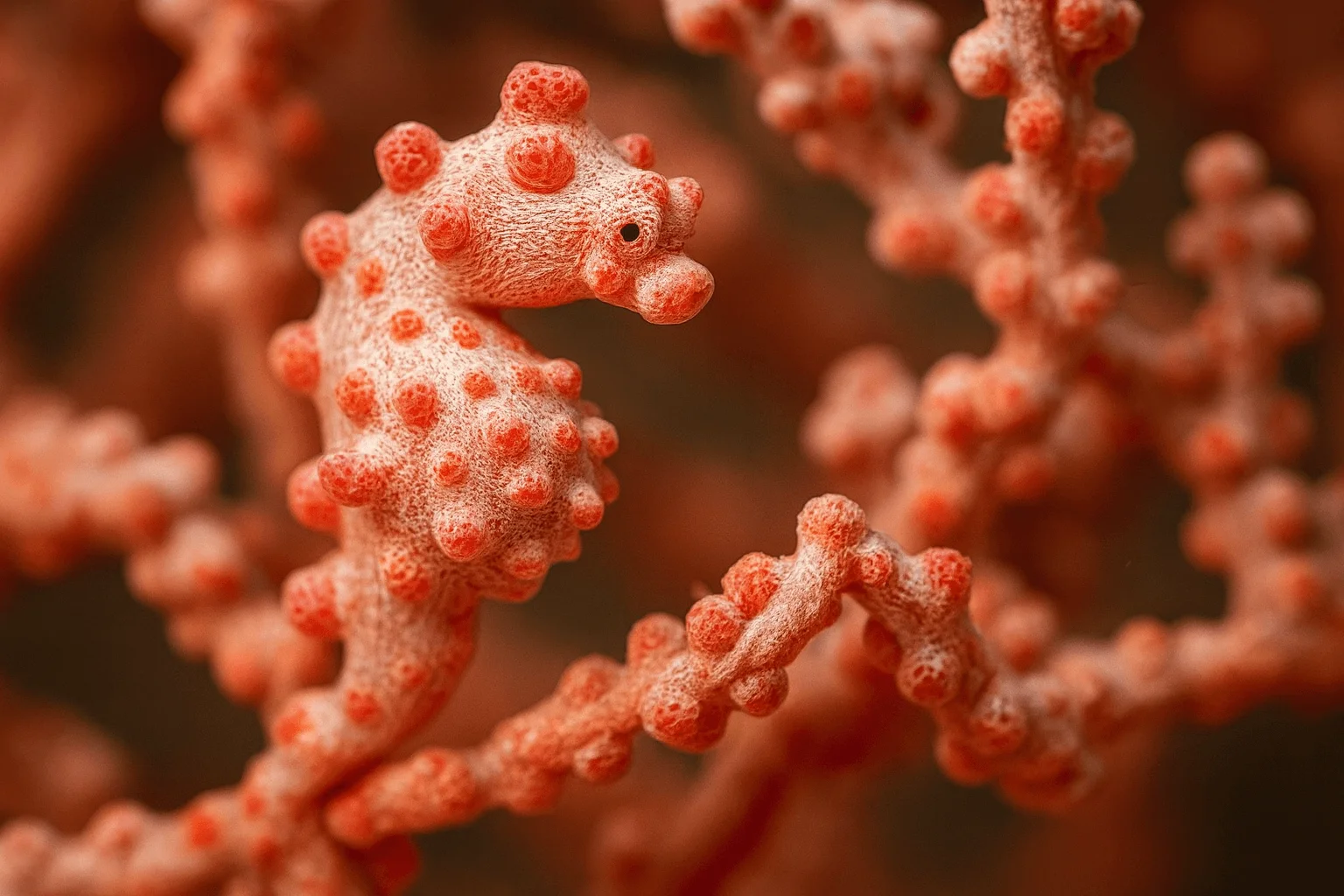
Anilao
Anilao, a small barangay in Batangas province just two hours south of Manila, is often called the macro capital of the Philippines. More than 50 dive sites fringe the coast and nearby islands, offering an intoxicating mix of coral‑covered pinnacles, muck slopes and blackwater encounters. Critter enthusiasts come for the legendary muck dives at Secret Bay and Anilao Pier, where mimic octopuses, blue‑ringed octopuses, wonderpus, seahorses, ghost pipefish, frogfish and dozens of nudibranch species lurk in the silt. Shallow reefs like Twin Rocks and Cathedral are covered in soft corals and teem with reef fish, while deeper sites such as Ligpo Island feature gorgonian‑covered walls and occasional drift. Because Anilao is so close to Manila and open year‑round, it’s the easiest place in the Philippines to squeeze in a quick diving getaway.
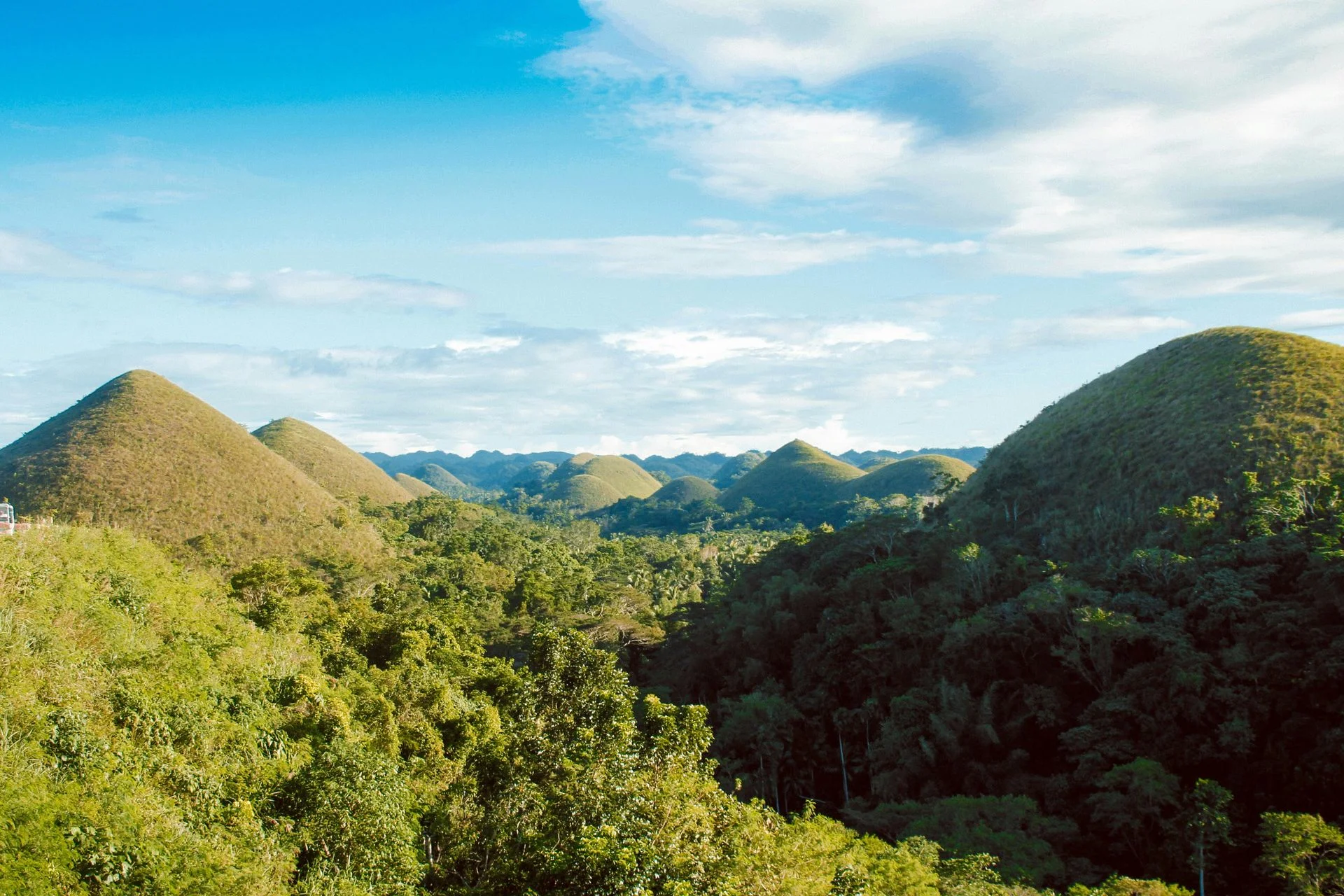
Bohol
Bohol, an island province in the central Visayas of the Philippines, is a diver’s playground with a huge variety of sites. The main hub is Panglao Island, where Alona Beach serves as the launch point for local reef dives and day trips. Nearby Balicasag Island is world‑class: its 5‑ to 18‑m plateau drops into walls where clouds of jackfish and sardines swirl and sleepy green and hawksbill turtles munch on soft corals. To the west, Cabilao’s reefs hide hammerhead sharks and pygmy seahorses, while the remote east coast of Anda offers muck dives, turtle nurseries and even mantas and whale sharks. Other favorites include Napaling’s year‑round sardine balls, Pamilacan’s manta and shark‑filled walls and Cervera (Snake Island) with its resident sea snakes. Whether you love colourful coral gardens, deep walls, big pelagics or tiny critters, Bohol has something for every diver.
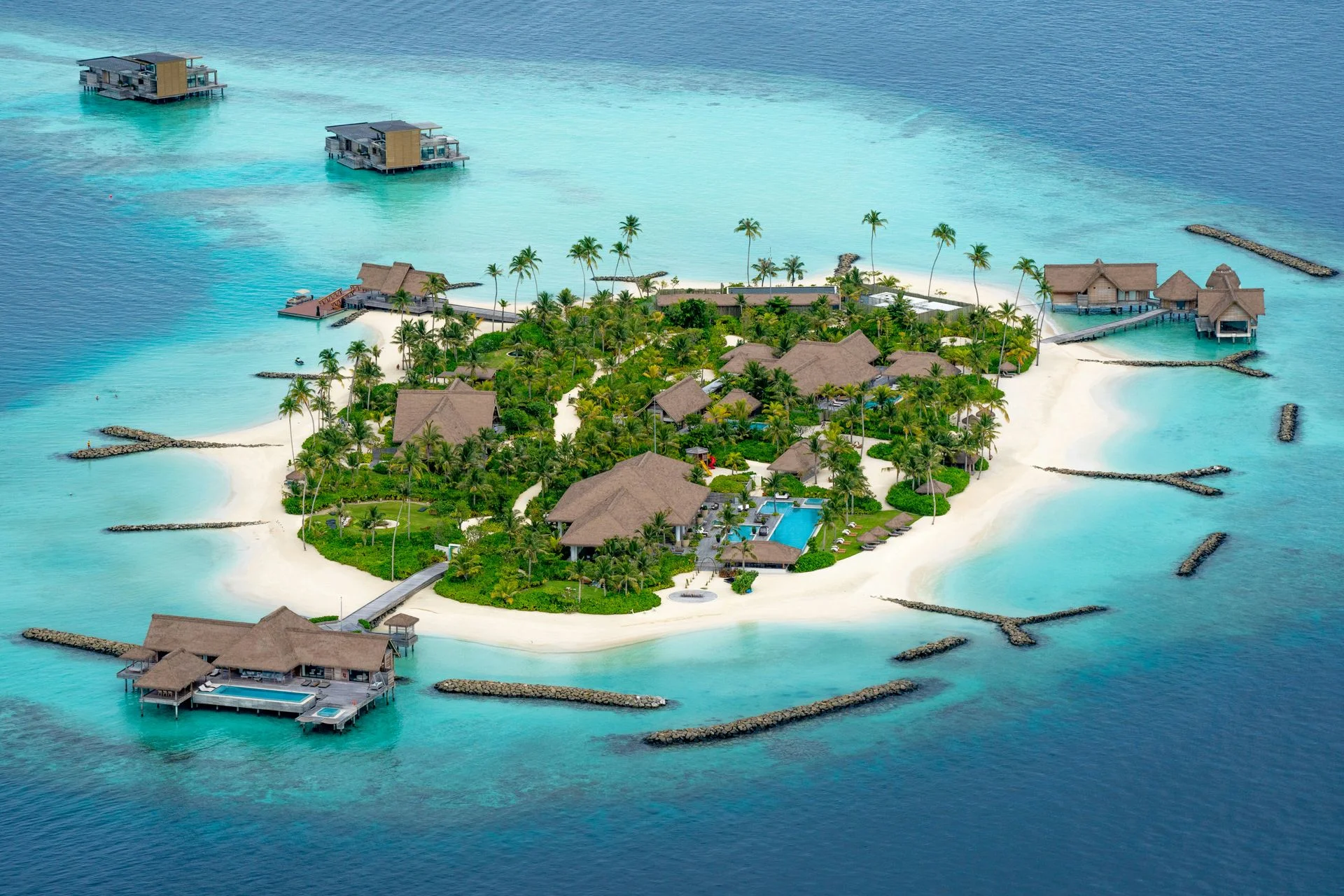
Maldives
Scattered across the Indian Ocean like strings of pearls, the Maldives’ 26 atolls encompass more than a thousand low‑lying islands, reefs and sandbanks. Beneath the turquoise surface are channels (kandus), pinnacles (thilas) and lagoons where powerful ocean currents sweep past colourful coral gardens. This nutrient‑rich flow attracts manta rays, whale sharks, reef sharks, schooling jacks, barracudas and every reef fish imaginable. Liveaboards and resort dive centres explore sites such as Okobe Thila and Kandooma Thila in the central atolls, manta cleaning stations in Baa and Ari, and shark‑filled channels like Fuvahmulah in the deep south. Diving here ranges from tranquil coral slopes to adrenalin‑fuelled drifts through current‑swept passes, making the Maldives a true pelagic playground.
Tulamben(Bali)
Tulamben sits on Bali’s northeast coast and is best known for the USAT Liberty shipwreck – a 125‑metre cargo ship torpedoed in WWII that now lies just a short swim from shore. Warm water, mild currents and straightforward shore entries make diving here relaxed for all levels. Besides the wreck, divers can explore coral gardens, black‑sand muck sites and dramatic drop‑offs. Macro lovers will find nudibranchs, ghost pipefish, mimic octopus and pygmy seahorses, while big‑fish fans can encounter schooling jackfish, bumphead parrotfish and reef sharks. With a compact coastline packed with variety, Tulamben delivers world‑class wreck and critter diving without long boat rides.