
Mandarin Fish
Synchiropus splendidus
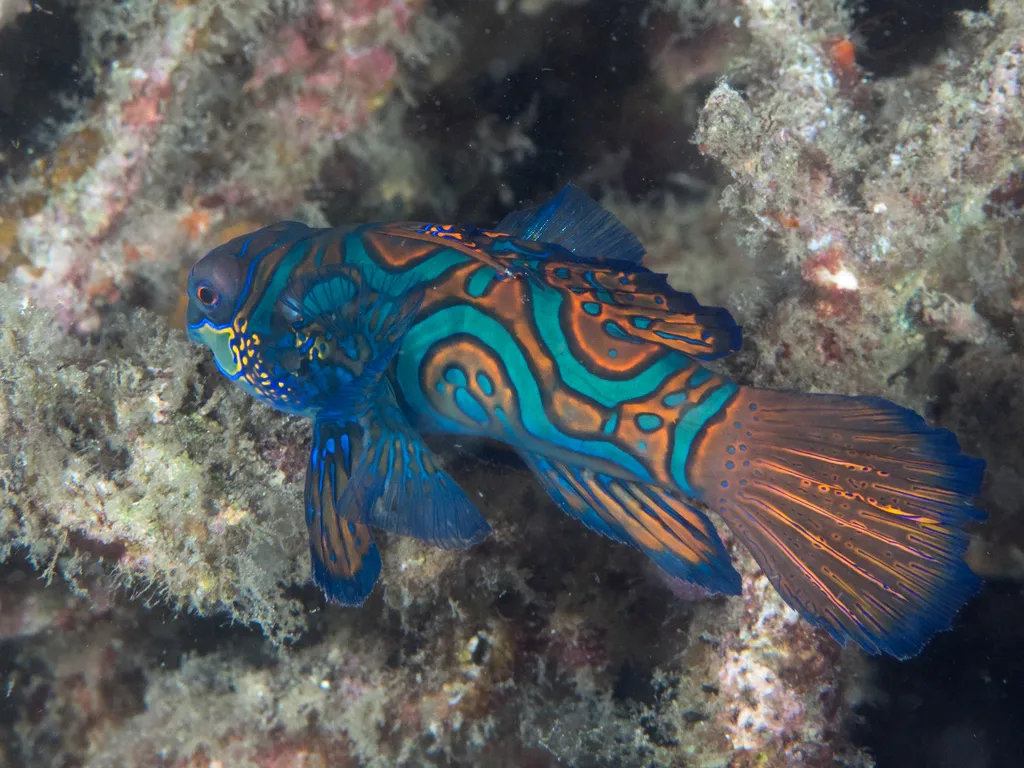
Photo by Rickard Zerpe / CC BY 2.0 via Wikimedia Commons
The Mandarin Fish (Synchiropus splendidus) is the reef's pocket-sized psychedelic poster child—a dragonet so outrageously patterned that first-time divers assume someone Photoshopped it onto the rubble. Electric blue, green, and orange swirls ripple across scaleless skin, with a signature yellow cheek spot that field guides use as a quick ID mark. By day it vanishes into branching coral and dead coral heads in sheltered lagoons; at dusk, pairs erupt from the rubble for one of diving's most famous spectacles—a sunset courtship dance where males flash fins and spiral upward with females to spawn. Small, shy, and coated in defensive mucus, it's a macro icon that rewards patience, perfect buoyancy, and showing up at the right minute of golden hour.
🔬Classification
📏Physical Features
🌊Habitat Info
⚠️Safety & Conservation
Identification Guide
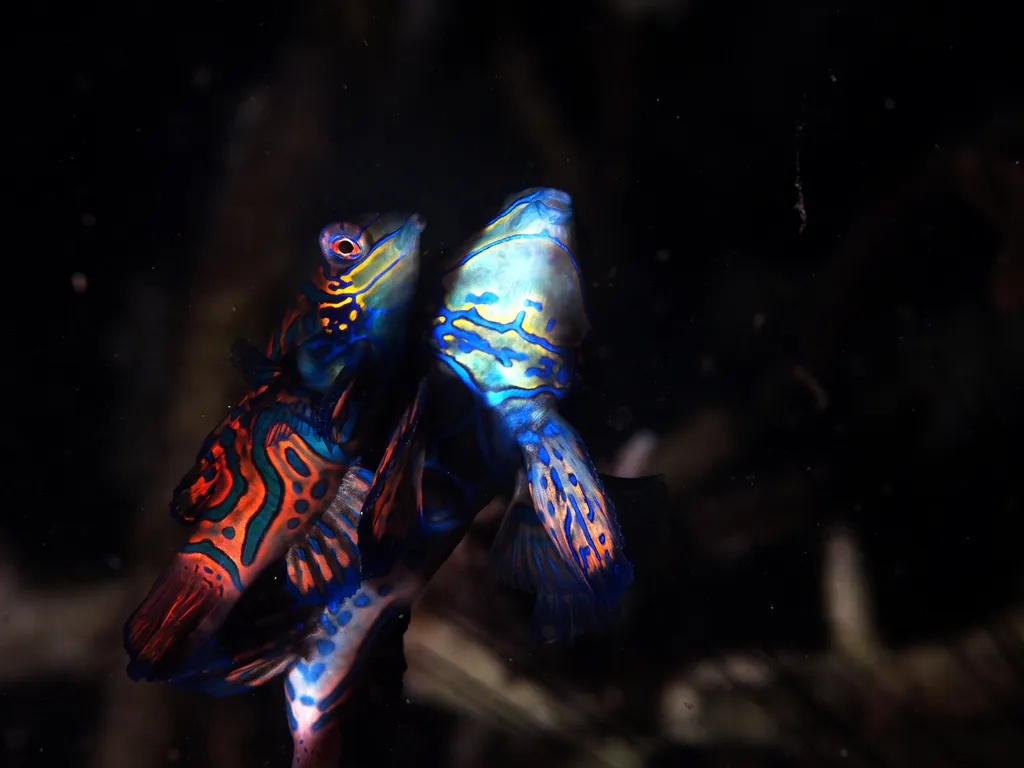
Photo by Rickard Zerpe / CC BY-SA 2.0 via Wikimedia Commons
Search shallow sheltered rubble at 1–12 m—especially branching Acropora, dead coral heads, and lagoon fringes. Mandarin fish are small (4–6 cm), scaleless, and cryptic by day; you often spot them only when they dart between coral fingers.
Key Field Marks
- Psychedelic swirl pattern: electric blue, green, and orange mosaic—one of the most distinctive reef fish palettes
- Yellow spot on the cheek (suborbital region)—reliable quick ID even in poor light
- Scaleless, mucus-coated skin with a slightly velvety look; fins often edged in electric blue
- Large pectoral fins used for precise hovering and short hops along the substrate
- Males larger and more vividly colored than females; extended dorsal and anal fins during courtship
Don't Confuse With
- Spotted mandarin / psychedelic mandarin (Synchiropus picturatus): similar psychedelic palette but spot-dominated pattern rather than flowing swirls; overlapping range in parts of the Philippines and Indonesia
- Green mandarin (Synchiropus splendens): more green-dominant with less orange; often in slightly deeper or more open rubble
- Scooter blennies (Neocirrhites / dragonet relatives): different body shape—more elongate, perch-and-dart behavior on open sand; lack the mandarin's cheek spot and swirl mosaic
- Lumpy or painted frogfish: globose body, lure, camouflage—not the flat, psychedelic dragonet look
Juvenile vs. Adult
Juveniles show the same swirl palette at smaller size and remain extremely shy in coral crevices. Adults are still tiny but males develop longer dorsal spines and richer fin margins used in the dusk display.
Top 10 Fun Facts about Mandarin Fish
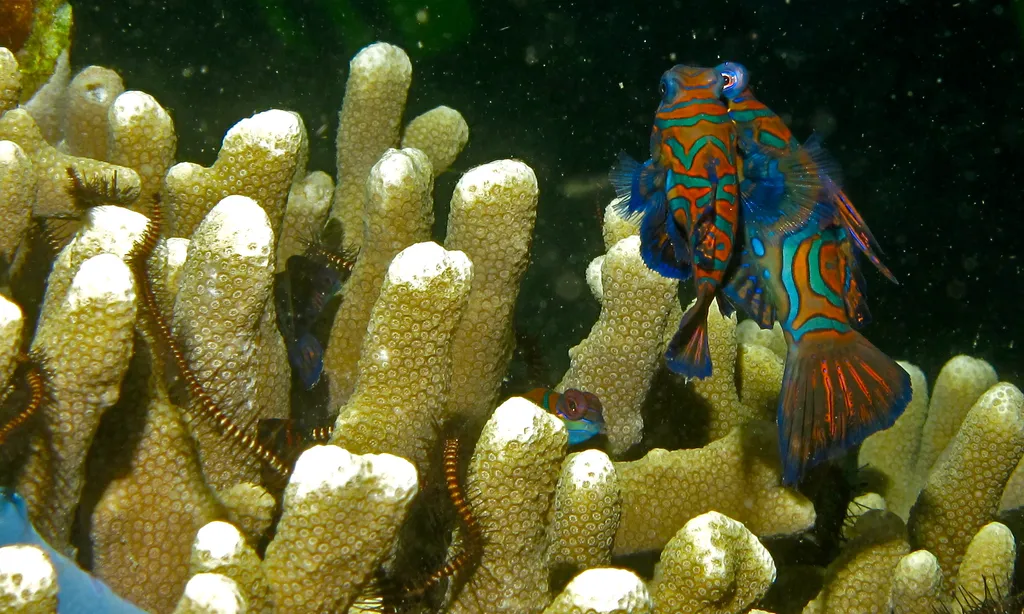
Photo by Bernard DUPONT from FRANCE / CC BY-SA 2.0 via Wikimedia Commons
1. One of the Few True-Blue Vertebrates
Most "blue" animals cheat with structural color—light bouncing off microscopic layers to create iridescence that shifts with angle. Mandarin fish pack genuine blue pigment (cyanophores) in their skin cells alongside other pigment types, making them one of the rare vertebrates where blue is chemically real, not just optical trickery. That's why their electric blue holds up even in flat, diffused light on a dusk dive—it's not a hologram that vanishes when you change angle. For macro photographers, it's a dream subject; for evolutionary biologists, it's a window into how reef fish achieve colors that seem impossible on a 5 cm body.
2. The Sunset Mating Ballet
Mandarin fish don't spawn casually—they schedule romance for the last light of day. As the sun drops toward the horizon, pairs emerge from coral rubble and perform a spiraling courtship dance: the male spreads his dorsal fin like a fan, flashes electric fin margins, and guides the female upward in tight circles while both release eggs and sperm into the water column. The whole show lasts only minutes around civil twilight—miss the window and you get nothing. Sites from Malapascua to Kapalai have built entire dive operations around this single behavior, with guides positioning groups at known coral heads before sunset and enforcing strict no-touch rules so the fish actually perform.
3. Scaleless, Slimy, and Don't Grab
Mandarin fish lack scales entirely—their skin is a smooth, mucus-coated armor that repels parasites and carries defensive compounds irritating to predators (and human skin if you handle them). That velvet texture is part of why they photograph so beautifully under macro lights, but it's also why catch-and-release handling is unethical: you strip protective mucus, stress a fish that can't swim fast, and risk chemical irritation to yourself. They're not venomous like a stonefish, but the mucus is a real chemical defense—observe with eyes and cameras, not fingers.
4. A Mouth Built for Micro-Hunting
Dragonets are benthic micro-predators with tiny mouths and patient hunting styles. Mandarin fish spend daylight hours picking copepods, amphipods, and other minute crustaceans from coral branches and rubble surfaces, hovering on oversized pectoral fins like hummingbirds over a reef. Their fused pelvic fins form a "suction disc" that helps them perch on vertical coral fingers without being swept away by surge. This specialized diet is why they almost never take aquarium flake food and why wild collection for the trade often ends badly—their feeding ecology is tied to live reef microfauna, not pellets.
5. Males Flashier, Females Pick the Stage
Sexual dimorphism is obvious once you know what to look for: males run larger (up to ~7 cm) with taller dorsal fins and more saturated blue-orange margins used in the dusk display. Females are slightly smaller and duller but choose the spawning site—usually a clear patch above a familiar coral head where the upward spiral won't snag on branches. During courtship, multiple males may compete near a female's territory, flashing fins and chasing rivals in bursts that last only seconds before the pair locks into the spiral. It's high-stakes theater on a 6 cm stage.
6. Hiding in Plain Sight (Until You're Not Looking)
By day, mandarin fish are champions of crypsis among psychedelic colors—they tuck into branching coral and dead heads, aligning their swirl patterns with the shadowed complexity of the reef matrix so that even neon blue vanishes at a glance. Guides find them by knowing specific coral colonies visited daily, not by scanning open water. Self-guided divers who swim fast over rubble almost always miss them; the fish don't flee dramatically—they inch deeper into a crevice and wait you out. Patience and a slow hover at arm's length beat endless fin kicks.
7. Pelagic Eggs, Benthic Adults
After the dusk spiral, fertilized eggs drift pelagically in the water column before hatching into larvae that eventually settle back onto reef rubble. This split life history—benthic adults, pelagic young—helps disperse the species across lagoons and inshore reefs throughout the western Pacific. It also means local populations can recover if spawning isn't disrupted nightly by crowds of divers shining lights directly into courting pairs. Responsible operators limit group size, cap bottom time at dusk sites, and forbid torches shoved at spawning fish.
8. The Dragonet Family of Reef Oddballs
Mandarin fish belong to Callionymidae—dragonets—a family of small, often spectacularly patterned bottom dwellers. Relatives include scooter blennies, spotted mandarins, and various muck-dragonets that share the large pectoral fins, scaleless skin, and benthic lifestyle but swap palettes. Synchiropus splendidus is the flagship species divers mean when they say "mandarinfish," but the genus holds other psychedelic cousins that keep ID guides busy in Anilao and Lembeh. Knowing the cheek spot and swirl-vs-spot pattern separates the classic mandarin from its look-alikes.
9. Lagoon Specialist in a Crowded Sea
Unlike wide-ranging reef fish, mandarin fish favor sheltered inshore habitats—lagoon rubble, protected fringing reefs, and calm bays with branching coral at 1–18 m. They're a western Pacific icon from the Philippines through Indonesia to northern Australia, but patchy within that range—you won't find them on every wall dive. Hot spots share calm water, rich coral rubble, and decades of guide knowledge mapping which coral head hosts a resident pair. Komodo's calm bays, Raja Ampat's lagoon fringes, and Bohol's Anda dusk sites are textbook examples of the habitat recipe.
10. The Dive Industry's Dusk Ritual
Few fish species have dedicated sunset dive products named after them. Mandarin fish courtship spawned (pun intended) a global macro ritual: boats drop divers at 5–8 m rubble sites 30–45 minutes before sunset, everyone kneels in a circle with cameras pre-focused, and waits in near-silence for the show. Done right, it's magical—pairs spiraling in golden light. Done wrong—crowds, white lights in faces, divers standing on coral—it's harassment that can suppress spawning and stress resident pairs. The species is IUCN Least Concern globally, but local populations at famous dusk sites face real pressure from tourism density. Your etiquette matters as much as your f-stop.
Diving & Observation Notes
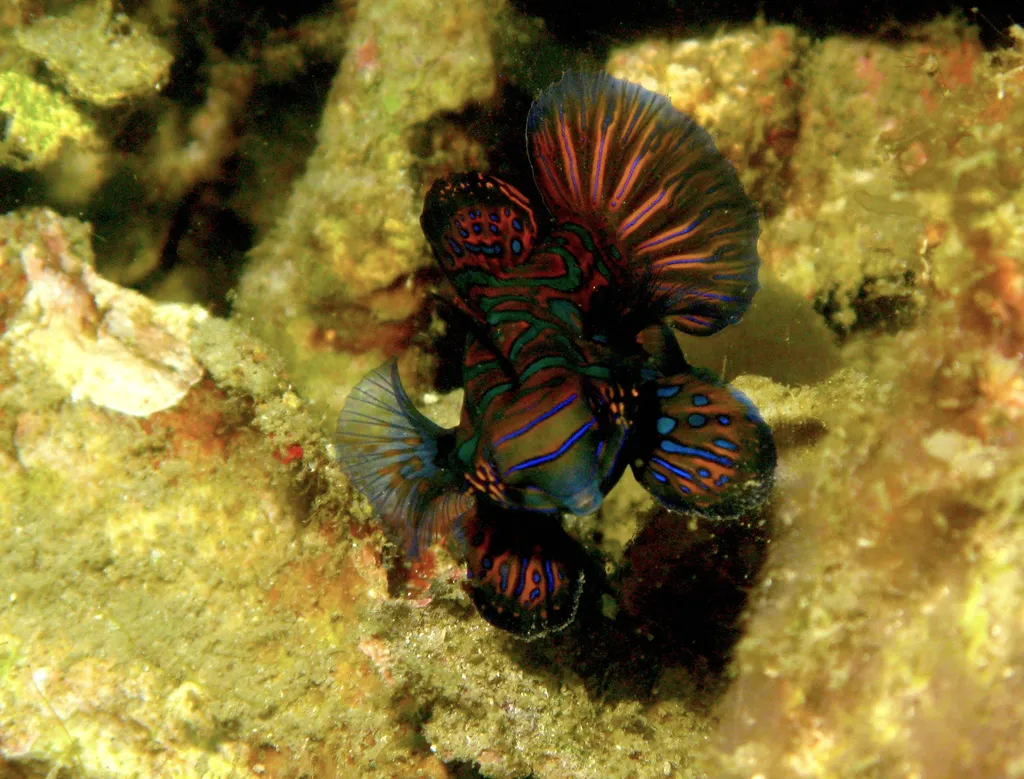
Photo by Silke Baron / CC BY 2.0 via Wikimedia Commons
🧭 Finding Them
Day dives: slow-hover over branching coral and dead coral heads in sheltered lagoons at 1–12 m. Look for a tiny psychedelic flicker between coral fingers—not open sand. Guides at Lembeh, Anilao, Dumaguete, and Raja Ampat often know resident colonies on specific rubble patches.
Dusk dives (the main event): book the mandarin fish sunset dive at sites like Malapascua's Lighthouse area, Bohol Anda/Wonder Wall, Kapalai jetty (Sipadan region), Maratua house reef, or Banda Neira jetty. Arrive 30–45 min before sunset, kneel on sand/rubble at 5–8 m, and wait. Pairs emerge from the same coral heads nightly—position early, stay low, and avoid blocking their exit routes.
🤿 Approach & Behavior
Mandarin fish are extremely shy by day—fast approaches or silt kicks send them deep into coral. At dusk they're bolder but still spook from white lights in the face, bubbles on the head, and divers standing up. Maintain perfect neutral buoyancy; never kneel on or grip coral to stabilize. If a pair aborts the spiral, back off and go dim—chasing ruins the dive for everyone and may skip spawning that night.
📸 Photo Tips
- Dusk is behavior gold: pre-set manual exposure for golden hour; warm ambient + low-power fill beats blasting strobes at courting fish
- Day macro: 100mm equivalent, eye + cheek spot focus; soft snoot or diffused strobe preserves swirl detail without hot spots
- Courtship burst: continuous drive, moderate shutter (1/125–1/200); spiral happens in seconds—pre-focus on the coral head exit point
- No white video lights during spawning—use red focus lights sparingly and angle away from the pair
⚠️ Ethics
- Never touch or net—mucus stripping stresses and harms the fish
- Do not collect for aquariums; wild diet and dusk spawning rarely succeed in tanks
- Cap group size and bottom time at famous dusk sites; follow local operator rules
- Keep fins high, stay off coral, and leave space for the upward spiral
🌏 Site Notes
- Malapascua: iconic sunset mandarin dives near Gato/Lighthouse rubble
- Bohol (Anda): Wonder Wall and Napaling dusk shows
- Sipadan region (Kapalai/Mabul): jetty and rubble mandarin mating
- Anilao / Dumaguete / Lembeh: daytime rubble residents plus seasonal dusk sites
- Maratua / Banda Sea: house-reef and jetty dusk entries
- Komodo / Raja Ampat / Tulamben: calm lagoon fringes with branching coral—ask guides for local coral-head maps
Best Places to Dive with Mandarin Fish
Malapascua
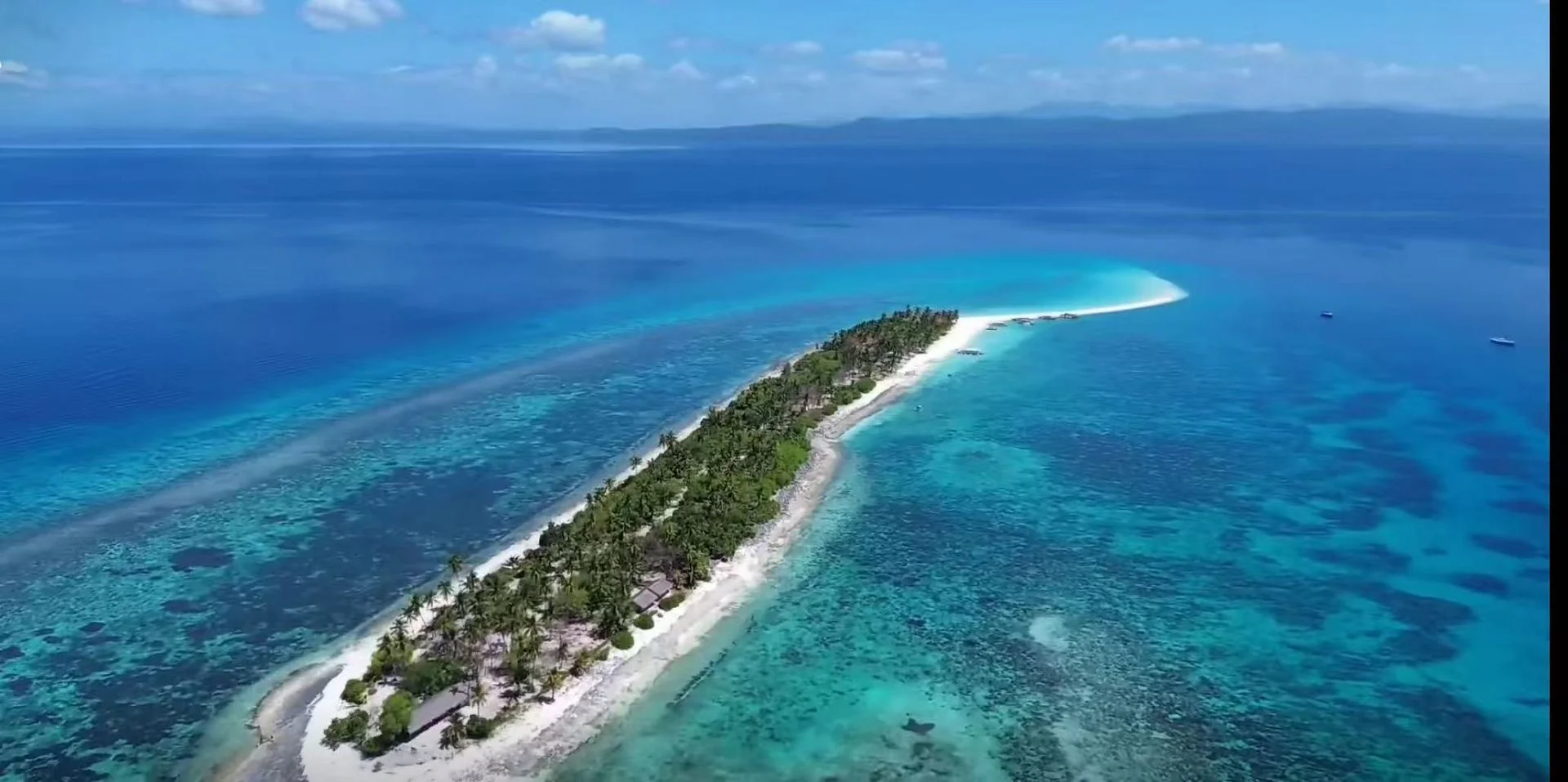
Malapascua is a small island off the northern tip of Cebu famed for its resident thresher sharks. Every morning at dawn, divers ride out to Monad Shoal and sit on a coral plateau 20–30 m deep, quietly watching as pelagic threshers rise from the abyss to use the cleaning station. But the excitement doesn’t end once the sharks disappear into the blue—around the island you’ll find coral‑covered pinnacles, drift dives, walls and gentle reef slopes teeming with life. Macro hunters can stalk flamboyant cuttlefish, pygmy seahorses and frogfish in the muck around Dauin, while wide‑angle lovers will enjoy schooling jackfish, batfish and barracuda at sites like Bugtong Bato and Gato Island. A relaxed village atmosphere, white‑sand beaches and day trips to neighbouring islands such as Kalanggaman or Capitancillo round out the experience.
Lembeh
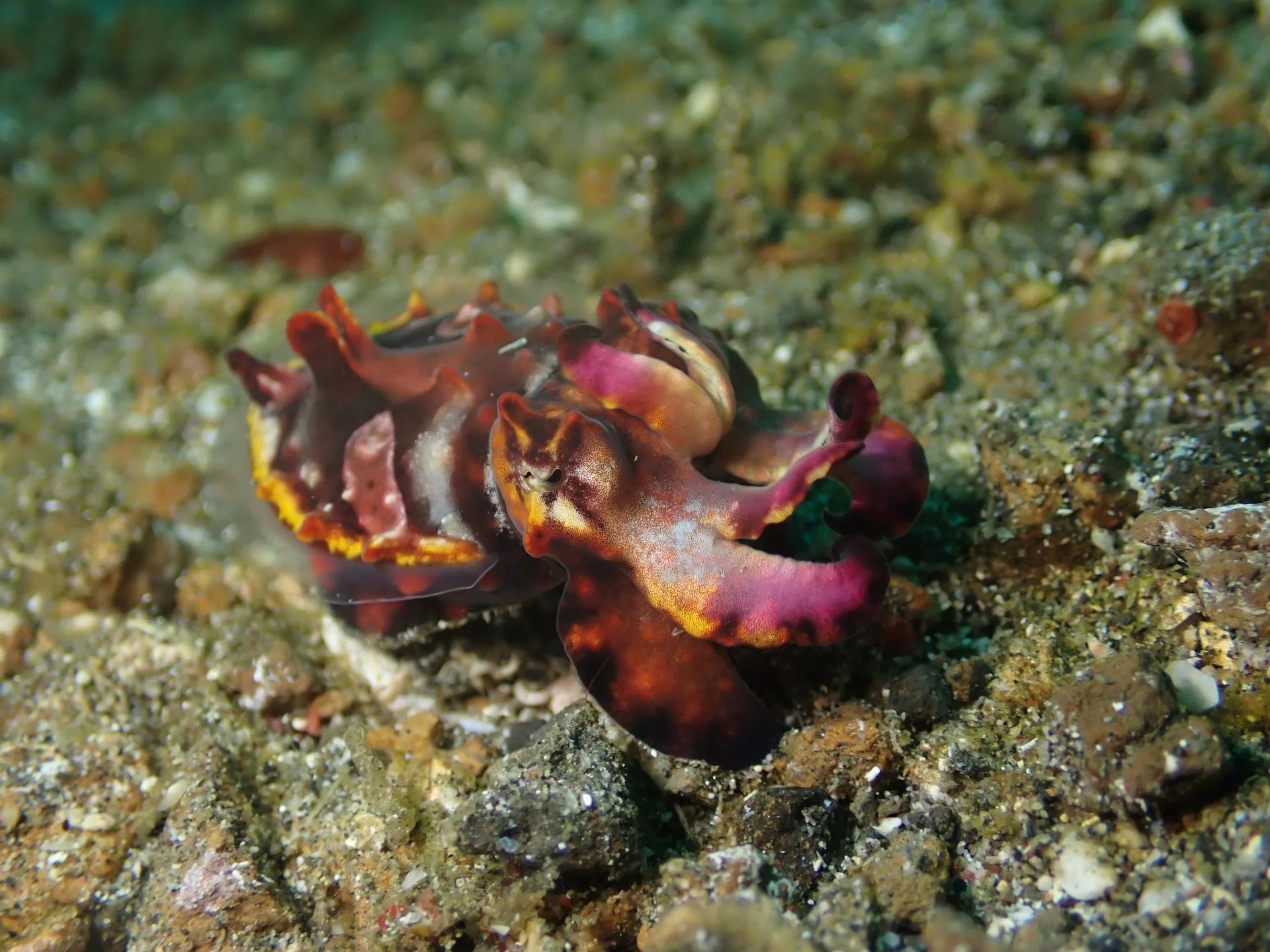
The Lembeh Strait in North Sulawesi has become famous as the muck‑diving capital of the world. At first glance its gently sloping seabed of black volcanic sand, rubble and discarded debris looks bleak. Look closer and it is teeming with weird and wonderful life: hairy and painted frogfish, flamboyant cuttlefish, mimic and blue‑ringed octopuses, ornate ghost pipefish, tiny seahorses, shrimp, crabs and a rainbow of nudibranchs. Most dives are shallow and calm with little current, making it an ideal playground for macro photographers. There are a few colourful reefs for a change of scenery, but Lembeh is all about searching the sand for critter treasures.
Komodo
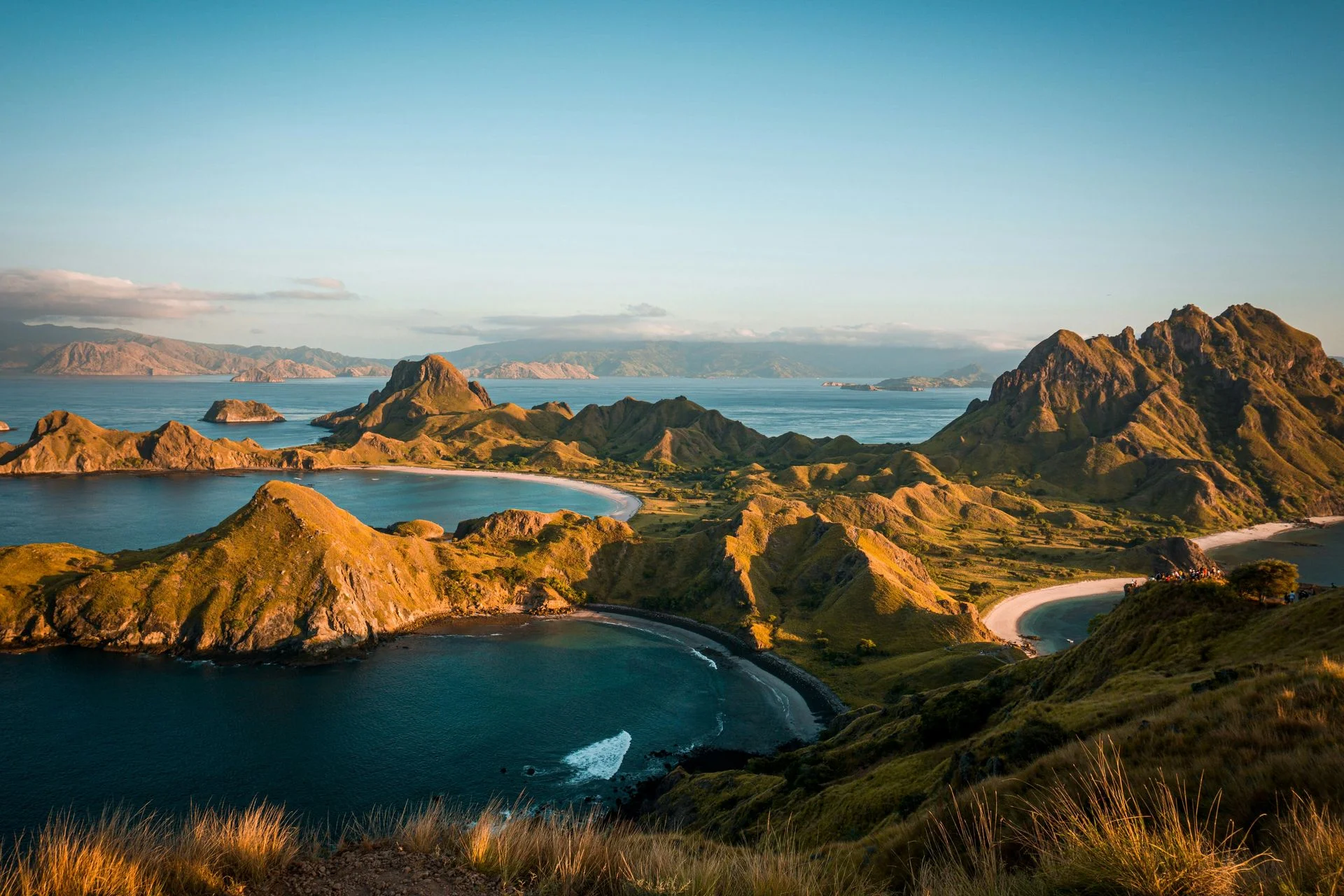
Komodo National Park is a diver’s paradise full of marine diversity: expect healthy coral gardens, reef sharks, giant trevallies, countless schools of fish, and frequent manta ray sightings at sites like Manta Point and Batu Bolong. Drift dives and dramatic reef structures add excitement, while both macro lovers and big-fish fans will find plenty to love. Above water, the wild Komodo dragons roam, giving a touch of prehistoric wonder to the whole trip.
Dumaguete
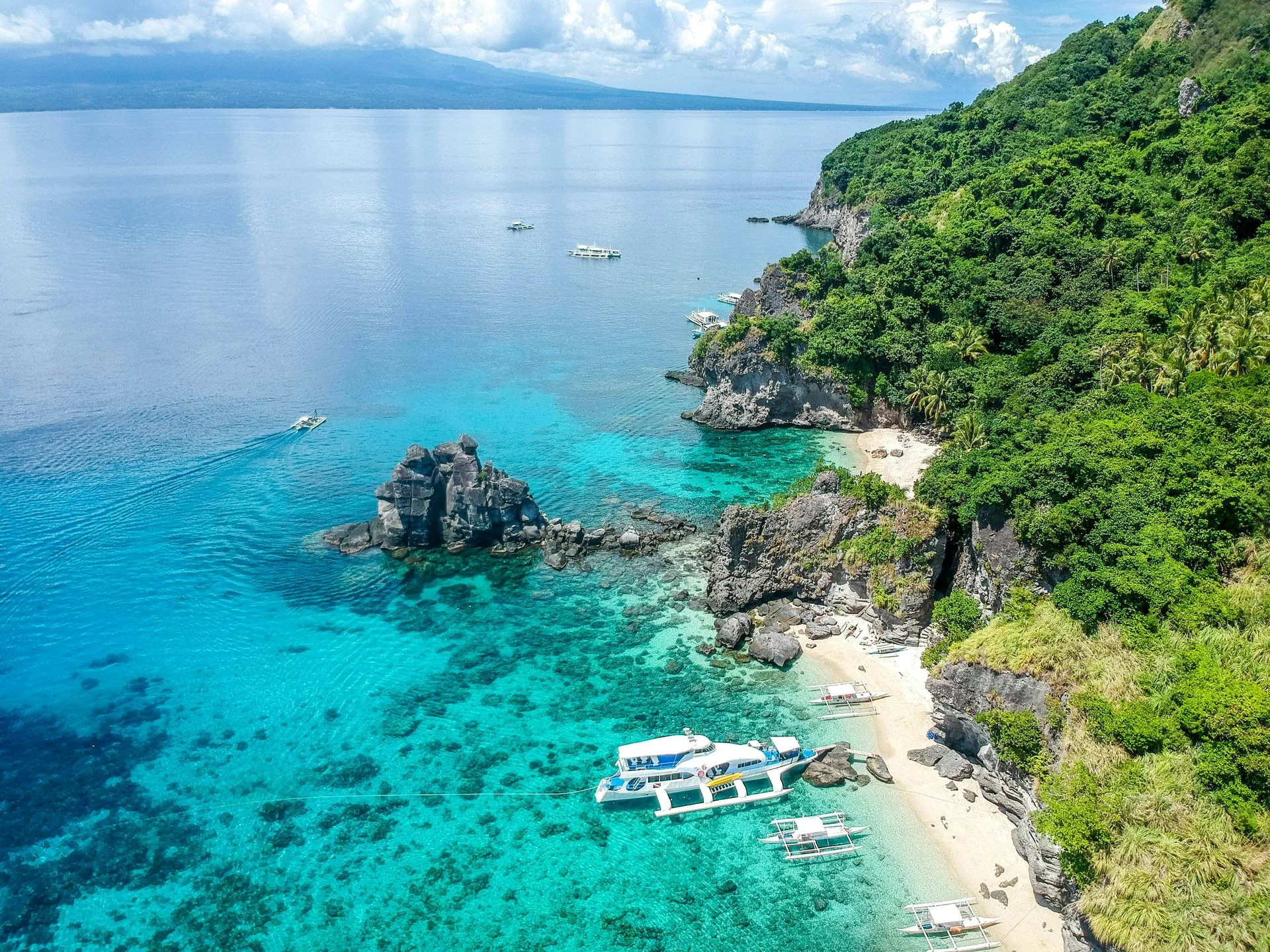
Dumaguete on the southeast coast of Negros is the jumping‑off point for some of the Philippines’ most diverse diving. Along the nearby town of Dauin, a series of shallow marine sanctuaries and black‑sand slopes hide critters galore: frogfish, flamboyant cuttlefish, mimic octopus, ghost pipefish, seahorses, pipefish and nudibranchs. Artificial reefs made from car tyres and pyramids provide extra habitat. Offshore, Apo Island’s walls and plateaus burst with hard and soft corals, schooling jacks and barracudas, and friendly green turtles. With day trips to Oslob’s whale sharks or Bais’ dolphin‑watching, and excursions to nearby Siquijor, Dumaguete offers a perfect mix of macro muck diving and classic coral reefs.
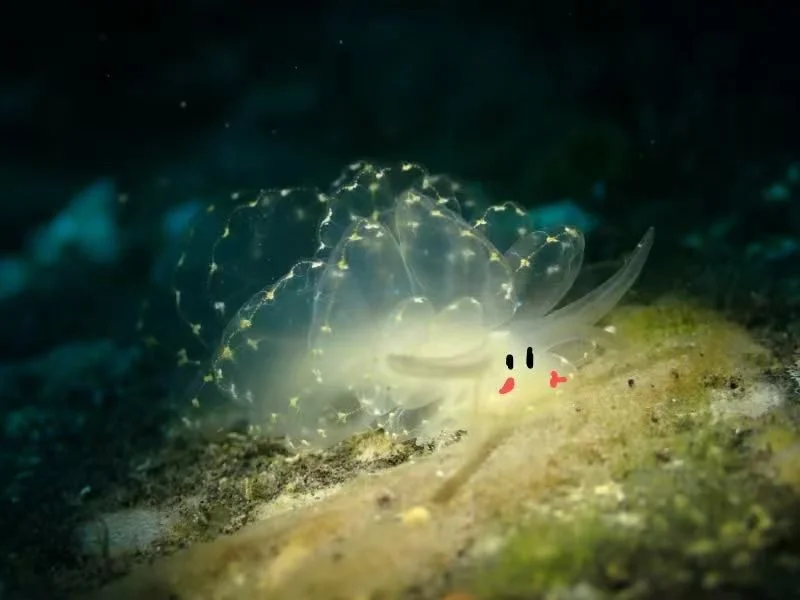
Tulamben(Bali)
Tulamben sits on Bali’s northeast coast and is best known for the USAT Liberty shipwreck – a 125‑metre cargo ship torpedoed in WWII that now lies just a short swim from shore. Warm water, mild currents and straightforward shore entries make diving here relaxed for all levels. Besides the wreck, divers can explore coral gardens, black‑sand muck sites and dramatic drop‑offs. Macro lovers will find nudibranchs, ghost pipefish, mimic octopus and pygmy seahorses, while big‑fish fans can encounter schooling jackfish, bumphead parrotfish and reef sharks. With a compact coastline packed with variety, Tulamben delivers world‑class wreck and critter diving without long boat rides.
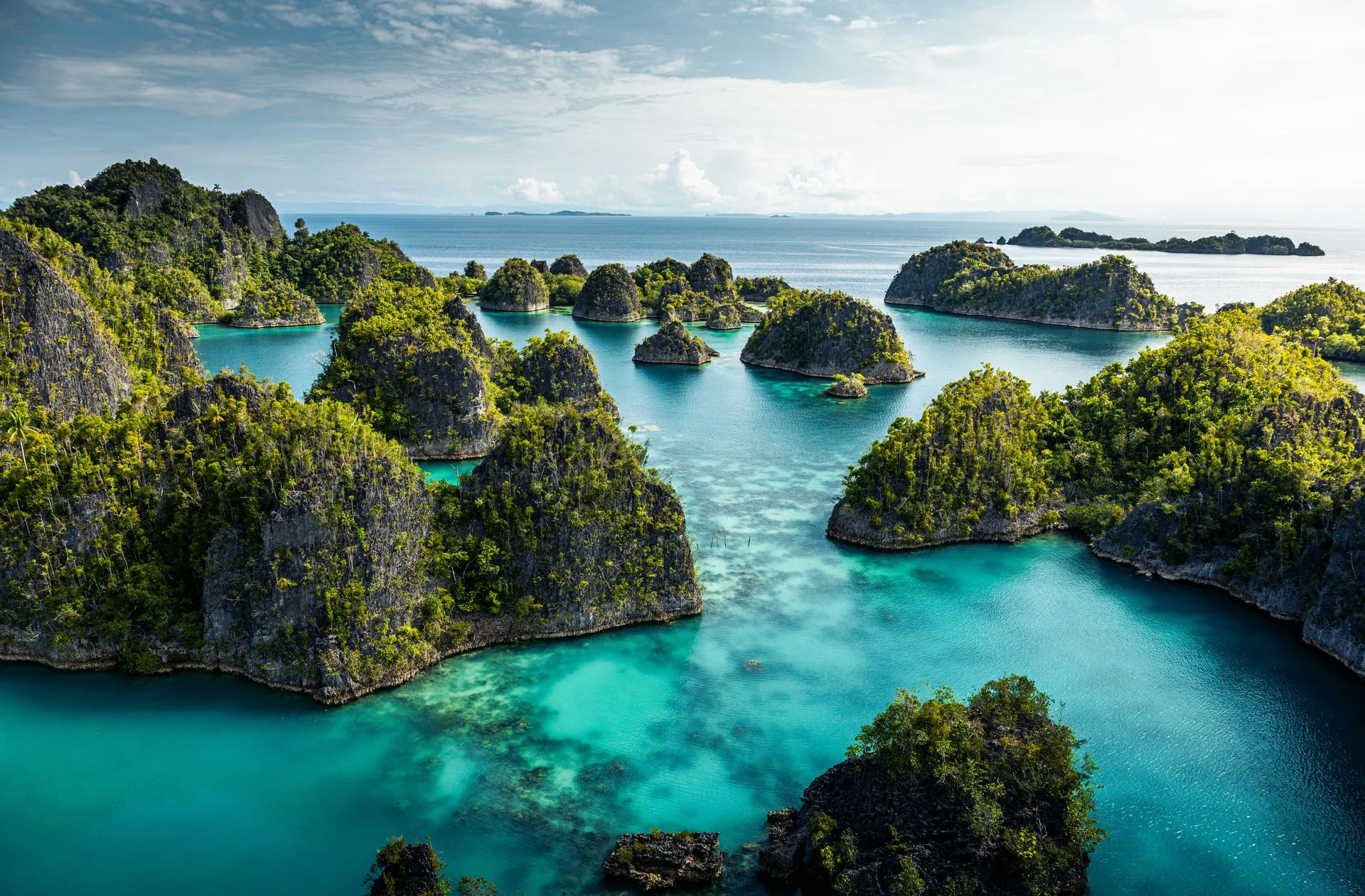
Raja Ampat
Raja Ampat, the “Four Kings,” is an archipelago of more than 1,500 islands at the edge of Indonesian West Papua. Its reefs sit in the heart of the Coral Triangle, where Pacific currents funnel nutrients into shallow seas and feed the world’s richest marine biodiversity. Diving here means gliding over colourful walls and coral gardens buzzing with more than 550 species of hard and soft corals and an estimated 1,500 fish species. You’ll meet blacktip and whitetip reef sharks on almost every dive, witness giant trevally and dogtooth tuna hunting schools of fusiliers, and encounter wobbegong “carpet” sharks, turtles, manta rays and dolphins. From cape pinnacles swarming with life to calm bays rich in macro critters, Raja Ampat offers endless variety. Above water, karst limestone islands and emerald lagoons provide spectacular scenery between dives.
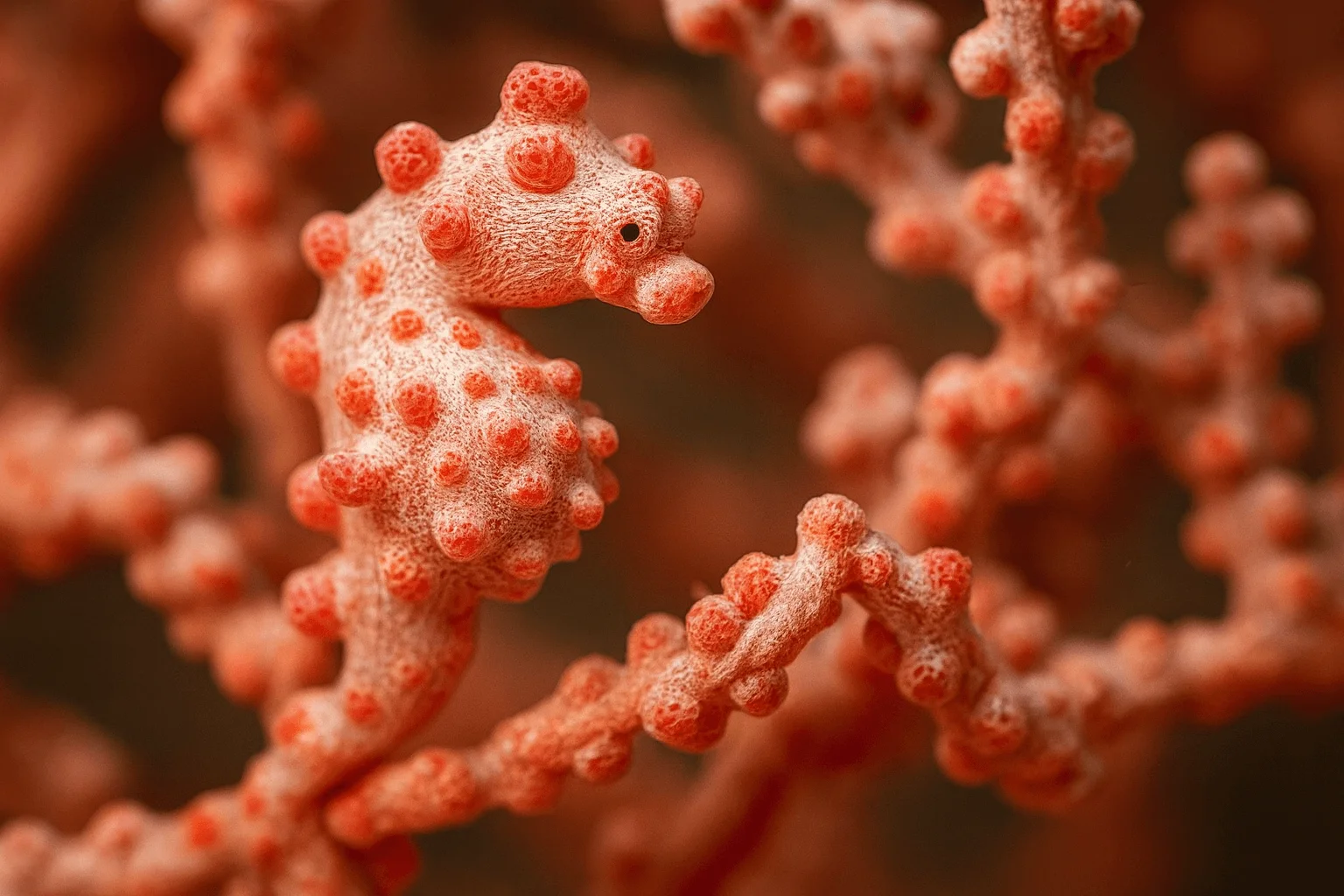
Anilao
Anilao, a small barangay in Batangas province just two hours south of Manila, is often called the macro capital of the Philippines. More than 50 dive sites fringe the coast and nearby islands, offering an intoxicating mix of coral‑covered pinnacles, muck slopes and blackwater encounters. Critter enthusiasts come for the legendary muck dives at Secret Bay and Anilao Pier, where mimic octopuses, blue‑ringed octopuses, wonderpus, seahorses, ghost pipefish, frogfish and dozens of nudibranch species lurk in the silt. Shallow reefs like Twin Rocks and Cathedral are covered in soft corals and teem with reef fish, while deeper sites such as Ligpo Island feature gorgonian‑covered walls and occasional drift. Because Anilao is so close to Manila and open year‑round, it’s the easiest place in the Philippines to squeeze in a quick diving getaway.
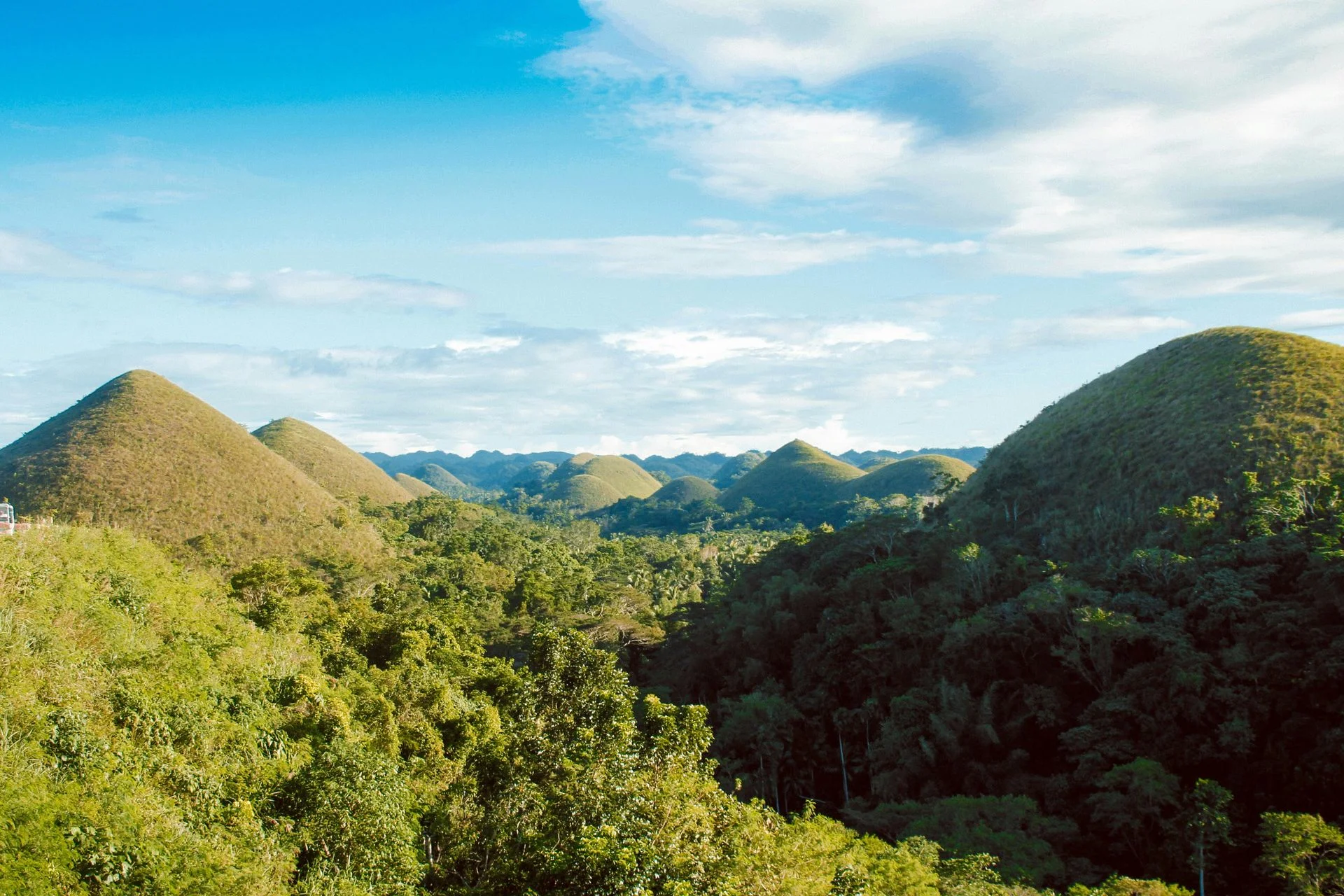
Bohol
Bohol, an island province in the central Visayas of the Philippines, is a diver’s playground with a huge variety of sites. The main hub is Panglao Island, where Alona Beach serves as the launch point for local reef dives and day trips. Nearby Balicasag Island is world‑class: its 5‑ to 18‑m plateau drops into walls where clouds of jackfish and sardines swirl and sleepy green and hawksbill turtles munch on soft corals. To the west, Cabilao’s reefs hide hammerhead sharks and pygmy seahorses, while the remote east coast of Anda offers muck dives, turtle nurseries and even mantas and whale sharks. Other favorites include Napaling’s year‑round sardine balls, Pamilacan’s manta and shark‑filled walls and Cervera (Snake Island) with its resident sea snakes. Whether you love colourful coral gardens, deep walls, big pelagics or tiny critters, Bohol has something for every diver.
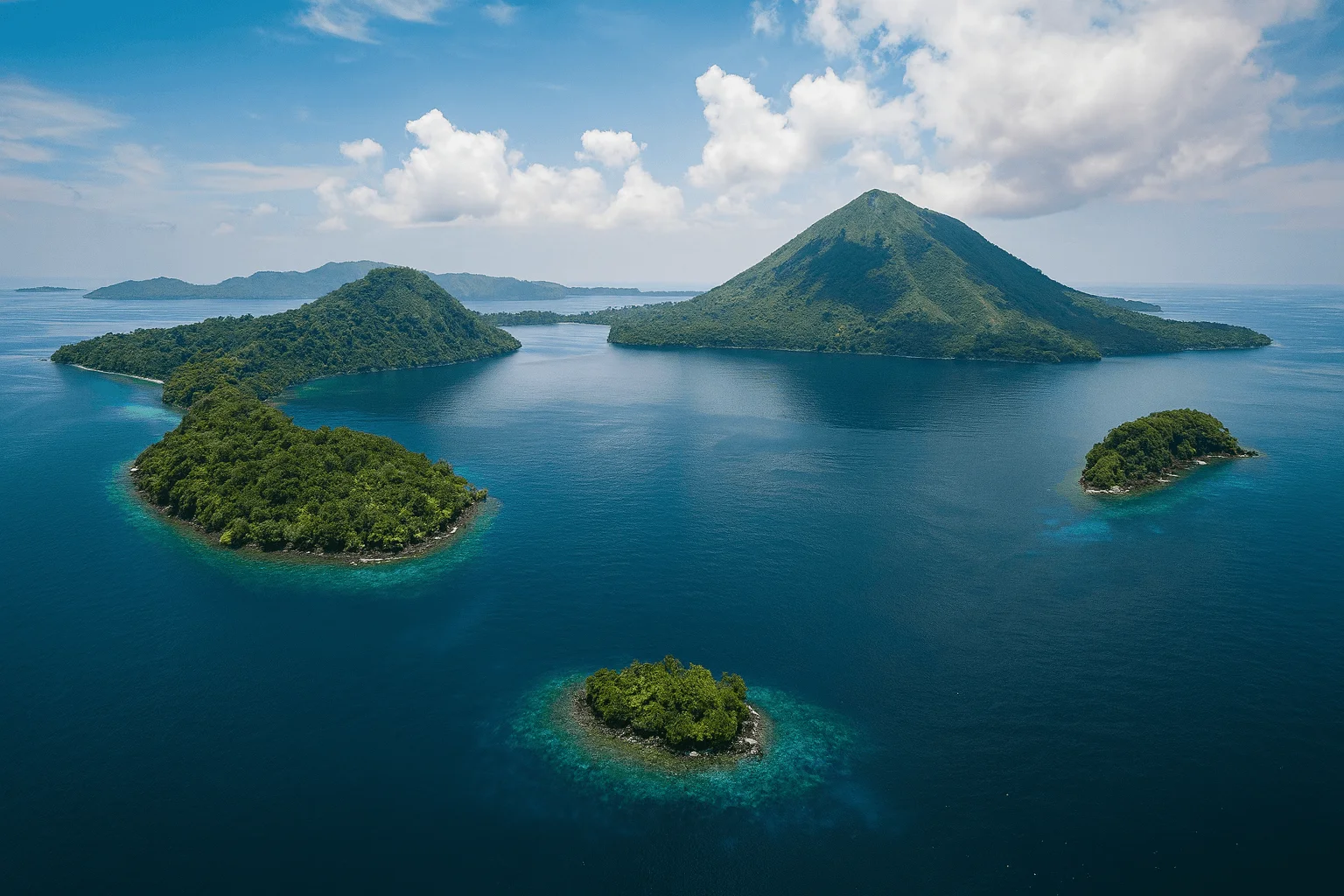
Banda Sea
Hidden between Indonesia’s Maluku Islands lies the Banda Sea – an untouched stretch of ocean famous for its schools of hammerhead sharks and abundant sea snakes. Part of the Coral Triangle, this remote sea spans over half a million square kilometres and plunges to depths beyond 7 km. Cold, nutrient‑rich upwellings feed pristine reefs bursting with life: imagine gliding along steep walls encrusted with giant gorgonians while dogtooth tuna, thresher sharks and squadrons of mobula rays cruise past. Volcanic islands such as Manuk and Gunung Api rise from the blue, their warm vents attracting banded sea kraits by the dozen and drawing divers from all over the world. Because there are no large towns here, the Banda Sea is usually explored on liveaboards – the reward is some of Indonesia’s wildest and most exhilarating diving.
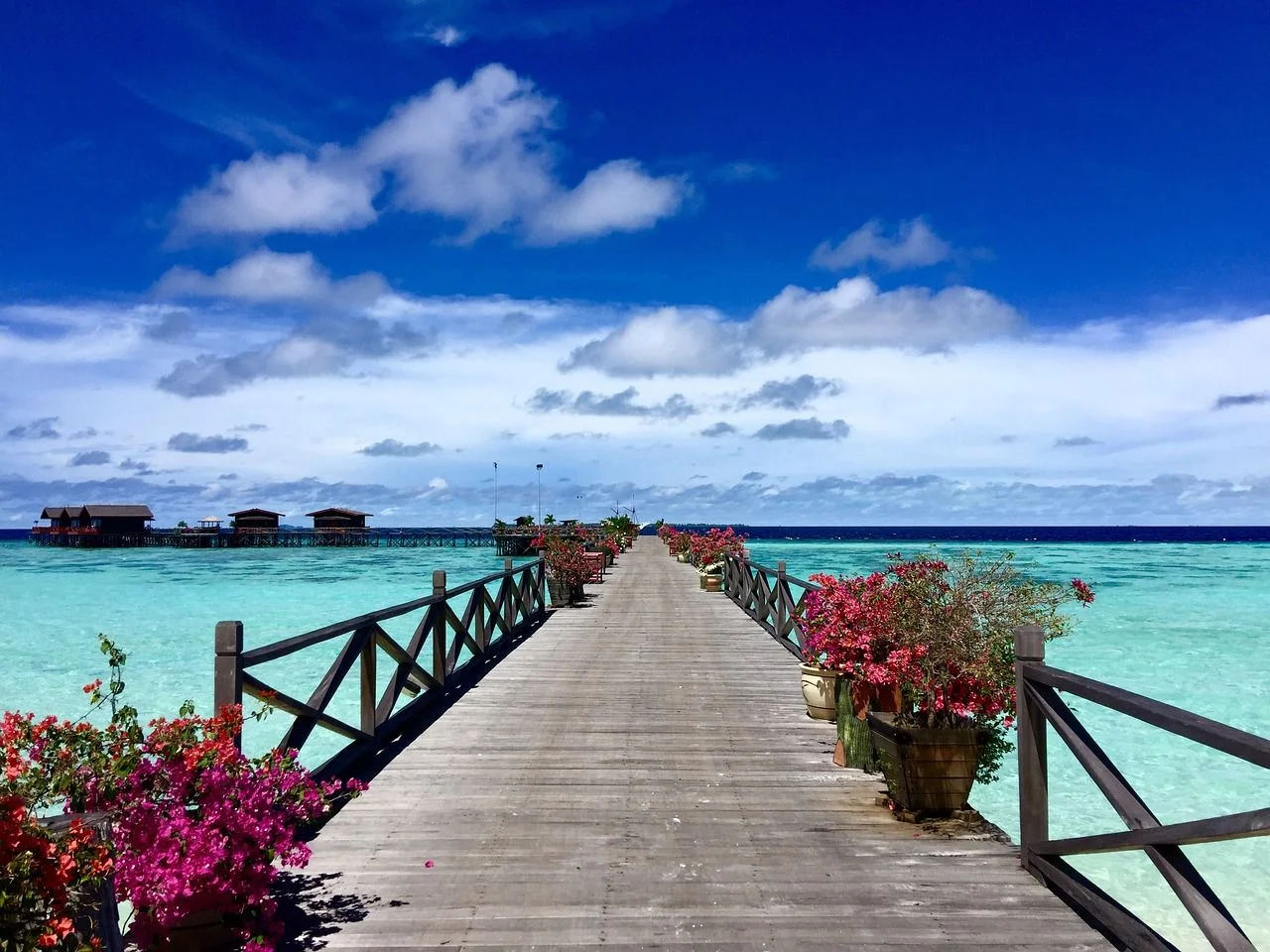
Sipadan & Semporna
Sipadan Island off the coast of Sabah is Malaysia’s crown jewel of diving – a steep limestone pinnacle rising more than 600 metres from the sea floor and teeming with pelagic life. Currents sweep past vertical walls encrusted in hard and soft corals, bringing in barracudas, jacks, reef sharks and bumphead parrotfish in breathtaking numbers. Nearby Mabul and Kapalai offer an entirely different experience on shallow sand‑slope reefs and artificial structures, where flamboyant cuttlefish, frogfish, mandarin fish and other macro critters hide among sponges and tyres. With limited daily permits, a visit to Sipadan is a privilege; most divers base themselves in the frontier town of Semporna or at water‑bungalow resorts on Mabul and Kapalai and make day trips into the park.
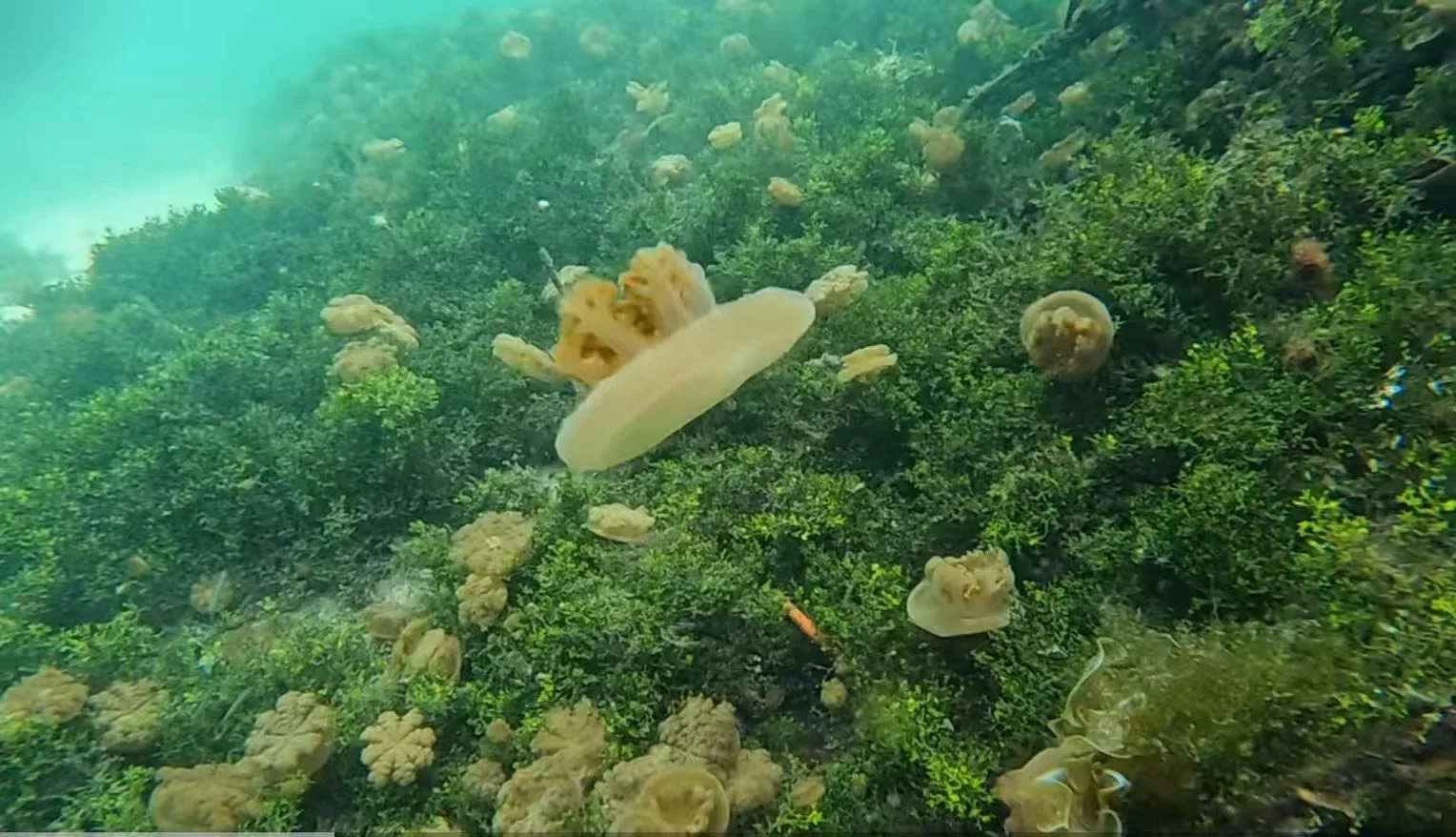
Maratua(Derawan)
Maratua Atoll, part of the remote Derawan Archipelago off East Kalimantan, offers thrilling big‑fish dives and rich reefs fed by nutrient‑charged currents. From swirling barracuda tornadoes and reef sharks at the world‑famous Big Fish Country to turtle cleaning stations and macro‑rich jetties, the island’s more than 20 sites deliver everything from ripping drift dives to gentle coral gardens. Expect encounters with green and hawksbill turtles, schooling snapper and jackfish, manta and eagle rays, nurse and reef sharks and even occasional hammerheads. The underwater topography is just as varied—vertical walls, coral pinnacles, sand channels and lush lagoon reefs mean you can pack your logbook with completely different experiences each day. Because Maratua sits far from major tourist hubs, you’ll often have the reef to yourself.