
Oceanic Manta Ray
Mobula birostris
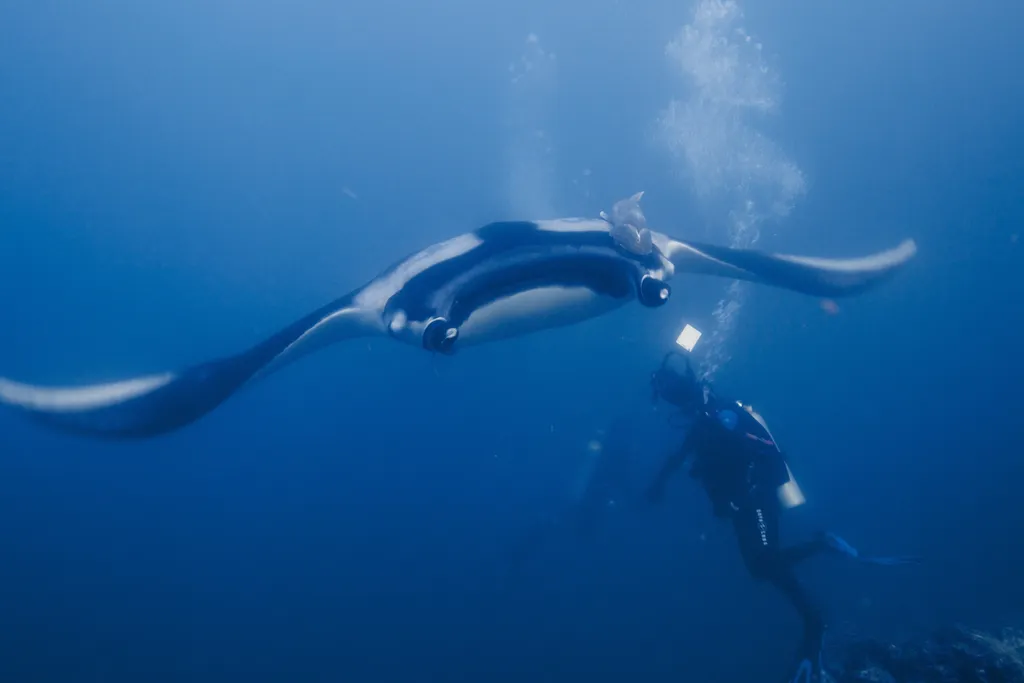
Photo by Elias Levy / CC BY 2.0 via Wikimedia Commons
The Oceanic Manta Ray is the largest ray on Earth—a pelagic filter feeder that can span seven meters wingtip to wingtip and still move with uncanny grace. Unlike its reef-dwelling cousin Mobula alfredi, this species roams the open ocean, diving hundreds of meters to chase zooplankton and only occasionally visiting shallow cleaning stations where divers get their best shots. Encounters feel less like spotting a fish and more like watching a silent aircraft bank through blue water: cephalic fins unfurled, mouth agape, belly spots flashing like a barcode as it passes overhead.
🔬Classification
📏Physical Features
🌊Habitat Info
⚠️Safety & Conservation
Identification Guide
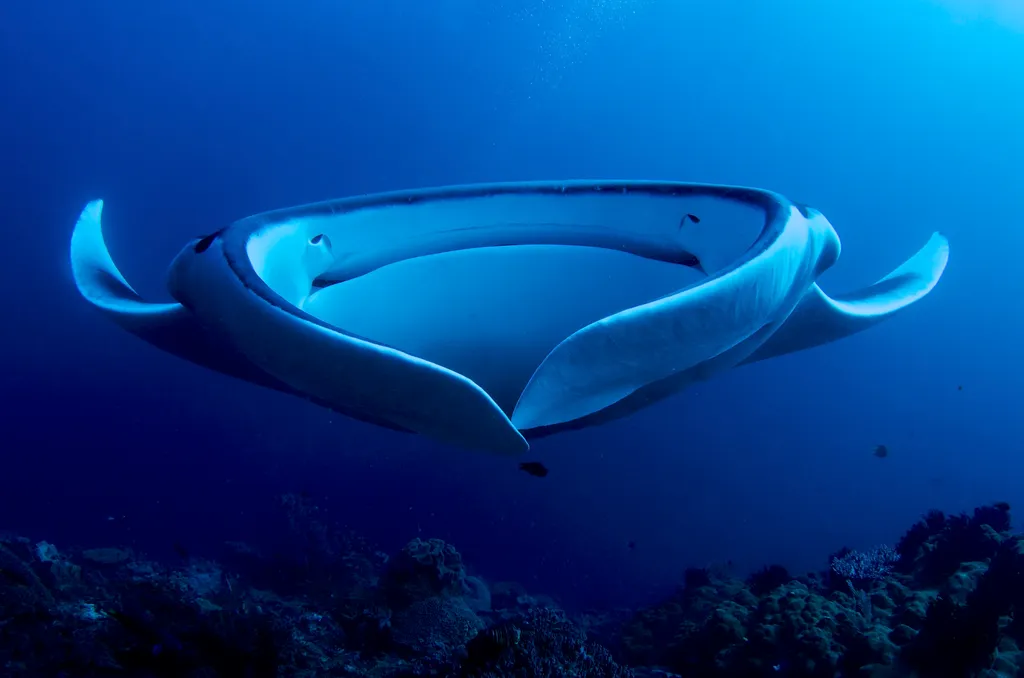
Photo by Arturo de Frias Marques / CC BY-SA 4.0 via Wikimedia Commons
Field marks:
- Wingspan: Typically 4–5 m disc width; oceanic mantas are generally larger than reef mantas.
- Cephalic fins: Two forward-projecting "horns" that can be rolled or flared while feeding.
- Belly spots: Unique ventral spot pattern—use for photo-ID (Manta Matcher, local databases).
- Caudal thorn: A small knob at the base of the tail (present in oceanic, absent in reef manta).
- Mouth: Terminal, wide, rectangular; gill slits on the underside.
Differences from Reef Manta (Mobula alfredi)
- Reef mantas are smaller (typical ~3–3.5 m), lack the caudal thorn, and spend far more time at cleaning stations.
- Oceanic mantas have a rougher skin texture and are more often seen in blue water away from reefs.
- At a glance, size and habitat context help; belly spots alone do not separate species—genetics and morphology do.
Chevron vs. Black Morph
Most individuals are chevron type (dark back, white belly with dark shoulder patches). Melanistic "black" morphs are almost entirely dark on both sides and are memorable when you see one.
Top 10 Fun Facts about Oceanic Manta Ray
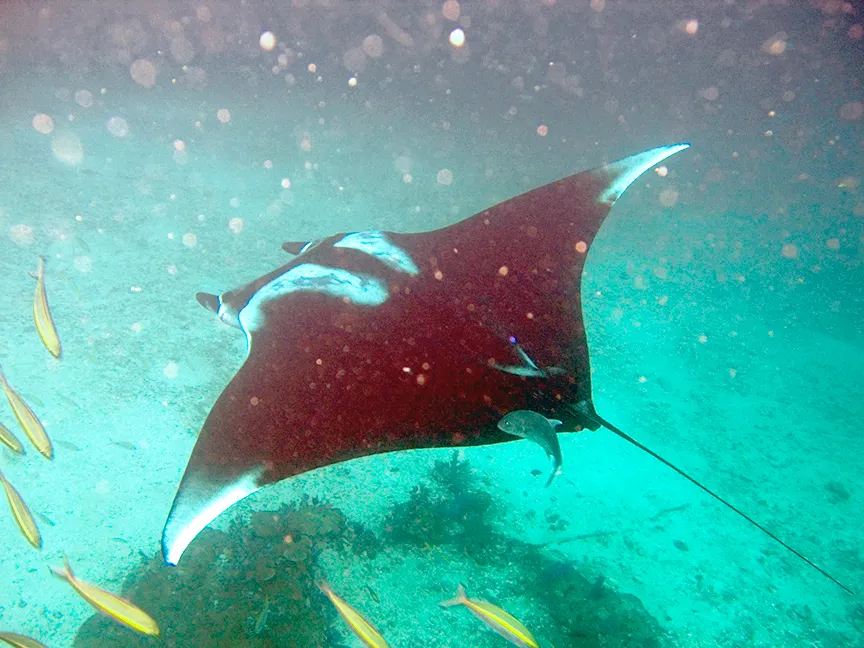
Photo by jon hanson from london / CC BY-SA 2.0 via Wikimedia Commons
1. Largest Ray Alive
With a confirmed disc width approaching seven meters and weights over two tonnes, the oceanic manta is the biggest ray species. A single slow wingbeat can move more water than a diver kicks in a minute.
2. Two Species, One Old Name
Until genetic work in the 2000s, "manta ray" lumped reef and oceanic forms together. Mobula birostris was split from M. alfredi in 2009; both were later moved into Mobula alongside devil rays—making mantas literally giant cousins of mobulas.
3. Brainy for a Fish
Mantas have the largest brain-to-body ratio of any fish studied, with a well-developed cerebellum linked to coordination and learning. Individuals revisit the same cleaning stations across years—behavior that looks a lot like site memory.
4. Belly Barcodes
Ventral spot patterns are unique per individual, like fingerprints. Citizen-science projects (Manta Matcher, regional catalogs) let recreational divers contribute IDs from flank and belly shots with date and GPS.
5. Filter Feeding at Scale
They funnel plankton through modified gill rakers—"gill plates" tragically targeted in some fisheries for traditional-medicine markets despite zero proven efficacy. A feeding manta can process huge volumes of water per hour with its wide terminal mouth.
6. Vertical Commuters
Tagging shows routine dives to 200–450 m and records beyond 1,000 m. They may follow the deep scattering layer at night while aggregating in shallow water by day for cleaning and socializing—a classic diel migration pattern.
7. Slow Reproduction, High Stakes
Aplacental viviparity: one pup at a time, roughly every 2–5 years, born already a meter or more across. Populations cannot recover quickly from targeted fishing—hence the IUCN Endangered listing and CITES Appendix II trade controls.
8. Cephalic Fins Are Tools
The "horns" are actually modified pectoral-fin lobes. Rolled tight for efficient cruising; flared into a funnel to channel water and prey into the mouth. Watching the transition is one of the best macro-details on a wide-angle dive.
9. Cleaning Station Culture
At sites like German Channel (Palau), Hanifaru (Maldives), or Manta Point (Nusa Penida), mantas queue for wrasse and other cleaners. Etiquette matters: hover outside the station, don't chase, and let the ray choose its path.
10. Tourism vs. Gill-Plate Trade
Live manta tourism generates far more sustained local revenue than dead gill plates in many destinations—but boat strikes, reckless diver behavior, and unregulated fishing still pressure populations. Your operator choice and in-water conduct directly affect whether aggregations stay healthy.
Diving & Observation Notes
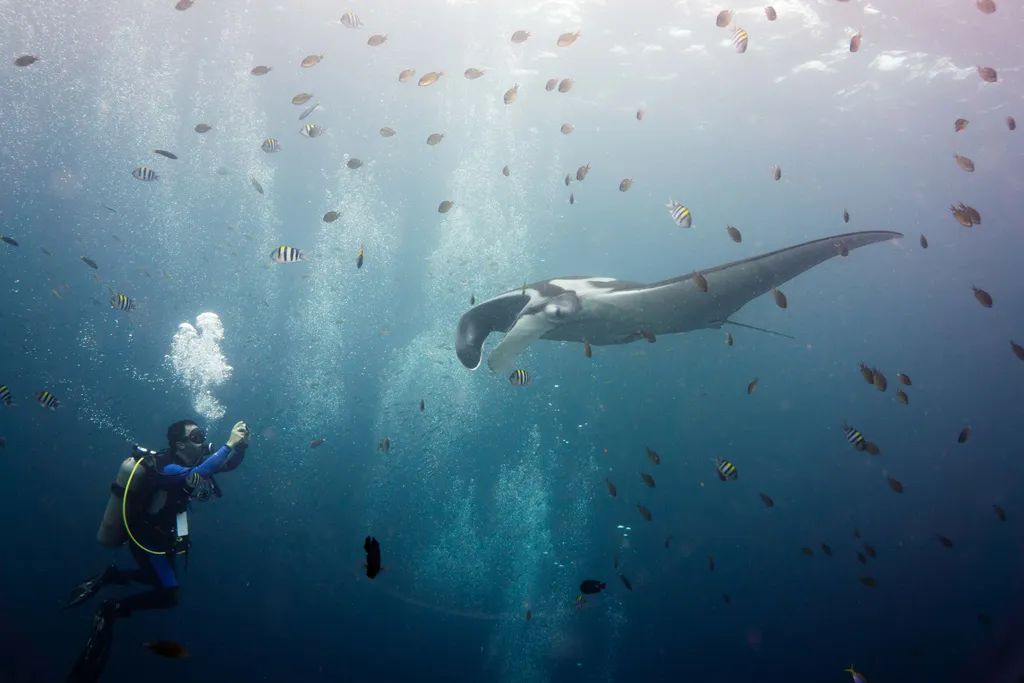
Photo by Daniel Sasse / CC BY-SA 4.0 via Wikimedia Commons
🧭 Finding Oceanic Mantas
Target cleaning stations on incoming tide when operators say mantas are active—German Channel, Hanifaru Bay, Manta Bay/Karang Makassar, Socorro cleaning rocks, Kona's lighted sand patch. Pelagic encounters also happen at seamounts and blue-water drifts (Galápagos, Mozambique) when upwellings concentrate plankton.
🤿 Approach & Behavior
- Never chase: Sprinting at a manta usually ends with it banking away. Position yourself on its likely path and stay still.
- Cleaning station etiquette: Stay low, avoid blocking the station, no touching cephalic fins or gills.
- Distance: Many codes suggest ~3 m; night Kona dives use kneeling lines—follow local briefing.
- Current: Mantas often face into flow at stations; plan your hook or finning so you are not fighting the same water.
📸 Photo Tips
- Belly shots for science: Ventral frame with spots in focus—huge value for ID databases.
- Wide angle mandatory: 15 mm fisheye or equivalent; mantas fill the frame fast.
- Ambient / video: Flash is often discouraged; continuous light on night dives (Kona) is the classic setup.
- Silhouette passes: Shoot upward as the ray blocks the sun for wingspan drama.
⚠️ Ethics
- Choose operators with no-touch policies and limited boat traffic at stations.
- Report gill-plate trade or entanglement to local authorities / Manta Trust where applicable.
- Reef mantas and oceanic mantas share sites—accurate photos help conservation datasets.
Best Places to Dive with Oceanic Manta Ray
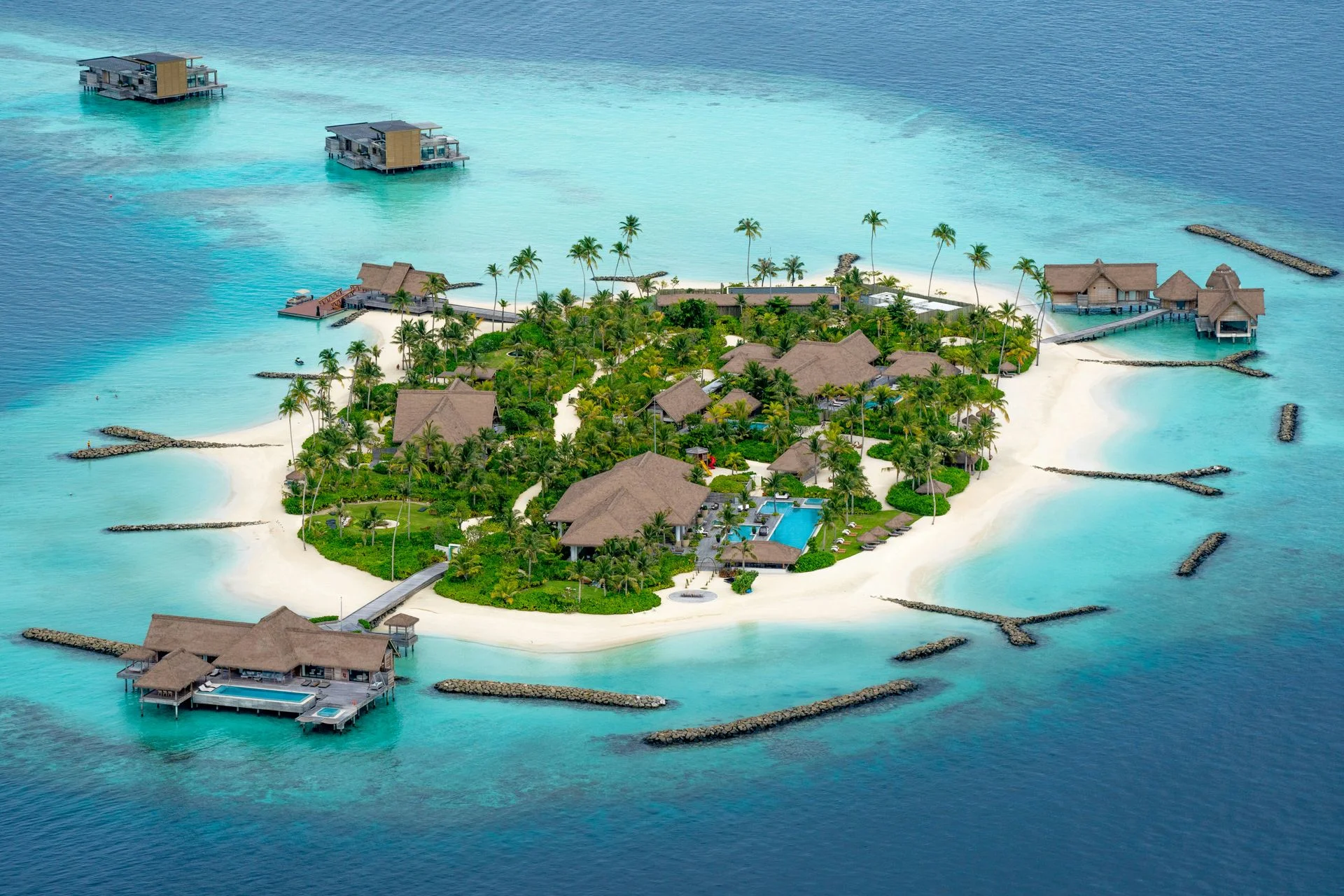
Maldives
Scattered across the Indian Ocean like strings of pearls, the Maldives’ 26 atolls encompass more than a thousand low‑lying islands, reefs and sandbanks. Beneath the turquoise surface are channels (kandus), pinnacles (thilas) and lagoons where powerful ocean currents sweep past colourful coral gardens. This nutrient‑rich flow attracts manta rays, whale sharks, reef sharks, schooling jacks, barracudas and every reef fish imaginable. Liveaboards and resort dive centres explore sites such as Okobe Thila and Kandooma Thila in the central atolls, manta cleaning stations in Baa and Ari, and shark‑filled channels like Fuvahmulah in the deep south. Diving here ranges from tranquil coral slopes to adrenalin‑fuelled drifts through current‑swept passes, making the Maldives a true pelagic playground.
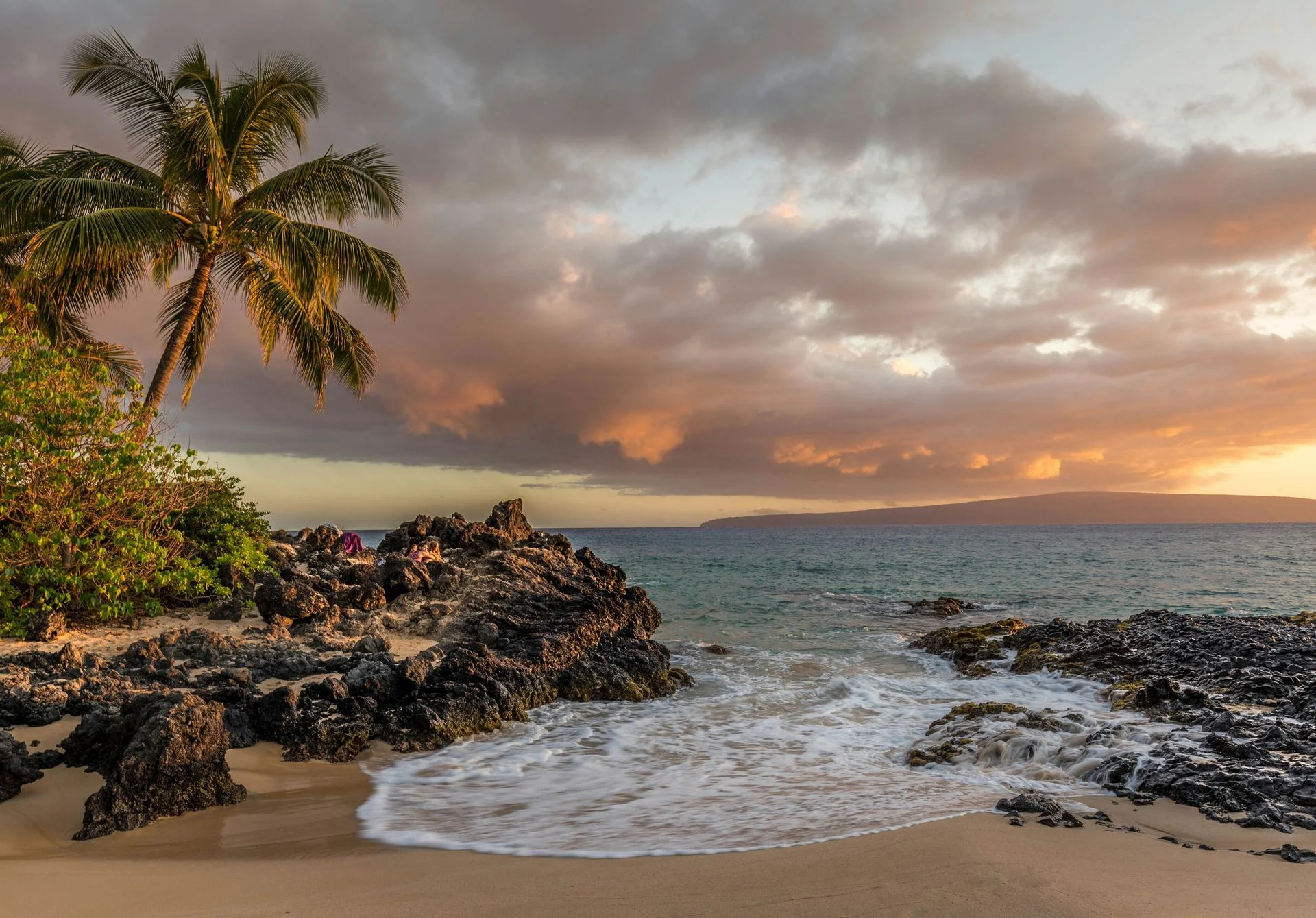
Hawaii
The Hawaiian Islands sit in the central Pacific and offer some of the United States’ most diverse diving. Each island has its own character: Oʻahu features WWII wrecks like the YO‑257 and Sea Tiger; Maui boasts the crescent‑shaped Molokini Crater and drift dives along Lānaʻi’s cathedral‑like caverns; the Big Island’s Kona coast is famed for lava tubes, black water pelagic dives and the world‑renowned manta‑ray night dive; Kauaʻi and Niʻihau offer lava arches, monk seals and dramatic drop‑offs. Water is warm year‑round and visibility regularly exceeds 25 m, making Hawaii ideal for both beginners and experienced divers. You’ll see green sea turtles, reef sharks, manta rays, dolphins and humpback whales in season, along with endemic fish found nowhere else on earth.
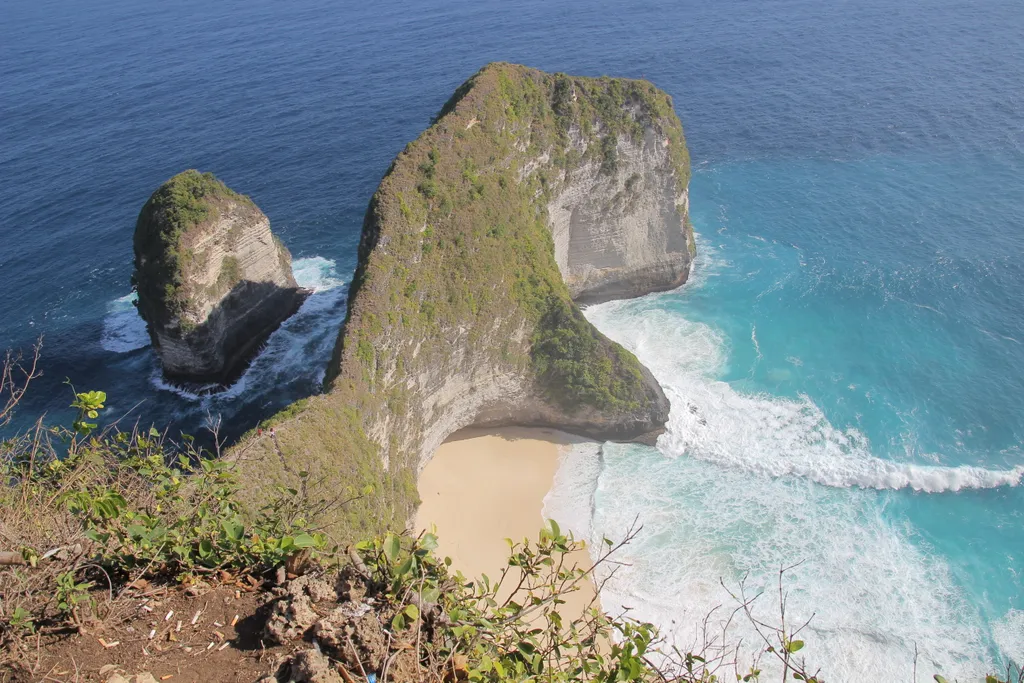
Nusa Penida
Nusa Penida is the big island in Bali's Nusa trio—and the one divers actually book a week for. The Lombok Strait funnels nutrient-rich water past sheer cliffs and deep channels, so even "easy" north-coast sites can turn into exhilarating drifts when the tide flips. South and west coasts deliver the headline acts: reef mantas at Manta Point and Manta Bay, and July–October ocean sunfish at Crystal Bay when cold thermoclines stack under 25 °C surface water. Most experienced divers base on Penida itself (Toyapakeh, Sampalan, or the north villages) rather than commuting from Sanur—early boats beat the swell, and you want slack-water windows for the south. The north-coast string—SD, PED, Sental, Buyuk—is where you rack up pretty reef drifts between manta days. Bring your AOW, respect the guides on current calls, and pack a thicker wetsuit for August thermoclines.
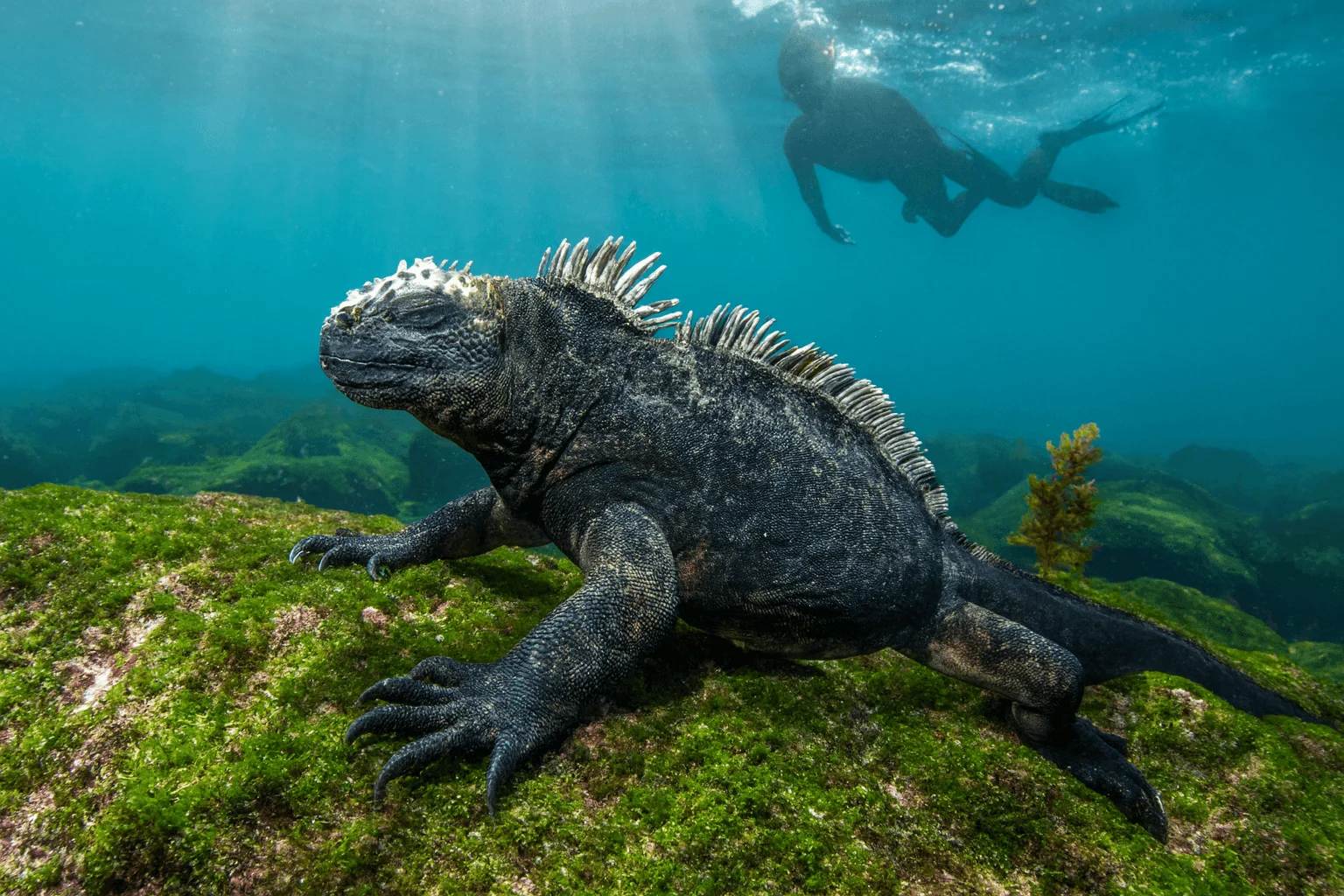
Galapagos
The Galápagos Islands sit 1 000 km off mainland Ecuador and are famous for their remarkable biodiversity both above and below the water. Created by volcanic hot spots and washed by the converging Humboldt, Panama and Cromwell currents, these remote islands offer some of the most exhilarating diving on the planet. Liveaboard trips venture north to Darwin and Wolf islands, where swirling schools of scalloped hammerheads and hundreds of silky and Galápagos sharks patrol the drop‑offs. Other sites host oceanic manta rays, whale sharks, dolphins, marine iguanas, penguins and playful sea lions. Strong currents, cool upwellings and surge mean the dives are challenging but incredibly rewarding. On land you can explore lava fields, giant tortoise sanctuaries and blue‑footed booby colonies.
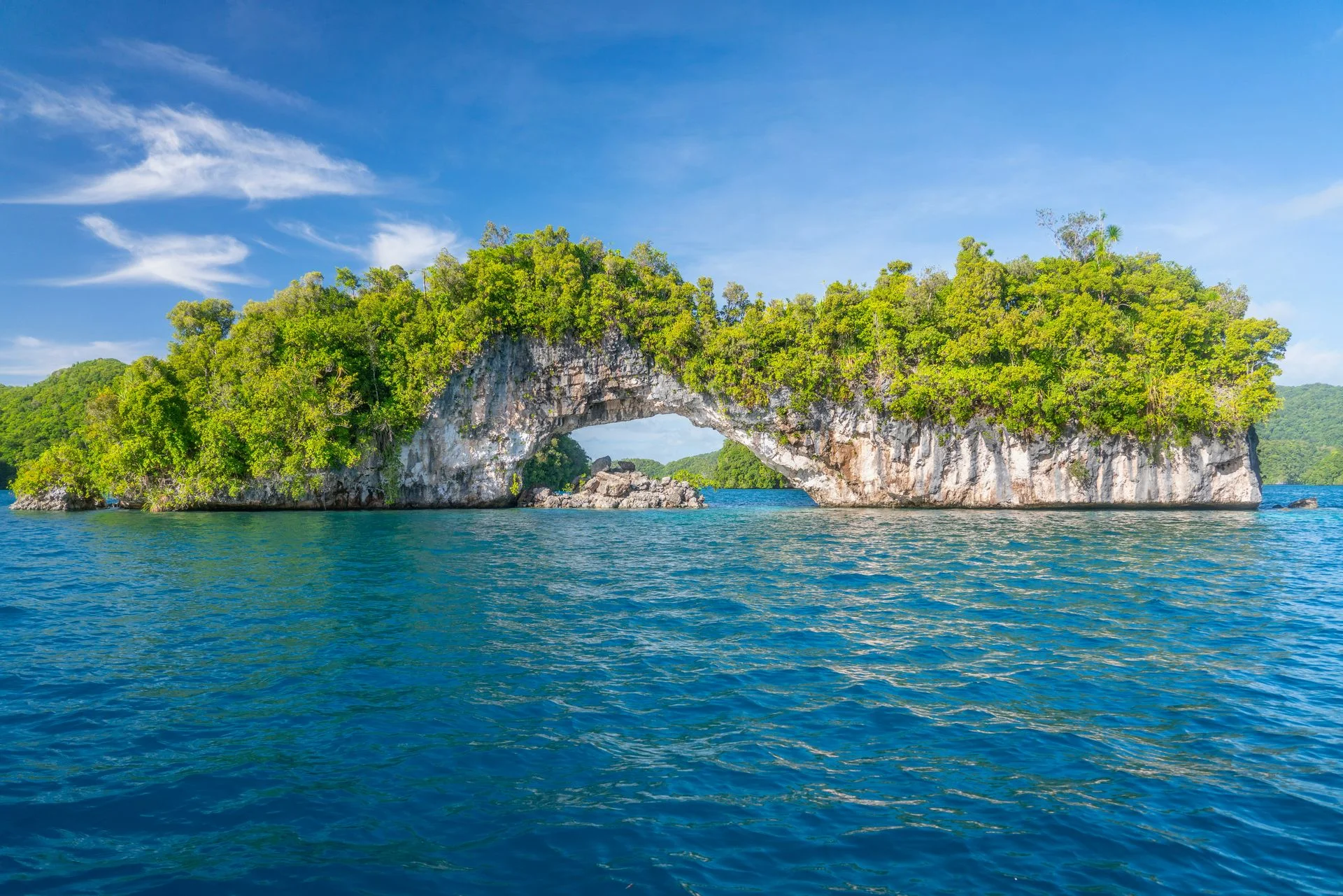
Palau
Rising out of the western Pacific at the meeting point of two great oceans, Palau is an archipelago of more than 500 jungle‑cloaked islands and limestone rock pinnacles. Its barrier reef and scattered outcrops create caverns, walls, tunnels and channels where nutrient‑rich currents sweep in from the Philippine Sea. These flows feed carpets of hard and soft corals and attract vast schools of jacks, barracudas and snappers, as well as an impressive cast of pelagics. Grey reef and whitetip sharks parade along the legendary Blue Corner; manta rays glide back and forth through German Channel’s cleaning stations; and Ulong Channel offers a thrill‑ride drift over giant clams and lettuce corals. Between dives you can snorkel among non‑stinging jellyfish in Jellyfish Lake or explore WWII ship and plane wrecks covered in colourful sponges.
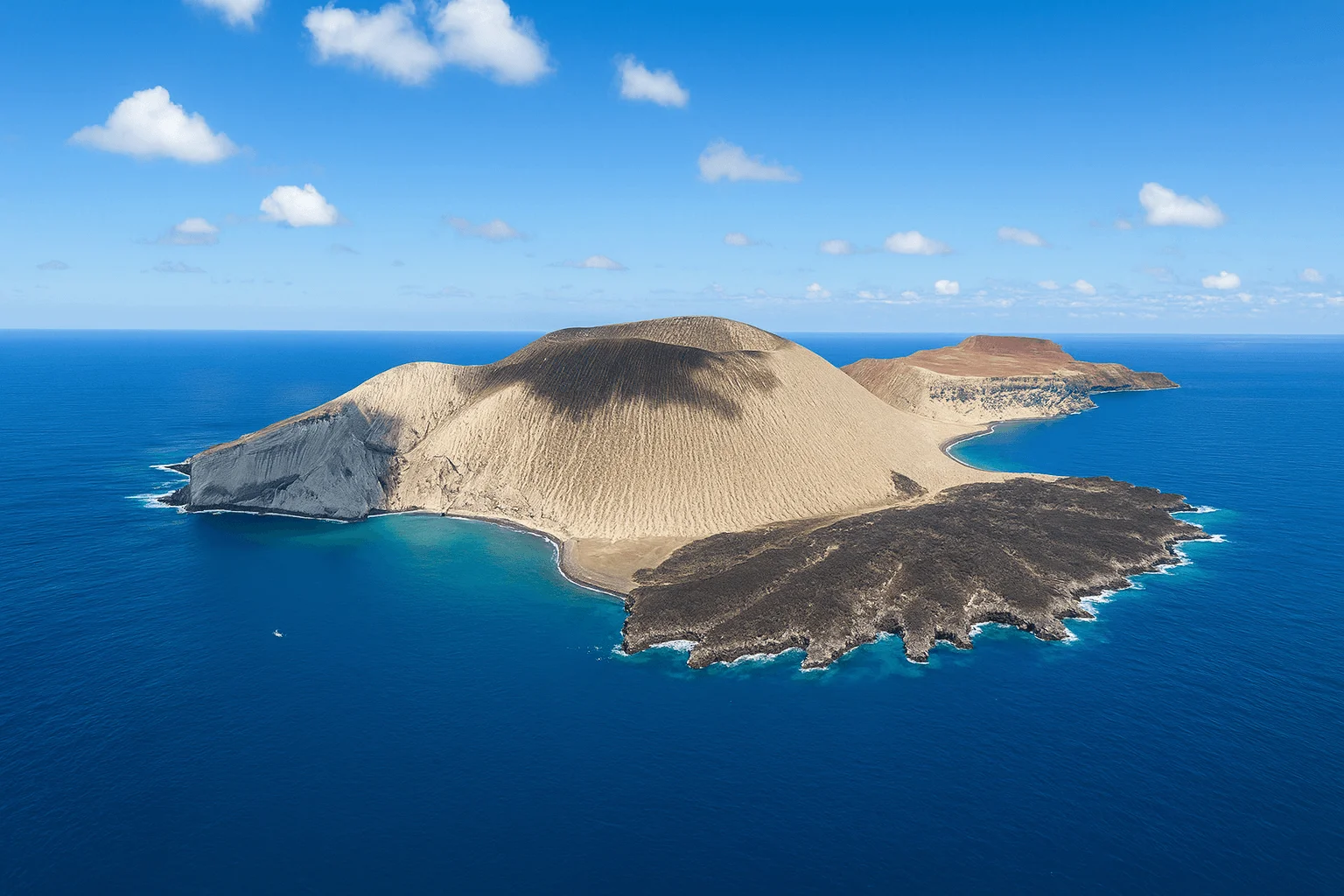
Socorro
The Revillagigedo Archipelago—better known simply as Socorro—is Mexico’s answer to the Galápagos. Located 400 km off the Baja California coast, this remote chain of volcanic islands (San Benedicto, Socorro, Roca Partida and Clarion) can only be reached by liveaboard. The reward for the 24‑hour crossing is a pelagic wonderland where giant Pacific manta rays circle close enough to touch, hammerhead sharks school in the blue, and humpback whales breach beside the boat. Rugged pinnacles and walls drop into deep blue water, attracting a myriad of large predators and making Socorro one of the world’s great big‑animal dive destinations.
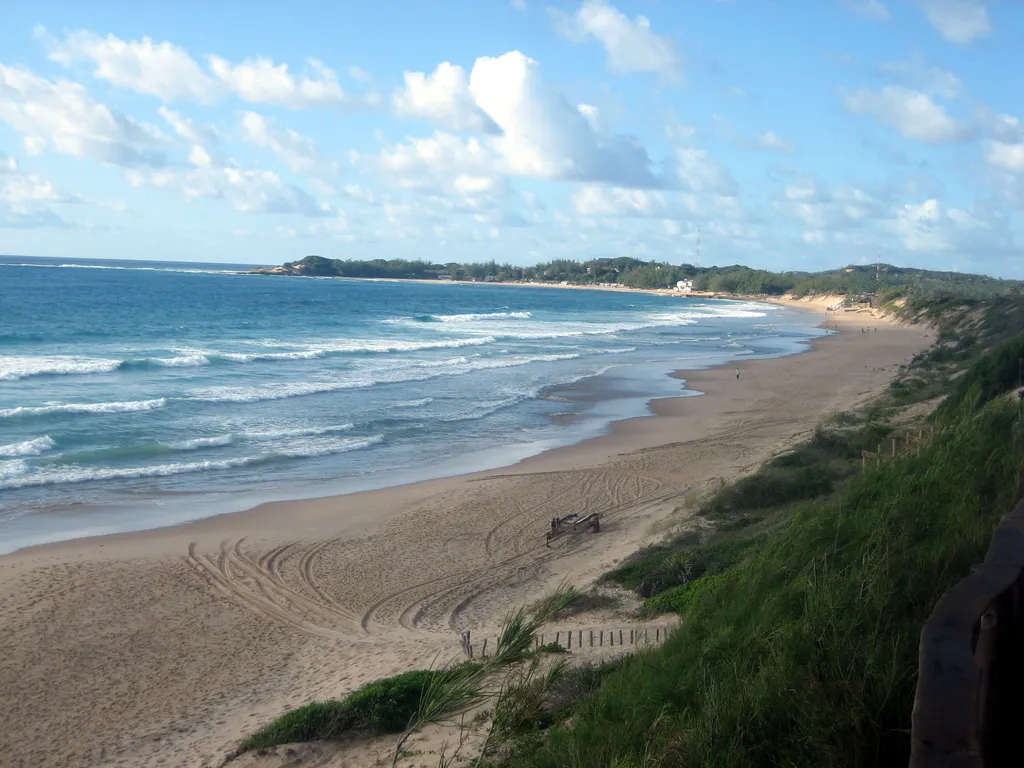
Tofo Beach
Tofo Beach sits on Mozambique's Indian Ocean coast, a dusty backpacker village that punches far above its weight for megafauna. The Mozambique Channel funnels plankton-rich water past Inhambane Bay, and the result is one of Africa's most reliable whale shark addresses — snorkel or dive alongside bus-sized filter feeders from October through March without the crowds of more famous aggregation sites. Manta rays clean at offshore reefs like Manta Reef, reef sharks patrol pinnacles at Giant's Castle, and from June to September humpback whales cruise the bay on their migration — operators run respectful surface encounters when conditions allow. Visibility swings wildly (5–30 m) with plankton blooms, but that's the trade-off for big-animal density. Dives launch from the beach on RIBs; most sites are 15–45 minutes out. The vibe is barefoot and cash-heavy — think dhow silhouettes at sunset, peri-peri prawns after a two-tank morning, and a dive community that still feels like a secret compared to the Red Sea or Maldives circuits.