
Engel's Melibe
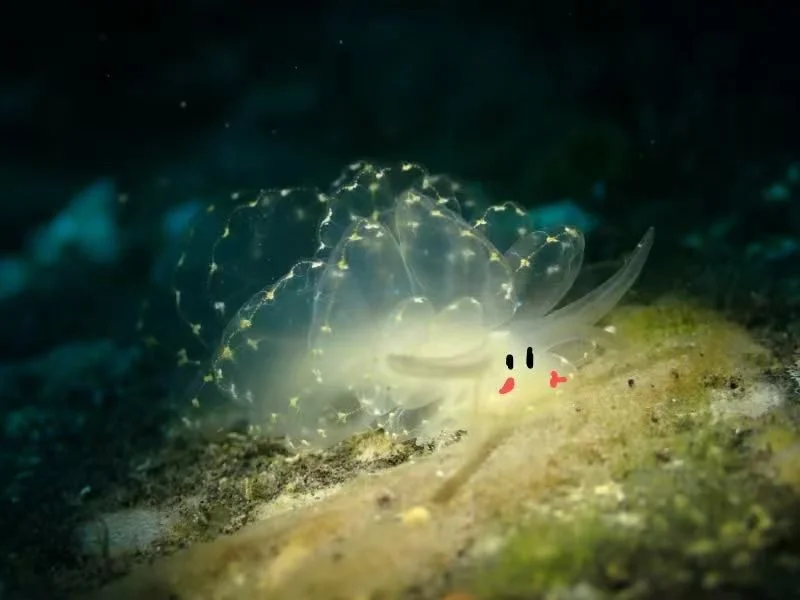
Melibe engeli
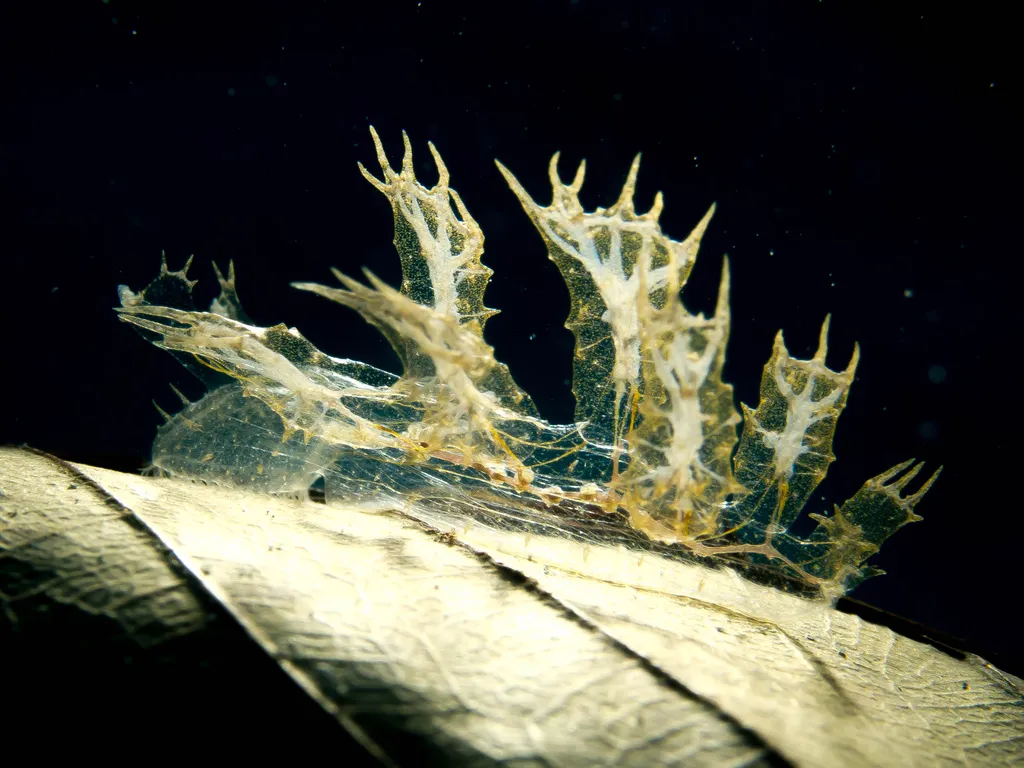
Photo by Rickard Zerpe / CC BY-SA 2.0 via Wikimedia Commons
Melibe engeli was named from New Caledonia in 1937; the next published records came only in 2003. Gosliner and Smith reported specimens from Maui and Batangas Province, and a photograph from southern Japan. They wrote that those animals did not differ markedly from Risbec's 1937 and 1953 accounts, and that the localities indicated a wide Indo-Pacific range. Later photographs from Okinawa, Romblon, Puerto Galera, Tulamben, and places beyond that paper lengthen the trail. Sites on a list are not a census.
The living slug is virtually transparent, with a slight greenish-yellow tint, organs and muscle fibers visible through the wall. Its oral hood is small for the body, usually with an entire margin, and fringed with long tapering papillae. Cerata, three to six a side, may be oval, saccate, pear-shaped, or elongate cylinders, smooth or warty, sometimes finished with a cockscomb of flat projections. They break off readily. The 2003 summary says about 30 mm; live measurements run from about 25 mm to 54 mm, and animals toward the top of that range have been seen with eggs.
Divers already call Melibe colemani the phantom: flattened cerata, a brown network like a pile of strings, described in 2012. Engel's animal is the older, smaller, more variable one. Ghost melibe is a nickname for both, and a poor one.
🔬Classification
📏Physical Features
🌊Habitat Info
⚠️Safety & Conservation
Identification Guide
Expect a small, glass-clear hooded slug whose cerata refuse a standard shape. The scientific name dates to New Caledonia in 1937. The ghost nickname does not.
How you meet it
Search seagrass, clumps of the brown alga Padina, Acanthophora, and the undersides of rocks, on bottoms that mix sand, grass, and hard ground. Rudman's Koumac animals were crawling on a seagrass blade in that kind of place. The only depths written down beside animals in these sources are 10.0 m and 11.0 m, which is a pair of readings, not a published range. Crawling is the meeting. A swim by lateral bending is on record and is the wrong search image.
Decisive marks
The body is limaciform, somewhat compressed along the front sides, and tapers to a narrow rounded tail. Living tissue stays virtually transparent, faintly greenish yellow, so organs and muscle fibers remain visible; fine white dots or tubercles concentrate on the conical papillae. The oral hood is small and usually entire along the rim, with inner and outer rows of long tapering conical papillae, tips recurved, most often set opposite each other, each with a visible axial fiber. Two to four small conical papillae sit just above the front edge of the narrow foot. Rhinophore sheaths carry a posterior cockscomb of three to five papillae and can outline like another ceras, so they are easy to add to the ceras count by mistake. Cerata run three to six a side and may be oval, saccate, pear-shaped, or elongate cylinders, smooth or low and warty, sometimes lobed, sometimes tipped with flattened projections.
Mix-ups
Melibe colemani is the animal this site already treats as the phantom. It was described in 2012, with laterally flattened cerata and a translucent body shot through with a brown tubule network compared to a pile of strings or debris. That description sets those flat cerata against cylindrical cerata in M. bucephala and M. engeli. On engeli the cerata are highly variable, so a neat cylinder is one outcome, not a rule you can take to the reef. Ghost melibe is used for both species. Pre-2003 photo names need the same caution: Rudman wrote, before the revision, that the species had not been re-examined since Risbec.
A second look
Missing or half-size cerata fit the animal. They autotomize readily, and regenerating ones are common. Use the hood fringe, the small papillae over the front of the foot, and the rhinophore cockscomb before you lean on ceras outline. A preserved specimen goes white to pale yellow and stops being the slug you saw. Live lengths from about 25 mm through the mid-50s still sit inside published measurements, including animals that were laying eggs.
Top 10 Fun Facts about Engel's Melibe
The epithet has no biography attached
Melibe engeli Risbec, 1937, is the accepted name (WoRMS AphiaID 593362), a nudibranch in the family Tethydidae. The type locality is New Caledonia, from Risbec's papers in the Bulletin du Muséum National d'Histoire Naturelle (1937, series 2, volume 9, pages 159–164) and again in 1953. Engeli is a patronym. The sources do not say who Engel was.
Print resumed with three widely spaced records
Gosliner and Smith, Proceedings of the California Academy of Sciences (2003, series 4, volume 54, pages 302–355), gave the first published records since the original description: specimens from Hawaiʻi (Maui) and the Philippines (Batangas Province), plus a photograph from southern Japan. They wrote that the animals did not differ markedly from Risbec 1937 and 1953, and that the finds indicated a wide Indo-Pacific distribution. External anatomy here follows that 2003 description as reproduced by SEASLUG.WORLD.
Alive, the body is a window
A slight greenish-yellow tint is the living color. Internal organs and muscle fibers show through the body wall, and fine white dots or tubercles speckle the skin, denser on the papillae. Preserved animals turn white to pale yellow, which is a jar color, not a dive color.
Three to six cerata, and then the agreement ends
Shape runs through oval, saccate, pyriform, and elongate cylindrical. The surface may be smooth or low-tuberculate, warty, or lobed, and some cerata carry flattened distal projections in a cockscomb. They autotomize readily, so a ragged or regrowing row is ordinary. The cylinder used in comparisons with other Melibe species is one of these forms.
Crabs and shrimps, taken with the hood
Melibe has no radula and catches small crustaceans by throwing the oral hood. Rudman, on the Sea Slug Forum in 2000, wrote that the sensory papillae trigger a rapid close and the prey is worked back to the mouth. He also wrote that prey may stay alive in the gut until digestive juices kill it. That last point is his genus-level account on the engeli factsheet, not a dissected count for this species. New Caledonia animals he called M. engeli took crabs and shrimps in aquaria. He noted then, before the revision, that the species had not been re-examined since Risbec.
Lateral flexion, filed under occasional
Those same New Caledonia animals, Rudman wrote, can swim by bending the body from side to side. Two photographs on SEASLUG.WORLD are tagged as swimming. The posture to brief is crawling.
Egg-layers measured past the summary length
At Koumac, New Caledonia, on 22 October 1993, Rudman measured many live animals at 43–54 mm, crawling on a seagrass blade with an egg mass. Risbec's length, as Rudman relayed it, was 50 mm. An Okinawa photograph from Motobu on 11 April 2015 is tagged 50 mm at 10.0 m and 22°C; one from Chatan on 5 June 2026 is 25 mm at 11.0 m and 24°C. Eggs at the larger sizes mean those animals are not automatically juveniles of a bigger Melibe. The "about 30 mm" line is the revision's summary.
Colemani took the phantom
Pola and Gosliner described Melibe colemani in 2012, long after Engel's species. The contrast drawn there is flattened cerata and a brown tubule network, set against cylindrical cerata in M. bucephala and M. engeli. Engel's species remains the older and, in the 2003 account, the more variable animal. Sharing the nickname ghost melibe does not identify either one.
A Japanese common name showed up in 2004
Atsushi Ono's 2004 book on Okinawa sea slugs coined マツゲメリベウミウシ. Beside a description from 1937, that vernacular name is recent.
The clade marks are mostly under the skin
Inside: no radula, a pair of denticulate chitinous jaws, a posterior stomach with 15–22 triangular chitinous plates alternating large and small, thickened at eccentric tips, and nine simple spherical ovotestis follicles. The 2003 phylogeny puts M. engeli as sister to the clade of M. digitata plus M. tuberculata. Traits listed in common include papillae just above the front of the foot, oral-hood papillae of equal length, and a digestive gland that branches only inside the cerata. Jaws and stomach plates will not show through a mask.
Diving & Observation Notes
Finding
Work seagrass blades, Padina, Acanthophora, and the undersides of rocks where soft bottom and hard bottom meet. Records behind this page include Hawaiʻi (Maui in the 2003 paper), Anilao for the Batangas coast — the paper says Batangas Province, not the town — plus Okinawa, Tulamben, Romblon, and Puerto Galera. Galleries run wider than that 2003 set. None of these places is a guaranteed animal. The only depths attached to specific records here are about 10 m and 11 m. A preferred band has not been published.
Approach
The fringe often reads before the body does. Move in until the hood papillae and the white dots separate from debris, and stay off the blade or clump the slug is on. If it leaves the substrate by lateral flexion, that matches a described swim, including animals Rudman identified before the revision. Let it go. Chasing is how a clear, readily autotomizing slug becomes a missed shot and a damaged one.
Photography and observation
The useful frame keeps the hood and several cerata, including odd, warty, broken, or regenerating ones. That variation is the species, not a defect to wait out. Organs and muscle fibers through the wall are the other half of the picture; a silhouette that blanks the interior throws away the best mark. No exposure recipe will fix a slug this transparent. What matters is that the body still reads as a body.
Ethics
Do not handle it. Cerata detach, and that is the harm these sources actually describe. No human envenomation is reported in them, and that is not a medical clearance to poke. There is no IUCN assessment; the status to use is Not Evaluated. If a rock comes up for a look, put it back as it lay. Padina and seagrass are the habitat, not props to shift for a cleaner background.
Best Places to Dive with Engel's Melibe
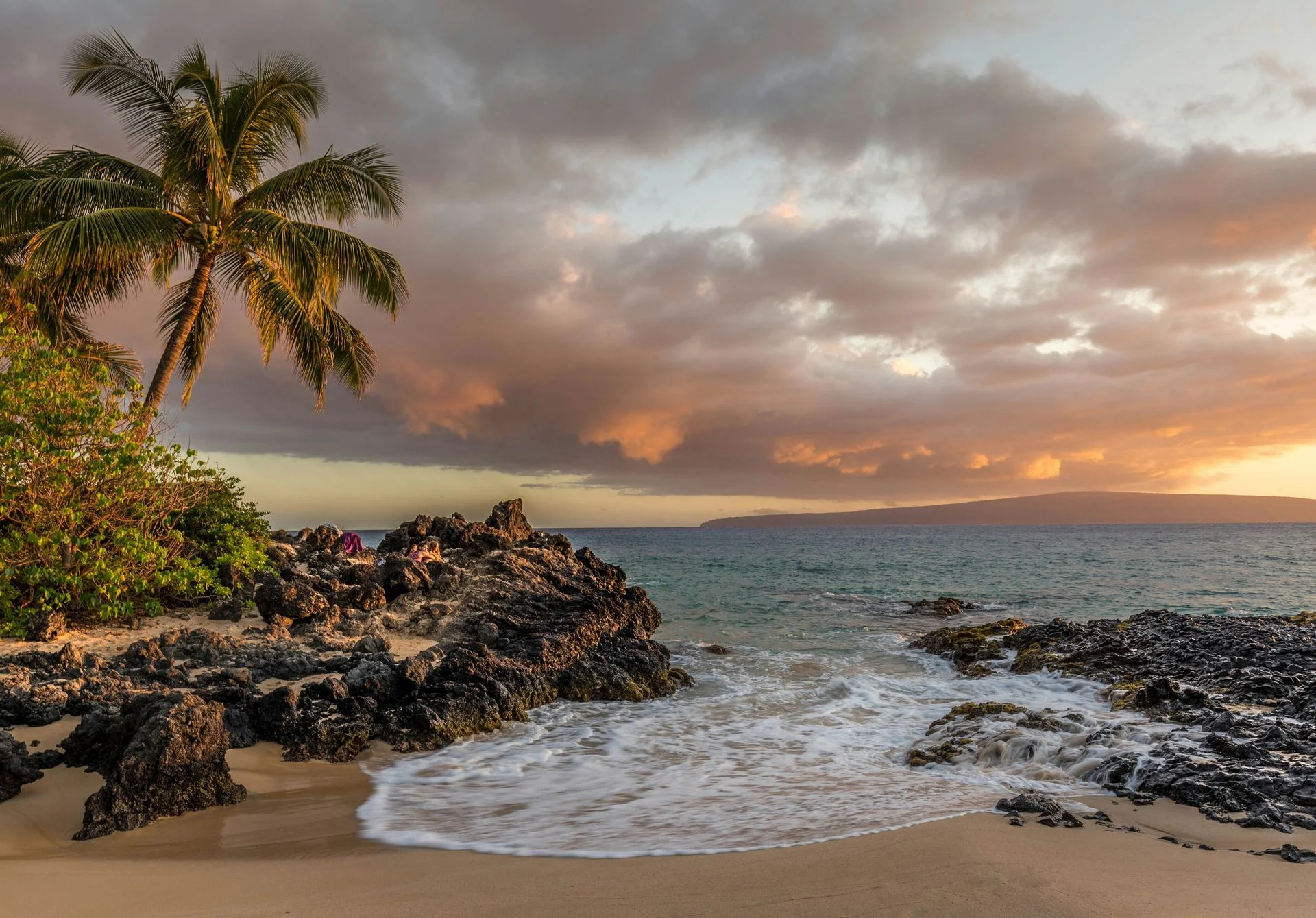
Hawaii
The Hawaiian Islands sit in the central Pacific and offer some of the United States’ most diverse diving. Each island has its own character: Oʻahu features WWII wrecks like the YO‑257 and Sea Tiger; Maui boasts the crescent‑shaped Molokini Crater and drift dives along Lānaʻi’s cathedral‑like caverns; the Big Island’s Kona coast is famed for lava tubes, black water pelagic dives and the world‑renowned manta‑ray night dive; Kauaʻi and Niʻihau offer lava arches, monk seals and dramatic drop‑offs. Water is warm year‑round and visibility regularly exceeds 25 m, making Hawaii ideal for both beginners and experienced divers. You’ll see green sea turtles, reef sharks, manta rays, dolphins and humpback whales in season, along with endemic fish found nowhere else on earth.
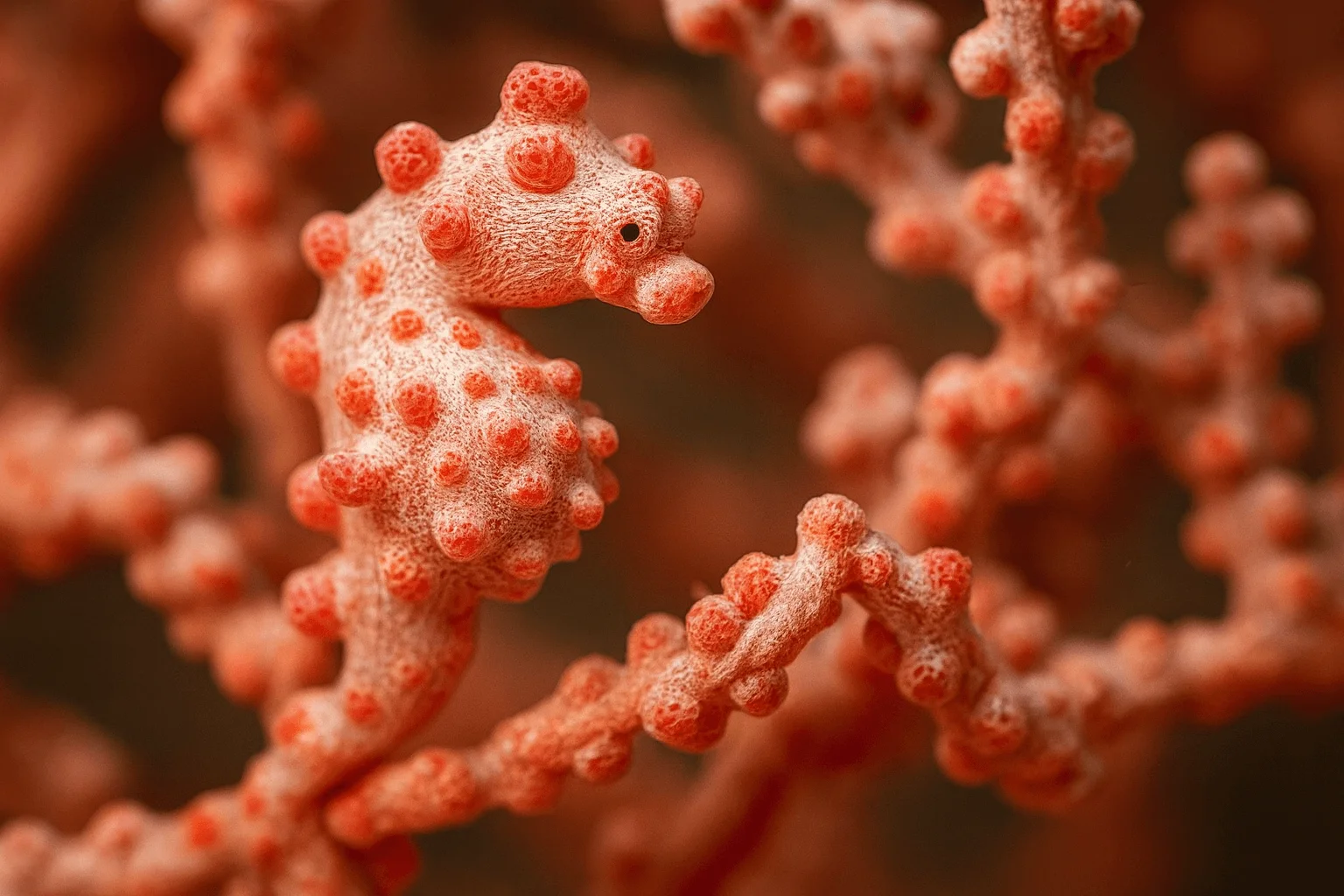
Anilao
Anilao, a small barangay in Batangas province just two hours south of Manila, is often called the macro capital of the Philippines. More than 50 dive sites fringe the coast and nearby islands, offering an intoxicating mix of coral‑covered pinnacles, muck slopes and blackwater encounters. Critter enthusiasts come for the legendary muck dives at Secret Bay and Anilao Pier, where mimic octopuses, blue‑ringed octopuses, wonderpus, seahorses, ghost pipefish, frogfish and dozens of nudibranch species lurk in the silt. Shallow reefs like Twin Rocks and Cathedral are covered in soft corals and teem with reef fish, while deeper sites such as Ligpo Island feature gorgonian‑covered walls and occasional drift. Because Anilao is so close to Manila and open year‑round, it’s the easiest place in the Philippines to squeeze in a quick diving getaway.
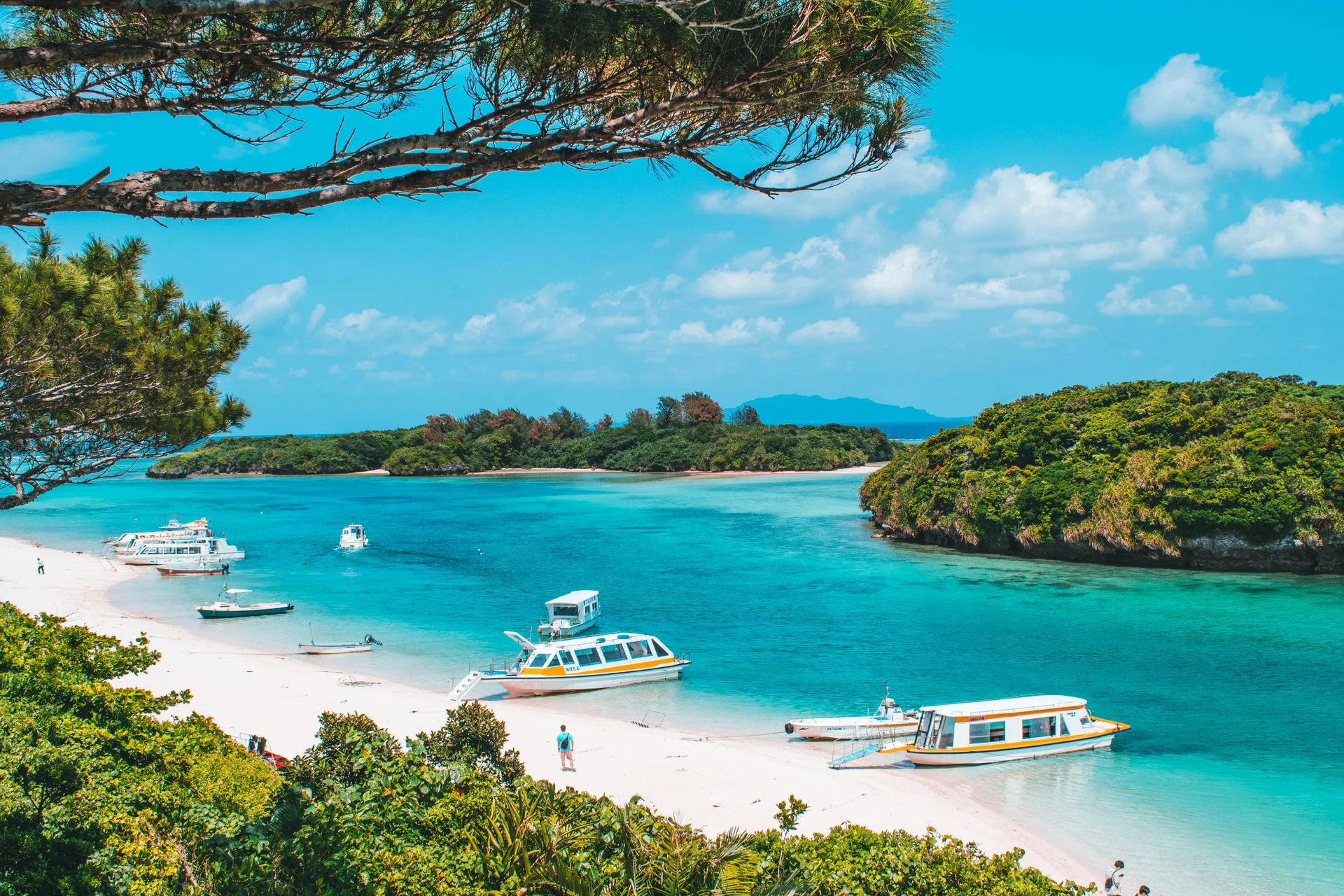
Okinawa
Straddling the subtropical Ryūkyū chain in Japan’s far south, Okinawa Prefecture is a mosaic of islands offering everything from shallow coral gardens to deep wrecks and wild drift dives. The main island provides easy access to the vibrant reefs of the Kerama National Park, where Tokashiki and Zamami Islands boast pristine hard corals, sea fans and more turtles than you can count. Just offshore, Cape Manza’s Dream Hole drops through a chimney into a colourful cavern system teeming with soldierfish, angelfish and feather stars. Further north, history buffs can dive the 100‑metre USS Emmons, a WWII destroyer resting intact at 35–40 m. Closer to shore, Cape Maeda’s Blue Cave offers an easy swim‑through with magical blue light – but expect crowds. Away from the main island, Okinawa’s outer islands extend the experience: Ishigaki’s Manta Scramble (April–Nov) promises manta ray ballets, Yonaguni’s currents bring hammerhead sharks in winter, and Miyako’s caves and tunnels deliver topography diving at its finest. Whether you crave reef fish, big pelagics, swim‑throughs or macro critters, Okinawa’s warm, clear waters offer a Japanese diving adventure for every level of diver.
Tulamben(Bali)
Tulamben sits on Bali’s northeast coast and is best known for the USAT Liberty shipwreck – a 125‑metre cargo ship torpedoed in WWII that now lies just a short swim from shore. Warm water, mild currents and straightforward shore entries make diving here relaxed for all levels. Besides the wreck, divers can explore coral gardens, black‑sand muck sites and dramatic drop‑offs. Macro lovers will find nudibranchs, ghost pipefish, mimic octopus and pygmy seahorses, while big‑fish fans can encounter schooling jackfish, bumphead parrotfish and reef sharks. With a compact coastline packed with variety, Tulamben delivers world‑class wreck and critter diving without long boat rides.
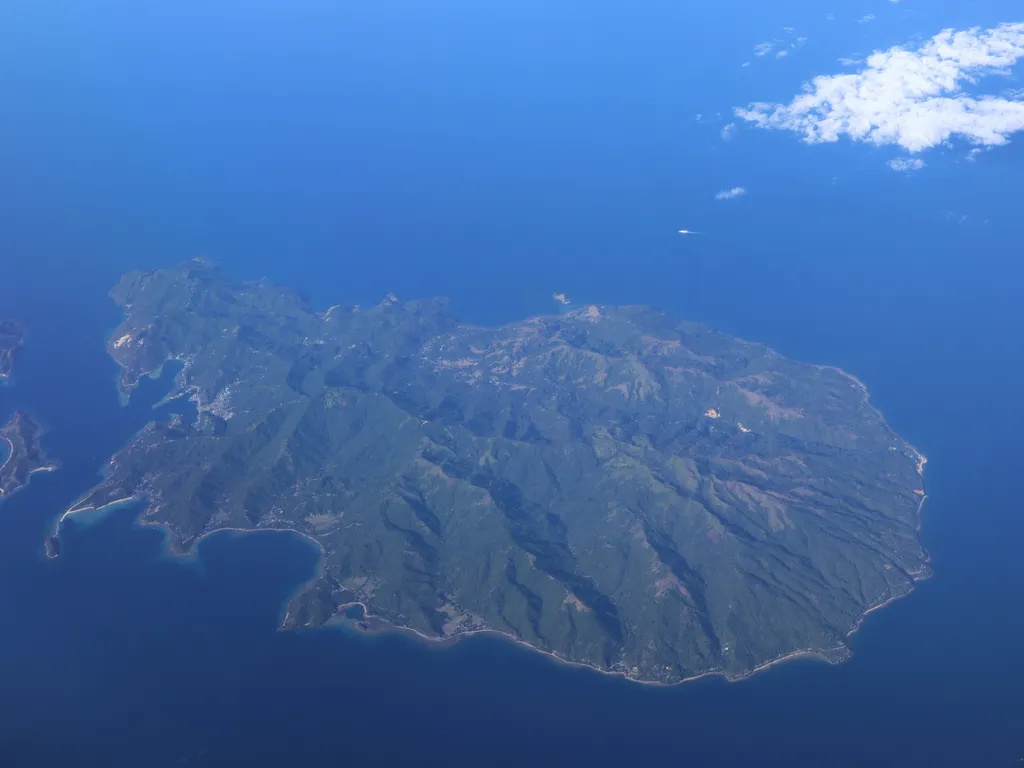
Romblon
Romblon is the Philippines' quiet answer to Lembeh—a province of small islands in the Sibuyan Sea where muck slopes, fan-coral walls and marine sanctuaries stack up without the resort sprawl. Most divers base in Lonos on Romblon Island, a short hop from Tablas, and spend days hopping between black-sand critter hunts and healthier reef drops. Signature finds include wunderpus, flamboyant cuttlefish, blue-ringed octopus, four pygmy seahorse species, Melibe colemani and Cyerce nudibranchs, plus eagle rays, sea snakes and schooling fish on the outer sites. Add a chimney dive at The Blue Hole on Tablas, cavern walls at Agpanabat, and night blackwater drifts over Romblon Pass when you want something stranger than another frogfish portrait.
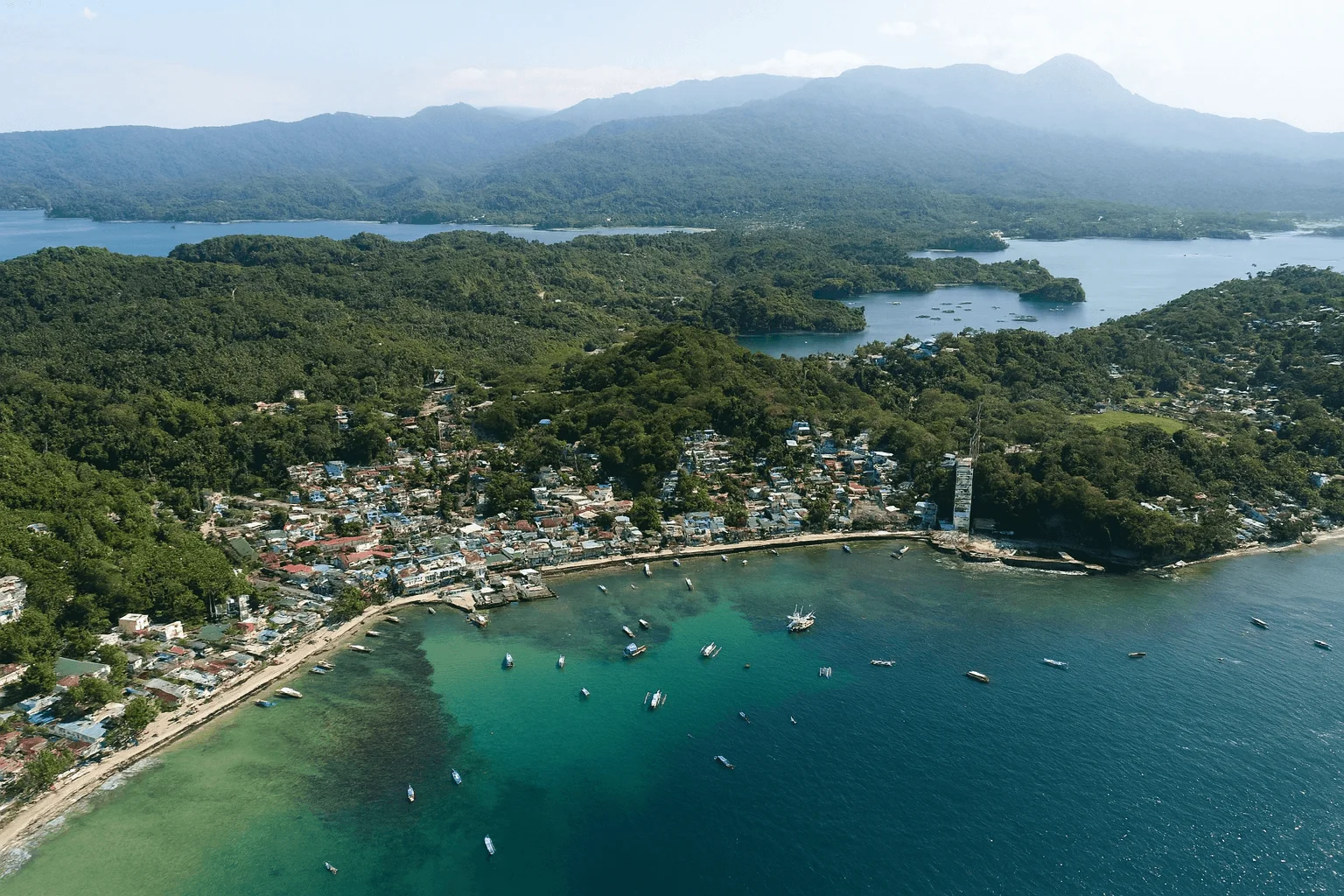
Puerto Galera
Puerto Galera sits on the northeast tip of Mindoro Island in the Philippines and has long been rated among Asia’s best and most diverse diving areas. The town faces the Verde Island Passage – part of the Coral Triangle – so its reefs host an incredible mix of hard and soft corals, seahorses, frogfish and other critters alongside schooling jacks and occasional pelagics. More than forty sites line the bays and headlands around Sabang and Small La Laguna, meaning everything from easy house‑reef dives and shallow muck sites to current‑swept canyons and colourful wrecks is only a short boat ride away. Currents are governed by the lunar cycle; strong spring tides around full and new moon create exciting drift dives, while neap tides offer gentle conditions that are perfect for macro photography. Because the water stays warm all year (27–30 °C) and visibility often reaches 15–30 m, Puerto Galera attracts both beginners and experienced divers seeking a fun, affordable destination with lively nightlife on land.