
Ornate Ghost Pipefish
Solenostomus paradoxus
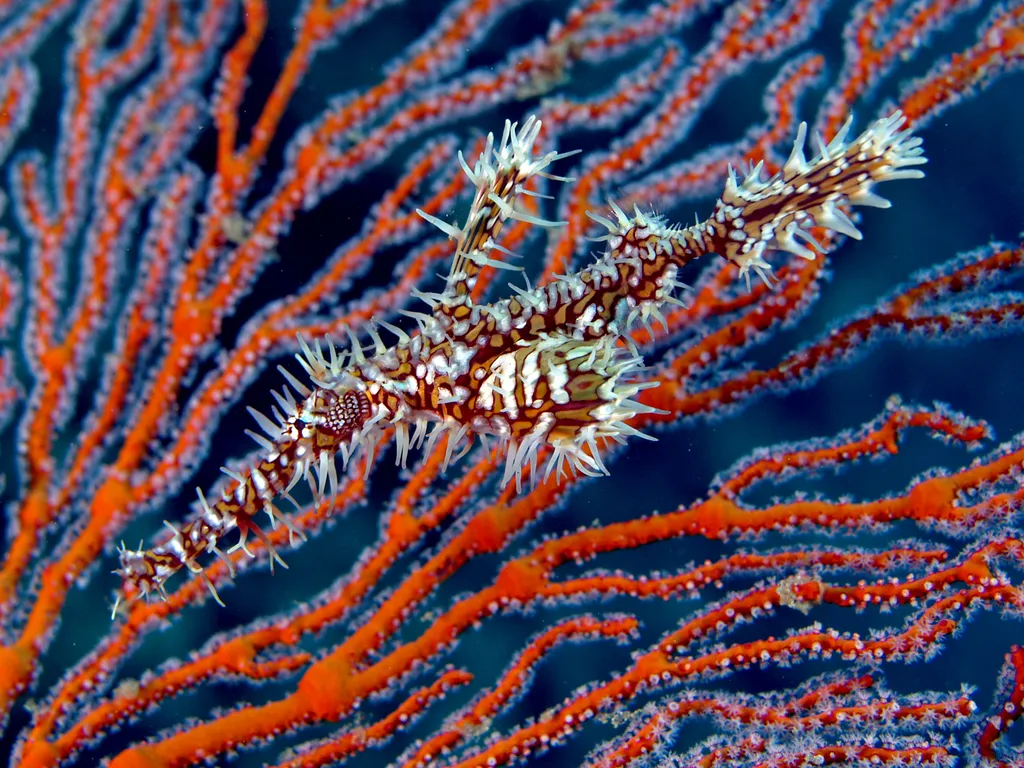
Photo by Nhobgood Nick Hobgood / CC BY-SA 3.0 via Wikimedia Commons
The Ornate Ghost Pipefish (Solenostomus paradoxus)—also called the Harlequin Ghost Pipefish—is the showpiece of Indo-Pacific macro diving. Unlike true pipefishes and seahorses (family Syngnathidae), it belongs to Solenostomidae, a separate family of "false pipefishes" that took camouflage to an art form.
Adults settle on reef edges where feather stars (crinoids), gorgonians, or black corals offer both cover and hunting perches. Their bodies sprout filamentous skin lobes that break up the fish outline until the animal looks like a stray arm of its host. Color morphs run from vivid red and yellow to near-black—guides often find them by scanning for a too-perfect gap in a crinoid rather than a fish shape.
Females carry eggs in a brood pouch formed from fused pelvic fins—a reversal of the seahorse story where males brood. Pairs hover head-down in synchronized stillness, making them a bucket-list subject for patient macro shooters.
🔬Classification
📏Physical Features
🌊Habitat Info
⚠️Safety & Conservation
Identification Guide
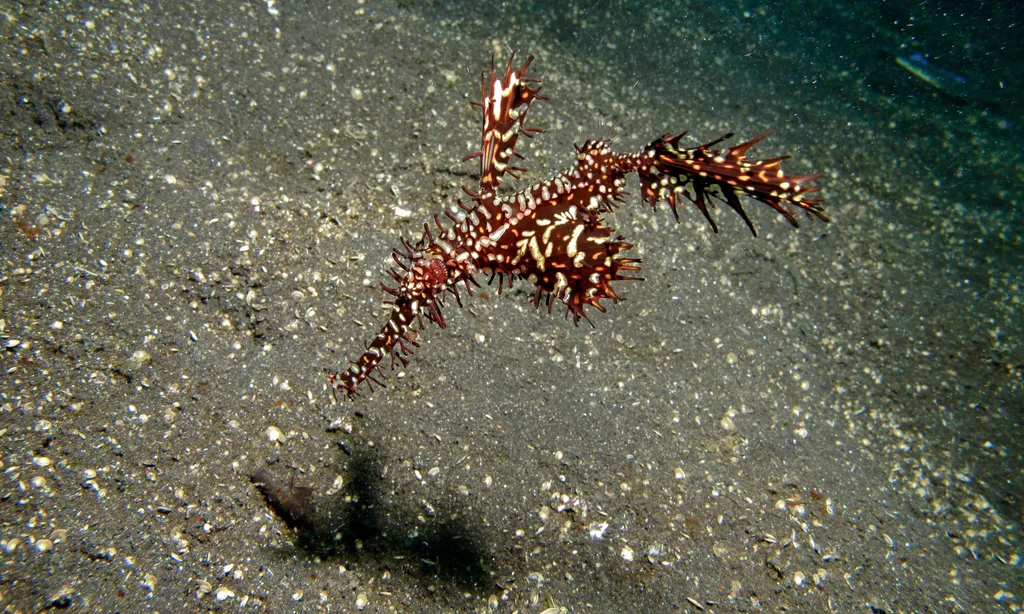
Photo by Bernard DUPONT from FRANCE / CC BY-SA 2.0 via Wikimedia Commons
Search crinoid clusters, gorgonian fans, and black-coral bushes on reef slopes and walls—not open sand flats.
Key Field Marks
- Filamentous lobes along body and fins; long tubular snout
- Large pelvic fins (females form a visible brood pouch when gravid)
- Head-down, body-aligned posture matching host orientation
- Color morphs: red, yellow, black, or white—often speckled to match crinoid arms
- Typically 8–12 cm; one of the larger ghost pipefish species
Similar Species
- Robust Ghost Pipefish (S. cyanopterus): smoother outline, seagrass/hydroid mimicry; less ornate filaments
- Halimeda Ghost Pipefish (S. halimeda): blade-shaped lobes mimicking green Halimeda algae
- True pipefish (Syngnathidae): stick-like, no leafy lobes; males brood eggs on belly
Juvenile vs. Adult
Juveniles are more transparent with finer filaments; adults develop fuller lobes and stronger color patterns. Pelagic juveniles are rarely seen by divers until they settle on benthic hosts.
Top 10 Fun Facts about Ornate Ghost Pipefish
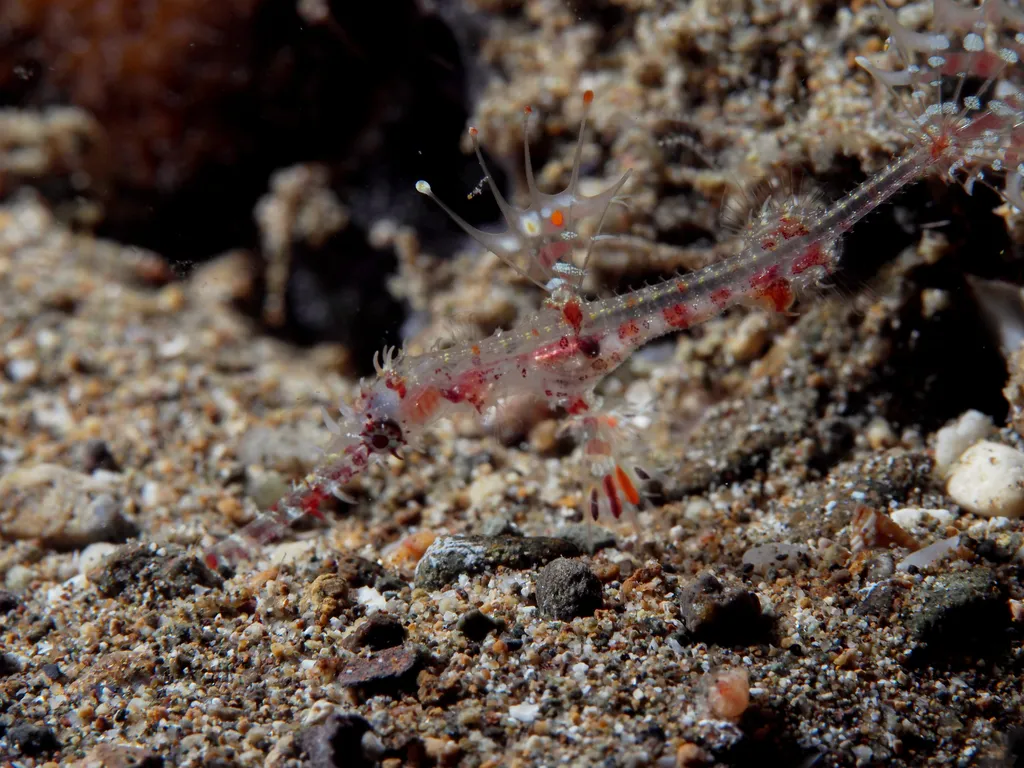
Photo by Rickard Zerpe / CC BY-SA 2.0 via Wikimedia Commons
1. The Original "Paradox" Fish
Solenostomus paradoxus was described by Pallas in 1770 from Ambon, Indonesia—one of the first ghost pipefish ever named. The species epithet paradoxus reflects early naturalists' confusion: it looks like a pipefish, behaves like a decorator crab, and broods like a kangaroo. Type locality Ambon remains a legendary critter-hunting ground today.
2. Feather-Star Furniture
Ornate ghost pipefish are specialists at mimicking crinoids (feather stars). They align their bodies with crinoid arms, match local color morphs, and can remain motionless for hours. Guides at Lembeh and Mabul joke that you don't find the fish—you find the crinoid that "has something wrong with it," then spot the eye.
3. Female Brood Pouch Engineering
In a twist on syngnathid norms, females develop the brood pouch by fusing enlarged pelvic fins with ventral tissue. Dozens to hundreds of eggs incubate inside until fully formed juveniles emerge. Males fertilize and guard but do not carry—a reversal that makes seahorse dads look conventional.
4. Three Color Personalities
Field morphs include red, yellow, black, and white forms, often with speckling that mirrors the host crinoid or gorgonian. A red individual on a red feather star can vanish completely; swap hosts and the same fish looks garish. Photographers chase morph variety like trading cards.
5. Monogamous Hovering Duos
Pairs are common during breeding season—male and female side by side, heads angled identically, hunting mysid shrimp in slow-motion vacuum strikes. If you photograph one, sweep the host structure within arm's reach for the partner. Getting both in frame with eggs visible in the pouch is the macro holy grail.
6. Pelagic Youth, Benthic Adult
Larvae drift planktonically as transparent juveniles before settling on reef structure. Settlement triggers metamorphosis: filaments grow, colors lock in, and the fish commits to a specific host type. It's a dramatic lifestyle shift from open-ocean drifter to crinoid couch potato.
7. Mysid Shrimp Sniper
Primary prey includes mysid shrimp and small benthic crustaceans. The strike uses rapid jaw expansion and suction— milliseconds from idle to swallowed. Between meals they conserve energy with near-zero movement, essential when your diet is calorie-poor zooplankton.
8. Indo-West Pacific Range
Distribution spans the Red Sea and East Africa east to Fiji and Tonga, north to southern Japan, south to southeast Australia and New Caledonia. Uncommon everywhere but patchily reliable at macro hotspots when seasonal conditions favor crinoid blooms.
9. Not a Seahorse Cousin (Close, But No Cigar)
Ghost pipefish share order Syngnathiformes with seahorses and true pipefish but sit in family Solenostomidae. Molecular work places them on a separate branch—convergent looks, divergent brooding biology. Field ID: leafy lobes + female pouch = ghost pipefish, not syngnathid.
10. Backlight Reveals the Ghost
Underwater photographers prize side- and back-lighting that turns translucent fins and brood pouches into glowing stained-glass panels. Filaments halo with light; eggs inside the pouch become visible. It's why "ghost" stuck—the fish looks spectral when lit correctly, solid when flat-lit against a busy crinoid.
Diving & Observation Notes
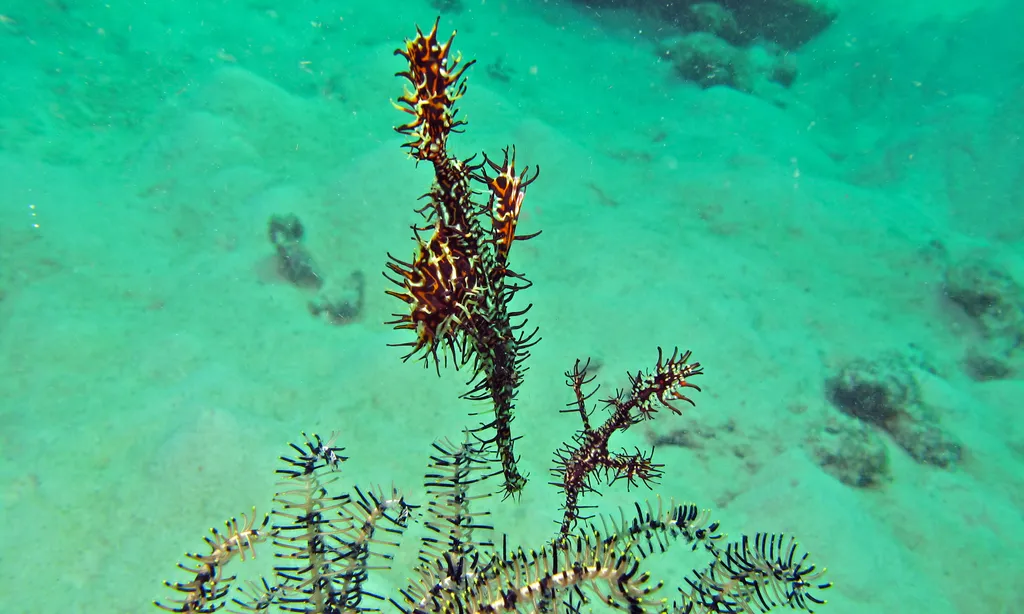
Photo by Bernard DUPONT from FRANCE / CC BY-SA 2.0 via Wikimedia Commons
🧭 Where to Look
Focus on crinoid gardens on reef slopes, walls, and pinnacles—especially where mild current feeds feather stars. Also check gorgonian fans and black coral bushes at 10–25 m. Lembeh, Mabul, Dumaguete (Dauin), Malapascua, Wakatobi, and Raja Ampat are reliable macro venues when guides know seasonal peaks.
🤿 Approach & Behavior
Move slowly and avoid touching the host crinoid—disturbing arms causes the fish to shift or tuck deeper. Pairs stay remarkably still; fin kicks and exhaled bubbles are enough to spook them. Maintain neutral buoyancy and approach from below or the side to avoid casting shadow on the subject.
📷 Photo Tips
Macro lens 60–100 mm with diopter if needed; minimum focus distance matters on crowded crinoids. Back- and side-lighting (snoot or remote strobe) reveals filaments and brood-pouch eggs. Shoot at an angle that separates the fish from the host—flat parallel shots merge subject into background. Manual exposure; crinoid reds clip easily.
🌊 Season & Conditions
Sightings often improve when calm seas allow crinoids to fully open and seasonal plankton blooms boost mysid numbers. Some sites report higher encounter rates in dry-season months—ask local guides rather than assuming year-round consistency. Moderate visibility (10–20 m) is fine; this is a close-focus subject.
♻️ Ethics
Never manipulate crinoids or gorgonians to expose a ghost pipefish. No touching, no herding with pointers. Limit dive time on one individual—queues of photographers stress sedentary fish. Report collection or harassment to operators; ornate ghost pipefish are sensitive to habitat damage and ornamental trade pressure.
Best Places to Dive with Ornate Ghost Pipefish
Lembeh
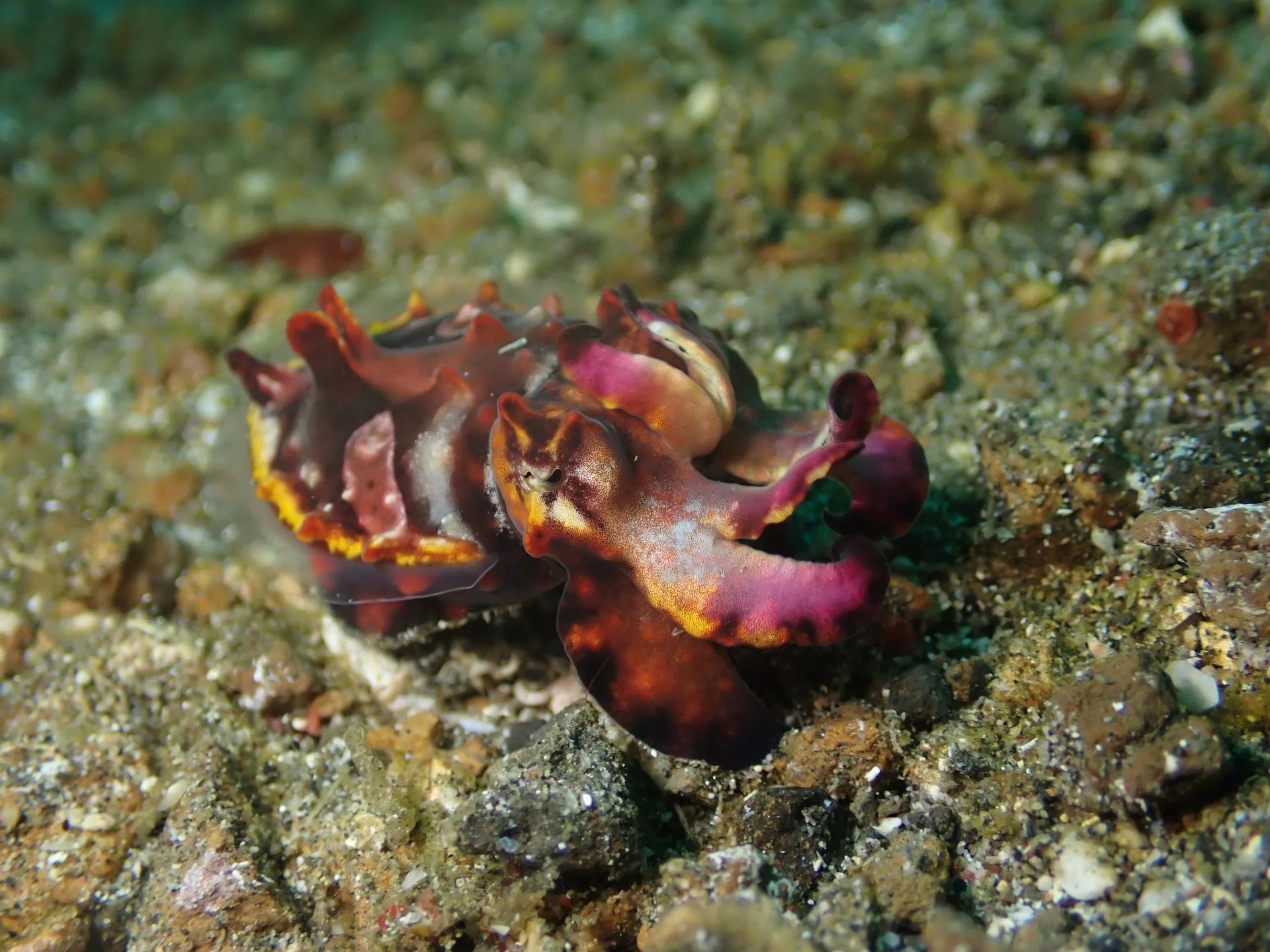
The Lembeh Strait in North Sulawesi has become famous as the muck‑diving capital of the world. At first glance its gently sloping seabed of black volcanic sand, rubble and discarded debris looks bleak. Look closer and it is teeming with weird and wonderful life: hairy and painted frogfish, flamboyant cuttlefish, mimic and blue‑ringed octopuses, ornate ghost pipefish, tiny seahorses, shrimp, crabs and a rainbow of nudibranchs. Most dives are shallow and calm with little current, making it an ideal playground for macro photographers. There are a few colourful reefs for a change of scenery, but Lembeh is all about searching the sand for critter treasures.
Mabul
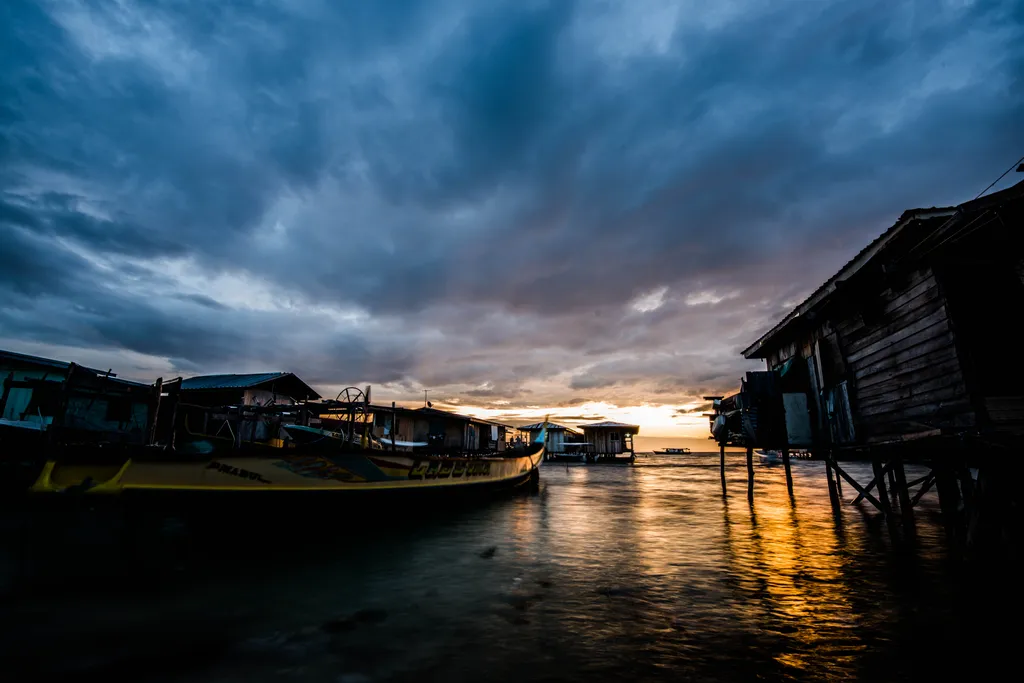
Mabul is where you come to slow down and stare at sand. The island sits in the Semporna archipelago off eastern Sabah — a flat, palm-fringed speck ringed by shallow rubble slopes, artificial reef structures, and the occasional tyre stack that macro photographers lose their minds over. Visibility rarely tops 15 m and nobody cares: frogfish the size of your thumb, flamboyant cuttlefish pulsing purple and yellow, blue-ring octopus tucked in rubble, ornate ghost pipefish, ribbon eels, pygmy seahorses in sea fans, and nudibranchs on every spare surface. This is muck diving with resort convenience — walk from your bungalow to the boat, three dives before lunch, rinse and repeat. The signature sites circle the island and nearby Seaventures rig: Froggy Lair and Crocodile Avenue for classic critter hunts, Lobster Wall and Eel Garden when you want a bit of structure, Paradise 1 & 2 for mixed reef-and-rubble variety. Night dives here are excellent — mandarinfish mating dances at dusk, bobtail squid and Spanish dancer nudibranchs after dark. Most resorts run house-reef dives and unlimited shore access between boat trips. Sipadan's barracuda tornadoes and sheer walls are 45 minutes away by speedboat, and many packages include a day or two on permit — but that's the side dish. Base yourself on Mabul for a week of macro and you won't feel cheated if the permit lottery doesn't go your way. Bring a macro lens, a patient dive guide, and low expectations for viz; bring high expectations for critters.
Dumaguete
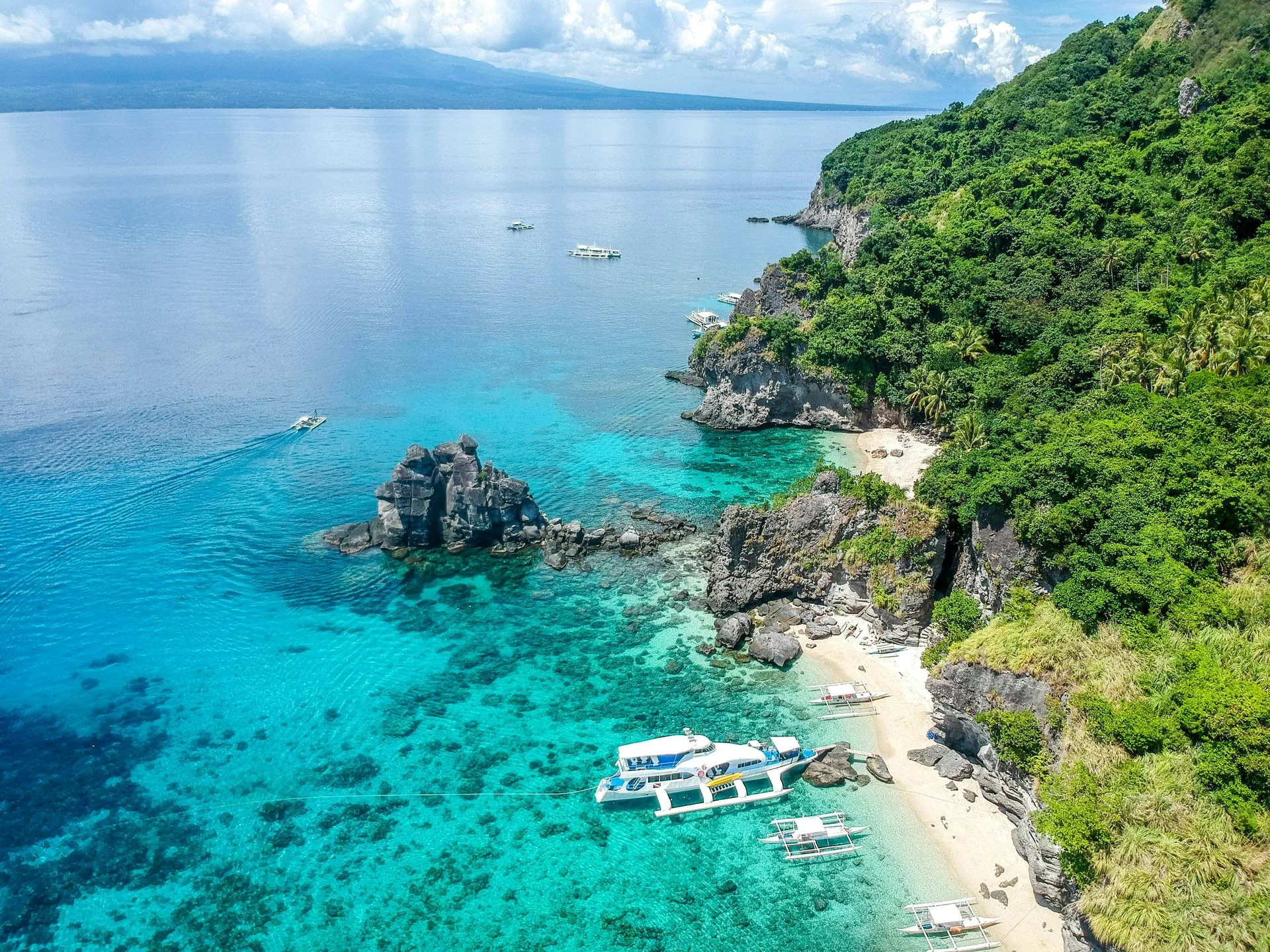
Dumaguete on the southeast coast of Negros is the jumping‑off point for some of the Philippines’ most diverse diving. Along the nearby town of Dauin, a series of shallow marine sanctuaries and black‑sand slopes hide critters galore: frogfish, flamboyant cuttlefish, mimic octopus, ghost pipefish, seahorses, pipefish and nudibranchs. Artificial reefs made from car tyres and pyramids provide extra habitat. Offshore, Apo Island’s walls and plateaus burst with hard and soft corals, schooling jacks and barracudas, and friendly green turtles. With day trips to Oslob’s whale sharks or Bais’ dolphin‑watching, and excursions to nearby Siquijor, Dumaguete offers a perfect mix of macro muck diving and classic coral reefs.
Malapascua
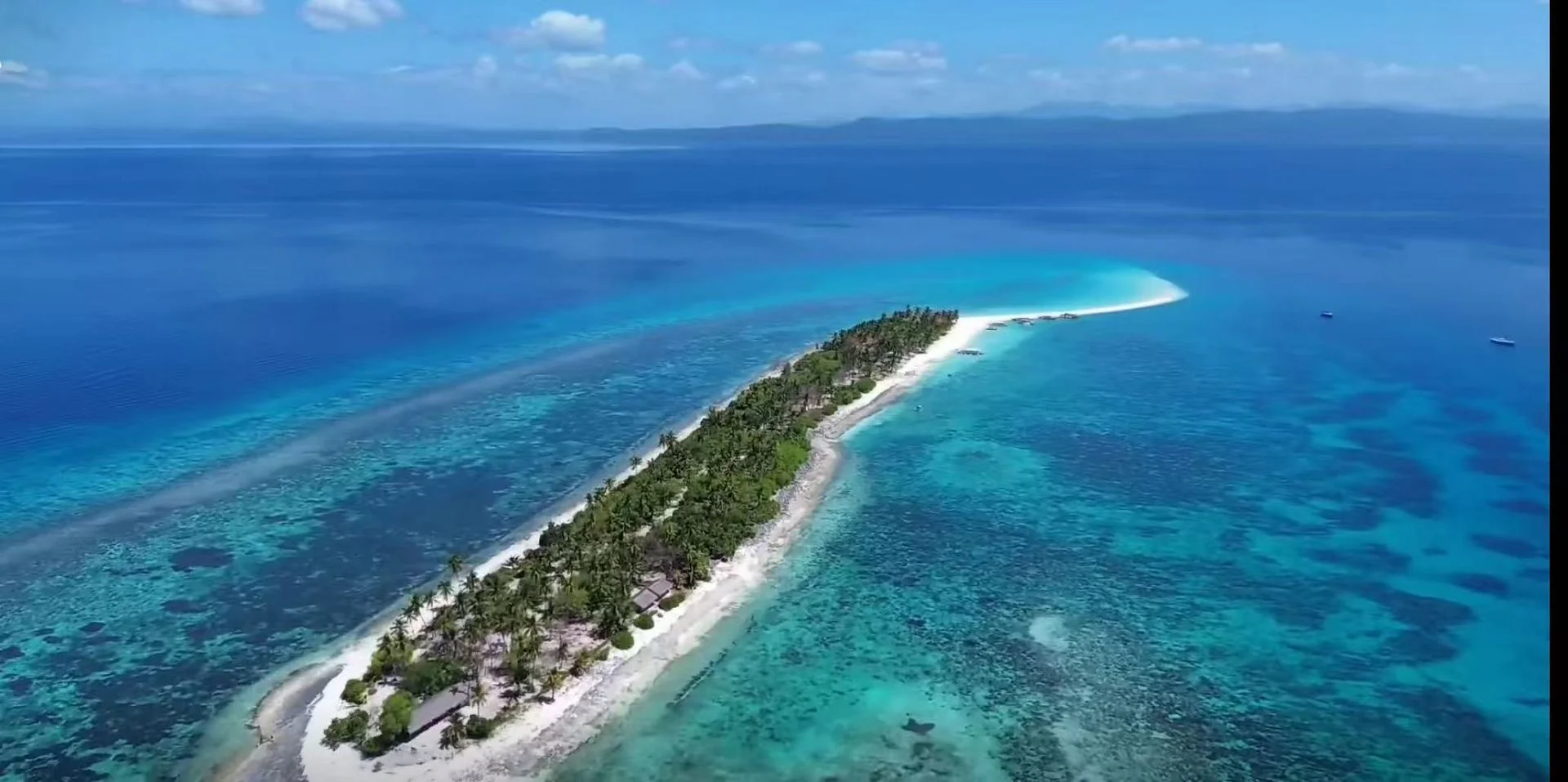
Malapascua is a small island off the northern tip of Cebu famed for its resident thresher sharks. Every morning at dawn, divers ride out to Monad Shoal and sit on a coral plateau 20–30 m deep, quietly watching as pelagic threshers rise from the abyss to use the cleaning station. But the excitement doesn’t end once the sharks disappear into the blue—around the island you’ll find coral‑covered pinnacles, drift dives, walls and gentle reef slopes teeming with life. Macro hunters can stalk flamboyant cuttlefish, pygmy seahorses and frogfish in the muck around Dauin, while wide‑angle lovers will enjoy schooling jackfish, batfish and barracuda at sites like Bugtong Bato and Gato Island. A relaxed village atmosphere, white‑sand beaches and day trips to neighbouring islands such as Kalanggaman or Capitancillo round out the experience.
Wakatobi
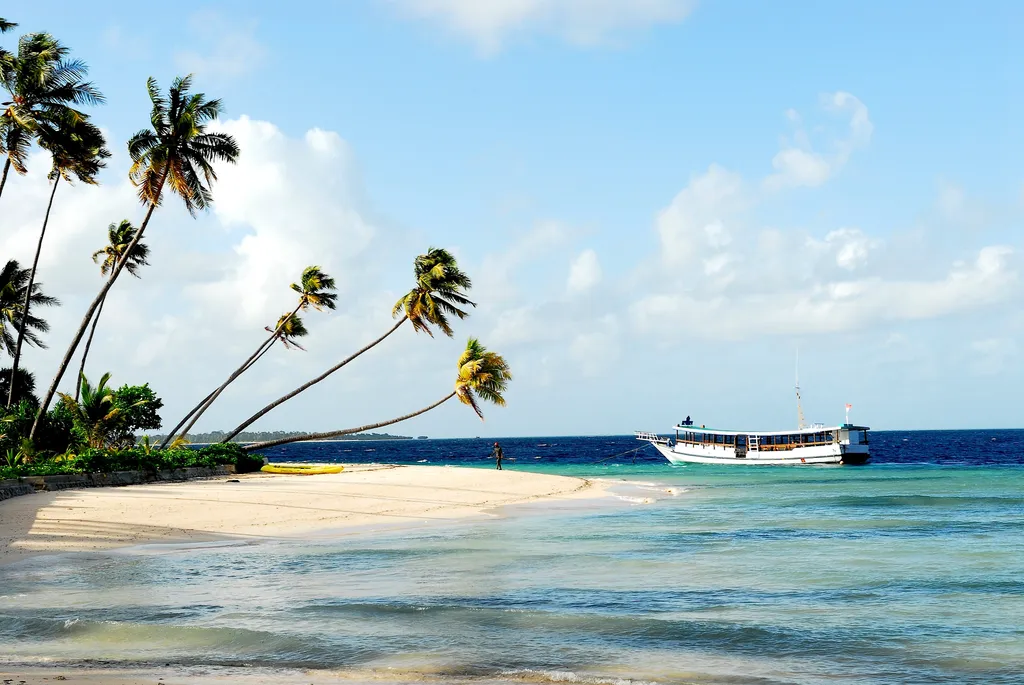
Wakatobi National Park sits on the southeastern rim of Sulawesi, named from its four main islands—Wangi-Wangi, Kaledupa, Tomia, and Binongko. It holds some of the healthiest coral coverage in the Coral Triangle, with walls, seamounts, and fringing reefs that marine biologists still treat as a reference system. Visibility regularly hits 30 m and can stretch past 50 m on calm outer-reef days. Currents are usually mild and predictable, so you get long bottom times on colorful hard-coral gardens instead of fighting blue water. The signature experience is Wakatobi’s House Reef—walk-in shore diving a short swim from the jetty—backed by more than 40 day-boat sites, from beginner pinnacles like Roma to the knife-edge walls of Blade.
Raja Ampat
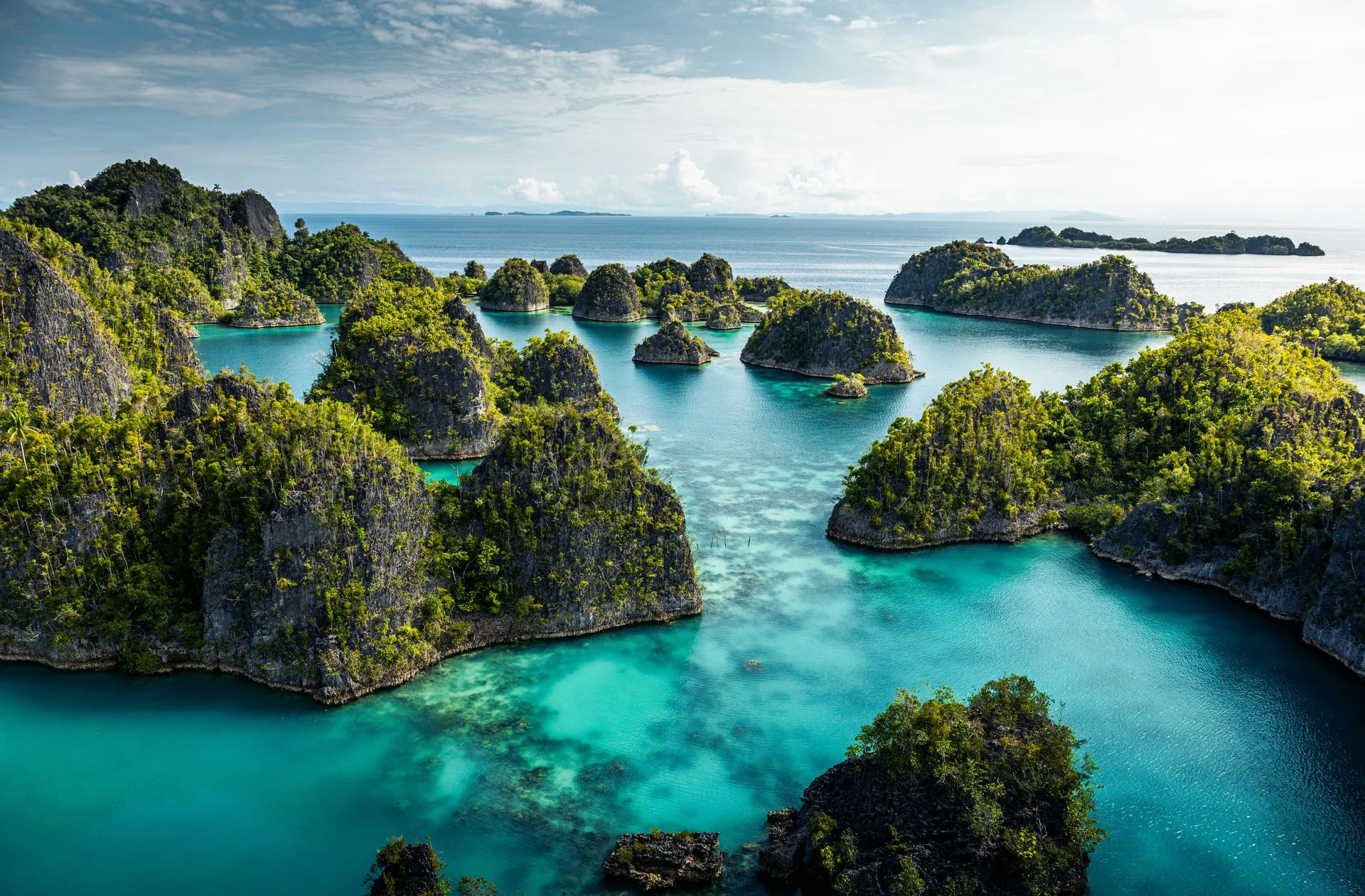
Raja Ampat, the “Four Kings,” is an archipelago of more than 1,500 islands at the edge of Indonesian West Papua. Its reefs sit in the heart of the Coral Triangle, where Pacific currents funnel nutrients into shallow seas and feed the world’s richest marine biodiversity. Diving here means gliding over colourful walls and coral gardens buzzing with more than 550 species of hard and soft corals and an estimated 1,500 fish species. You’ll meet blacktip and whitetip reef sharks on almost every dive, witness giant trevally and dogtooth tuna hunting schools of fusiliers, and encounter wobbegong “carpet” sharks, turtles, manta rays and dolphins. From cape pinnacles swarming with life to calm bays rich in macro critters, Raja Ampat offers endless variety. Above water, karst limestone islands and emerald lagoons provide spectacular scenery between dives.