
Bobtail Squid
Euprymna berryi
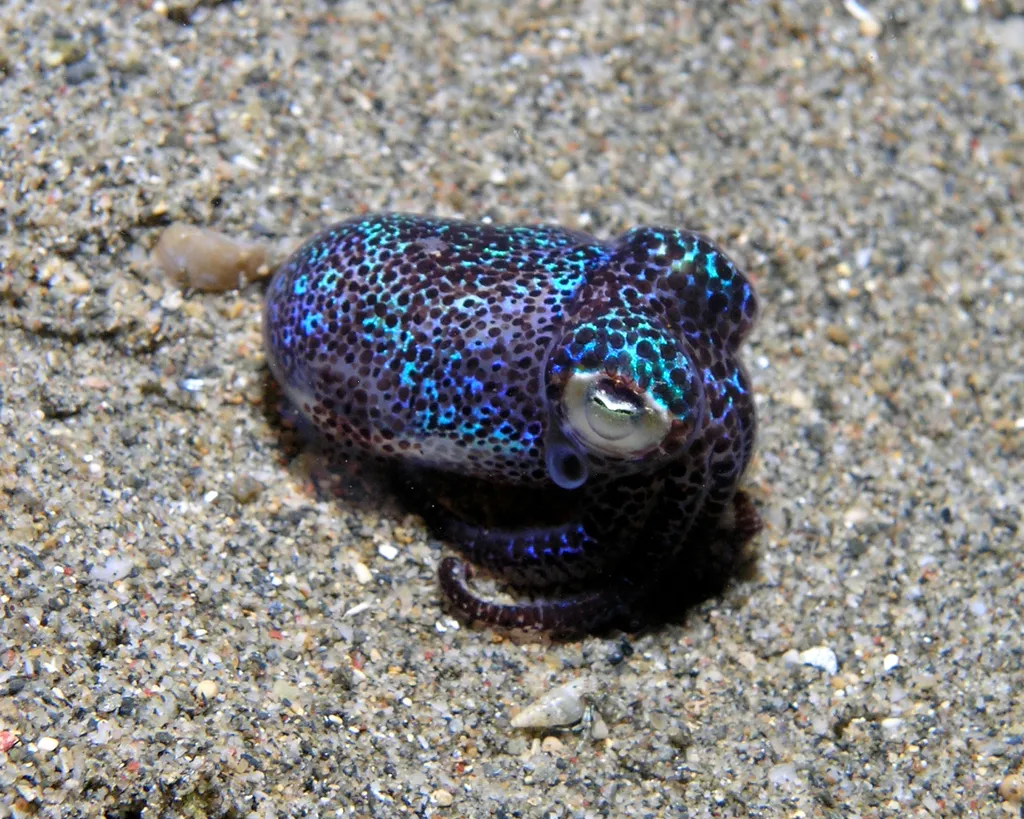
Photo by Nick Hobgood / CC BY-SA 3.0 via Wikimedia Commons
If you only dive daylight muck, you will miss Euprymna berryi almost every time. The Bobtail Squid—also sold in guides as hummingbird bobtail or Berry's bobtail—is a thumbnail cephalopod that spends daylight hours blanketed under sand, then lifts out after dark to hunt tiny crustaceans on Indo-Pacific soft bottoms. Compact and rounded, with a pair of stubby lateral fins, it looks halfway between a baby cuttlefish and a dumpling with attitude. What makes it famous among night-macro shooters is not bulk but counter-illumination: a light organ in the mantle cavity hosts symbiotic Vibrio bacteria and throws just enough glow to erase the animal's silhouette from predators looking up. Add flickering blue-green chromatophore texture and a habit of flicking sand over itself with fins and arms, and you have one of the most reliable "wow" sightings on Lembeh, Anilao, Dumaguete, Mabul, and Bohol night schedules. Short lifespan (~6 months in study populations) means every encounter is a temporary adult doing maximum work in thin time.
🔬Classification
📏Physical Features
🌊Habitat Info
⚠️Safety & Conservation
Identification Guide
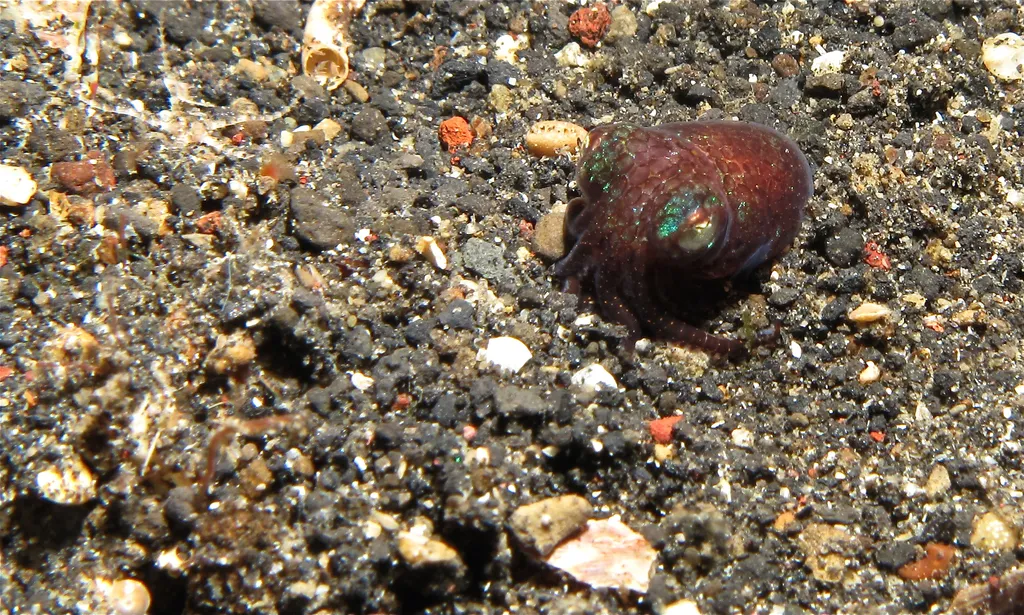
Photo by Bernard DUPONT from FRANCE / CC BY-SA 2.0 via Wikimedia Commons
Size & Shape
- Mantle length ~3 cm (males) to ~5 cm (females)—fist-of-a-toddler scale, not reef-squid size
- Body short, rounded, "bobtailed"; two small lateral fins on the rear mantle
- Eight arms + two hunting tentacles; overall silhouette more dumpling than torpedo
Color & Light
- Base look: translucent with dense dark chromatophores
- Living appearance often reads as a mosaic of dark, electric-blue, and green dots
- Night lights may reveal a soft ventral glow from the bacterial light organ—subtle, not flashlight-bright
Behavior Signatures
- Day: buried under sand/fine sediment, sometimes only eye/fin edge showing
- Night: crawls/swims low over sand, covers itself with sand grains using fins and arms when stressed
- Ink squirts possible if pressed—back off rather than chase
Habitat
- Shallow sand, silt, rubble muck (~2–25 m typical recreational depth)
- Classic night-muck sites in central Indo-Pacific
Similar Critters
- Other Euprymna / sepiolids: sibling bobtails—use locale + guide ID; E. berryi is the common hummingbird/Berry's form in this range
- Flamboyant cuttlefish (Metasepia): vivid warning colors, broader mantle—not translucent dotted bobtail
- Reef squid / cuttlefish juveniles: longer mantle, stronger open-water swimming habit
Top 10 Fun Facts about Bobtail Squid
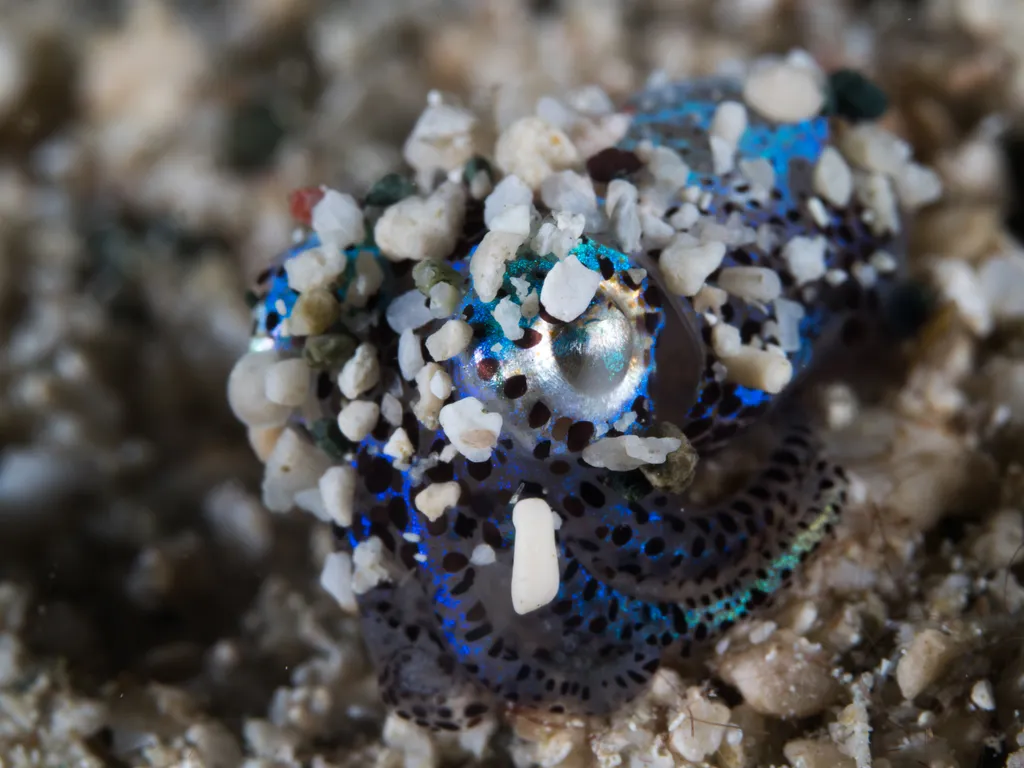
Photo by Rickard Zerpe / CC BY 2.0 via Wikimedia Commons
1. Counter-Illumination, Not Party Glow
The light organ is a biological cloaking device: symbiotic Vibrio bacteria produce light that matches downwelling moonlight/starlight from a predator's view below. Divers with torch beams disrupt that geometry—the "glow" you admire is the animal briefly losing stealth in your light cone.
2. Why Guides Call It Hummingbird Bobtail
Compact fins and rapid hover-and-settle movements earned English common names like hummingbird bobtail. In the frame, it rarely trails long tentacle shows; it bobs, settles, and reburies—perfect for snooted stills if you settle silt first.
3. Sexual Size Dimorphism in Three Centimeters
Males top out near 3 cm mantle length; females reach about 5 cm. That matters for ID logs and for photographers who assume every tiny sepiolid is the same sex-size class.
4. Daytime Invisibility Protocol
Buried animals may leave only a ridge of sand or a glazed eye. Guides who "know the house" mark daytime bunkers, then return after dark—so your "lucky find" is often site memory, not random luck.
5. Sand Coat as Camouflage Armor
When threatened, E. berryi uses fins and arms to pull substrate over the mantle—a living ghillie suit. Silt storms from clumsy finning erase that behavioral shot and can bury the subject for the rest of the dive.
6. Short Life, High Throughput
Lab and field notes put life expectancy around half a year. Macro nights that yield "the same reef" year-round are sampling a rolling cohort, not a handful of long-lived celebrities.
7. Central Indo-Pacific Soft-Bottom Specialist
Core range spans Indonesia–Philippines–East Asia coasts, with deeper soft-bottom records to ~107 m. Recreational divers almost exclusively meet them on shallow night muck.
8. Vibrio Partnership Shared With Unexpected Neighbors
The luminescence symbiont group overlaps functionally with other hosts (e.g., pinecone fish light organs)—handy trivia for briefing, and a reminder that "cute squid glow" is microbial engineering.
9. Night Circuits That Actually Produce
Destination pages for Lembeh, Anilao, Dumaguete, Mabul, and Bohol repeatedly flag bobtail squid on night logs. Book dedicated night dives on sand slopes; do not expect the animal on noon reef walls.
10. Shot Discipline Beats Power
Low angle, soft or snooted light, and patience while the animal re-orients after burial beats blasting full power into open sand. If it inks or reburies hard, you already lost the frame—reset distance.
Diving & Observation Notes
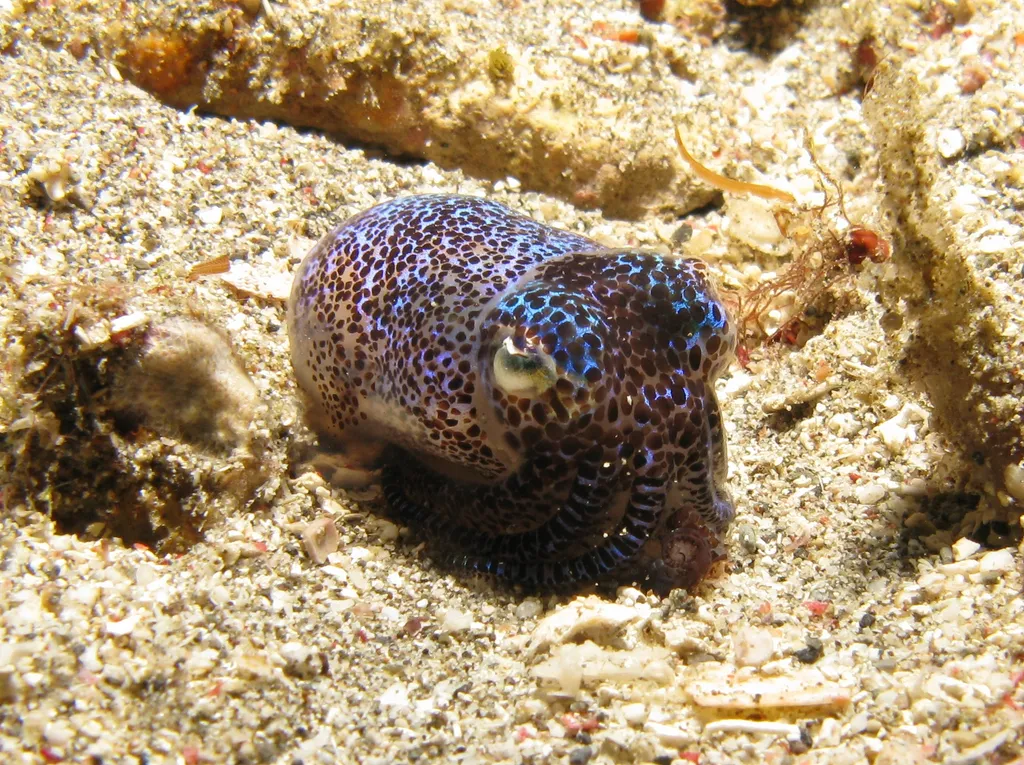
Photo by prilfish / CC BY 2.0 via Wikimedia Commons
🧭 Finding Them
Book night dives on sandy/rubble muck at Lembeh, Anilao, Dumaguete (Dauin), Mabul, and Bohol (including Panglao-area night slopes). Guides scan for eyeshine, subtle sand mounds, and small rounded silhouettes hugging the bottom—not midwater squid schools. Depth sweet spot for guests is often 5–18 m with minimal current.
🤿 Approach
Kill excess ambient light when possible; approach low and slow. If the animal starts flicking sand over itself, freeze or ease back—reburial is stress, not a pose request. Never dig daytime bunkers out of curiosity; wait for natural emergence on the night plan.
📷 Photo Notes
- 60–100 mm for behavioral context; 100 mm macro for chromatophore texture and eye
- Prefer snoot / soft side light to avoid whiteout on pale sand and to preserve any ventral glow
- Capture sand-coat and hover-settle moments; video helps when chromatophores flicker
⚠️ Ethics & Safety
Non-toxic in the diver-threat sense, but handling stress is real—no cupping, no chasing ink clouds. Control buoyancy on silt; one bad frog-kick can end the show for the whole team. IUCN Data Deficient—treat populations as poorly known, not endless.
Best Places to Dive with Bobtail Squid
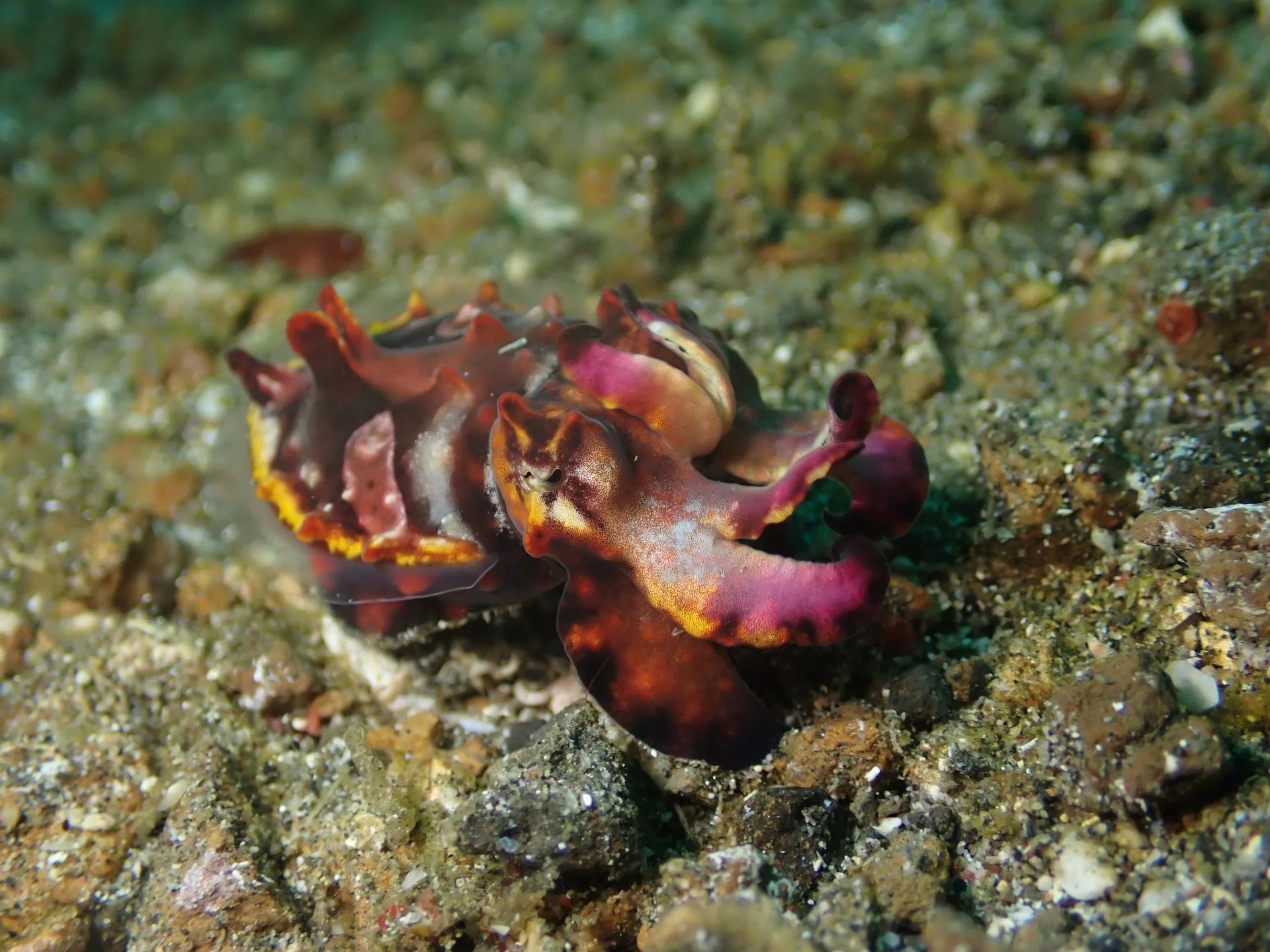
Lembeh
The Lembeh Strait in North Sulawesi has become famous as the muck‑diving capital of the world. At first glance its gently sloping seabed of black volcanic sand, rubble and discarded debris looks bleak. Look closer and it is teeming with weird and wonderful life: hairy and painted frogfish, flamboyant cuttlefish, mimic and blue‑ringed octopuses, ornate ghost pipefish, tiny seahorses, shrimp, crabs and a rainbow of nudibranchs. Most dives are shallow and calm with little current, making it an ideal playground for macro photographers. There are a few colourful reefs for a change of scenery, but Lembeh is all about searching the sand for critter treasures.
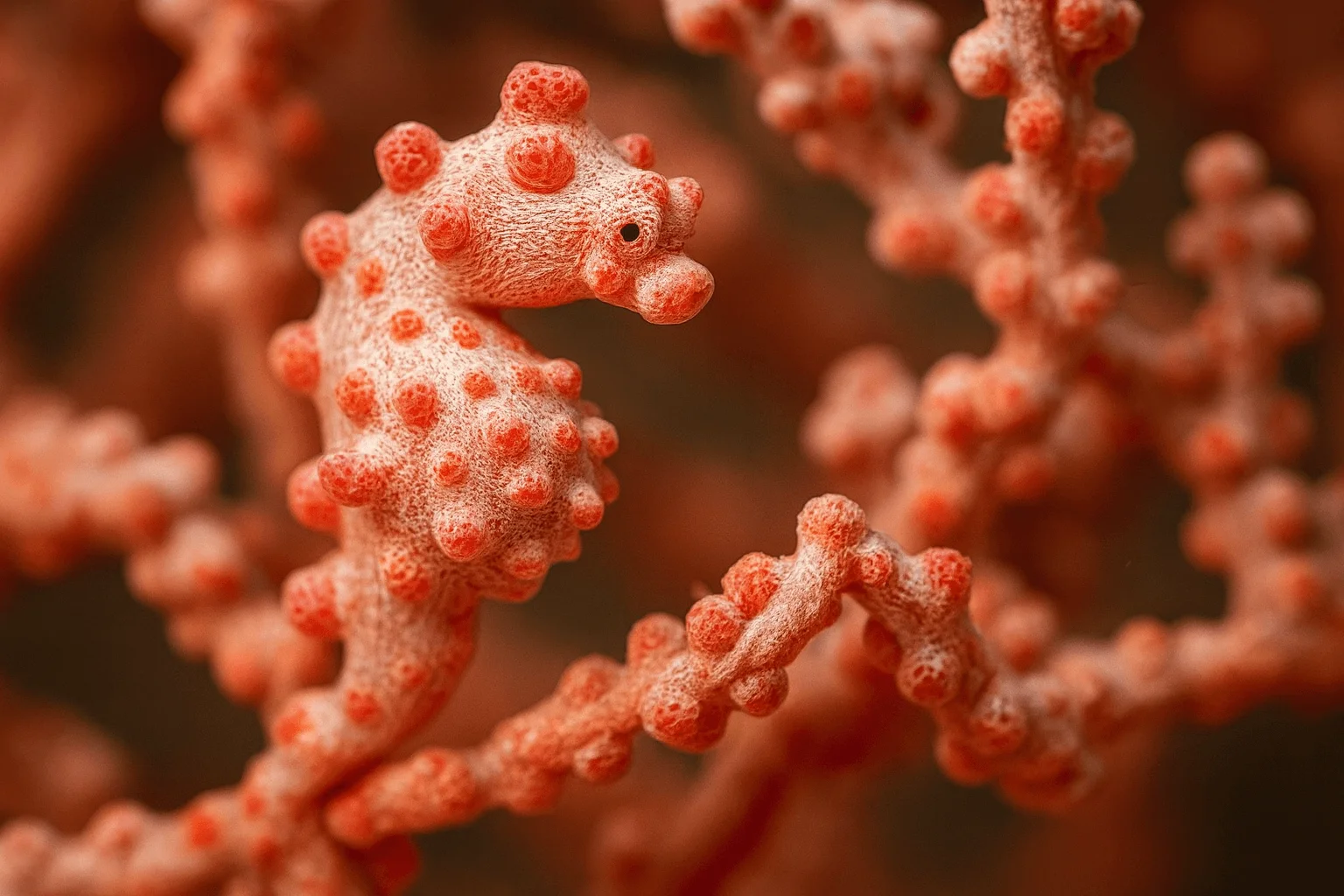
Anilao
Anilao, a small barangay in Batangas province just two hours south of Manila, is often called the macro capital of the Philippines. More than 50 dive sites fringe the coast and nearby islands, offering an intoxicating mix of coral‑covered pinnacles, muck slopes and blackwater encounters. Critter enthusiasts come for the legendary muck dives at Secret Bay and Anilao Pier, where mimic octopuses, blue‑ringed octopuses, wonderpus, seahorses, ghost pipefish, frogfish and dozens of nudibranch species lurk in the silt. Shallow reefs like Twin Rocks and Cathedral are covered in soft corals and teem with reef fish, while deeper sites such as Ligpo Island feature gorgonian‑covered walls and occasional drift. Because Anilao is so close to Manila and open year‑round, it’s the easiest place in the Philippines to squeeze in a quick diving getaway.
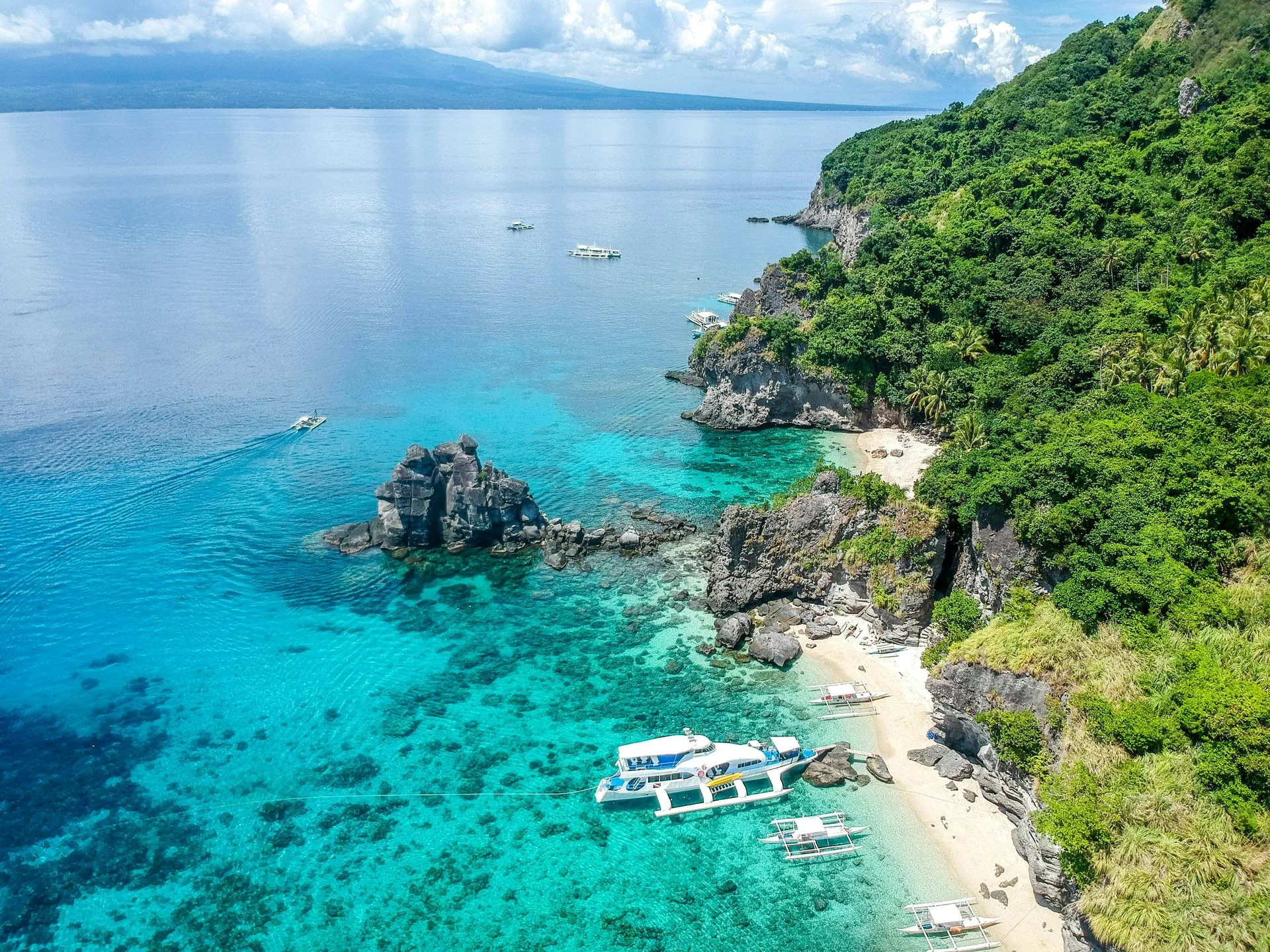
Dumaguete
Dumaguete on the southeast coast of Negros is the jumping‑off point for some of the Philippines’ most diverse diving. Along the nearby town of Dauin, a series of shallow marine sanctuaries and black‑sand slopes hide critters galore: frogfish, flamboyant cuttlefish, mimic octopus, ghost pipefish, seahorses, pipefish and nudibranchs. Artificial reefs made from car tyres and pyramids provide extra habitat. Offshore, Apo Island’s walls and plateaus burst with hard and soft corals, schooling jacks and barracudas, and friendly green turtles. With day trips to Oslob’s whale sharks or Bais’ dolphin‑watching, and excursions to nearby Siquijor, Dumaguete offers a perfect mix of macro muck diving and classic coral reefs.
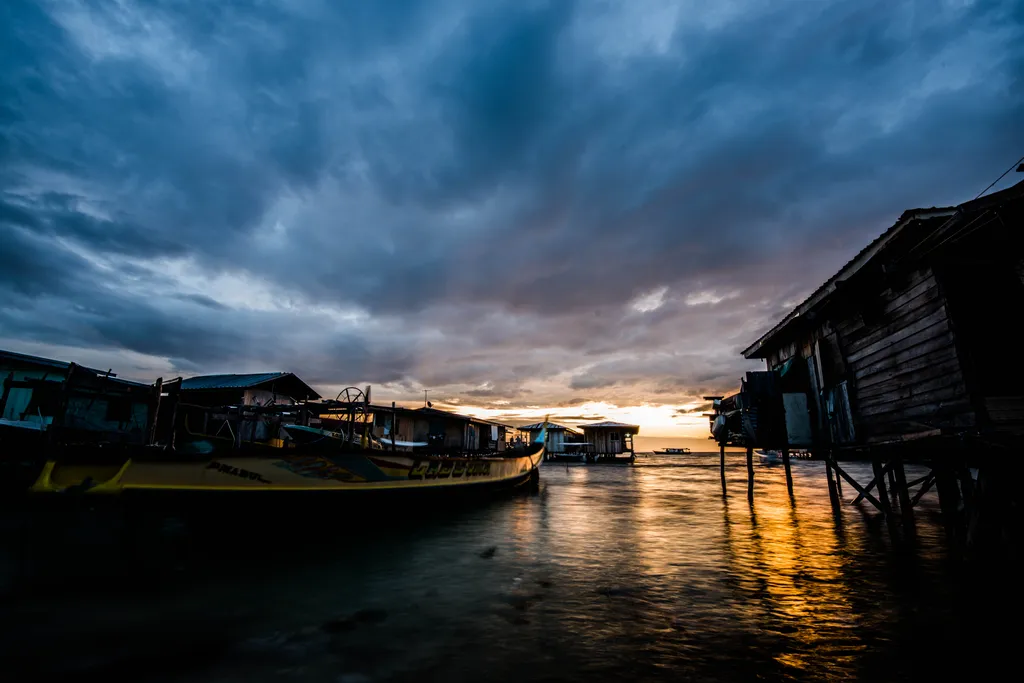
Mabul
Mabul is where you come to slow down and stare at sand. The island sits in the Semporna archipelago off eastern Sabah — a flat, palm-fringed speck ringed by shallow rubble slopes, artificial reef structures, and the occasional tyre stack that macro photographers lose their minds over. Visibility rarely tops 15 m and nobody cares: frogfish the size of your thumb, flamboyant cuttlefish pulsing purple and yellow, blue-ring octopus tucked in rubble, ornate ghost pipefish, ribbon eels, pygmy seahorses in sea fans, and nudibranchs on every spare surface. This is muck diving with resort convenience — walk from your bungalow to the boat, three dives before lunch, rinse and repeat. The signature sites circle the island and nearby Seaventures rig: Froggy Lair and Crocodile Avenue for classic critter hunts, Lobster Wall and Eel Garden when you want a bit of structure, Paradise 1 & 2 for mixed reef-and-rubble variety. Night dives here are excellent — mandarinfish mating dances at dusk, bobtail squid and Spanish dancer nudibranchs after dark. Most resorts run house-reef dives and unlimited shore access between boat trips. Sipadan's barracuda tornadoes and sheer walls are 45 minutes away by speedboat, and many packages include a day or two on permit — but that's the side dish. Base yourself on Mabul for a week of macro and you won't feel cheated if the permit lottery doesn't go your way. Bring a macro lens, a patient dive guide, and low expectations for viz; bring high expectations for critters.
Bohol
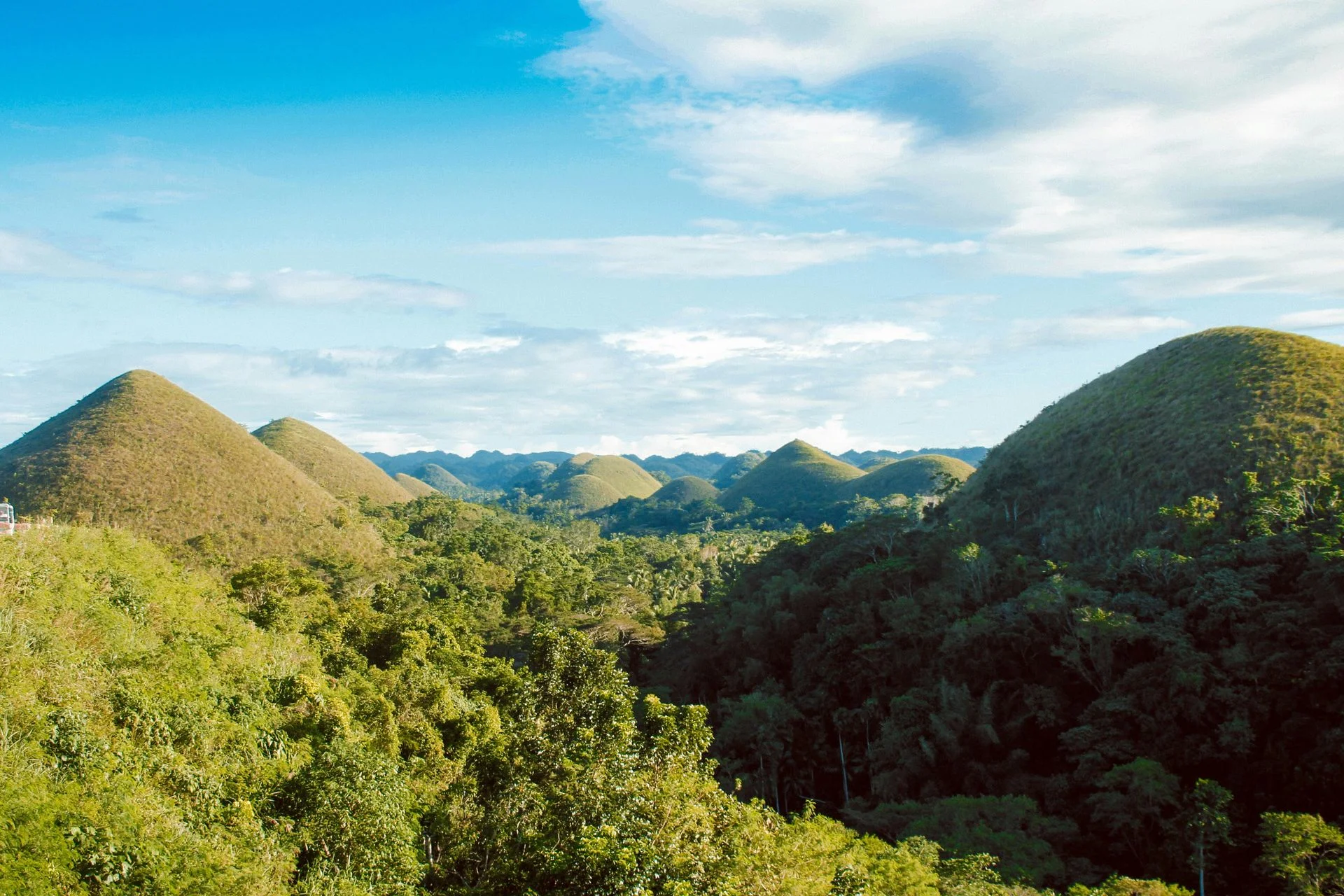
Bohol, an island province in the central Visayas of the Philippines, is a diver’s playground with a huge variety of sites. The main hub is Panglao Island, where Alona Beach serves as the launch point for local reef dives and day trips. Nearby Balicasag Island is world‑class: its 5‑ to 18‑m plateau drops into walls where clouds of jackfish and sardines swirl and sleepy green and hawksbill turtles munch on soft corals. To the west, Cabilao’s reefs hide hammerhead sharks and pygmy seahorses, while the remote east coast of Anda offers muck dives, turtle nurseries and even mantas and whale sharks. Other favorites include Napaling’s year‑round sardine balls, Pamilacan’s manta and shark‑filled walls and Cervera (Snake Island) with its resident sea snakes. Whether you love colourful coral gardens, deep walls, big pelagics or tiny critters, Bohol has something for every diver.