
Clumpy Nudibranch
Ceratosoma trilobatum
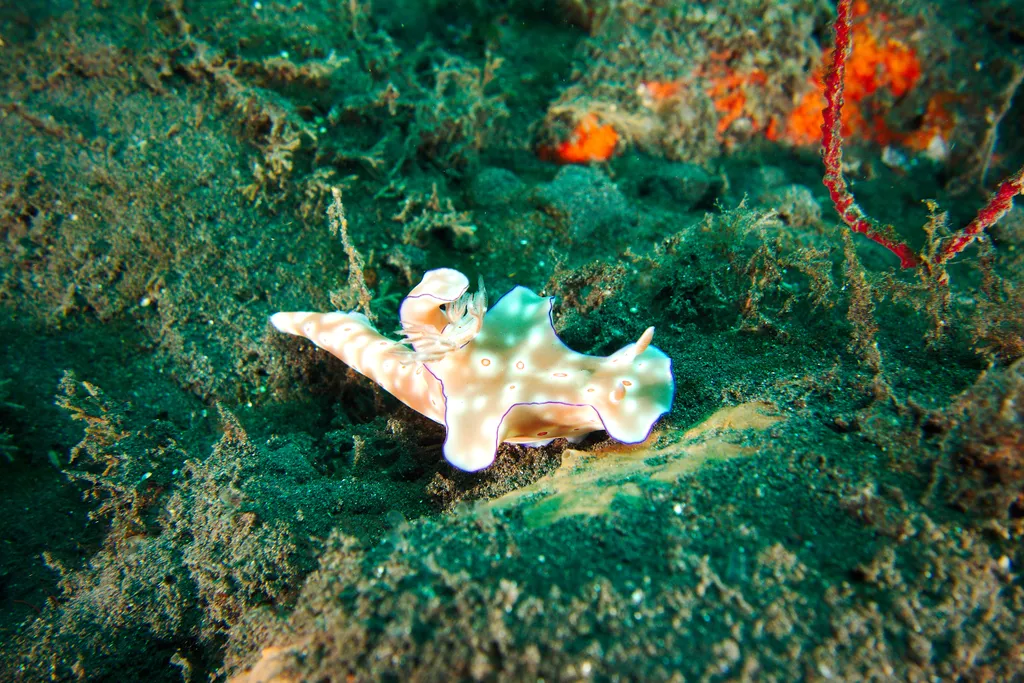
Photo by Paul Kli / CC BY-SA 2.0 via Wikimedia Commons
Ceratosoma trilobatum is one of those nudibranchs that rewards slow diving. It can look chunky and relaxed at first glance, but once you spend time with it you notice a lot of structure: broad mantle lobes, a recurved dorsal horn behind the gills, and color lines that help separate it from similar Ceratosoma species.
For macro divers, this species is a perfect "bridge subject" between behavior and portrait work. It often crawls over sponge-rich substrate in open view, so you can get profile shots, rhinophore detail, and habitat context in one sequence if you stay patient and keep your fin wash controlled.
🔬Classification
📏Physical Features
🌊Habitat Info
⚠️Safety & Conservation
Identification Guide
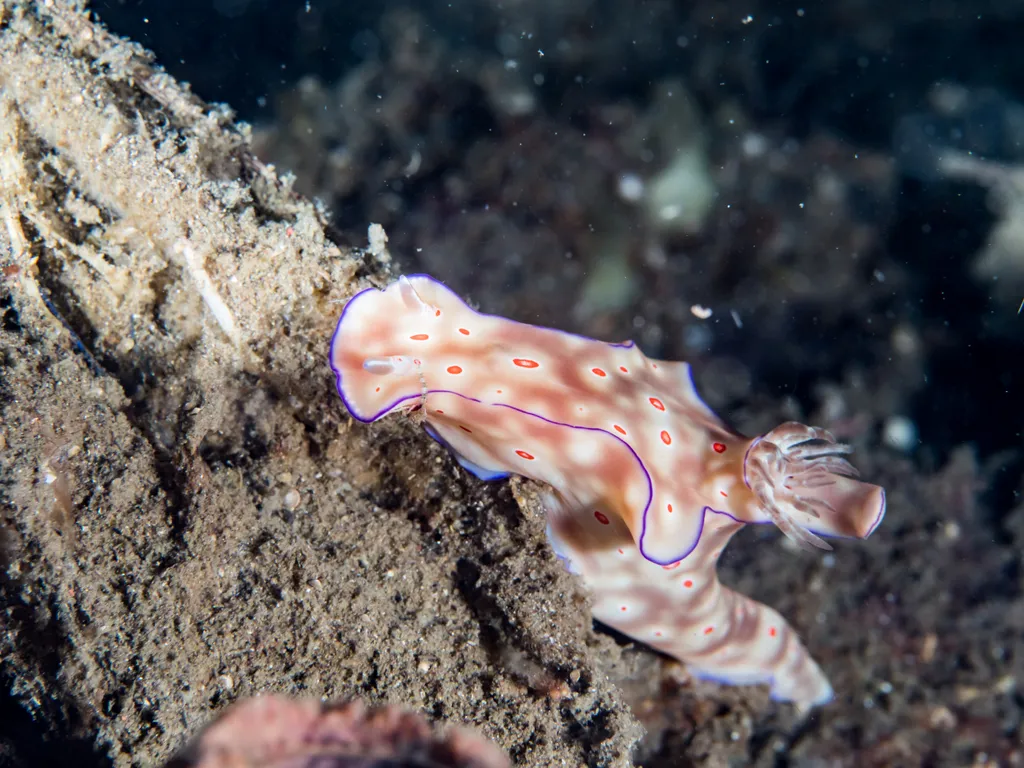
Photo by Rickard Zerpe / CC BY 2.0 via Wikimedia Commons
1. Check the body architecture, not only color
Color is variable and unreliable on its own. Focus on the robust body, paired lateral lobes, and the prominent recurved horn behind the gill plume.
2. Look for the purple edge line
Many individuals show a purple margin along the mantle and often around structures near gills and rhinophores. This line is a practical in-water clue when visibility is average.
3. Separate it from Ceratosoma tenue
Divers frequently confuse these two. Use lobe arrangement and overall "thick" profile rather than trying to decide from spot color alone.
Top 10 Fun Facts about Clumpy Nudibranch
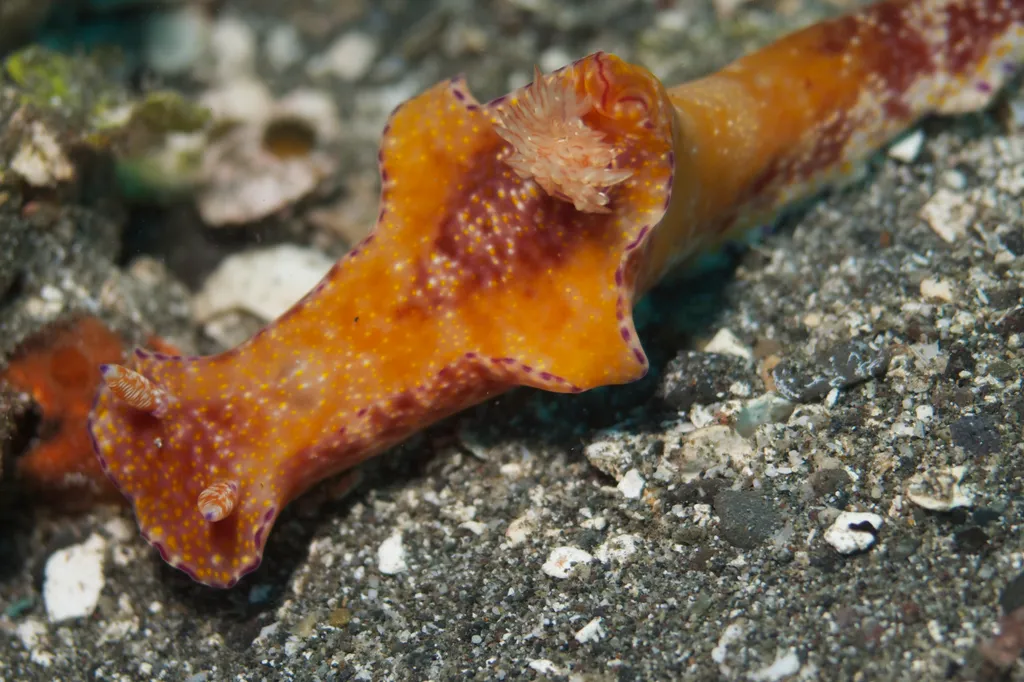
Photo by Elias Levy / CC BY 2.0 via Wikimedia Commons
1. The "horn" is a defensive decoy
The recurved dorsal horn behind the gills is not just decoration. In Ceratosoma, defensive chemicals are concentrated in exposed tissue so predators are more likely to bite non-vital areas first.
2. It borrows chemistry from food
Like many chromodorids, this species feeds on sponges (often dysideid sponges) and can sequester deterrent compounds, turning diet into defense.
3. Color does not equal species certainty
Bright red, pink, cream, and brown forms can all belong to C. trilobatum. Field IDs are stronger when based on body structure plus color pattern, not pattern alone.
4. It is usually a daytime subject
Divers most often encounter it during daylight while it is actively moving and feeding on substrate, making it a practical macro target on regular daytime schedules.
5. Size can be deceptively large for a nudibranch
Adults commonly appear in the high single-digit centimeter range, and some records approach 15 cm, which gives photographers room for both close-up and environmental framing.
6. Distribution spans classic Indo-Pacific routes
Records extend across much of the tropical Indo-West Pacific, including Red Sea and many Southeast Asian macro hotspots, so travel divers can encounter it across multiple itineraries.
7. Texture matters for ID photos
Mantle edge contour, horn profile, and rhinophore shape are high-value details in photo review. One good side profile often beats several front snapshots.
8. It is a slow but purposeful crawler
Movement is slow enough for careful strobe setup, yet purposeful enough to show behavior sequences when you hold position and shoot in short intervals.
9. It is a strong candidate for behavior storytelling
Because it often traverses sponge patches, you can document feeding context, substrate transitions, and interaction with commensals in one dive without chasing pelagic action.
10. Good buoyancy reveals more biology
This species is frequently found on fragile muck and rubble bottoms. Neutral trim and low-impact finning are not just ethical choices; they directly improve sighting quality for everyone on the dive.
Diving & Observation Notes
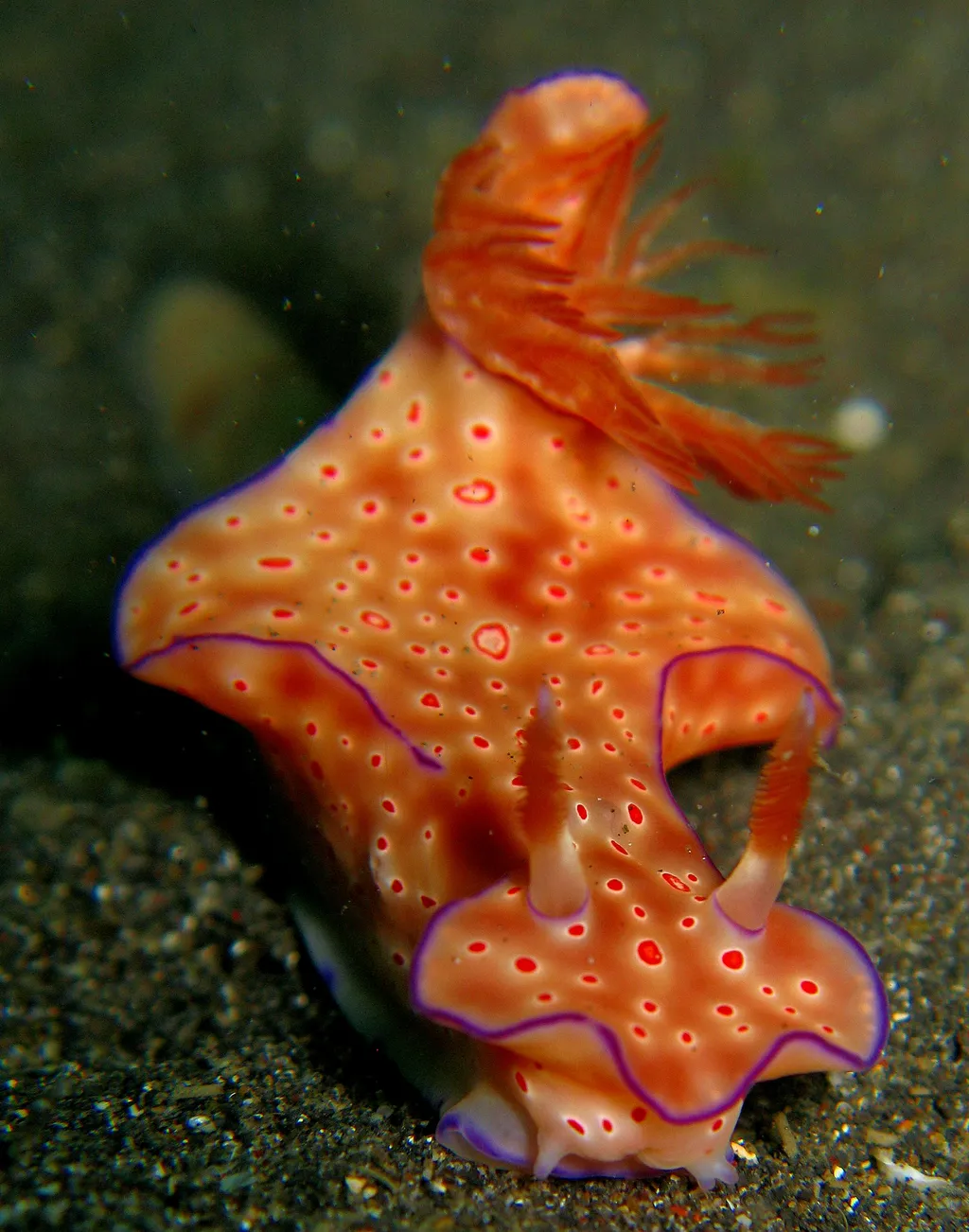
Photo by Steve Childs / CC BY 2.0 via Wikimedia Commons
Finding Windows
Search sponge-rich rubble lanes and mixed sand-coral transitions between roughly 5 and 20 m first, then expand shallower or deeper depending on local guide feedback.
Approach and Positioning
Keep your torso low, move in half-fin increments, and approach from slightly ahead of travel direction. This avoids forcing abrupt turns and preserves natural movement behavior.
Lighting Strategy
A moderate strobe spread works well because body surfaces are curved and reflective. Start with side-light to emphasize mantle texture, then adjust to preserve purple edge details without clipping highlights.
Composition Sequence
Shoot in this order: identification side profile, rhinophore close-up, dorsal horn and gill relation, and finally a habitat frame that includes sponge substrate for ecological context.
Team and Ethics
Rotate turns quickly on productive individuals. This species often sits in soft substrate zones where one poor fin kick can collapse visibility for the whole group.
Best Places to Dive with Clumpy Nudibranch
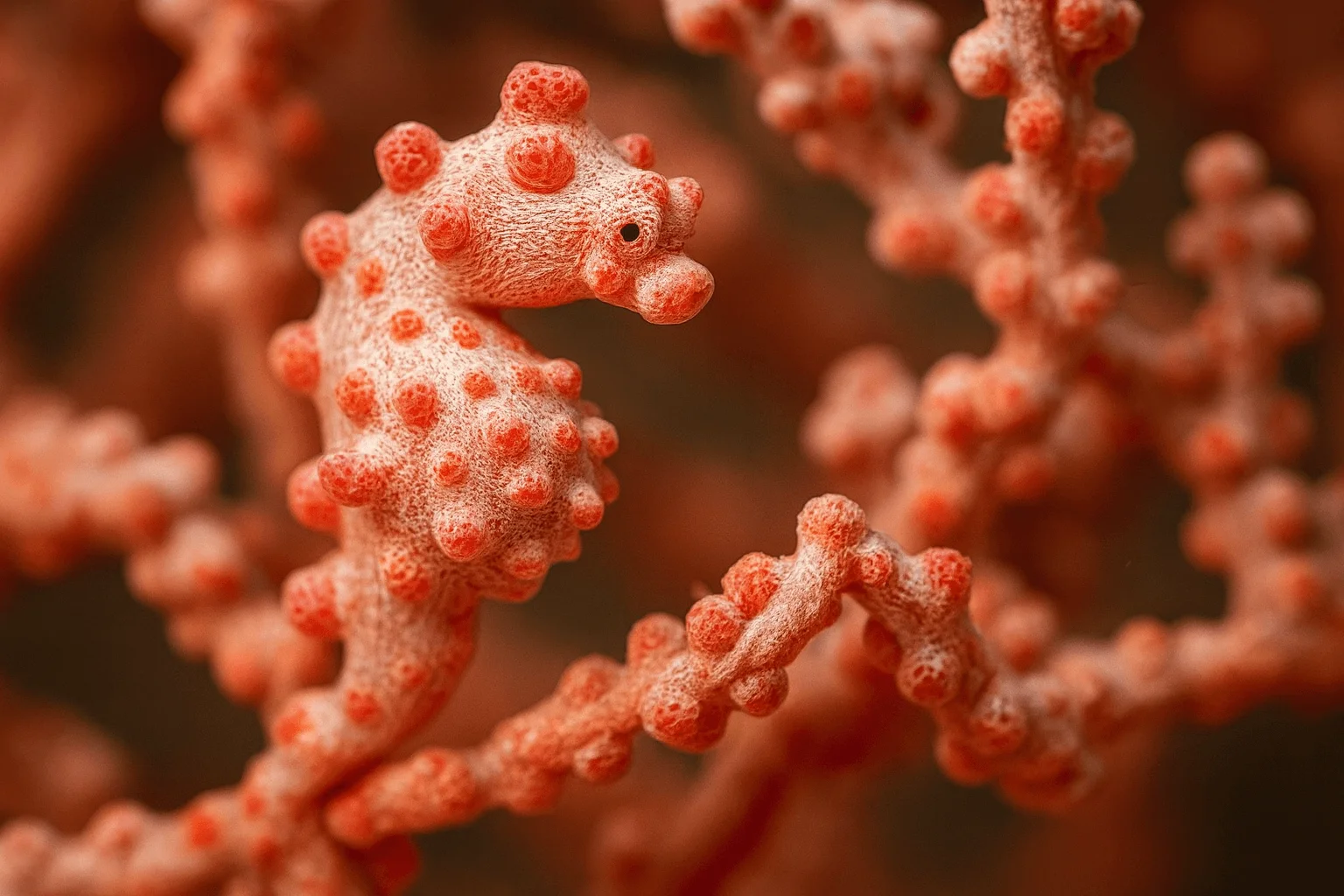
Anilao
Anilao, a small barangay in Batangas province just two hours south of Manila, is often called the macro capital of the Philippines. More than 50 dive sites fringe the coast and nearby islands, offering an intoxicating mix of coral‑covered pinnacles, muck slopes and blackwater encounters. Critter enthusiasts come for the legendary muck dives at Secret Bay and Anilao Pier, where mimic octopuses, blue‑ringed octopuses, wonderpus, seahorses, ghost pipefish, frogfish and dozens of nudibranch species lurk in the silt. Shallow reefs like Twin Rocks and Cathedral are covered in soft corals and teem with reef fish, while deeper sites such as Ligpo Island feature gorgonian‑covered walls and occasional drift. Because Anilao is so close to Manila and open year‑round, it’s the easiest place in the Philippines to squeeze in a quick diving getaway.
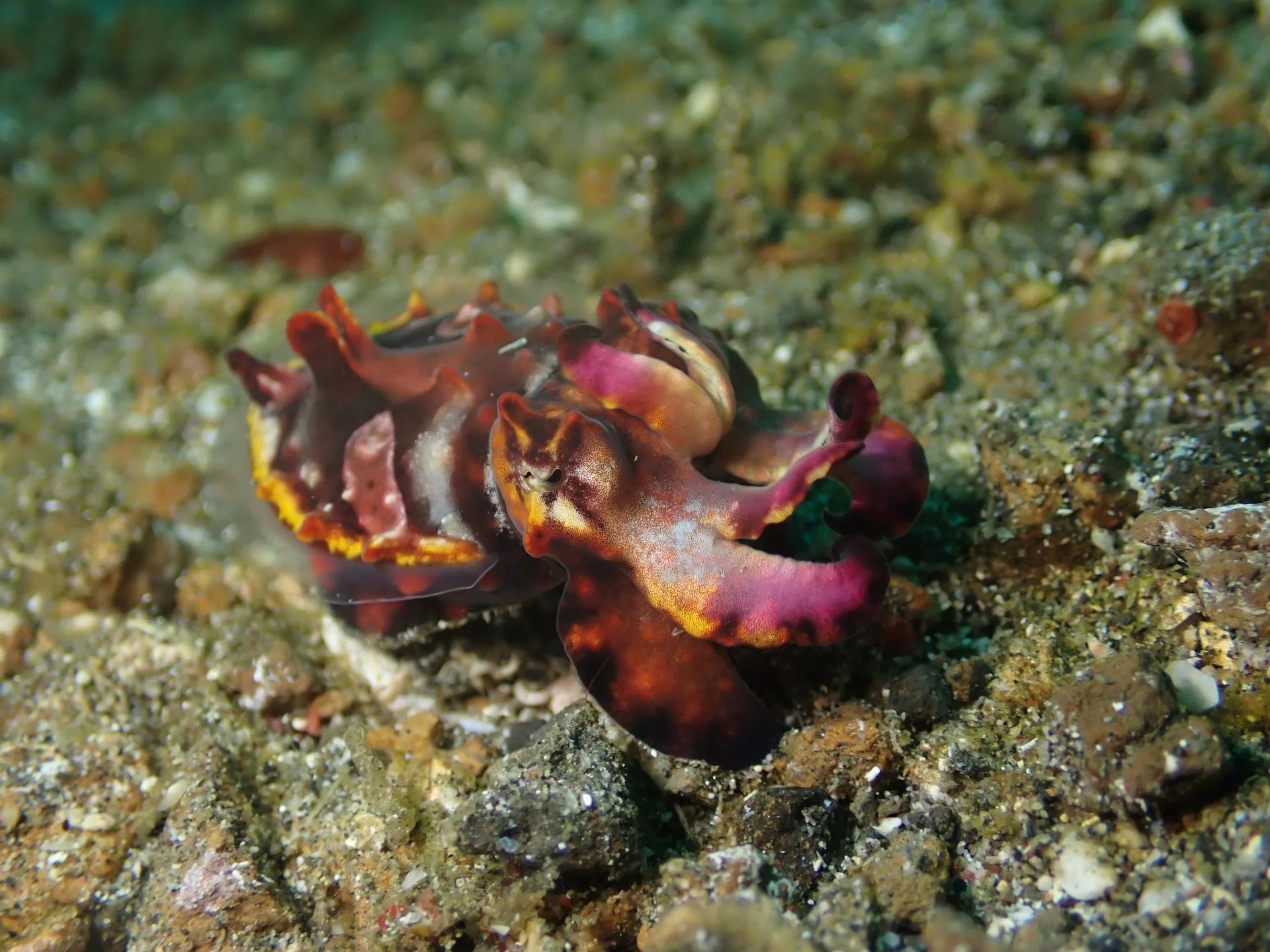
Lembeh
The Lembeh Strait in North Sulawesi has become famous as the muck‑diving capital of the world. At first glance its gently sloping seabed of black volcanic sand, rubble and discarded debris looks bleak. Look closer and it is teeming with weird and wonderful life: hairy and painted frogfish, flamboyant cuttlefish, mimic and blue‑ringed octopuses, ornate ghost pipefish, tiny seahorses, shrimp, crabs and a rainbow of nudibranchs. Most dives are shallow and calm with little current, making it an ideal playground for macro photographers. There are a few colourful reefs for a change of scenery, but Lembeh is all about searching the sand for critter treasures.
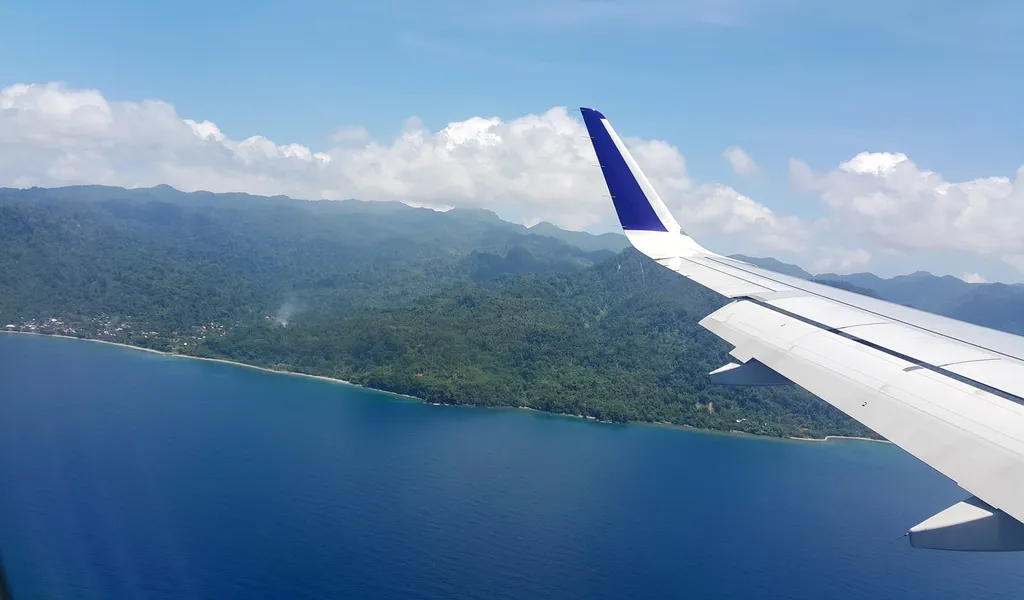
Ambon
Ambon sits in Indonesia’s Maluku (Spice Islands) and is one of the world’s elite muck destinations—often ranked alongside Lembeh for rare critters, without the crowds. The heart of the action is Ambon Bay around Laha village near the airport: black volcanic sand slopes, rubble, pier posts and discarded debris that somehow host psychedelic frogfish (endemic to Ambon waters), rhinopias, flamboyant cuttlefish, mimic and wonderpus octopuses, ghost pipefish and endless nudibranchs. Most bay dives stay 5–35 m with long bottom times that photographers love. When weather allows, the south and east coasts flip the script—healthy hard coral, walls, arches at Pintu Kota, the swim-throughs of Hukurila Cave, and the critter-coated Duke of Sparta wreck. Expect modest lodging in Laha or resort packages further around the bay; July–August monsoon often closes operators.
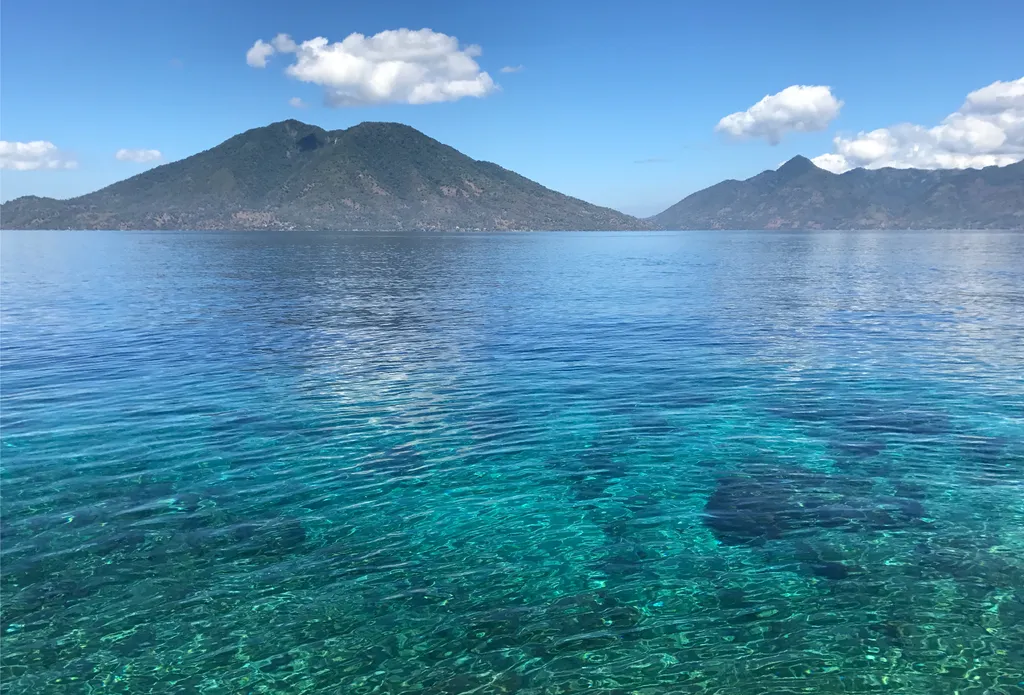
Alor
Alor rewards a trip that moves between two very different kinds of diving. In Pantar Strait, walls and coral slopes meet moving water, with schooling fish along exposed edges. Inside Kalabahi Bay, volcanic sand, rubble and silty bottoms turn the dive into a slow search for small animals. The diving area spans the shores of Alor, Pantar and Pura; where you stay affects which of these habitats fits comfortably into a boat day. Water movement explains much of the variation. Cold water enters the strait from the south, and local operators associate upwelling and stronger currents with new and full moons. A warm surface does not tell you what awaits below: a thermocline can change both the temperature and the demands of a dive. Site choice matters more than a single forecast for the archipelago. Build the itinerary around reefs, walls and macro life, with large animals as a possible encounter. There is no dependable shared season for hammerheads, mola or threshers on which to base a booking. A guide who can switch between exposed sites and sheltered searches is more useful than a fixed list of promised sightings.
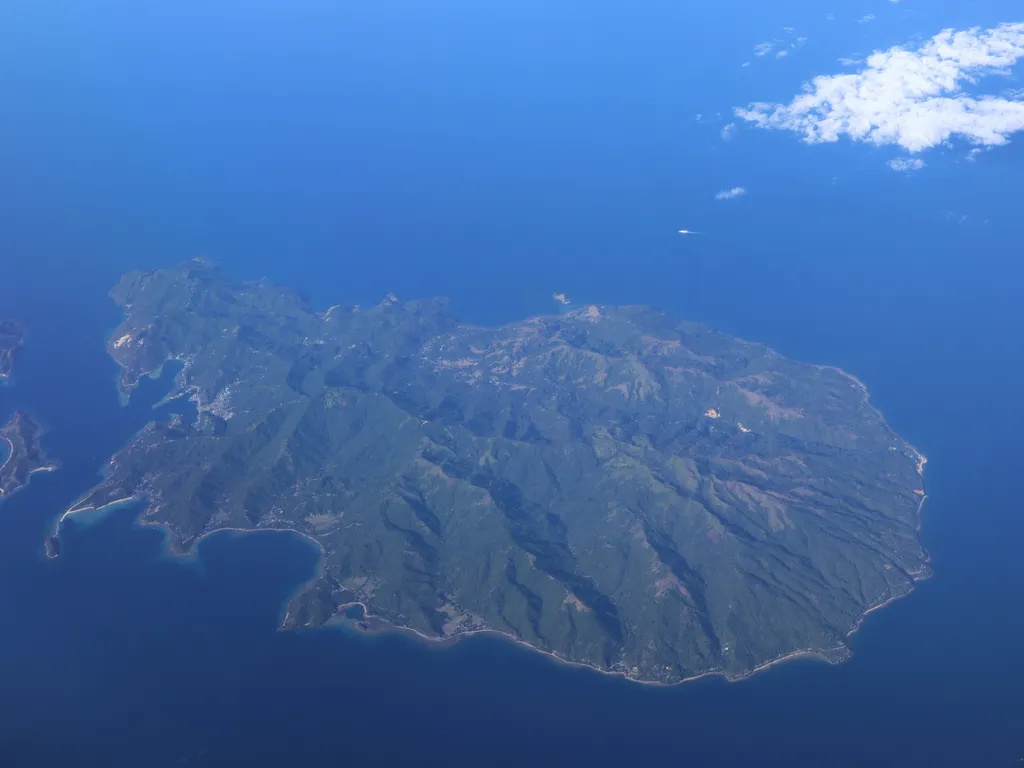
Romblon
Romblon is the Philippines' quiet answer to Lembeh—a province of small islands in the Sibuyan Sea where muck slopes, fan-coral walls and marine sanctuaries stack up without the resort sprawl. Most divers base in Lonos on Romblon Island, a short hop from Tablas, and spend days hopping between black-sand critter hunts and healthier reef drops. Signature finds include wunderpus, flamboyant cuttlefish, blue-ringed octopus, four pygmy seahorse species, Melibe colemani and Cyerce nudibranchs, plus eagle rays, sea snakes and schooling fish on the outer sites. Add a chimney dive at The Blue Hole on Tablas, cavern walls at Agpanabat, and night blackwater drifts over Romblon Pass when you want something stranger than another frogfish portrait.
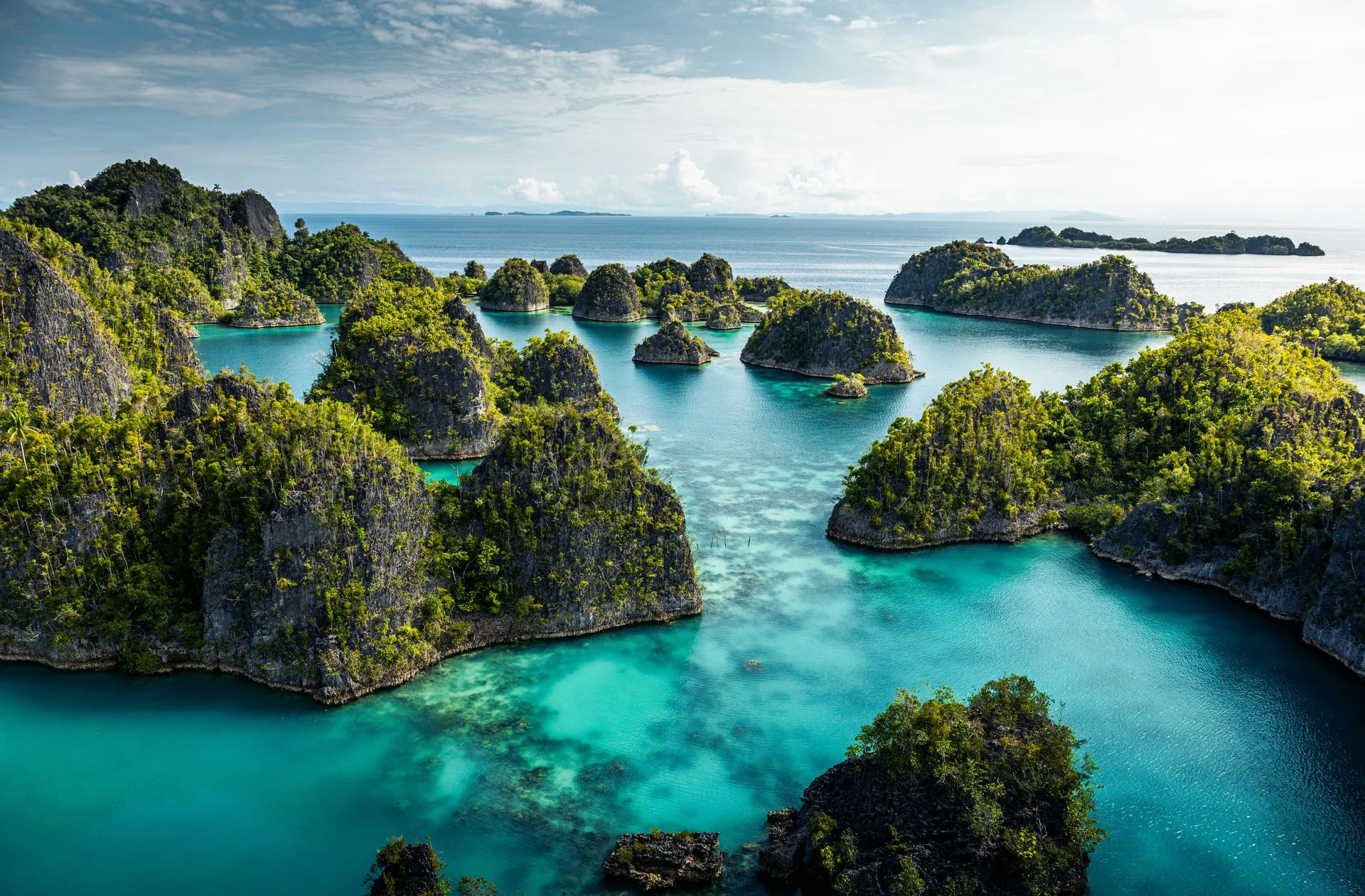
Raja Ampat
Raja Ampat, the “Four Kings,” is an archipelago of more than 1,500 islands at the edge of Indonesian West Papua. Its reefs sit in the heart of the Coral Triangle, where Pacific currents funnel nutrients into shallow seas and feed the world’s richest marine biodiversity. Diving here means gliding over colourful walls and coral gardens buzzing with more than 550 species of hard and soft corals and an estimated 1,500 fish species. You’ll meet blacktip and whitetip reef sharks on almost every dive, witness giant trevally and dogtooth tuna hunting schools of fusiliers, and encounter wobbegong “carpet” sharks, turtles, manta rays and dolphins. From cape pinnacles swarming with life to calm bays rich in macro critters, Raja Ampat offers endless variety. Above water, karst limestone islands and emerald lagoons provide spectacular scenery between dives.
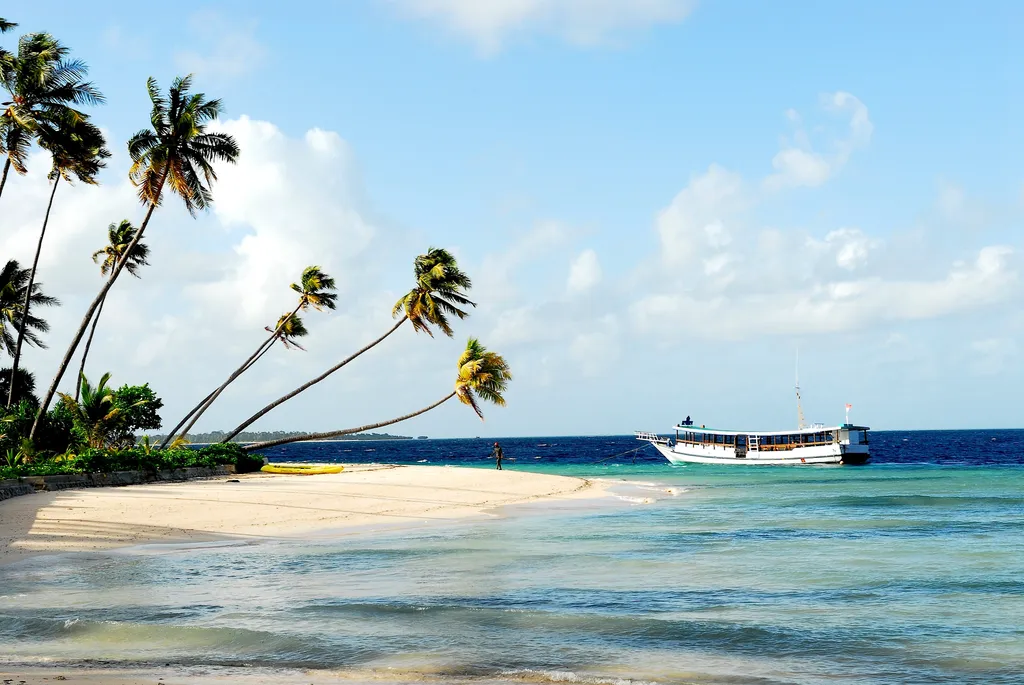
Wakatobi
Wakatobi National Park sits on the southeastern rim of Sulawesi, named from its four main islands—Wangi-Wangi, Kaledupa, Tomia, and Binongko. It holds some of the healthiest coral coverage in the Coral Triangle, with walls, seamounts, and fringing reefs that marine biologists still treat as a reference system. Visibility regularly hits 30 m and can stretch past 50 m on calm outer-reef days. Currents are usually mild and predictable, so you get long bottom times on colorful hard-coral gardens instead of fighting blue water. The signature experience is Wakatobi’s House Reef—walk-in shore diving a short swim from the jetty—backed by more than 40 day-boat sites, from beginner pinnacles like Roma to the knife-edge walls of Blade.
Tulamben(Bali)
Tulamben sits on Bali’s northeast coast and is best known for the USAT Liberty shipwreck – a 125‑metre cargo ship torpedoed in WWII that now lies just a short swim from shore. Warm water, mild currents and straightforward shore entries make diving here relaxed for all levels. Besides the wreck, divers can explore coral gardens, black‑sand muck sites and dramatic drop‑offs. Macro lovers will find nudibranchs, ghost pipefish, mimic octopus and pygmy seahorses, while big‑fish fans can encounter schooling jackfish, bumphead parrotfish and reef sharks. With a compact coastline packed with variety, Tulamben delivers world‑class wreck and critter diving without long boat rides.