
Emperor Angelfish
Pomacanthus imperator
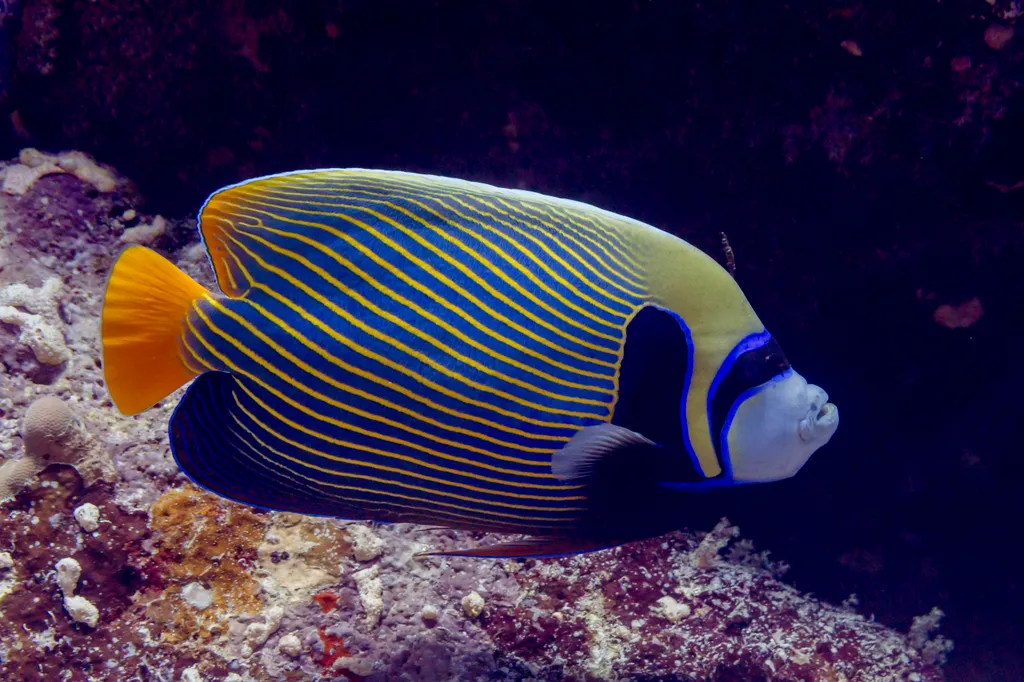
Photo by Diego Delso / CC BY-SA 4.0 via Wikimedia Commons
The emperor angelfish is the reef fish that makes every new diver stop finning and stare—horizontal bands of electric yellow and royal blue over a dark body, a black eye mask, and a tail that glows like a traffic cone. Pomacanthus imperator ranges across the entire tropical Indo-Pacific from the Red Sea to French Polynesia, and it's one of those species where the juvenile looks like a completely different animal: concentric white-and-blue rings on a dark body, earning the nickname "blue ring" in the aquarium trade. Adults are territorial, sponge-feeding reef residents that haunt overhangs and cave mouths on healthy coral slopes. They're common on Red Sea and Maldives itineraries, reliable in Raja Ampat and Komodo, and still exciting on dive number fifty because that color pattern doesn't get old.
🔬Classification
📏Physical Features
🌊Habitat Info
⚠️Safety & Conservation
Identification Guide
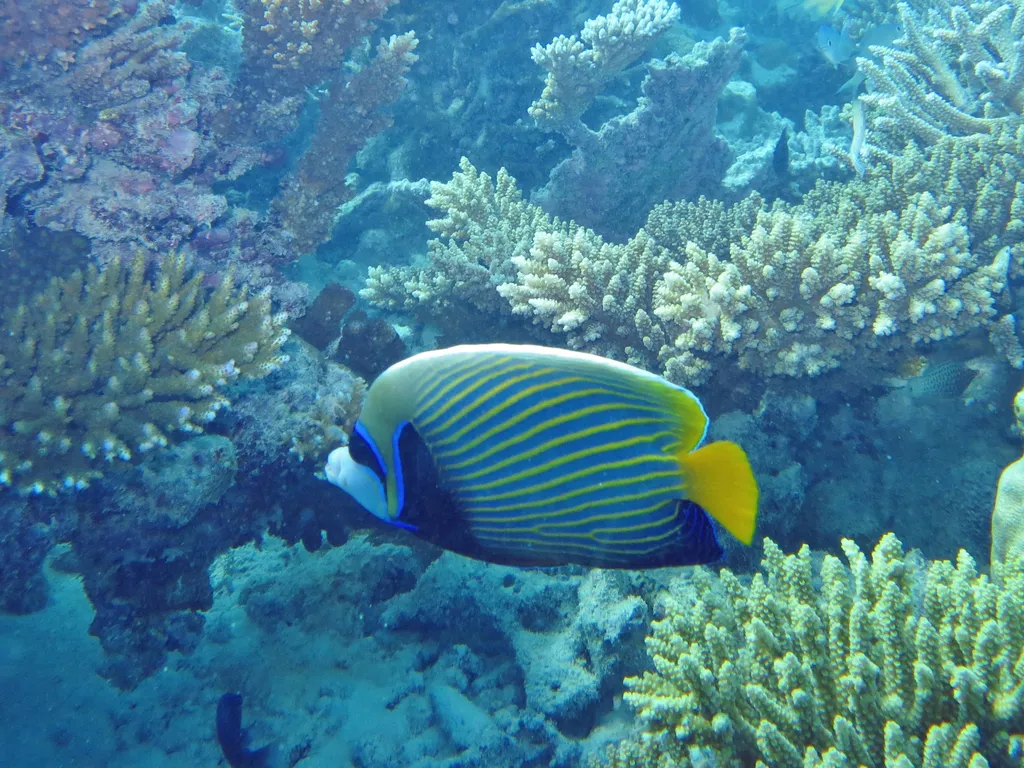
Photo by Frédéric Ducarme / CC BY-SA 4.0 via Wikimedia Commons
Field marks:
- Adult stripes: Bold alternating yellow and blue horizontal bands across the body; dark blue-black head with a black "mask" through the eye; bright yellow tail fin
- Body shape: Deep, compressed disc typical of Pomacanthidae; continuous dorsal fin; small mouth with brush-like teeth for scraping sponges
- Juvenile pattern: Dark body with concentric white and electric-blue rings—completely unlike the adult; white margin on dorsal fin in small juveniles
- Size: Adults reach up to ~40 cm; juveniles start around 6–8 cm with the ring pattern
Similar Species
- Regal angelfish (Pygoplites diacanthus): Also called "emperor angelfish" in some markets—vertical yellow stripes on orange body, not horizontal bands; different genus entirely
- Blue-ringed angelfish (P. annularis): Juvenile rings are similar, but adult has a blue ring on the caudal peduncle and different band geometry
- Six-banded angelfish (P. sexstriatus): Six vertical (not horizontal) blue-white bands; more Pacific distribution overlap in some areas
- King angelfish (Holacanthus passer): Eastern Pacific only; yellow body with blue speckling, no horizontal band pattern
Life Stages
Juveniles (< ~12 cm) show the ring pattern and shelter under ledges. Subadults develop intermediate banding in reef-front surge channels. Full adult coloration appears around 12–15 cm—one of the most dramatic ontogenetic makeovers in reef fish.
Top 10 Fun Facts about Emperor Angelfish
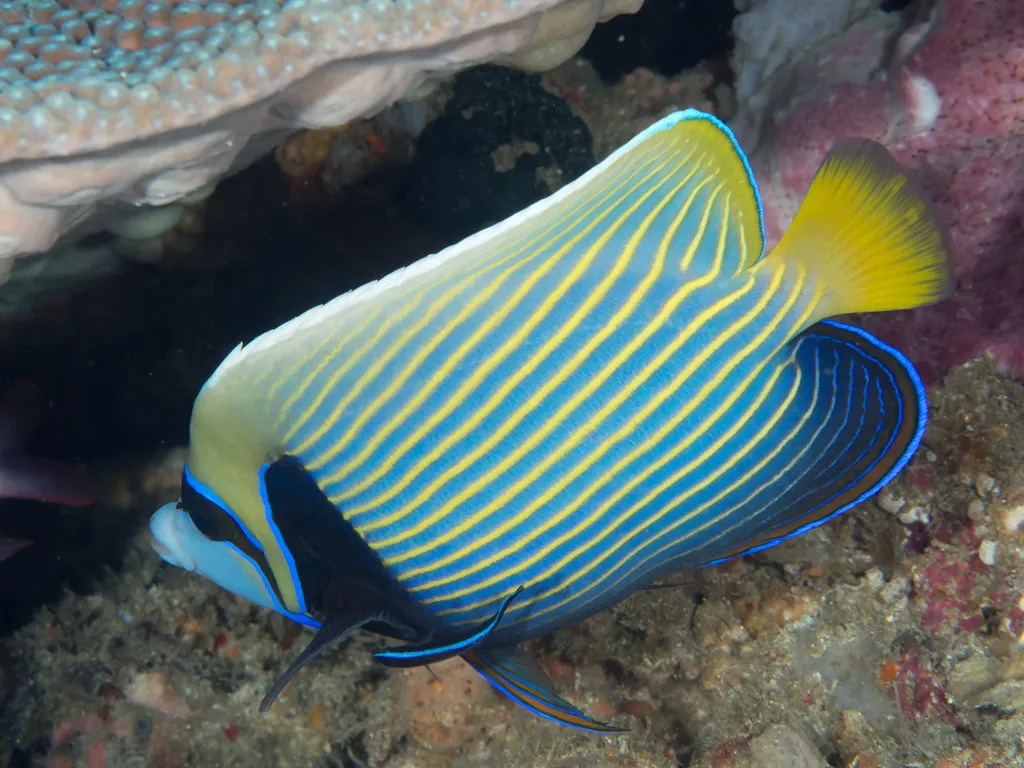
Photo by Rickard Zerpe / CC BY 2.0 via Wikimedia Commons
1. Two Fish, One Name Confusion
In English dive shops and Chinese aquarium forums, "emperor angelfish" gets applied to both Pomacanthus imperator (horizontal bands) and Pygoplites diacanthus (regal angelfish, vertical stripes). Always check the scientific name—especially before buying livestock or logging a sighting for a citizen-science app.
2. The Juvenile Was Its Own Species
Until 1933, juvenile P. imperator with its ring pattern was described as a separate species, P. nicobariensis. The extreme ontogenetic color change fooled early taxonomists—a cautionary tale about identifying reef fish from a single life stage.
3. Sponge Specialist With a Scraping Smile
Adults feed primarily on sponges and encrusting organisms, using comb-like teeth in the small mouth. Watch an adult methodically working an overhang—that pecking rhythm is sponge harvesting, not algae grazing like surgeonfish.
4. Cleaner Fish on the Side
Both juveniles and adults occasionally act as cleaner fish, picking parasites from larger species including sunfish. Juveniles are sometimes found near shrimp cleaning stations—a behavior worth watching for on Red Sea and Maldives reef flats.
5. Territorial Real Estate
Adult males defend territories that can exceed 1,000 m², often with one or more females in a harem arrangement. Approach a cave-mouth resident slowly—burst swimming triggers a retreat into the overhang or an audible "knocking" warning.
6. Red Sea vs Pacific Color Forms
Western Indian Ocean (Red Sea) adults often show more vertical elements in the banding and a brighter yellow tail; Pacific forms trend toward cleaner horizontal stripes. Regional variation is subtle but recognizable to repeat visitors—another reason photographers chase "Christmas Island" and "Red Sea" morphs in the aquarium trade.
7. Depth Generalist, Structure Specialist
Recorded from 1 to 100 m, but recreational divers most often see them at 5–40 m on coral-rich slopes. The key isn't depth—it's structure. Ledges, caves, and channel walls with sponge growth are the reliable addresses.
8. Long-Lived Reef Royalty
Wild individuals may live 15–20+ years. That longevity, combined with specialized sponge diet and large territory needs, makes them poor long-term aquarium candidates despite their iconic status in the trade.
9. Lessepsian Pioneer
Since 2009, P. imperator has been recorded as a Lessepsian migrant in the eastern Mediterranean via the Suez Canal—one of many Red Sea species expanding westward as waters warm. Mediterranean sightings are still rare but biogeographically significant.
10. A Stamp and a Status Symbol
Featured on postage stamps from Israel, Indonesia, and Khor Fakkan; the species is IUCN Least Concern with stable populations across its range. The real threat is habitat loss from coral decline—not targeted fishing, though the aquarium trade removes substantial numbers from wild reefs annually.
Diving & Observation Notes
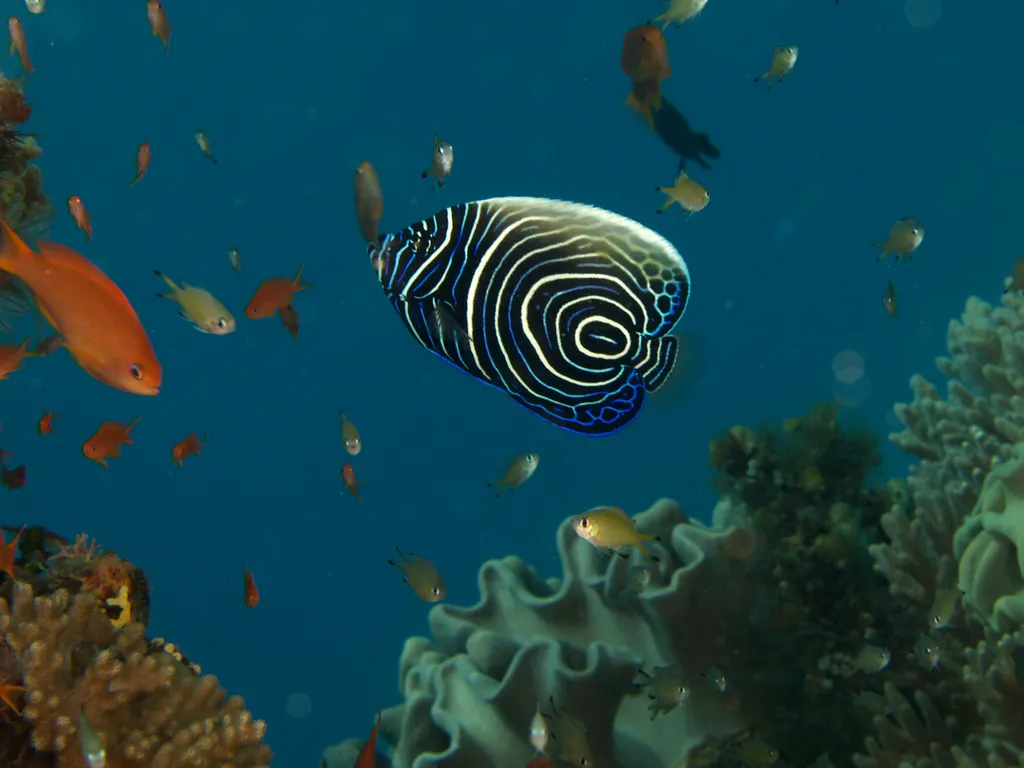
Photo by Nhobgood Nick Hobgood / CC BY-SA 3.0 via Wikimedia Commons
🧭 Where to Look
Start at 5–30 m on coral-rich slopes with overhangs and cave mouths. Red Sea sites (Sharm, Hurghada, Marsa Alam, Dahab) are among the most reliable in the world. In the Indo-Pacific, check lagoon channels and seaward walls in Maldives, Raja Ampat, Komodo, Wakatobi, Bunaken, Sipadan, and Tubbataha. For juveniles, scan sheltered reef flats, patch reefs, and the undersides of ledges at 5–15 m.
🐟 Behavior & Approach
Adults are territorial but habituated on busy dive sites—often allow a slow approach to 2–3 m before retreating into a cave. Avoid chasing; park near a known overhang and wait. Juveniles are shyer and stick to cover; never block their escape route into a crevice. If you hear a low knocking sound, back off—you've stressed the fish.
📷 Photo Tips
Adult side profiles against blue water show the band pattern best; fill flash or video light brings out yellow without blowing highlights. For juveniles, macro or mid-range lens—get low and shoot slightly upward so the ring pattern reads against open water. Adults in caves: expose for the fish, accept dark background; don't stick strobes into the crevice and blind the resident.
♻️ Ethics
Do not collect for aquariums—wild-caught emperor angelfish have poor survival rates in home tanks and the trade damages reef populations. Maintain neutral buoyancy around cave mouths; kicking up sediment smothers the sponges they feed on. Enjoy them as indicators of reef health: regular sightings on a slope mean the sponge community and structure are still intact.
Best Places to Dive with Emperor Angelfish
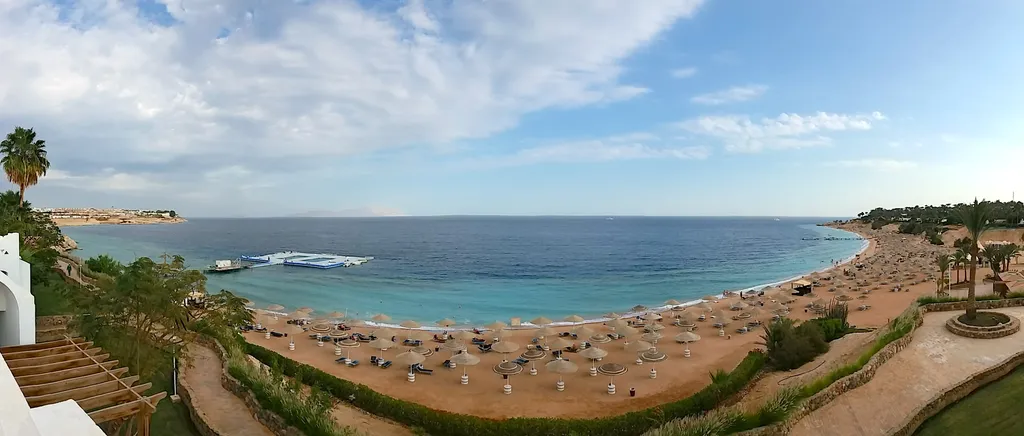
Sharm El Sheikh
Sharm El Sheikh sits at the southern tip of Egypt's Sinai Peninsula and functions as the Red Sea's busiest dive hub for good reason. Day boats run south to Ras Mohammed National Park—walls, current-swept pinnacles and the famous Shark Reef–Yolanda Reef double drop—and north through the Straits of Tiran past four reef towers where hammerheads patrol in season. Wreck divers book the early alarm for SS Thistlegorm, one of the world's great WWII cargo dives, and the coral-encrusted SS Dunraven on calmer days. Closer to Naama Bay and Sharks Bay, house reefs like Ras Um Sid, the Gardens and Temple deliver easy boat dives between the big-ticket runs. Visibility routinely clears 20 m, reefs are healthy by Red Sea standards, and the resort strip makes logistics painless: gear on, coffee, two-tank boat, back for lunch.
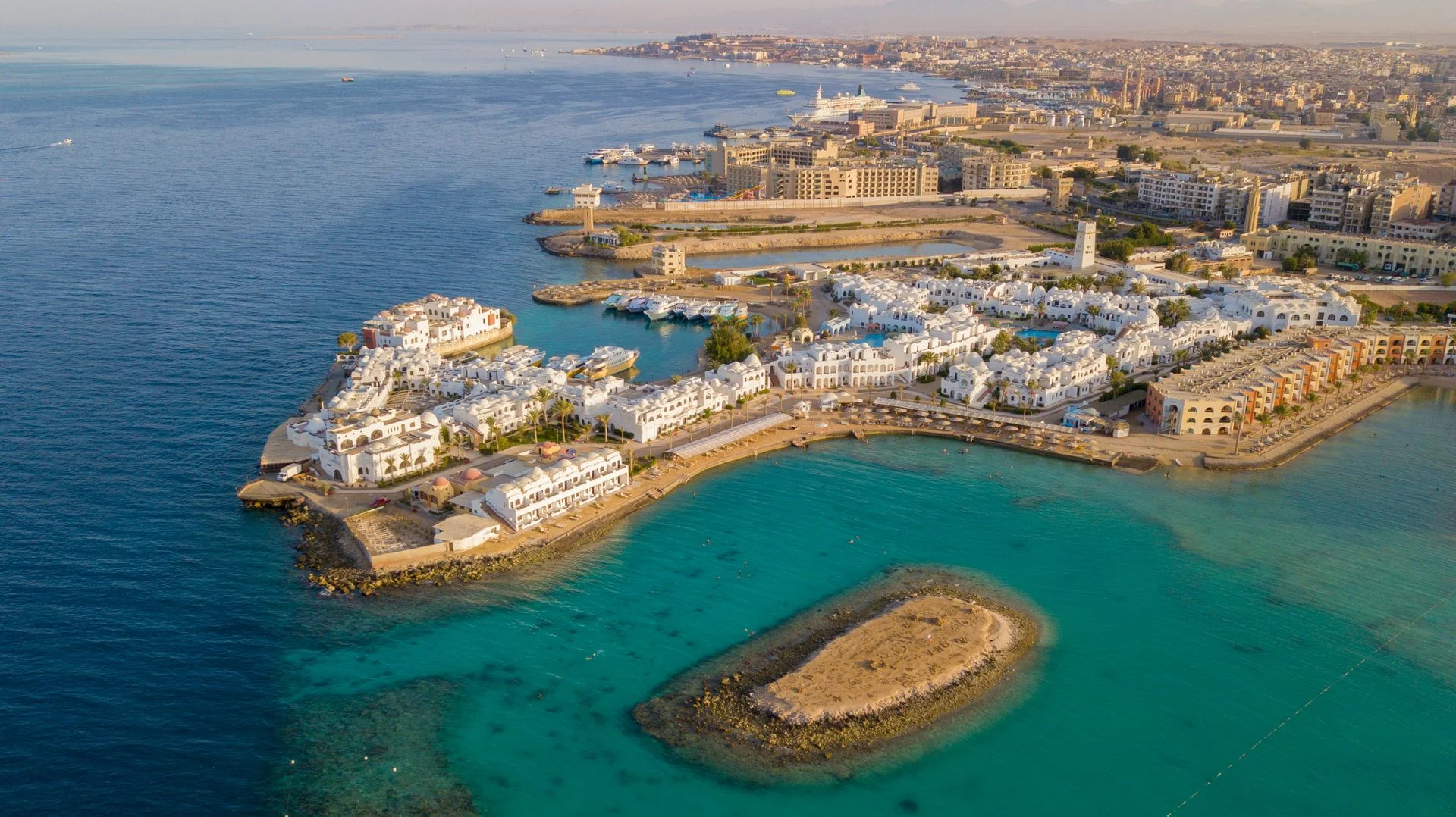
Hurghada (Red Sea)
Hurghada is one of Egypt’s original Red Sea resorts and remains a popular base for day‑boat diving and liveaboard departures. Situated on the mainland’s eastern shore, the city offers easy access to a wide variety of reefs, wrecks and islands within a short boat ride. Warm, clear waters, gentle conditions and lively coral gardens make Hurghada ideal for training and fun diving, while nearby sites such as Abu Nuhas and the Thistlegorm wreck keep more experienced divers enthralled. Topside, the modern resort town boasts a lively promenade, international restaurants and plenty of après‑dive entertainment.
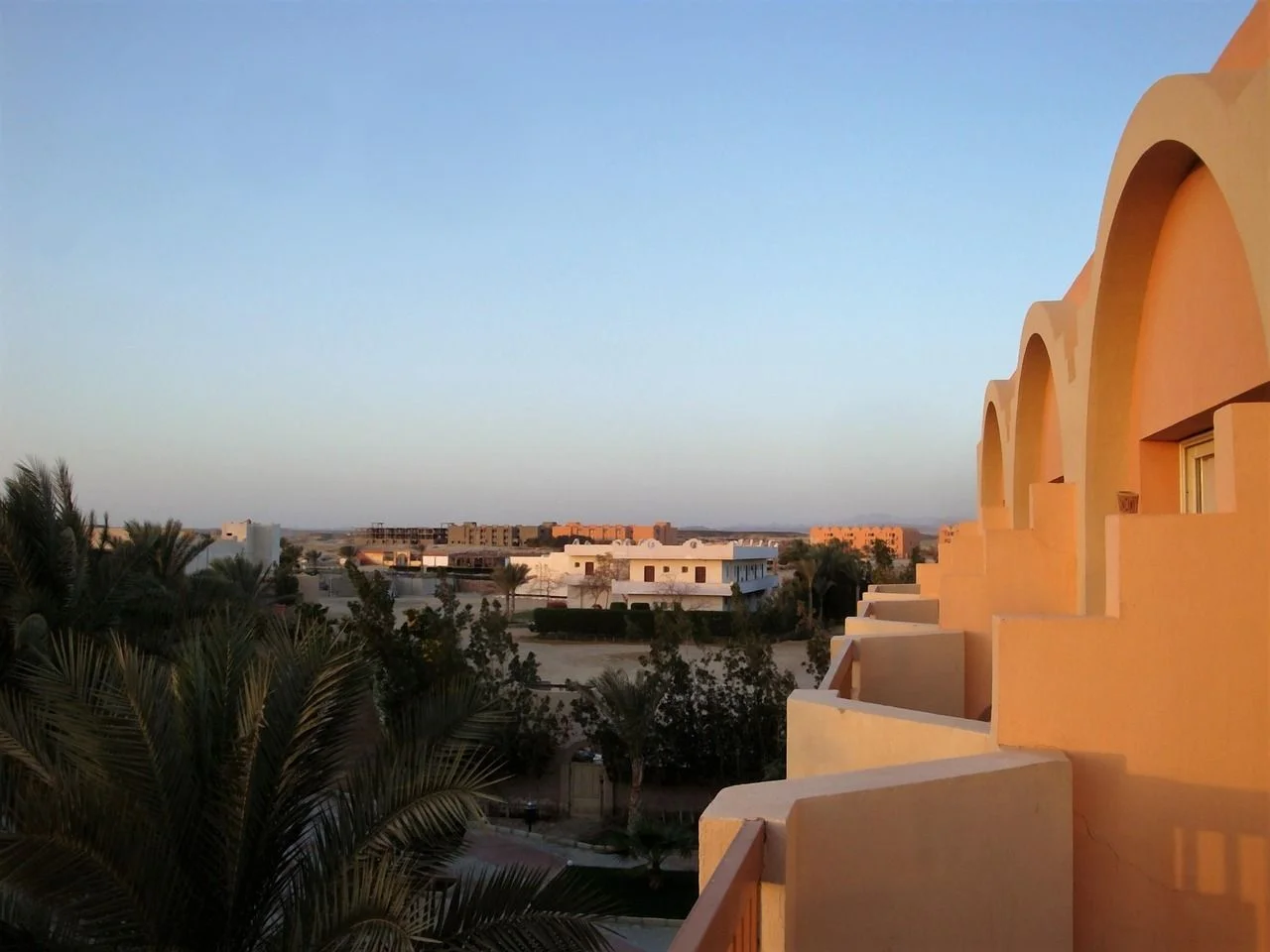
Marsa Alam
Once a sleepy fishing village on Egypt’s southern Red Sea coast, Marsa Alam is now synonymous with pristine reefs, encounters with sharks and dolphins, and long, deep walls far from the crowds. Stretching from El Quseir in the north to Wadi Lahami in the far south, the region encompasses famous offshore pinnacles such as Elphinstone and Daedalus, seagrass meadows where dugongs graze, and shallow bays sheltering green turtles. Compared to Hurghada and Sharm, the reef systems here are relatively untouched and the crowds thin, making Marsa Alam ideal for divers seeking pelagics, dramatic drop‑offs and a taste of the desert wilderness.
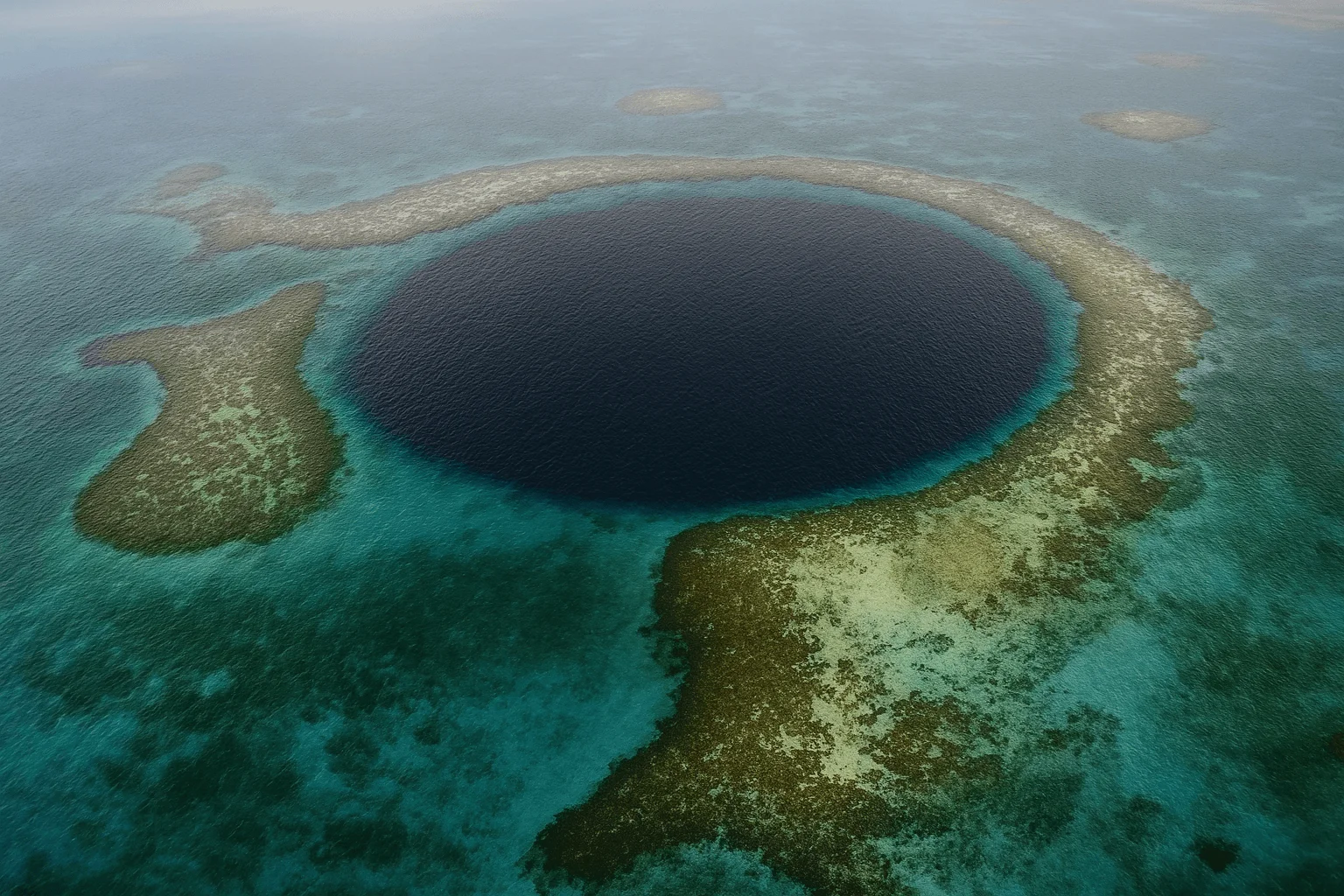
Dahab
Dahab is a laid‑back Bedouin village on Egypt’s Sinai Peninsula that has become a magnet for divers and free divers alike. The fringing reef starts just a few metres from the beach, dropping into a coral‑covered plateau and steep walls cut by canyons and chimney‑like holes. From beginner‑friendly shore entries at Lighthouse and Coral Garden to the legendary Blue Hole and Canyon, Dahab offers reef gardens full of anthias, butterflyfish and turtles as well as thrilling drift dives and deep blue walls. Year‑round sunshine, clear desert air and a bohemian vibe make it easy to spend weeks exploring the many dive sites along the shoreline and by boat.
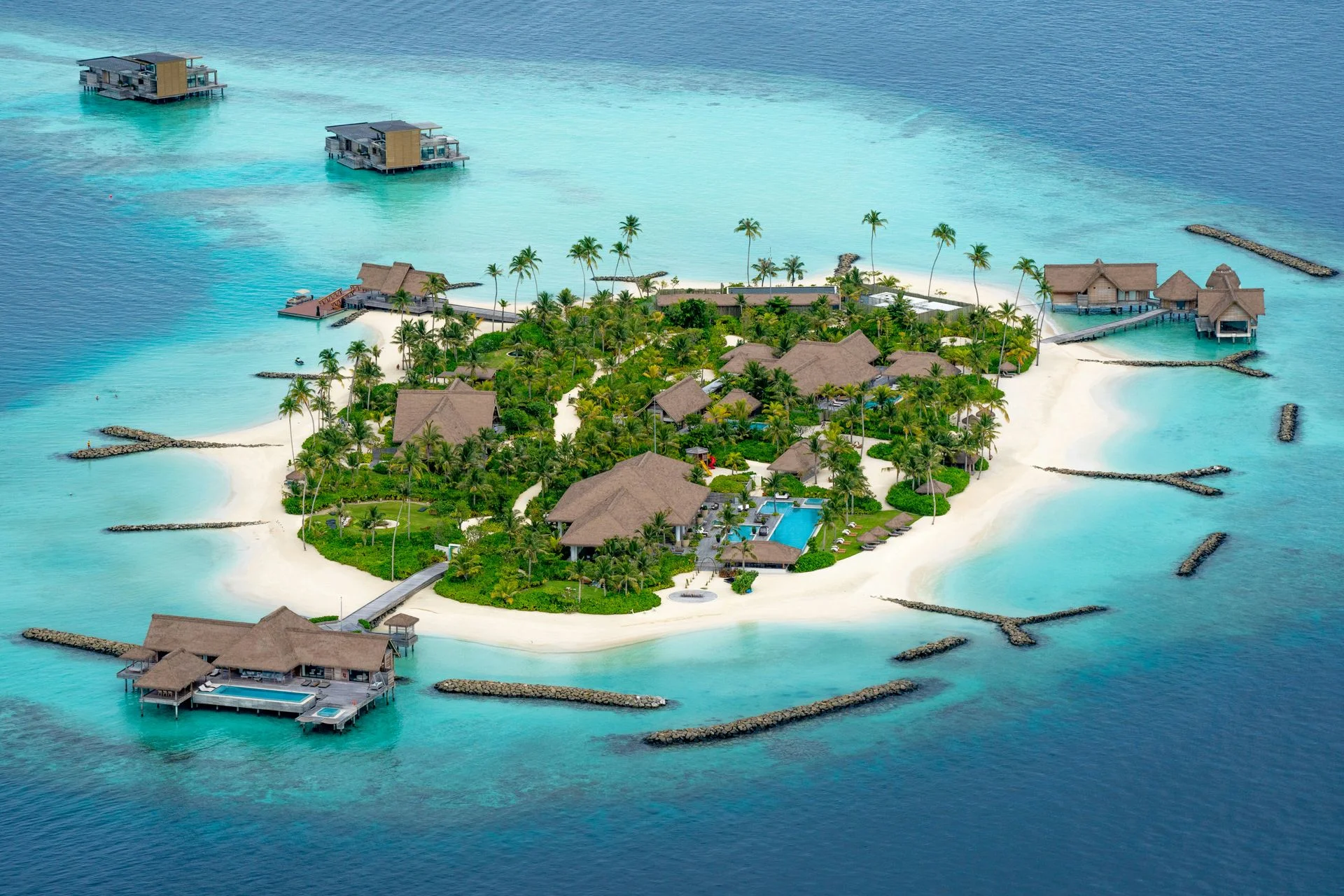
Maldives
Scattered across the Indian Ocean like strings of pearls, the Maldives’ 26 atolls encompass more than a thousand low‑lying islands, reefs and sandbanks. Beneath the turquoise surface are channels (kandus), pinnacles (thilas) and lagoons where powerful ocean currents sweep past colourful coral gardens. This nutrient‑rich flow attracts manta rays, whale sharks, reef sharks, schooling jacks, barracudas and every reef fish imaginable. Liveaboards and resort dive centres explore sites such as Okobe Thila and Kandooma Thila in the central atolls, manta cleaning stations in Baa and Ari, and shark‑filled channels like Fuvahmulah in the deep south. Diving here ranges from tranquil coral slopes to adrenalin‑fuelled drifts through current‑swept passes, making the Maldives a true pelagic playground.
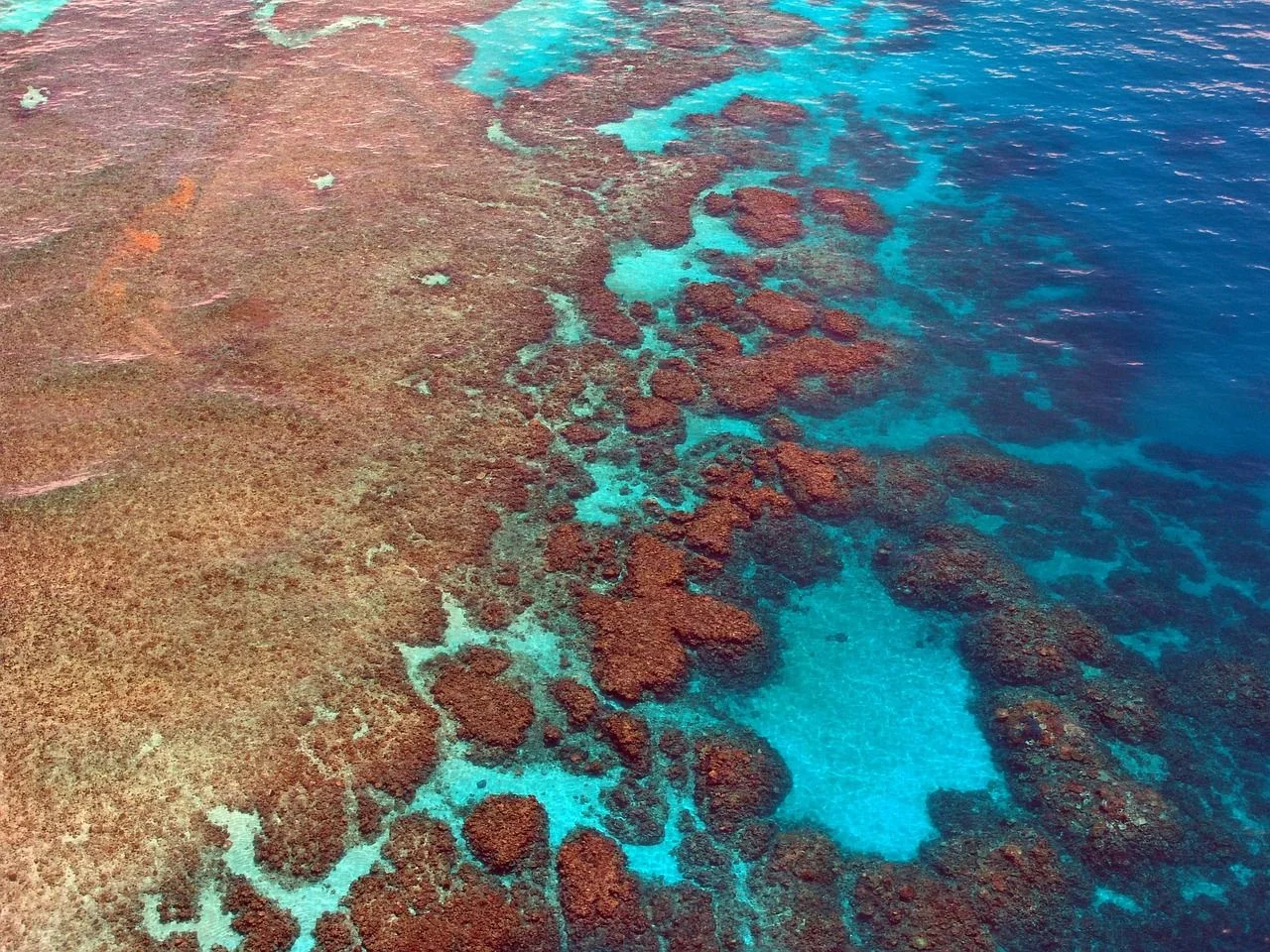
Great Barrier Reef
The Great Barrier Reef stretches for more than 2,300 km along Australia’s Queensland coast and is Earth’s largest coral ecosystem. With over 2,900 individual reefs, hundreds of islands, and a staggering diversity of marine life, it’s a bucket‑list destination for divers. Outer reef walls, coral gardens and pinnacles support potato cod, giant trevallies, reef sharks, sea turtles, manta rays and even visiting dwarf minke and humpback whales. Divers can explore historic wrecks like the SS Yongala, drift along the coral‑clad walls of Osprey Reef or mingle with friendly cod at Cod Hole. Whether you’re a beginner on a day trip from Cairns or an experienced diver on a remote liveaboard, the Great Barrier Reef offers unforgettable underwater adventures.
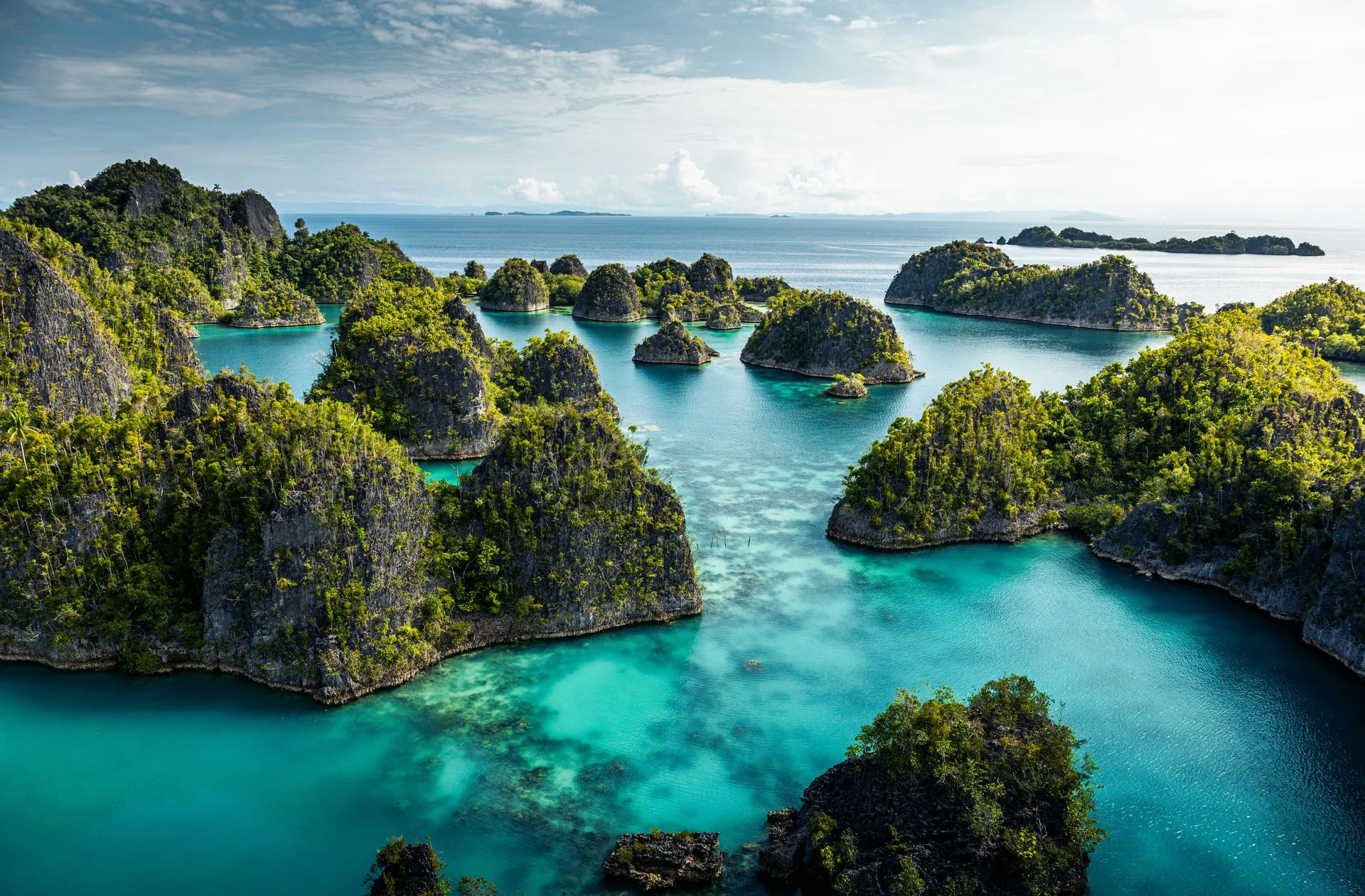
Raja Ampat
Raja Ampat, the “Four Kings,” is an archipelago of more than 1,500 islands at the edge of Indonesian West Papua. Its reefs sit in the heart of the Coral Triangle, where Pacific currents funnel nutrients into shallow seas and feed the world’s richest marine biodiversity. Diving here means gliding over colourful walls and coral gardens buzzing with more than 550 species of hard and soft corals and an estimated 1,500 fish species. You’ll meet blacktip and whitetip reef sharks on almost every dive, witness giant trevally and dogtooth tuna hunting schools of fusiliers, and encounter wobbegong “carpet” sharks, turtles, manta rays and dolphins. From cape pinnacles swarming with life to calm bays rich in macro critters, Raja Ampat offers endless variety. Above water, karst limestone islands and emerald lagoons provide spectacular scenery between dives.
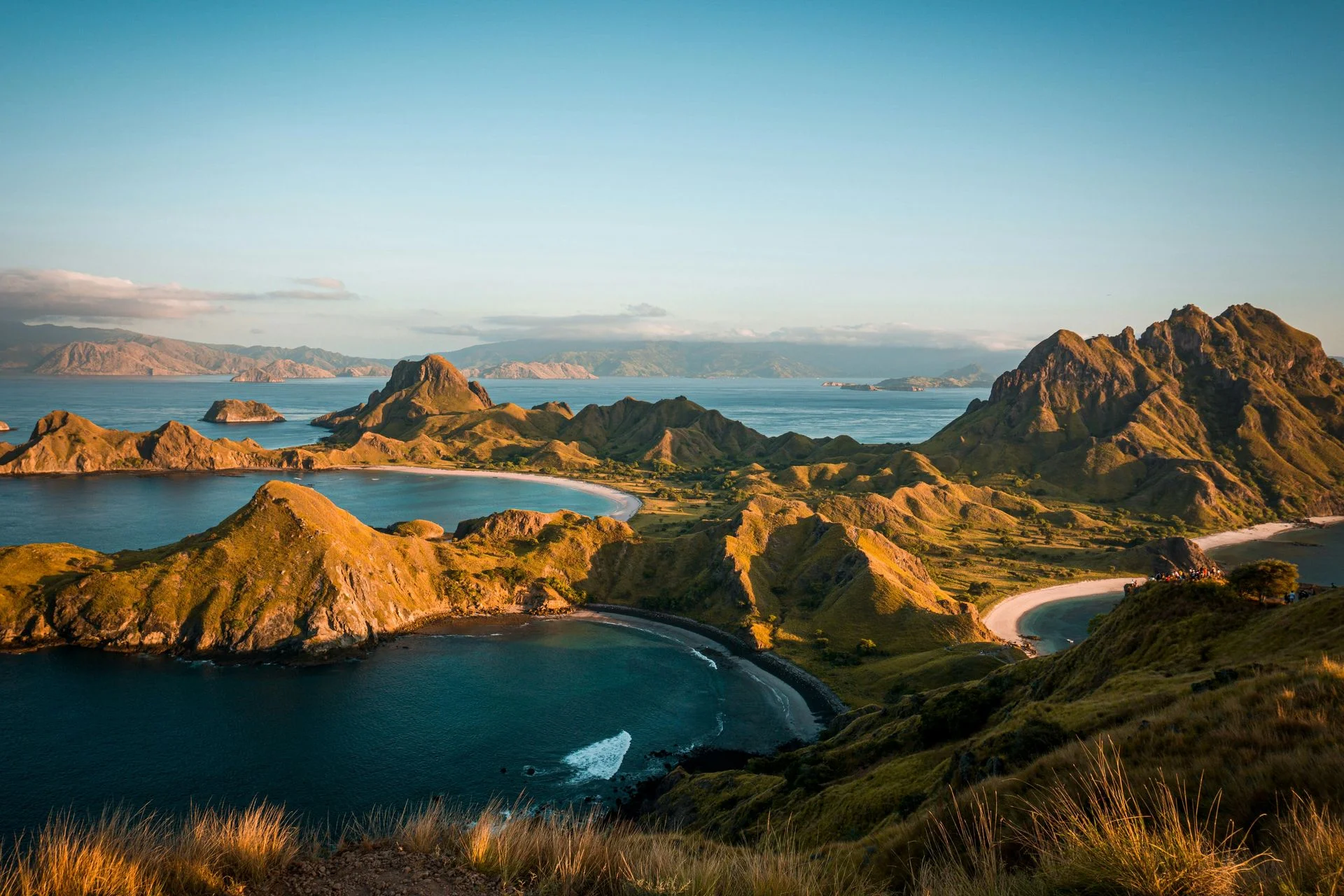
Komodo
Komodo National Park is a diver’s paradise full of marine diversity: expect healthy coral gardens, reef sharks, giant trevallies, countless schools of fish, and frequent manta ray sightings at sites like Manta Point and Batu Bolong. Drift dives and dramatic reef structures add excitement, while both macro lovers and big-fish fans will find plenty to love. Above water, the wild Komodo dragons roam, giving a touch of prehistoric wonder to the whole trip.
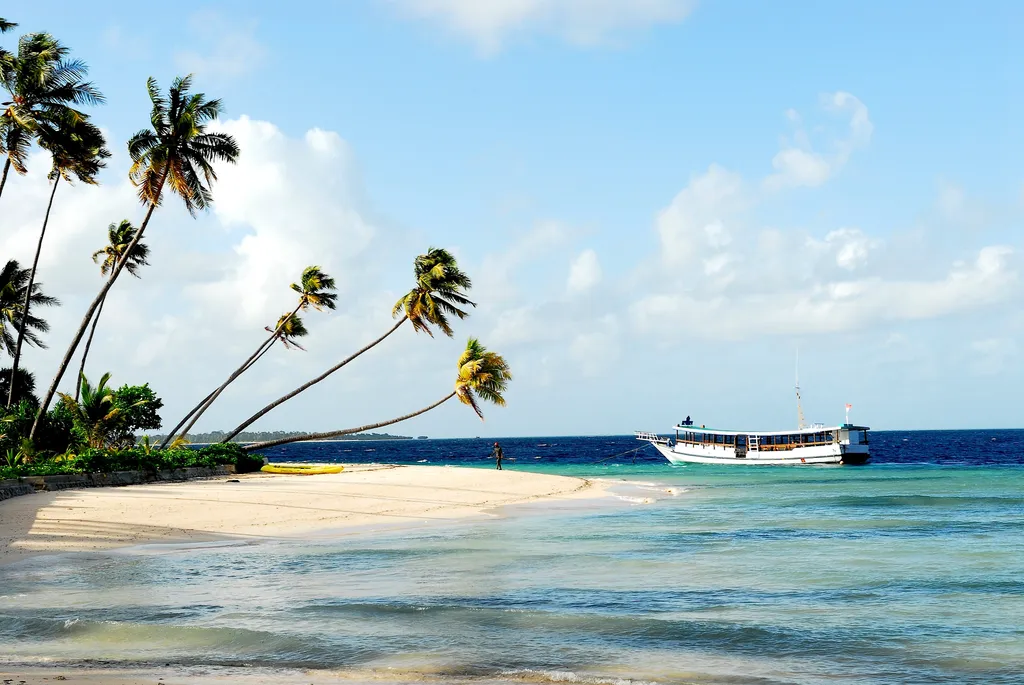
Wakatobi
Wakatobi National Park sits on the southeastern rim of Sulawesi, named from its four main islands—Wangi-Wangi, Kaledupa, Tomia, and Binongko. It holds some of the healthiest coral coverage in the Coral Triangle, with walls, seamounts, and fringing reefs that marine biologists still treat as a reference system. Visibility regularly hits 30 m and can stretch past 50 m on calm outer-reef days. Currents are usually mild and predictable, so you get long bottom times on colorful hard-coral gardens instead of fighting blue water. The signature experience is Wakatobi’s House Reef—walk-in shore diving a short swim from the jetty—backed by more than 40 day-boat sites, from beginner pinnacles like Roma to the knife-edge walls of Blade.
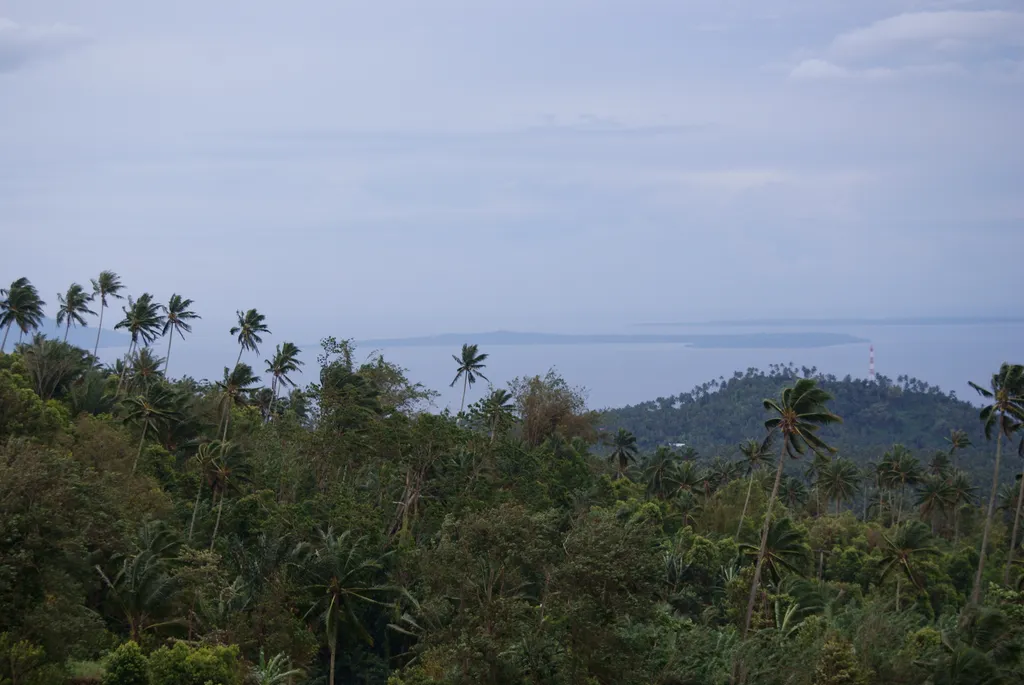
Bunaken
Bunaken National Park is wall-diving country: five volcanic islands—Bunaken, Manado Tua, Siladen, Mantehage, and Nain—ringed by drop-offs that fall from snorkel depth into hundreds of metres of blue. This is not the muck slopes of the Manado mainland; it is vertical reef, drift lines, and current-fed fish schools. The signature move is simple—roll off the boat at Lekuan or Muka Kampung, swim the shallow turtle flats, then hang on the wall while pyramid butterflyfish, fusiliers, and Napoleon wrasse stream past. Reef sharks patrol the corners, eagle rays cruise the blue, and barrel sponges the size of oil drums frame every wide-angle shot. Warm 27–29°C water, park protection since 1991, and island resorts that put you on the first boat at 08:00 make Bunaken the classic North Sulawesi wall trip—fly into MDC, transfer to the strait, and live on the reef for a week.
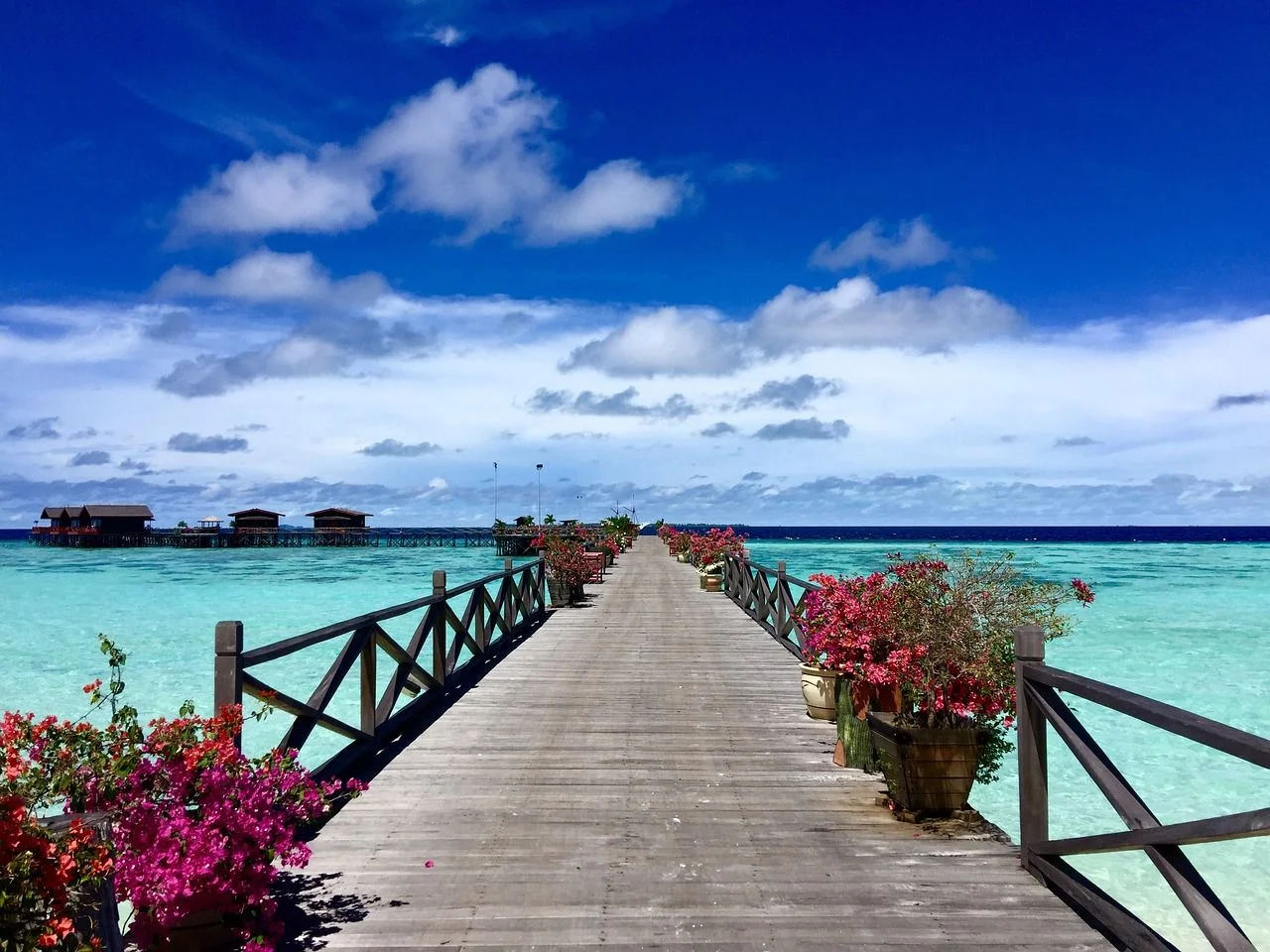
Sipadan & Semporna
Sipadan Island off the coast of Sabah is Malaysia’s crown jewel of diving – a steep limestone pinnacle rising more than 600 metres from the sea floor and teeming with pelagic life. Currents sweep past vertical walls encrusted in hard and soft corals, bringing in barracudas, jacks, reef sharks and bumphead parrotfish in breathtaking numbers. Nearby Mabul and Kapalai offer an entirely different experience on shallow sand‑slope reefs and artificial structures, where flamboyant cuttlefish, frogfish, mandarin fish and other macro critters hide among sponges and tyres. With limited daily permits, a visit to Sipadan is a privilege; most divers base themselves in the frontier town of Semporna or at water‑bungalow resorts on Mabul and Kapalai and make day trips into the park.
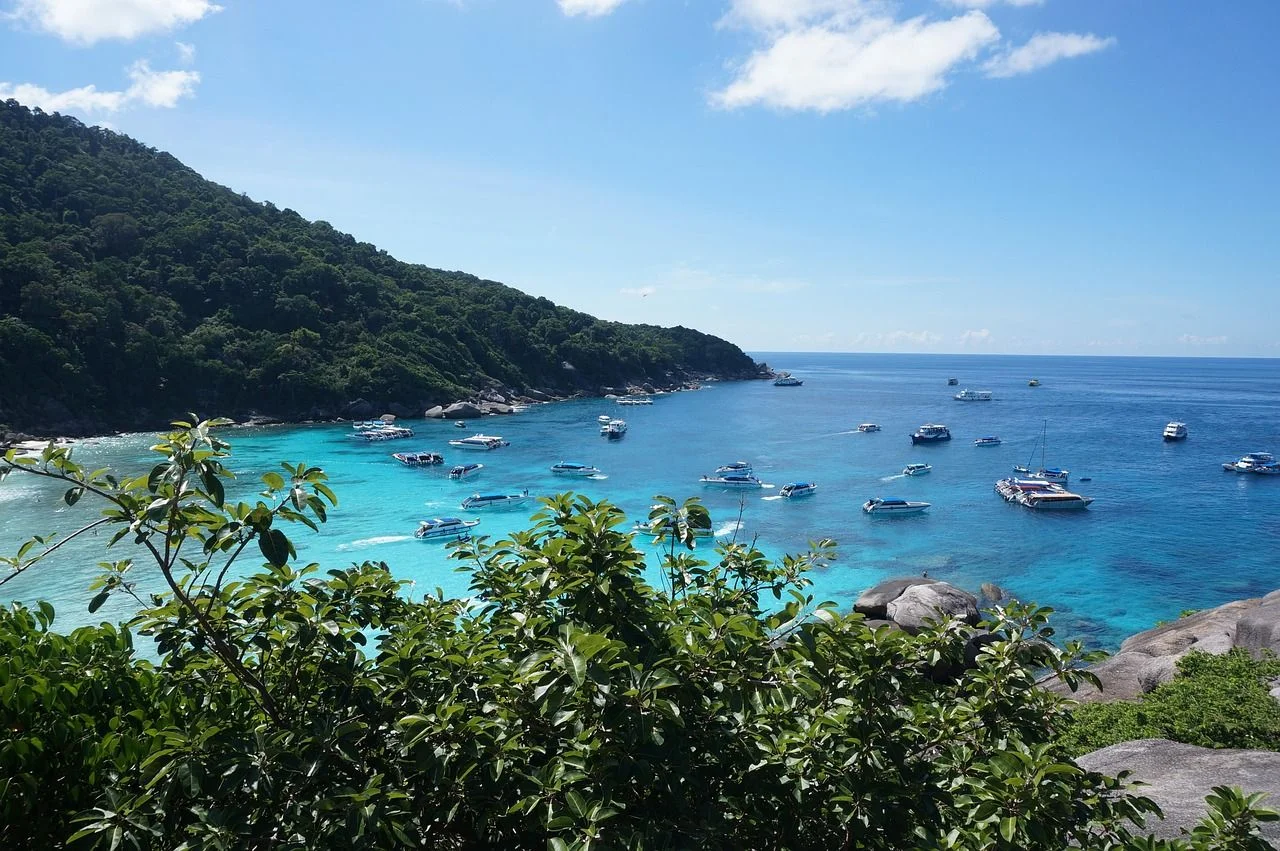
Similan
The Similan Islands are an archipelago of nine granite islands in the Andaman Sea off Thailand’s west coast, protected as part of Mu Ko Similan National Park. Underwater you’ll find dramatic boulder formations, swim‑throughs, coral gardens and drop‑offs teeming with life. Manta rays and whale sharks cruise by at sites like Richelieu Rock and Koh Tachai, while reef sharks, leopard sharks, turtles and swarming schools of fusiliers and trevally are common. The park is only open from mid‑October to mid‑May, when calm seas and clear water make for world‑class liveaboard trips or speedboat day tours.
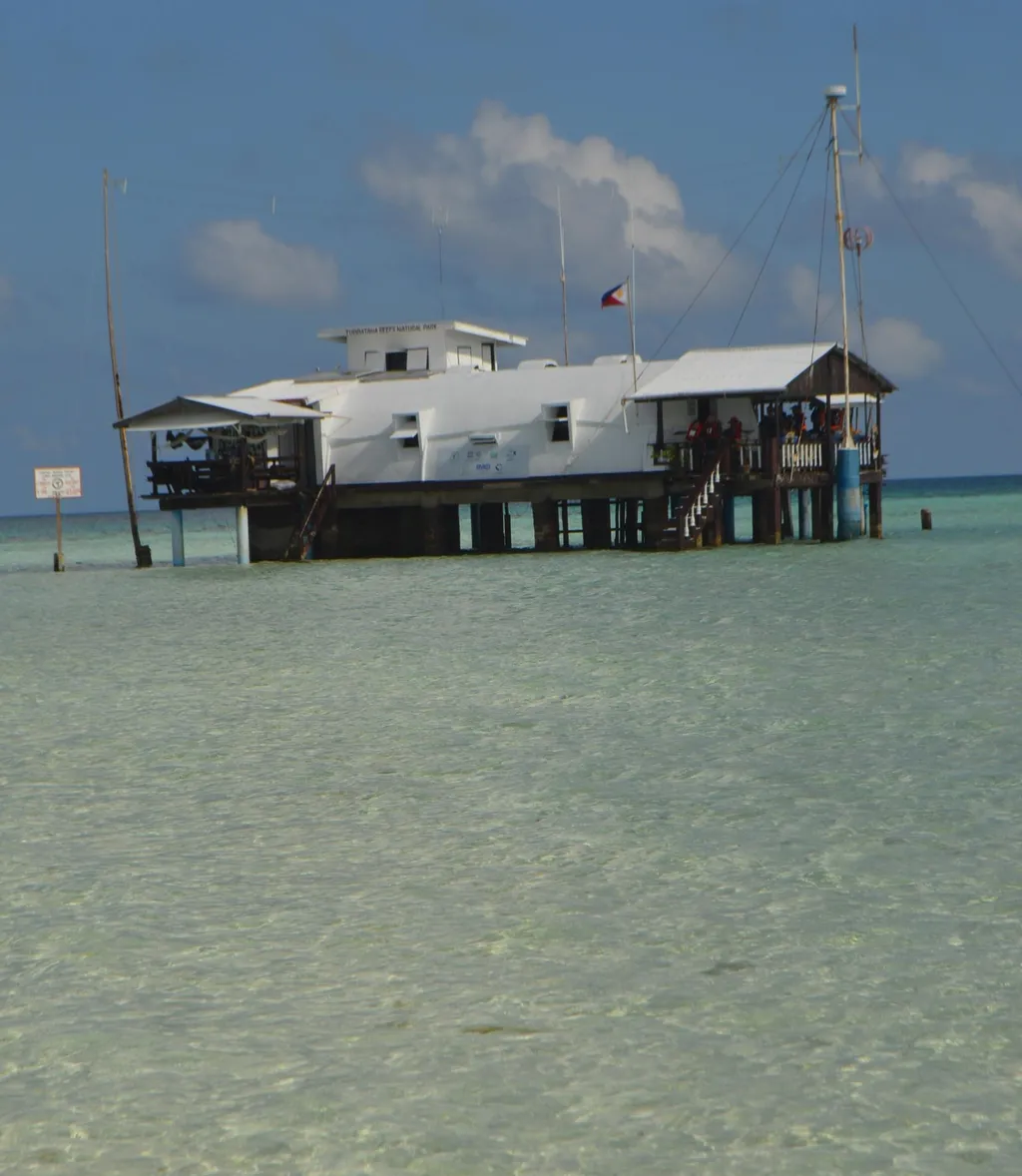
Tubbataha
Tubbataha Reefs Natural Park sits alone in the middle of the Sulu Sea—two coral atolls and a nearby bank that you only reach by liveaboard. For roughly ninety days each year (mid-March to mid-June), boats steam overnight from Puerto Princesa, drop anchor in reef lagoons, and spend the week on walls that drop into deep blue. Soft and hard coral cover is dense and healthy; the water column fills with schooling jacks, snappers, and bumphead parrotfish. Reef sharks are routine, hammerheads and whale sharks show when the blue cooperates, and mantas cruise cleaning stations. There is no shore diving, no day-boat option, and no resort on the reef—just park patrol boats, a ranger station, and the liveaboard fleet. If you want remote Philippine wall diving with shark density to match the marketing, this is the short season to book.
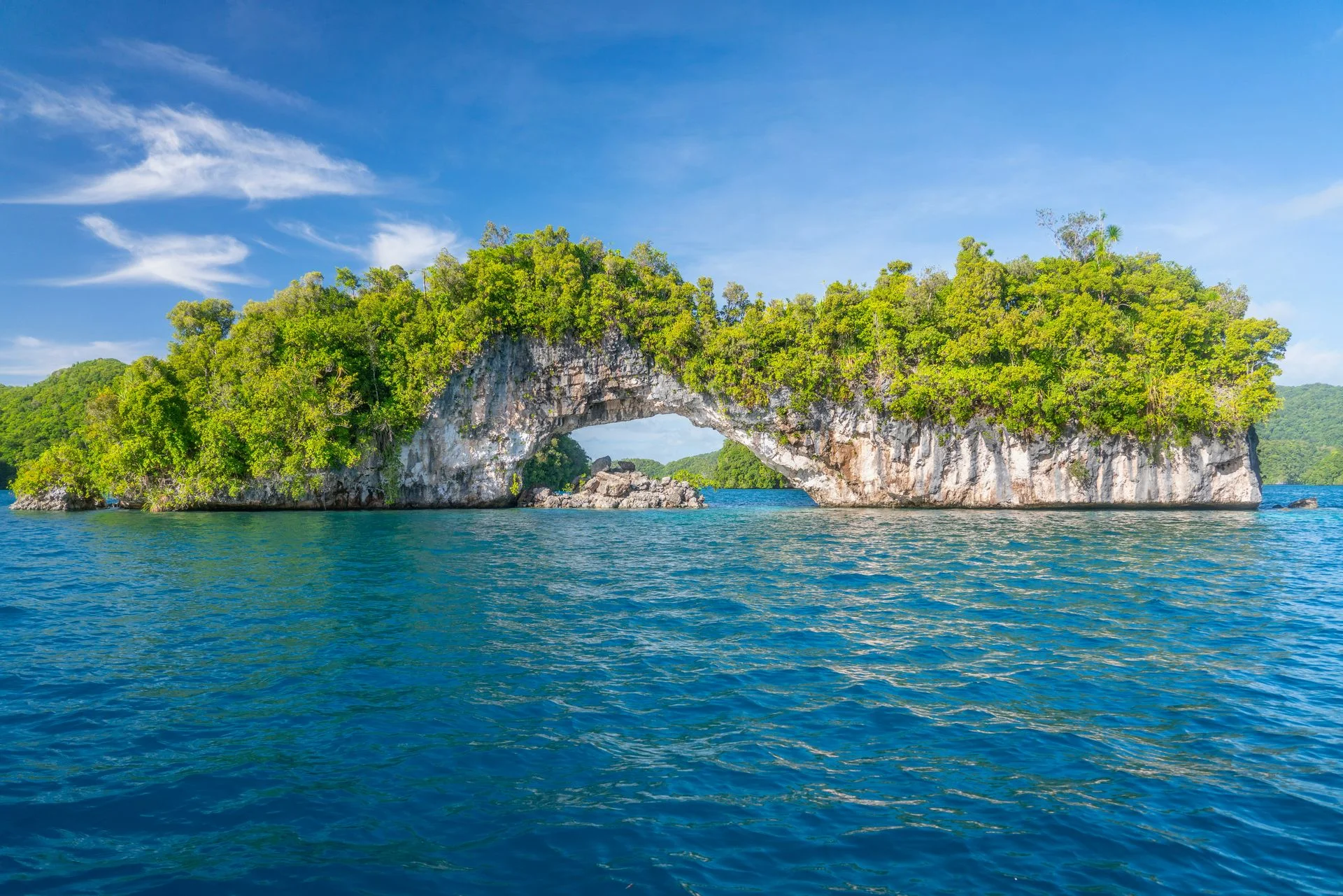
Palau
Rising out of the western Pacific at the meeting point of two great oceans, Palau is an archipelago of more than 500 jungle‑cloaked islands and limestone rock pinnacles. Its barrier reef and scattered outcrops create caverns, walls, tunnels and channels where nutrient‑rich currents sweep in from the Philippine Sea. These flows feed carpets of hard and soft corals and attract vast schools of jacks, barracudas and snappers, as well as an impressive cast of pelagics. Grey reef and whitetip sharks parade along the legendary Blue Corner; manta rays glide back and forth through German Channel’s cleaning stations; and Ulong Channel offers a thrill‑ride drift over giant clams and lettuce corals. Between dives you can snorkel among non‑stinging jellyfish in Jellyfish Lake or explore WWII ship and plane wrecks covered in colourful sponges.
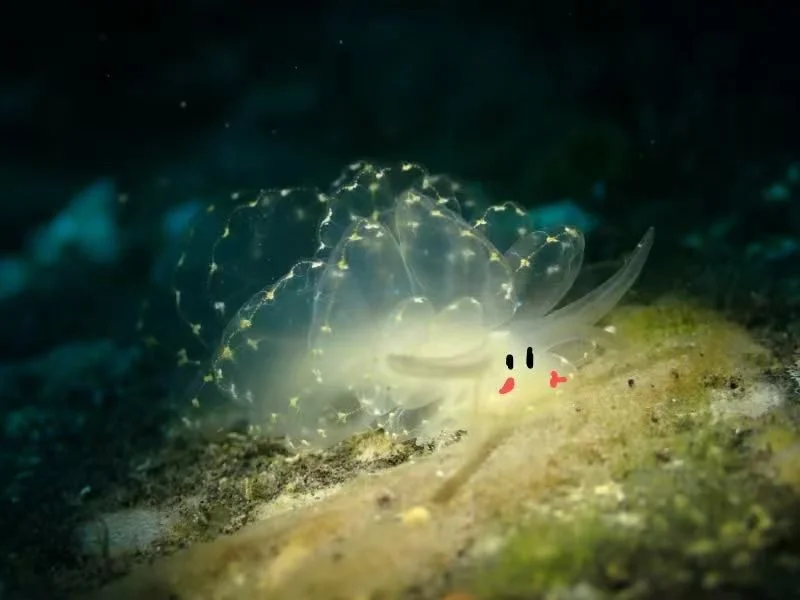
Tulamben(Bali)
Tulamben sits on Bali’s northeast coast and is best known for the USAT Liberty shipwreck – a 125‑metre cargo ship torpedoed in WWII that now lies just a short swim from shore. Warm water, mild currents and straightforward shore entries make diving here relaxed for all levels. Besides the wreck, divers can explore coral gardens, black‑sand muck sites and dramatic drop‑offs. Macro lovers will find nudibranchs, ghost pipefish, mimic octopus and pygmy seahorses, while big‑fish fans can encounter schooling jackfish, bumphead parrotfish and reef sharks. With a compact coastline packed with variety, Tulamben delivers world‑class wreck and critter diving without long boat rides.
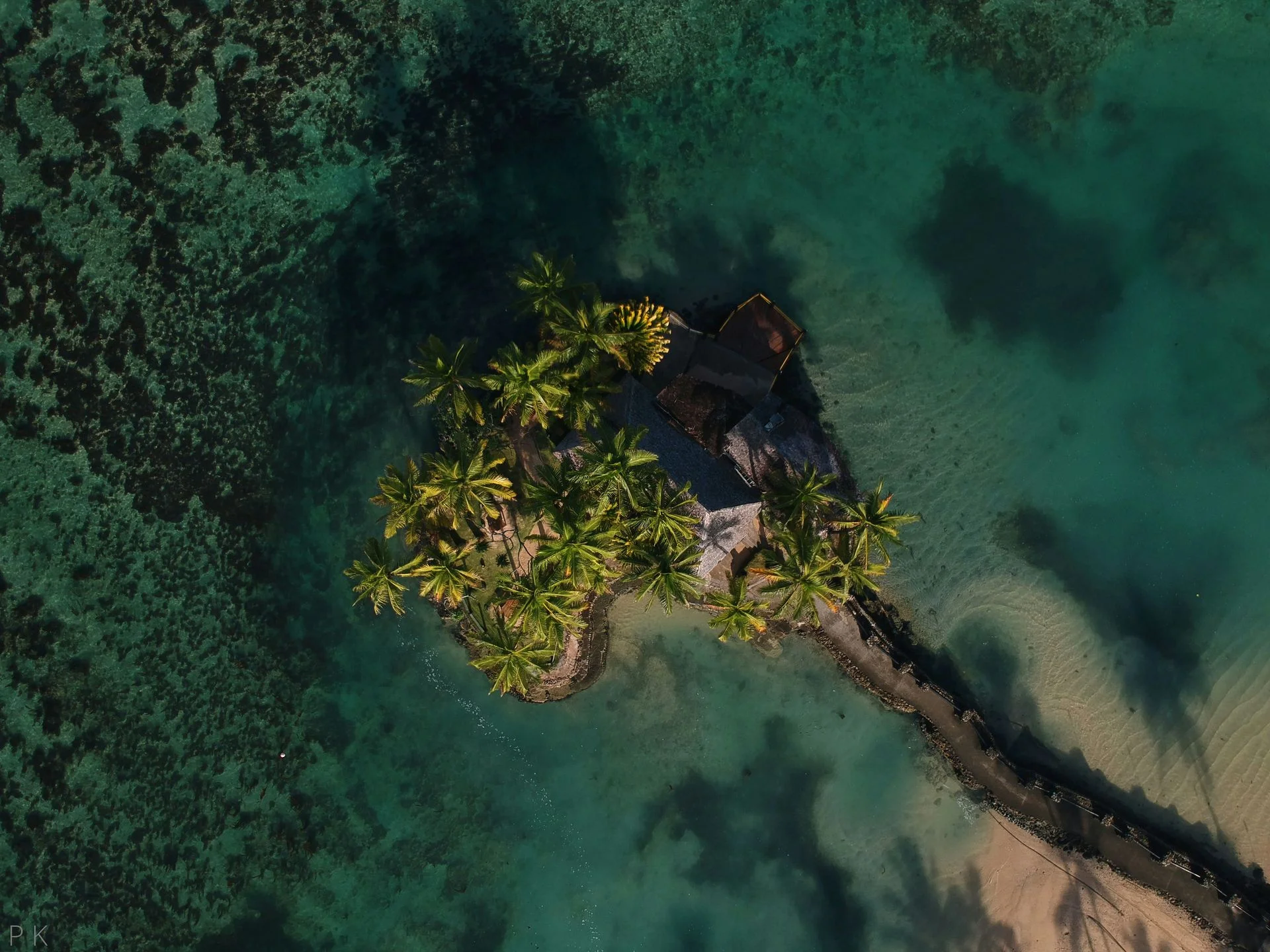
Fiji
Fiji sits like a necklace of more than 300 inhabited islands and 500 smaller islets in the heart of the South Pacific. Jacques Cousteau dubbed it the “soft coral capital of the world” for good reason – nutrient‑rich currents wash over sloping reefs, walls and bommies that erupt in shades of pink, purple, orange and yellow. The country’s dive sites range from kaleidoscopic coral gardens and pinnacles in the Somosomo Strait to shark dives in Beqa Lagoon, and remote passages in Bligh Water and the Koro Sea. Schools of barracuda, trevally and surgeonfish cruise above while manta rays, turtles, bull sharks and occasionally hammerheads glide past. Friendly locals and a relaxed island vibe make Fiji a favourite for both adventurous liveaboard trips and leisurely resort‑based diving.
Rangiroa
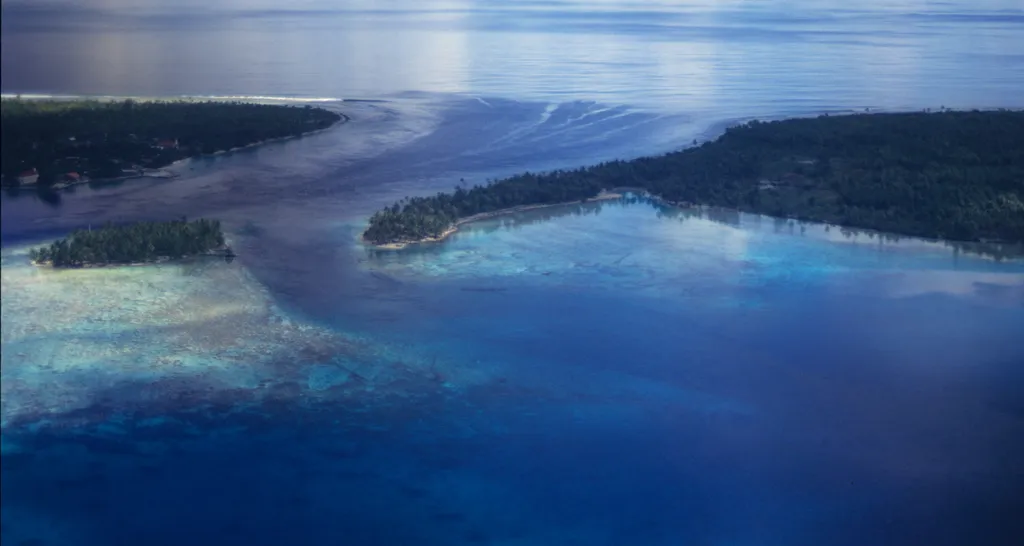
Rangiroa is the largest atoll in French Polynesia — a thin coral ring around a lagoon big enough to swallow Tahiti — and its diving reputation rests almost entirely on two ocean passes: Tiputa and Avatoru. Tiputa is the headline: inbound tides stack grey reef sharks along the drop-off, dolphins cruise the channel year-round, and in January–March the deep mouth of the pass is where great hammerheads show up for divers who can handle 40–50 m profiles. Avatoru is narrower and shallower, known for silvertip sharks, mantas feeding against the flow, and colorful reef pockets once you drop into the "small pass." Visibility in the dry season routinely clears 30–50 m; water sits around 26–29°C. Every signature dive is tide-timed — operators run Tiputa on the morning inbound window, then often put dolphin or Aquarium tanks in the afternoon. Most divers base on the Avatoru–Tiputa motu strip (airport on Avatoru; Tiputa village needs a boat). This is Tuamotu pass diving, not a beginner reef circuit — lagoonside Aquarium works for newer divers, but Tiputa drift is why people book the Air Tahiti hop from Papeete.