
Moorish Idol
Zanclus cornutus
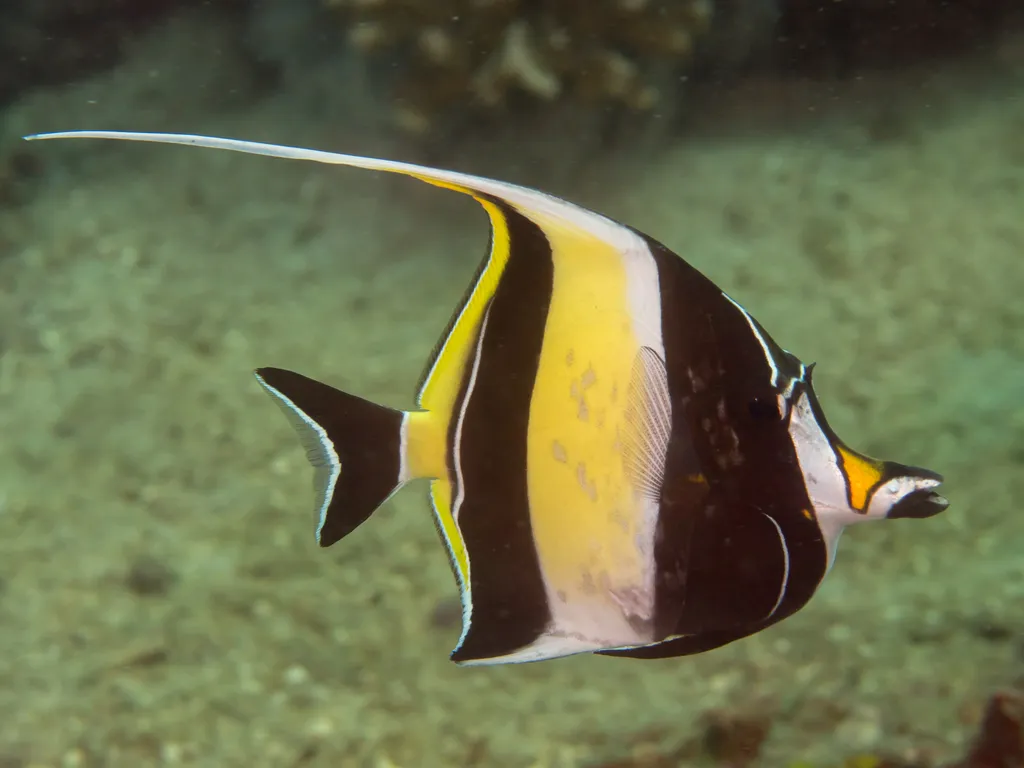
Photo by Rickard Zerpe / CC BY 2.0 via Wikimedia Commons
The Moorish idol is the reef fish everyone thinks they know—because Pixar put one in every diver's imagination before their first open-water checkout. Zanclus cornutus is the sole living species in family Zanclidae: a compressed, high-contrast icon with a trailing dorsal filament that makes it instantly readable at distance on any Indo-Pacific or eastern Pacific reef. Unlike the cartoon version, real idols are picky, long-lived reef residents that drift in loose pairs or trios along drop-offs and reef crests, picking at sponges and encrusting invertebrates. They're common enough to feel like wallpaper on a healthy wall dive, yet distinctive enough that you'll still point every time—especially when a school of twenty ghosts past in open water.
🔬Classification
📏Physical Features
🌊Habitat Info
⚠️Safety & Conservation
Identification Guide
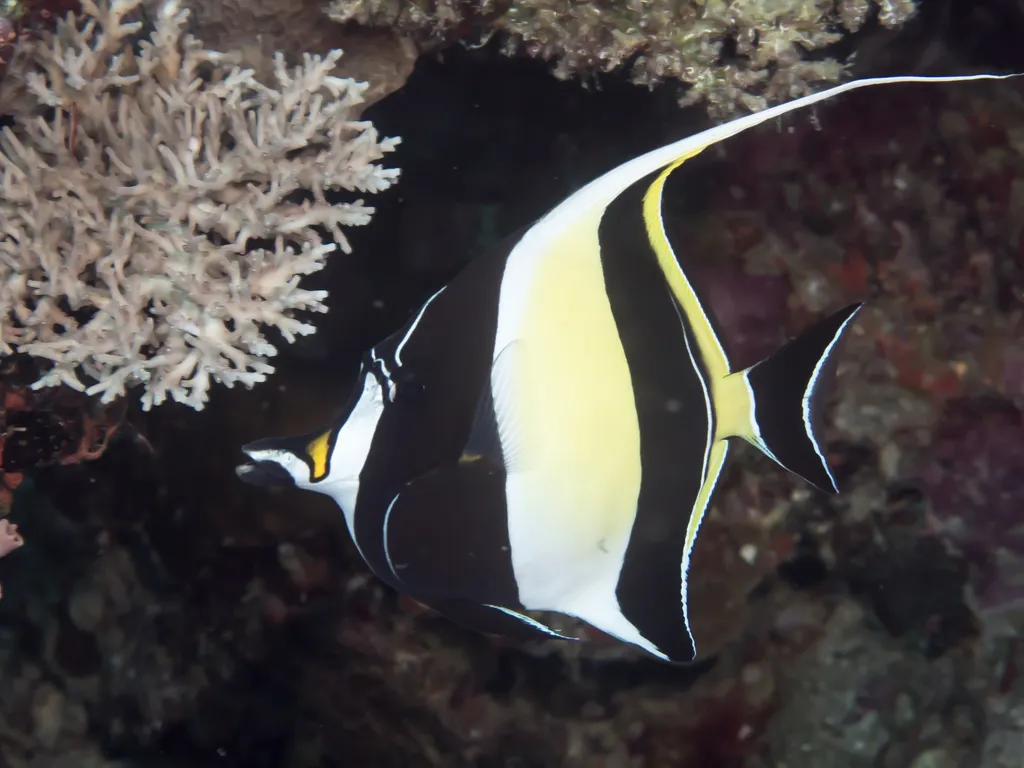
Photo by Rickard Zerpe / CC BY 2.0 via Wikimedia Commons
Field marks:
- Bar pattern: Three wide black vertical bars on a white-to-yellow body—the classic "convict stripe" look
- Dorsal filament: Sixth and seventh dorsal spines extend into a long, trailing whip—visible even at 15 m distance
- Snout & brow: Tubular snout with yellow saddle; small horn-like bumps above eyes
- Body shape: Deep, strongly compressed disc—almost butterflyfish-like but with a longer profile
- No caudal spines: Unlike surgeonfish/tangs, no scalpel spines on the tail peduncle
Similar Species
- Heniochus spp. (Bannerfish / Poor man's Moorish idol): Similar stripes and dorsal extension, but snout shorter, dorsal filament less dramatic, and usually more schooling. H. acuminatus is the classic look-alike—check snout length and bar width.
- Pennant coralfish (H. chrysostomus): Longer dorsal pennant, different bar geometry; often in larger schools.
- Butterflyfish (Chaetodontidae): Many share bold bars, but lack the Moorish idol's tubular snout and horned brow; fin shapes differ.
Juvenile vs Adult
Juveniles show the same bar pattern but proportionally longer dorsal filament and smaller body depth. Postlarval metamorphosis happens around 7.5 cm—by the time you see them on a reef, they already look like miniature adults.
Top 10 Fun Facts about Moorish Idol
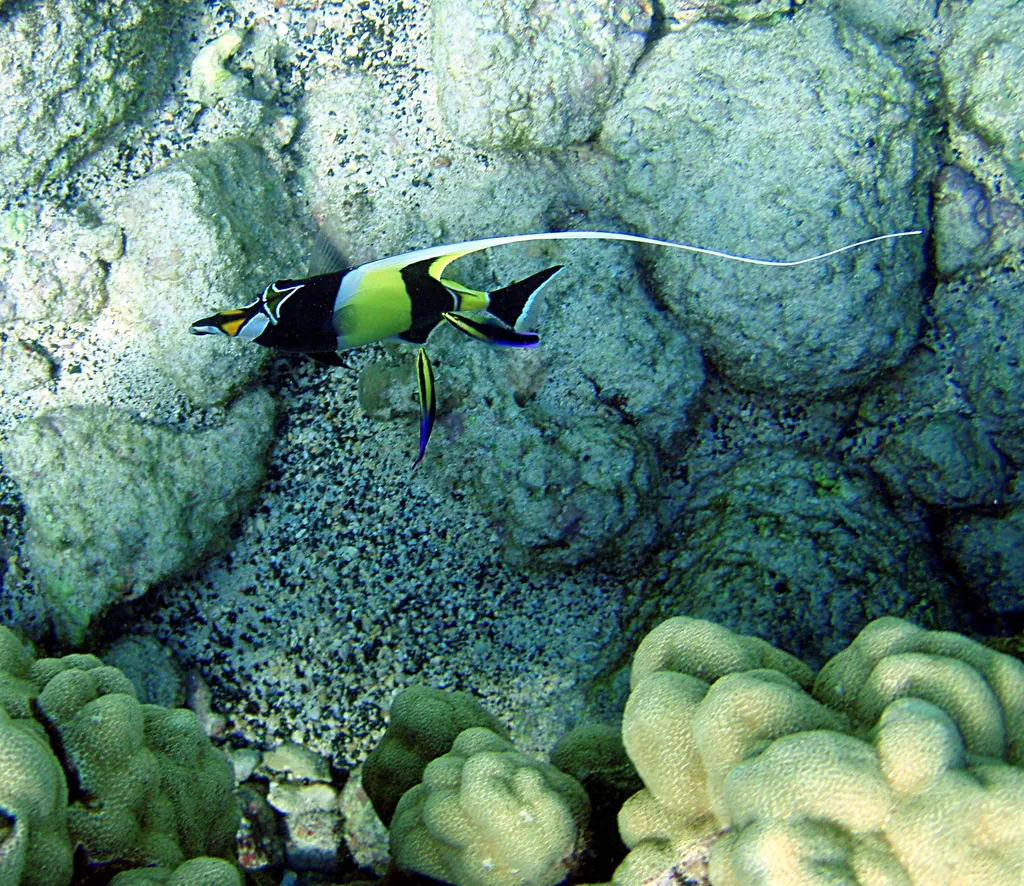
Photo by Brocken Inaglory / CC BY-SA 3.0 via Wikimedia Commons
1. One Species, One Family
Zanclus cornutus is the only extant member of family Zanclidae—no close reef relatives sharing its exact silhouette. That evolutionary loneliness explains why it looks like nothing else on the reef and why aquarists struggle to find tank-mates with identical care needs.
2. The Gill Character Connection
Most divers know the Moorish idol from Finding Nemo as Gill, the scarred tank resident who dreams of the ocean. The film nailed one truth: idols are terrible long-term aquarium fish. They need huge volumes, varied sponge diets, and stable water chemistry—most home tanks kill them within weeks despite their hardy appearance in the wild.
3. A Filament With a Job
The elongated dorsal spines aren't just fashion—they may signal fitness to mates and confuse predators by breaking up the body outline. On a wall dive, that trailing thread is the first thing your eye catches when a pair cruises the blue.
4. Long Pelagic Childhood
Moorish idol larvae spend months in the plankton before metamorphosing at roughly 7.5 cm. That extended drift phase spreads them across the entire Indo-Pacific and into the eastern Pacific (Hawaii, Galápagos, Sea of Cortez) with almost no regional color variation—a sign of high gene flow.
5. Sponge and Crust Menu
Adults aren't algae grazers like surgeonfish. They pick at sponges, tunicates, and encrusting invertebrates with bristle-like teeth in that tubular snout. On a slow drift along a reef crest, watch them peck methodically at rubble and overhangs—that feeding style is why they ignore flake food in tanks.
6. Pairs, Trios, and Occasional Armies
Day-to-day you'll see 2–3 fish together, loosely affiliated rather than tightly schooling. But healthy outer reefs occasionally host aggregations of 100+ individuals moving along the drop-off—a surreal wallpaper moment that feels like the whole reef decided to commute at once.
7. Depth Generalist
Recorded from 1 to 180 m, though recreational divers most often encounter them between 5 and 40 m on reef flats and seaward slopes. They're comfortable in turbid lagoons and crystal-clear outer reefs alike—habitat flexibility helps explain their wide range.
8. Least Concern, Reef-Dependent
IUCN lists the species as Least Concern with local abundance across its range. The caveat: idols depend on hard-bottom reef structure. Climate-driven coral decline and habitat degradation are the real long-term threats—not targeted fishing.
9. Eastern Pacific Surprise
Many divers associate Moorish idols strictly with Bali or the Maldives, but they're native to the eastern Pacific too—from the Gulf of California to Peru, including Galápagos and Cocos. Sea of Cortez dives regularly produce them alongside pufferfish and king angelfish—a biogeographic plot twist worth knowing before a Baja trip.
10. Name With a Backstory
"Moorish idol" likely references the Moorish people of North Africa and the fish's horn-like brow, which reminded early European naturalists of African tribal art. Linnaeus originally placed it in Chaetodon (butterflyfish) in 1758; Cuvier erected genus Zanclus in 1831 when the unique morphology became undeniable.
Diving & Observation Notes
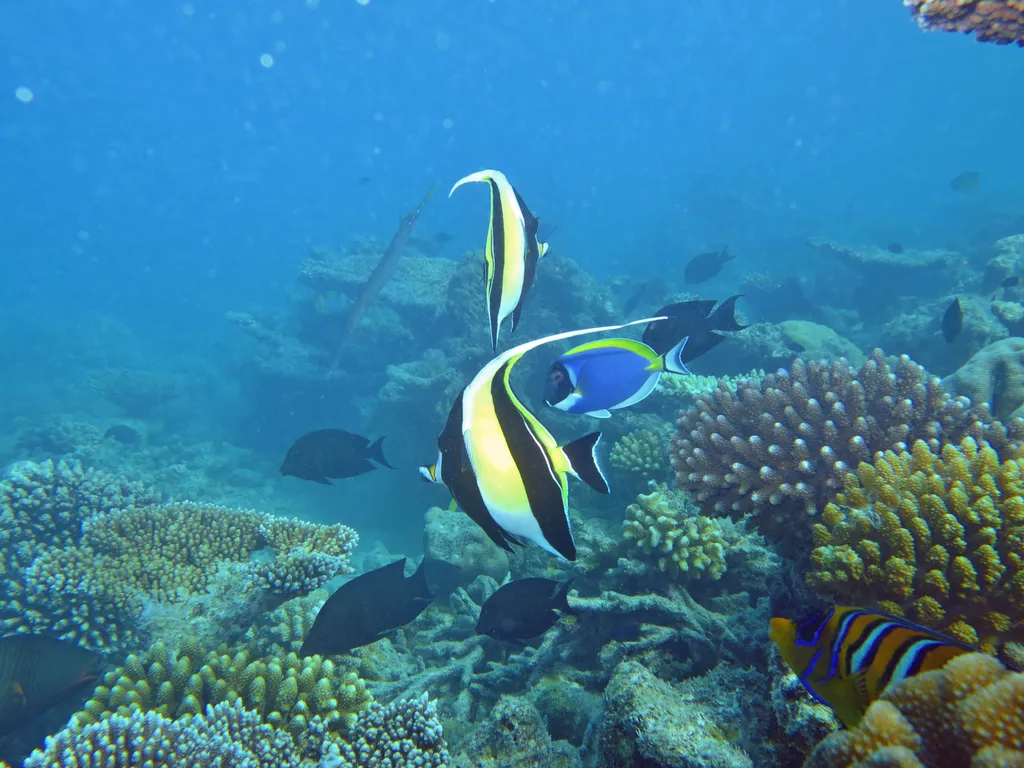
Photo by Frédéric Ducarme / CC BY-SA 4.0 via Wikimedia Commons
🧭 Where to Look
Scan reef crests, outer walls, and lagoon channels at 5–25 m first. Idols like structure with current—drop-off lips and cleaning-station neighborhoods are reliable. In the eastern Pacific (La Paz, Cabo Pulmo, Galápagos), check rocky reefs alongside surgeonfish and angelfish.
🐟 Behavior & Approach
They're curious but not tame—often pass within a few metres without spooking, yet a burst of finning sends them into open water. Move slowly on a reef-crest drift; let pairs come to you rather than chasing the dorsal filament. Large schools are shy—stay neutrally buoyant on the wall and let them flow past.
📷 Photo Tips
Side profiles show the bar pattern and dorsal whip best; shoot slightly upward against blue water for separation. A fast shutter (1/250+) freezes the filament—it's constantly flexing in surge. For schools, wide-angle with natural light; single fish, a mid-range zoom handles framing without crowding.
♻️ Ethics
Never collect for aquariums—wild idols rarely survive captivity and the trade fuels unnecessary mortality. Maintain neutral buoyancy over reef crests; their feeding grounds on sponges and encrusting life are easily damaged by careless fin kicks. Enjoy them as reef health indicators: regular sightings mean the habitat still supports their specialized diet.
Best Places to Dive with Moorish Idol
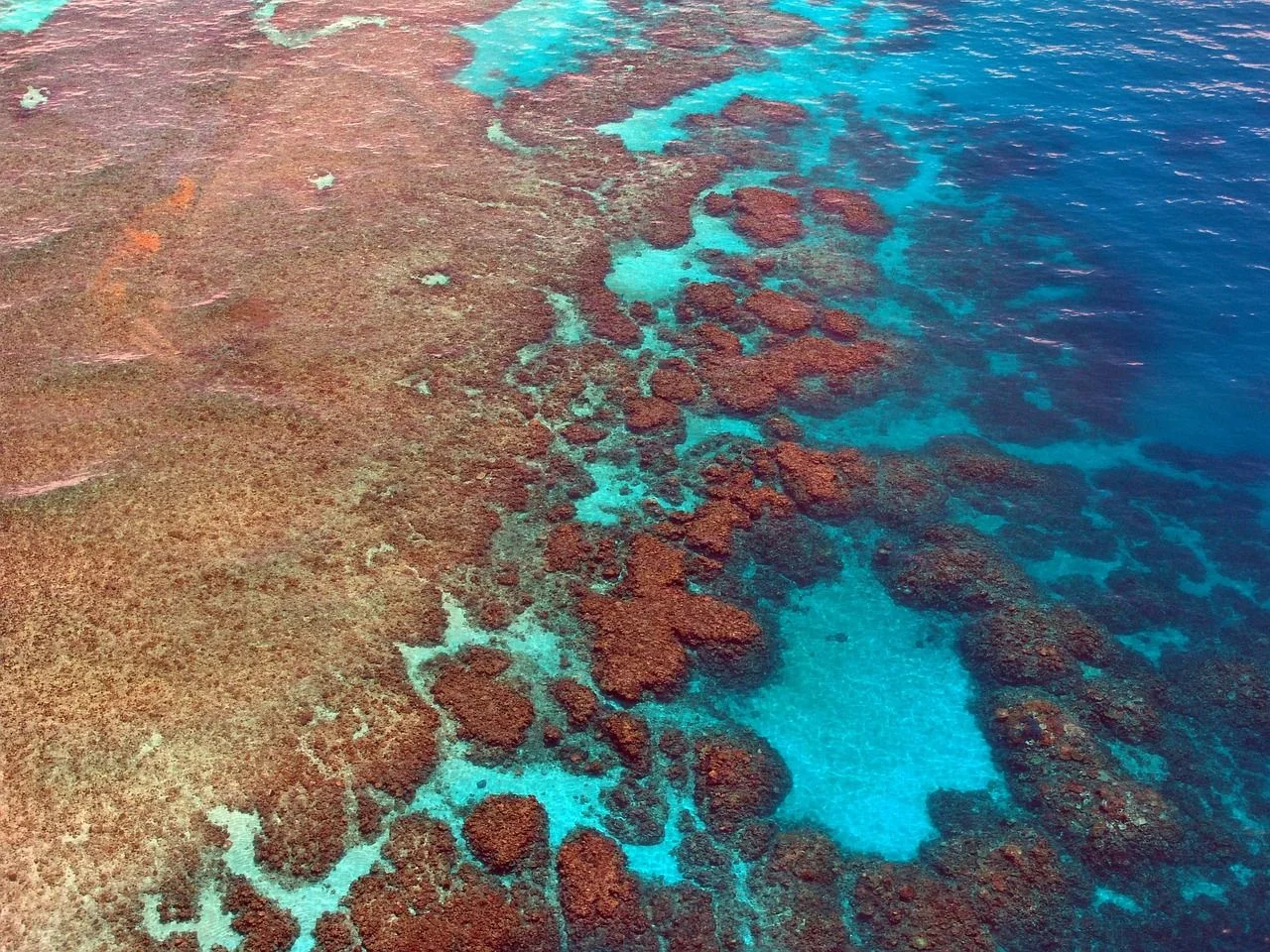
Great Barrier Reef
The Great Barrier Reef stretches for more than 2,300 km along Australia’s Queensland coast and is Earth’s largest coral ecosystem. With over 2,900 individual reefs, hundreds of islands, and a staggering diversity of marine life, it’s a bucket‑list destination for divers. Outer reef walls, coral gardens and pinnacles support potato cod, giant trevallies, reef sharks, sea turtles, manta rays and even visiting dwarf minke and humpback whales. Divers can explore historic wrecks like the SS Yongala, drift along the coral‑clad walls of Osprey Reef or mingle with friendly cod at Cod Hole. Whether you’re a beginner on a day trip from Cairns or an experienced diver on a remote liveaboard, the Great Barrier Reef offers unforgettable underwater adventures.
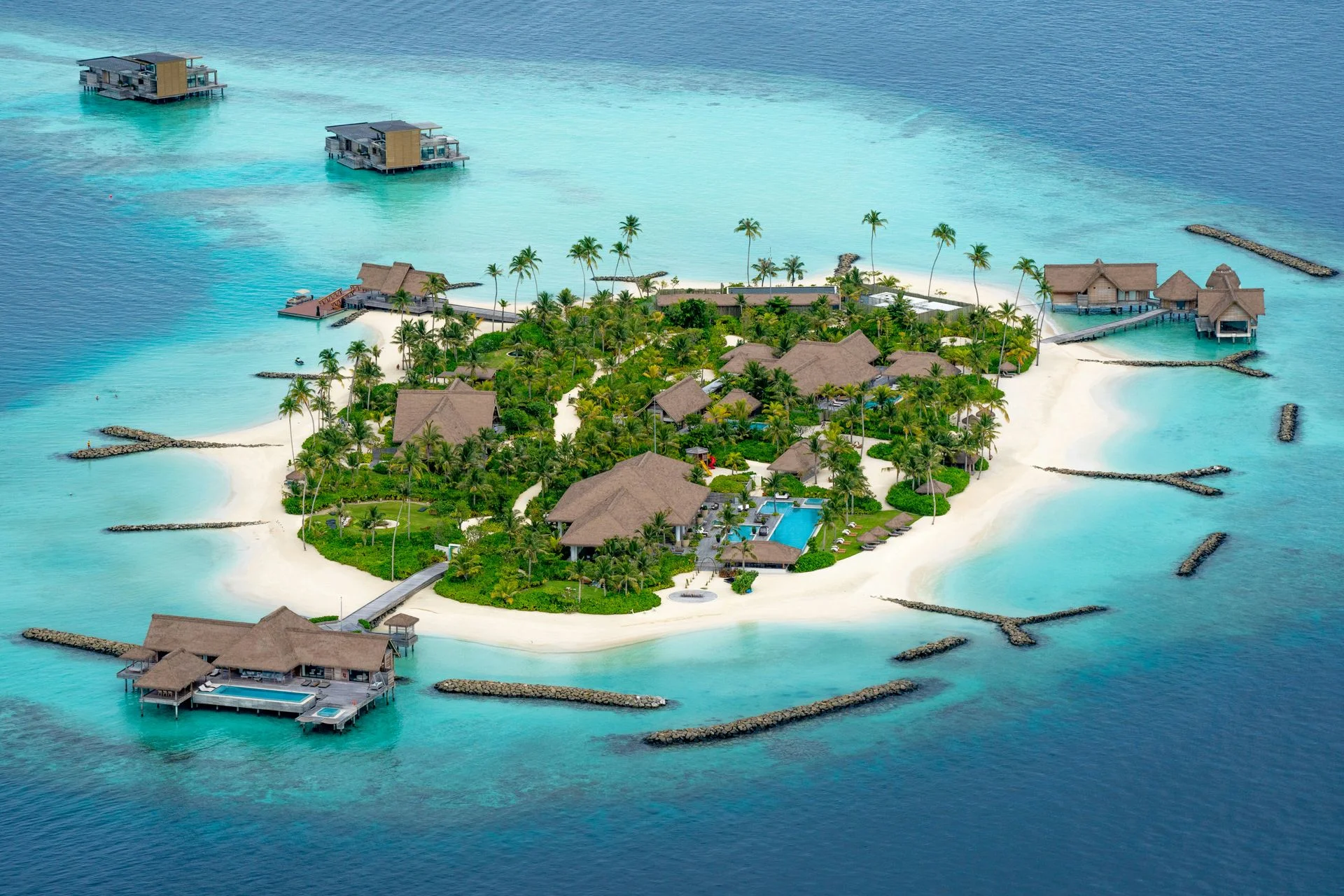
Maldives
Scattered across the Indian Ocean like strings of pearls, the Maldives’ 26 atolls encompass more than a thousand low‑lying islands, reefs and sandbanks. Beneath the turquoise surface are channels (kandus), pinnacles (thilas) and lagoons where powerful ocean currents sweep past colourful coral gardens. This nutrient‑rich flow attracts manta rays, whale sharks, reef sharks, schooling jacks, barracudas and every reef fish imaginable. Liveaboards and resort dive centres explore sites such as Okobe Thila and Kandooma Thila in the central atolls, manta cleaning stations in Baa and Ari, and shark‑filled channels like Fuvahmulah in the deep south. Diving here ranges from tranquil coral slopes to adrenalin‑fuelled drifts through current‑swept passes, making the Maldives a true pelagic playground.
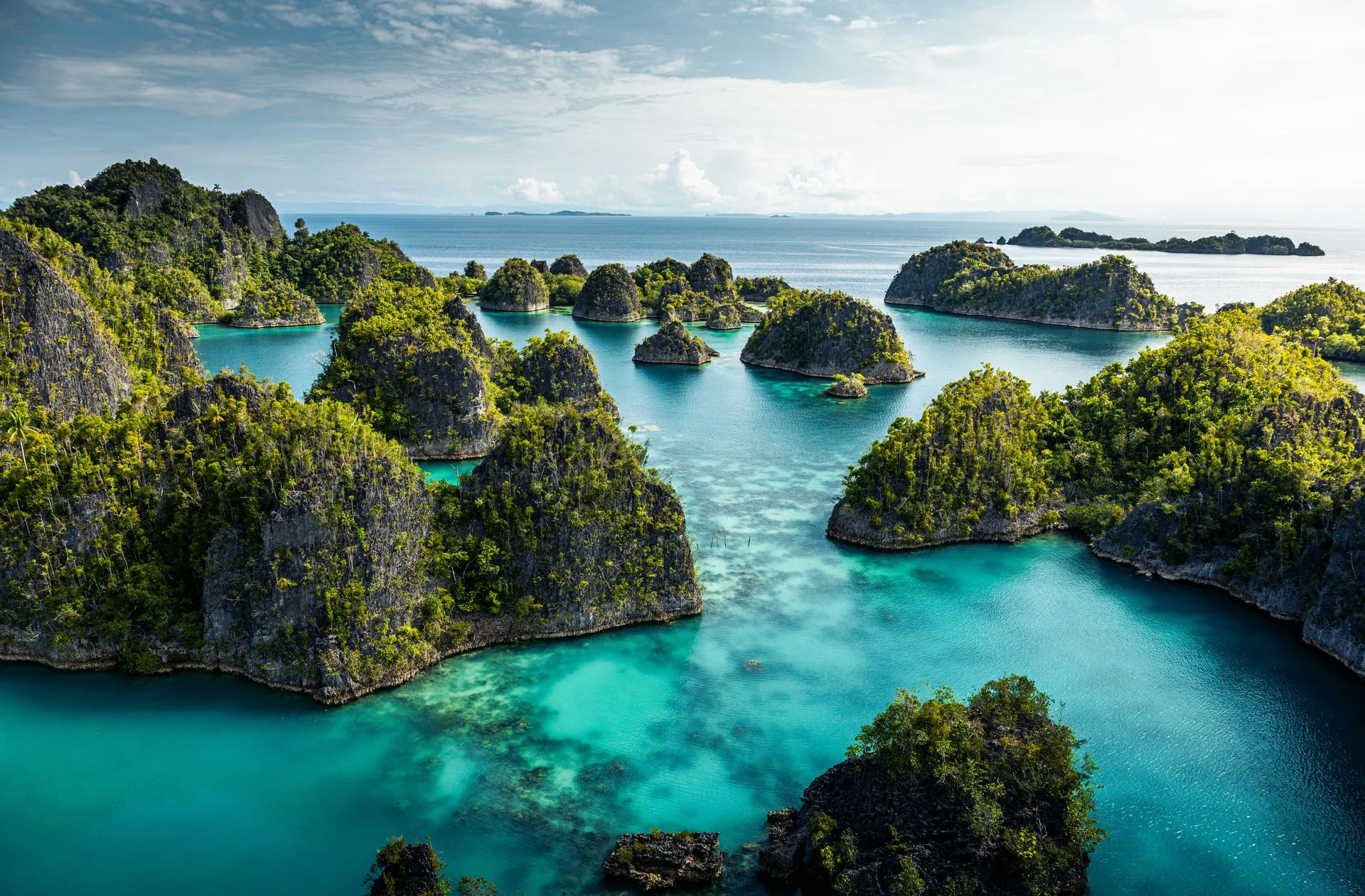
Raja Ampat
Raja Ampat, the “Four Kings,” is an archipelago of more than 1,500 islands at the edge of Indonesian West Papua. Its reefs sit in the heart of the Coral Triangle, where Pacific currents funnel nutrients into shallow seas and feed the world’s richest marine biodiversity. Diving here means gliding over colourful walls and coral gardens buzzing with more than 550 species of hard and soft corals and an estimated 1,500 fish species. You’ll meet blacktip and whitetip reef sharks on almost every dive, witness giant trevally and dogtooth tuna hunting schools of fusiliers, and encounter wobbegong “carpet” sharks, turtles, manta rays and dolphins. From cape pinnacles swarming with life to calm bays rich in macro critters, Raja Ampat offers endless variety. Above water, karst limestone islands and emerald lagoons provide spectacular scenery between dives.
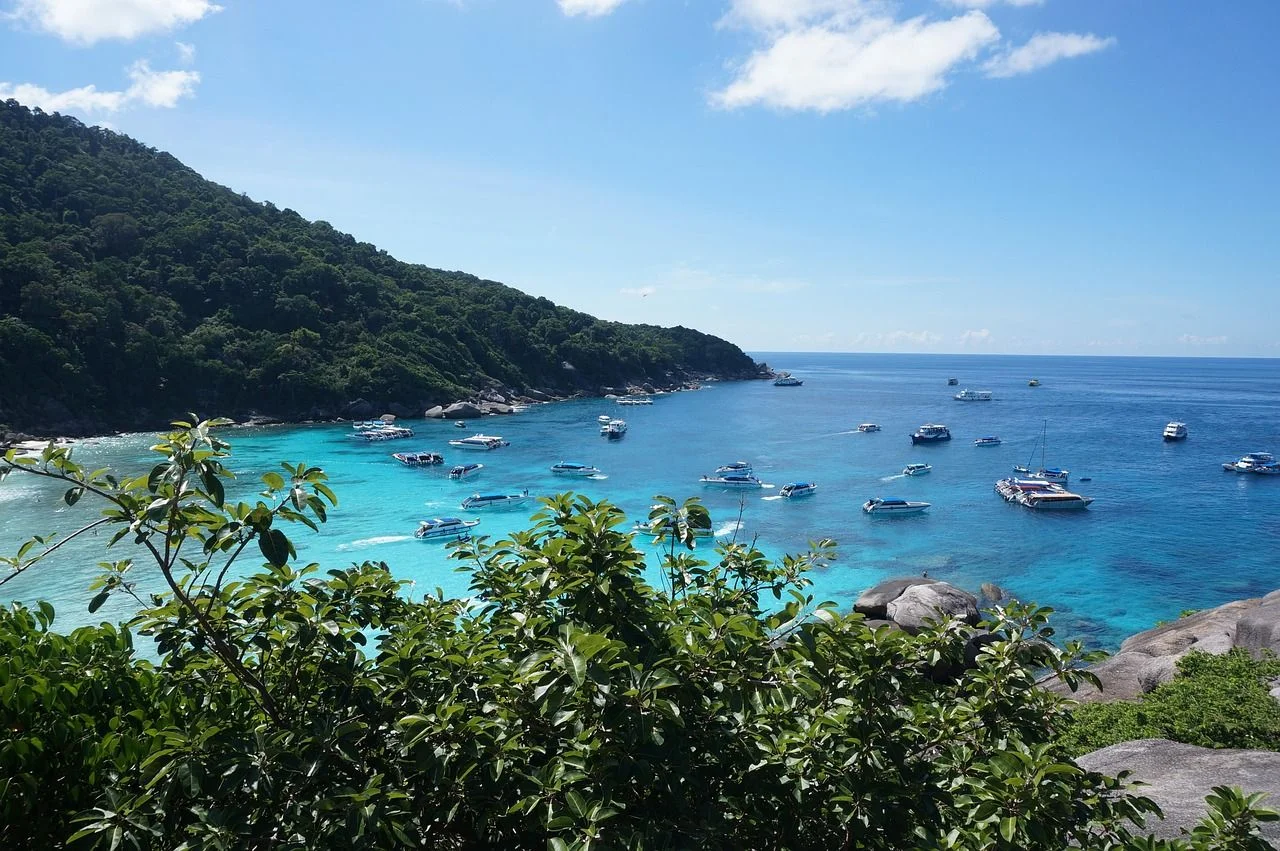
Similan
The Similan Islands are an archipelago of nine granite islands in the Andaman Sea off Thailand’s west coast, protected as part of Mu Ko Similan National Park. Underwater you’ll find dramatic boulder formations, swim‑throughs, coral gardens and drop‑offs teeming with life. Manta rays and whale sharks cruise by at sites like Richelieu Rock and Koh Tachai, while reef sharks, leopard sharks, turtles and swarming schools of fusiliers and trevally are common. The park is only open from mid‑October to mid‑May, when calm seas and clear water make for world‑class liveaboard trips or speedboat day tours.
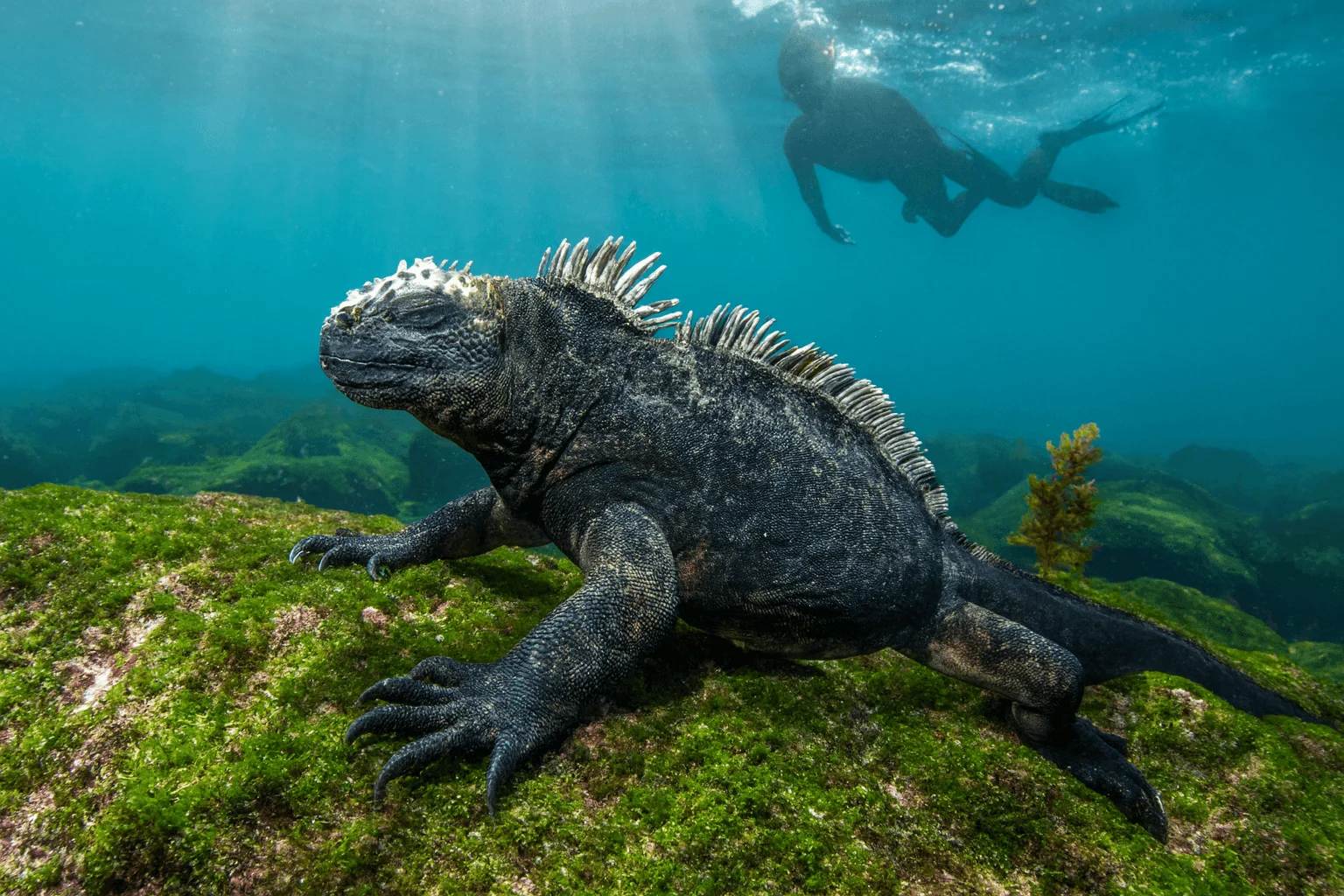
Galapagos
The Galápagos Islands sit 1 000 km off mainland Ecuador and are famous for their remarkable biodiversity both above and below the water. Created by volcanic hot spots and washed by the converging Humboldt, Panama and Cromwell currents, these remote islands offer some of the most exhilarating diving on the planet. Liveaboard trips venture north to Darwin and Wolf islands, where swirling schools of scalloped hammerheads and hundreds of silky and Galápagos sharks patrol the drop‑offs. Other sites host oceanic manta rays, whale sharks, dolphins, marine iguanas, penguins and playful sea lions. Strong currents, cool upwellings and surge mean the dives are challenging but incredibly rewarding. On land you can explore lava fields, giant tortoise sanctuaries and blue‑footed booby colonies.
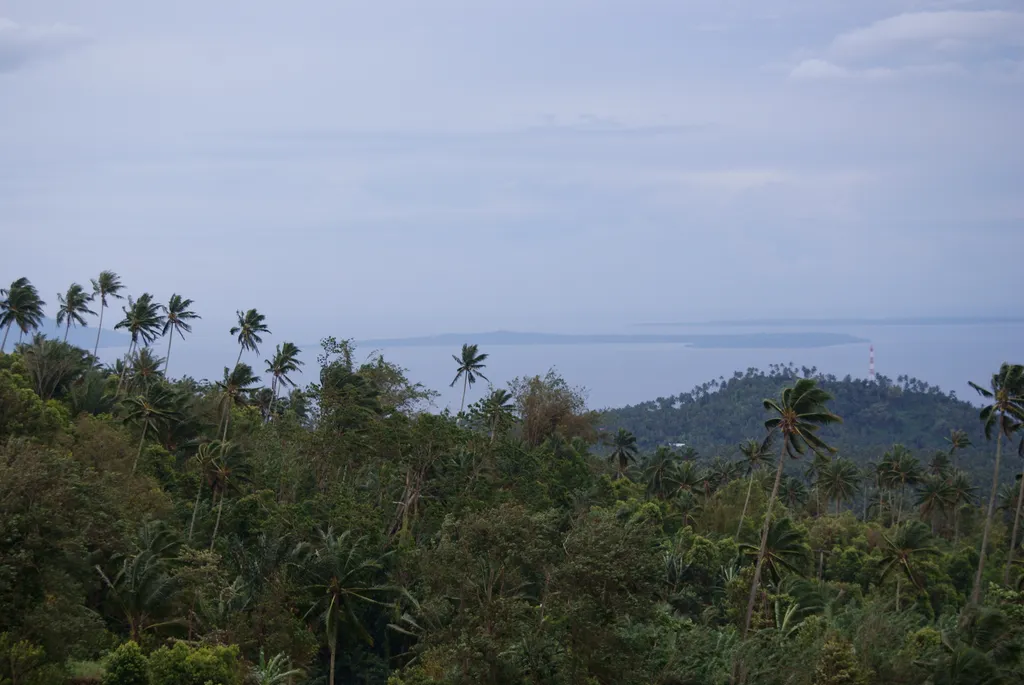
Bunaken
Bunaken National Park is wall-diving country: five volcanic islands—Bunaken, Manado Tua, Siladen, Mantehage, and Nain—ringed by drop-offs that fall from snorkel depth into hundreds of metres of blue. This is not the muck slopes of the Manado mainland; it is vertical reef, drift lines, and current-fed fish schools. The signature move is simple—roll off the boat at Lekuan or Muka Kampung, swim the shallow turtle flats, then hang on the wall while pyramid butterflyfish, fusiliers, and Napoleon wrasse stream past. Reef sharks patrol the corners, eagle rays cruise the blue, and barrel sponges the size of oil drums frame every wide-angle shot. Warm 27–29°C water, park protection since 1991, and island resorts that put you on the first boat at 08:00 make Bunaken the classic North Sulawesi wall trip—fly into MDC, transfer to the strait, and live on the reef for a week.
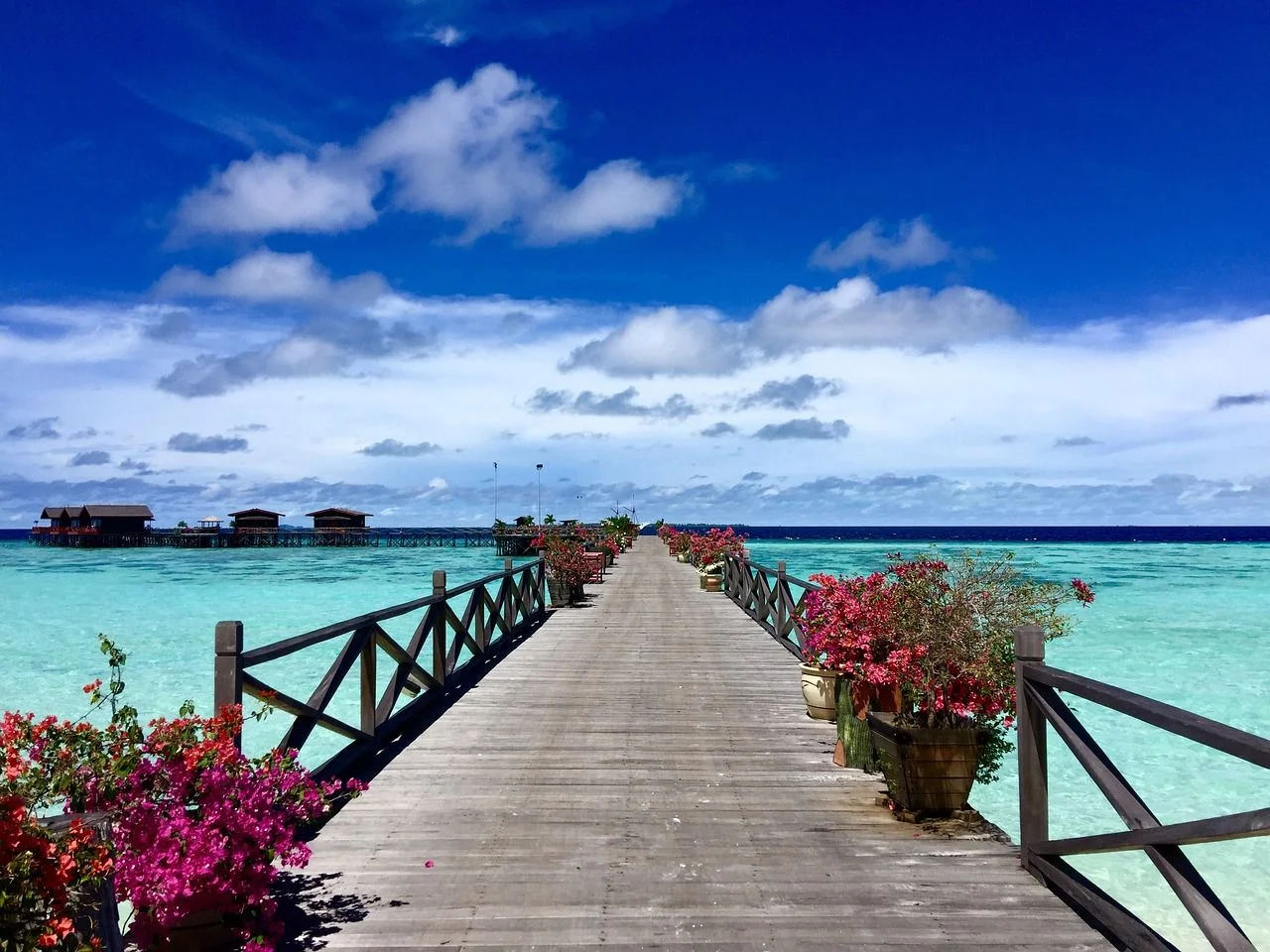
Sipadan & Semporna
Sipadan Island off the coast of Sabah is Malaysia’s crown jewel of diving – a steep limestone pinnacle rising more than 600 metres from the sea floor and teeming with pelagic life. Currents sweep past vertical walls encrusted in hard and soft corals, bringing in barracudas, jacks, reef sharks and bumphead parrotfish in breathtaking numbers. Nearby Mabul and Kapalai offer an entirely different experience on shallow sand‑slope reefs and artificial structures, where flamboyant cuttlefish, frogfish, mandarin fish and other macro critters hide among sponges and tyres. With limited daily permits, a visit to Sipadan is a privilege; most divers base themselves in the frontier town of Semporna or at water‑bungalow resorts on Mabul and Kapalai and make day trips into the park.
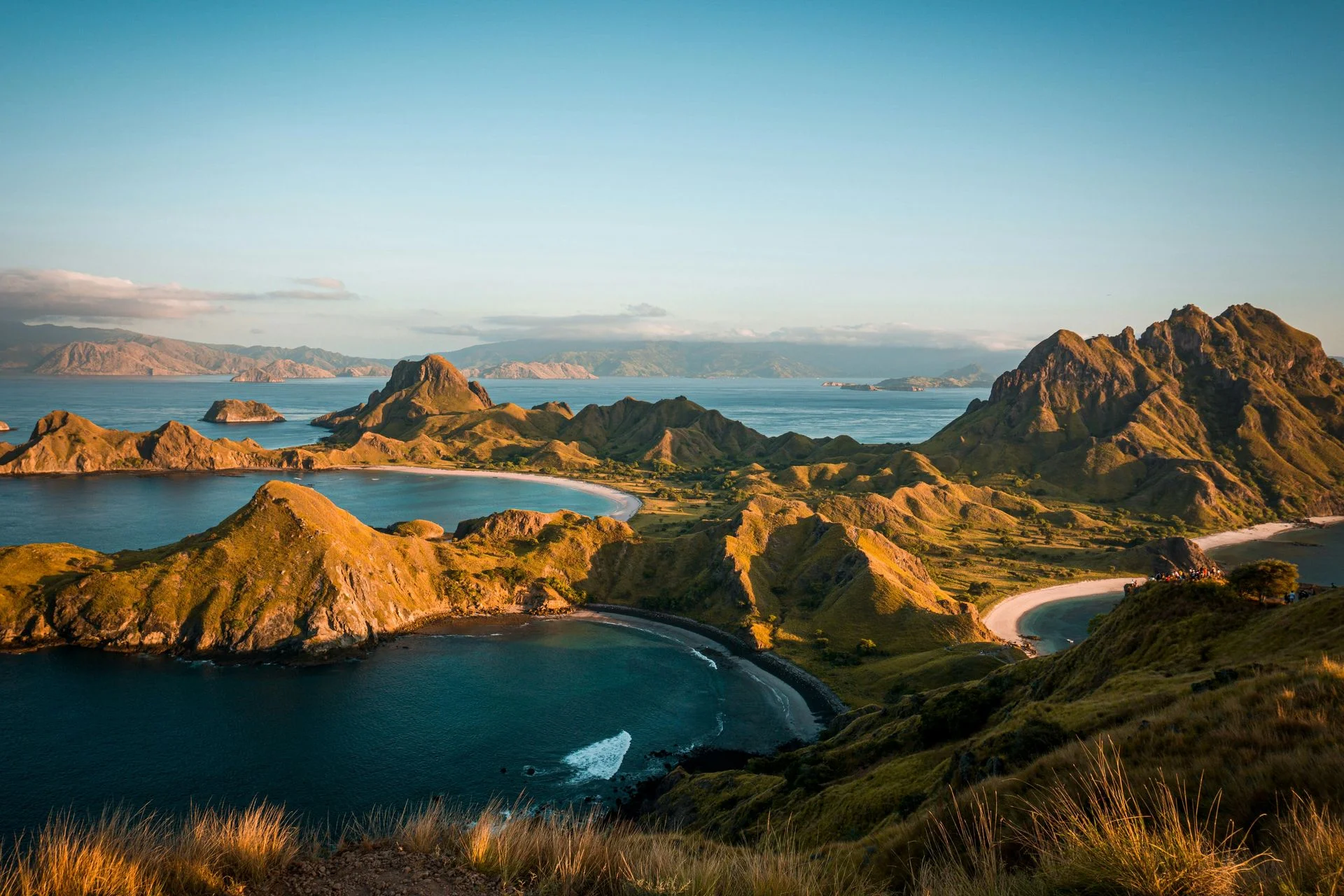
Komodo
Komodo National Park is a diver’s paradise full of marine diversity: expect healthy coral gardens, reef sharks, giant trevallies, countless schools of fish, and frequent manta ray sightings at sites like Manta Point and Batu Bolong. Drift dives and dramatic reef structures add excitement, while both macro lovers and big-fish fans will find plenty to love. Above water, the wild Komodo dragons roam, giving a touch of prehistoric wonder to the whole trip.
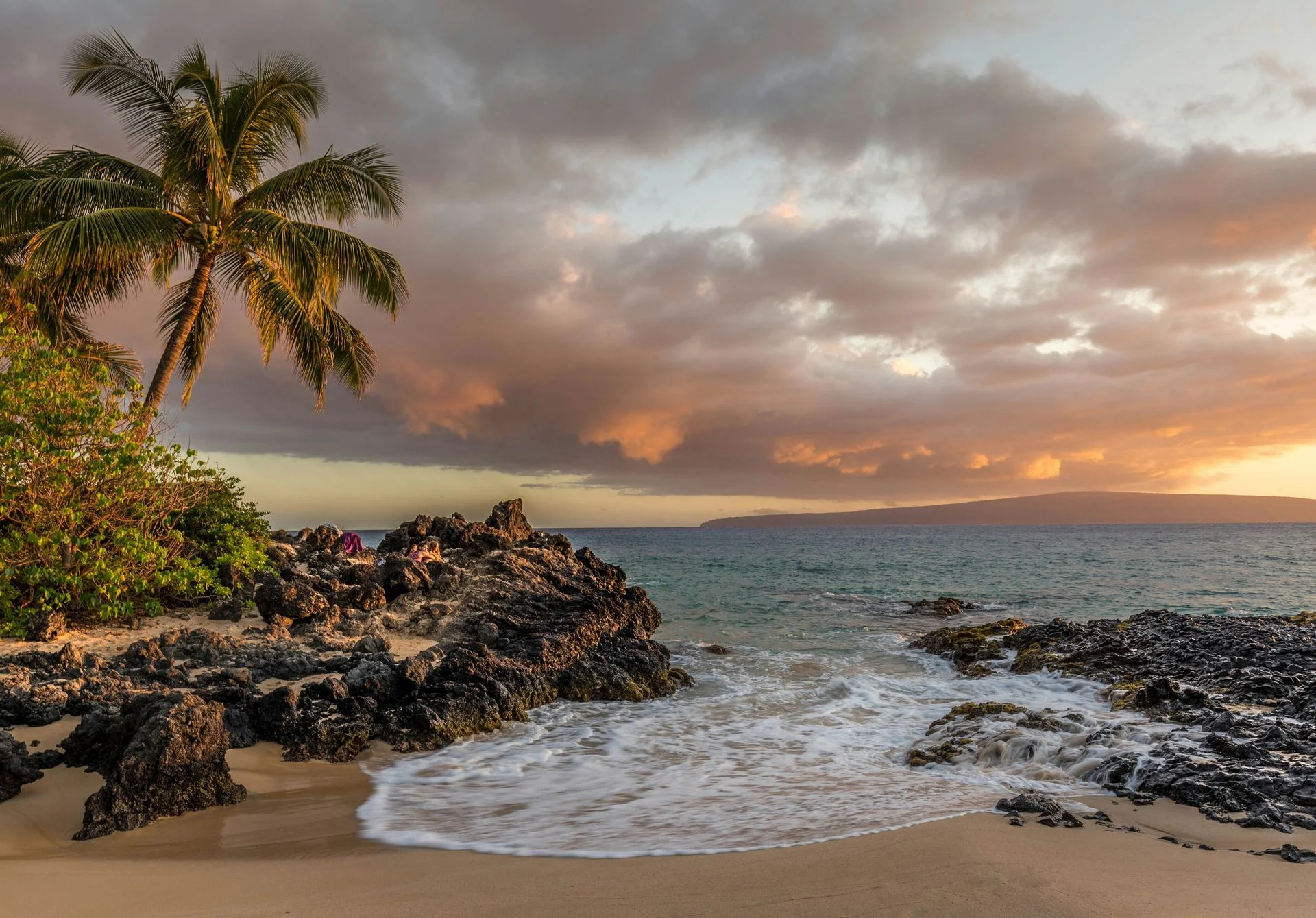
Hawaii
The Hawaiian Islands sit in the central Pacific and offer some of the United States’ most diverse diving. Each island has its own character: Oʻahu features WWII wrecks like the YO‑257 and Sea Tiger; Maui boasts the crescent‑shaped Molokini Crater and drift dives along Lānaʻi’s cathedral‑like caverns; the Big Island’s Kona coast is famed for lava tubes, black water pelagic dives and the world‑renowned manta‑ray night dive; Kauaʻi and Niʻihau offer lava arches, monk seals and dramatic drop‑offs. Water is warm year‑round and visibility regularly exceeds 25 m, making Hawaii ideal for both beginners and experienced divers. You’ll see green sea turtles, reef sharks, manta rays, dolphins and humpback whales in season, along with endemic fish found nowhere else on earth.
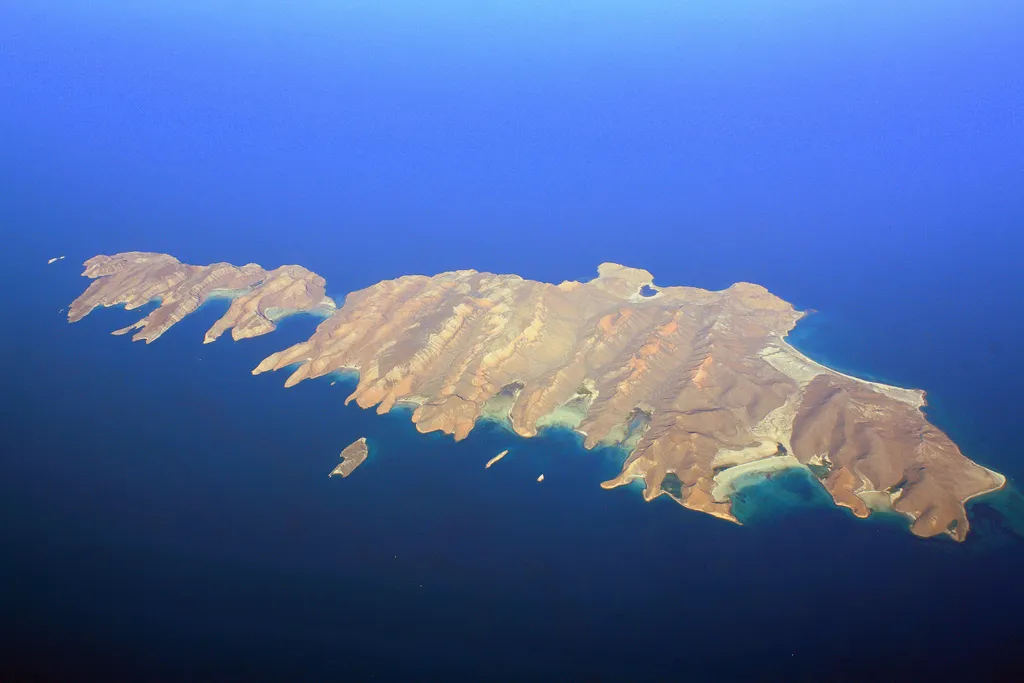
La Paz
La Paz is the practical gateway to the southern Sea of Cortez—Jacques Cousteau's "world aquarium"—without Cabo crowds. Day boats run from the Malecón and local marinas out to Isla Espíritu Santo National Park for California sea lions at Los Islotes, shipwrecks in the San Lorenzo Channel, and blue-water seamounts like El Bajo. In winter, the Bay of La Paz hosts one of the world's most accessible whale shark snorkel seasons (scuba is not allowed in the refuge zone). ### What Makes It Different This is a city-based wildlife trip, not a remote reef camp. You sleep in a real Mexican capital, eat well on the waterfront, then motor 30–90 minutes to sites that punch far above their logistics. Los Islotes is the headline scuba day (playful juveniles at 5–18 m); whale sharks are a separate early-morning snorkel; El Bajo is the advanced pelagic add-on when current and season line up. ### Conditions and Dive Style Expect 2-tank boat days with a beach lunch on Espíritu Santo between dives. Water runs cool in winter (18–22 °C, 5 mm recommended) and warm in summer (28–30 °C). Visibility commonly 15–30 m, dropping when plankton blooms. Critical timing: Los Islotes closes to diving and snorkeling 1 June–31 August for breeding season under CONANP rules—plan around that if sea lions are the reason you booked.
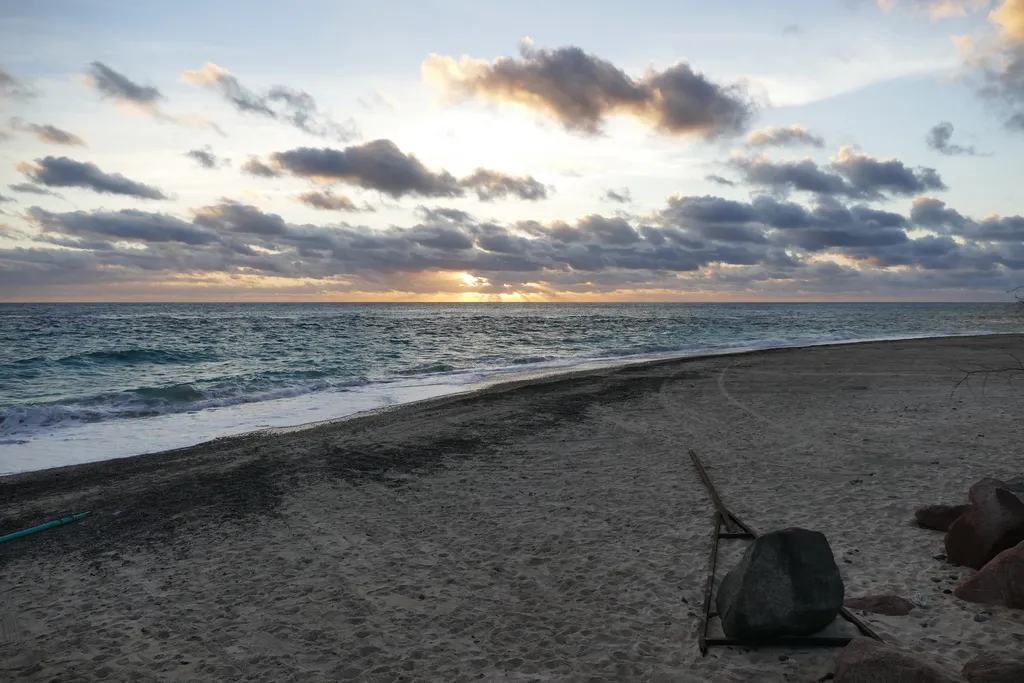
Cabo Pulmo
Cabo Pulmo is where the "marine reserve success story" stops being a headline and starts feeling personal underwater. The reef sits on the Sea of Cortez side of Baja California Sur, and the no-take rules here have been strict enough that fish biomass famously rebounded by 463% between 1999 and 2009. ### What Makes It Different You are not diving an isolated pretty reef; you are diving a rebuilt ecosystem. One dive can be all hard coral and clouded baitfish, the next can put you in the middle of a jackfish tornado so dense it dims the sun. On the right day, El Vencedor adds resident bull sharks to the mix. ### Conditions and Dive Style This is mostly boat diving from pangas with park-managed site rotation. Signature sites can have current, surge, and blue-water exposure, so buoyancy control matters. When weather settles from late summer into early winter, visibility jumps and the whole park feels cinematic.
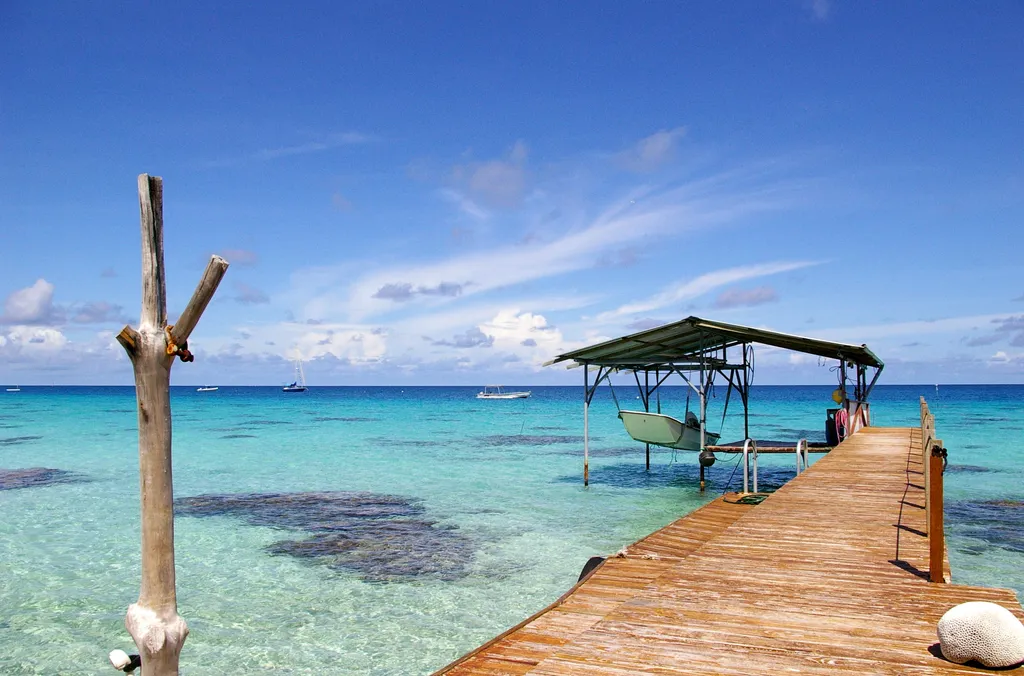
Fakarava
Fakarava is a UNESCO Biosphere Reserve in the Tuamotu Archipelago — a low coral atoll with two legendary passes that funnel Pacific water and pelagic life through its lagoon. This is advanced drift-diving territory: Garuae Pass in the north is the widest channel in French Polynesia, where incoming tides can stack grey reef sharks, Napoleon wrasse, and occasional great hammerheads along the drop-off. Tumakohua Pass in the south is the famous "shark wall" — during June–July grouper spawning around the full moon, hundreds of grey reef sharks hang in the blue like a living curtain. Visibility routinely clears 30–50 m in the dry season, and the outer walls still carry healthy hard-coral cover that feels untouched compared to busier Indo-Pacific hubs. Beyond the passes you get canyon dives (Alibaba), manta cleaning stations on Ohotu-side walls, lagoon blues at Tetamanu, and humpback whales overhead in August–October. Most divers base in Rotoava for Garuae access or split the trip with a few nights at Tetamanu village for South Pass — plan around tides, not just calendars.
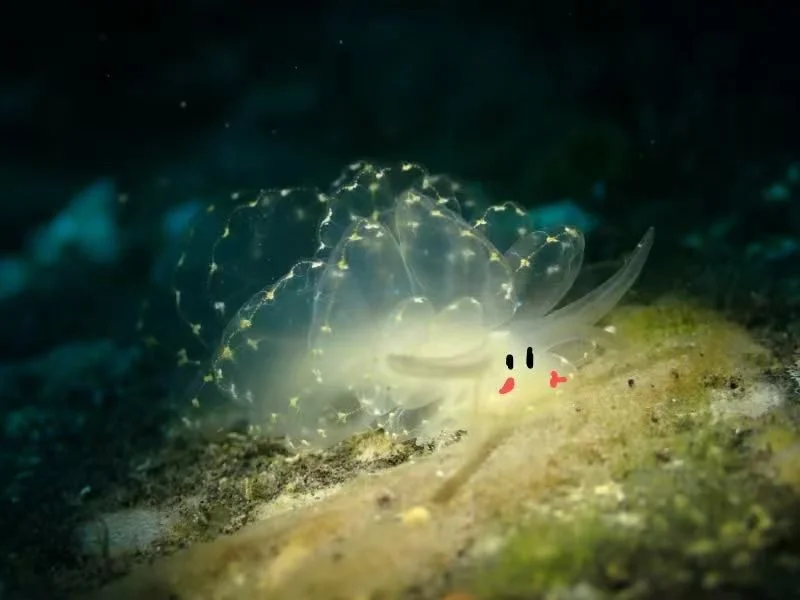
Tulamben(Bali)
Tulamben sits on Bali’s northeast coast and is best known for the USAT Liberty shipwreck – a 125‑metre cargo ship torpedoed in WWII that now lies just a short swim from shore. Warm water, mild currents and straightforward shore entries make diving here relaxed for all levels. Besides the wreck, divers can explore coral gardens, black‑sand muck sites and dramatic drop‑offs. Macro lovers will find nudibranchs, ghost pipefish, mimic octopus and pygmy seahorses, while big‑fish fans can encounter schooling jackfish, bumphead parrotfish and reef sharks. With a compact coastline packed with variety, Tulamben delivers world‑class wreck and critter diving without long boat rides.
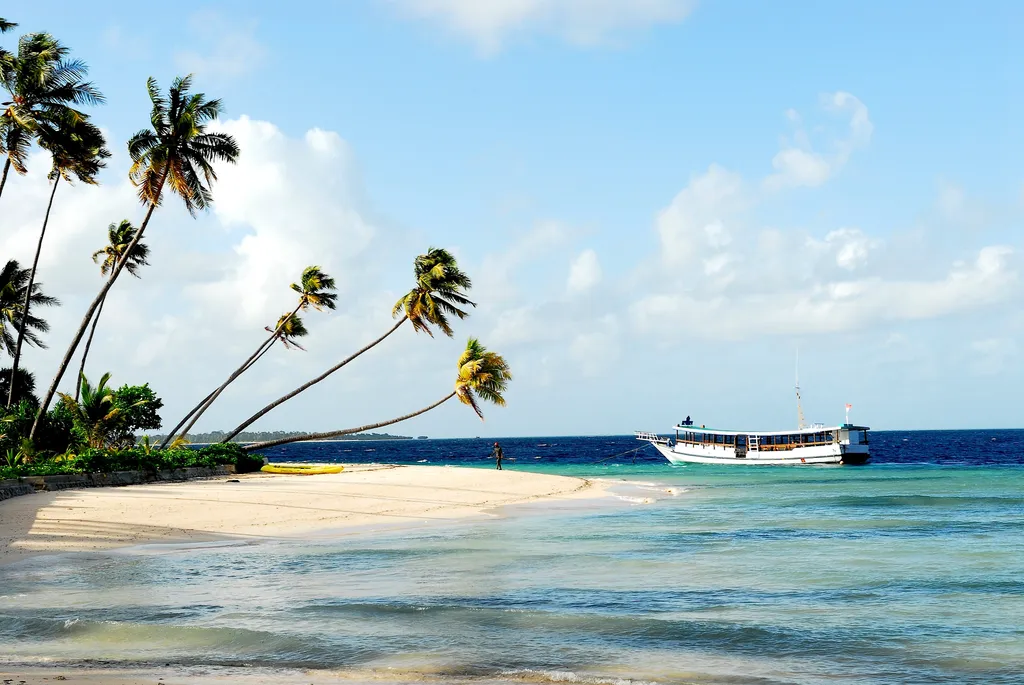
Wakatobi
Wakatobi National Park sits on the southeastern rim of Sulawesi, named from its four main islands—Wangi-Wangi, Kaledupa, Tomia, and Binongko. It holds some of the healthiest coral coverage in the Coral Triangle, with walls, seamounts, and fringing reefs that marine biologists still treat as a reference system. Visibility regularly hits 30 m and can stretch past 50 m on calm outer-reef days. Currents are usually mild and predictable, so you get long bottom times on colorful hard-coral gardens instead of fighting blue water. The signature experience is Wakatobi’s House Reef—walk-in shore diving a short swim from the jetty—backed by more than 40 day-boat sites, from beginner pinnacles like Roma to the knife-edge walls of Blade.