
Variable Neon Slug
Nembrotha kubaryana
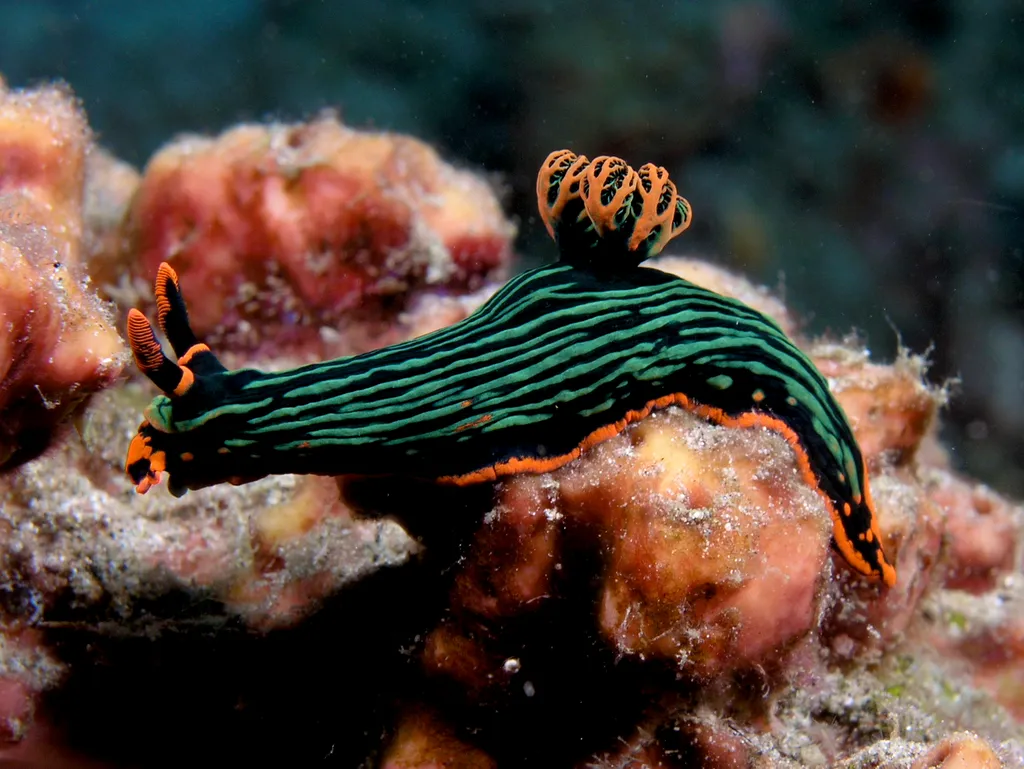
Photo by Nhobgood Nick Hobgood / CC BY-SA 3.0 via Wikimedia Commons
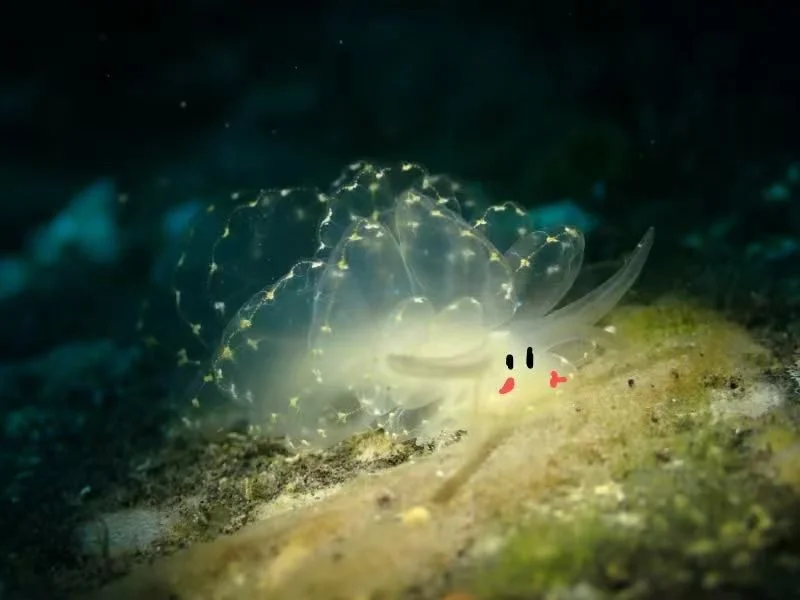
Nembrotha kubaryana—the variable neon slug or dusky nembrotha—is a large Polyceridae dorid that reads like neon graffiti on black velvet. Adults commonly sit near 8 cm, with some animals pushing 12 cm+, so this is one of the few nudibranchs you can lock onto from a few metres out before switching to macro. Color is the namesake: a near-black body laced with green pustules or ridges, framed by a continuous orange-red foot and head border. Rhinophores and gills flip between orange and green morphs—hence "variable." Ecology is food-locked: they graze colonial ascidians (tunicates such as Sigillina), steal the tunicates' chemical arsenal, and advertise "don't eat me" with that high-contrast paint job. Type locality is Palau; for trip planning, think Coral Triangle muck and reef sites where guides glass tunicate patches—Anilao, Lembeh, Manado/Bunaken, Raja Ampat, Tulamben, Wakatobi, Mabul.
🔬Classification
📏Physical Features
🌊Habitat Info
⚠️Safety & Conservation
Identification Guide
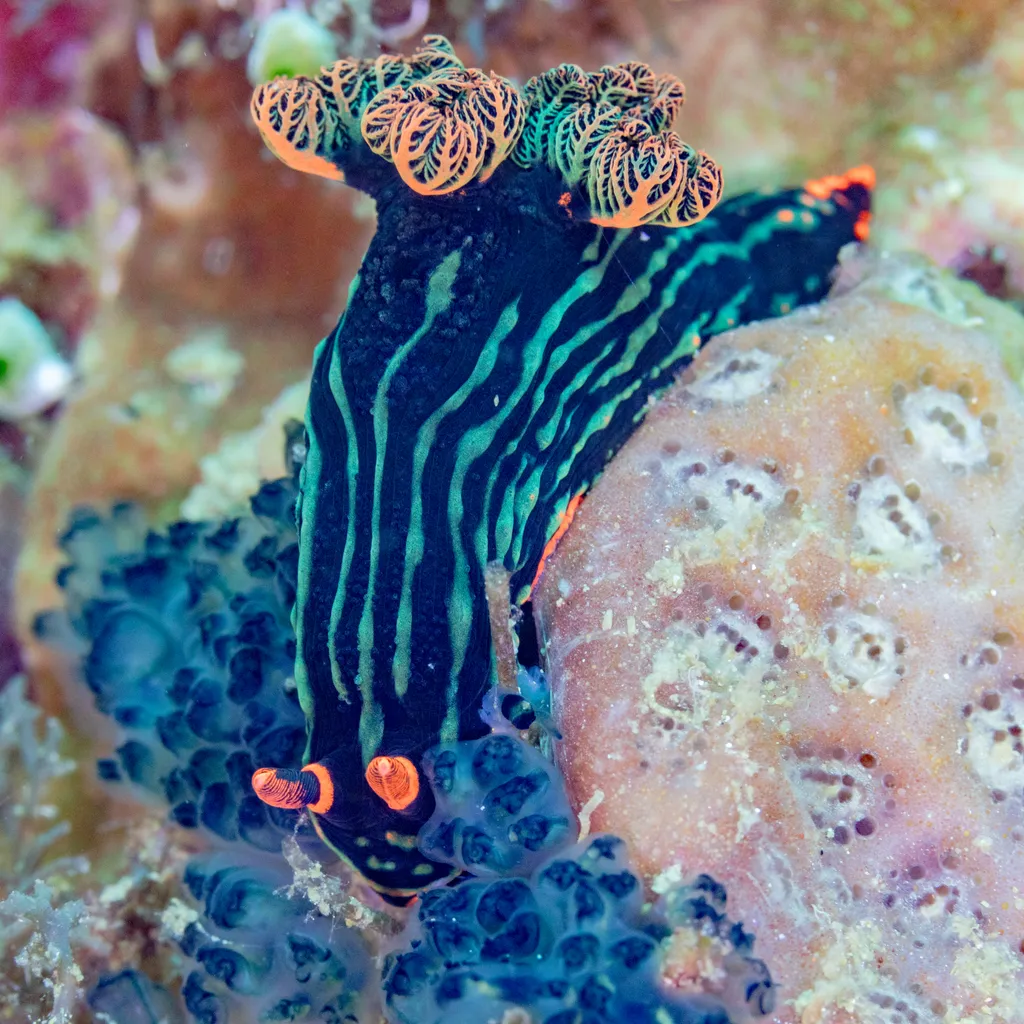
Photo by Diego Delso / CC BY-SA 4.0 via Wikimedia Commons
Silhouette & size
- Elongated dorid body; often 6–12 cm—noticeably larger than most reef chromodorids
- Soft longitudinally wrinkled dorsum with raised green pustules or green ridges
Neon borders (species lock)
- Bright orange to vermillion rim along the foot edge, rhinophore sheaths, and oral region
- Background body black to dark green-black
Rhinophores & gills
- Rhinophore clubs and gill rachides may be orange or green—both can still be N. kubaryana
- Branchial plume relatively tall; sits mid-rear dorsum
Look-alike trap
- Nembrotha cristata is the classic confusion: similar black-and-green neon look but lacks the orange-red foot border
- Red-spotted / orange-marked morphs exist—still check the foot margin first
Habitat cue
- Almost always near colonial ascidians; seeing one grazing mid-meal is common confirmation
Top 10 Fun Facts about Variable Neon Slug
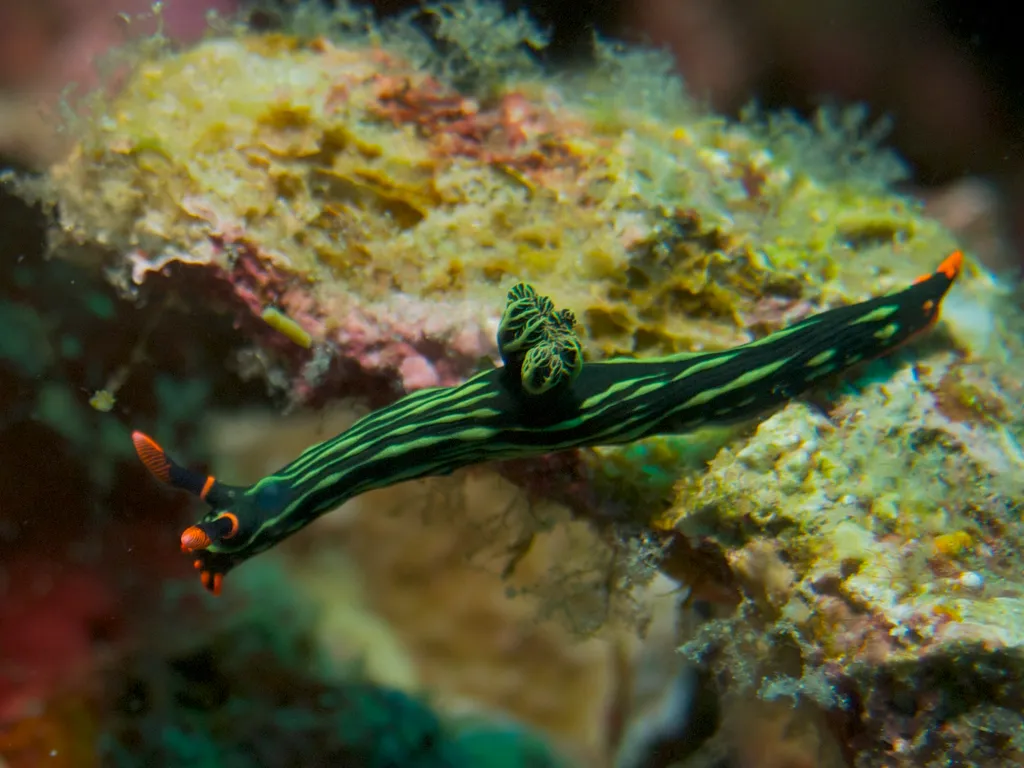
Photo by Elias Levy / CC BY 2.0 via Wikimedia Commons
1. "Variable" Is Not Marketing Copy
Body markings swing from green pustules to green longitudinal ridges; some animals swap green for pinkish-orange spots. Divers who memorized one Instagram morph routinely miss the next animal on the same wall.
2. Orange Foot Border = Field Key
Against Nembrotha cristata, the decisive underwater cue is the continuous orange-red foot/head border. When surge and turbidity eat detail, lock the camera on that rim before guessing the Latin name.
3. Built Bigger Than Macro Stereotypes
Pushing 120 mm, this species sits between "micro critter" and "close-focus wide" territory. A 60 mm lens often frames better than a cramped 105 mm when the animal is stretched and feeding.
4. Dinner Is Ascidians, Not Sponges
Unlike many dorids, N. kubaryana is a tunicate specialist—documented on Sigillina signifera and related colonial ascidians. Spot denser tunicate gardens and your hit rate jumps.
5. Stolen Chemical Armor
Classic work by Paul and colleagues showed Nembrotha spp. sequester antifeedant compounds from prey ascidians and release them in mucus when disturbed. Bright colors are honest aposematism, not decoration.
6. Two Names, One Animal
Nembrotha nigerrima was published the same year by Bergh; first-reviser action gave precedence to kubaryana. Older logs and IDs may still say nigerrima—same neon black-and-green slug in the water.
7. Type Locality: Palau
Bergh's original material traced to the Palau Islands. Coral Triangle trips still produce the densest recreational encounters, but the Pacific origin story sits farther east than the usual Lembeh pitch.
8. Local Booms Track Food
Populations can pulse when colonial ascidians bloom. Guides talk about "nudi weeks" on particular slopes; empty walls a month earlier often just lacked dinner plates.
9. Aggregation & Mucous Trails
Animals are frequently found in ones and twos near rich tunicate patches, following mucus trails and pairing to mate. Seeing several on one rock is less coincidence than shared pantry.
10. Aposematic Billboard for Predators—and Divers
High contrast green-on-black plus orange trim makes for easy spotting once you tune your search image. Paradoxically, that same billboard is why reef fish leave them alone after one bad taste lesson.
Diving & Observation Notes
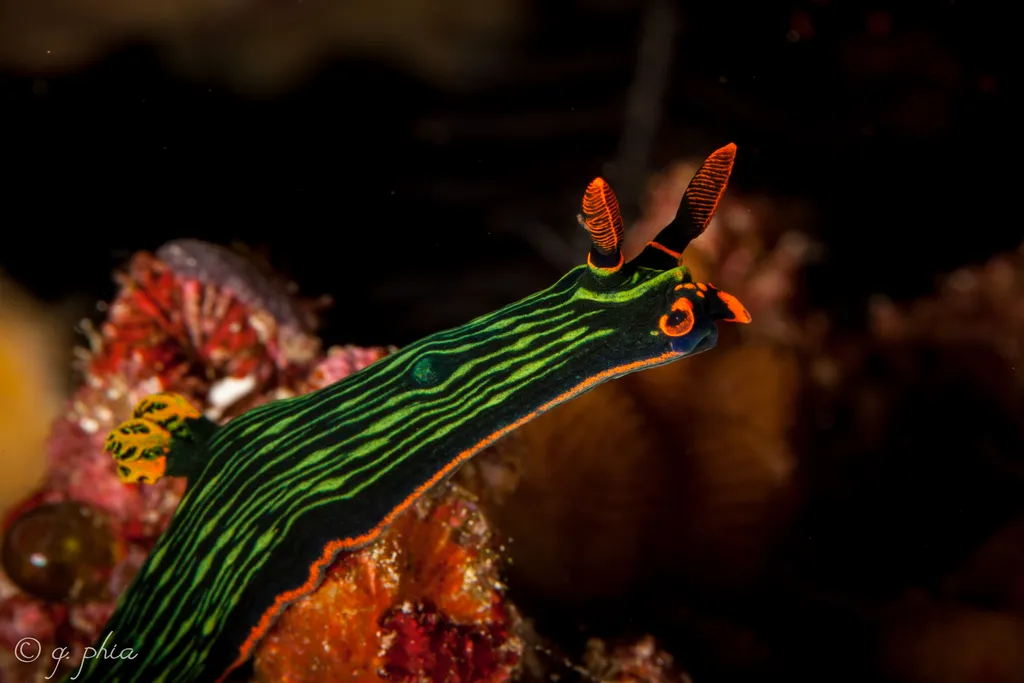
Photo by q phia / CC BY 2.0 via Wikimedia Commons
Finding tunicate walls
Scan open reef slopes and walls for dark colonial ascidian mats rather than muck sand alone. Once tunicates appear, slow your swim and glass for black neon silhouettes stretching across the colony.
Approach & behaviour
They crawl slowly while feeding and rarely bolt. Stay off the substrate plume, keep fin wash away from the animal, and let them finish a bite if you want natural feeding frames.
Photo tips
- Expose for the green pustules and orange rim; black body will crush to shadow if you meter on the reef background
- Include the foot border in at least one frame—that is your ID insurance
- At full size, consider 60 mm / mid-macro; save 100–105 mm for rhinophore and gill detail crops
Ethics
No poking, no "posing" onto prettier tunicates, no lifting. Chemical defenses do not make them toys. If mucus appears after contact, you already handled too close—back off and rinse gloves if you touched reef structures nearby.
Best Places to Dive with Variable Neon Slug
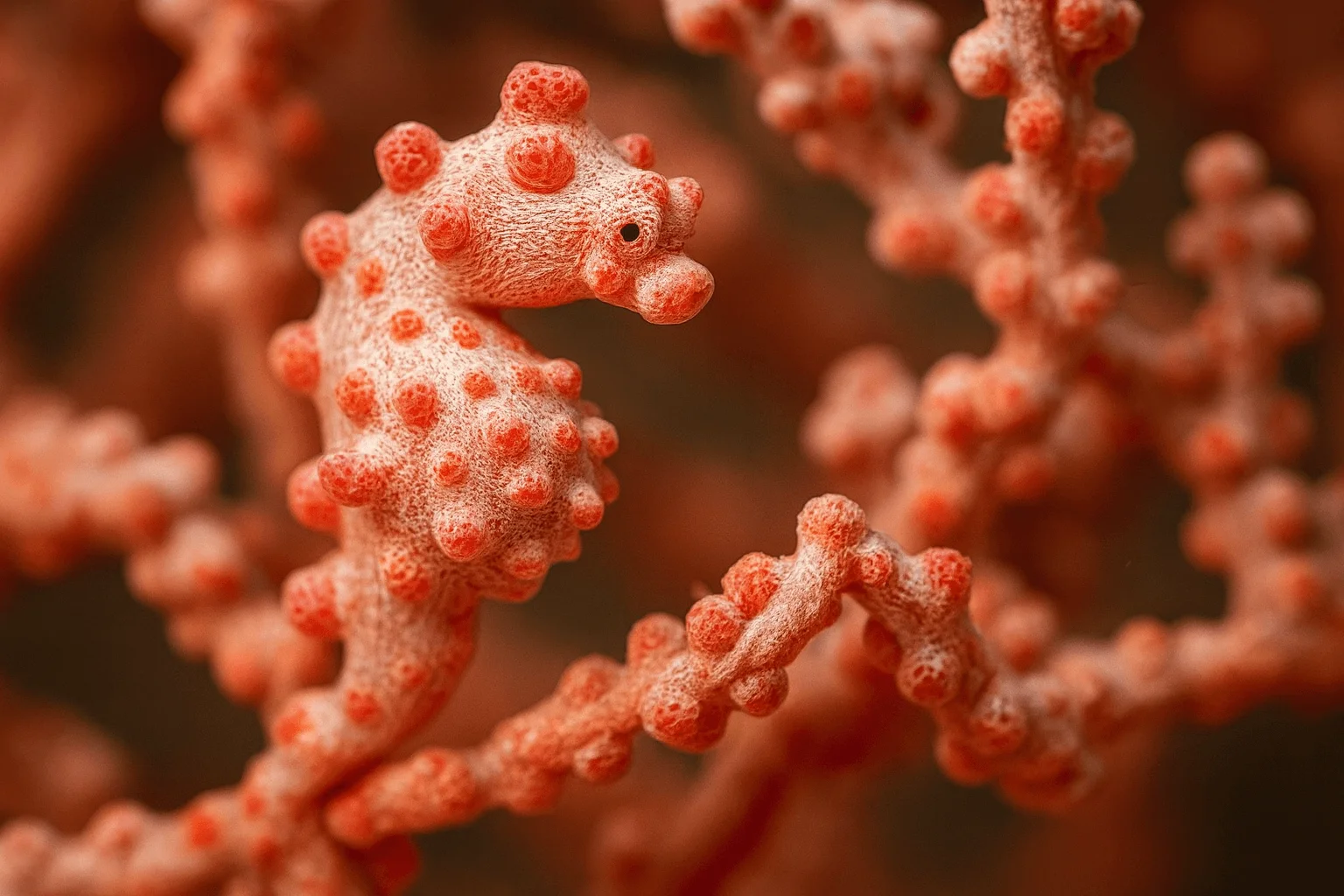
Anilao
Anilao, a small barangay in Batangas province just two hours south of Manila, is often called the macro capital of the Philippines. More than 50 dive sites fringe the coast and nearby islands, offering an intoxicating mix of coral‑covered pinnacles, muck slopes and blackwater encounters. Critter enthusiasts come for the legendary muck dives at Secret Bay and Anilao Pier, where mimic octopuses, blue‑ringed octopuses, wonderpus, seahorses, ghost pipefish, frogfish and dozens of nudibranch species lurk in the silt. Shallow reefs like Twin Rocks and Cathedral are covered in soft corals and teem with reef fish, while deeper sites such as Ligpo Island feature gorgonian‑covered walls and occasional drift. Because Anilao is so close to Manila and open year‑round, it’s the easiest place in the Philippines to squeeze in a quick diving getaway.
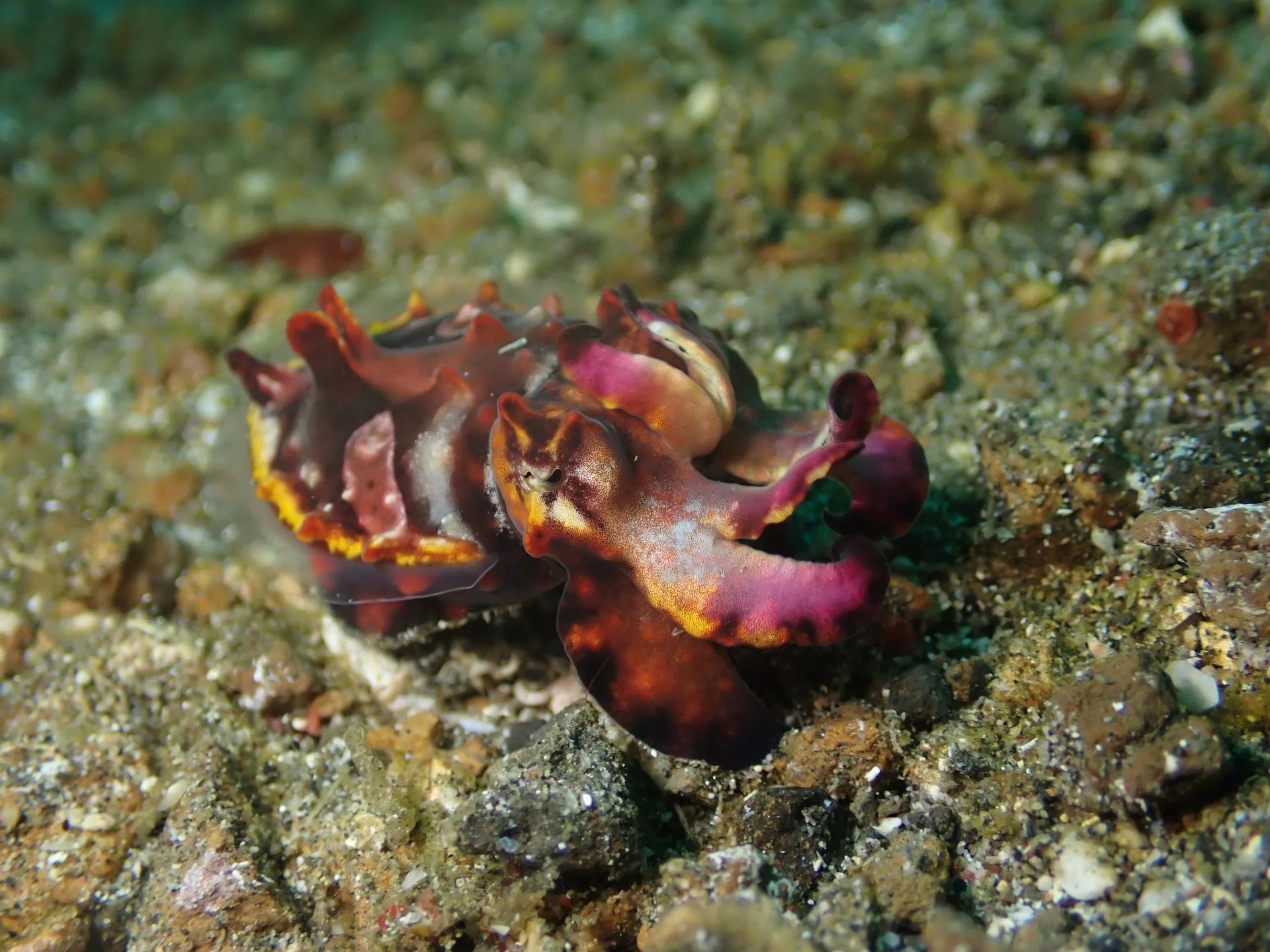
Lembeh
The Lembeh Strait in North Sulawesi has become famous as the muck‑diving capital of the world. At first glance its gently sloping seabed of black volcanic sand, rubble and discarded debris looks bleak. Look closer and it is teeming with weird and wonderful life: hairy and painted frogfish, flamboyant cuttlefish, mimic and blue‑ringed octopuses, ornate ghost pipefish, tiny seahorses, shrimp, crabs and a rainbow of nudibranchs. Most dives are shallow and calm with little current, making it an ideal playground for macro photographers. There are a few colourful reefs for a change of scenery, but Lembeh is all about searching the sand for critter treasures.
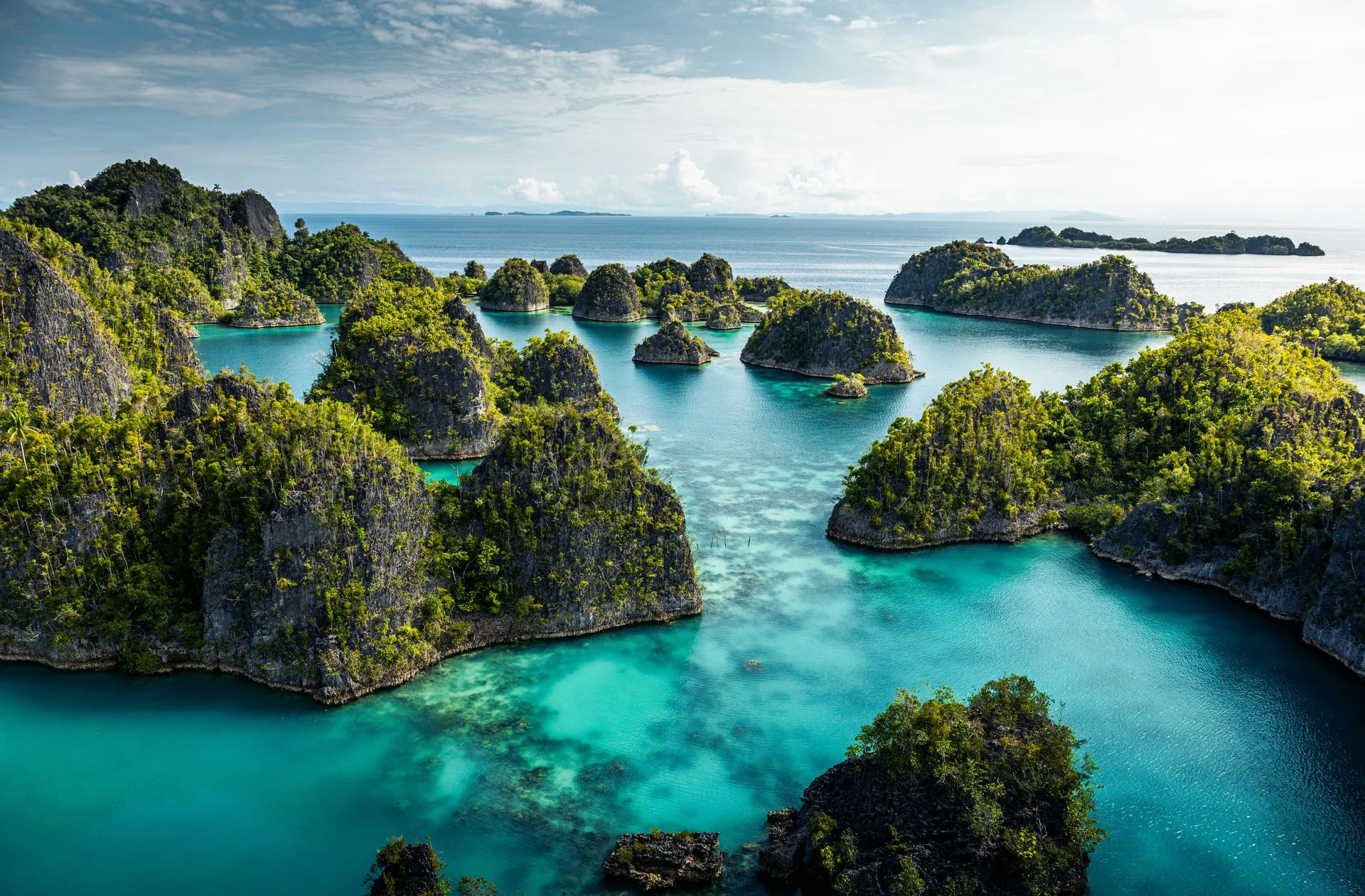
Raja Ampat
Raja Ampat, the “Four Kings,” is an archipelago of more than 1,500 islands at the edge of Indonesian West Papua. Its reefs sit in the heart of the Coral Triangle, where Pacific currents funnel nutrients into shallow seas and feed the world’s richest marine biodiversity. Diving here means gliding over colourful walls and coral gardens buzzing with more than 550 species of hard and soft corals and an estimated 1,500 fish species. You’ll meet blacktip and whitetip reef sharks on almost every dive, witness giant trevally and dogtooth tuna hunting schools of fusiliers, and encounter wobbegong “carpet” sharks, turtles, manta rays and dolphins. From cape pinnacles swarming with life to calm bays rich in macro critters, Raja Ampat offers endless variety. Above water, karst limestone islands and emerald lagoons provide spectacular scenery between dives.
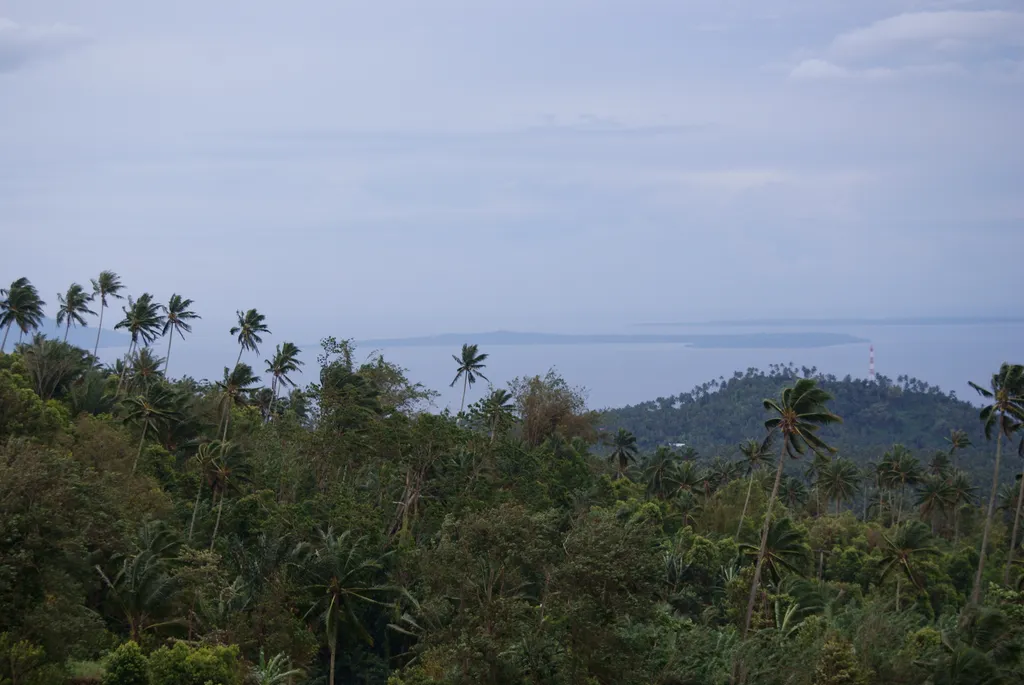
Bunaken
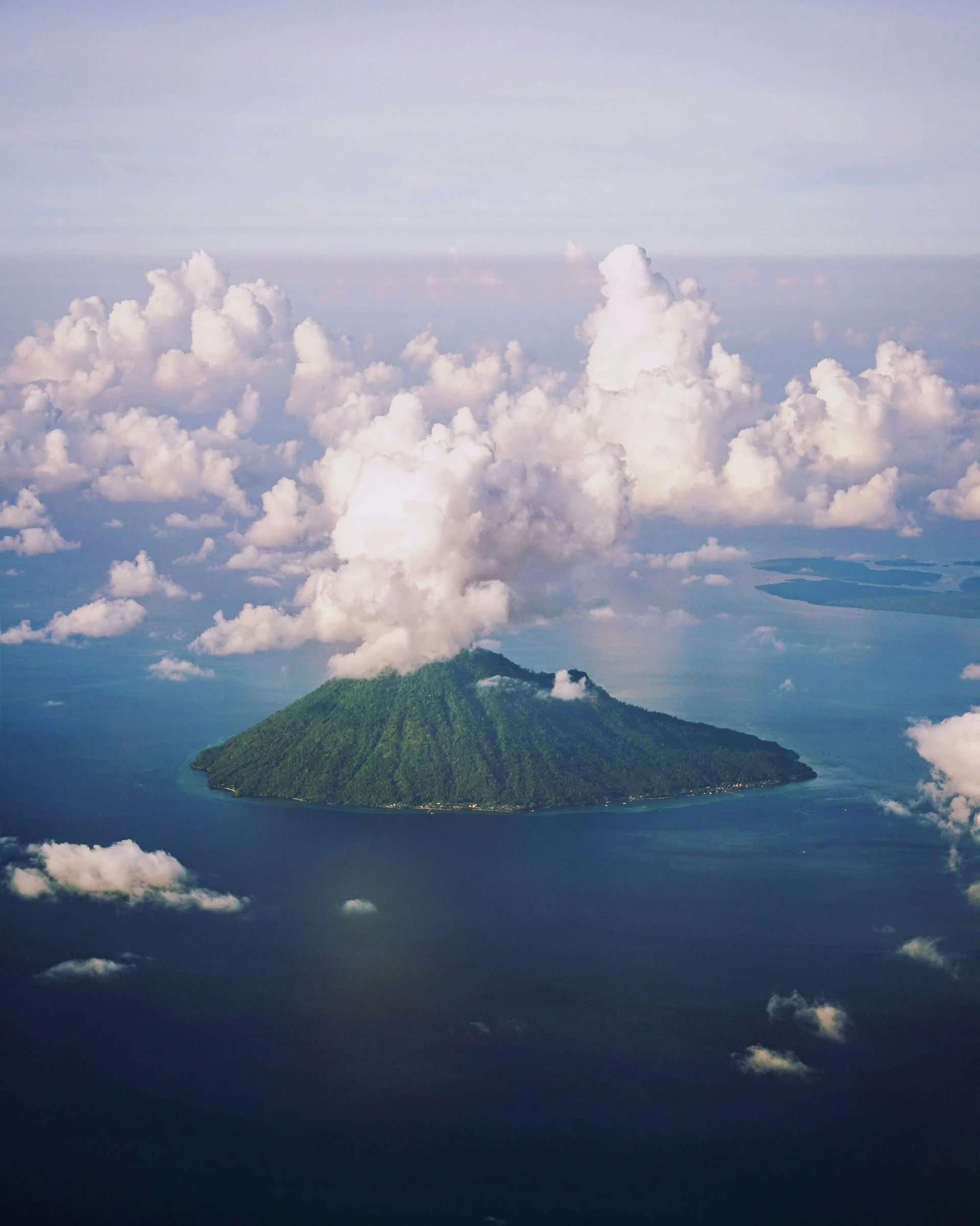
Bunaken National Park is wall-diving country: five volcanic islands—Bunaken, Manado Tua, Siladen, Mantehage, and Nain—ringed by drop-offs that fall from snorkel depth into hundreds of metres of blue. This is not the muck slopes of the Manado mainland; it is vertical reef, drift lines, and current-fed fish schools. The signature move is simple—roll off the boat at Lekuan or Muka Kampung, swim the shallow turtle flats, then hang on the wall while pyramid butterflyfish, fusiliers, and Napoleon wrasse stream past. Reef sharks patrol the corners, eagle rays cruise the blue, and barrel sponges the size of oil drums frame every wide-angle shot. Warm 27–29°C water, park protection since 1991, and island resorts that put you on the first boat at 08:00 make Bunaken the classic North Sulawesi wall trip—fly into MDC, transfer to the strait, and live on the reef for a week.
Manado
Tucked away in northern Sulawesi, Manado’s coastal waters and Bunaken National Park are a diver’s dream. Sheer coral walls plunge into the deep blue, exploding with sponges, sea fans and tropical fish, while the mainland coast hides muck‑diving gems with seahorses, ghost pipefish and mimic octopus. Dolphins and pilot whales sometimes cruise past, green turtles nap on the reef, and reef sharks and schooling jacks patrol the drop‑offs. Whether you like effortless drift dives along walls or critter hunting in sand and seagrass, Manado balances big‑fish thrills with macro treasures. Warm waters, friendly locals and laid‑back resorts make it perfect for both serious underwater photographers and casual holidaymakers.
Tulamben(Bali)
Tulamben sits on Bali’s northeast coast and is best known for the USAT Liberty shipwreck – a 125‑metre cargo ship torpedoed in WWII that now lies just a short swim from shore. Warm water, mild currents and straightforward shore entries make diving here relaxed for all levels. Besides the wreck, divers can explore coral gardens, black‑sand muck sites and dramatic drop‑offs. Macro lovers will find nudibranchs, ghost pipefish, mimic octopus and pygmy seahorses, while big‑fish fans can encounter schooling jackfish, bumphead parrotfish and reef sharks. With a compact coastline packed with variety, Tulamben delivers world‑class wreck and critter diving without long boat rides.
Wakatobi
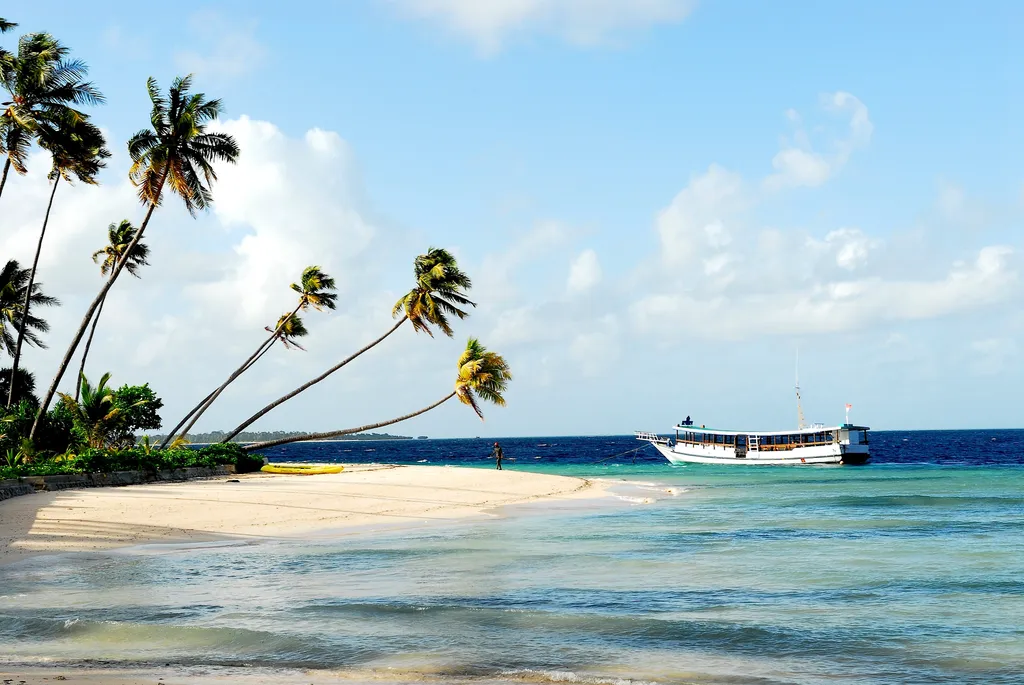
Wakatobi National Park sits on the southeastern rim of Sulawesi, named from its four main islands—Wangi-Wangi, Kaledupa, Tomia, and Binongko. It holds some of the healthiest coral coverage in the Coral Triangle, with walls, seamounts, and fringing reefs that marine biologists still treat as a reference system. Visibility regularly hits 30 m and can stretch past 50 m on calm outer-reef days. Currents are usually mild and predictable, so you get long bottom times on colorful hard-coral gardens instead of fighting blue water. The signature experience is Wakatobi’s House Reef—walk-in shore diving a short swim from the jetty—backed by more than 40 day-boat sites, from beginner pinnacles like Roma to the knife-edge walls of Blade.
Mabul
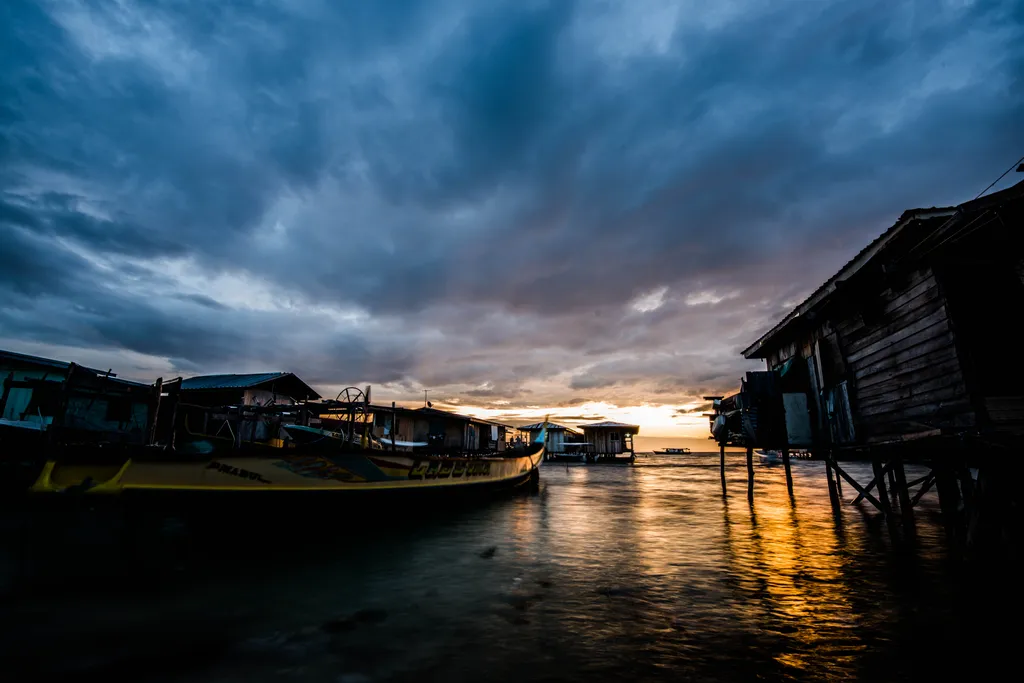
Mabul is where you come to slow down and stare at sand. The island sits in the Semporna archipelago off eastern Sabah — a flat, palm-fringed speck ringed by shallow rubble slopes, artificial reef structures, and the occasional tyre stack that macro photographers lose their minds over. Visibility rarely tops 15 m and nobody cares: frogfish the size of your thumb, flamboyant cuttlefish pulsing purple and yellow, blue-ring octopus tucked in rubble, ornate ghost pipefish, ribbon eels, pygmy seahorses in sea fans, and nudibranchs on every spare surface. This is muck diving with resort convenience — walk from your bungalow to the boat, three dives before lunch, rinse and repeat. The signature sites circle the island and nearby Seaventures rig: Froggy Lair and Crocodile Avenue for classic critter hunts, Lobster Wall and Eel Garden when you want a bit of structure, Paradise 1 & 2 for mixed reef-and-rubble variety. Night dives here are excellent — mandarinfish mating dances at dusk, bobtail squid and Spanish dancer nudibranchs after dark. Most resorts run house-reef dives and unlimited shore access between boat trips. Sipadan's barracuda tornadoes and sheer walls are 45 minutes away by speedboat, and many packages include a day or two on permit — but that's the side dish. Base yourself on Mabul for a week of macro and you won't feel cheated if the permit lottery doesn't go your way. Bring a macro lens, a patient dive guide, and low expectations for viz; bring high expectations for critters.
Dumaguete
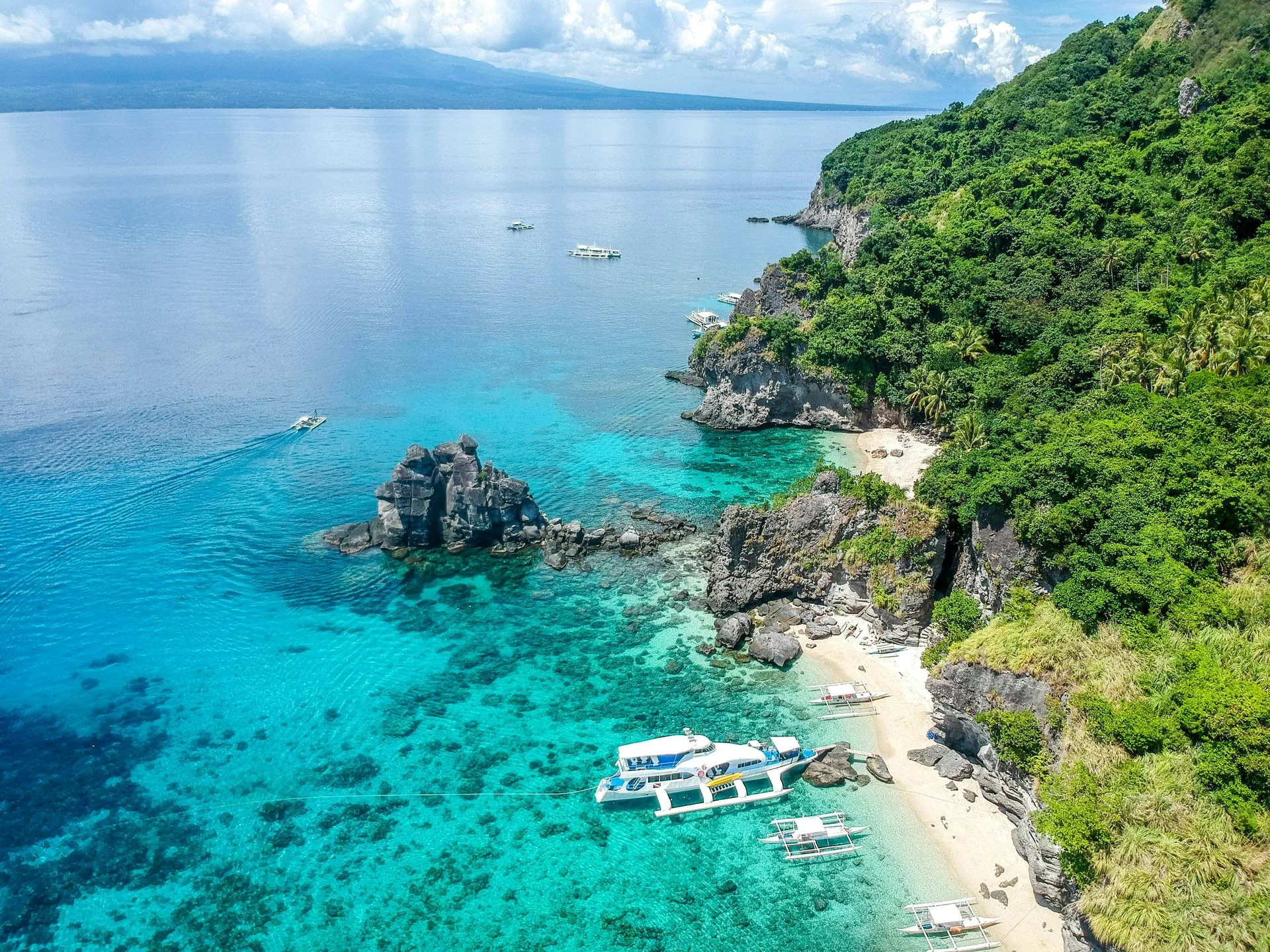
Dumaguete on the southeast coast of Negros is the jumping‑off point for some of the Philippines’ most diverse diving. Along the nearby town of Dauin, a series of shallow marine sanctuaries and black‑sand slopes hide critters galore: frogfish, flamboyant cuttlefish, mimic octopus, ghost pipefish, seahorses, pipefish and nudibranchs. Artificial reefs made from car tyres and pyramids provide extra habitat. Offshore, Apo Island’s walls and plateaus burst with hard and soft corals, schooling jacks and barracudas, and friendly green turtles. With day trips to Oslob’s whale sharks or Bais’ dolphin‑watching, and excursions to nearby Siquijor, Dumaguete offers a perfect mix of macro muck diving and classic coral reefs.
Palau
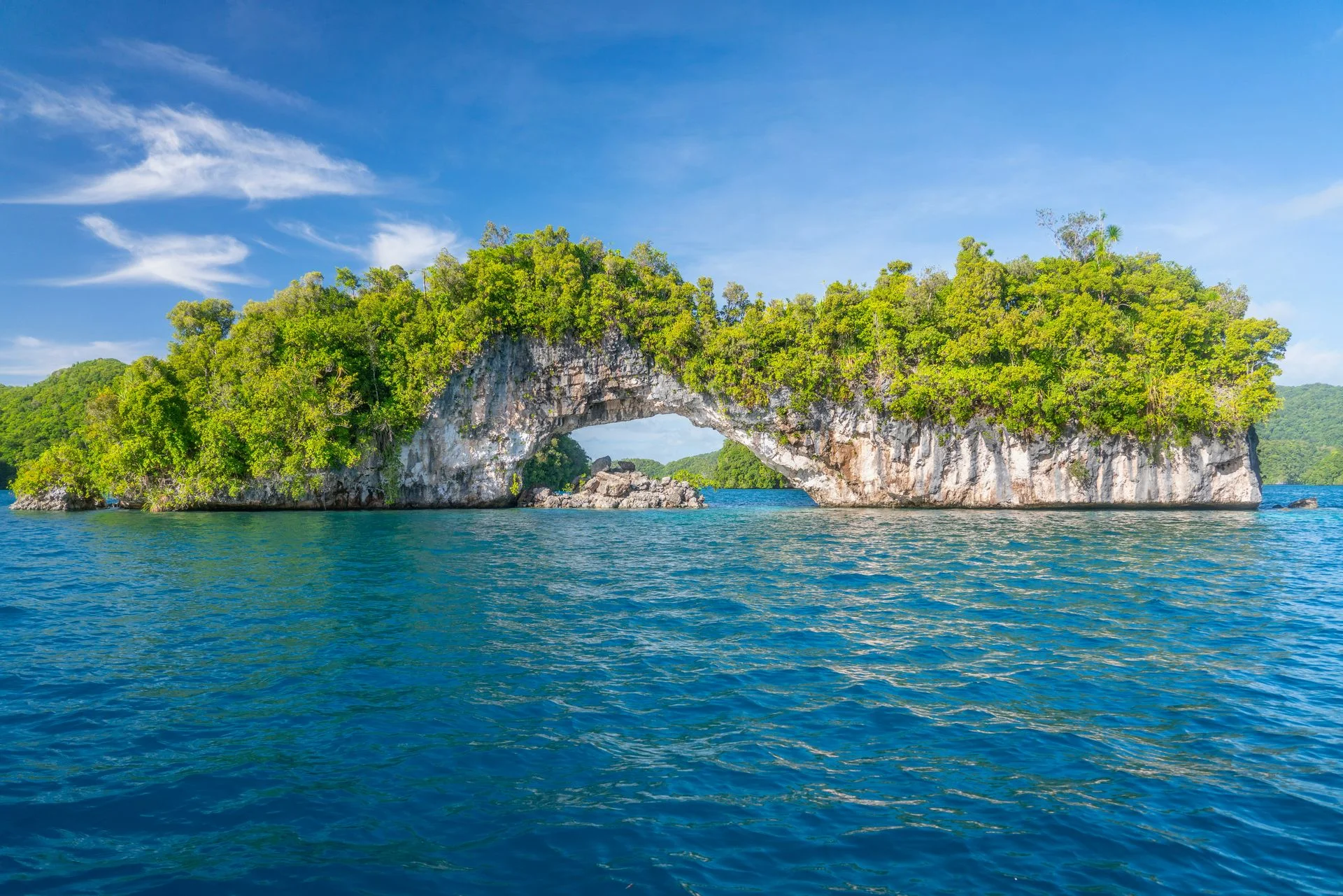
Rising out of the western Pacific at the meeting point of two great oceans, Palau is an archipelago of more than 500 jungle‑cloaked islands and limestone rock pinnacles. Its barrier reef and scattered outcrops create caverns, walls, tunnels and channels where nutrient‑rich currents sweep in from the Philippine Sea. These flows feed carpets of hard and soft corals and attract vast schools of jacks, barracudas and snappers, as well as an impressive cast of pelagics. Grey reef and whitetip sharks parade along the legendary Blue Corner; manta rays glide back and forth through German Channel’s cleaning stations; and Ulong Channel offers a thrill‑ride drift over giant clams and lettuce corals. Between dives you can snorkel among non‑stinging jellyfish in Jellyfish Lake or explore WWII ship and plane wrecks covered in colourful sponges.
Ambon
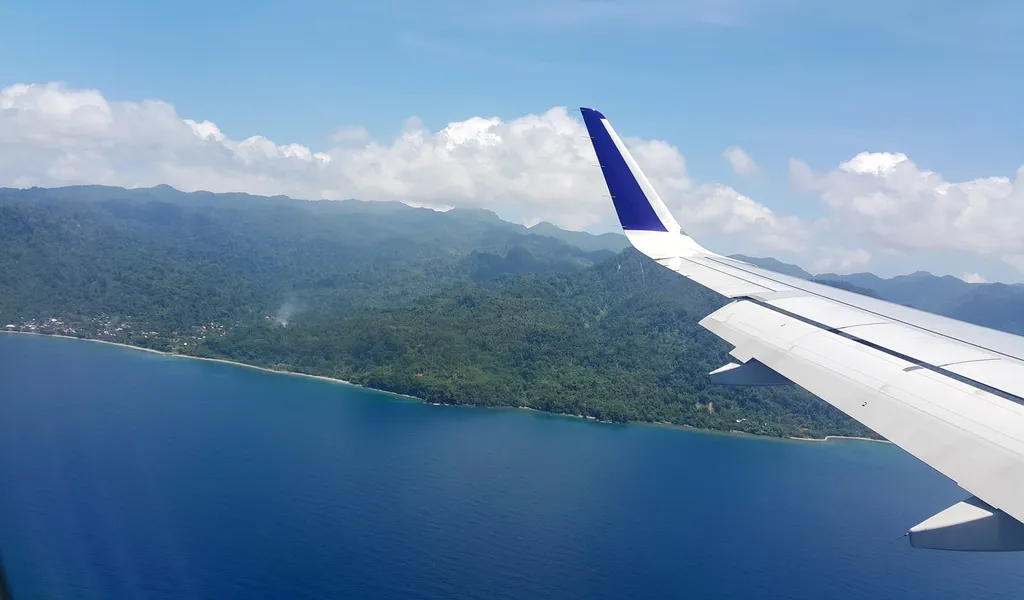
Ambon sits in Indonesia’s Maluku (Spice Islands) and is one of the world’s elite muck destinations—often ranked alongside Lembeh for rare critters, without the crowds. The heart of the action is Ambon Bay around Laha village near the airport: black volcanic sand slopes, rubble, pier posts and discarded debris that somehow host psychedelic frogfish (endemic to Ambon waters), rhinopias, flamboyant cuttlefish, mimic and wonderpus octopuses, ghost pipefish and endless nudibranchs. Most bay dives stay 5–35 m with long bottom times that photographers love. When weather allows, the south and east coasts flip the script—healthy hard coral, walls, arches at Pintu Kota, the swim-throughs of Hukurila Cave, and the critter-coated Duke of Sparta wreck. Expect modest lodging in Laha or resort packages further around the bay; July–August monsoon often closes operators.
Great Barrier Reef
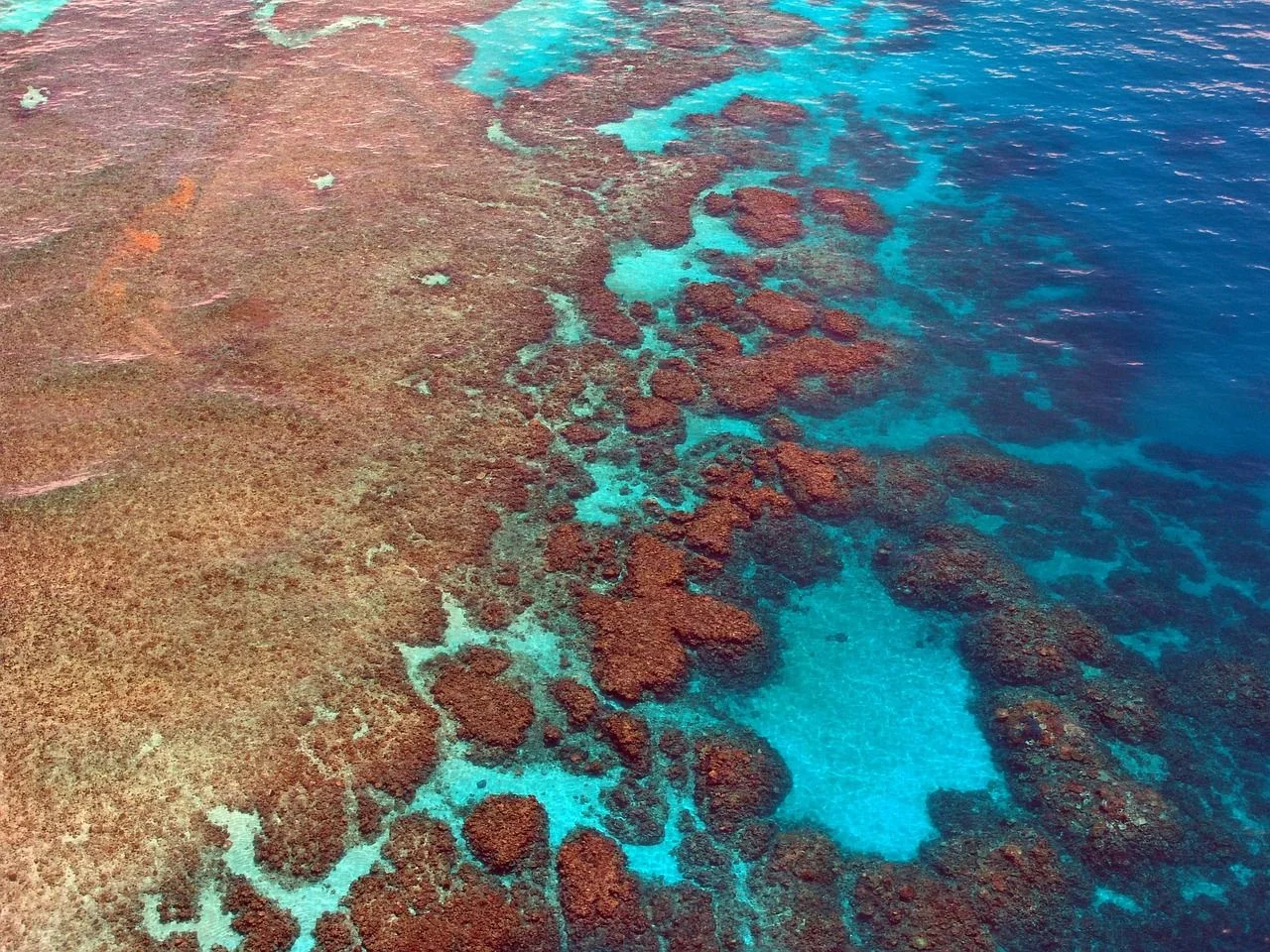
The Great Barrier Reef stretches for more than 2,300 km along Australia’s Queensland coast and is Earth’s largest coral ecosystem. With over 2,900 individual reefs, hundreds of islands, and a staggering diversity of marine life, it’s a bucket‑list destination for divers. Outer reef walls, coral gardens and pinnacles support potato cod, giant trevallies, reef sharks, sea turtles, manta rays and even visiting dwarf minke and humpback whales. Divers can explore historic wrecks like the SS Yongala, drift along the coral‑clad walls of Osprey Reef or mingle with friendly cod at Cod Hole. Whether you’re a beginner on a day trip from Cairns or an experienced diver on a remote liveaboard, the Great Barrier Reef offers unforgettable underwater adventures.