
Paddleflap Scorpionfish
Rhinopias eschmeyeri
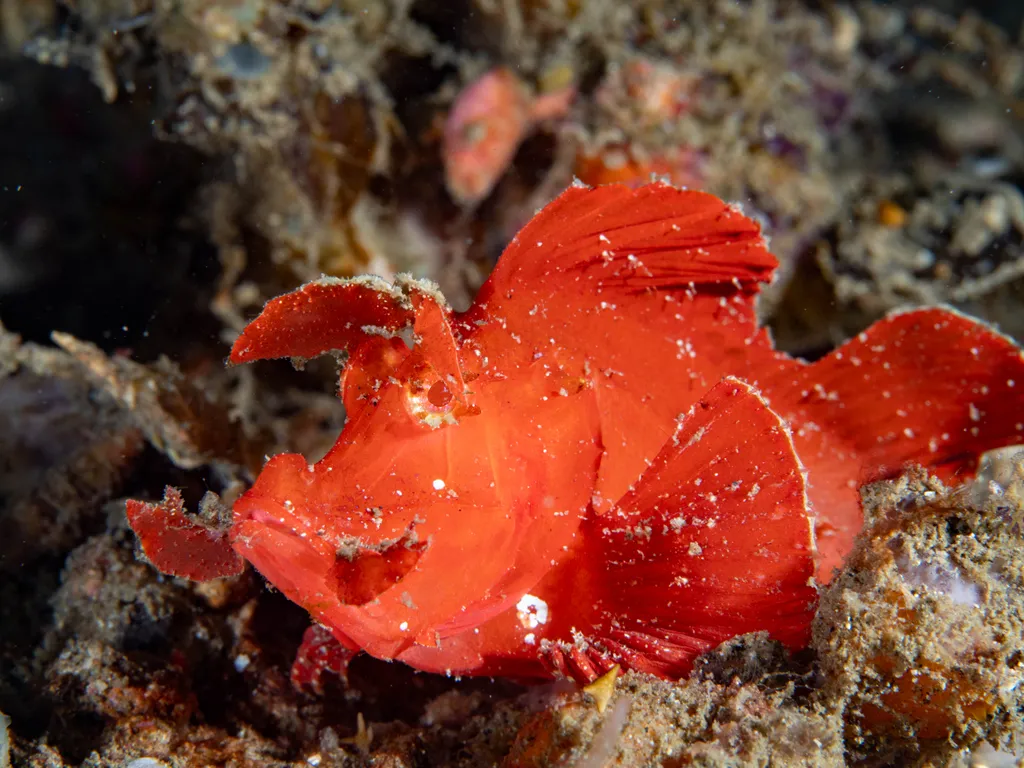
Photo by Rickard Zerpe / CC BY 2.0 via Wikimedia Commons
Paddleflap Scorpionfish are the "cleaner" Rhinopias—less tangled weed, more sculpted flaps. Where weedy Rhinopias look like a drifting algae ball, R. eschmeyeri reads as a compressed scorpionfish wearing oversized eyebrows and a moustache of paddle-shaped skin.
They are poor swimmers and honest sit-and-wait predators. Most sightings are a fish parked on rubble or tucked against soft coral, watching a cloud of small cardinalfish or sweepers the way a heron watches a bait ball.
Depth is the real filter. This species skews deeper than many muck icons, so Nitrox, good buoyancy, and a guide who remembers last week's GPS beat random reef cruising every time.
🔬Classification
📏Physical Features
🌊Habitat Info
⚠️Safety & Conservation
Identification Guide
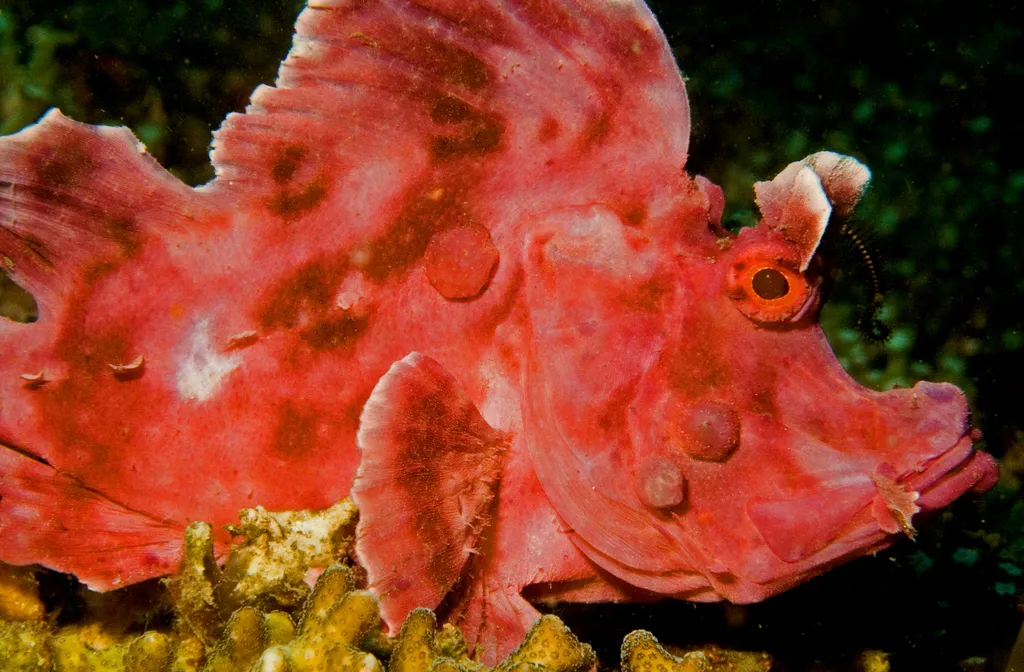
Photo by Jason Marks / CC BY-SA 3.0 via Wikimedia Commons
Paddle Flaps Above the Eyes
The signature cue is broad, smooth, paddle-like skin flaps sitting above each eye—often described as giant eyebrows. These are cleaner-edged than the fine branching tentacles of weedy Rhinopias.
Mouth Flaps and Jaw Tentacles
Matching paddle flaps sit on either side of the mouth. Two short tentacles project from the underside of the lower jaw; the species lacks obvious tentacles below the eyes in anterior view.
Smoother Body Profile
Lateral tentacles above the lateral line are reduced or absent compared with R. frondosa. Overall silhouette is less "shaggy kelp" and more compressed scorpionfish with decorative fins.
Depth and Posture
Usually found below ~20 m on rubble or near Goniopora and soft coral gardens. Expect a stationary perch within a meter or two of structure holding small fish—rarely mid-water or shallow sand.
Top 10 Fun Facts about Paddleflap Scorpionfish
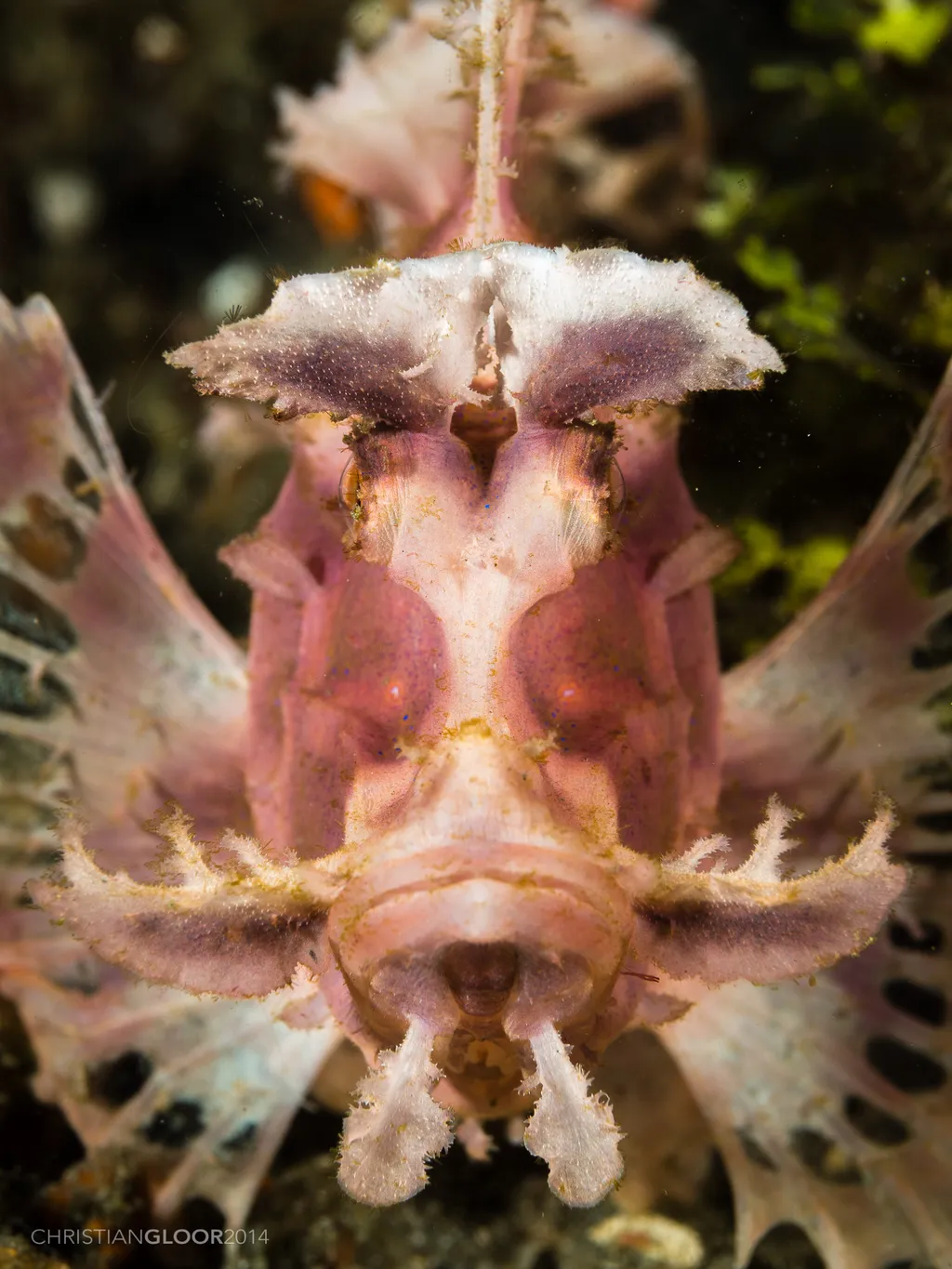
Photo by Christian Gloor from Wakatobi Dive Resort / CC BY 2.0 via Wikimedia Commons
1. Named for William N. Eschmeyer
The specific epithet honours American ichthyologist William N. Eschmeyer, who revised the genus Rhinopias in 1973—years before Bruno Condé formally described the species from Mauritius in 1977.
2. Mauritius Type, Indo-Pacific Reality
First described from Mahébourg, Mauritius, the fish was once thought Mauritian-endemic until Indo-West Pacific populations confirmed a wide tropical range from East Africa to Japan, Indonesia, and northern Australia.
3. Species Status Was Debated
Some researchers suggested R. eschmeyeri might be a morph of weedy R. frondosa—especially when the two appear paired on dives. Motomura and Johnson (2006) confirmed eschmeyeri as a valid species with distinct morphology.
4. The Paddle Flap Signature
Broad flaps above the eyes and beside the mouth are the field marks that separate this fish from frondosa's weed-like tentacles and aphanes's lacier net-like appendages.
5. Walkers on the Bottom
Like other Rhinopias, paddleflaps rarely swim. They push off with thickened pelvic and pectoral fin rays to hop or creep across rubble—another reason guides find them by substrate memory, not pursuit.
6. Site-Faithful Individuals
An individual may hold the same rubble pocket or coral head for weeks or even a year, making local guide intel disproportionately valuable.
7. Ambush Near Bait Clouds
Field reports note a habit of sitting one to two meters from bommies packed with cardinalfish or sweepers—the same prey size class they strike from a still perch.
8. Deeper Than Many Muck Icons
Typical records sit at 18-55 m, with recreational sightings often starting around 20 m. That depth band explains why Nitrox and controlled descents show up in so many trip reports.
9. Venomous but Passive
Twelve dorsal spines, three anal spines, and venomous pelvic spines deliver a painful sting. Incidents almost always involve accidental contact during macro work—not aggression from the fish.
10. Aquarium Trade vs. Wild Rarity
Collected from Southeast Asian waters for the Japanese aquarium trade, wild encounters still feel like a jackpot because camouflage, depth, and patchy distribution hide them in plain sight.
Diving & Observation Notes
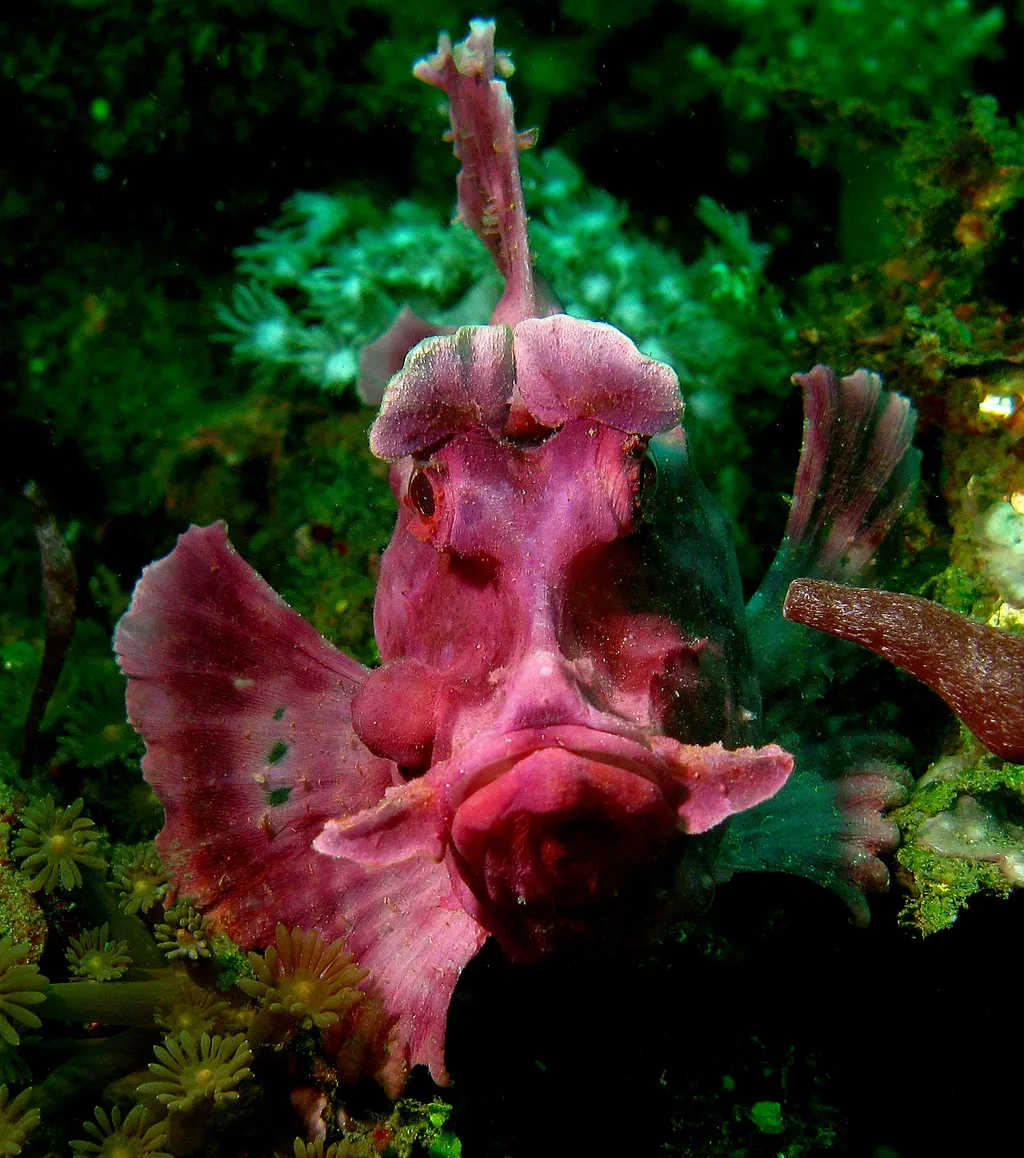
Photo by Steve Childs / CC BY 2.0 via Wikimedia Commons
🧭 Depth and Site Selection
Plan dives with Nitrox or conservative air profiles when targeting 20-40 m rubble slopes and soft-coral gardens. In Lembeh, sites like Nudifalls and deeper muck pockets are recurring names; in Ambon, ask for Rhino City-style rubble channels.
🧭 Guide Intel Beats Random Scanning
Individuals often stay put for extended periods. Start with yesterday's coordinates, then scan a 1-2 m radius around the same bommie—multiple paddleflaps sometimes share one feature.
🤿 Approach Low and Patient
Approach from the side below eye level. Overhead shadows can trigger a short fin-hop into denser cover; settle buoyancy once framed and let the fish resume its perch.
📸 Photo Priorities
Frame the paddle flaps and upturned mouth so the subject reads as Rhinopias, not generic scorpionfish. Side light separates smooth flaps from substrate; stop down for eye and spine plane without crowding venomous fin rays.
⚠️ Safety and Ethics
Never touch, fan silt onto, or relocate the fish for a cleaner background. Keep one diver in spine range at a time and avoid planting hands on rubble near the perch.
Best Places to Dive with Paddleflap Scorpionfish
Lembeh
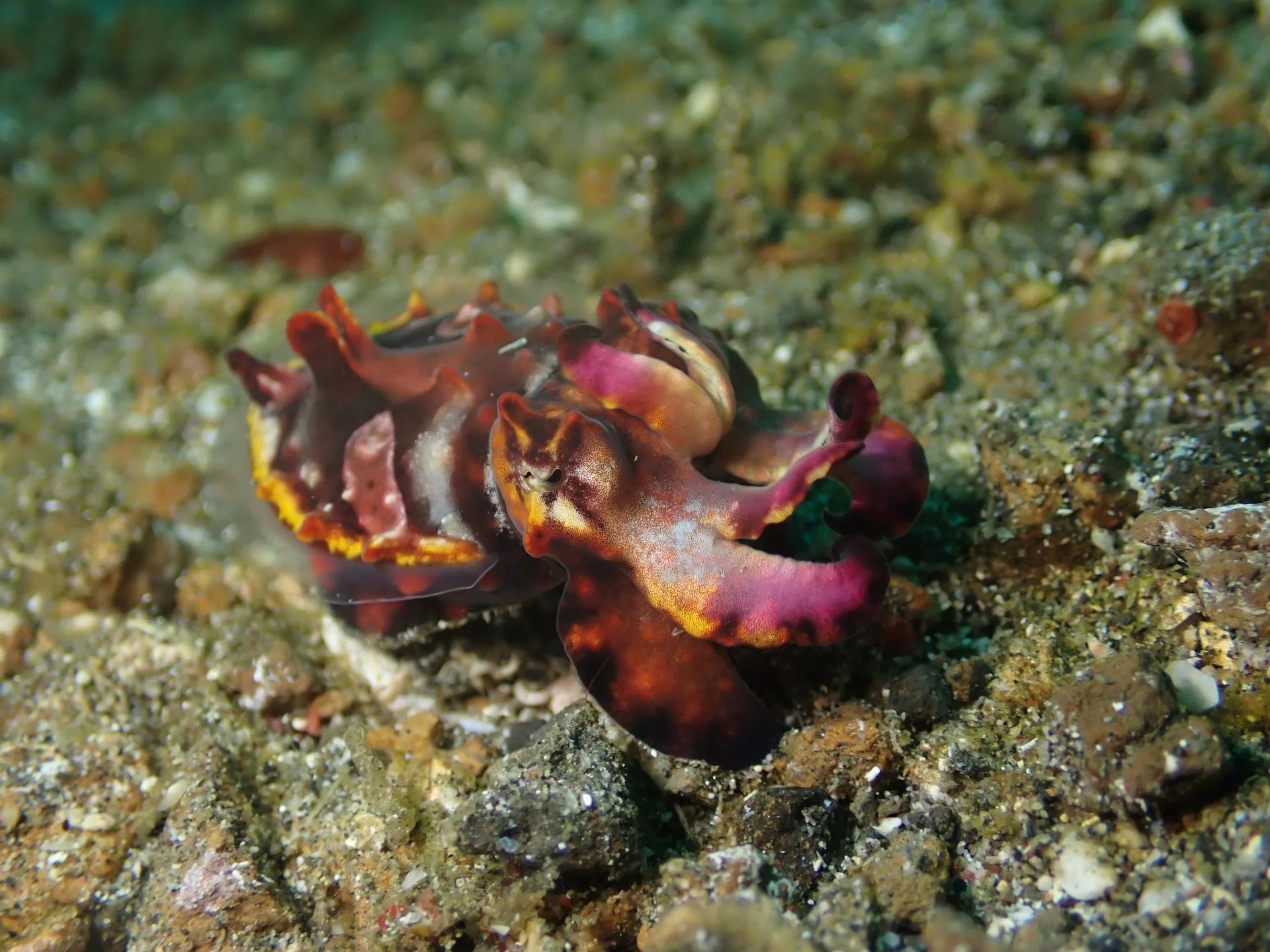
The Lembeh Strait in North Sulawesi has become famous as the muck‑diving capital of the world. At first glance its gently sloping seabed of black volcanic sand, rubble and discarded debris looks bleak. Look closer and it is teeming with weird and wonderful life: hairy and painted frogfish, flamboyant cuttlefish, mimic and blue‑ringed octopuses, ornate ghost pipefish, tiny seahorses, shrimp, crabs and a rainbow of nudibranchs. Most dives are shallow and calm with little current, making it an ideal playground for macro photographers. There are a few colourful reefs for a change of scenery, but Lembeh is all about searching the sand for critter treasures.
Ambon
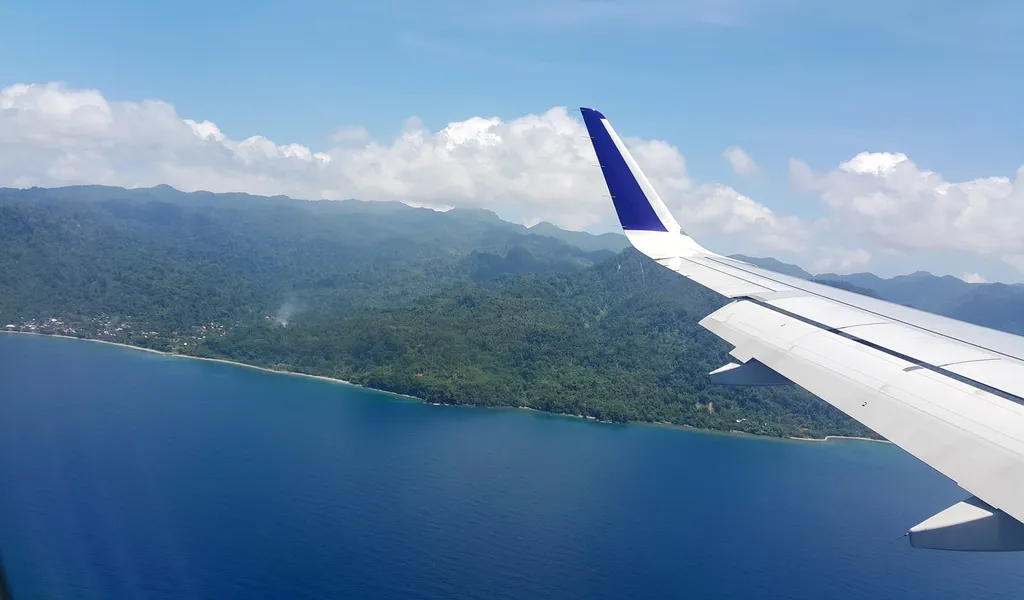
Ambon sits in Indonesia’s Maluku (Spice Islands) and is one of the world’s elite muck destinations—often ranked alongside Lembeh for rare critters, without the crowds. The heart of the action is Ambon Bay around Laha village near the airport: black volcanic sand slopes, rubble, pier posts and discarded debris that somehow host psychedelic frogfish (endemic to Ambon waters), rhinopias, flamboyant cuttlefish, mimic and wonderpus octopuses, ghost pipefish and endless nudibranchs. Most bay dives stay 5–35 m with long bottom times that photographers love. When weather allows, the south and east coasts flip the script—healthy hard coral, walls, arches at Pintu Kota, the swim-throughs of Hukurila Cave, and the critter-coated Duke of Sparta wreck. Expect modest lodging in Laha or resort packages further around the bay; July–August monsoon often closes operators.
Alor
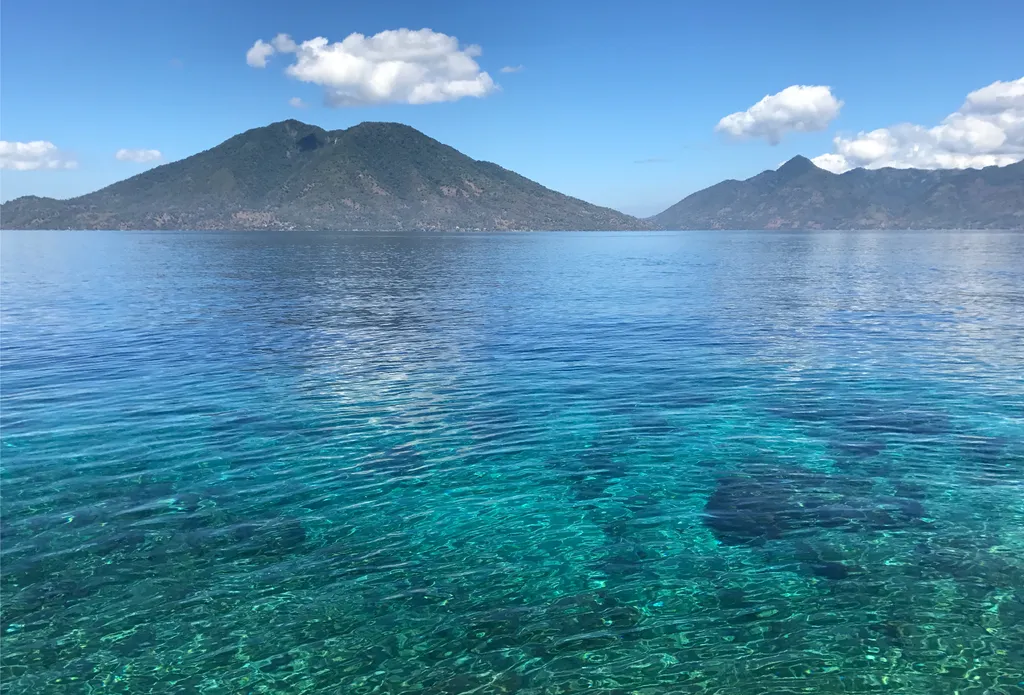
Alor rewards a trip that moves between two very different kinds of diving. In Pantar Strait, walls and coral slopes meet moving water, with schooling fish along exposed edges. Inside Kalabahi Bay, volcanic sand, rubble and silty bottoms turn the dive into a slow search for small animals. The diving area spans the shores of Alor, Pantar and Pura; where you stay affects which of these habitats fits comfortably into a boat day. Water movement explains much of the variation. Cold water enters the strait from the south, and local operators associate upwelling and stronger currents with new and full moons. A warm surface does not tell you what awaits below: a thermocline can change both the temperature and the demands of a dive. Site choice matters more than a single forecast for the archipelago. Build the itinerary around reefs, walls and macro life, with large animals as a possible encounter. There is no dependable shared season for hammerheads, mola or threshers on which to base a booking. A guide who can switch between exposed sites and sheltered searches is more useful than a fixed list of promised sightings.
Anilao
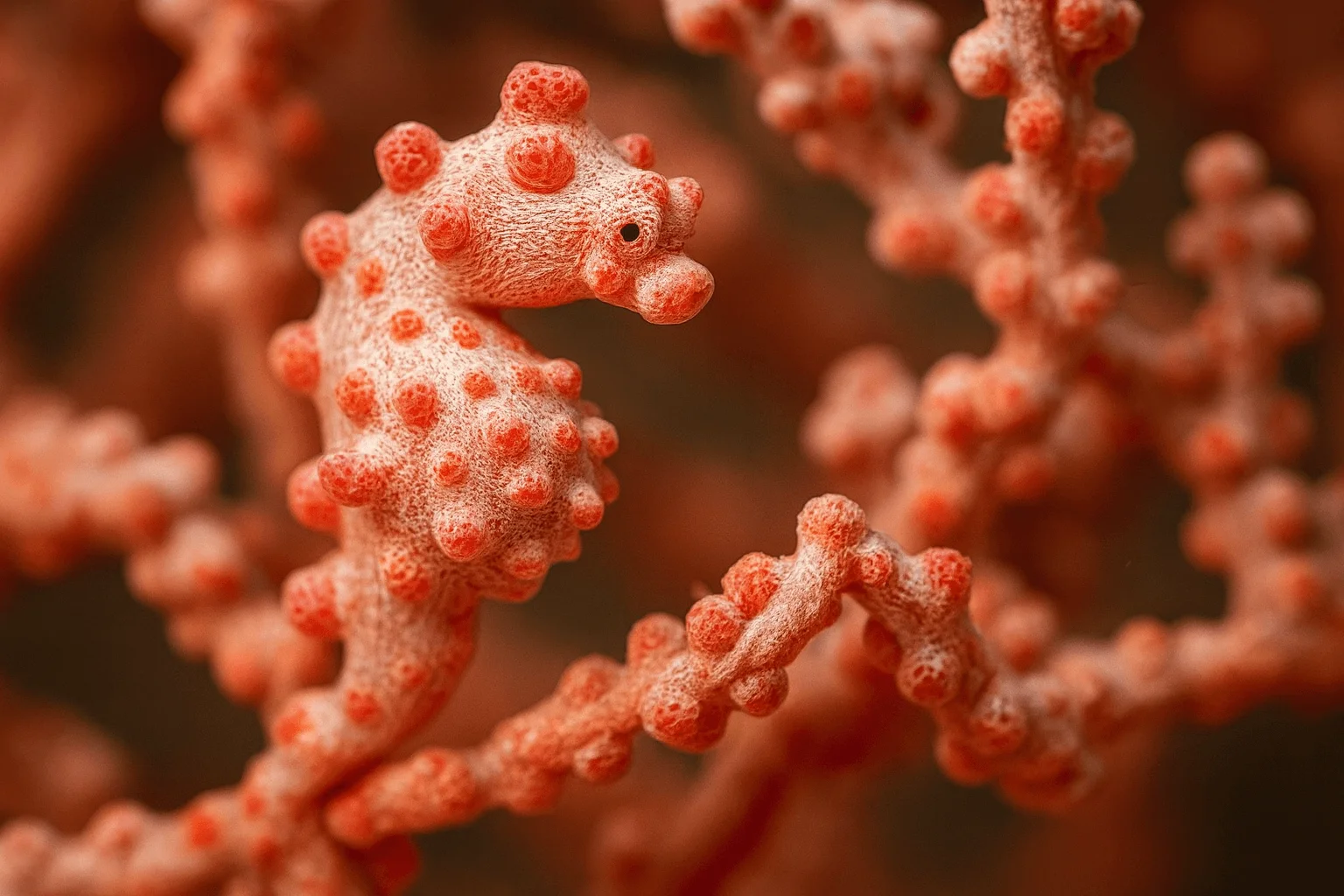
Anilao, a small barangay in Batangas province just two hours south of Manila, is often called the macro capital of the Philippines. More than 50 dive sites fringe the coast and nearby islands, offering an intoxicating mix of coral‑covered pinnacles, muck slopes and blackwater encounters. Critter enthusiasts come for the legendary muck dives at Secret Bay and Anilao Pier, where mimic octopuses, blue‑ringed octopuses, wonderpus, seahorses, ghost pipefish, frogfish and dozens of nudibranch species lurk in the silt. Shallow reefs like Twin Rocks and Cathedral are covered in soft corals and teem with reef fish, while deeper sites such as Ligpo Island feature gorgonian‑covered walls and occasional drift. Because Anilao is so close to Manila and open year‑round, it’s the easiest place in the Philippines to squeeze in a quick diving getaway.
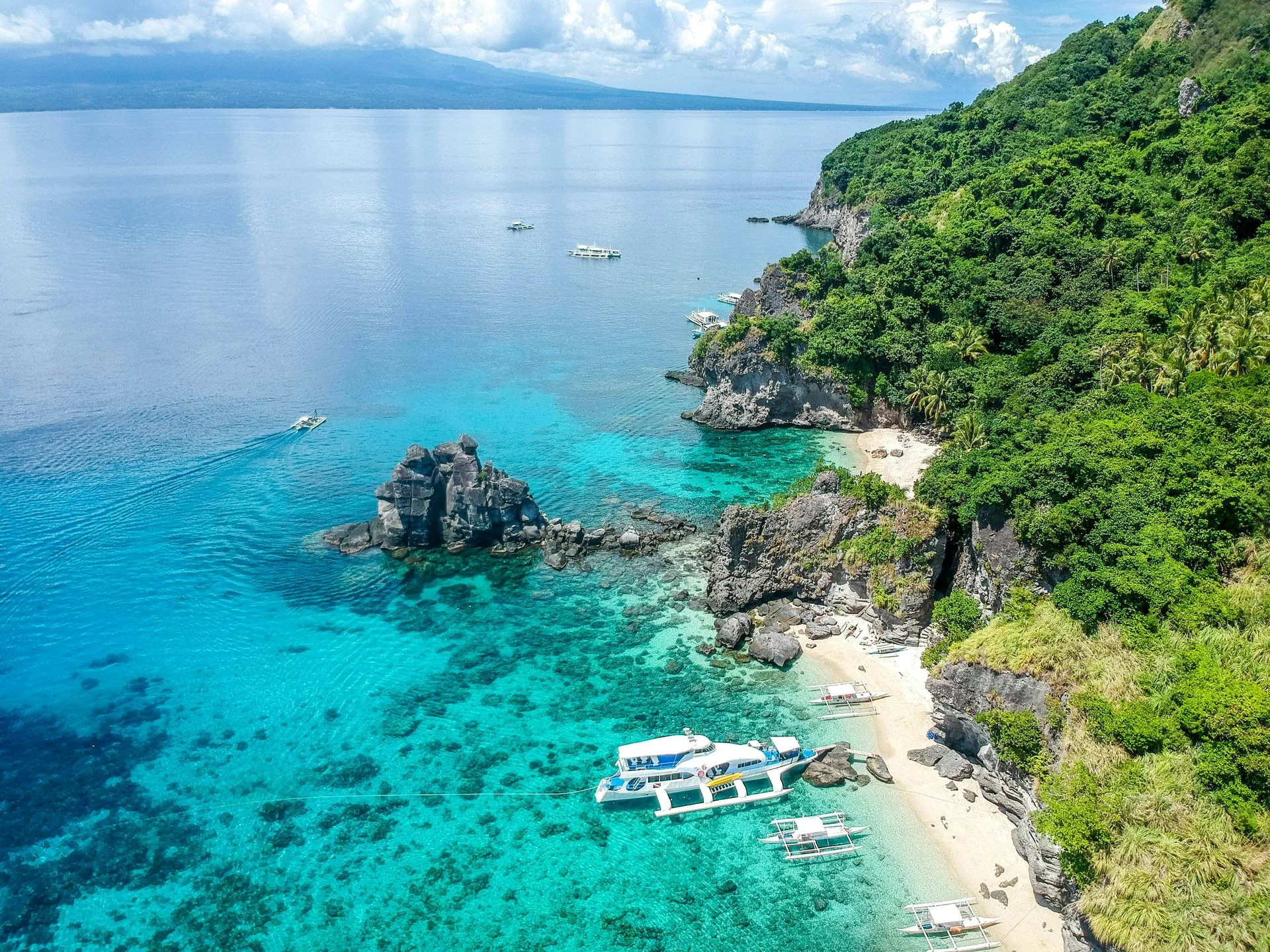
Dumaguete
Dumaguete on the southeast coast of Negros is the jumping‑off point for some of the Philippines’ most diverse diving. Along the nearby town of Dauin, a series of shallow marine sanctuaries and black‑sand slopes hide critters galore: frogfish, flamboyant cuttlefish, mimic octopus, ghost pipefish, seahorses, pipefish and nudibranchs. Artificial reefs made from car tyres and pyramids provide extra habitat. Offshore, Apo Island’s walls and plateaus burst with hard and soft corals, schooling jacks and barracudas, and friendly green turtles. With day trips to Oslob’s whale sharks or Bais’ dolphin‑watching, and excursions to nearby Siquijor, Dumaguete offers a perfect mix of macro muck diving and classic coral reefs.
Tulamben(Bali)
Tulamben sits on Bali’s northeast coast and is best known for the USAT Liberty shipwreck – a 125‑metre cargo ship torpedoed in WWII that now lies just a short swim from shore. Warm water, mild currents and straightforward shore entries make diving here relaxed for all levels. Besides the wreck, divers can explore coral gardens, black‑sand muck sites and dramatic drop‑offs. Macro lovers will find nudibranchs, ghost pipefish, mimic octopus and pygmy seahorses, while big‑fish fans can encounter schooling jackfish, bumphead parrotfish and reef sharks. With a compact coastline packed with variety, Tulamben delivers world‑class wreck and critter diving without long boat rides.
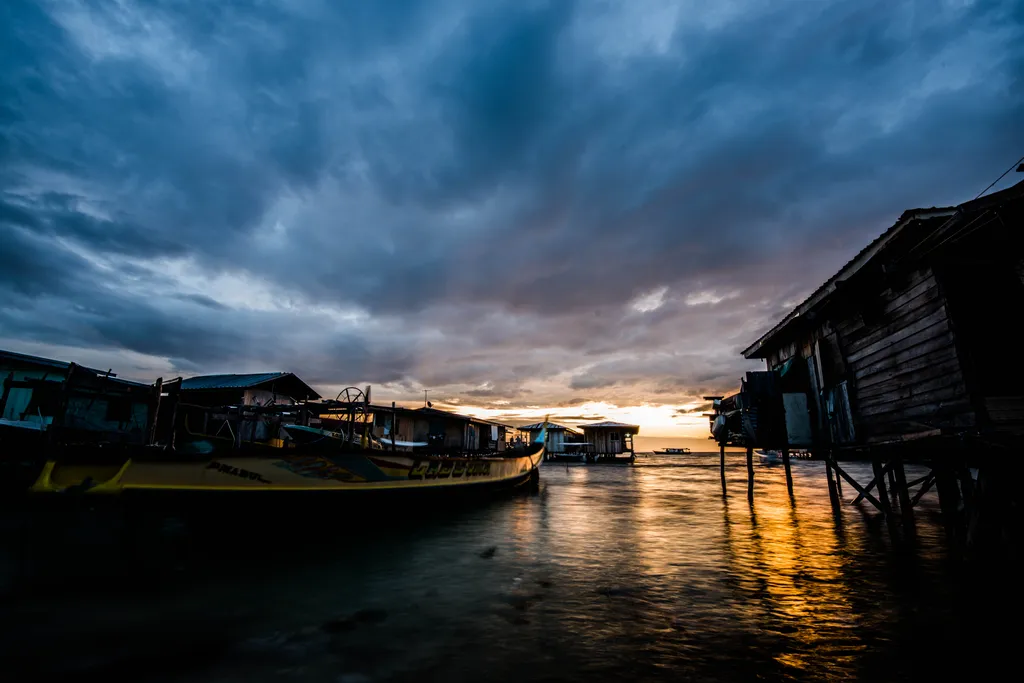
Mabul
Mabul is where you come to slow down and stare at sand. The island sits in the Semporna archipelago off eastern Sabah — a flat, palm-fringed speck ringed by shallow rubble slopes, artificial reef structures, and the occasional tyre stack that macro photographers lose their minds over. Visibility rarely tops 15 m and nobody cares: frogfish the size of your thumb, flamboyant cuttlefish pulsing purple and yellow, blue-ring octopus tucked in rubble, ornate ghost pipefish, ribbon eels, pygmy seahorses in sea fans, and nudibranchs on every spare surface. This is muck diving with resort convenience — walk from your bungalow to the boat, three dives before lunch, rinse and repeat. The signature sites circle the island and nearby Seaventures rig: Froggy Lair and Crocodile Avenue for classic critter hunts, Lobster Wall and Eel Garden when you want a bit of structure, Paradise 1 & 2 for mixed reef-and-rubble variety. Night dives here are excellent — mandarinfish mating dances at dusk, bobtail squid and Spanish dancer nudibranchs after dark. Most resorts run house-reef dives and unlimited shore access between boat trips. Sipadan's barracuda tornadoes and sheer walls are 45 minutes away by speedboat, and many packages include a day or two on permit — but that's the side dish. Base yourself on Mabul for a week of macro and you won't feel cheated if the permit lottery doesn't go your way. Bring a macro lens, a patient dive guide, and low expectations for viz; bring high expectations for critters.
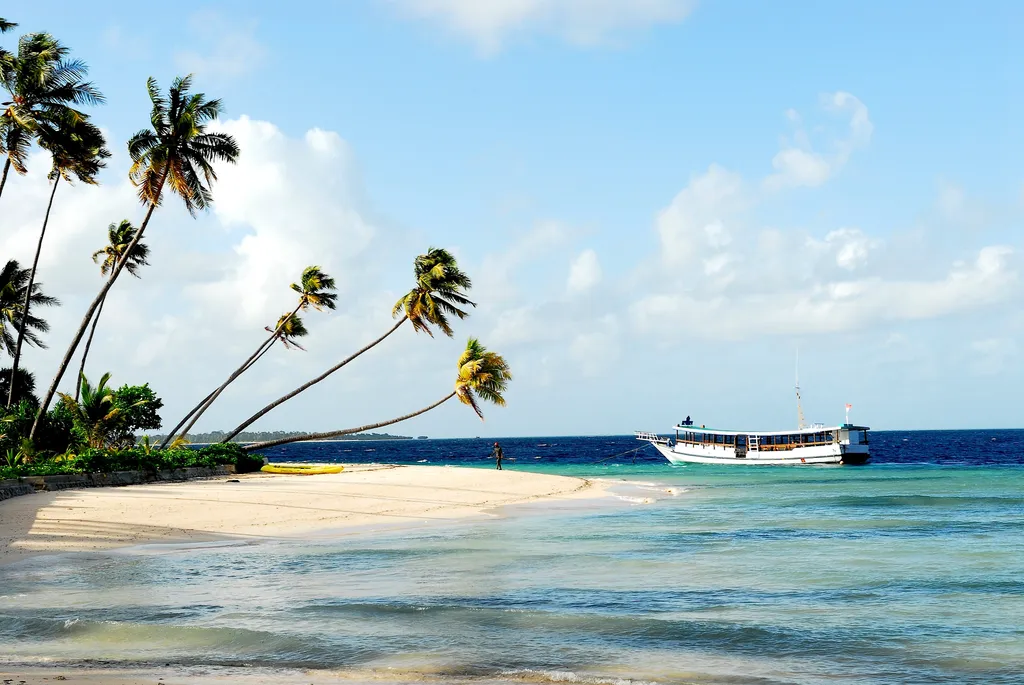
Wakatobi
Wakatobi National Park sits on the southeastern rim of Sulawesi, named from its four main islands—Wangi-Wangi, Kaledupa, Tomia, and Binongko. It holds some of the healthiest coral coverage in the Coral Triangle, with walls, seamounts, and fringing reefs that marine biologists still treat as a reference system. Visibility regularly hits 30 m and can stretch past 50 m on calm outer-reef days. Currents are usually mild and predictable, so you get long bottom times on colorful hard-coral gardens instead of fighting blue water. The signature experience is Wakatobi’s House Reef—walk-in shore diving a short swim from the jetty—backed by more than 40 day-boat sites, from beginner pinnacles like Roma to the knife-edge walls of Blade.