
Bargibanti Pygmy Seahorse
Hippocampus bargibanti
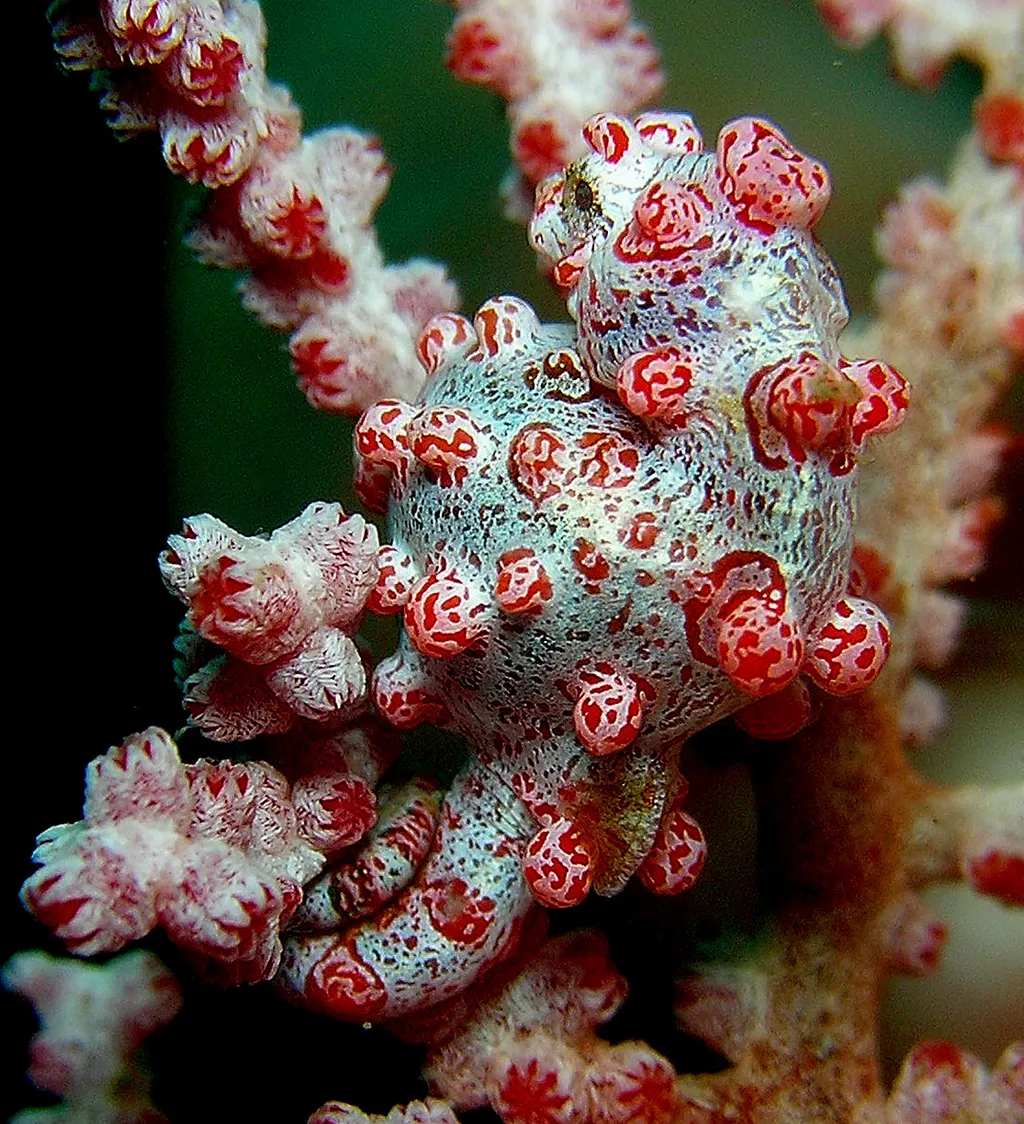
Photo by Steve Childs / CC BY 2.0 via Wikimedia Commons
The Bargibanti Pygmy Seahorse (Hippocampus bargibanti) is the species that invented pygmy seahorse diving. Discovered by accident in 1969 when Georges Bargibant collected a Muricella gorgonian for an aquarium and noticed two tiny bumps moving on the branches, it remains the benchmark for super-macro reef hunting: a fish smaller than your pinky nail that lives its entire adult life on a single sea fan.
Unlike free-swimming seahorses, bargibantis are obligate residents of Muricella gorgonians. Their tubercles, color, and even posture mirror the host coral so precisely that untrained eyes scan right past them. Guides memorize fan locations; photographers kneel for twenty minutes to nail one frame. It is not a big-animal dive—it is patience distilled into 2 cm of living coral camouflage.
🔬Classification
📏Physical Features
🌊Habitat Info
⚠️Safety & Conservation
Identification Guide
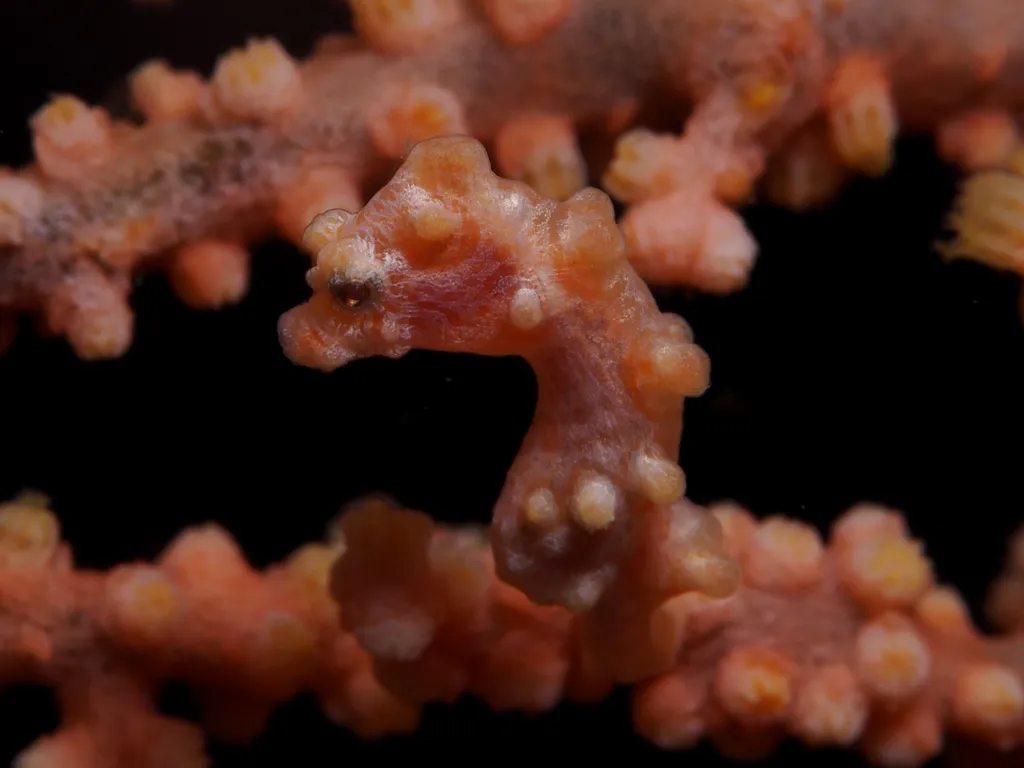
Photo by Rickard Zerpe / CC BY-SA 2.0 via Wikimedia Commons
Search Muricella gorgonian fans on reef slopes and walls—usually 16–40 m, not shallow rubble muck.
Key Field Marks
- Tiny size: adults typically 13–24 mm tall—smaller than most fingernails
- Bulbous tubercles scattered over head and body, mimicking coral polyps
- Very short snout, rounded knob-like coronet, single prominent eye spine
- Prehensile tail wrapped around a gorgonian branch; body aligned with fan orientation
- Two color morphs: grey/purple + pink-red tubercles or yellow + orange tubercles
Similar Species
- Denise's Pygmy Seahorse (H. denise): smoother, leaner body; longer neck; less lumpy tubercles; hosts on more gorgonian genera
- Pontoh's Pygmy Seahorse (H. pontohi): free-living on algae/hydroids in shallow water; white with red filaments—not on deep Muricella fans
- Satomi's Pygmy Seahorse (H. satomiae): even smaller; extremely cryptic; rare in recreational dive ranges
Host Coral Clues
Pink-red morphs usually match Muricella plectana; yellow-orange morphs align with Muricella paraplectana. If the fan is wrong genus, you are probably looking at Denise's or another species.
Top 10 Fun Facts about Bargibanti Pygmy Seahorse
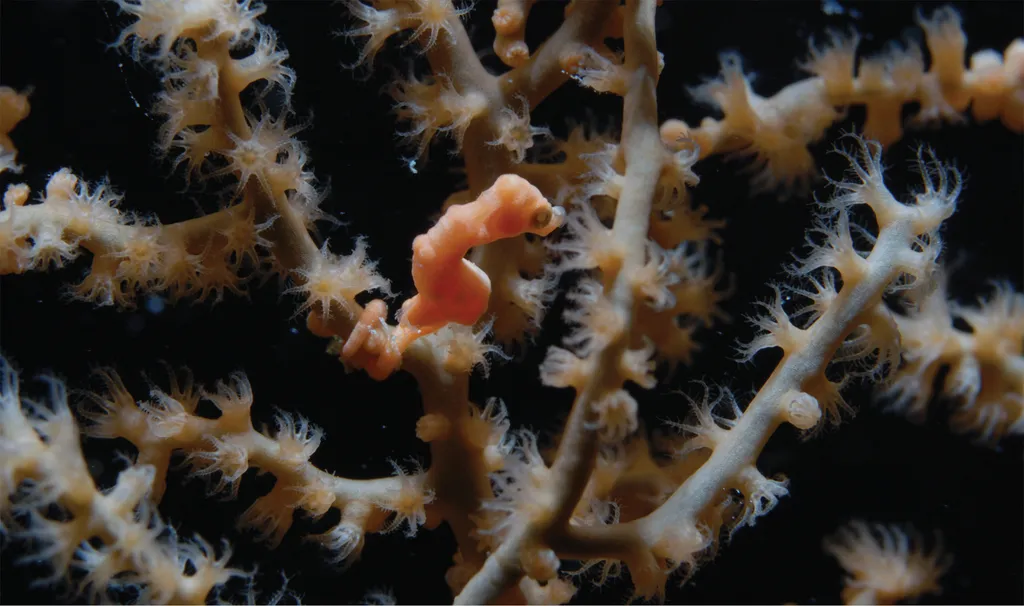
Photo by F.R. Stokvis / CC BY 4.0 via Wikimedia Commons
1. Discovered on a Dissection Table
The world's first pygmy seahorse was not found on a dive—it was found when Georges Bargibant examined a Muricella gorgonian he'd collected for the Nouméa Aquarium in 1969. Two tiny "polyps" turned out to be fish. The species was formally described by Whitley in 1970 and named bargibanti in his honor.
2. A Fan Is a Lifetime Address
Adults are obligate residents of Muricella gorgonians. Once a juvenile settles, it likely never leaves that coral head. Camouflage is so host-specific that switching fans would mean instant exposure to predators. Guides return to the same fan year after year because the horses stay put.
3. Up to 28 Pairs on One Fan
Despite their tiny territories, bargibantis can cluster. Researchers have recorded up to 28 pairs on a single gorgonian. They are usually monogamous, with males and females forming long-term pair bonds on the same branch system—crowded real estate on a dinner-plate-sized fan.
4. Trunk Brooding, Not Tail Pouch
Large seahorses carry eggs in a tail pouch. Pygmies brood on the trunk—an enclosed pouch under the belly. After an elaborate courtship dance, the female transfers eggs to the male, who carries them for about two weeks before releasing ~35 pelagic larvae roughly 2 mm long.
5. Two Color Morphs, Two Host Corals
FishBase and field records link color morphs to host species: grey/purple with pink-red tubercles on Muricella plectana, and yellow with orange tubercles on Muricella paraplectana. The tubercle shape and body tone mirror the polyp texture of each host—a textbook case of habitat-matching camouflage.
6. No Eyelids, Ever
Like all seahorses, bargibantis cannot close their eyes. They are perpetually light-sensitive. High-powered white focus lights and repeated strobe bursts are stressful. Responsible photographers use red focus lights, limit flash counts, and shoot quickly so the animal can return to resting posture.
7. Breeding Season Has Depth Preferences
Breeding activity runs roughly March through November in the tropical West Pacific. During breeding, adults appear to favor red-polyp Muricella hosts in depths over 20 m—which is why many dive operations schedule pygmy hunts on deeper fan sites when pairs are courting.
8. The Pygmy Definition
Pygmy seahorses are defined by size under ~27 mm standard length, a single gill opening on the back of the head, and trunk brooding. Bargibanti was the template for that definition—every later pygmy species description references it.
9. CITES Listed, Aquarium Trade Risk
The species is listed under CITES and assessed Least Concern by IUCN (2023), but wild collection for aquaria has failed repeatedly—even expert facilities lose both horses and host gorgonians. In situ observation is the only sustainable way to enjoy them.
10. Lembeh Put It on the Bucket List
Sites like Pygmy Seahorse House and Nudi Retreat in Lembeh Strait turned bargibanti from a scientific curiosity into a macro-diving pilgrimage. The pattern spread across Romblon, Wakatobi, Raja Ampat, and Mabul—wherever Muricella fans grow deep enough, guides build fan maps and photographers build diopter collections.
Diving & Observation Notes
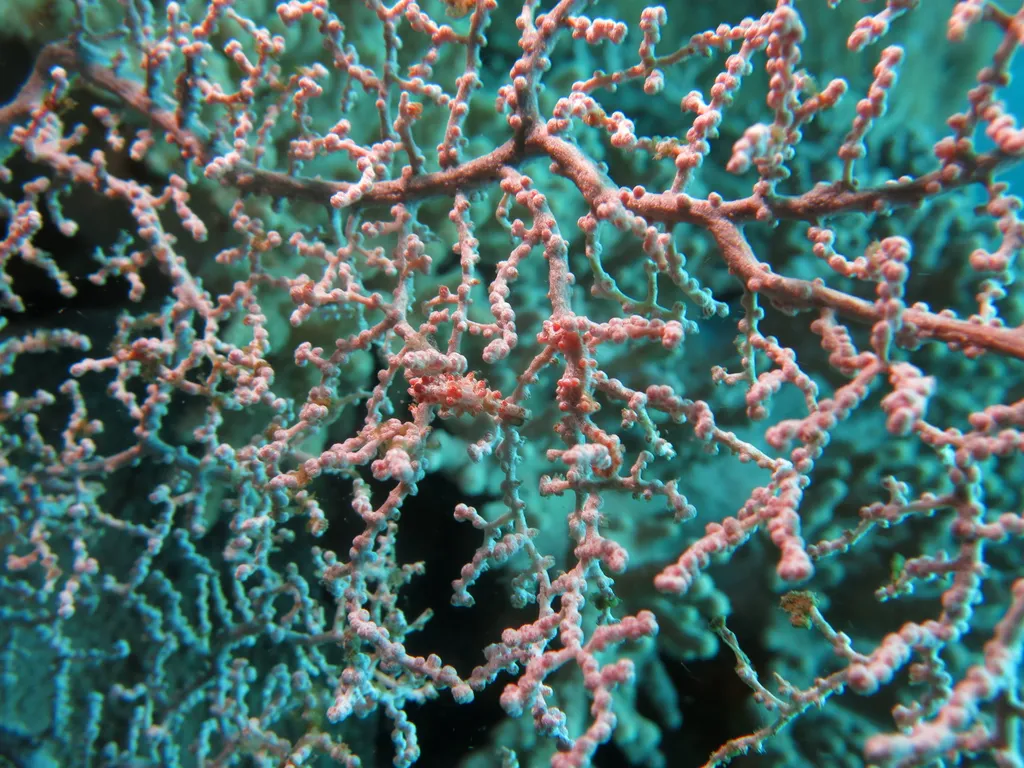
Photo by Manuae / CC BY-SA 3.0 via Wikimedia Commons
🧭 Finding the Fan First
You do not "hunt pygmies on sand"—you hunt Muricella fans on slopes and walls at 16–40 m. Lembeh (Pygmy Seahorse House, Nudi Retreat, Angel's Window), Romblon (Bonbon Fan Coral Collection, Anchor Bay), Wakatobi, Raja Ampat (Blue Magic), Mabul sea-fan sites, Anilao (Ligpo), Tulamben (Drop-Off wall), and Menjangan walls are reliable starting points. Go with a guide who knows the fan map.
👀 Search & ID Workflow
- Let the guide point—then verify host genus (Muricella branching pattern)
- Scan branch tips at 45° with a narrow beam; look for tail curls and eye shine
- Count tubercles: bulbous and scattered = bargibanti; smooth elongate body = likely Denise's
- Check depth: bargibanti on deep fans; Pontoh's in shallow algae—do not mix the briefings
📷 Super-Macro Photo Tips
- +10 to +20 diopter (or dedicated super-macro port) is standard; focus distance may be under 5 cm
- Red focus light first; save white/video lights for seconds only
- Limit strobes—three to five shots per individual is a common ethical cap on busy fan sites
- Shoot eye level with the polyp row; downward angles flatten the tubercle texture
- Video of pair courtship (if season and luck align) beats another static portrait
⚠️ Buoyancy, Gas, and Ethics
Pygmy dives are gas-heavy: you hover motionless at 25–35 m while the group queues. Plan nitrox if available, watch NDL, and avoid kneeling on the fan or kicking silt onto the colony. Never touch the gorgonian to rotate the horse—stressed animals retreat into the fan and may abandon the branch. One fan, many boats: rotate quickly and let the next diver in.
Best Places to Dive with Bargibanti Pygmy Seahorse
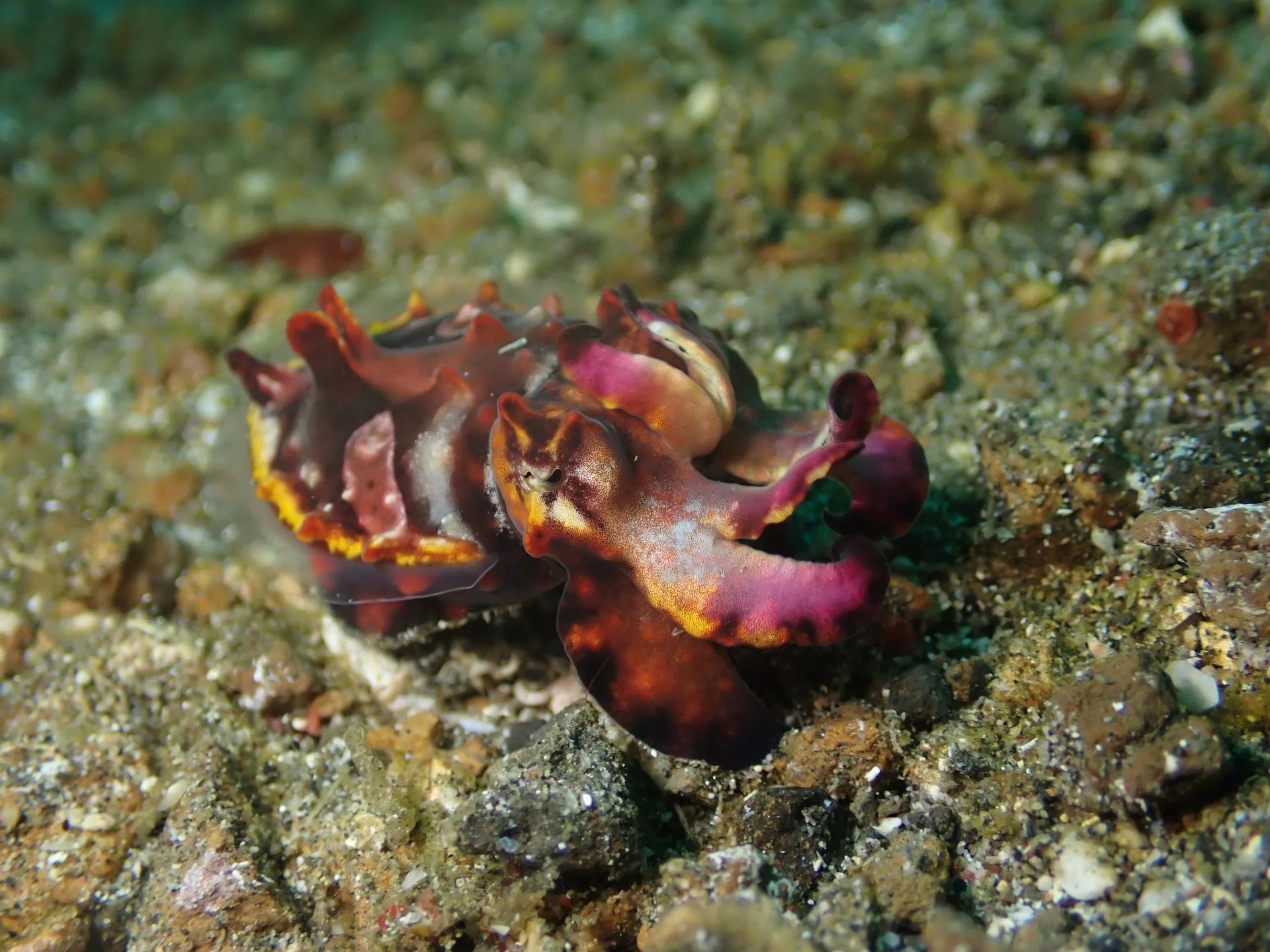
Lembeh
The Lembeh Strait in North Sulawesi has become famous as the muck‑diving capital of the world. At first glance its gently sloping seabed of black volcanic sand, rubble and discarded debris looks bleak. Look closer and it is teeming with weird and wonderful life: hairy and painted frogfish, flamboyant cuttlefish, mimic and blue‑ringed octopuses, ornate ghost pipefish, tiny seahorses, shrimp, crabs and a rainbow of nudibranchs. Most dives are shallow and calm with little current, making it an ideal playground for macro photographers. There are a few colourful reefs for a change of scenery, but Lembeh is all about searching the sand for critter treasures.
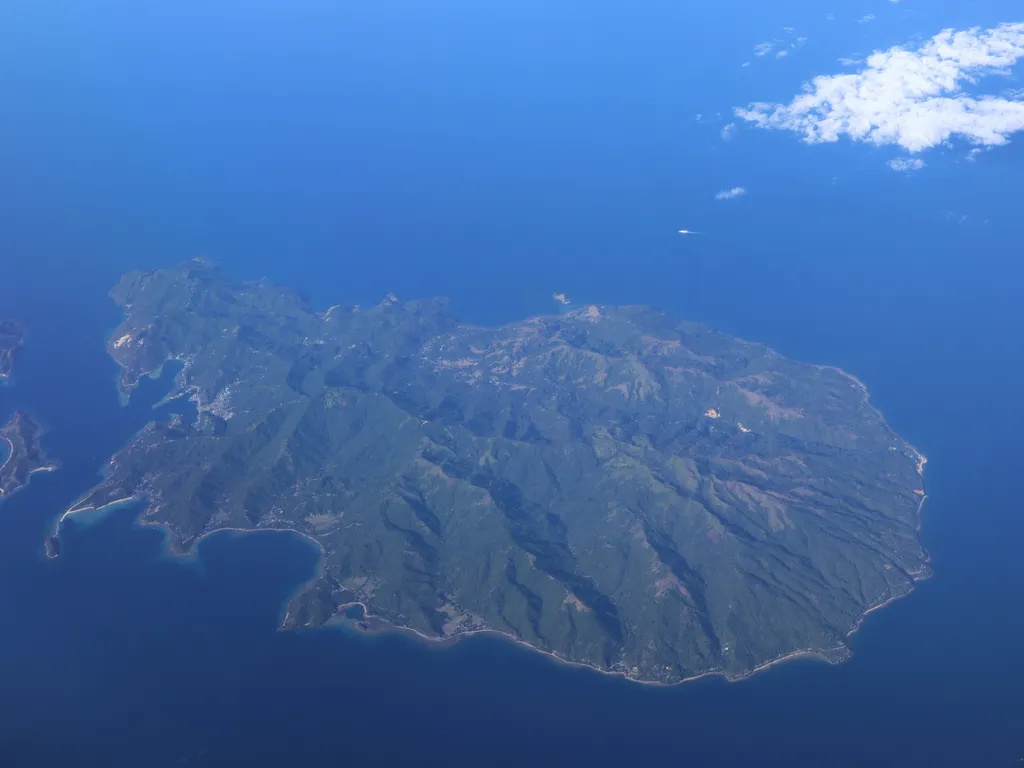
Romblon
Romblon is the Philippines' quiet answer to Lembeh—a province of small islands in the Sibuyan Sea where muck slopes, fan-coral walls and marine sanctuaries stack up without the resort sprawl. Most divers base in Lonos on Romblon Island, a short hop from Tablas, and spend days hopping between black-sand critter hunts and healthier reef drops. Signature finds include wunderpus, flamboyant cuttlefish, blue-ringed octopus, four pygmy seahorse species, Melibe colemani and Cyerce nudibranchs, plus eagle rays, sea snakes and schooling fish on the outer sites. Add a chimney dive at The Blue Hole on Tablas, cavern walls at Agpanabat, and night blackwater drifts over Romblon Pass when you want something stranger than another frogfish portrait.
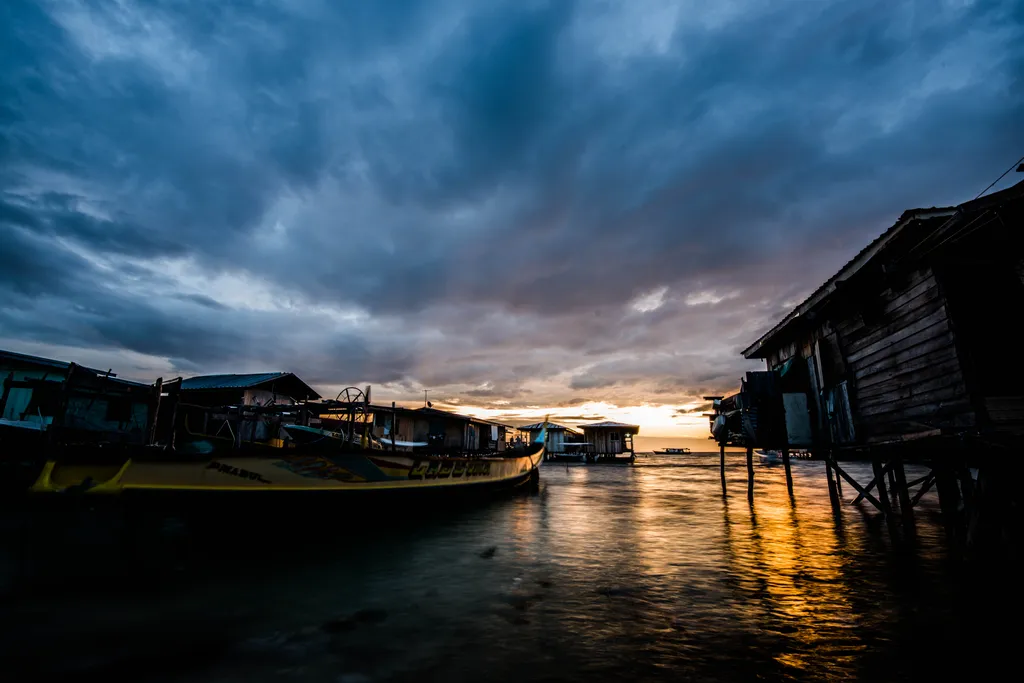
Mabul
Mabul is where you come to slow down and stare at sand. The island sits in the Semporna archipelago off eastern Sabah — a flat, palm-fringed speck ringed by shallow rubble slopes, artificial reef structures, and the occasional tyre stack that macro photographers lose their minds over. Visibility rarely tops 15 m and nobody cares: frogfish the size of your thumb, flamboyant cuttlefish pulsing purple and yellow, blue-ring octopus tucked in rubble, ornate ghost pipefish, ribbon eels, pygmy seahorses in sea fans, and nudibranchs on every spare surface. This is muck diving with resort convenience — walk from your bungalow to the boat, three dives before lunch, rinse and repeat. The signature sites circle the island and nearby Seaventures rig: Froggy Lair and Crocodile Avenue for classic critter hunts, Lobster Wall and Eel Garden when you want a bit of structure, Paradise 1 & 2 for mixed reef-and-rubble variety. Night dives here are excellent — mandarinfish mating dances at dusk, bobtail squid and Spanish dancer nudibranchs after dark. Most resorts run house-reef dives and unlimited shore access between boat trips. Sipadan's barracuda tornadoes and sheer walls are 45 minutes away by speedboat, and many packages include a day or two on permit — but that's the side dish. Base yourself on Mabul for a week of macro and you won't feel cheated if the permit lottery doesn't go your way. Bring a macro lens, a patient dive guide, and low expectations for viz; bring high expectations for critters.
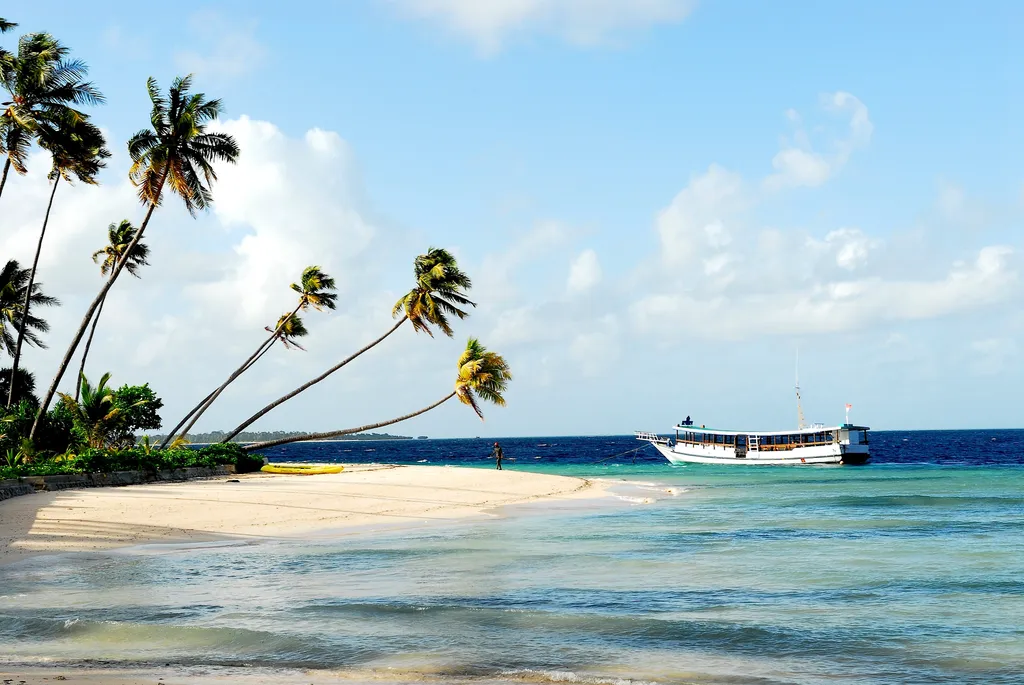
Wakatobi
Wakatobi National Park sits on the southeastern rim of Sulawesi, named from its four main islands—Wangi-Wangi, Kaledupa, Tomia, and Binongko. It holds some of the healthiest coral coverage in the Coral Triangle, with walls, seamounts, and fringing reefs that marine biologists still treat as a reference system. Visibility regularly hits 30 m and can stretch past 50 m on calm outer-reef days. Currents are usually mild and predictable, so you get long bottom times on colorful hard-coral gardens instead of fighting blue water. The signature experience is Wakatobi’s House Reef—walk-in shore diving a short swim from the jetty—backed by more than 40 day-boat sites, from beginner pinnacles like Roma to the knife-edge walls of Blade.
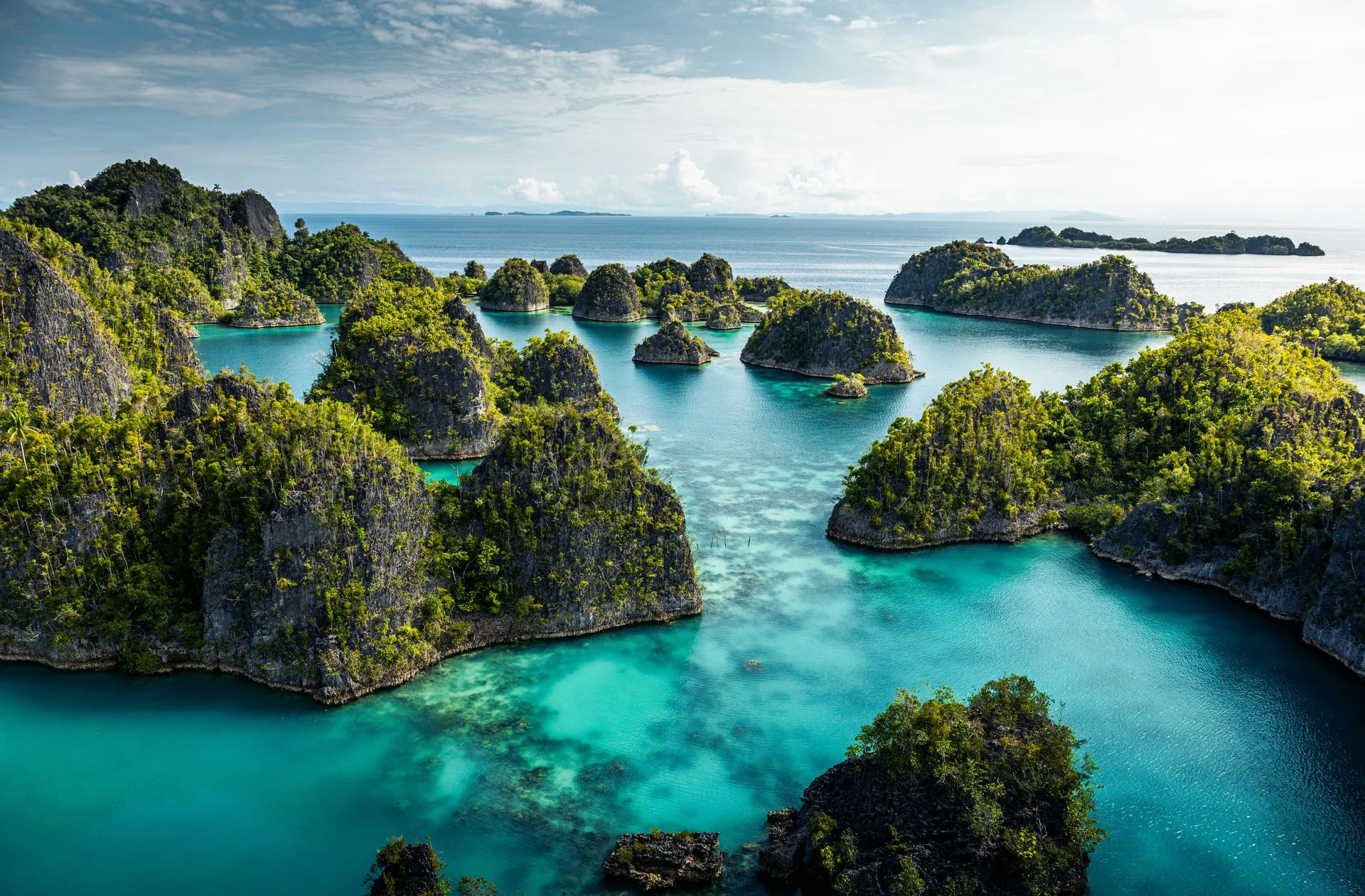
Raja Ampat
Raja Ampat, the “Four Kings,” is an archipelago of more than 1,500 islands at the edge of Indonesian West Papua. Its reefs sit in the heart of the Coral Triangle, where Pacific currents funnel nutrients into shallow seas and feed the world’s richest marine biodiversity. Diving here means gliding over colourful walls and coral gardens buzzing with more than 550 species of hard and soft corals and an estimated 1,500 fish species. You’ll meet blacktip and whitetip reef sharks on almost every dive, witness giant trevally and dogtooth tuna hunting schools of fusiliers, and encounter wobbegong “carpet” sharks, turtles, manta rays and dolphins. From cape pinnacles swarming with life to calm bays rich in macro critters, Raja Ampat offers endless variety. Above water, karst limestone islands and emerald lagoons provide spectacular scenery between dives.
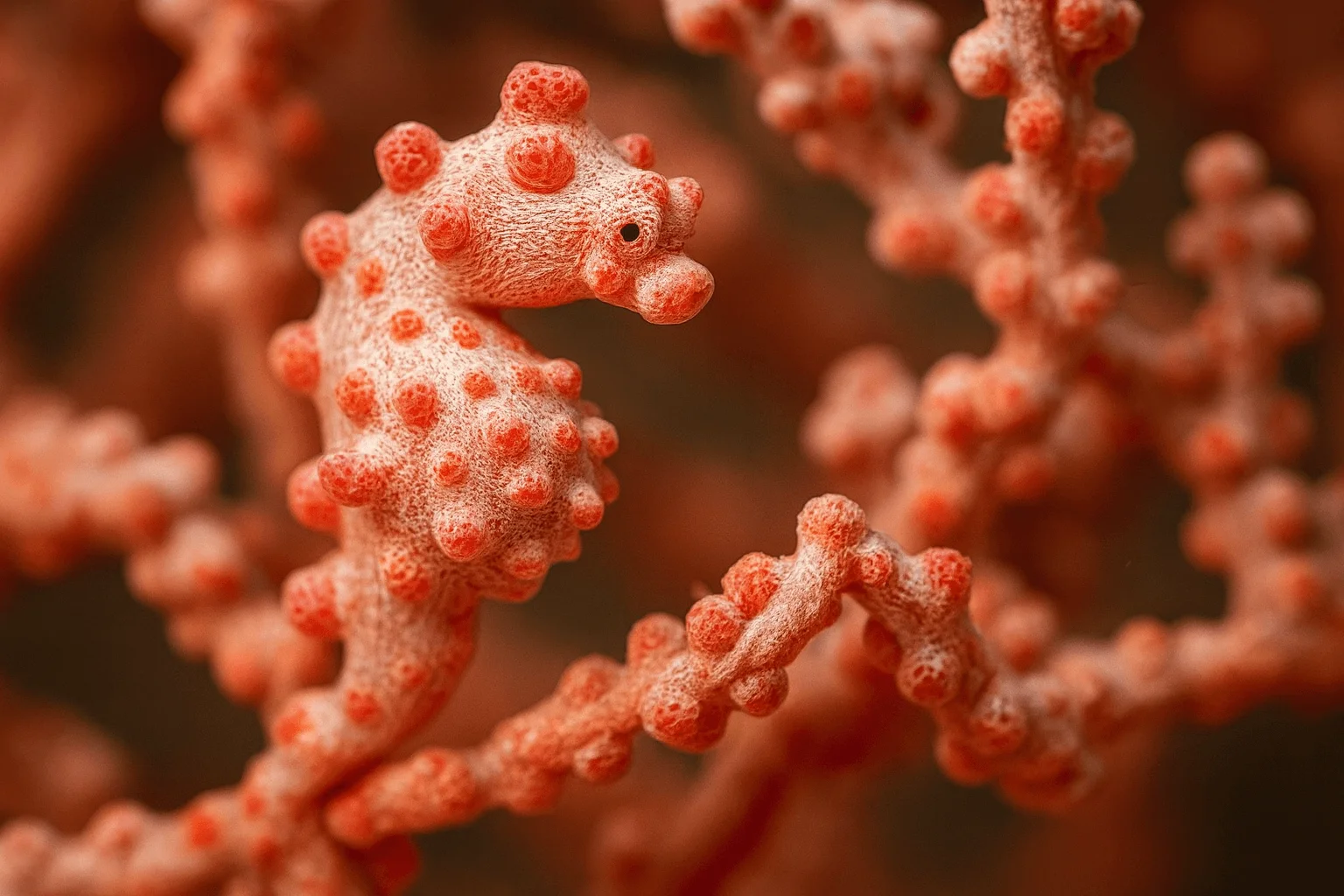
Anilao
Anilao, a small barangay in Batangas province just two hours south of Manila, is often called the macro capital of the Philippines. More than 50 dive sites fringe the coast and nearby islands, offering an intoxicating mix of coral‑covered pinnacles, muck slopes and blackwater encounters. Critter enthusiasts come for the legendary muck dives at Secret Bay and Anilao Pier, where mimic octopuses, blue‑ringed octopuses, wonderpus, seahorses, ghost pipefish, frogfish and dozens of nudibranch species lurk in the silt. Shallow reefs like Twin Rocks and Cathedral are covered in soft corals and teem with reef fish, while deeper sites such as Ligpo Island feature gorgonian‑covered walls and occasional drift. Because Anilao is so close to Manila and open year‑round, it’s the easiest place in the Philippines to squeeze in a quick diving getaway.
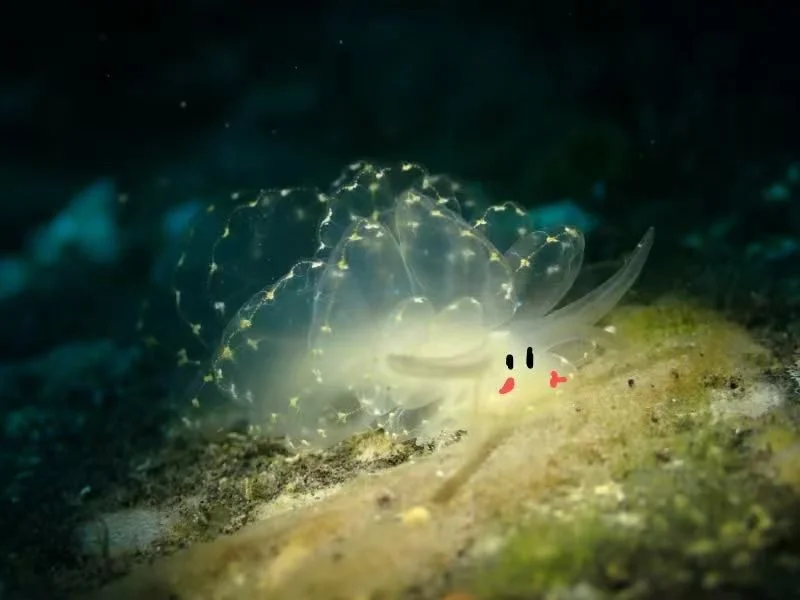
Tulamben(Bali)
Tulamben sits on Bali’s northeast coast and is best known for the USAT Liberty shipwreck – a 125‑metre cargo ship torpedoed in WWII that now lies just a short swim from shore. Warm water, mild currents and straightforward shore entries make diving here relaxed for all levels. Besides the wreck, divers can explore coral gardens, black‑sand muck sites and dramatic drop‑offs. Macro lovers will find nudibranchs, ghost pipefish, mimic octopus and pygmy seahorses, while big‑fish fans can encounter schooling jackfish, bumphead parrotfish and reef sharks. With a compact coastline packed with variety, Tulamben delivers world‑class wreck and critter diving without long boat rides.
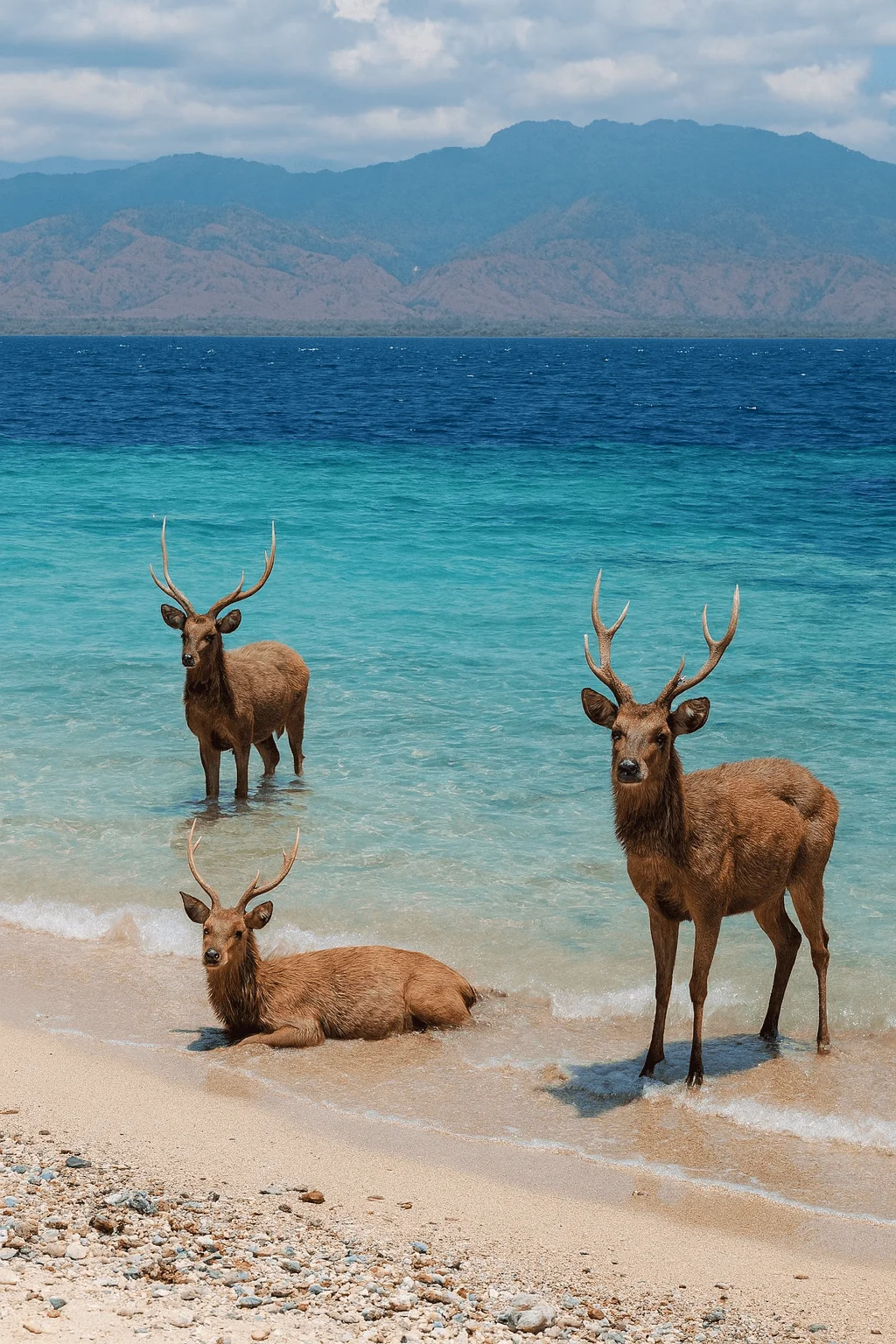
Menjangan(Deer Island)
Menjangan Island sits just off the north‑west tip of Bali and forms part of the West Bali National Park. Protected from heavy seas by Bali’s mainland, it offers calm, crystal‑clear waters, dramatic drop‑offs and lush coral walls covered with sea fans, sponges and soft corals. Healthy reef fish populations mix with turtles, reef sharks and occasional pelagics, while macro enthusiasts hunt for pygmy seahorses, frogfish and nudibranchs. With easy access from Pemuteran and relatively few dive boats, Menjangan is ideal for relaxing wall dives, snorkelling and photography.